Arts & Entertainment
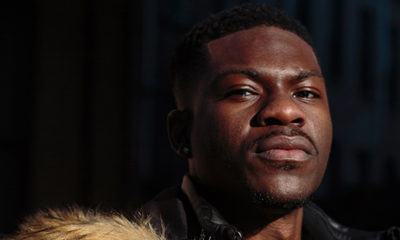
Queery: Bev Stanton
The artist behind Arthur Loves Plastic answers 20 gay questions
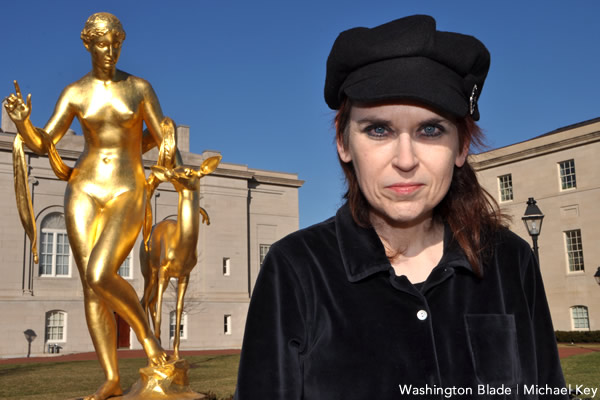
(Blade photo by Michael Key)
For all the ballyhooing that’s occurred as the major label record industry has slipped dramatically over the last decade-plus, there are lots of indie acts that are quietly but consistently building impressive oeuvres in the digital age. Bev Stanton is one of them.
As electronica imprint Arthur Loves Plastic, Stanton — a 45-year-old Silver Spring resident and lesbian — has, since the mid-‘90s, released dozens of projects, had her work licensed for shows on the Discovery Channel, VH1, MTV and other cable networks. She was one of 24 artists profiled in “Pink Noises: Women in Electronic Music and Sound,” a 2010 book by Tara Rodgers, and she’s won a dozen Washington Area Music Awards (“Wammies”) in the electronica category. Stanton uses all the usual techniques — she makes her own loops, samples other sources, records friends playing various instruments, uses MIDI tricks and more. She attributes her popularity to good timing and perseverance.
“I just sent some product to a company,” she says. “They were trying to bridge the gap between people creating music and projects that wanted music but that wasn’t just cheesy canned stuff.”
Listen for her Thursday from 6:30 to 9 p.m. in the back room of Jackie’s Restaurant/Sidebar in Silver Spring (8081 Georgia Ave.) where she and Rodgers will spin for an Equality Maryland fundraiser (equalitymaryland.org/events for details).
Ironically, Stanton does not own a TV so she never sees her work on the air. She concedes that’s probably “for the best” and says it would be too tempting to watch constantly if she owned a set. By day she works in D.C. doing online work for an environmental non-profit. She came to the area about 20 years ago after living in North Carolina and craving a “more cosmopolitan” area.
Stanton, who admits to a fetish for mid-century design (she loves the “atomic age” look of chairs of the era), was born in the Bahamas but grew up mostly in central Florida. She enjoys web surfing (especially Daily Mail) and spending time with her two cats, Nicky and Kimba, in her free time.
(Blade photos by Michael Key)
How long have you been out and who was the hardest person to tell?
I came out in high school and fretted over telling my best friend but it turned out he was gay too so it all worked out.
Who’s your LGBT hero?
Dusty Springfield. Despite her phenomenal talent she was plagued by insecurity. However, she was an uncompromising perfectionist in her artistic approach and her music transcends her era.
What’s Washington’s best nightspot, past or present?
I used to enjoy DJing at the back room of the Black Cat for Girl Friday events several years ago. It was a very eclectic crowd of shoe-gazing males, edgy lesbians and ostensibly straight women who apparently just needed a few drinks to defy labels. I also loved spinning at Cafe Japone in the bar with the fiber optic ceiling.
Describe your dream wedding.
Even if marriage equality passes in Maryland I have the major barrier of finding a woman who would want to marry me. In the meantime I might resort to a Sue Sylvester-style ceremony but would ditch the tracksuit and wear black.
What non-LGBT issue are you most passionate about?
Animal rights.
What historical outcome would you change?
Columbus’ arrival to the New World.
What’s been the most memorable pop culture moment of your lifetime?
I don’t have TV so I always feel a little out of the loop and rely on Facebook to keep up, with mixed results. But Susan Boyle’s overnight success on “Britain’s Got Talent” demonstrated the power of YouTube and was a triumph of raw talent over slick music industry packaging. It almost makes up for Katy Perry!
On what do you insist?
To thine own self be true, or at least have a plausible excuse.
What was your last Facebook post or Tweet?
“oh no! i sent an email to my coop board this morning to report a gas smell in my living room only to discover it was a burning odor from a feline pheromone diffuser. add this to the list of things i will never live down.”
If your life were a book, what would the title be?
“Easy Does It!”
If science discovered a way to change sexual orientation, what would you do?
I would offer to administer the serum to every straight female friend who has told me they are sick of men just to see how serious they are about this.
What do you believe in beyond the physical world?
I believe I am currently in purgatory and suspect that ascension to the afterlife is about as merit-based as things here on earth.
What’s your advice for LGBT movement leaders?
Please come up with an elevator speech to help me explain the ENDA controversy to my straight friends!
What would you walk across hot coals for?
Enlightenment
What LGBT stereotype annoys you most?
That lesbians are hummus-consuming granola activist types whose lives revolve around their cats … oh wait!
What’s your favorite LGBT movie?
I loved “High Art” though it was more a commentary on the art world than a lesbian film per se. Radha Mitchel was captivating yet understated and underrated.
What’s the most overrated social custom?
The Super Bowl. It is a great time to do supermarket shopping!
What trophy or prize do you most covet?
I would love to win the lottery so I could pay cash for my apartment and politely instruct my mortgage company to stop hounding me for documents!
What do you wish you’d known at 18?
It isn’t what you know, it’s who you know!
Why Washington?
I love D.C.! Although it’s inhabited by people with a heightened sense of self-importance, it is a destination for passionate activists trying to make the world a better place. The architecture is beautiful and the monuments are absolutely stunning. I have lived here over 20 years and still find new places to visit and explore.




Out & About
Writers’ association hosts Capital Love LitFest
Inaugural literary salon scheduled for Sunday
The Washington Writers’ Publishing House (WWPH), the nation’s longest continuously operating cooperative nonprofit literary press, will present the inaugural “Capital Love LitFest” on Sunday, June 28 at 10 a.m. at The Writer’s Center in Bethesda, Md.
Designed as a full-day literary salon and cultural gathering, the event will feature more than 25 writers, nine workshops, and panel discussions, readings, and conversations centered on love, relationships, identity, healing, creativity, and connection in divisive times. Admission is pay-what-you-can, beginning at free.
The LitFest celebrates the release of “Capital Love,” WWPH’s new anthology featuring 55 writers from across the DMV, including contributors from Baltimore, D.C., Maryland, and Virginia. The pocket-sized collectible anthology explores love in its many forms through poetry and prose and serves as a literary response to today’s social and political climate.
For more details, visit Washington Writers’ website.
Television
‘Vampire Lestat’ heats up Pride month with queer action
Latest Anne Rice adaptation poised to be your next TV obsession
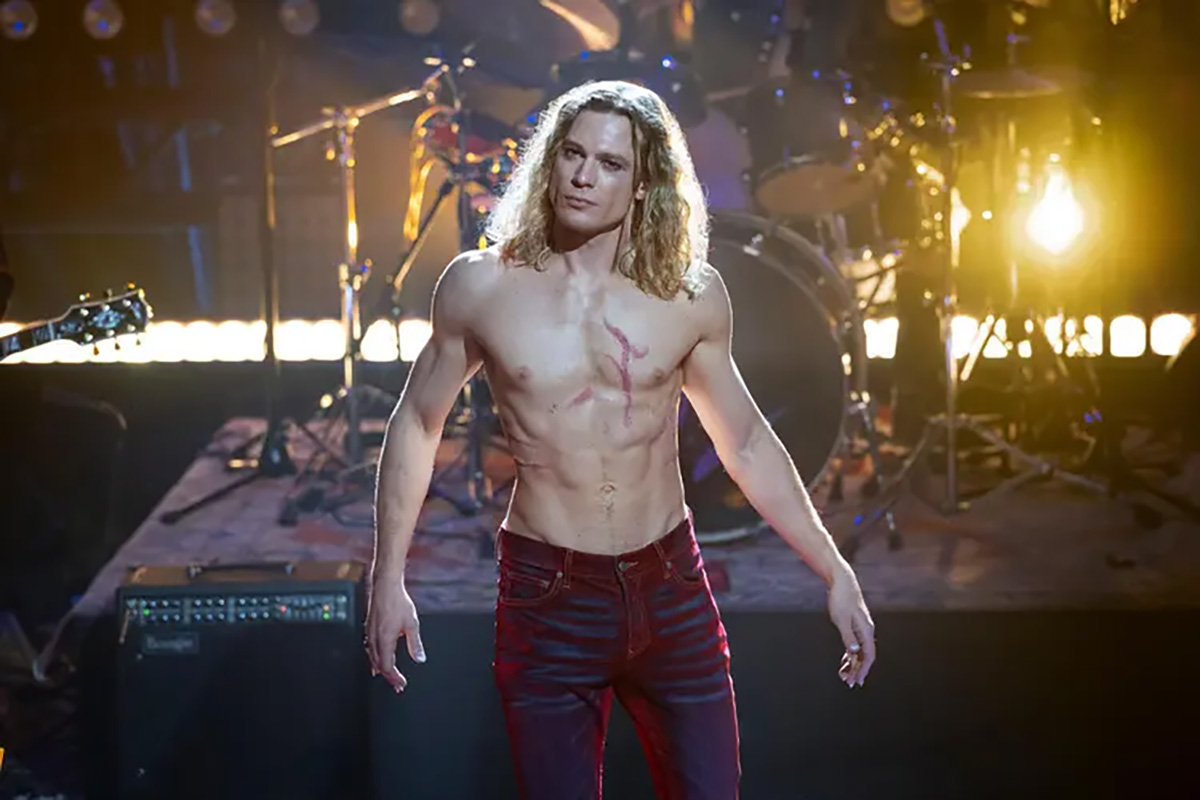
Whether you’re mourning the end of Euphoria, The Boys, or Hacks, you’re dying for another hit of Heated Rivalry or just need something new to watch, The Vampire Lestat has you covered. Whether it’s the cutting witty dialogue, supernatural action, or the maudlin adventures of problematic queer relationships, this is the show for you. This new season brings literal sex, drugs, and rock-n-roll as Lestat (Sam Reid), a multi-centennial vampire, decides to process his beef with his sexy ex Louis (Jacob Anderson) for giving the Interview With The Vampire by starting a rock band.
In 1976, Anne Rice wrote a book to process the death of her young daughter. It was the story of two vampire “roommates” and their centuries-long relationship drama. What followed was a series of 13 books and a whole world filled with vampires, witches, and more. This launched the 1994 film where Brad Pitt, Antonio Banderas, and Tom Cruise played “totally not gay” vampires who almost kissed a few times, despite having all of the hottest actors of the era, it was sanitized of all queer subplots. R&B diva Aaliyah’s last role was as Akasha, the eponymous Queen of the Damned (2002), the unoffical follow up to the first film covering Rice’s second and third book.
The AMC series version of Interview with the Vampire took all this source material and made it more gay, more current, and more PC. They shifted the story to the present day, having Louis live in a luxurious Dubai compound, and his interviewer, Daniel Molloy (Eric Bogosian), being a former addict hawking his masterclass, armed with a ton of evidence. The choice to race-swap Louis from a misanthropic emo plantation owner to a black brothel owner in New Orleans adds so much more nuance, history and richness to his character. Exploring the abusive nature of the relationship and casting the amazing Delainey Hayles as Claudia have all elevated the story to your next television obsession. The choice to turn the book into two seasons allowed the creators to take their time, play with storytelling and explore Louis as an unreliable narrator and tease at many of the storylines of later books. This was a smart choice considering these characters are all centuries old, and over the course of 13 books, all have complex backstories and inner worlds.
Sam Reid was always a standout and captured the egomania and charm of Lestat, the self-proclaimed Brat Prince. He gets to play an over-the-top bitch about everything we’ve seen and heard in Seasons 1 and 2, while even skewering the world of today, commenting on the state of fame, life, and politics.
Like in the book, he reclaims the narrative as he takes the helm of the story. Rather than write his own book, he’s nabbed the newly vamped-up Daniel Molloy as his documentarian. Also, without giving too much away, this series begins in an unnamed future. Armand (Assad Zaman) and Louis are still as hot as ever, and they’re at an auction for the complete works of the Vampire Lestat. It’s teased that some sort of world-altering event has transpired, and Lestat is missing in action. Could that be the events of The Queen of the Damned or even the sum of all of the books? Only time will tell.
The worldbuilding is really solid as we get to see the past, present and future of these characters. Prime example, Akasha, The Queen of the Damned, was name-checked in earlier seasons. Whether you’re a fan of the original source material or not, this series has something for everyone. It has action, including an epic vampire fight scene in the premiere. It has a complex world and mysteries that unfold over the course of each season. Plus, it has hotties of all genders with Reid, Anderson and Zaman holding it down from earlier seasons. Schitt’s Creek dreamboat Noah Reid joins the cast as Lestat’s band’s frontman.
The show has everything: sex, violence, drama, all with a queer and racially inclusive lens. It doesn’t pull punches in storytelling and examining history, all while maintaining a level of levity and fun. It unfolds with dramatic soap operatic reveals and confrontations while also grounding all of the fantasy in our world.
The series is poised to continue with the same characters from the first two seasons while shifting the focus to allow in a new cast of characters who will play out the events of multiple books and major arcs that are part of AMC’s new Anne Rice cinematic universe.
The series airs on AMC Plus, while the first two seasons are available on Netflix. A note to people streaming it may appear on Season 2, as the series name change might be confusing for those who haven’t seen the show.
a&e features
Television loses a legend, longtime ‘Will & Grace’ director James Burrows
Iconic hitmaker leaves behind a legacy of telling LGBTQ stories
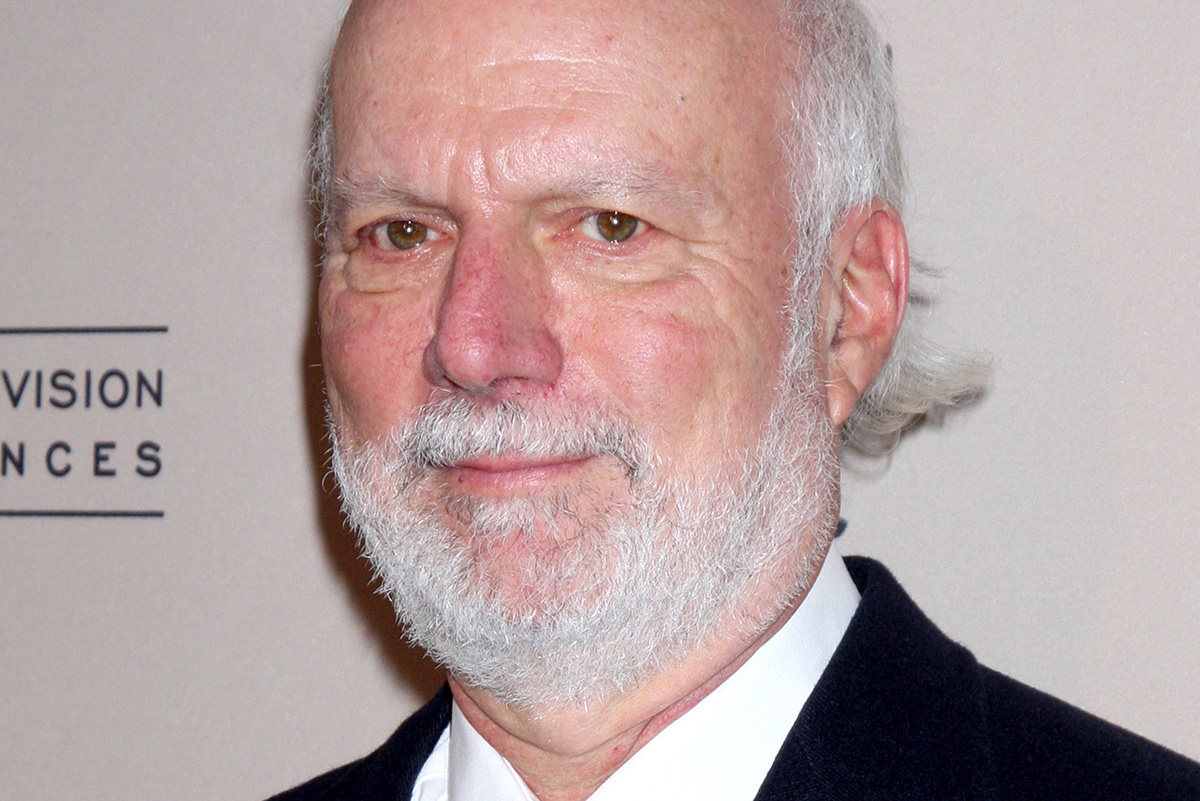
You don’t have to be a pretentious film major to name 10 movie directors. But naming television directors is not that simple. They’re the unsung heroes of your favorite shows, and the late James Burrows was the television director. He passed on June 19, but his DNA runs through television history.
He directed over 1200 episodes of television and over 50 pilots. He co-created “Cheers” and directed many episodes of long-running series like “Friends,” “Taxi,” “Frasier,” “The Big Bang Theory,” and “Two and a Half Men.” You also may remember him from playing a heightened version of himself on the Lisa Kudrow comedy “The Comeback.”
He has left an indelible mark on the LGBTQ community. As recently as last year, he directed the series run of “Mid-Century Modern” starring Nathan Lane, Matt Bomer, and Linda Lavin. He was also a longtime director of “Will & Grace” and directed every episode of the series revival. He even directed the unaired “Absolutely Fabulous” pilot with Kathryn Hahn, Kristen Johnston, and Zosia Mamet.
Not to mention he’s worked with queer icons throughout history, including Betty White and Stockard Channing on their single-season series, and Jennifer Coolidge in “2 Broke Girls.”
He started his career on shows like “The Mary Tyler Moore Show,” “Rhoda,” “Laverne & Shirley,” and the first four seasons of “Taxi.”
He continued to work steadily and directed successful pilots that went to series for “Roc,” “3rd Rock From the Sun,” “Dharma & Greg,” and “Wings.” He directed multiple episodes of “Friends,” “Caroline in the City,” and “Frasier.”
This magic continued into the 2000s with him directing the pilots for “Two and a Half Men,” “The Big Bang Theory,” and multiple episodes of “Mike & Molly,” and the entire return series of “Will & Grace.”
What was the secret to his success? He’d enact the “fun clause” in his contract. In his words, “Life is too short to deal with obnoxious leads,” he shared. “So as long as the writing is good and the cast is fun, I’m going to enjoy the experience.”
He had the magic touch, having multiple pilots turned into long-running series. He was nominated for an Emmy 24 times in 26 years and worked consistently until a year before his death.
The secret was the way he brought the cast together. He describes, “it was my job to mold them into an ensemble, and they did round into a group of people who loved each other.”
This earned him 11 Emmy Awards and five Directors Guild of America Awards, including being awarded the inaugural DGA’s Lifetime Achievement Award for Television Direction.
In a 2003 interview by the Television Academy, he was asked how he wants to be remembered, and he said, “That every night forever you can tune in somewhere, and there’ll be a show I did.”
He’s survived by his wife, Debbie, four daughters, seven grandchildren, and the countless people whose careers he launched and the countless viewers he inspired with his television legacy.

Eswatini’s government ordered to allow LGBTQ group to legally register

Does Pride decor resemble Trump’s design aesthetic?

Nearly 6,000 turn out for Pride Night Out at the Nationals

White House to end PEPFAR funding for South Africa

Washington Blade names new publisher

Union leader files assault complaint against gay Md. delegate after fight at early-voting site

PHOTOS: 2026 Capital Pride Parade

US no longer refuge for LGBTQ refugees

Cool convertibles