News
Clay Aiken ‘actively considering’ run for Congress: sources
‘American Idol’ alum has reportedly talked to DCCC about a bid

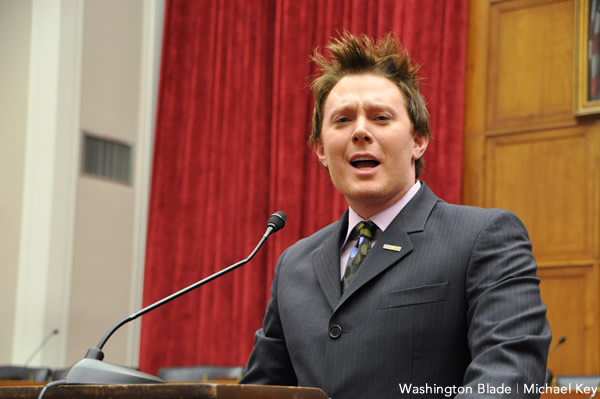
Clay Aiken is “actively considering” a run for Congress, sources say. (Washington Blade file photo by Michael Key)
Gay singer and “American Idol” runner-up Clay Aiken is actively considering a bid to represent North Carolina’s 2nd congressional district in the U.S. House, according to two Democratic sources familiar with his plans.
The sources, who spoke on condition of anonymity, said the 35-year-old Raleigh native has taken initial steps for a run, including consulting with political operatives in Washington, D.C., about a bid for the seat.
One Democratic source said Aiken made phone calls to gauge support, talked to the Democratic Congressional Campaign Committee and has met with figures in Raleigh, N.C., about a potential bid. Although it’s unclear when Aiken might formally announce a decision, the source said Aiken is “actively considering” it and “sounding and acting like a candidate.”
To help explore a run, the source said Aiken has been working with Betsy Conti, a Raleigh-based political strategist who’s worked for former North Carolina Gov. Bev Purdue and Democratic presidential nominee Al Gore in addition to serving as Maryland’s deputy labor secretary in the Glendening administration. It’s unclear whether Aiken has formally hired her or anyone else to help with his bid.
Another Democratic source said Aiken was in D.C. last month meeting with pollsters at Hart Research Associates to examine polling data with one of the partners at the firm.
The DCCC hasn’t responded to multiple requests to comment about a potential Aiken candidacy in the past few weeks. Neither Conti nor the Hart Research Associates responded to the Blade’s request for comment on Thursday.
Aiken himself was unable to be reached for comment. A Los Angeles-based management company known as the Firm, which reportedly represented Aiken for his music career in the last decade, didn’t respond to a request for comment.
Aiken wouldn’t be the only candidate on the Democratic side to pursue a run for the House seat, which is currently occupied by Rep. Renee Ellmers (R-N.C.). Former North Carolina Commerce Secretary Keith Crisco is expected to formally announce his candidacy on Monday. He formed a campaign committee to explore a run in December.
The filing deadline to participate in the primary is Feb. 28. The primary itself in North Carolina is set for May 6.
Although the polls indicate Republicans may be favored as the mid-term elections approach on a general ballot, the Democratic nominee — whether it’s Aiken, Crisco or someone else — may have a shot at the seat, which comprises Raleigh and was controlled by Democrats before the Republican surge in 2010. A House Democratic aide, who also spoke on condition of anonymity, described the second congressional district as a “winnable seat” for Democrats.
After finishing in second-place on Fox’s “American Idol” in 2003, Aiken used the prominence he gained from performing on the show to launch a successful music and Broadway career. He’s sold more than six millions copies of his albums, and, according to Forbes, made $1.5 million in 2010.
Aiken has also drawn on his fame to help promote causes as an activist. He co-founded the the National Inclusion Project, formerly the Bubel/Aiken Foundation, which seeks to help children with disabilities. Tapped as a national ambassador for the United States Fund for UNICEF in 2004, Aiken has travelled to Afghanistan, Indonesia, Uganda, Mexico, Kenya and Somalia as part of aid missions.
The singer has also taken part in LGBT activism. In 2010, the singer appeared at a briefing on Capitol Hill on behalf of the Gay, Lesbian & Straight Education Network, or GLSEN, to urge for passage of anti-bullying legislation with LGBT protections known as the Student Non-Discrimination Act and the Safe Schools Improvement Act.
“Like many kids now in middle schools and high schools, I was bullied,” Aiken said at the time. “I was picked on, I was called gay, I was called fag, I was called sissy, you name it. Fortunately, I was able to overcome it and live through it because of a number of friends who were supportive of me.”
Dogged by rumors about his sexual orientation during his appearance on “American Idol” and over the course of his musical career afterward, Aiken came out as a gay in 2008 by appearing on the cover of “People” magazine with his then-infant son Parker Foster Aiken.
“It was the first decision I made as a father,” Aiken told the magazine. “I cannot raise a child to lie or to hide things. I wasn’t raised that way, and I’m not going to raise a child to do that.”




North Carolina
Authorities investigate officer-involved shooting outside Asheville gay bar
Incident took place near Shakey’s on Wednesday

An officer-involved shooting outside of a gay dive bar, Shakey’s, in downtown Asheville, N.C., left one man dead Wednesday.
The bar released a statement the following morning regarding the incident, stating that bar staff had asked a patron to leave earlier in the night citing concerning behavior. The bar said that later the man was spotted with a gun in the parking lot.
The bar proceeded to call 911, locked the doors to the establishment, and followed dispatcher instructions on how to keep patrons of the bar safe while officers arrived. These protocols included getting patrons away from the windows and staying low to the ground.
According to Shakey’s, shots were fired outside of the business. When the Asheville Police Department officers arrived, they fired back. The individual died from their injuries, according to the police.
“Because of everyone’s quick actions, cooperation, and concern for one another, every customer and every employee inside Shakey’s made it home safely. We are incredibly thankful,” Shakey’s said on their Instagram page. They thanked Asheville police, emergency dispatchers, EMS, and all first responders who were on scene.
On Thursday, a spokesperson for the North Carolina State Bureau of Investigation, Chad Flowers, stated that the suspect involved in the shooting was Arturo Castillo Palomar.
The Washington Blade reached out to the North Carolina State Bureau of Investigation for a comment regarding the possibility of the event being considered a hate crime. They said the issue is currently under investigation and that the findings would be turned over to the district attorney for review.
Baltimore
Popular Mount Vernon gay bar Leon’s to temporarily close after owner’s death
Ron Singer passed away on July 7
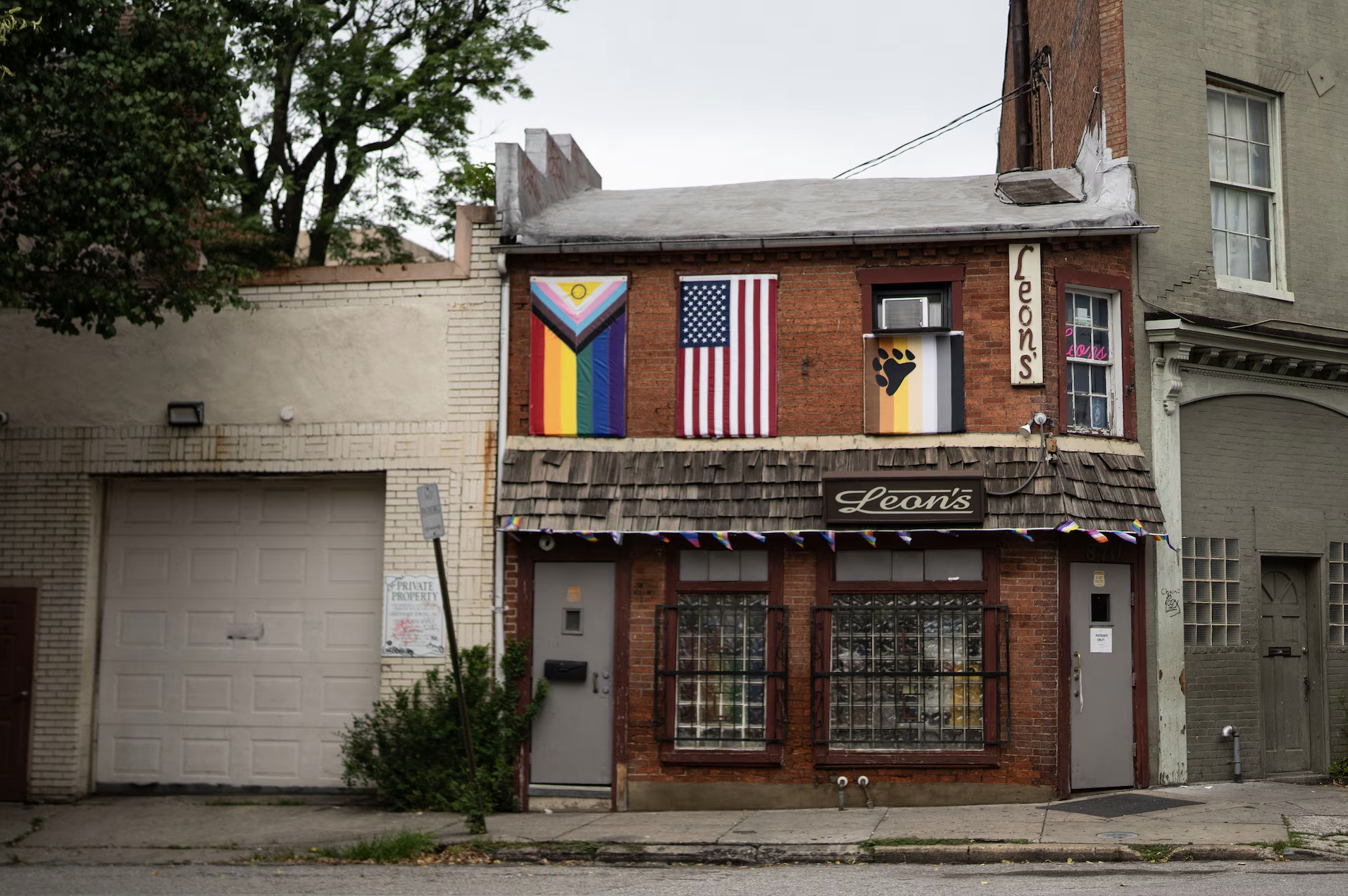
By WESLEY CASE | Leon’s Backroom, Baltimore’s oldest gay bar, temporarily shut down after service on Wednesday night, according to a post on the business’s Instagram page.
The announcement comes a little more than a week after the death of the Mount Vernon bar’s owner, Ron Singer, who died at 66 on July 7.
The rest of this article can be found on the Baltimore Banner’s website.

The Comings & Goings column is about sharing the professional successes of our community. We want to recognize those landing new jobs, new clients for their business, joining boards of organizations and other achievements. Please share your successes with us at [email protected].
Congratulations to Stuart Ortel and Scott Marker, and Dave Lyons and Rick Hardy, on the recent opening of their garden center on Route 1 in Rehoboth Beach, in the former Farmer Girl site. It is called Bay Laurel Home and Garden and debuted earlier this year. The four owners are all well known to the denizens of Rehoboth Beach.
Stuart and Scott have been active members of the Rehoboth Beach community since 1999. Stuart is a landscape architect, and has established relationships with many local folks in the building and landscape industry. When this opportunity for Bay Laurel Home & Garden presented itself, and they had the perfect team of people in place, he and Scott were committed to making it a reality. So, when Scott and Stuart introduced this opportunity to create a new garden center to Dave and Rick, they embraced the chance to cultivate a business where beautiful plants, inspiring home and garden products, and outstanding customer service come together. Dave and Rick knew about owning a business in Rehoboth as they previously owned Coho’s Market, where they discovered firsthand the value of serving their community, and the rewards of running a locally owned business.
The garden center launched with a refreshed brand identity, updated merchandising, and expanded product lines, all designed to create an inspiring and welcoming environment for your home. Bay Laurel Home & Garden offers a beautifully appointed garden center and curated home and gift shop.
The new center features a full nursery with annuals, perennials, shrubs, trees, and seasonal selections; a garden center offering pottery, fountains, and garden ornamentation, and essential tools and garden supplies. It has a garden shop featuring unique indoor/outdoor furnishings and accessories, and a gift shop featuring botanical and coastal style items for home and entertaining.

Authorities investigate officer-involved shooting outside Asheville gay bar

Popular Mount Vernon gay bar Leon’s to temporarily close after owner’s death

30 years on, ‘The Birdcage’ remains a landmark

Comings & Goings

Whitman-Walker to host legal services workshop

Democrats are trying to disqualify trans candidates. Here’s how

Political drama in Angie Craig’s Minn. Senate race heats up

Aparna Raj expected to become second LGBTQ member of D.C. Council

Suzanne Goode wants efficient spending, better infrastructure for Rehoboth

Mexico’s first openly gay mayor killed
-

 National5 days ago
Democrats are trying to disqualify trans candidates. Here’s how
-
Congress5 days ago
Political drama in Angie Craig’s Minn. Senate race heats up
-
District of Columbia5 days ago
Aparna Raj expected to become second LGBTQ member of D.C. Council
-
Rehoboth Beach5 days ago
Suzanne Goode wants efficient spending, better infrastructure for Rehoboth