Local
Cleveland Gay Games organizer may be ousted
Rumors swirl over whether 2014 competition will move to D.C.

The international LGBT sports organization that chose Cleveland over D.C. and Boston for the 2014 Gay Games has taken steps to oust the non-profit foundation it selected last fall to organize the quadrennial sports competition.
The Federation of Gay Games’ decision to begin a process to revoke the license it awarded last year to the Synergy Foundation to organize and operate the 2014 Gay Games fueled speculation about whether Federation officials might seek to move the multi-million dollar athletic competition to D.C., which was deemed the runner-up city for hosting the event.
Cleveland city officials and an FGG spokesperson sought to dispel the speculation this week, saying they expect the Gay Games to take place in Cleveland as planned, although they would not comment on which entity would organize the event.
The Gay Games usually draws thousands of athlete participants and spectators from Europe, Latin America and all parts of the U.S. and Canada for two weeks, generating several million dollars in revenue for the host city. The Olympic-style competition includes sporting venues ranging from soccer and swimming to track and field events, among many others.
Last September, the FGG stunned officials with the Metropolitan Washington Gaymes, Inc., the group that organized D.C.’s bid for the Gay Games, when it announced its selection of Cleveland as the host city for the 2014 games.
The D.C. group, which had the full support of Mayor Adrian Fenty, the City Council and local business, tourist and sports groups, expected to win the bid, saying it had put together an unprecedented proposal for the games that included the use of the Washington Nationals Baseball Stadium.
FGG officials said D.C., Boston and Cleveland each submitted equally impressive and acceptable bids from a logistical and organizational standpoint. They noted that they chose Cleveland because it represented a region less advanced in LGBT rights and acceptance than D.C. and Boston and that holding the Gay Games there would have a greater impact on LGBT equality.
Recently, though, the LGBT sporting news blog, Out Sports, and the Cleveland-based LGBT news publication, Gay People’s Chronicle, have reported learning from inside sources that the FGG is dissatisfied with the work performance of Synergy Foundation, the Cleveland-based group it licensed last September to organize and operate the games.
A July 7 letter from Traci Nichols, director of Cleveland’s Department of Economic Development, which was leaked to the media, says the FGG was “exercising its right to terminate the license agreement with Synergy for the 2014 Gay Games in Cleveland.”
The letter says the FGG had also agreed to “pursue voluntary mediation within fourteen days to attempt to resolve the outstanding issues.” The letter does not disclose the issues.
However, it says that Synergy failed to submit to the city a required project report due June 1.
“In light of the notice given to Synergy by the FGG, the City hereby notifies Synergy that it is suspending any further payments to Synergy until the outstanding issues between the FGG and Synergy are resolved and Synergy continues to hold the license for the 2014 Gay Games,” Nichols says in the letter.
Andrea Taylor, a spokesperson for the city, said officials would have no further comment on the matter. She noted that any additional information would have to come either from the FGG or Synergy.
Spokespersons for the two groups did not immediately return calls this week seeking comment. In a statement released on its web site, Synergy said it was optimistic that the “issues” between itself and the FGG would soon be resolved and organizing for the 2014 Gay Games would proceed as scheduled.
With the selection of a host city made more than four years in advance, the organizers and representatives of the host city of the next Gay Games traditionally appear at the current year’s games to promote the future event.
But this tradition is expected to create an awkward situation for the FGG and Cleveland officials as the FGG grapples over whether to oust Synergy Foundation from its role as organizer of the 2014 games.
Gay People’s Chronicle reports that “financial irregularities and reporting issues” appear to be among the reasons the FGG has taken steps to revoke Synergy’s license to organize and run the 2014 Gay Games.
Vince Micone, president of Metropolitan Washington Gaymes, said a member of the FGG board informed him about a week ago that the Synergy Foundation’s license to operate the games was in “mediation.” According to Micone, the board member gave no further details, saying only that bidding organizations in D.C. and Boston were being notified of the matter as a “courtesy.”
“Our first priority right now is to make sure the 2010 Gay Games are successful,” said Micone, who noted that a contingent of LGBT athletes from D.C. will be participating in the games set for July 31 through Aug. 7 in Cologne.
“We continue to be very supportive of the FGG and the Cologne games,” he said. “We don’t know what the situation is in Cleveland. All I know is what I’m reading about this in the media.”
Asked if D.C. could put together all of the components of its bid for a D.C.-based Gay Games if the FGG should choose to move the event to D.C., Micone said that would be possible.
“But it’s a moot point since we have not been asked,” he said. “If we were asked, we would consider it.”



The Comings & Goings column is about sharing the professional successes of our community. We want to recognize those landing new jobs, new clients for their business, joining boards of organizations and other achievements. Please share your successes with us at [email protected].
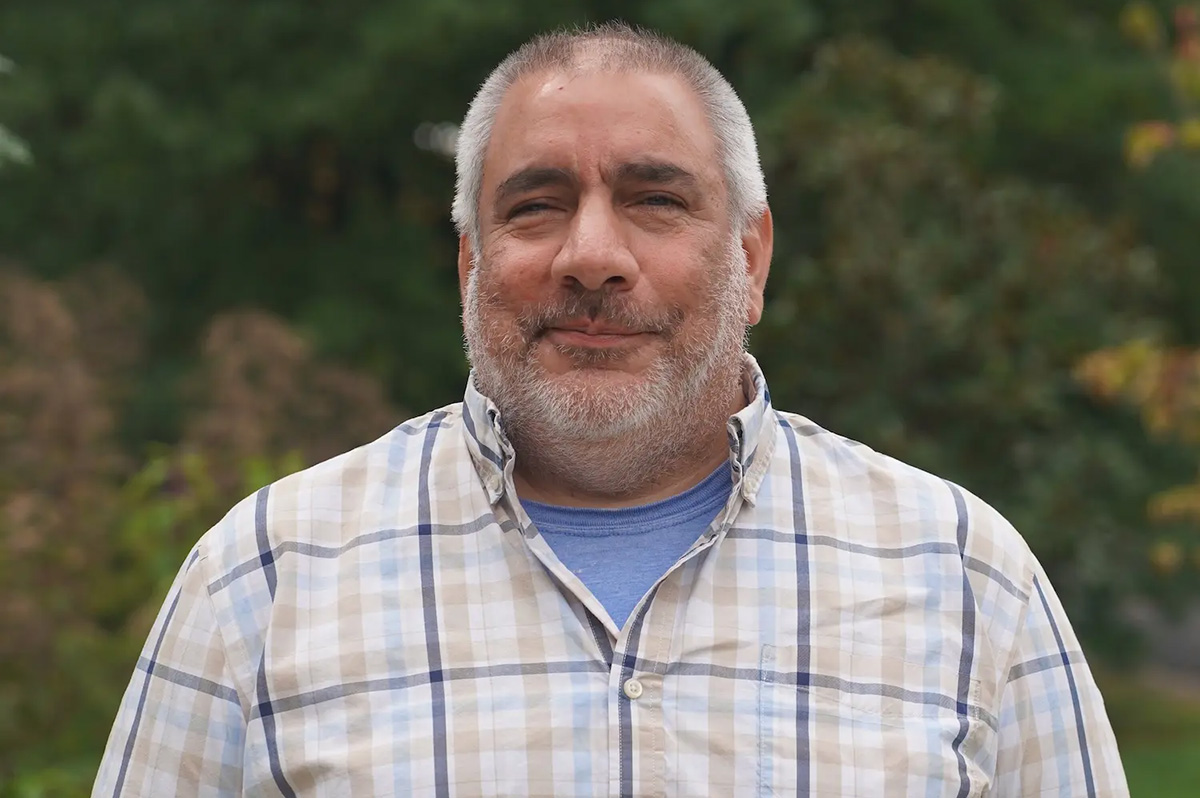
Congratulations to Paul Marengo who has been appointed the new executive director of the Equality Chamber of Commerce.
The Equality Chamber of Commerce is dedicated to advancing economic opportunities, business growth, and advocacy for LGBTQ+ entrepreneurs, professionals, and allies. Through networking, education, and community engagement, the Chamber works to create a thriving and inclusive business environment for all.
On behalf of the Chamber, Edmund Morris said, “We are thrilled to welcome Paul Marengo as executive director. His passion, vision, and dedication to fostering inclusive business environments make him the ideal leader to guide the Chamber into its next phase of growth and success.”
Marengo has been a nonprofit fundraising executive for more than 30 years. He is the founder and CEO of Promethean Fundraising, a grassroots consulting firm that provides assistance, tools, and empowers emerging nonprofits to become competitive fundraisers. His clients have included The Chamber, Ragtag Film Society, and The Cherry Fund. He has served as a grant reviewer for the Maryland State Arts Commission, Virginia Commission for the Arts, DC Commission on the Arts and Humanities, and the National Endowment for the Arts.
District of Columbia
Nearly 6,000 turn out for Pride Night Out at the Nationals
Gay Men’s Chorus sings National Anthem

“Just shy of” 6,000 people purchased tickets for the Wednesday, June 24, 21st annual Pride Night Out at the Washington Nationals baseball stadium, which the Nationals said is the longest running LGBTQ Pride event in Major League Baseball, according to a Nationals spokesperson.
The event was organized with the Nationals by Team D.C., the local LGBTQ sports group that organizes similar Pride Nights for other professional D.C. area sports teams.
“It was a good time had by all as the Nationals celebrated the LGBTQ+ community during the Nationals 21st Pride Night Out, presented by Team D.C.” the Nationals said in a statement.
Nationals spokesperson Erica George said the overall game attendance was 27,200.
Similar to recent past years, the Gay Men’s Chorus of Washington sung the National Anthem at the start of the game, drawing loud cheers from people throughout the stadium.
The Nationals lost the game to the Philadelphia Phillies by a score of 5-4. Although most of the LGBTQ attendees of the event, held in the right-field mezzanine section of the stadium, were cheering for the Nationals, a sizeable number also cheered for the Phillies.
Miguel Ayala, one of Team D.C.’s lead organizers, said he noticed fans displaying Pride flags and recognized LGBTQ people in all parts of the stadium, indicating significantly more LGBTQ people and their supporters attended the game beyond the close to 6,000 or more who purchased the specific Pride Night Out tickets.
“It was a great excitement last night,” he told the Washington Blade on the day following the event. “I saw a lot of big crowds of our people, I saw everybody I can think of in the community. And it was really great to see the turnout.”
Also, like in previous years, Team D.C. along with the Nationals helped to organize a pre-game show on the large concourse platform area next to the stadium seating area involving a drag show led by local drag performer Shi-Queeta Lee.
“During pregame ceremonies, the Nationals Pride employee resource group was recognized on the field,” the statement released by the Nationals says. “Dr. Demetre Daskalakis, a physician and public health leader who has had a profound impact on the LGBTQ+ community and those living with or vulnerable to HIV, threw out the ceremonial first pitch as the guest of Team D.C.,” the statement says.
It adds that Team D.C.’s scholarship recipient Spencer Doll made the ceremonial call to “Play Ball.”
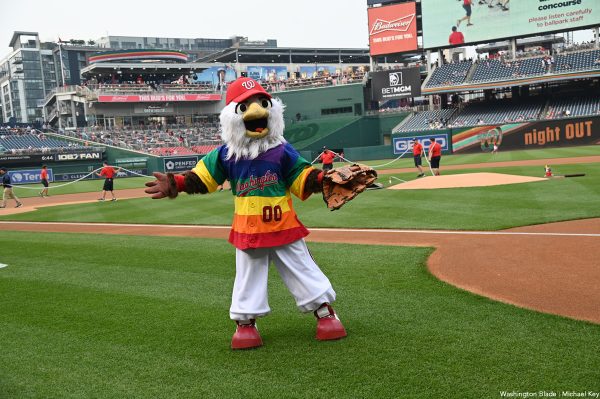
As if all that were not enough, a Nationals employee who entertains during the Nationals pre-game shows on the field dressed as a giant eagle named “Screech” wearing an eagle’s head mask appeared in the seating area where the Pride Night Out crowd was seated and mingled with the LGBTQ fans, many of whom posed for photos with Screech.
District of Columbia
Washington Blade names new publisher
Longtime ad exec Brian Pitts to assume role from Lynne Brown

The Washington Blade announced this week that its longtime publisher, Lynne Brown, who has worked at the publication for nearly 40 years, is retiring from her day-to-day duties.
Blade co-owner and longtime advertising executive Brian Pitts will assume the role of publisher effective June 26.
Pitts, 46, is a native of Fredericksburg, Va. In 2004, he moved to Washington, D.C., from Rehoboth Beach, Del., to work at the Blade as a 24-year-old sales executive. Pitts, along with Brown and Blade Editor Kevin Naff have owned the Blade since 2009. Pitts has served as the Blade’s lead sales executive since then.
“We’ve been through a lot over the last 17 years, including a recession and a pandemic,” said Pitts. “Lynne has been a steady hand throughout and I’m excited to take the reins and help steer the Blade into its next chapter.”
Brown will assume the title of publisher emerita and remain a part owner of the Washington Blade and Los Angeles Blade and contribute to the business via special projects.
As for what’s next, she said, “I will take the summer to regroup. I have one more LGBTQ community project in mind, and a few personal goals to check off the list. I am a Washingtonian. I will continue to live, work, and love here in D.C. Of course every Friday morning, I will grab a cup of coffee and read the Blade.”
Asked what advice she has for Pitts as he takes over the publisher’s job, Brown replied, “Brian is going to be great. He has all the skills needed to run this business. He also has a deep, silent passion for the Blade. My only advice: Slow and steady wins the race.”
Pitts said his primary goal as publisher is to ensure the Blade continues its mission as America’s LGBTQ news source.
“Another goal is to reach a younger audience and to include an educational component,” he added. “Some younger community members may be newer to the Blade and less familiar with LGBTQ history. Recently, we published a special commemorative magazine to coincide with America 250, chronicling LGBTQ history and contributions to U.S. culture. It’s so important not to let our history get erased and to remember where we came from and to work toward where we want to go.”
He described the biggest challenge to queer media as the Trump administration’s attacks on DEI.
“We have companies that have advertised with us for years who are now afraid of the potential consequences,” he said.
Brown joined the Blade in 1987. She was named publisher in 2007 by previous owner Window Media. In 2009, Window Media filed for bankruptcy; shortly after, Brown, Naff, and Pitts acquired the Blade’s assets from the bankruptcy court and relaunched the brand with Brown as publisher.
She said the period after the bankruptcy became her biggest challenge as publisher.
“The crisis that birthed Brown Naff Pitts Omnimedia kept me overly focused on millions of details,” she recalls. “My greatest personal challenge was delegating and letting go of details. Trusting staff with their strengths and skills to do their jobs was slow to come. It has proved to be most rewarding. Building the right team — knowing the people you work with are committed, professional, and honest — is a great thing.”
Pitts described the bankruptcy and rebirth of the Blade in 2009 as his proudest moment with the company.
“Working at the paper has been great, but becoming a co-owner was a dream come true,” he said.
Naff praised both of his colleagues.
“Lynne has been a rock, helping us navigate financial crises and a pandemic. The Blade wouldn’t have survived without her dedication,” he said. “She is the publisher every editor would want. Brian has terrific instincts, a passion for the Blade’s important mission, and an eye on growth. I am proud to call both of them friends and mentors and look forward to the next chapter.”
Asked why LGBTQ media are still relevant, Brown cited the recent erosion of queer rights as evidence that the Blade’s work remains important.
“The Blade helps fight invisibility and isolation,” she said. “We may have rights today, but we have seen rights eroded or erased. The Blade reports on those rights authentically and accurately and serves as a communication tool and a historian for the community.”
Pitts added, “While mainstream media may cover LGBTQ+ issues, no one covers them quite like us. These are our community’s stories and voices and this is your news source.”
The Blade will host a happy hour event later this summer where the community can meet Pitts and thank Brown for her decades of service.

Comings & Goings

‘Leviticus’ demonizes homophobia for gripping queer horror yarn

Calendar: June 26-July 2

Orioles take on Nats for Pride Night

My boyfriend is almost perfect

Abelardo de la Espriella elected Colombia’s next president

Capital Pride draws tens of thousands to D.C.

British Prime Minister Keir Starmer to resign

PHOTOS: Capital Pride Festival and Concert