Movies
Sacrificing self
New documentary profiles gay Naval Academy alumni
‘Out of Annapolis’
Oct. 22 at 9:30 p.m.
U.S. Naval Memorial Theatre
701 Pennsylvania Ave., N.W.
$15
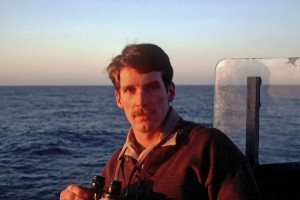
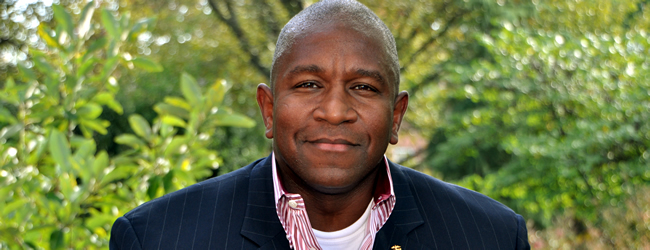
Director Steve Clark Hall during his service days in 1982 off the coast of Connecticut. (Photo courtesy of the filmmaker)
Baltimore resident Frank McNeil remembers with a chuckle some of the tricks of the trade he and his Marine Corps buddies — the few who were out to each other — used to keep handy during their years at North Carolina’s Marine Corps Base Camp Lejeune where he was stationed in the ’80s.
There was a gay bar in nearby Jacksonville, N.C., ironically dubbed Secrets. But partying there was too dangerous because military police would routinely troll the Secrets parking lot for cars with military stickers, trace the owners and confront them.
McNeil wormed his way out of getting busted a few times — enough to learn Secrets was too close to home to patronize.
“‘So, Corp. McNeil, why was your car parked at a gay bar?'” McNeil remembers the conversation unfolding. “‘Uhhh, I loaned it to a friend.’ You just learned not to go out in Jacksonville, most of us went out in Wilmington, which was like an hour away. So you could go out and have fun but your guard was up, or at least mine was.”
McNeil left the military in 1991, before “Don’t’ Ask, Don’t Tell” was enacted. His story and 10 others are told in the new film “Out of Annapolis,” a documentary that will be screened as half of a double bill at the U.S. Naval Memorial Theatre in Washington Oct. 22. It’s one of three films being screened this month as a mini Reel Affirmations festival as the LGBT film marathon has moved its usual lineup from October to April.
Director Steve Clark Hall, a San Francisco Navy vet whose own story is shared in the film, says he was inspired to make the documentary because he was tired of seeing gays misrepresented.
“I’m just trying to put a real face on who we are,” Hall says. “Everything we see so misrepresents us, so we started with a website three-and-a-half years ago. Who are these people? You know, gays are always assumed to be these other people. Not people we know. Not who we are, but then all of a sudden it’s like, ‘Oh, gays are my good friends or my neighbors.'”
Hall, who spent 20 years in the Navy, says he was “about as out as one could be without having gay tattooed on my forehead. I didn’t raise my hand and say, ‘I’m gay, kick me out.’ I think it wasn’t much of a problem for me because I was always a team player. Always an asset.”
McNeil had an especially rough time keeping his personal and professional life in balance. In those pre-“Don’t Ask” years, he only confided in a “very select” group of friends about his sexual orientation. His late partner, Chris Duncan, was battling AIDS, a factor in McNeil’s eventual resignation.
“It brought a lot of mixed feelings because I really loved what I was doing, but you just couldn’t share completely,” he says. “You couldn’t have your partner’s picture out. You had to change your pronouns. … There was a sense of dismay that you couldn’t quite be honest with the people you were serving.”
“Out of Annapolis” started in the summer of 2008 as an undertaking of the United States Naval Academy OUT — a group of LGBT U.S. Naval Academy alumni and their supporters. Hall, a novice filmmaker, says the project, which included a study of the experiences of gay alumni, aims to educate the public about the experiences of gay service members before and during “Don’t Ask, Don’t Tell.” Participants were selected to give a good cross-representation of experiences. About 300 participated in the study, 75 were interviewed and 11 were chosen for the film.
“It was tough to pare it down,” Hall says. “We had some great stories we had to turn away because it would have over-represented a certain group.”
The movie debuted in New York in June and has been making the rounds of LGBT film festivals since. Hall and five others, including McNeil, will be at the D.C. screening, its local premiere.
“It’s very powerful,” says Larry Guillemette, Reel Affirmations festival chair. “I think it will resonate a great deal given the defeat our community just experienced on the ‘Don’t Ask, Don’t Tell’ legislation. I think it will hopefully galvanize people to get more involved.”
Perhaps ironically, Hall didn’t conceive the project as an anti-“Don’t Ask” manifesto. The policy is hardly mentioned in the film.
“Some of it is just chronology,” he says. “Some of the people we profiled served before the policy began. But the film interestingly doesn’t sit there and try to make an argument, but in some ways just hearing the stories makes it the greatest argument against ‘Don’t Ask, Don’t Tell’ because people can see what it was really like trying to live under the law. We were forced to be two different people and you just can’t be.”
PHOTO: Frank McNeil at his home in Baltimore (Blade photo by Michael Key)



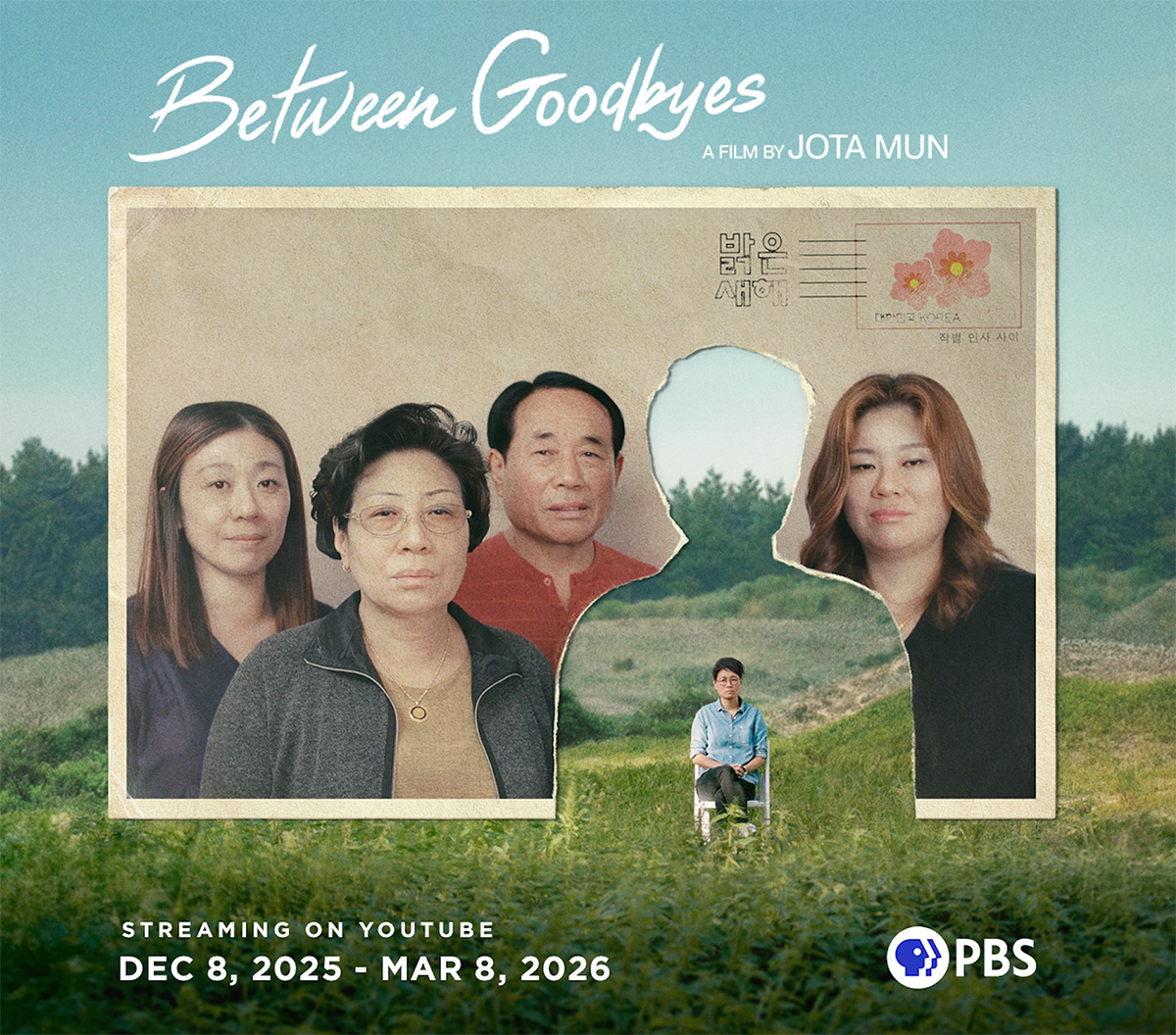
What does longing for your child look like? What happens when they resurface in front of you, when that rift was once an immeasurable open sea — a searing pain that silently hollowed you out for decades? For the child wrenched away by circumstance and thrown into the purgatory of always feeling in-between: in between home, in between being a whole person, in between who you could have been and who you are now — what does it mean to become and belong?
In filmmaker Jota Mun’s documentary “Between Goodbyes”, the fragmented yearning for home, family and identity are woven together into a tremendous and at times dream-like contemplation of the self, focused on various family members set adrift by a deceitful international adoption machine.
The story is focused on Mieke Murkes, a queer Korean adoptee who grew up in the rural village of Vaassen in the Netherlands. Shortly after her birth in 1982, she was raised by Willy, a devout evangelical Christian woman. But the story does not begin with Mieke in Vaassen. It begins with Okgyun, her original mother, walking through an ephemeral meadow as she makes her way to a shoreline. This is our first point of loss.
It is important to understand how the stories of Okgyun and Mieke exist. In “Between Goodbyes”, we see a frustrating glimpse into the cultural and political forces that created this separation. Since 1955, 200,000 children have been adopted from South Korea, and just three years ago, several of these adoptees found that their documents had been falsified. Murkes would sift through her own papers in “Between Goodbyes”, noting their dull and rote descriptions of her physical appearance and health. “The paperwork is as if you’re buying a new car,” Murkes says.
Written nearby: “Both parents are unknown,” a falsehood that leaves the family breathless. It is a gut punch.
This March, a South Korean governmental agency admitted that it had violated the rights of adoptees, but an investigation that began in 2022 at the behest of over 350 Korean adoptees has been halted. Whether or not retribution can ever be paid is up in the air, but the reeling grief and complicated self-reckoning many of these adoptees and their families face are rendered and expressed with deep tenderness in Mun’s documentary. “I did not know how to fit the Korean part of me in there,” Murkes said.
When Okgyun was pregnant with Mieke, she was also raising three other daughters: Mijin, Mikyung and Taekyung. The population was booming, and mothers like herself were being shamed for continuing to have children. Considering abortion, Okgyun recounts a midwife who convinced her not to go through with it — that if the child were a boy, she should keep him. If it turned out to be a girl, she could give her away to live “a good life” in the U.S. “Men are always positioned above women,” Okgyun said. “I always hated that.”
After Mieke was born, Okgyun’s mother-in-law told her to give her away. “She was gone before I saw her face,” Okgyun said. “I let her go.” Her guilt tightens her throat, trembles in her voice. “I dreamed of Mieke a lot. I can’t tell you how many times,” Okgyun said. “Dreaming and forgetting, dreaming, and forgetting. The thought that kept me going is that one day I can find Mieke.”
What ensued was a several years-long search. Kwangho, Mieke’s original father, pleaded with an adoption agency for any leads about Mieke. They denied him several times and his desperation only grew. “I had to find her to be at peace before I die,” he said.
Meanwhile, Mieke’s own grief and confusion were compounding. When she was beginning to discover her queerness, she was deeply ingrained in local religious spaces. What made her feel free, the church treated as an aberration — as behavior that resulted from loss.
When she would eventually meet her original family, they, too, had trouble processing her queer identity and masculine presentation. To them, queerness was “acquired” from being raised in a foreign land. With time, they grew to embrace Mieke and her partner, Marit, even as misunderstandings arose. Of this, Mieke’s conflictedness is explored. Gay rights are more advanced and accepted in the Netherlands than in South Korea, but this does not mean contending with her queerness would have been easy with her adoptive mother, Willy. “It probably would have disappointed her a lot,” Mieke tearfully revealed.
Mieke’s stepping in between knowing and unknowing is reminiscent of Okgyun’s dreaming and forgetting — their grief and confusion move within them, replicating themselves over and over again. “Between Goodbyes” dives deeply into this in order to offer a portrait of healing: of its complications and the necessity of community support to achieve this.
Mun discusses the film with the Los Angeles Blade, diving into how reunification between adoptees and original family members is, in many ways, made nearly impossible by factors like language and cultural barriers enforced and held tightly in place by the international adoption system. This film illustrates a break in this narrative and the mighty efforts behind it all.
A broadcast version of “Between Goodbyes” is now available to stream on PBS. See below for more information.
Can you tell me about the inception of making “Between Goodbyes”? Have you always wanted to tell a story about international Korean adoption from a queer perspective?
As a queer Korean adoptee myself, [there are] so many intersections that I haven’t quite seen on screen before. So I was always really excited about making something about my community. And then I’d say, in 2017, is around when I started getting closer to zeroing in on the idea. I think part of it was through befriending Mieke and hearing her parents’ story. Hearing about their efforts really blew my mind.
So much of the standard narrative is that adoptees initiate the search. So even before meeting [Okgyun and Kwangho], it just felt like it spoke so loudly of not only their character, but a piece of the puzzle that I had never considered — that they could be longing for us. And I think as an adoptee, you always wonder what [your original parents] would think. So it’s very noticeable that we almost don’t ever hear from them directly. Even in narrative stories of adoption, they’re usually deleted, or they’re written in a really flat way that feels like they’re serving the plot. I’ve never seen a depiction of birth mothers in particular who are questioning their own circumstances or feel angry about it.
There’s a lot of nuance given to all of the different people that we see in the story. The pain is layered and deep, and we don’t just view it from one perspective. What was it like having to portray this hurt, when many adoption stories typically focus solely on the adoptee’s emotional and personal journey?
It’s so unique through each lens, even though it’s the same pain. Like her sisters — of course, it’s going to affect them. Even if she never said anything, they must have felt it. It just ripples out to everyone and keeps expanding.
Originally, it was focused on Mieke, because that’s who I had the most access to, and she’s the closest to me in terms of general identity markers. So in my mind, I felt more confident that I could tell her story in a nuanced way. But what about Okgyun? I was hitting a similar barrier of communication that Mieke had hit. That’s part of why our main producer, Zoe Sua Cho, was so essential in conveying more about Okygun and the original family’s side of the story.
When I was in the early stages of developing the film, there was a quote that I felt was really inspirational: “In our hurting, we did not realize that we were stolen from each other” (by SN Désirée Cha from Outsiders Within Writing on Transracial Adoption.) The same quote came back to me in the edit and helped us find a narrative structure that went beyond just one person’s perspective.
What if the main character is the collective trauma, a singular event that causes the family to splinter and suffer across decades? I wanted to explore how tempting it is in these moments of righteous anger at systemic problems to end up fighting with each other. I feel like they both had to mourn something that was so much bigger than any one family. Mieke’s adoption affected so many people that I almost wanted that to be the main character. How do we not get lost in that pain and still try to come back together? It’s too much to carry alone.
So the main character is not necessarily one person, but the issue that you’re trying to tackle throughout the story. It also makes me think about how the documentary itself, or the making of it, also participates in this community healing that I feel like was the focus of “Between Goodbyes”.
I hope it’s an important layer. Suffice to say I think I always deflect to name a singular main character. I wanted to show everyone’s point of view while of course highlighting especially Okgyun and Mieke.
What else can you share about your approach to filmmaking?
You know, I was on this wonderful panel earlier this year, hosted by A-DOC, and I kind of surprised myself in preparing for it. I realized, actually, I have a lot of strong beliefs on filmmaking ethics that I hope come through in the film. For example, I reject the genius artist myth. The fantasy that if an artist is talented enough, they get permission to treat everyone around them terribly. That exploitation and squeezing things out of people is the best way to make great art.
Instead, I want to believe that the sensitivity, the care, and emotional work I poured in is going to come shining through in the film. And I do think that’s part of why we witnessed so many intensely vulnerable moments that I couldn’t have predicted.
This emotional connection to the film is also, visually, represented in artistic and inventive ways. There are sequences interspersed throughout that feel dream-like and cinematic. Creatively, what was it like to structure and craft how you wanted those scenes to be, the weight that they carried, and why you wanted to represent them in that way?
Aw, thanks for saying so! I was clear from the beginning that I wanted certain moments in the film to look as cinematic and epically life-changing as they feel in real life. Because visually, sometimes these moments of heartbreak can look rather dull. The deep heartbreak of a farewell at the airport. What does it look like? It looks like two people hugging in a very normal-looking terminal. But that’s not what it feels like. It feels larger than life. So to me, every single one of the art [scenes] has a very literal symbolism in my mind.
I really enjoy the complexity given to the family, both through the artistic symbolism and through the different angles we get to view them in. When it comes to Mieke’s queer identity, there are varying levels of acceptance and also tension that co-exist. One of her sisters, Mikyung, skirts around terms and labels, instead saying Mieke is “like that,” and “I don’t know anyone like that.” There was this feeling that queerness is learned or acquired elsewhere — that Mieke “wouldn’t have turned out like that” if she had grown up with her original family in Korea.
I can’t be sure what they were implying but you know, I definitely didn’t want to fall into a common trope of seeing Western values as being so liberal and accepting and framing all other cultures as homophobic. I want to be clear that there is a queer community in Seoul. It’s not the same as Amsterdam, of course, but it does exist.
That’s part of why it was important for me to include Mieke mentioned what she thinks her Dutch mom would have thought — just to clarify that homophobes are everywhere. There are plenty of them here in the West as well. Mieke’s Dutch parents were Evangelist Christians. So it’s not like everyone in the West is free to be a lesbian, you know?
Another moment that struck me in the film was a moment where we, as the audience, get to see you clearly. In this scene, we see you and Mieke on a rooftop, and you’re consoling her as she’s trying to prepare for a difficult conversation with her original mother, Okgyun. Did you have to find a balance in terms of being the director of this film and being Mieke’s friend?
It was really important to me to show friendship and how much that can help you along the journey. You think that for her to emotionally process things, it would have to be with her mom. But that rooftop conversation felt so transformative in itself. And then what ended up being the kind of mirror scene to that was Okgyun talking to Ruth [a fellow original mother]. She needed a buddy, too. How many times in life are we like: the opposing party doesn’t need to get it, but if my friend just could — that would give me so much relief and patience to enter the actual conversation with the person I’m upset with.
Being so personally close to Mieke and her family meant that my film was about all people I loved and cared about. I think the documentary field comes from such a long history of an anthropological approach. It’s like, “I’ve helicoptered in, and I just met you, but I’m the expert artist.” I wish the ethos were the opposite; we need to care about everyone, from the participants to the crew. I don’t want the blood, sweat, and tears to come through on the screen. I hope that watching it makes people feel cloaked in tenderness and care.
I was so worried about everyone, probably too much. It’s such a weird thing to ask people to do, to be in a film, so I took that with a lot of responsibility. Be aware of the impact you’re having. I am having an effect on this family’s life. I almost wanted to be like: “Forget my art project.” This is about the rest of their lives as a family, and that’s more important. So it became a light on my path, trying to make decisions as best I could to have a positive impact on their relationship.
It almost made me question my ethics in a different direction. “Am I intervening too much?” And that’s a strange thing: I have to admit I exist. I’m not a fly on the wall. And I think that’s why the conversation on the roof was really the most vulnerable for me, because I was showing myself. I’ve actually been here the whole time, cheering them on or trying to diffuse tension. I set out to make a film about how hard it is to stay in reunion, but now I’ve realized I’ll be heartbroken if their reunion doesn’t last. So in many ways the film was really just a vehicle for my attempt at keeping us all connected across so many distances, and that’s my own emotional journey or connection to their story.
Mun plans to release the full-length film in 2026, along with deleted scenes and additional footage. Up-to-date information can be found on the film’s Instagram page.
Movies
A bad romance is brought to light in ‘300 Letters’
All is not as it seems on social media in gay ‘anti-romcom’
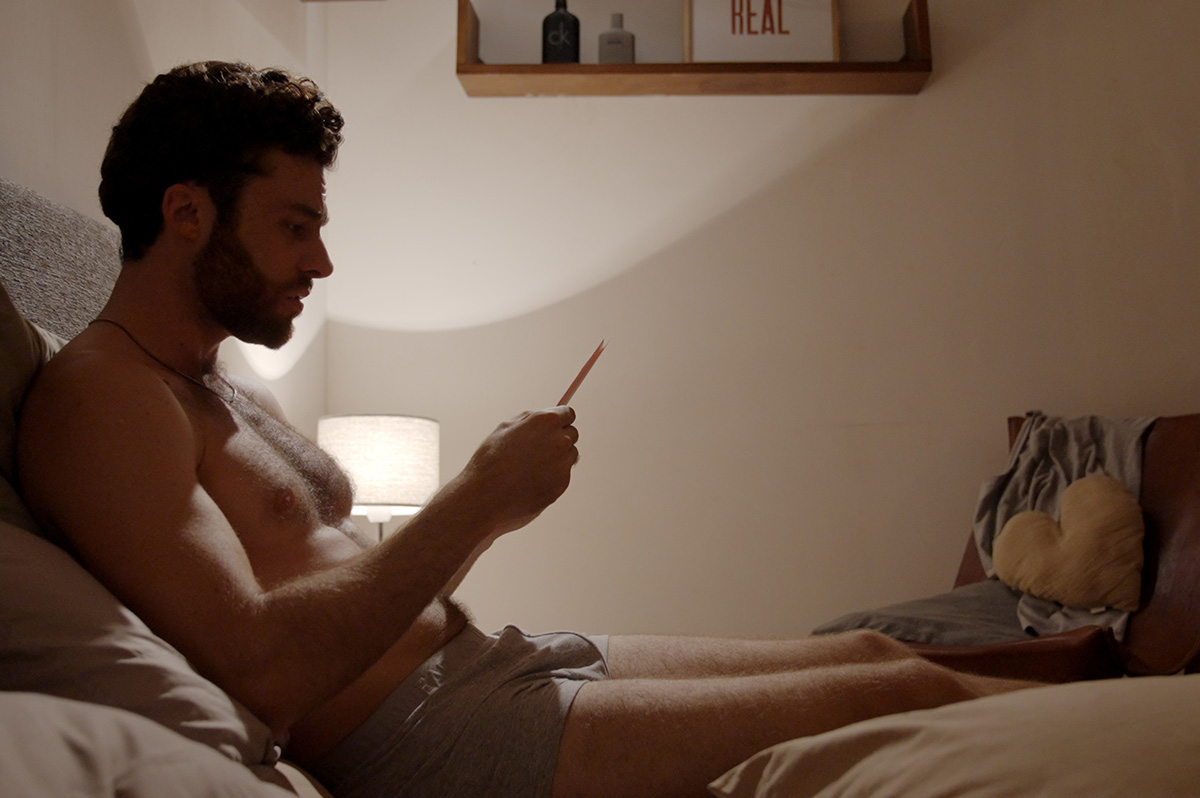
We’ve all known them. We’ve all watched those couples on our “friends” feed who seem to live a perfect life together; young, attractive, and devoted to each other, they present an aspirational image on social media, documenting their romance for friends, followers, and all the world to see. We can’t help but envy them, but at the same time, we can’t help feeling like it’s all just a little too good to be true – and inevitably, our instinct is eventually proven right by an abrupt and messy breakup that ends up being aired just as publicly as the rest of their relationship.
That’s the kind of couple that occupies the center of “300 Letters,” a self-described gay “anti-romcom” from Argentine filmmaker Lucas Santa Ana (“Memories of a Teenager”), which garnered acclaim on the festival circuit both in its native country and in the U.S. earlier this year. Now available for home viewing via Prime Video and other VOD platforms, it might just be the perfect alternative if you need a counterbalance to all the sugary sweet holiday romances that tend to dominate the seasonal content offerings.
It’s the saga of the one-year romance between Jero (Cristian Mariani) and Tom (Gastón Frías), an “opposites attract” couple who meet (on Grindr, of course), have great sex, and become a couple despite the differences in their status (Jero is a “masc”-presenting cryptocurrency bro, Tom a struggling queer radical poet) and their outlook on life; they move in together, building a relationship that – thanks to Jero’s popular social media profile – soon has its own fandom. Then, on their first anniversary together, Jero comes home from his Crossfit class with plans for the big celebration – only to find that Tom has packed up and moved out, ending their relationship and leaving behind only a box of letters as an explanation.
Jero, blindsided and devastated, is at first resistant to the letters, but – at the urging of his best friend Esteban (Bruno Giganti), who believes it will help him move on – he decides to read them; the story they tell reveals that his couplehood with Tom was never as he had perceived it to be. Built on sex and maintained through performative routine, there had been an underlying agenda hidden beneath it from the beginning. As he continues the painfully eye-opening process of learning the truth, he is forced to question his own honesty in the relationship – all while holding on to an attachment that may have been a performance all along.
We’ll admit it sounds like a gimmicky premise, and also kind of a downer, but there’s a sensibility behind “300 Letters” that somehow overcomes those pitfalls. Thanks to the conceit of learning the story through letters – sometimes out of order – we are gradually coaxed (along with Jero) toward our own conclusions and epiphanies as the details (and layers of complexity) become more clearly defined; it keeps us engaged through this gradual reveal, allowing time for the uncomfortable truths to sink in, and maintains a subtle sense of humor to keep the tone from being bogged down by melancholy.
According to Santa Ana, who also co-wrote the film with Gustavo Cabaña, all of that is by design.
“I love romantic comedies and breakup movies, and I wanted to combine them while also talking about something that interests me within the LGBT world,” the filmmaker says of his movie. “We always talk about the discrimination we suffer from outsiders, but we rarely think about the discrimination we inflict on ourselves due to the prejudices we carry. In ‘300 Letters,’ I wanted to explore this topic with a fun and relaxed perspective.”
It pays off better than you might expect. Thanks to the carefully balanced screenplay and the performances of its two leading men, it manages to point out the mismatched couple’s faults, flaws, and foibles, while also making them both relatable. In the end, we definitely get the message: the assumptions we have about other people shape our perceptions of them in ways to which we are usually blind, and the prejudices we carry can become self-fulfilling prophecies when we only see what we are looking for. More than that, it’s a refreshingly candid and mature exploration of relationships – and yes, gay relationships in particular – which reminds us that every love affair has meaning and value, and that even a failed one is worth having if it helps you learn how to do better next time.
On the flip side, it’s easy to imagine some viewers finding both characters tiresome. Jero is charming, and he’s definitely sexy, but he’s undeniably mired in a comfortably conventional queerness that makes us more inclined to sympathize with Tom – who is, himself, perhaps equally as judgmental in his assumptions about others, and who seemingly has no qualms about gaslighting his partner, but somehow still feels more “authentic” than Jero.
Fortunately, “300 Letters” is not the kind of movie that makes us choose between them. Instead, it invites us to see parts of ourselves in each of them, and in the end is really more about the “culture of presentation” – the obsession with projecting an appealing image, of seeking private validation through public display – than it is about holding up either of its protagonists for judgment. Instead, it leaves us to contemplate our own relationships in the light of self-awareness, never pulling the emotional punch that comes with loss and the grieving of a relationship, but somehow letting us see the wisdom that awaits us on the other side of it.
In the starring roles, Mariani and Frías are equally charismatic in their own distinctive way, capturing a chemistry that both “clicks” and doesn’t at the same time; Giganti also delivers a presence, subtly conveying his character’s unspoken role as the third point in a triangular relationship, There’s a deep complexity behind these characters that goes largely unspoken, but which emerges in their performances all the same; and if, in the end, the balance of our sympathies may have shifted more toward one of them than the other, that’s OK.
In Santa Ana’s deceptively breezy post-mortem of a break-up, that’s just how relationships go.
Movies
Holiday movie season off to a ‘Wicked’ good start
From Hallmark to horror, something for all tastes
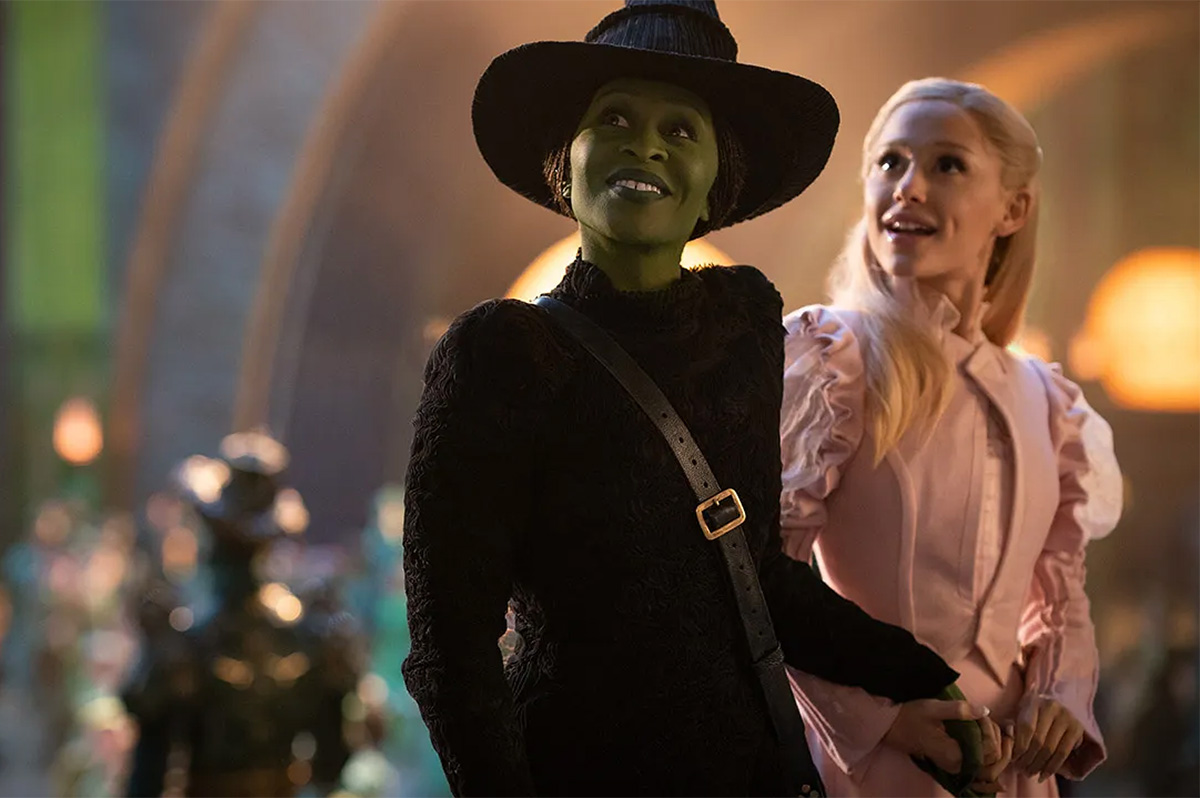
With Christmas just around the corner, it’s time to look ahead to the movies headed our way for December – and just like last year, the perfect film to launch it all is already here.
We’re talking, of course, of “Wicked: For Good” (now in theaters), the follow-up to last year’s smash adaptation of the hit Broadway musical that turns the witchy mythos of “The Wizard of Oz” inside out. A continuation rather than a sequel, director John M. Chu’s sumptuously crafted epic adapts the show’s second act to conclude the saga of green-skinned Elpheba – branded as a “wicked” witch by the authoritarian Wizard (Jeff Goldblum) for her rebellion against his suppression of Oz’s animal population – and her complicated relationship with “frenemy” Glinda (Ariana Grande-Butera), who is now serving as a sort of “double agent” by working to change the regime from within. As with the movie’s source material, there’s a definite “second act slump,” which Chu and co-screenwriters Winnie Holzman and Dana Fox attempt to counter with some minor retooling of the plot, incorporating more material derived from the Gregory Maguire novel that inspired it all, and adding a couple of new, original songs; it works, to a large degree, but the second half still lacks the bubbling sense of joy and excitement that made the first such an infectious hit.
Still, that’s just a quibble – and while this one may not leave us as giddy, it’s a worthy completion of the project, arguably improving the show by granting it levels of emotional resonance, political subtext, and overall depth that always seemed to be the missing element to the material. As for the cast (which also includes first out gay “sexiest man alive” Jonathan Bailey, alongside Michelle Yeoh, Marissa Bode, Ethan Slater, and Bowen Yang), they all continue to deliver powerhouse performances, breathing the kind of fully developed life into their fantastical characters that makes them all stick with us after the final high note is sung. So never mind the inevitable letdown that comes with the splitting of the story into two parts – taken as a whole, Chu’s “Wicked” saga is still a cinematic triumph that, frankly, very few of us expected it to be, and that’s hardly a reason to be disappointed.
As for the rest of the holiday season, there’s not much in the way of directly LGBTQ content coming to our screens – but there are still plenty of promising titles for us to look forward to.
Cutting to the chase for fans of the “Queer Christmas Romance” genre, we’re happy to report that Hallmark – the reigning champion of such fare – has two queer holiday entries lined up for you this season. First up is “A Keller Christmas Vacation” (Hallmark+, now streaming), a quirky tale of three adult siblings on a holiday cruise with their parents in Europe, each dealing with their own personal issues as they find “unexpected joy, romance, and family bonds” along the way – and gay heartthrob Jonathan Bennett, who’s pretty much become the poster boy for this genre, stars as one of them, with former Superman Brandon Routh providing extra eye candy for good measure. The second is “The Christmas Baby” (Hallmark, 12/21), starring Ali Liebert and Katherine Barrell as a lesbian couple who get a holiday surprise when they find a baby on their doorstep; they decide to adopt – which, naturally, requires them to negotiate the process of balancing their relationship and careers with the challenge of being new moms.
There’s also “The Christmas Writer” (Tello, now streaming) in which a lesbian romance author (Shelby Allison Brown) returns to her hometown in search of some Christmas spirit after the death of her mother, an ugly breakup, and a bad case of writer’s block. What she finds is a single lesbian mom (Callie Bussell), and flying sparks ensue.
For heartwarming Christmas cheer without the romcom trappings, there’s “Oh. What. Fun.” (Prime Video 12/3), which serves up Michelle Pfeiffer as a mom and grandma whose knack for putting on the perfect holiday gathering is taken for granted by her self-absorbed family – until they leave her behind on a family outing, forcing them to pull it together themselves. Pfeiffer leads an ensemble cast that includes co-stars like Eva Longoria, Felicity Jones, Denis Leary, Danielle Brooks, Jason Schwartzman, Maude Apatow, Joan Chen, and Chloë Grace Moretz as the queer daughter whose vegan girlfriend throws a last-minute wrench into the dinner menu. Sounds relatable!
Not holiday-themed but still a gift, “Merrily We Roll Along” (limited theaters 12/5) is the multiple-Tony-winning 2023 Broadway revival of Stephen Sondheim’s musical that tells the story – in reverse – of three high school BFFs as their relationship (and their ideals) shift across three decades. Featuring some of Sondheim’s most personal compositions, director Maria Friedman’s production of the show (starring Jonathan Groff, Daniel Radcliffe, and Lindsey Mendez) was immersively captured on film before closing in 2024 – and now, it’s on its way to movie screens as a special holiday treat for musical theatre lovers.
Likewise unseasonable and just as intriguing is “100 Nights of Hero” (limited theaters 12/5), an adaptation of the graphic novel by Isabel Greenberg (itself based on the classic folk tale “1,001 Nights”) in which a woman (Maika Monroe) is left alone by her neglectful husband (Amir El-Masry) for 100 nights at the estate of his seductive friend (Nicholas Galitzine, “Red, White, and Royal Blue”) as a test of her fidelity, with only her loyal maid (Emma Corrin, “The Crown”) as an ally. A sexy and stylish period fantasy with a queer-inlusive cast, it comes with buzzy acclaim from its Venice Film Fest debut, so we’ve definitely got this one on our list.
Kristen Stewart fans will be excited to see the debut of “The Chronology of Water” (limited theaters 12/5), the queer screen queen’s first film as producer, director, and co-writer. Adapted from Lidia Yuknavitch’s memoir, it stars Imogen Poots as a woman who overcomes personal trauma through her writing, and earned a lengthy standing ovation at its Cannes premiere earlier this year. The release is limited, with a wider expansion in early 2026 – but we’re confident it will be worth waiting for, if you have to.
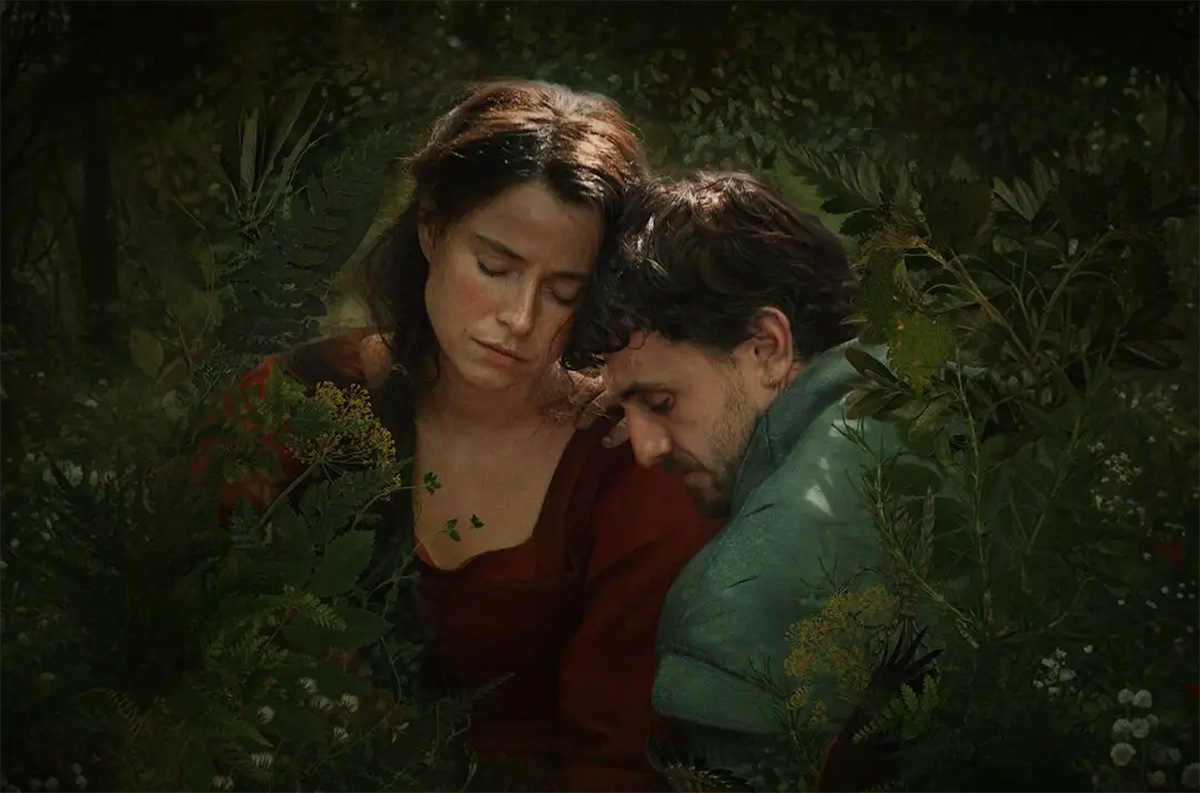
“Hamnet” (Theaters, 12/12), from Oscar-winning director Chloé Zhao, delivers a speculative slice of behind-the-scenes history with a period tearjerker about William Shakespeare (Paul Mescal) and his wife, Agnes (Jessie Buckley), as they struggle to cope with the death of their 11-year-old son – a real-life tragedy that inspired the playwright in his creation of “Hamlet.” Advance reviews have offered high praise for this one, especially regarding Buckley’s performance; but as his fans know, Mescal is no slouch either, and they’ll no doubt be standing in line for this one whether they’re interested in Shakespeare or not. Emily Watson and Joe Alwyn also star.
It’s been 15 years since iconic producer/director James L. Brooks has made a movie, but the “Terms of Endearment filmmaker is back this month with “Ella McCay” (theaters, 12/12), a political dramedy set in the Obama era, which follows a young Lieutenant Governor (Emma Mackey) as she prepares to take over after her boss and mentor (Albert Brooks) accepts a Cabinet position with the new administration. Also featuring popular and prolific queer ally Jamie Lee Curtis, alongside Jack Lowden, Kumail Nanjiani, Ayo Edebiri, and Woody Harrelson, it’s sure to be a highlight of the season – after all, besides all his movies, Brooks is the man responsible for “The Mary Tyler Moore Show” and “The Simpsons,” so the track record speaks for itself.
Daniel Craig returns for one more round as Master Detective Benoit Blanc in “Wake Up Dead Man: A Knives Out Mystery” (Netflix, 12/12), the third installment in filmmaker Rian Johnson’s series of all-star comedic “whodunnits” that both spoof and pay homage to the classic murder mystery genre defined by Agatha Christie and other authors of her era. This time, the eccentric gay detective investigates a murder within a devout church community centered around a charismatic priest (Josh Brolin), in what’s described as “his most dangerous case yet,” and the list of suspects includes Josh O’Connor, Glenn Close, Mila Kunis, Jeremy Renner, Kerry Washington, Andrew Scott, Cailee Spaeny, Daryl McCormack, and Thomas Haden Church. If it’s even half as diabolically clever as the first two films, it’s bound to be a fun ride.
Screen icon Kate Winslet makes her directorial debut (from a screenplay by her son, Joe Anders) with “Goodbye June” (limited theaters 12/12, Netflix 12/24), a Christmas-set British drama about a family that gathers around its ailing mother (Helen Mirren) as she prepares to face the end of her life on her own terms. Inspired by the personal experiences surrounding the death of Winslet’s mother from ovarian cancer, some audiences might find the subject matter too much of a downer for the holiday season, but a light-hearted and positive tone – along with an ensemble cast that includes Toni Collette, Johnny Flynn, Andrea Riseborough, Timothy Spall, and Winslet herself – is likely to take the edge off for those willing to include a touch of bittersweet flavor in their holiday season.
For those who love the immersive, imaginative spectacle of James Cameron’s “Avatar” franchise, “Avatar: Fire and Ash” (theaters, 12/19) makes its eagerly awaited debut this month, with a third installment that sees the Na’vi people enmeshed in further struggle with exploitative humans from Earth – which gives the phrase “it’s going to be a Blue Christmas” a whole new meaning. The cast includes returning players Sam Worthington, Zoe Saldaña, Stephen Lang, Sigourney Weaver, CCH Pounder, Giovanni Ribisi, Kate Winslet, Cliff Curtis, Edie Falco, Jemaine Clement, and multiple other veterans of the series.
Because sometimes you need a creepy psychological thriller to offset all the seasonal sweetness, versatile director Paul Feig’s “The Housemaid” (Theaters, 12/19) gives us Sydney Sweeney as in the title role, who takes a job as live-in servant to a wealthy woman (Amanda Seyfried) and her family, and slowly begins to discover the dark secrets lurking behind her new employers’ seemingly perfect life. Brandon Sklenar, Michele Morrone, and Elizabeth Perkins also star.
With “Father Mother Sister Brother” (limited theaters 12/24), acclaimed cult filmmaker Jim Jarmusch re-emerges with an anthology movie that follows three estranged family relationships in three different countries around the world. Its ensemble cast features Tom Waits, Adam Driver, Mayim Bialik, Charlotte Rampling, Cate Blanchett, Vicky Krieps, Sarah Greene, Luka Sabbat, and transgender actress Indya Moore (“Pose”) – and oh, by the way, it won the Golden Lion at this year’s Cannes Film Festival, so cinema enthusiasts are especially advised to consider it a “must-see” for their holiday season.
Finally, if you’re a member of the “Cult of Chalamet,” you’re probably already looking forward to “Marty Supreme” (theaters 12/25), in which the gifted young “It Boy” actor plays an ambitious ping pong player who “goes to hell and back” on his path to becoming a champion in the sport. Loosely based on the story of real-life table tennis champion Marty Reisman, it’s helmed by acclaimed director Josh Safdie (“Uncut Gems”) and co-stars Gwyneth Paltrow, Odessa A’zion, Kevin O’Leary, Tyler Okonma, Abel Ferrara, Sandra Bernhard, and Fran Drescher – but let’s face it, it’s going to be all about Timothée, and we’re perfectly fine with that.
With all those titles to choose from, we’re pretty confident you’ll have enough to keep you entertained until next year, when we can look forward to thrilling new releases like the much-anticipated “Pillion,” with Alexander Skarsgård – but we’ll have more on that for our next preview. For now, enjoy the seasonal offerings already on your plate.
Happy holidays!

PHOTOS: The Holiday Show

The best books to give this holiday season

Studio’s ‘Mother Play’ draws from lesbian playwright’s past

Choose U ambassadors share lived experiences with HIV, personal reflections, and insights

DOJ seeks to join lawsuit against Loudoun County over trans student in locker room

EXCLUSIVE: George Santos speaks out on prison, Trump pardon, and more

Victory Institute honors transgender Spanish senator in D.C.

The beginning of the fall of Trump

Markey reintroduces International Human Rights Act in Senate