Local
Md. House committee votes to advance marriage bill
Full House vote final step; governor has pledged support
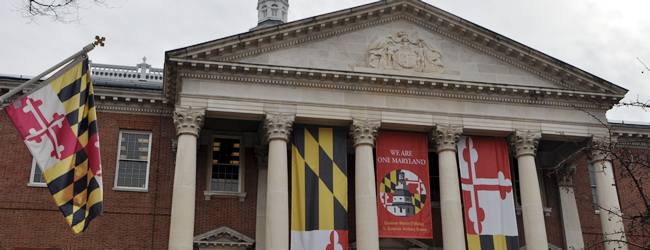
In a dramatic turn of events, the chair of a committee in the Maryland House of Delegates cast the deciding committee vote on Friday for a same-sex marriage bill, keeping the bill alive and allowing it to go the floor of the House for a final vote next week.
Del. Joseph Vallario (D-Prince George’s County), chair of the House Judiciary Committee, indicated earlier that he would likely not vote for the bill. But he cast a “yes” vote on Friday when it became known that another committee member and co-sponsor of the bill, whose support faltered earlier in the week, would vote against it.
The committee voted 12 to 10 to approve the bill and send it to the floor of the House of Delegates.
The vote to approve the bill came after the committee defeated several proposed amendments introduced by opponents aimed at weakening or gutting the bill, including a proposal for civil unions.
“Securing a favorable committee vote was an enormous obstacle – one that we were able to overcome together as thousands of marriage supporters called, emailed, and met with their delegates,” said Morgan Meneses-Sheets, executive director of the statewide LGBT group Equality Maryland.
“But I’m hearing from our elected officials that out-of-state opposition is flooding their offices with slanderous lies about gay and lesbian couples and their families like never before,” Meneses-Sheets said.
She called on LGBT Marylanders and their friends and supporters to redouble their efforts to contact their delegates to ask for their support in the final vote expected next week on the floor of the full House of Delegates.
Vallario’s vote in favor of the Civil Marriage Protection Act in committee on Friday became the deciding vote allowing the measure to pass after Del. Tiffany Alston (D-Prince George’s County), a co-sponsor of the bill, voted against it.
Alston was one of three Democratic co-sponsors of the bill whose support wavered earlier this week.
Alston and Del. Jill Carter (D-Baltimore City) forced Vallario to cancel a scheduled vote on the bill on Tuesday when they failed to show up for the voting session. Both said their initial intent was to pressure the committee and Democratic leaders in the House of Delegates to devote more attention to other bills they believe were equally as important as same-sex marriage.
Following meetings and phone calls with colleagues and constituents, the two agreed to show up for a committee voting session on Friday. Carter said she expected to vote for the bill. Alston, however, told the Baltimore Sun she was praying over how to vote, saying her religious beliefs made her uncomfortable despite her decision earlier in the year to become a co-sponsor of the bill.
Meanwhile, Del. Sam Arora (D-Montgomery County), another co-sponsor of the bill who pledged support for same-sex marriage in his election campaign last fall, stunned LGBT activists earlier in the week when he said he, too, was having strong reservations over the bill based on personal religious beliefs.
Political observers say support for same-sex marriage is strong in his solidly Democratic and liberal-leaning district in Montgomery County.
Arora released a statement Friday morning, shortly before the committee session, saying he had decided to vote for the bill in committee and on the House floor, with the expectation that voters would ultimately decide the issue in an expected referendum next year.
“I have heard from constituents, friends, and advocates from across the spectrum of views and have thought about the issue of same-sex marriage extensively,” he said in his statement.
“While I personally believe that Maryland should extend civil rights to same-sex couples through civil unions, I have come to the conclusion that this issue has such impact on the people of Maryland that they should have a direct say.”
Carter voted for the bill in committee. She has not said how she will vote when the measure reaches the full House next week.
Sources familiar with the committee said one of the proposed amendments called for dropping the same-sex marriage language and converting the legislation into a civil unions bill.
The marriage bill won approval last week in the Maryland Senate.
Supporters were cautiously optimistic that the razor-thin majority of delegates in the House of Delegates who committed to back the bill just a few weeks ago would hold firm and not buckle under a furious campaign to kill the bill by a coalition of conservative religious groups, including the Catholic Archdiocese of Maryland.
Arora’s initial statements that he might not vote for the bill drew a firestorm of protest from LGBT activists and others in Montgomery County, who noted that his pledge of support for the marriage bill played a role in their decision to support him and contribute money to his campaign for his House seat in last November’s election.
“We applaud the Maryland House of Delegates Judiciary Committee for ending attempts to hold our families hostage to political maneuvering,” said Joe Solmonese, president of the Human Rights Campaign, an LGBT advocacy group that’s lobbying for the Maryland marriage bill.
“Maryland is at the forefront in the fight for equality and will go down on the right side of history,” he said. “We ask the full House to swiftly move forward to bring full equality to Maryland families.”
Marc Solomon, national campaign director for the LGBT advocacy group Freedom to Marry, also praised the action of the committee but cautioned supporters to continue to push hard with lawmakers in the days before the final vote.
The National Organization for Marriage, which is leading efforts to defeat the bill, has said it would take immediate steps to place the same-sex marriage law before the voters in a referendum if it passes in the legislature and Gov. Martin O’Malley signs it, as he has said he would.
If opponents succeed in obtaining the required number of petition signatures, such a referendum would appear on the ballot in November 2012 in the midst of the U.S. presidential election campaign.




Virginia
Winsome Earle-Sears launches campaign against Va. marriage equality amendment
Former LG lost to Abigail Spanberger in 2025 gubernatorial race
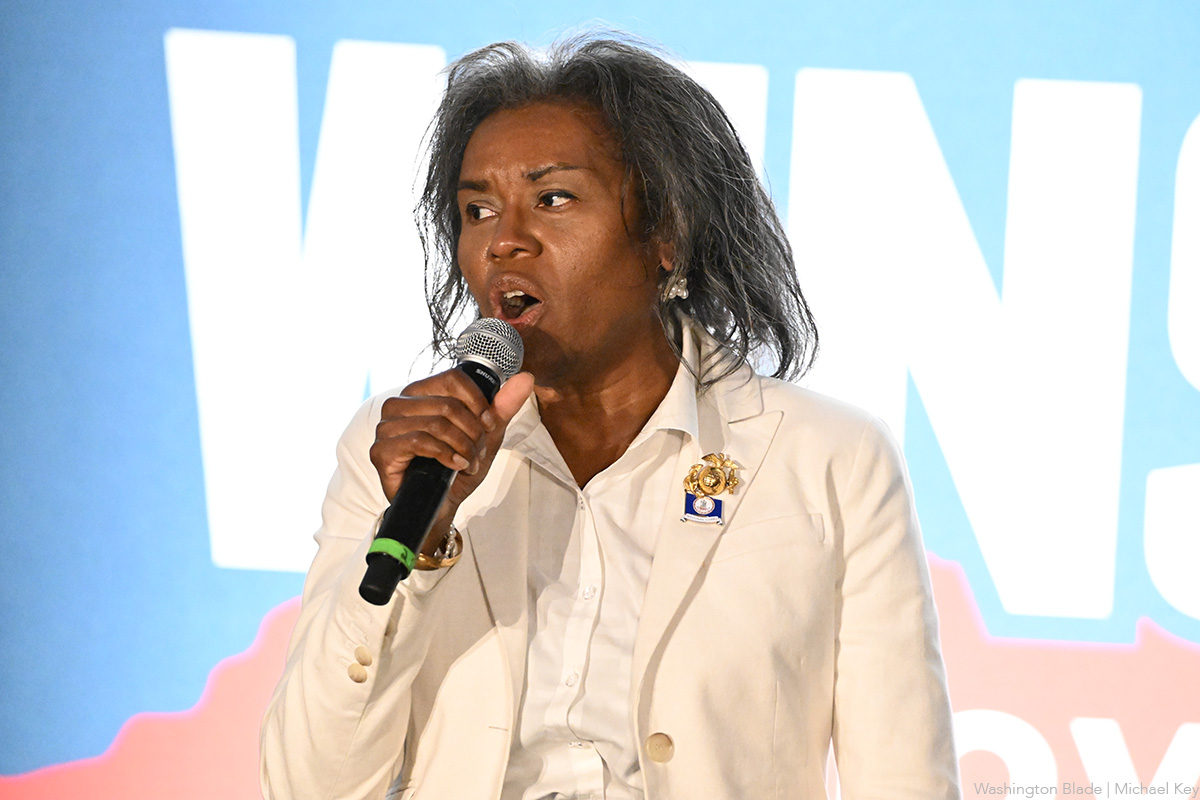
Less than a year after losing Virginia’s gubernatorial race, former Lt. Gov. Winsome Earle-Sears is campaigning across the state against constitutional amendments that would protect marriage equality and reproductive freedom.
She is launching a statewide “Life and Marriage Tour” ahead of November’s election.
Although same-sex couples can legally marry under the U.S. Supreme Court’s 2015 Obergefell v. Hodges decision, Virginia’s constitution still contains language that defines marriage as between one man and one woman. Supporters say removing the language would protect marriage equality should federal precedent change.
The original ban was written into the state constitution in 2006.
It has been hinted at in the past by Supreme Court Judge Clarence Thomas that he would consider revisiting Obergefell v. Hodges regarding contraception and marriage rights for same-sex couples. He stated this in his concurring opinion regarding the Dobbs v. Jackson ruling, which allows for state-level abortion bans.
Equality Virginia Executive Director Narissa Rahaman said removing the ban would bring the state’s constitution in line with existing law.
“20 years after banning marriage equality, it’s time for our commonwealth to fully complete our evolution — and finish the job on protecting marriage equality for all,” Rahaman said.
In an email to supporters, Earle-Sears said these amendments “raise serious concerns” and could alter principles about which Virginians care.
“That is why our efforts are focused not only on informing voters, but also encouraging them to carefully consider these proposals and vote NO on both amendments,” Earle-Sears said.
Virginia voters will consider three constitutional amendments this November.
Earle-Sears is campaigning for voters to reject two of them: the Virginia Remove Constitutional Same-Sex Marriage Ban Amendment and the Right to Reproductive Freedom Amendment.
A “Yes” vote on the Same-Sex Marriage Ban Amendment would include removing a provision that states marriage is between one man and one woman and prohibitng the state from denying a marriage license to two adults based on their sex, gender, or race, according to the Virginia Department of Elections.
In 2025, during debates against now Gov. Abigail Spanberger, Earle-Sears argued it is not discrimination to think that gay people should not be allowed to marry. She claims it conflicts with her faith.
According to ABC 8, in 2024 she wrote that she had a “moral opposition” to marriage equality, after former Gov. Glenn Youngkin, a Republican, signed a marriage equality bill that barred denying marriage licenses based on sex, gender, or race.
According to the Virginia Department of Elections, a “Yes” vote on the Reproductive Freedom amendment supports adding a section to the state constitution that would give Virginians the right to make and carry out decisions regarding reproductive healthcare, except in specific exemptions.
The Virginia Department of Elections wrote that if accepted, the amendment would allow the state government to pass laws to regulate abortion care in the third trimester of pregnancy, but require abortion care when it is medically needed to protect the life and health of the pregnant person or because the fetus is not viable.
During the 2025 election cycle, Earle-Sears was clear on her anti-abortion stance.
According to the Virginia Independent, she utilized campaign funds to donate to the Family Foundation of Virginia. The group is a faith-based, anti-abortion, and anti-in vitro fertilization non-profit.
The “Life and Marriage Tour” will include traveling throughout Virginia to speak with citizens, churches, community organizations, and local leaders. The exact locations have yet to be announced.
District of Columbia
D.C. Council approves increased funding for Mayor’s Office of LGBTQ Affairs
Increase attached to 2027 budget bill

The D.C. Council on July 14 gave final approval for the city’s fiscal year 2027 budget that includes an amendment calling for increasing the number and size of funding grants that the Mayor’s Office of LGBTQ Affairs provides for local organizations providing services for the LGBTQ community.
The amendment, called the “LGBTQ Community Grant Amendment Act of 2026,” was introduced earlier this year by D.C. Council member Zachary Parker (D-Ward 5), the Council’s only gay member.
The D.C. LGBTQ Budget Coalition called the Parker amendment “a historic measure that establishes the District’s most sustainable model for a vehicle for investing in LGBTQ communities.”
The Council approved the version of the FY 2027 budget bill with the attached Parker amendment in its first of two required votes on June 9. Shortly after voting unanimously to give final approval of an earlier version of the two-part budget measure on July 7 that includes the Parker amendment, the Council sent the bill to Mayor Muriel Bowser for her signature.
Bowser has expressed strong opposition to several provisions in the $22 billion budget measure passed by the Council that are unrelated to the Parker amendment regarding the Office of LGBTQ Affairs. The mayor has yet to say whether she will sign, veto, or choose not to sign the bill.
The latter option would allow the bill to become law if Congress does not choose to overturn it during its required 30-day legislative review period for all D.C. bills. Political observers believe the Council will vote to override a veto if Bowser chooses to veto the bill.
When contacted by the Washington Blade on July 22 to determine where the mayor stands on the budget bill, mayoral spokesperson Daniel Gleick said only, there was “no update on the budget just yet.”
Among other things, the Parker amendment calls for the Mayor’s Office of LGBTQ Affairs to issue a $980,000 grant in FY 2027 to a private, nonprofit organization in partnership with the office “for the purpose of supporting programs that promote the welfare of the lesbian, gay, bisexual, transgender, and questioning community.”
It would allocate $680,000 of that funding total from existing funds from the city’s community affairs grants program and calls for $200,000 in newly appropriated funds.
It says the organization selected would also initiate its own fundraising effort to expand the amount of funds beyond the amount the office would provide, enabling it to provide larger grants to a greater number of local LGBTQ organizations.
“The legislation arrives at a critical moment, as LGBTQ-serving organizations face unprecedented uncertainty,” the D.C. Budget Coalition said in its comment on the Parker amendment. “Growing demand for services is colliding with shrinking resources, federal attacks on LGBTQ programs, and ongoing threats to local funding streams,” the coalition’s statement says.
In what some observers have called a highly controversial action; the budget bill approved by the Council reverses and restores millions of dollars in budget cuts proposed by Bowser in the budget she submitted to the Council earlier this year.
Among other things, the Council’s budget preserves the current level of funding for housing vouchers, childcare, paid family leave, and other programs slated to be cut in the mayor’s proposed budget, according to a report by the Washington Post.
Bowser points out that the Council approved budget bill calls for using $150 million from the city’s reserve fund, which she and others have said could put the city in jeopardy in future years. The mayor has said the cuts were needed to prevent a major funding shortfall brought about by the action by Republicans in Congress to cut the city’s budget by over a billion dollars.
Rehoboth Beach
Craig Thier says experience, civility are key to Rehoboth’s future
Mayoral candidate cites finance background as key strength
(Editor’s note: This is the third installment in a three-part series profiling the candidates for mayor of Rehoboth Beach, Del.: Commissioners Suzanne Goode, Susan Stewart, and Craig Thier; a fourth candidate, William Raak, filed to join the race but has not responded to multiple Blade inquiries. Visit washingtonblade.com for previous installments.)
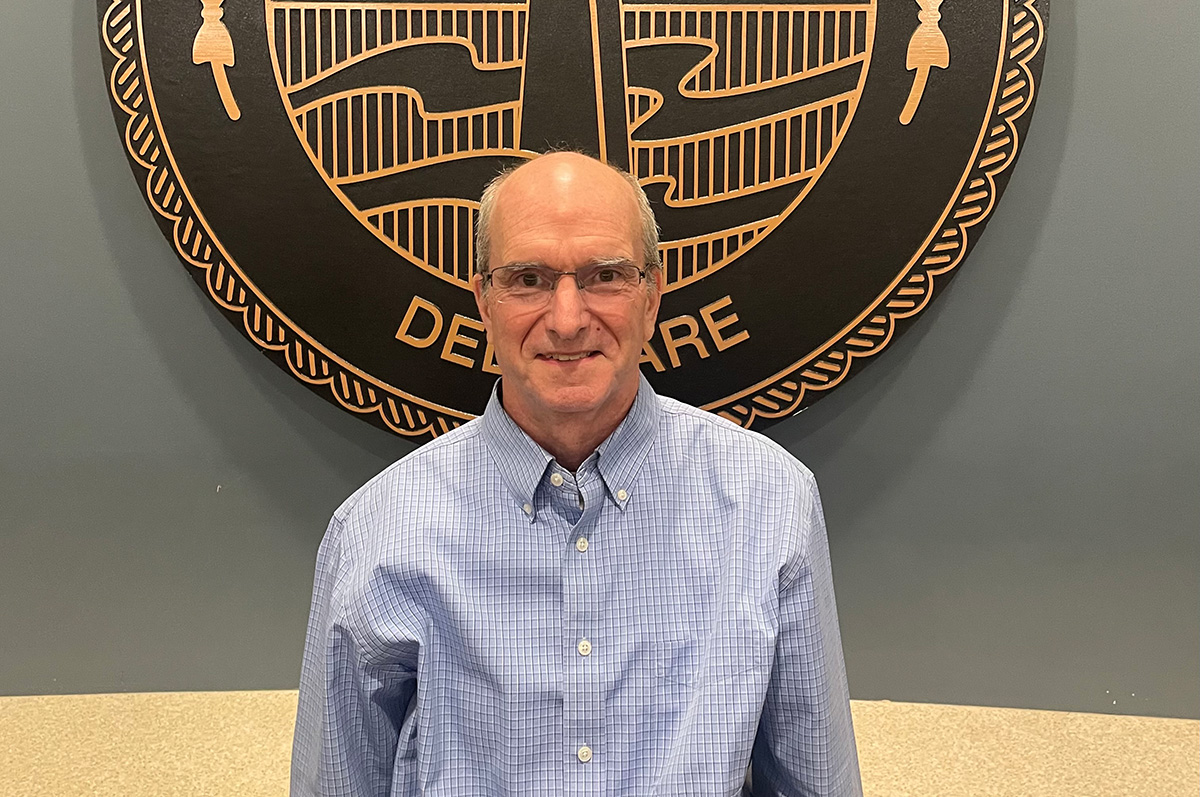
Rehoboth Beach City Commissioner Craig Thier says his experience in public service and finance has prepared him to lead the city as residents elect a new mayor on Aug. 8.
Thier, who has owned property in Rehoboth Beach since 2002 and has lived there full time for a little more than five years, said he first sought public office after becoming concerned about the city’s financial planning.
“A couple of years ago, when I decided to run, the city raised taxes and fees across the board unnecessarily. They had a broken budgeting process,” said Thier.
Elected as a city commissioner in August 2024, Thier draws on a background in corporate finance and consulting, He said he could improve the city’s budgeting practices.
“I felt that I could bring that experience in and help the city improve that broken budgeting process,” he said.
Thier said one of his accomplishments as commissioner has been helping transition the city from annual budgeting to long-term financial planning.
“Within the first year, I worked with the city administration to transition us from an annual budgeting process that was really broken to a multi-year planning process,” he said.
If elected mayor, Thier said his first priority would be improving relationships among members of the Board of Commissioners.
“First would be just civility. There is a lot of infighting among some of the commissioners,” said Thier.
He says that he wants to focus on “getting people to work together so that we can get back to the business of the city.”
Thier said disagreements are inevitable but believes they should be handled more respectfully.
“We have to return to civility. People need to respect each other, people need to respect the right of other individuals to express their thoughts and opinions,” he said.
“That lack of civility absolutely has impacted our ability to get the business of the city done.”
He also said meetings should remain focused on the agenda even when commissioners disagree.
“Everyone’s got to tone things down a little bit,” Thier said. “Just because we may not agree with someone’s position doesn’t mean that that position isn’t valid.”
He added that after discussions conclude, commissioners should be willing to accept the outcome.
“People need to be prepared to move on if they don’t have the support,” he said.
Thier pointed to his previous elected experience as another qualification for the mayor’s office.
“I spent 12 years on a school board, five years as president, and I’m finishing up my second year here [as commissioner]. I believe that I have far more experience than anyone else.”
“I’ve been able to accomplish things because of my experience, and I’ve been doing this a long time,” he added.
Thier also said maintaining Rehoboth Beach’s perfect score on the Human Rights Campaign’s Municipal Equality Index would remain a priority if he is elected.
“It is absolutely a priority for the city,” he said.
“I think it’s one of the great things about the city of Rehoboth Beach is the diversity that’s there, and that we’ve been a very welcoming community.”
Thier credited city staff for helping achieve the city’s perfect score and said he would continue working with LGBTQ+ organizations, including CAMP Rehoboth.
“I have relationships with these organizations. I would continue to foster these relationships,” he said. “It’s critical that we’re doing the things to maintain this perfect score.”
Thier also expressed support for the city’s partnership with Clear Space Theatre Company as it works toward constructing a permanent performing arts venue downtown.
“Clear Space has been part of the community for more than 20 years. I think they’re an important part of the community.”
He said the theater contributes to Rehoboth’s identity as a tourist destination.
“The tourists come to Rehoboth for the whole package: the beach, the boardwalk, our restaurants, our retailers, Clear Space. They’re an important part of that whole package.”
The election will take place on Aug. 8 from 10 a.m.-6 p.m. at the Rehoboth Beach Convention Center.

‘Into the Grey’ unites Cavill, Gyllenhaal for thrills and gay love

Winsome Earle-Sears launches campaign against Va. marriage equality amendment

Calendar: July 24-30

Pentagon says hormones make trans troops unfit but gives them to men

At Alliance Defending Freedom’s summit, church and state are one

Tickets on sale for chef Patrick O’Connell’s book launch event

Wanda Alston Foundation announces passing of founding executive director Brian Watson

In the middle of the Bible Belt, a summer camp lets trans kids exhale

Remembering Victoria Cruz, Stonewall veteran and beloved trans activist

Polish president vetoes same-sex relationship recognition bills
-

 a&e features4 days ago
Tickets on sale for chef Patrick O’Connell’s book launch event
-
District of Columbia5 days ago
Wanda Alston Foundation announces passing of founding executive director Brian Watson
-
North Carolina4 days ago
In the middle of the Bible Belt, a summer camp lets trans kids exhale
-
National4 days ago
Remembering Victoria Cruz, Stonewall veteran and beloved trans activist