Local
Tony Hunter assailant pleads guilty to new charges
Sentencing set for July 19


Robert Hannah. (Washington Blade file photo)
In exchange for the guilty plea, the U.S. Attorney’s office agreed to dismiss a third charge of simple assault against Hannah, which was filed in June in connection with the attempted threats charge.
Court papers show that the attempted threat and simple assault charges were classified as a domestic violence incident that D.C. police said involved Hannah allegedly using physical force to pull his girlfriend against her will into a street.
He faces a possible maximum sentence of six months in jail and a fine of up to $1,000 for each of the two charges to which he pleaded guilty. D.C. Superior Court Judge Jose Lopez, who presided over Thursday’s court hearing in which Hannah entered the guilty plea, scheduled a sentencing hearing for the case on July 19.
Gays and Lesbians Opposing Violence, a D.C. group, and residents of the Shaw neighborhood where Hannah lives have said they plan to file community impact statements with the court urging the judge to hand down a stringent sentence.
LGBT and community activists have been following Hannah’s involvement in the criminal justice system since he was released from jail in 2010 after serving a maximum six month sentence on a charge of misdemeanor simple assault in connection with the Hunter case.
In a highly controversial action, the U.S. Attorney’s office allowed Hannah to plead guilty to simple assault over an incident in which he admitted punching Hunter in the face after the two crossed paths on the street while Hunter and a friend were walking to a gay bar.
Hunter fell backwards into a fence before falling to the ground and hitting his head on the pavement, resulting in a brain injury that the city’s medical examiner said caused his death.
Hannah told police he hit Hunter in self-defense after Hunter allegedly touched his crotch and butt in a sexually suggestive way. Police said a witness backed up Hannah’s story. A friend of Hunter’s, who was also on the scene, told police Hunter never touched Hannah and that the attack against Hunter was unprovoked.
The U.S. Attorney’s office has said it was forced to lower the charge against Hannah from manslaughter to simple assault due to a number of developments in the case, including a report by the D.C. medical examiner that Hunter was intoxicated at the time of the incident and most likely fell on his head because he was drunk rather than because of the assault by Hannah. Hunter’s friend provided several conflicting versions of what happened, the U.S. Attorney’s office claimed, making him an unreliable witness.
GLOV officials have disputed these assertions, saying the U.S. Attorney’s office and D.C. police failed to adequately investigate the case as a likely gay-bashing incident. They said the U.S. Attorney’s office botched what activists said was Hannah’s use of the so-called “gay panic” defense, a defense that gay activists say is a bogus alibi to justify an anti-gay attack.




Baltimore
Popular Mount Vernon gay bar Leon’s to temporarily close after owner’s death
Ron Singer passed away on July 7
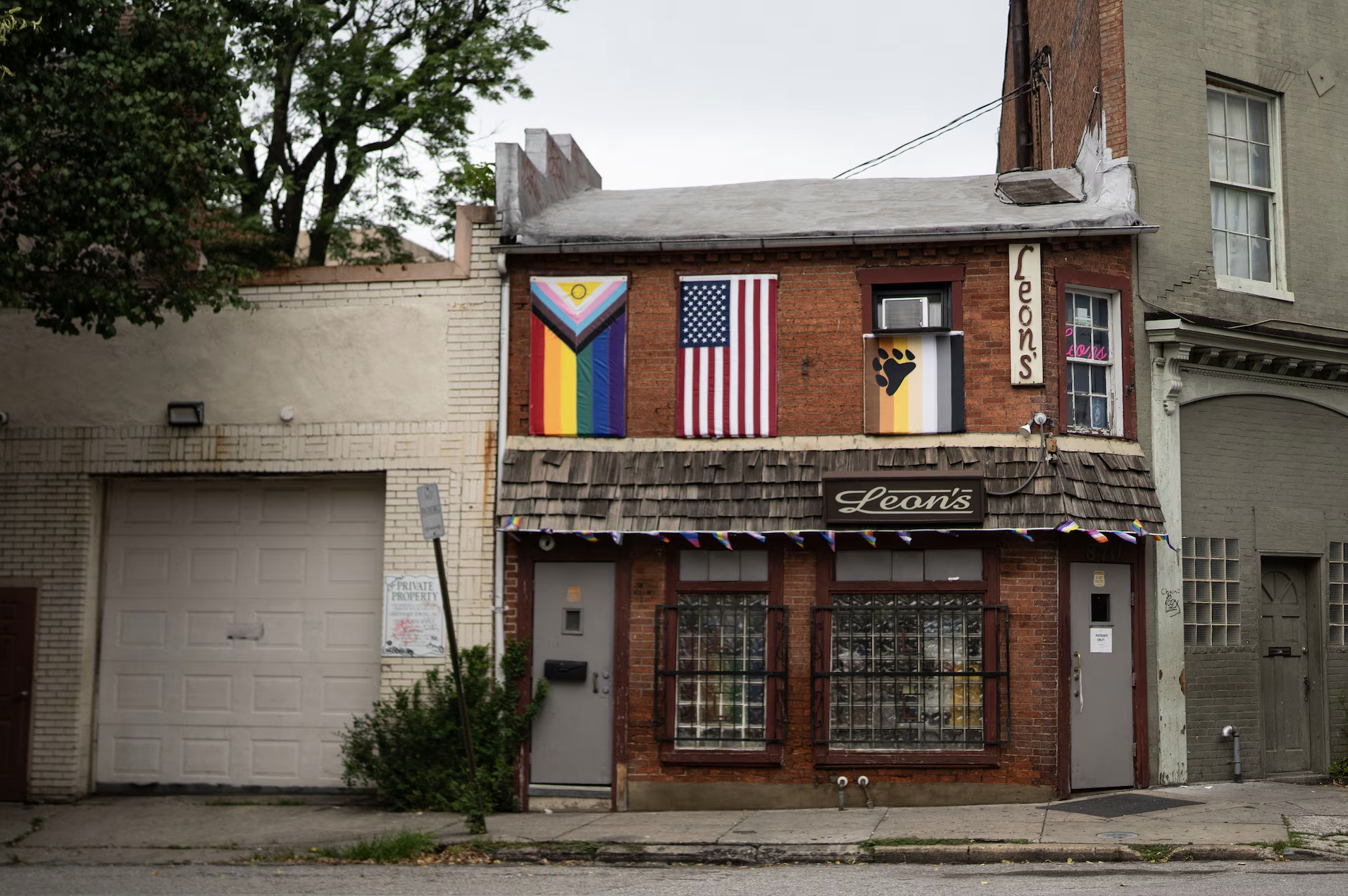
By WESLEY CASE | Leon’s Backroom, Baltimore’s oldest gay bar, temporarily shut down after service on Wednesday night, according to a post on the business’s Instagram page.
The announcement comes a little more than a week after the death of the Mount Vernon bar’s owner, Ron Singer, who died at 66 on July 7.
The rest of this article can be found on the Baltimore Banner’s website.

The Comings & Goings column is about sharing the professional successes of our community. We want to recognize those landing new jobs, new clients for their business, joining boards of organizations and other achievements. Please share your successes with us at [email protected].
Congratulations to Stuart Ortel and Scott Marker, and Dave Lyons and Rick Hardy, on the recent opening of their garden center on Route 1 in Rehoboth Beach, in the former Farmer Girl site. It is called Bay Laurel Home and Garden and debuted earlier this year. The four owners are all well known to the denizens of Rehoboth Beach.
Stuart and Scott have been active members of the Rehoboth Beach community since 1999. Stuart is a landscape architect, and has established relationships with many local folks in the building and landscape industry. When this opportunity for Bay Laurel Home & Garden presented itself, and they had the perfect team of people in place, he and Scott were committed to making it a reality. So, when Scott and Stuart introduced this opportunity to create a new garden center to Dave and Rick, they embraced the chance to cultivate a business where beautiful plants, inspiring home and garden products, and outstanding customer service come together. Dave and Rick knew about owning a business in Rehoboth as they previously owned Coho’s Market, where they discovered firsthand the value of serving their community, and the rewards of running a locally owned business.
The garden center launched with a refreshed brand identity, updated merchandising, and expanded product lines, all designed to create an inspiring and welcoming environment for your home. Bay Laurel Home & Garden offers a beautifully appointed garden center and curated home and gift shop.
The new center features a full nursery with annuals, perennials, shrubs, trees, and seasonal selections; a garden center offering pottery, fountains, and garden ornamentation, and essential tools and garden supplies. It has a garden shop featuring unique indoor/outdoor furnishings and accessories, and a gift shop featuring botanical and coastal style items for home and entertaining.
Rehoboth Beach
Celebrate Pride in Rehoboth Beach this weekend
‘A vital space for community, healing, and connection’
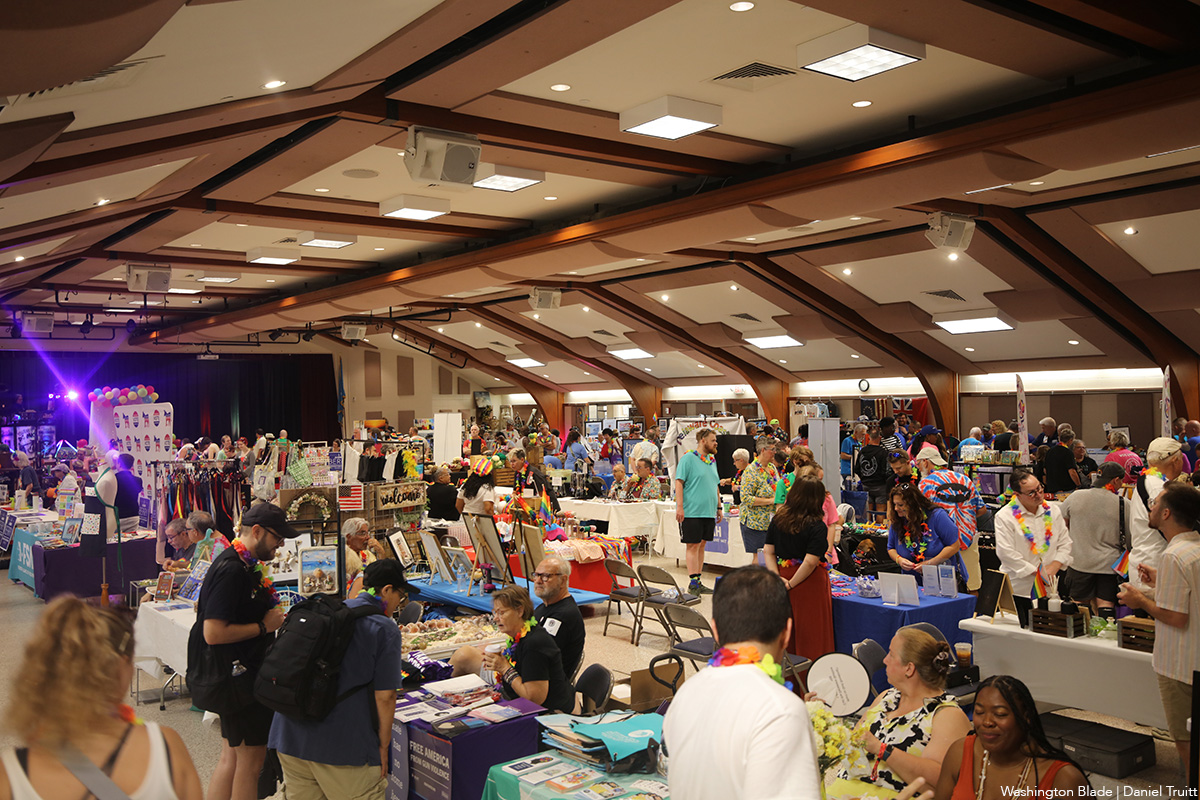
Pride in Rehoboth Beach is kicking off this week on Friday, July 17, with events happening throughout the weekend.
“Rehoboth Beach Pride is more than a festival — it is a vital space for community, healing, and connection,” said David Mariner, director of Sussex Pride, which organizes many of the events.
The weekend will begin with the Grand Opening & Community Preview from 1-4 p.m. on Friday, July 17, celebrating the opening of Novus Medical Services and the new Sussex Pride Community Center.
This will be followed by an Interfaith Pride Service at 6 p.m. at the Metropolitan Community Church Rehoboth to gather for healing and the affirmation of queer spirituality with Rev. Carla Christopher, chair of Sussex Pride Faith.
Members of the community are then invited to head over to join the Rehoboth Beach Bears at the Pines to have dinner, mingle, and give back to local initiatives.
End the first night of Pride in Rehoboth at Diego’s Bar & Nightclub with music by DJ Joey P from 9 p.m.-1 a.m.
Rehoboth Beach Pride Festival will take place on Saturday, July 18, 2026, from 9 a.m.- 3 p.m. inside the Rehoboth Beach Convention Center. A full list of events is available at rehobothbeachpride.org.
Roxy Overbrooke will host on the main stage as live performances take place throughout the day, featuring music from DJ MK and Tribe 9 Entertainment.
The festival will include educational workshops, community meetups, and a raffle dedicated to raising funds for unhoused LGBTQ+ youth across Delaware.
Feature workshops include panels discussing topics such as unhoused LGBTQ+ youth in Delaware, the needs of trans and non-binary youth, as well as the increase in HIV and syphilis diagnoses amid federal budget cuts, in a panel moderated by Blade Editor Kevin Naff.
Saturday night will also feature an evening comedy and entertainment show at the Convention Center presented by the Gay Women of Rehoboth. Performers will include comedians Suzanne Westenhoefer and Karen Mills as well as musician Kristen Merlin. Tickets are available at gaywomenofrehoboth.org.
The Rehoboth Beach Pride Ride will take place at 10 a.m. on Sunday, July 19, hosted by the Dykes on Bikes Rehoboth Beach Women’s Motorcycle Club, starting at Lefty’s.
Goolee’s Drag Brunch will also take place on Sunday from 12-2 p.m at Goolee’s Grille. This is a family-friendly event hosted by Regina Cox and Ruby, featuring Aurora Sterling, Michelle Leigh Sterling, Scarlet St. Cartier, and Joanna Blue. Tickets can be purchased online.
Pride in Rehoboth will conclude at 2 p.m. with the official Rehoboth Beach Pride Closing Party at Aqua Bar & Grill, celebrating the venue’s landmark 20th anniversary with DJ Biff until 7 p.m.
Due to an influx of visitors for the summer season, those coming from out-of-town are encouraged to use the Park & Ride.

PHOTOS: Rehoboth Beach Pride Festival

Liza’s book a tale that’s better than most celebrity memoirs

Hot hatchbacks: Honda Civic, Subaru Impreza

When buying a home, it’s decisions, decisions, decisions

Authorities investigate officer-involved shooting outside Asheville gay bar

Expected India Supreme Court ruling could shape future LGBTQ rights cases

Celebrate Pride in Rehoboth Beach this weekend

Christa Tichy hopes to preserve LGBTQ representation in Md. House of Delegates

Advocacy groups join Venezuela earthquake relief efforts

Rehoboth’s Aqua to celebrate 20th anniversary Sunday
-

 India4 days ago
Expected India Supreme Court ruling could shape future LGBTQ rights cases
-
Rehoboth Beach4 days ago
Celebrate Pride in Rehoboth Beach this weekend
-
Maryland4 days ago
Christa Tichy hopes to preserve LGBTQ representation in Md. House of Delegates
-
Venezuela4 days ago
Advocacy groups join Venezuela earthquake relief efforts