Opinions
Lesbian poet wins prestigious $500,000 award
LGBT community should celebrate Kay Ryan’s latest honor
So many awards are bestowed on celebrities renowned only for their celebrity that the idea of excellence seems reduced to a sleazy walk on the red carpet in search of glitz and glam. But recently, Kay Ryan, a former U.S. poet laureate, received an award that is meaningful and well-deserved.
Last week, Ryan, who in California married her partner of 30 years, the late Carol Adair, received a $500,000 “genius award” from the John D. and Catherine T. MacArthur Foundation. The award will be paid to Ryan in yearly installments of $100,000 for five years. Ryan will be free to use the award money as she pleases. At a time when mediocrity is too often the norm and the arts are frequently undervalued, this is great news not only for Ryan, poets, the culture at large, but the LGBT community as well.
Why am I so excited about this? Because the “genius” award honors the work of not only a great poet, but an openly lesbian poet, who has brought poetry to people in all walks of life.
As a poet, I can tell you that there are as many stereotypes of poets (and other creative artists) as there are breeds of dogs. The popular image of poets is often that of the eccentric, other-worldly “dreamer” who, like the hapless bard in Sylvia Plath’s novel “The Bell Jar” eats lettuce with his or her fingers. Sometimes it’s thought that poetry (or other forms of art) is therapy or a hobby. I’ve been asked when I’m going to “get over” writing poems — as if poetry were an illness like the flu. Most every poet I know has been told, “anybody can write poetry.”
As the truism says, some grain of truth lurks within many stereotypes. Poets themselves, we who are in the “po biz,” far too frequently erect barriers between the Mount Olympus of M.F.A. programs, conferences and prizes and less privileged readers and writers of poetry.
Kay Ryan defies these stereotypes. Ryan has received the Ruth Lilly Poetry Prize (worth $100,000), the Pulitzer Prize for her collection “The Best of It: New and Selected Poems,” a Guggenheim Fellowship and other prestigious awards. Yet, she’s no Ivory Tower goddess in MFA Land. Though Ryan has a bachelor’s and master’s in English from the University of California in Los Angeles, she has taught remedial reading for more than three decades at the College of Marin, a community college in Kentfield, Calif.
“You have to make yourself worthy of [poetry],” Ryan told The Cleveland Plain Dealer. “I want it to be hard.”
Yet while pushing herself and her students toward excellence, Ryan has opened the door to poetry for prisoners and others who can’t afford MFA programs or other trappings of the “po biz.”
Though Ryan came to the poetry establishment as an outsider (it took years for her poetry to be widely recognized), she isn’t a proponent of “outsider art.” I doubt if she’d say that anyone could write poetry. “Most of it’s too dreary,/or too cherry red,” Ryan writes in her poem “Outsider Art.”
Ryan’s spare, witty, yet poignant poetry is often compared to the work of Emily Dickinson. “How can she fit paradox, argument, mystery, philosophy and story into that space?” Grace Cavalieri, host of the public radio show “The Poet and the Poem,” e-mailed the Blade. “But she does. I don’t think poetry has ever seen anything like it.”
A friend, pointing out that Ryan’s work is “universal, not overtly lesbian,” asked me why it matters that Ryan is queer.
It’s true. You won’t find much sapphic lust in Ryan’s poetry. Ryan isn’t a confessional poet. “Only distance/lets distance collapse,” she writes in the poem “Distance.”
But until recently no poet, not even a poet laureate, could be openly queer. Let’s celebrate that one of our own has received the recognition she so richly deserves.




Letter-to-the-Editor
Candidates should pledge to nominate LGBTQ judge to Supreme Court
Presidential, Senate hopefuls need to go on the record
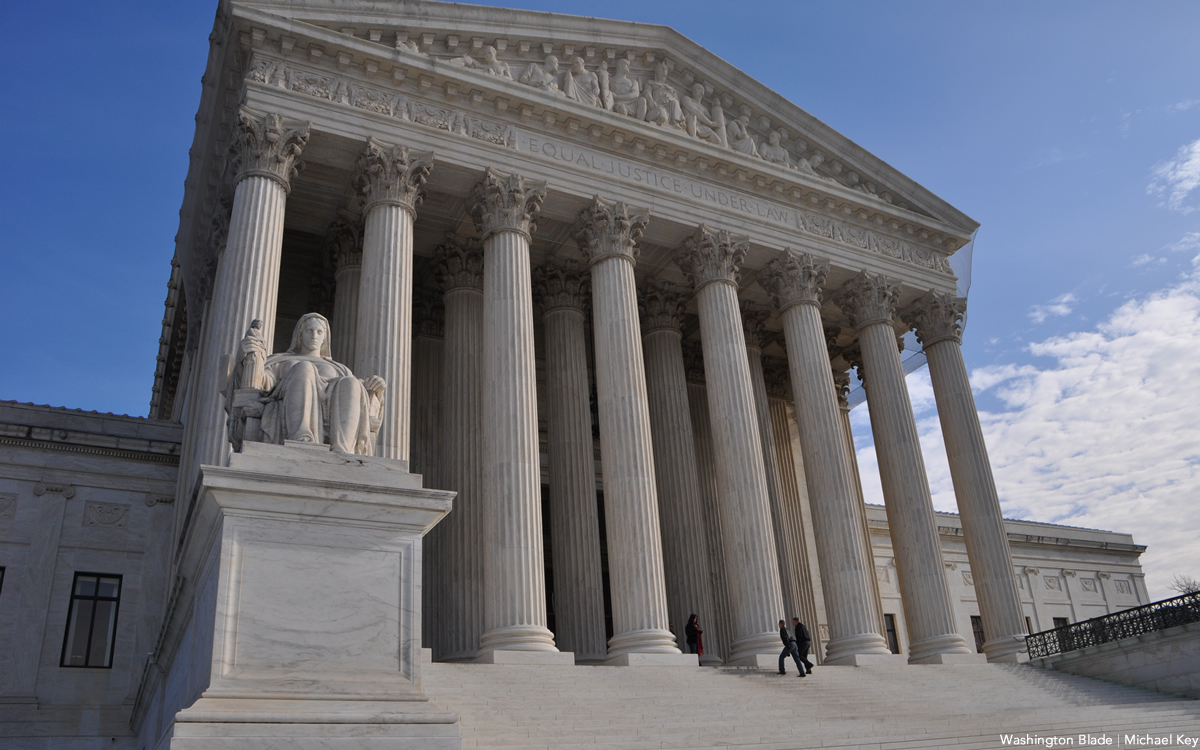
As soon as the final votes are cast and counted and verified after the November 2026 elections are over, the 2028 presidential cycle will begin in earnest. Polls, financial aid requests, and volunteer opportunities ad infinitum will flood the public and personal media. There will be more issues than candidates in both parties. The rending of garments and mudslinging will be both interesting and maybe even amusing as citizens will watch how candidates react to each and every issue of the day.
There is one particular item that I am hoping each candidate will be asked whether in private or in public. If a Supreme Court vacancy occurs in your potential administration, will you nominate an open and qualified LGBTQ to join the remaining eight?
Other interest groups on both sides have made similar demands over the years and have had them honored. Is it not time that our voices are raised as well? There are several already sitting judges on both state and federal benches that have either been elected statewide or approved by the U.S. Senate.
Our communities are being utilized and abused on judicial menus. Enough already! Challenge each and every candidate, regardless of their party with our honest question and see if honest answers are given. By the way … no harm in asking the one-third of the U.S. Senate candidates too who will be on ballots. Looking forward to any candidate tap dancing!
Opinions
2026 elections will bring major changes to D.C. government
Mayor’s office, multiple Council seats up for grabs
Next year will be a banner year for elections in D.C. The mayor announced she will not run. Two Council members, Anita Bonds, At-large, and Brianne Nadeau, Ward 1, have announced they will not run. Waiting for Del. Norton to do the same, but even if she doesn’t, there will be a real race for that office.
So far, Robert White, Council member at-large, and Brooke Pinto, Council member Ward 2, are among a host of others, who have announced. If one of these Council members should win, there would be a special election for their seat. If Kenyon McDuffie, Council member at-large, announces for mayor as a Democrat, which he is expected to do, he will have to resign his seat on the Council as he fills one of the non-Democratic seats there. Janeese George, Ward 4 Council member, announced she is running for mayor. Should she win, there would be a special election for her seat. Another special election could happen if Trayon White, Ward 8, is convicted of his alleged crimes, when he is brought to trial in January. Both the Council chair, and attorney general, have announced they are seeking reelection, along with a host of other offices that will be on the ballot.
Many of the races could look like the one in Ward 1 where at least six people have already announced. They include three members of the LGBTQ community. It seems the current leader in that race is Jackie Reyes Yanes, a Latina activist, not a member of the LGBTQ community, who worked for Mayor Fenty as head of the Latino Affairs Office, and for Mayor Bowser as head of the Office of Community Affairs. About eight, including the two Council members, have already announced they are running for the delegate seat.
I am often asked by candidates for an endorsement. The reason being my years as a community, LGBTQ, and Democratic, activist; and my ability to endorse in my column in the Washington Blade. The only candidate I endorsed so far is Phil Mendelson, for Council chair. While he and I don’t always agree on everything, he’s a staunch supporter of the LGBTQ community, a rational person, and we need someone with a steady hand if there really are six new Council members, out of the 13.
When candidates call, they realize I am a policy wonk. My unsolicited advice to all candidates is: Do more than talk in generalities, be specific and honest as to what you think you can do, if elected. Candidates running for a legislative office, should talk about what bills they will support, and then what new ones they will introduce. What are the first three things you will focus on for your constituents, if elected. If you are running against an incumbent, what do you think you can do differently than the person you hope to replace? For any new policies and programs you propose, if there is a cost, let constituents know how you intend to pay for them. Take the time to learn the city budget, and how money is currently being spent. The more information you have at your fingertips, the smarter you sound, and voters respect that, at least many do. If you are running for mayor, you need to develop a full platform, covering all the issues the city will face, something I have helped a number of previous mayors do. The next mayor will continue to have to deal with the felon in the White House. He/she/they will have to ensure he doesn’t try to eliminate home rule. The next mayor will have to understand how to walk a similar tightrope Mayor Bowser has balanced so effectively.
Currently, the District provides lots of public money to candidates. If you decide to take it, know the details. The city makes it too easy to get. But while it is available, take advantage of it. One new variable in this election is the implementation of rank-choice voting. It will impact how you campaign. If you attack another candidate, you may not be the second, or even third, choice, of their strongest supporters.
Each candidate needs a website. Aside from asking for donations and volunteers, it should have a robust issues section, biography, endorsements, and news. One example I share with candidates is my friend Zach Wahls’s website. He is running for United States Senate from Iowa. It is a comprehensive site, easy to navigate, with concise language, and great pictures. One thing to remember is that D.C. is overwhelmingly Democratic. Chances are the winner of the Democratic primary will win the general election.
Potential candidates should read the DCBOE calendar. Petitions will be available at the Board of Elections on Jan. 23, with the primary on June 16th, and general election on Nov. 3. So, ready, set, go!
Peter Rosenstein is a longtime LGBTQ rights and Democratic Party activist.
Opinions
Lighting candles in a time of exhaustion
Gunmen killed 15 people at Sydney Hanukkah celebration
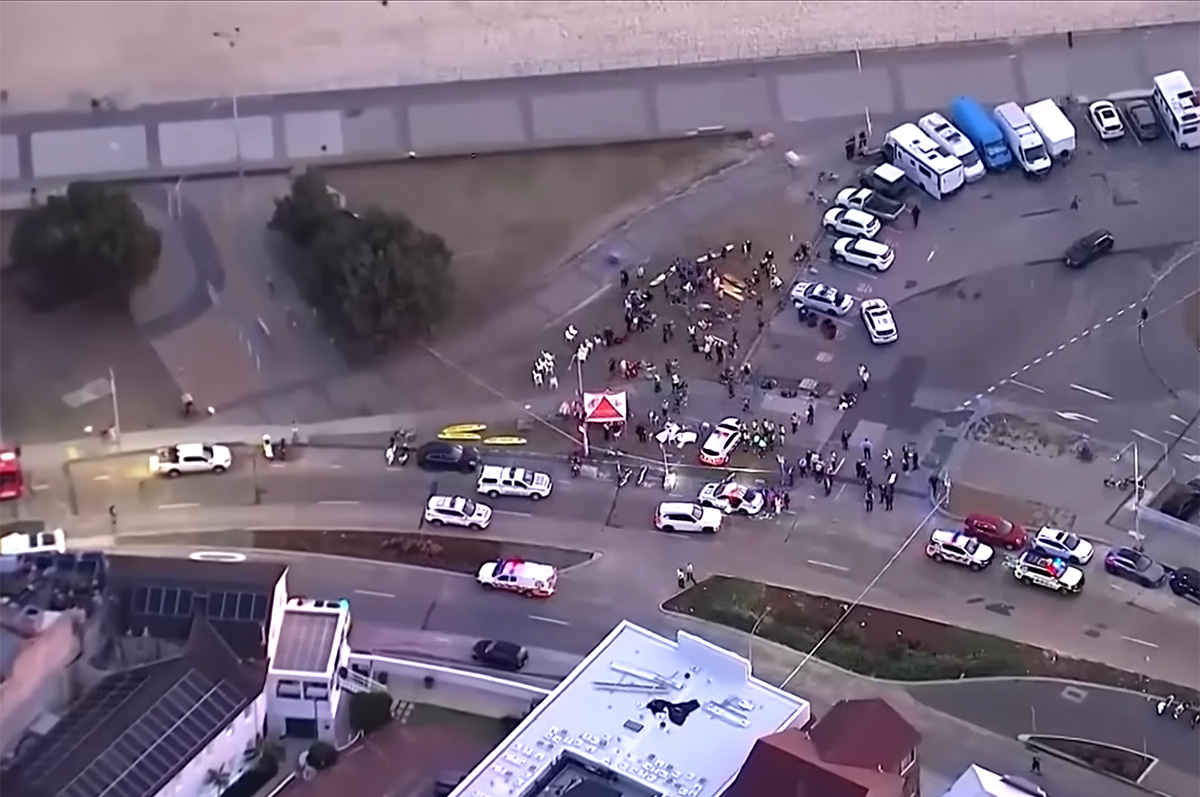
In the wake of the shooting at Bondi Beach that targeted Jews, many of us are sitting with a familiar feeling: exhaustion. Not shock or surprise, but the deep weariness that comes from knowing this violence continues. It is yet another reminder that antisemitism remains persistent.
Bondi Beach is far from Washington, D.C., but antisemitism does not respect geography. When Jews are attacked anywhere, Jews everywhere feel it. We check on family and friends, absorb the headlines, and brace ourselves for the quiet, numbing normalization that has followed acts of mass violence.
Many of us live at an intersection where threats can come from multiple directions. As a community, we have embraced the concept of intersectional identity, and yet in queer spaces, many LGBTQ+ Jews are being implicitly or explicitly asked to play down our Jewishness. Jews hesitate before wearing a Magen David or a kippah. Some of us have learned to compartmentalize our identities, deciding which part of ourselves feels safest to lead with. Are we welcome as queer people only if we mute our Jewishness? Are those around us able to acknowledge that our fear is not abstract, but rooted in a lived reality, one in which our friends and family are directly affected by the rise in antisemitic violence, globally and here at home?
As a result of these experiences, many LGBTQ+ Jews feel a growing fatigue. We are told, implicitly or explicitly, that our fear is inconvenient; that Jewish trauma must be contextualized, minimized, or deferred in favor of other injustices. Certainly, the world is full of horror. And yet, we long for a world in which all lives are cherished and safe, where solidarity is not conditional on political purity or on which parts of ourselves are deemed acceptable to love.
We are now in the season of Chanuka. The story of this holiday is not one of darkness vanishing overnight. It is the story of a fragile light that should not have lasted. Chanuka teaches us that hope does not require certainty; it requires persistence and the courage to kindle a flame even when the darkness feels overwhelming.
For LGBTQ+ Jews, this lesson resonates deeply. We have survived by refusing to disappear across multiple dimensions of our identities. We have built communities, created rituals, and embraced chosen families that affirm the fullness of who we are.
To our LGBTQ+ siblings who are not Jewish: this is a moment to listen, to stand with us, and to make space for our grief. Solidarity means showing up not only when it is easy or popular, but especially when it is uncomfortable.
To our fellow Jews: your exhaustion is valid. Your fear is understandable, and so is your hope. Every candle lit this Chanuka is an act of resilience. Every refusal to hide, every moment of joy, is a declaration that hatred will not have the final word.
Light does not deny darkness. It confronts it.
As we light our candles this Chanuka season, may we protect one another and bring light to one another, even as the world too often responds to difference with violence and hate.
Joshua Maxey is the executive director of Bet Mishpachah, D.C.’s LGBTQ synagogue.

Candidates should pledge to nominate LGBTQ judge to Supreme Court

Kazakh Senate approves anti-LGBTQ propaganda bill

Local, last-minute holiday gift ideas

2026 elections will bring major changes to D.C. government

Brian Footer suspends campaign for Ward 1 D.C. Council seat

PHOTOS: The Holiday Show

Choose U ambassadors share lived experiences with HIV, personal reflections, and insights

The best books to give this holiday season

Studio’s ‘Mother Play’ draws from lesbian playwright’s past