National
5 takeaways from Election Day
Obama’s marriage support was a good political move and other observations
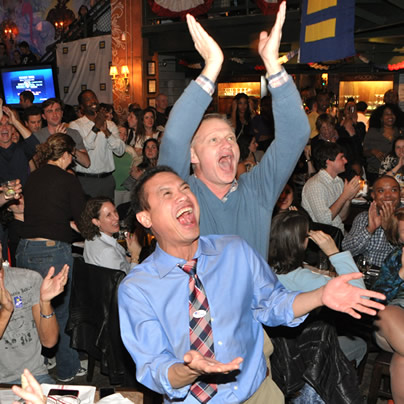
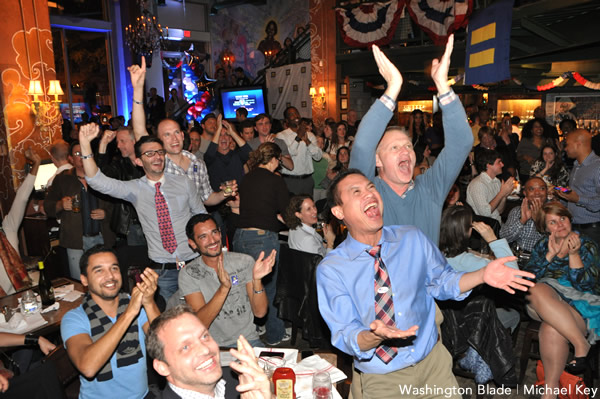
Members of the community celebrated President Obama’s reelection at the Human Rights Campaign election watch party at Eatonville on 14th Street. (Washington Blade photo by Michael Key)
Hailed as a watershed moment for the LGBT movement, Election Day yielded several milestones that political observers say will have a profound impact on the advancement of LGBT rights and marriage equality going forward.
Here are five takeaways from an evening that saw wins for marriage equality at the ballot and the election for the first time of an openly gay U.S. Senate candidate — not to mention the re-election of a U.S. president who endorsed marriage equality.
1. The sky’s the limit for gay candidates seeking political office
Lesbian U.S. Senate candidate Tammy Baldwin made history when she became the first openly gay person elected to the U.S. Senate in a highly contested race against former Wisconsin Gov. Tommy Thompson. She’ll be part of a record number of as many as seven openly gay, lesbian and bisexual candidates elected to Congress and 121 candidates endorsed by the Gay & Lesbian Victory Fund elected to various offices throughout the country.
Baldwin’s sexual orientation was virtually a non-issue during the campaign. The only time it came up was when Brian Nemoir, a Thompson campaign official, circulated a video of her dancing at a gay Pride festival and told media outlets, “Clearly, there’s no one better positioned to talk ‘heartland values’ than Tammy.” The incident resulted in negative press for Thompson, who apologized for his aide’s action.
The glass ceiling broken by Baldwin could be a hopeful sign for other LGBT officials seeking office — such as lesbian New York City Council Chair Christine Quinn, who’s likely to run for mayor of the nation’s largest city in 2013 — that sexual orientation needn’t be a factor even when pursuing the highest offices in the nation.
Dan Pinello, who’s gay and a political scientist at the City University of New York, said Baldwin’s election “was a remarkable achievement” as was the the election of additional openly gay people to the House.
“An LGBT candidate no longer has to worry about facing his or her sexual orientation in terms of it being an impediment in running for public office,” Pinello said. “Tammy Baldwin most clearly demonstrates that, her being elected the first openly gay or lesbian senator.”
Some barriers have yet to fall. Gay Republican Richard Tisei failed in his bid to unseat incumbent Democrat Rep. John Tierney from a House seat in Massachusetts, which means the LGBT contingent in Congress will be entirely Democratic and an openly gay non-incumbent Republican has yet to win election to Congress. No transgender candidate has won election to Congress, although Stacie Laughton, a Democrat, was elected in New Hampshire as the first openly transgender person to a state legislature in the country.
Denis Dison, a Victory Fund spokesperson, noted that 40 state legislatures will now have LGBT representation and said the priority for his organization over the next 10 years is to elect an openly LGBT person to each state throughout the country.
“That matters greatly at the state level; it matters greatly at the municipal level,” Dison said. “There are some states out there where there’s one out elected official, and that’s kind of a very tenuous position, and we want to make sure that we are building capacity — and that’s states that people don’t talk about very much: the Nebraskas and Kansas.”
2. Obama’s support of marriage equality was a good political move
At the time President Obama completed his 19-month “evolution” in May and announced his personal support for marriage rights for gay couples, many political observers feared a backlash against him at the polls.
Many predicted — as it turns out, correctly — that states once considered battlegrounds —Missouri, North Carolina and Indiana — would fall in the Republican column because of their large evangelical populations. Whether Obama would be able to make the difference in the Electoral College to reach 270 votes was unclear.
But the result was positive — most initially in terms of financing for the Obama campaign. According to an analysis from National Public Radio, donations to Obama nearly tripled in the immediate period after the announcement. The campaign took in nearly $9 million over three days, compared to $3.4 million in the three previous days. The Washington Blade reported anecdotally that while many major donors had already maxed out their contributions, Obama’s new support for marriage equality resulted in his supporters making more small donations to the campaign.
Richard Socarides, a gay New York advocate who pushed Obama to support same-sex marriage, said coming out for marriage equality helped Obama not only in terms of donations before the election, but energized LGBT voters to come to the polls.
“I think it excited Democrats and young voters and gay and lesbian voters,” Socarides said. “His margin of victory in the popular vote was less than his vote among gays and lesbians, so I think gays and lesbians turned out for him.”
Socarides pointed to exit polling showing gay voters made up 5 percent of the electorate and 77 percent of them voted for Obama — an increase from the 2008 election — as evidence the gay vote is significant and helped Obama claim victory.
The youth vote was also significant in the election. According to the early National Exit Poll conducted by Edison Research, Obama won 60 percent of the youth vote, compared to 36 percent for Romney. Voters from ages 18 to 29 represented 19 percent of the electorate, which is an increase of one percentage point from 2008.
Pinello said Obama’s support for marriage equality helped drive to the polls younger voters, who are generally more supportive of same-sex marriage.
“The Obama campaign used marriage equality as a means to target younger voters to turn out in greater numbers as has been the case in the past,” Pinello said. “I think that was probably fairly wise of the Obama campaign. I think they succeeded in strengthening and increasing the size of their base in doing so.”
3. LGBT support alone won’t save Republicans in moderate districts
Despite the apparent support that Obama won as a result of coming out for marriage equality, Republicans in office who were supportive of LGBT issues didn’t fare as well in the 2012 election.
In Massachusetts, Tisei was notable among those Republicans. Also of note is freshman Rep. Nan Hayworth (R-N.Y.), a co-sponsor of the Employment Non-Discrimination Act, who lost to gay Democrat Sean Patrick Maloney; Rep. Judy Biggert (R-Ill.), who voted for “Don’t Ask, Don’t Tell” repeal even before the Pentagon report came out in favor of open service; and Rep. Mary Bono Mack (R-Calif.), who during her five terms in Congress voted against a Federal Marriage Amendment and in favor of ENDA and hate crimes legislation. U.S. Senate candidate Linda McMahon in Connecticut was also defeated; she supported Defense of Marriage Act repeal.
These Republicans were supported by gay GOP groups. The American Unity PAC, which was working to support pro-LGBT Republicans, notably spent a total of $420,000 in advertising to protect Bono Mack; $260,000 in Connecticut for McMahon; $540,000 in Biggert’s campaign; $530,000 in the Tisei race and $260,000 in ad buys on behalf of Hayworth. But each of these investments ended in losses.
Jeff Cook, senior adviser to the American Unity PAC, blamed the losses on the general poor showing by the Republican Party during the 2012 election and said the party as a whole needs to adapt to survive.
“It was a tough night for Republicans in most of the country,” Cook added. “The impact was particularly felt in moderate, swing districts where our party’s brand too often has limited our candidates’ appeal. It’s increasingly clear that there is a need to modernize the Republican Party, not only to win full inclusion for gay and lesbian Americans, but to ensure that the GOP can compete and win in the 21st century.”
Cook noted that Reps. Ileana Ros-Lehtinen (R-Fla.) and Richard Hanna (R-N.Y.), pro-LGBT Republicans who were also recipients of funds from the American Unity PAC, won re-election. These candidates weren’t in as highly contested races.
4. The national trend in favor of marriage equality is real
Four states yielded good news for supporters of same-sex marriage on Tuesday night: Maine approved a voter-initiated referendum legalizing same-sex marriage; voters in Maryland and Washington upheld same-sex marriage laws passed by the legislatures put up for referenda; and Minnesota voters rejected a constitutional amendment that would have restricted marriage to one man, one woman.
The wins were a remarkable turnaround after loses in years past, breaking a losing streak in 32 states where same-sex marriage lost at the ballot. Moreover, the wins also validate national polls showing a gradual rise in support for same-sex marriage, which has led to a bare majority supporting marriage rights for gay couples.
Lanae Erickson, a lesbian and director of social policy and politics for the moderate group Third Way, said the election demonstrated marriage equality is coming into the mainstream after having been a hot-button issue for many years.
“I think this election showed that marriage and LGBT issues are no longer going to be a divisive social issue in the way they have been in the past,” Erickson said. “It definitely shows that the losing season that we had is relegated to history and now we’re in a new season where we can win frequently if not most of the time, especially on marriage.”
The victories have spurred talk about which states will be next to legalize same-sex marriage as Illinois and Minnesota are in position to take action in 2013. In New Jersey, Gov. Chris Christie has said he would favor allowing a referendum on same-sex marriage, but LGBT advocates in the state have dismissed that option.
Pinello warned that the marriage equality side won by a slim margin in these states — in Washington State, for example, the marriage law was approved by 52 percent as votes continued to trickle in — and said LGBT advocates shouldn’t attempt to place the issue on the ballot in a year other than a presidential election when the youth and progressive turnout isn’t high.
“If activists were to decide then to try it again in other states like Oregon, for example, in 2014, an off-year election, I think it might be a mistake because, again, the part of the population who are LGBT friendly tend not to turn out as much in off-year elections,” Pinello said.
5. The influence of anti-gay groups is waning
The Election Day results were a disaster for social conservative groups trying to stop the legalization of same-sex marriage and elect Republican presidential nominee Mitt Romney.
The day after the election, the National Organization for Marriage’s Brian Brown issued a statement saying the American public still favors marriage between one man, one woman, but his organization was up against “a huge financial advantage” from marriage equality supporters.
In an email message to supporters on Wednesday, the Family Research Council’s Tony Perkins dismissed the results at the ballot, saying, “And while homosexuals may be celebrating an end to our movement’s perfect record, they still have a long way to go to match the 32 states where Americans voted overwhelmingly to protect the union of a man and woman.”
Erickson said although NOM is a one-issue group and unlikely to change its tune even in the wake of its losses, social conservative groups may seek to veer away from demonizing LGBT people.
“I think a lot of the other social conservative groups will turn their attention toward other issues because they realize that the momentum on this one just is not in their favor,” Erickson said. “They’re pushing a lot, for example, to say, ‘Yeah, younger people are trending better on LGBT issues, but they’re more pro-life than their older counterparts and we can still get them on immigration and we can still get them on abortion.”
One question is whether heads will roll at these organizations as a result of their failures on Election Day. Will Brown and Perkins be forced to step down? The Huffington Post reported on Wednesday that a Republican operative said billionaire donors who contributed to the Republican Party are “livid” about the election results. Similar heat may be coming down on social conservative groups.
Pinello said conservative organizations will likely have more difficulty finding funds as donations dry up in the wake of their defeats.
“I think their momentum has been taken away; they’ve been deflated,” Pinello said. “They’re no longer guaranteed a win, so, donors, I think would be much more circumspect about whether this is the best place to put their money.”





The White House
As house Democrats release Epstein photos, Garcia continues to demand DOJ transparency
Blade this week sat down with gay House Oversight Committee ranking member
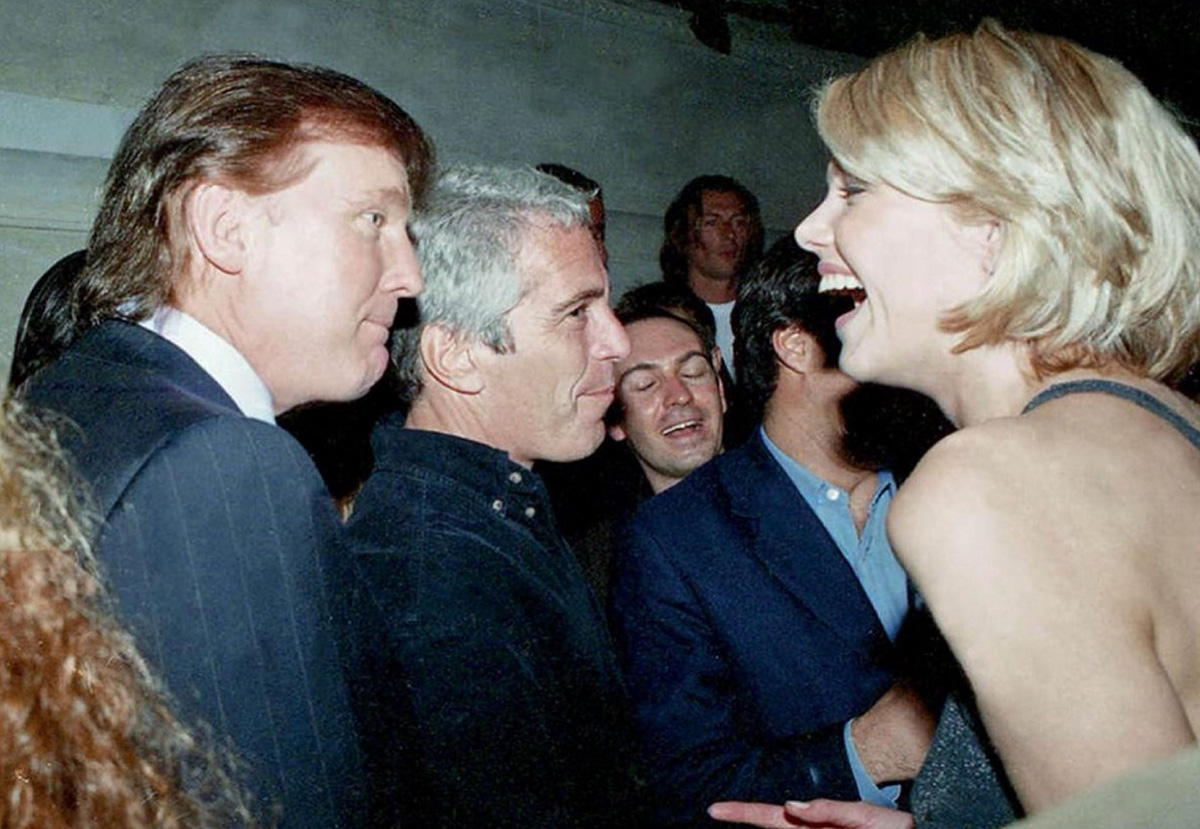
Democrats on the House Oversight Committee have released new photos from Jeffrey Epstein’s email and computer records, including images highlighting the relationship between President Donald Trump and the convicted sex offender.
Epstein, a wealthy financier, was found guilty of procuring a child for prostitution and sex trafficking, serving a 13-month prison sentence in 2008. At the time of his death in prison under mysterious circumstances, he was facing charges of sex trafficking and conspiracy to traffic minors.
Among those pictured in Epstein’s digital files are Trump, former President Bill Clinton, former Trump adviser Steve Bannon, actor and director Woody Allen, economist Larry Summers, lawyer Alan Dershowitz, entrepreneurs Richard Branson and Bill Gates, and Andrew Mountbatten-Windsor.
One photo shows Trump alongside Epstein and a woman at a Victoria’s Secret party in New York in 1997. American media outlets have published the image, while Getty Images identified the woman as model Ingrid Seynhaeve.
Oversight Committee Democrats are reviewing the full set of photos and plan to release additional images to the public in the coming days and weeks, emphasizing their commitment to protecting survivors’ identities.
With just a week left for the Justice Department to publish all files related to Epstein following the passage of the Epstein Files Transparency Act, which requires the Justice Department to release most records connected to Epstein investigations, the Washington Blade sat down with U.S. Rep. Robert Garcia (D-Calif.), the ranking member on the Oversight Committee to discuss the current push the release of more documents.
Garcia highlighted the committee’s commitment to transparency and accountability.
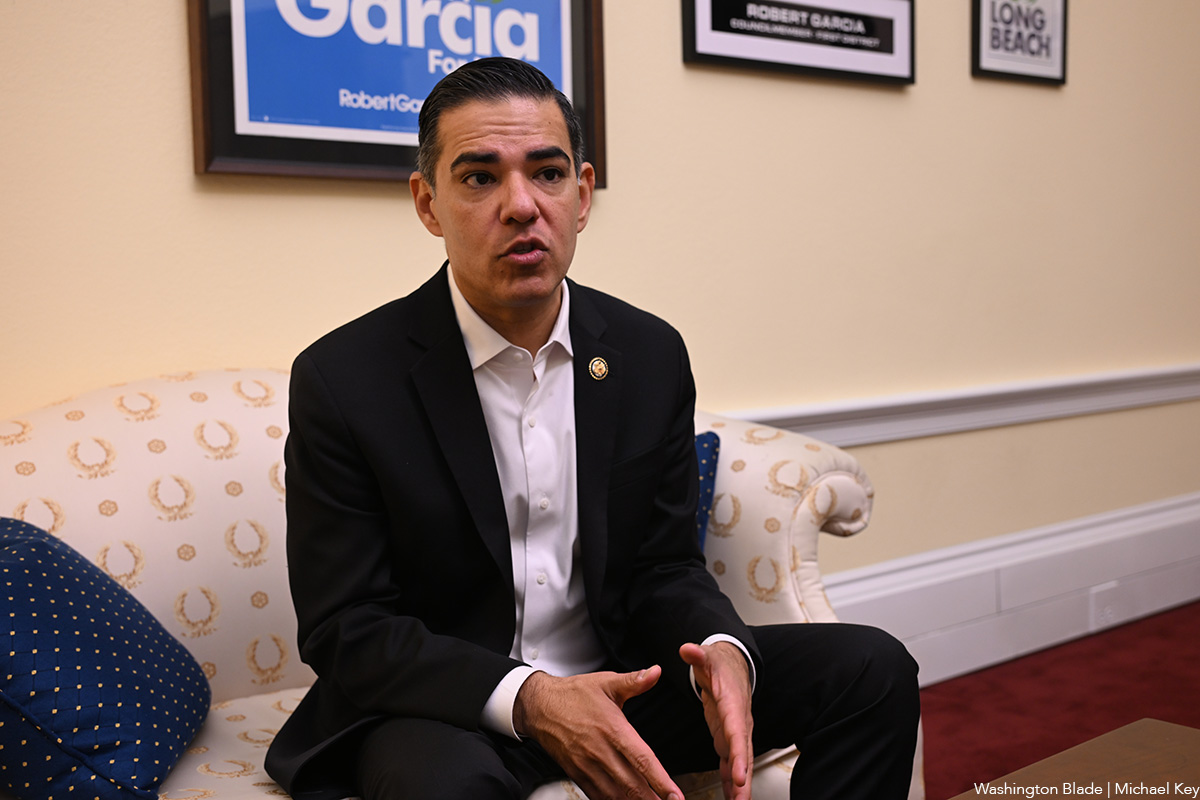
“We’ve said anything that we get we’re going to put out. We don’t care who is in the files … if you’ve harmed women and girls, then we’ve got to hold you accountable.”
He noted ongoing questions surrounding Trump’s relationship with Epstein, given their long history and the apparent break in friendship once Trump assumed public office.
“There’s been a lot of questions about … Donald Trump and Jeffrey Epstein. They were best friends for 10 years … met women there and girls.”
Prior to Trump’s presidency, it was widely reported that the two were friends who visited each other’s properties regularly. Additional reporting shows they socialized frequently throughout the 1990s and early 2000s, attending parties at Trump’s Mar-a-Lago resort in Florida and Epstein’s residences. Flight logs from an associate’s trial indicate Trump flew on Epstein’s private jet multiple times, and Epstein claimed Trump first had sex with his future wife, Melania Knauss, aboard the jet.
“We’ve provided evidence … [that leads to] questions about what the relationship was like between Donald Trump and Jeffrey Epstein.”
Garcia stressed the need for answers regarding the White House’s role in withholding information, questioning the sudden change in attitude toward releasing the files given Trump’s campaign promises.
“Why is the White House trying to cover this up? So if he’s not covering for himself … he’s covering up for his rich friends,” Garcia said. “Why the cover up? Who are you hiding for? I think that’s the question.”
He confirmed that Trump is definitively in the Epstein files, though the extent remains unknown, but will be uncovered soon.
“We know that Trump’s in them. Yeah, he’s been told. We know that Trump’s in them in some way. As far as the extent of it … we don’t know.”
Garcia emphasized accountability for all powerful figures implicated, regardless of financial status, political party, or personal connections.
“All these powerful men that are walking around right now … after abusing, in some cases, 14‑ and 15‑year‑old girls, they have to be held accountable,” he said. “There has to be justice for those survivors and the American public deserves the truth about who was involved in that.”
He added that while he is the ranking member, he will ensure the oversight committee will use all available political tools, including subpoenas — potentially even for the president.
“We want to subpoena anyone that we can … everyone’s kind of on the table.”
He also emphasized accountability for all powerful figures implicated, regardless of financial status, political party, or relationship with the president.
“For me, they’re about justice and doing the right thing,” Garcia said. “This is about women who … were girls and children when they were being abused, trafficked, in some cases, raped. And these women deserve justice.”
“The survivors are strong.”
Deputy White House Press Secretary Abigail Jackson issued a statement regarding the release the photos, echoing previous comments from Republicans on the timing and framing of the photos by the Oversight Committee.
“Once again, House Democrats are selectively releasing cherry-picked photos with random redactions to try and create a false narrative,” Jackson said.
“The Democrat hoax against President Trump has been repeatedly debunked and the Trump administration has done more for Epstein’s victims than Democrats ever have by repeatedly calling for transparency, releasing thousands of pages of documents, and calling for further investigations into Epstein’s Democrat friends,”
In a press release on Friday, Garcia called for immediate DOJ action:
“It is time to end this White House cover-up and bring justice to the survivors of Jeffrey Epstein and his powerful friends. These disturbing photos raise even more questions about Epstein and his relationships with some of the most powerful men in the world. We will not rest until the American people get the truth. The Department of Justice must release all the files, NOW.”



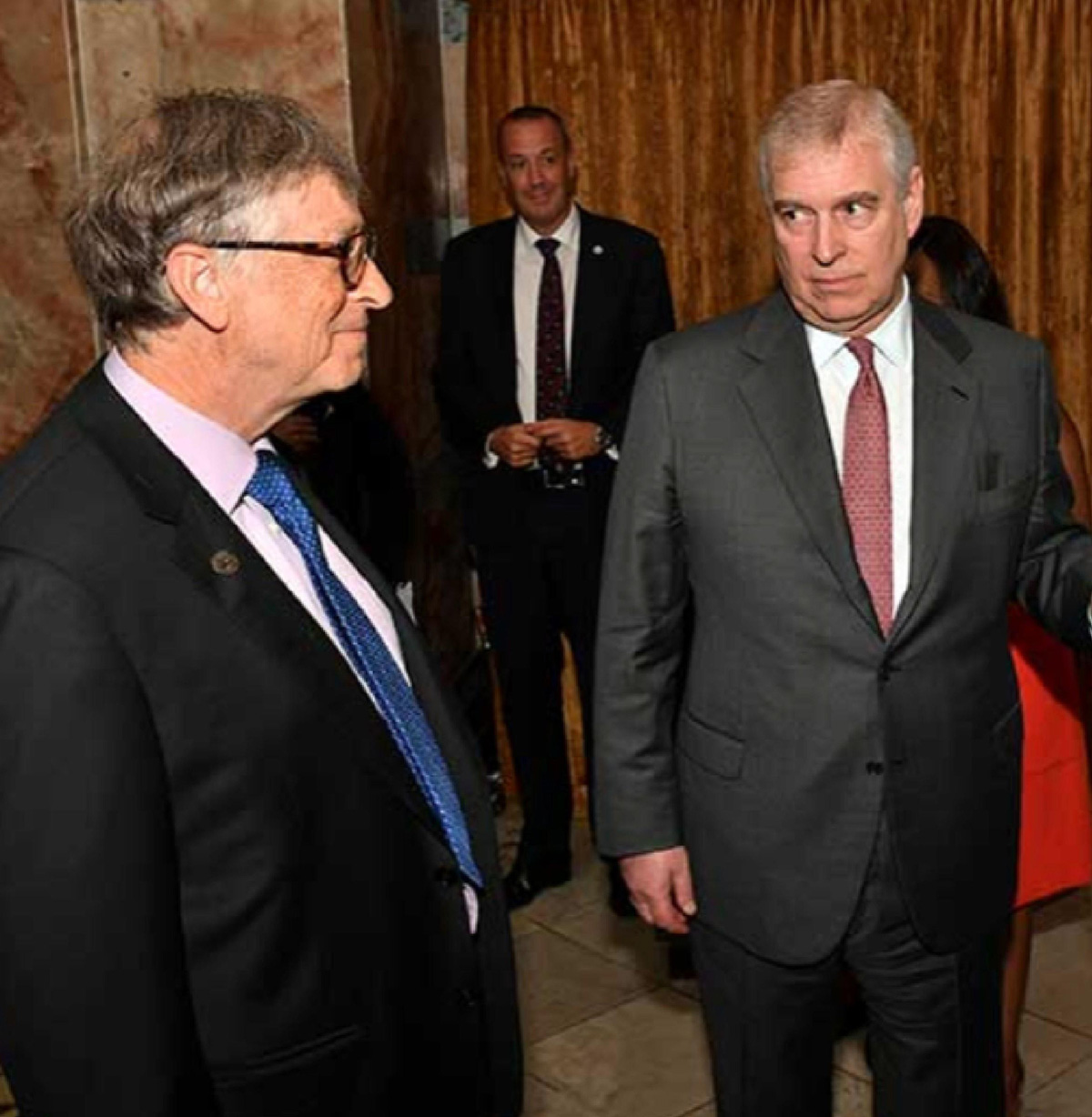
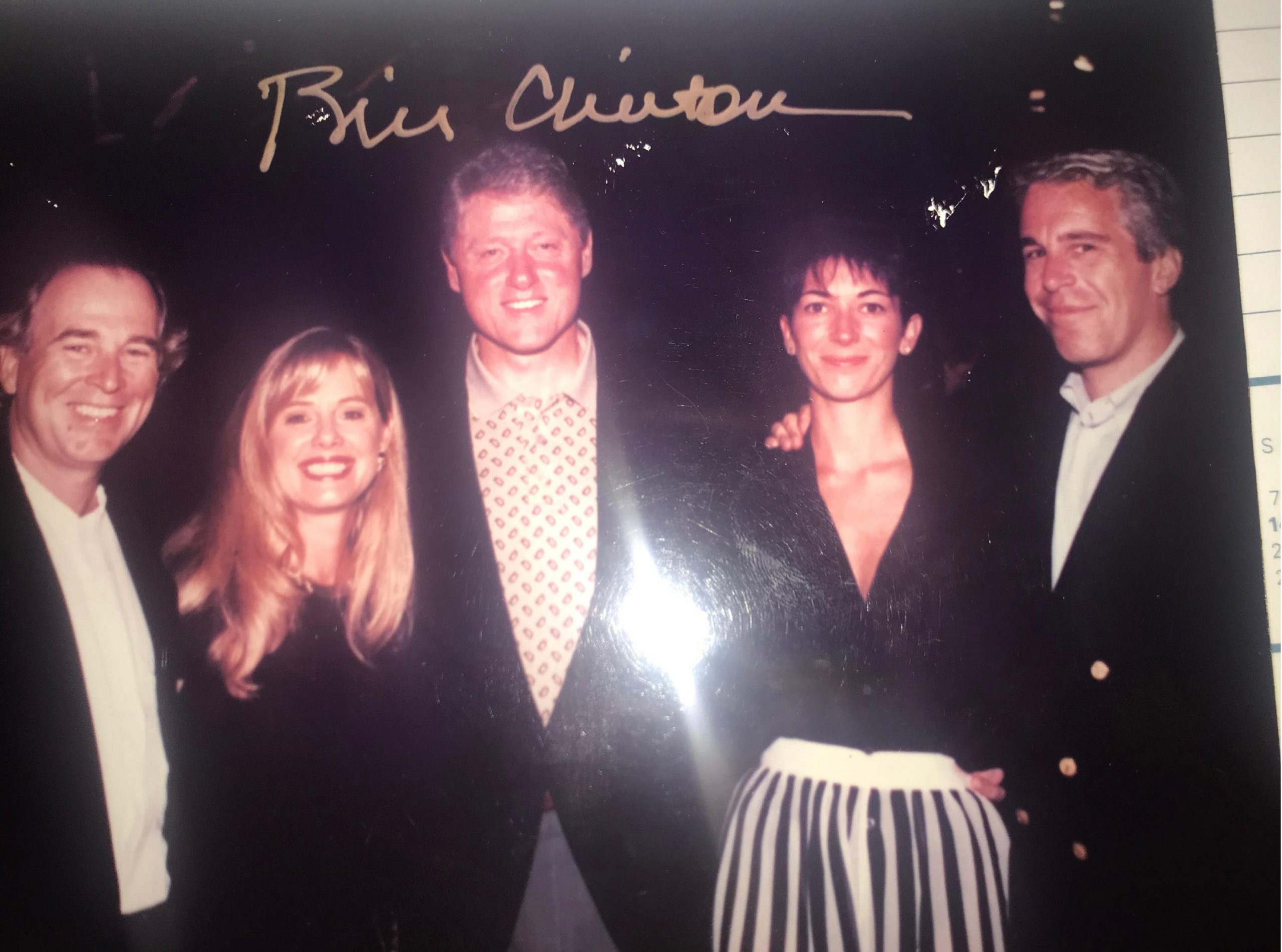
(Photo courtesy of the U.S. House Oversight Committee)
The White House
White House deadnames highest-ranking transgender official
Rachel Levine’s portrait altered at HHS
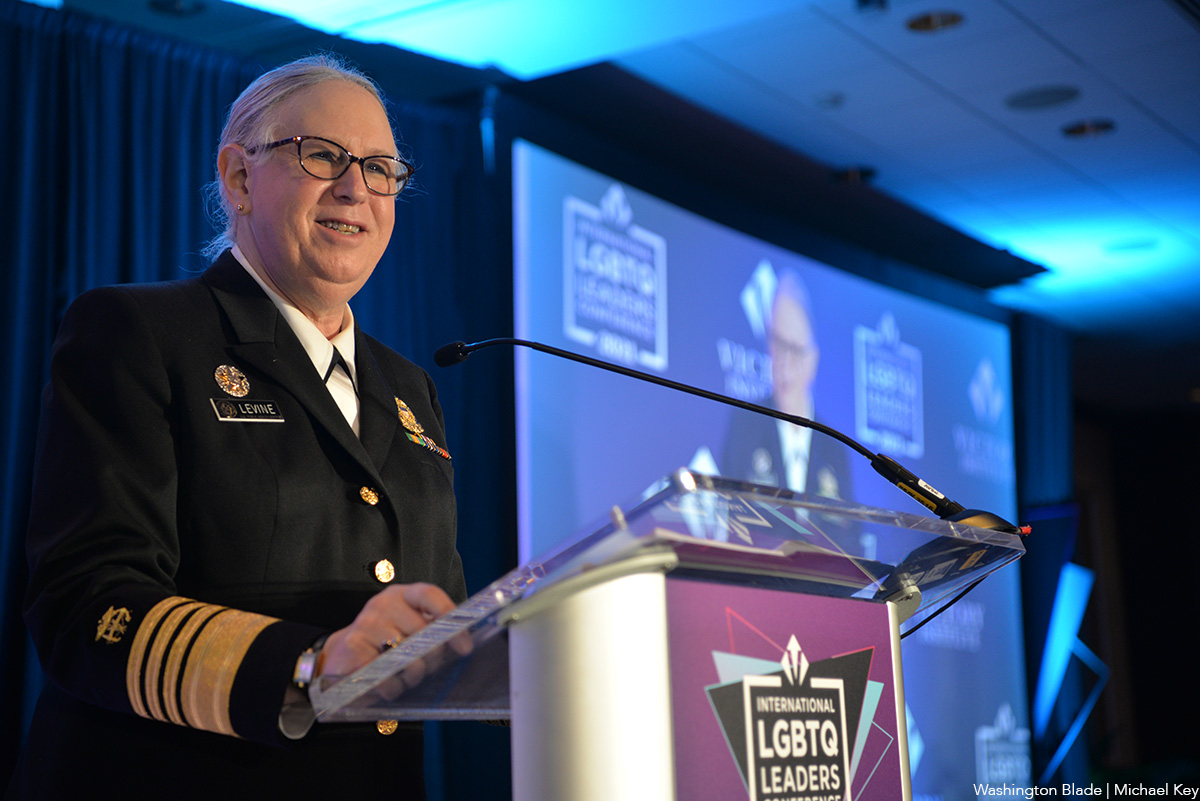
Admiral Rachel Levine — the first transgender person ever confirmed by the U.S. Senate and the highest-ranking trans official in American history — had her official portrait in the Humphrey Building altered, with staff replacing her correct name with her deadname, the name she has not used since 2011.
NPR first reported the change, and an HHS spokesperson confirmed to the outlet that Levine’s portrait had recently been altered. A digital photograph obtained by NPR shows Levine’s former (male) name typed on a placard beneath the portrait, placed under the glass of the frame.
Levine served as a four-star admiral in the U.S. Public Health Service Commissioned Corps under the Biden-Harris administration and was appointed the 17th assistant secretary for health.
During her tenure, Levine oversaw the Commissioned Corps and helped lead national public-health initiatives, including the federal COVID-19 response and vaccination strategy; efforts to address rising syphilis infection rates; HIV/AIDS prevention and treatment programs; and strategies to combat the opioid epidemic, particularly through expanded harm-reduction approaches for the communities most affected.
The Trump-Vance administration’s decision to publicly deadname Levine is widely viewed within the trans community as demeaning and disrespectful. The move comes amid a series of federal policy reversals targeting LGBTQ Americans, particularly trans youth seeking gender-affirming care.
Those actions include: weakening workplace protections for LGBTQ employees; limiting restroom access; downgrading gender-identity discrimination cases; pressuring hospitals to end gender-affirming care; cutting HIV research and prevention funding; removing LGBTQ crisis resources; restricting access to trans-inclusive medical policies for veterans and young people; supporting trans sports bans and threatening funding for teams that include trans athletes; and forcing schools and universities to eliminate DEI and LGBTQ offices, inclusive curricula, gender-neutral bathrooms, and books or training materials addressing LGBTQ issues.
The Trump–Vance administration has also expanded federal censorship by removing LGBTQ language from surveys, agency websites, Smithsonian materials, and human-rights reports; blocking Pride recognitions; creating federal communications that misgender trans women; imposing passport and travel barriers for trans Americans; lifting protections for trans service members; limiting benefits and care for LGBTQ veterans; and pressuring states, universities, and hospitals to end trans-inclusive policies under threat of losing federal research, education, or Medicaid funds. The administration has additionally deported LGBTQ asylum seekers to unsafe conditions, removed LGBTQ issues from global human-rights reporting, and escalated anti-trans rhetoric at public events.
These actions stand in stark contrast to Levine’s public-health record. As assistant secretary for health, she worked to expand LGBTQ+ health data collection, promote equitable vaccine distribution, strengthen national health-equity initiatives, and reduce care disparities experienced by historically underserved communities, including LGBTQ populations. Within HHS, she led councils and task forces dedicated to reducing structural barriers to care and improving community outcomes.
Before joining the federal government, Levine oversaw health and safety for nearly 13 million residents as Pennsylvania’s physician general from 2015–2017 and as Pennsylvania secretary of health from 2018–2021.
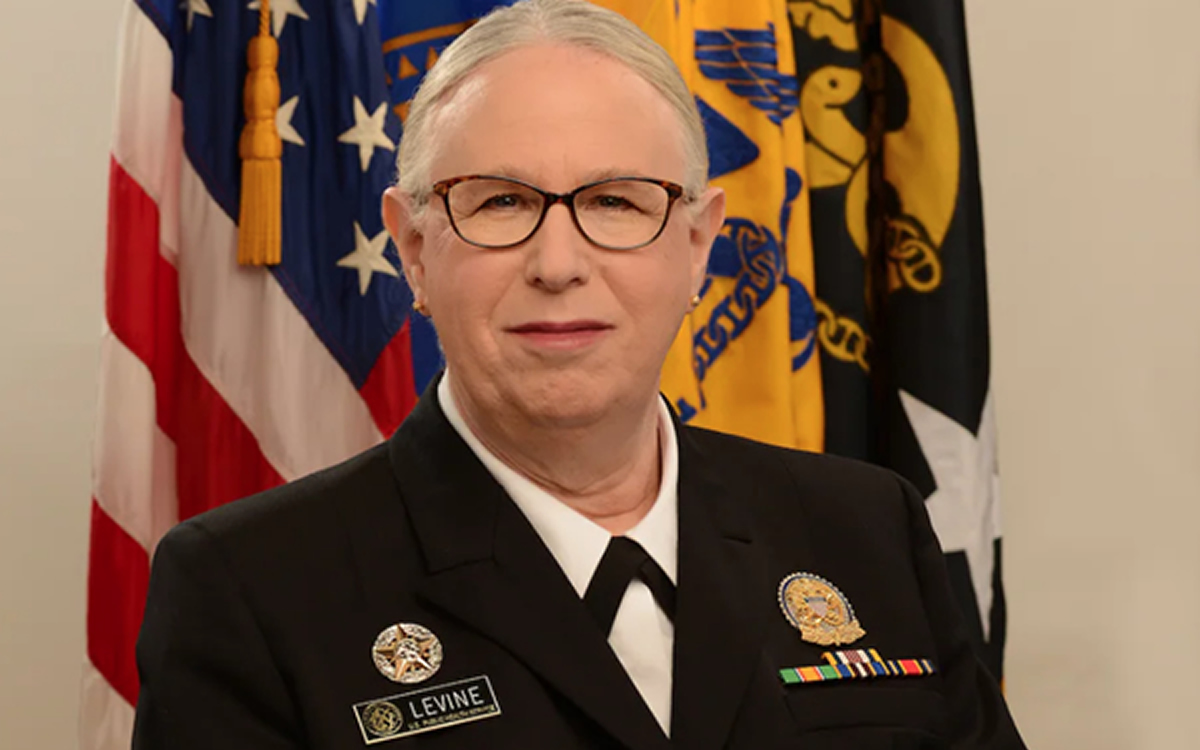
Asked by NPR about the alteration of her official portrait, Levine responded that it had been an honor to serve as assistant secretary for health, adding: “I’m not going to comment on this type of petty action.”
Health
The harsh truth about HIV phobia in gay dating
HIV and stigma remain baked into queer dating culture
Uncloseted Media published this article on Dec. 9.
This story was produced with the support of MISTR, a telehealth platform offering free online access to PrEP, DoxyPEP, STI testing, Hepatitis C testing and treatment and long-term HIV care across the U.S. MISTR did not have any editorial input into the content of this story.
By SAM DONNDELINGER | In his room, 19-year-old Cody Nester toggles between Grindr profiles on his phone.
As he senses chemistry with a match, he knows he has to flag something that could be a deal breaker.
“Did you see on my profile that I’m HIV positive?” he writes.
The reply arrives instantly.
“You’re disgusting. I don’t know why you’re on here.” Seconds later, the profile disappears, suggesting Nester is blocked.
“He went out of his way to say that. People could at least be more aware, ask questions, and understand the reality [of living with HIV] instead of attacking us,” Nester told Uncloseted Media.
“I would say 95 percent of people respond that way,” says Nester, who lives in Hollywood, Fla., and works at a Mexican restaurant. “The entire conversation is going fine. They’re down to meet up and then right when I mention [HIV], it’s always, ‘Oh no, never mind.’”
Some other messages he’s received include:
“You’ll never get anything in your life.”
“Why don’t you die?”
“Why are you on here?”
More often, it’s silence, a cold “No” or a sudden block.
“It’s like you’re a white fish in a school of black fish,” he says. “You’re immediately the odd one out.”
Even though Nester’s undetectable status makes it impossible for him to transmit HIV to partners during sex, he experiences stigma around HIV, something which nearly 90 percent of Americans agree still exists, according to a 2022 GLAAD report. And a survey shared in 2019 found that 64 percent of respondents would feel uncomfortable having sex with someone living with HIV, even on effective treatment. The emotional cost of this stigma is a significant barrier to intimacy and can result in a loss of self-esteem, fear of disclosure and suicidal thoughts.
What the science says — and why it doesn’t seem to matter
“The fear comes from antiquated ideas around HIV,” says Xavier A. Erguera, senior clinical research coordinator at University of California, San Francisco,’s Division of HIV, Infectious Diseases & Global Medicine. “A lot of people who are newly diagnosed still fear it’s a death sentence. Even though we have medications now to treat it effectively, and it’s basically a chronic condition, people haven’t caught up.”
Since 1996, antiretroviral therapies have developed to where they can suppress the virus to levels so low that it is undetectable in the blood, and thus not able to be transmitted to sexual partners. This is known as Undetectable = Untransmittable, or U=U. According to a Centers for Disease Control and Prevention report from 2024, 65 percent of HIV-positive cases are virally suppressed.
Another line of defense is pre-exposure prophylaxis (PrEP), which reduces the risk of acquiring HIV from sexual intercourse by roughly 99 percent when taken as prescribed. Approved by the Food and Drug Administration in 2012, the medication launched as a once-a-day pill and was hailed as a breakthrough as it transformed the sex lives of gay men, which had been shaped by decades of fear about HIV complications and about where AIDS came from.
“Internal logic doesn’t reflect what we know scientifically,” says Kim Koester, associate professor in the Department of Medicine at UCSF. “I was very optimistic when PrEP came out. The drug works, so why wouldn’t everyone use it?”
Even with PrEP use on the rise, less than 600,000 Americans used it in 2024, and Koester says skepticism and judgments about taking the drug persist.
“The phobia is pervasive,” Koester told Uncloseted Media. “People believe that others get the disease because of their lifestyle. … PrEP was supposed to be the antidote to the threat of HIV, reduce the anxiety, and make you more open to who you are and the sex you want. It’s supposed to be liberating. It is part of the answer. But it’s not enough. We don’t have enough people using PrEP for it to make the dent in the stigma we need.”
According to a 2023 study of seven informants living with HIV, public stigma stems from problematic views from society that those living with HIV are “a dangerous transmission source,” “disgraceful” and “violators of social and religious norms who have committed deviant behavior.”
Laramie Smith, assistant professor of Global Public Health at the University of California, San Diego, says this stigma is unwarranted and fueled by misunderstanding:
“With today’s treatments, it shouldn’t be a life-altering identity shift. It should be no different than, ‘I have diabetes.’ If you’re virally suppressed, it shouldn’t matter whether you’re friends with someone, whether you’re sleeping with someone — the science shows us that.”
How HIV phobia shows up online
Nester, who contracted HIV last year from a Grindr hook-up who insisted he was negative, says he is just starting to accept his diagnosis. “I didn’t go back on the apps for a long time after that. It messed with my mental health … realizing I’d have to take medication for the rest of my life.”
Since he started dating again this year, returning to apps like Grindr and Sniffies, he has faced a new normal. He tries to do everything “right” and disclose his status early. Even on his Grindr profile, he identifies as “poz,” slang for HIV-positive.
Still, he says most people ghost him once they find out. “The second I bring it up, it’s ‘No,’” says Nester. “The amount of discrimination you get … it’s always the same pattern. … People don’t know, and they don’t want to know. It messes with you.”
This discrimination may be fueled by a deprioritization of HIV awareness programs across the country. Earlier this month, the U.S. State Department did not commemorate World AIDS Day for the first time in 37 years. HIV prevention programs have been slashed, especially in conservative districts, and only 25 states and D.C. require both HIV and sex education. In many states, health curricula often lag behind current science and omit teaching about PrEP, gay sex and concepts like U=U. Research shows that Gen Z is currently the least educated generation about HIV.
“I could go all day explaining HIV, but people don’t want to listen,” says Nester, who is part of Gen Z. “People don’t want to learn about it; they just want to avoid it.”
HIV anxiety and public stigma shaped by history
Even in more progressive areas, stigma still exists. Damian Jack, a 45-year-old from Brooklyn, remembers sitting in an exam room in 2009 as a doctor explained how low his T-cell count was, which is a hallmark of HIV infection.
“I started hysterically crying,” he told Uncloseted Media. “HIV meant death. That’s what I thought.”
In 1981, when Jack was 1 year old, the first reports of a mysterious and deadly immune deficiency syndrome, which would later be named AIDS, appeared in the U.S. Growing up, Jack saw countless terrifying images of men on their deathbeds with Kaposi sarcoma, the purple lesions the media once called “gay cancer.” Public misinformation and fearmongering spread ideas that AIDS was a disease that “only gay men and drug users get.” And politicians often equated it with homosexuality and moral failure, calling it a “gay plague.” It wasn’t until September 1985, four years after the crisis began and thousands had died, that President Ronald Reagan first publicly mentioned AIDS.
Decades later, the emotional residue of that era and the shame associated with the virus lingers.
Hours after learning of his diagnosis, Jack faced his first encounter with rejection. He already had a date planned that night, and his doctor and friends encouraged him to go.
They had a great time until the date asked him: “Are you negative or positive?”
He told the truth.
“It was just understood there wouldn’t be a second date,” says Jack. “I remember thinking, ‘This is how dating is going to be now.’ I felt so anxious telling guys. It followed me everywhere. I don’t think that anxiety ever truly goes away.”
The emotional impact of HIV stigma
For those who are HIV-negative, experts say that “stigma’s whole design is to ‘other.’”
“The ‘us versus them’ creates that false sense of safety when it comes to HIV,” says Smith. “If I can believe that someone did something to deserve their diagnosis, and I’m not that [kind of person], then I’m safe.”
This othering is painful and can lead to shame, fear and isolation, and it is linked to a higher risk of depression and anxiety.
“If I’m undesirable, and that’s what those messages are communicating, that threatens your sense of safety, your sense of belonging and the fundamental desire we all have to be loved,” Smith says. “And that starts to reinforce the thinking that ‘I am not worthy. This virus that I have means that I’m not lovable. I am not safe showing up among other men.’”
“I pretend it doesn’t hurt, but some things do sting a little bit,” Nester says. “You start thinking, ‘Am I really that disgusting? Am I really that singled out?’”
When public stigma turns inward
“Internalized stigma is what occurs when applying the stereotypes about who gets HIV, the prejudice, the negative feelings, onto yourself,” says Smith.
In 2024, 38 percent of people living with HIV reported internalized stigma. And studies show that it can predict hopelessness and lower quality of life, even when people are engaged in care or virally suppressed.
Internalized stigma can also affect how people practice safe sex and communicate about the virus. A 2019 survey of men who have sex with men found that individuals who perceived greater community-level stigma were less likely to be aware of — and use — safer-sex functions available on dating apps, such as HIV-status disclosure fields, as well as sexual health information and resources.
“[HIV phobia] is probably the most intense, subvert bigotry I think you could experience,” Joseph Monroe Jr., a 48-year-old living in the Bronx, told Uncloseted Media.
On dating apps, men have messaged him things like, “You look like you’ve got that thing” and “Go ahead and infect someone else.”
Monroe has also dealt with misinformed people who rudely opine about how he contracted the virus: “Who fucked you? That’s how you got it, right?” people will say to him.
“You end up internalizing all these stereotypes about who gets HIV — that you were promiscuous, that you didn’t care about yourself, that you did something wrong,” says Smith. “You carry that in, and then you have to relearn: ‘No, I didn’t. This is just a health condition.’”
What HIV acceptance looks like and raising awareness
For those living with HIV, acceptance feels far away.
“You’re living under this threat of HIV and the threat that others find you threatening. It inhabits you socially and sexually,” Koester says. “People are hunkering down. Not putting themselves out there and having a mediocre quality of life. To have a sense of empowerment, you have to be legitimate and seen in the world and it’s hard to do that with the stigma that exists.”
Researchers say the path forward lies as much in conversation as in medicine.
Koester says she talks about HIV and PrEP anywhere she can, including in salons, cafes and restaurants. “Whenever I get into a cab with someone, I’m going to bring up HIV so the driver gets accustomed to hearing about it. … We have a long way to go in terms of exposure and awareness and every little bit helps.”
Part of this lies in increasing awareness through targeted marketing campaigns. PrEP is still profoundly misunderstood outside major urban centers, with uneven uptake among minority groups and usage gaps in the Bible Belt. And a 2022 U.S. survey found that 54.5 percent of people living with HIV didn’t know what U=U meant, and less than half of Americans agree that people living with HIV who are on proper medications cannot transmit the virus.
While eradicating stigma is slow, there is hope for acceptance.
Years after Jack’s diagnosis, in 2021, he told a man he was on a third date with that he was HIV-positive but undetectable. His date’s reply was almost casual:
“Oh — is that it? I thought you were going to say you had a boyfriend or something. I’m on PrEP. You’re fine.”
“It felt so good to hear him say that and accept me,” says Jack. “I was like, ‘This is my person. You’re my person.’” One year later, they got married.
Back in Florida, 19-year-old Cody Nester isn’t feeling this acceptance. He still scrolls past profiles that read “Only negative guys” and tries to ignore the hateful messages.
“It still hurts, but I know it’s coming from fear,” he says. “I wasn’t too informed about HIV before I got it. … When I got it, I really jumped into the rabbit hole and began to learn. I really do think [HIV and stigma] is because people are not knowledgeable. … When people don’t know details, they tend to get scared.”
Additional reporting by Nandika Chatterjee.

PHOTOS: The Holiday Show

The best books to give this holiday season

Studio’s ‘Mother Play’ draws from lesbian playwright’s past

Choose U ambassadors share lived experiences with HIV, personal reflections, and insights

DOJ seeks to join lawsuit against Loudoun County over trans student in locker room

EXCLUSIVE: George Santos speaks out on prison, Trump pardon, and more

Victory Institute honors transgender Spanish senator in D.C.

The beginning of the fall of Trump

Markey reintroduces International Human Rights Act in Senate