Local
Equality Maryland sets post-marriage agenda
Transgender rights bill, HIV/AIDS, immigration among issues on which organization hopes to work
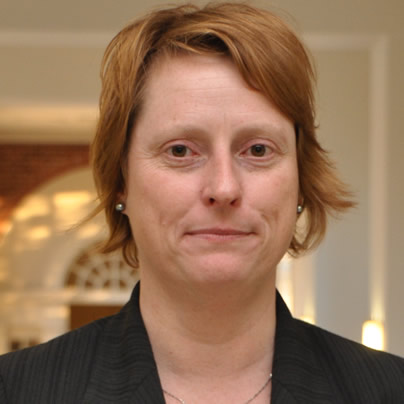
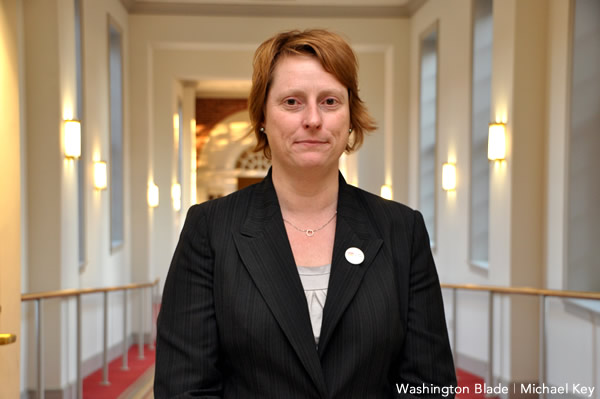
Equality Maryland executive director Carrie Evans (Washington Blade file photo by Michael Key)
Equality Maryland executive director Carrie Evans decided to stand along the side of the stage at the Baltimore Soundstage shortly after midnight on Nov. 7 as Gov. Martin O’Malley, gay state Sen. Rich Madaleno (D-Montgomery County) and others officially proclaimed the referendum on Maryland’s same-sex marriage law had passed. She said in a post-Election Day interview in D.C. it was the “best vantage point to look out at everyone” who had played a role in the long fight to secure marriage rights for same-sex couples in the state.
“I was crying like a baby,” Evans told the Washington Blade. “You’d see every person out there whose been a part of this in some way, shape or form. Everybody out there was crying and hugging and kissing. We will never experience this moment again, ever. And I just wanted to absorb it all.”
Election Day capped off a long and often tumultuous effort for Maryland’s same-sex marriage advocates that began in 1997 when three lawmakers introduced the first bill that would have allowed nuptials for gays and lesbians.
Equality Maryland and the American Civil Liberties Union in 2004 filed a lawsuit on behalf of Lisa Polyak and Gita Deane and eight other same-sex couples and a gay widow who sought the right to marry in the state. Baltimore Circuit Court Judge M. Brooke Murdock in 2006 found Maryland’s same-sex marriage ban unconstitutional. The Maryland Court of Appeals a year later upheld the prohibition on nuptials for gays and lesbians.
State lawmakers in 2011 narrowly defeated a same-sex marriage bill, but legislators approved it in February. O’Malley signed the law on March 1.
Evans said Equality Maryland, the Human Rights Campaign, the ACLU and other organizations that had fought for the same-sex marriage bill knew opponents would almost certainly collect enough signatures to force a referendum on the issue. The coalition that eventually became known as Marylanders for Marriage Equality formed before the legislative session ended in April.
“We’ve won in the Baltimore trial court, got excited but we knew we had to go to Court of Appeals, lost there,” Evans said. “[We] went to the legislature, couldn’t even really celebrate after that because you knew it was going to referendum. We had our little woohoo, but knowing this is going to referendum and being able to finally say ‘This is it, we’re done.’”
Evans, who took the helm of Equality Maryland last December, said her organization contributed more than $200,000 to Marylanders for Marriage Equality. The campaign ultimately raised nearly $6 million, but she said Equality Maryland’s contribution is remarkable considering her organization nearly closed its doors in the summer of 2011 in the wake of former executive director Morgan Meneses-Sheets’ termination.
“I’m so proud because 12 months ago Equality Maryland was pretty much broke and struggling,” said Evans. “Not only have we come out of that and had a good 2012 budget for the organization, we raised over $200,000 for the campaign, which is amazing.”
Mass., Iowa groups re-evaluate missions after marriage victories
Advocacy groups in other states have had to re-evaluate their agenda once same-sex couples won the right to marry.
Love Makes a Family of Connecticut, which spearheaded the passage of the state’s same-sex marriage law, disbanded in 2009 after then-Gov. Jodi Rell signed the measure. It took effect in Oct. 2010.
MassEquality also re-evaluated its mission after lawmakers in 2007 rejected a proposed referendum on amending the state constitution to ban nuptials for gays and lesbians. Massachusetts’ same-sex marriage law took effect in 2004.
“There were town halls that were done all over the state to ask people should MassEquality continue to exist, should we change the resources and the political power and the reputation, the expertise we had developed and leverage it to a multi-issue agenda that would basically lift up the other existing LGBT groups throughout the state,” Kara Suffredini, the group’s executive director, told the Blade. “The conclusion was yes: We have all the resources, we have all this political power. Yes, let’s use it to leverage other groups. And that’s what we’ve done since.”
Since the same-sex marriage debate ended in Massachusetts, MassEquality has worked with the Massachusetts Transgender Political Coalition to advocate on behalf of a trans rights bill Gov. Deval Patrick signed into law last November. The group has also worked with the LGBT Aging Project to address health disparities among LGBT elders and the Boston Alliance of Gay, Lesbian, Bisexual and Transgender Youth (BAGLY) to address homelessness among LGBT youth and bullying.
MassEquality has a seat on a commission state lawmakers created earlier this year to study the issue of homelessness among young people.
“Obviously marriage equality is an issue that garners a lot of attention and resources,” said Suffredini. “Once it’s done, there is plenty else to do and it was not difficult for us to figure out what else there was to do.”
Same-sex couples have been able to legally marry in the Hawkeye State since the Iowa Supreme Court in 2009 unanimously struck down the ban on nuptials for gays and lesbians. Voters in 2010 removed three of the justices who backed the ruling from the bench. Opponents failed to unseat a fourth on Nov. 6.
“Just because you have marriage, it doesn’t mean you stop being vigilant,” Donna Red Wing, executive director of One Iowa, told the Blade. “Here in Iowa if we don’t maintain a Democratic Senate majority at this time, we might see marriage on the ballot. And so we need to really make sure that we not only continue to hold back the forces working against us, but that we do the work that needs to be done across the state and that’s putting a face and a voice to what it means to be gay and lesbian or bi or trans in Iowa.”
One Iowa continues to fight to secure parental rights for same-sex couples — she noted the state’s Department of Public Health refused to allow a married lesbian who had a child with her wife to be recognized on their birth certificate. Red Wing pointed to another case in which officials “crudely whited-out” a lesbian mother’s name on her stillborn child’s birth certificate because she said the Department of Public Health would not recognize the two women as parents.
The group is also working with HIV/AIDS service providers to decriminalize those living with the virus and to address LGBT-specific health care disparities across Iowa.
“From birth to death we’re looking at the issues that impact Iowans — specifically LGBT Iowans – and how we can really strengthen and deepen what equality means for them,” Red Wing said.
Back in Maryland, Evans said Equality Maryland plans to work to make sure the same-sex marriage law is fully implemented once it takes effect on Jan. 1.
“We have to clean up a few regulations,” she said. “There may even be some litigation for clerks of court who aren’t complying. We still have some counties that aren’t offering spousal benefits to same-sex couples to same-sex spouses despite the Port v. Cowan court case [where the Court of Appeals in May unanimously ruled same-sex couples who legally married in another state can obtain divorces in Maryland] and attorney general.”
Equality Maryland continues to strategize with the Maryland Coalition for Trans Equality on how to advance a bill during the upcoming legislative session that would add gender identity and expression to the state’s anti-discrimination law. The organization also hopes to work with the NAACP and Revs. Delman Coates of Mt. Ennon Baptist Church in Prince George’s County and Donté Hickman of Southern Baptist Church in Baltimore and other groups to address health disparities and reduce HIV/AIDS rates among disproportionately affected populations in the state.
Evans further stressed she hopes to continue Equality Maryland’s work on immigration-related issues that began in August when it and CASA de Maryland announced a campaign to build additional support for the same-sex marriage and a law that provides in-state tuition to undocumented immigrants — voters on Nov. 6 approved the Maryland Dream Act by a 59-41 percent margin.
Equality Maryland also plans to work with the Maryland State Department of Education to ensure the state’s anti-bullying regulations are properly implemented.
“We’re going to start really focusing on that, making sure the way students are treated in Montgomery County is the way they’re treated in Garrett County and the way they’re treated in Cecil [County],” Evans said.


District of Columbia
Brian Footer suspends campaign for Ward 1 D.C. Council seat
Race’s third LGBTQ candidate cites family reasons for ‘stepping back’
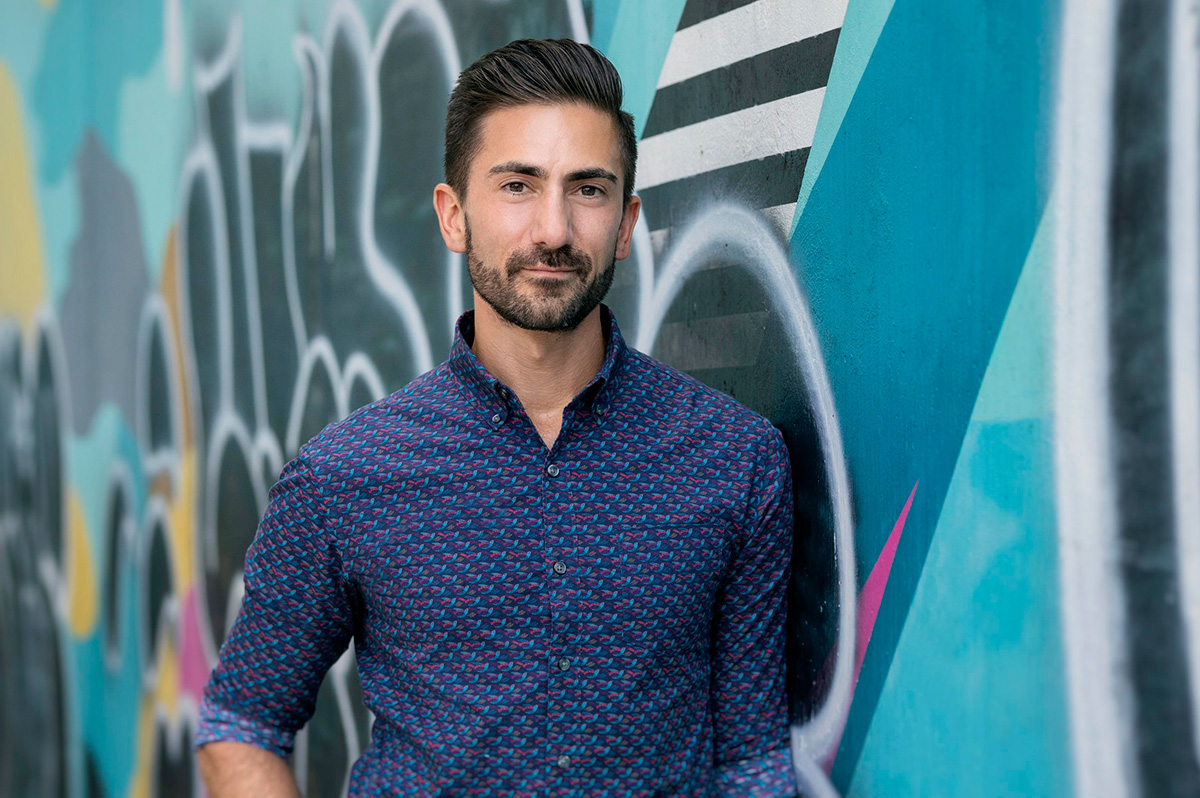
Gay Advisory Neighborhood Commissioner Brian Footer, who was one of three out LGBTQ candidates running for the open Ward 1 D.C. Council seat in the city’s June 16, 2026, Democratic primary, announced on Dec. 17 he has decided to “suspend” his campaign to focus on his family.
“After deep reflection and honest conversations with my family, I have decided to suspend my campaign for the D.C. Council,” he said in a statement. “This moment in my life requires me to be present with the people I love most and honor the responsibilities I carry both at home and in the community,” he states. “This was not an easy decision, but it is the right one for me and my family at this time.”
Footer, a longtime Ward 1 community activist and LGBTQ rights advocate, announced his candidacy for the Ward 1 Council seat in July, one month before bisexual Ward 1 community activist Aparna Raj announced her candidacy for the Council seat on Aug. 12.
Gay Ward 1 Advisory Neighborhood Commissioner Miguel Trindade Deramo announced his candidacy for the Ward 1 Council seat on Nov. 18, becoming the third out LGBTQ candidate in what appeared to be an unprecedented development for a race for a single D.C. Council seat.
At least three other candidates who are not LGBTQ are running for the Ward 1 Council seat. They include Ward 1 ANC member Rashida Brown, longtime Ward 1 community activist Terry Lynch, and Jackie Reyes-Yanes, the former director of the Mayor’s Office of Community Affairs.
In his statement announcing the suspension of his candidacy, Footer said he would continue to be involved in community affairs and advocate for the issues he discussed during his campaign.
“I want to be clear: I am stepping back from the race, not the work,” he says in his statement. “Public service has always been my calling. I will continue advocating for affordability, for safer streets, for stability for small businesses, and for a government that responds to people with urgency and respect,” he wrote. “And I will continue showing up as a partner in the work of building a stronger Ward 1.”
Footer concluded by thanking and praising his campaign supporters and calling his campaign suspension a “transition,” suggesting he is not likely to resume his candidacy.
His campaign press spokesperson did not immediately respond to a question from the Washington Blade asking if Footer might later resume his campaign or if his latest action was in effect an end to his candidacy.
“To everyone who knocked on doors, hosted conversations, donated, shared encouragement, and believed in this campaign, thank you,” he says in his statement. “I am deeply grateful for every person who helped this campaign take root,” he added. “This isn’t an ending, it’s a transition. And I’m excited for the work ahead, both in Ward 1 and at home with my family.”
Longtime gay D.C. Democratic Party activist Peter Rosenstein said in a statement to the Blade, “I respect Brian Footer’s decision to end his campaign for Council. It is not easy to run a campaign in D.C. and there are many others running in Ward 1.” He added, “While not living in Ward 1, I thank Brian for all he has done and clearly will continue to do for the people in the ward.”
Local
LGBTQ, LGBTQ-friendly congregations to hold holiday services
Bet Mishpachah’s Hanukkah service to take place on Friday
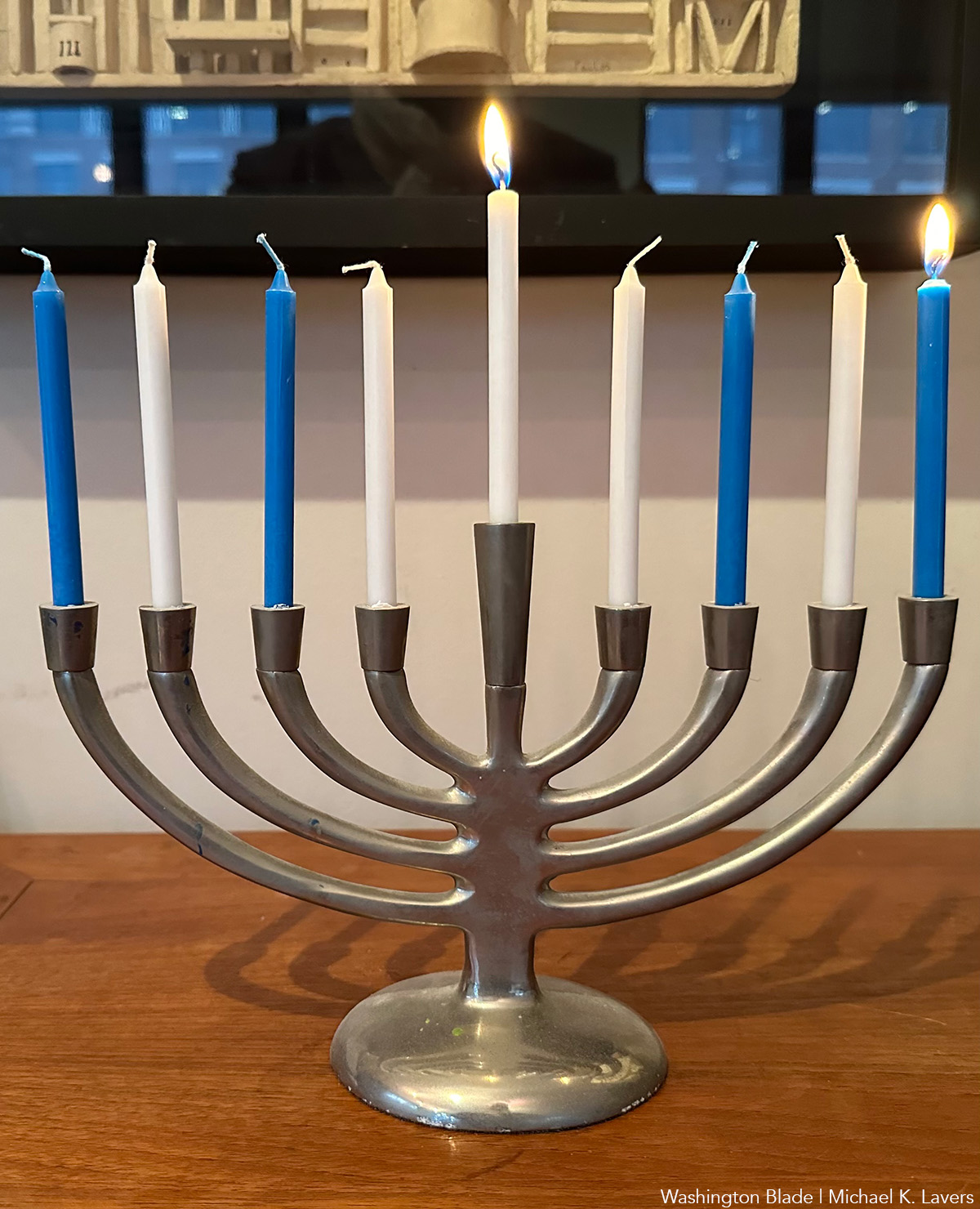
LGBTQ and LGBTQ-friendly congregations in D.C. will hold services and other events throughout the holiday season.
Bet Mishpachah on Friday will hold its Sparks in the Dark Happy Hour at Spark Social on 14th Street from 5:30-7:30 p.m. It’s Chanuka Shabbat Service will begin at the Edlavitch DC Jewish Community Center (1529 16th St., N.W.) at 8 p.m.
Hanukkah began on Sunday and will end on Dec. 22.
Two gunmen on Sunday killed 15 people and injured more than two dozen others when they opened fire at a Hanukkah celebration on Sydney’s Bondi Beach.
Jake Singer-Beilin, Bet Mishpachah’s chief rabbi, in a Facebook post mourned the victims.
“We grieve for the victims and send heartfelt prayers of healing for those who were wounded,” he wrote.
“This Chanuka, our lights will shine brightly in the darkness, but our hearts will be heavy with mourning for those who were murdered on Bondi Beach while observing what should have been a joyous day,” added Singer-Beilin. “We will still celebrate our Festival of Lights and we will commit ourselves to illuminating and repairing our broken world. Let us channel the bravery of the Maccabees who found hope where there seemed to be none, and who fought to create a better future. We must do the same.”
LGBTQ Catholic group to hold annual Christmas Day Mass
Dignity Washington’s Christmas Day Mass will take place at St. Margaret’s Episcopal Church (1820 Connecticut Ave., N.W.) on Dec. 25 from 6-7 p.m. Parishioners can attend in person or watch it online via Facebook.
The Metropolitan Community Church of Washington D.C.’s Christmas Eve service will take place at the church (474 Ridge St., N.W., on Dec. 24 at 6 p.m.
St. Thomas Episcopal Church (1517 18th St., N.W.) in Dupont Circle will hold its Christmas Eve Festival Eucharist from 5-6 p.m. A Christmas Eve dinner will take place in the Parish Hall from 6-8:30 p.m. The church’s Christmas Eve Festival Eucharist will occur on Dec. 25 from 10-11 a.m.
Washington National Cathedral throughout the holiday season has a number of services and events scheduled. These include the virtual Gospel Christmas Service on Dec. 21 from 6-7:30 p.m., the Family Christmas Service on Dec. 23 from 11 a.m. to noon, the Christmas Eve Festival Holy Eucharist on Dec. 24 from 10-11:45 p.m., and the Christmas Day Festival Holy Eucharist on Dec. 25 from 11:15 a.m. to 12:45 p.m.
The Foundry United Methodist Church (1500 16th St., N.W.) in Dupont Circle will hold its Christmas Eve Family Service on Dec. 24 at 4:30 p.m. Its Carols and Candlelight Service will take place at 8 p.m.
Smithsonian Anacostia Community Museum to celebrate Kwanzaa
The Smithsonian Anacostia Community Museum (1901 Fort Place S.E.) in Anacostia will mark the first day of Kwanzaa on Dec. 26 with storytelling and drumming with Mama Ayo and Baba Ras D from noon to 2 p.m. The museum will hold a series of other events through the 6-day celebration of African American culture that ends on Jan. 1.
The Creative Suitland Arts Center (4719 Silver Hill Road) in Suitland, Md., on Friday will hold their Almost Kwanzaa: A Creative Kind of Holiday event from 6-8:30 p.m.
Maryland
Joseline Peña-Melnyk elected Md. House speaker
Family immigrated to New York City from the Dominican Republic
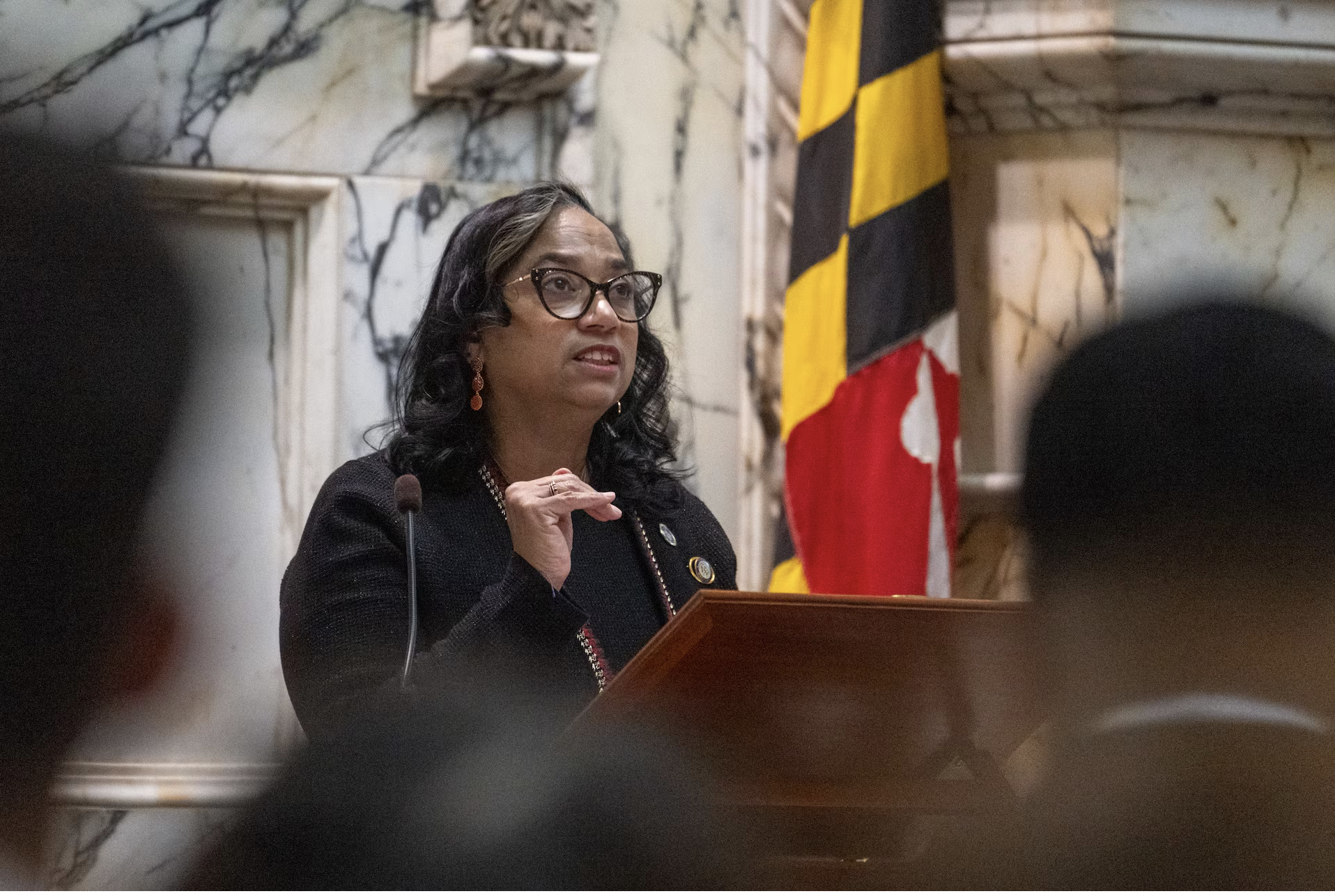
By PAMELA WOOD | Moments after being elected speaker of the Maryland House of Delegates Tuesday, state Del. Joseline Peña-Melnyk stood before the chamber and contemplated her unlikely journey to that moment.
Born in the Dominican Republic, the Peña family lived in a small wooden house with a leaky tin roof and no indoor plumbing. Some days, she said, there was no food to eat.
When she was 8 years old, the family immigrated to New York City, where Peña-Melnyk was dubbed “abogadito” or “little lawyer” for helping her mother and others by translating at social services offices.
The rest of this article can be read on the Baltimore Banner’s website.

Brian Footer suspends campaign for Ward 1 D.C. Council seat

LGBTQ Democrats say they’re ready to fight to win in 2026

PHOTOS: 10’s Across the Board

Lighting candles in a time of exhaustion

LGBTQ, LGBTQ-friendly congregations to hold holiday services

PHOTOS: The Holiday Show

Choose U ambassadors share lived experiences with HIV, personal reflections, and insights

Studio’s ‘Mother Play’ draws from lesbian playwright’s past

The best books to give this holiday season