News
Pope says gays should not be marginalized
Pontiff spoke to reporters after leaving Brazil

Pope Francis (Photo by Roberto Stuckert Filho via Wikimedia Commons)
Pope Francis on Monday said gay men and lesbians should not be judged or marginalized.
“If a person is gay and seeks the Lord and is of good will, who am I to judge him?” he told reporters in response to a question about gay priests as he returned to Rome after his week-long trip to Brazil for World Youth Day as La Nación, an Argentine newspaper reported.
Francis’ comments come amid renewed calls to welcome gays and lesbians back into the church following Pope Benedict XVI’s abrupt resignation in February.
“You are made in God’s image and likeness,” New York Cardinal Timothy Dolan told ABC News’ George Stephanopoulos during an interview in March. “We want your happiness… and you’re entitled to friendship.”
Cardinal Nicolás de Jesús López Rodríguez of the Archdiocese of Santo Domingo in the Dominican Republic late last month referred to James “Wally” Brewster, an openly gay man whom President Obama nominated to become the next American ambassador to the Caribbean country, as a “maricón” or “faggot” in Spanish during a press conference.
Francis himself seemed to echo Dolan’s call during his comments to reporters.
“The Catechism of the Catholic church explains this in a very clear way,” the pontiff told reporters. “It says that these people should not be marginalized. They should be integrated into society.”
Majority of Catholics back same-sex marriage; hierarchy remains opposed
A Quinnipiac University poll in March found that 54 percent of Catholics support marriage rights for same-sex couples.
Maryland Gov. Martin O’Malley is among the Catholic state executives who have signed same-sex marriage measures into law.
Catholic hierarchy continues to oppose the issue in spite of this increased support.
“Marriage exists obviously we believe by the will of God because the sexual orientation between men and women tends to create babies,” Father Leonard Klein of the Diocese of Wilmington (Del.) said before Delaware Gov. Jack Markell signed a bill into law that extended marriage to same-sex couples in the state.
Bishop Thomas Tobin of the Diocese of Providence (R.I.) in May also spoke out against the issue in a letter to Rhode Island Catholics before Gov. Lincoln Chafee signed his state’s same-sex marriage bill into law.
“Like many others, I am profoundly disappointed that Rhode Island has approved legislation that seeks to legitimize ‘same-sex marriage,’” Tobin wrote.
Francis, who was among the most prominent opponents of efforts to extend marriage rights to same-sex couples in his native Argentina, also spoke out against what he described as the “gay lobby” within the Vatican. These comments came in response to questions over the reported homosexuality of Monsignor Battista Ricca, whom the pontiff last month appointed to oversee the Vatican bank, that began to emerge last week in the Italian press.
“When one encounters a person like this, one have to distinguish between the act of being gay and lobbying, because no lobby is good,” Francis said. “The problem is not having this orientation. We must be brothers. The problem is lobbying.”
The Archdiocese of Washington did not have an immediate comment on Francis’ statements.
“He’s articulating well in a beautifully tender way the traditional teaching of the church,” Dolan said during an interview on “CBS This Morning” on Tuesday. “While certain acts may be wrong, we will always love and respect the person and treat the person with dignity.”
Marianne Duddy-Burke, executive director of DignityUSA, an LGBT Catholic organization, told the Washington Blade she welcomes what she described as a “change of tone from the very harsh and damaging rhetoric” of Benedict and his predecessor, Pope John Paul II.
“We hope it translates into similar expressions of openness among bishops and cardinals here in the U.S. and in other countries,” Duddy-Burke said. “The best news would be if the Pope indicates a willingness to begin a dialogue with LGBT Catholics and our families about our experience in the Church and in our societies. He’s shown humility in walking with other marginalized groups. We’d hope it would extend to us, as well.”
Human Rights Campaign President Chad Griffin struck a similar tone.
“While Pope Francis’s words do not reflect a shift in Church policy, they represent a significant change in tone,” he said. “Like his namesake, Francis’s humility and respect for human dignity are showing through, and the widespread positive response his words have received around the world reveals that Catholics everywhere are thirsty for change.”
Esteban Paulón, president of the LGBT Federation of Argentina, highlighted the pontiff’s opposition to same-sex marriage in Argentina.
“A profound self-criticism on the part of the church hierarchy about the position it has historically taken with regard to lesbians, gays, bisexuals and transgender people is essential,” Paulón said in a statement. “Let’s not forget that this same pope that today said don’t judge us the same man who called for ‘a holy war against the devil’s plan’ to block the same-sex marriage law. These types of declarations, coming from the top of the Catholic church hierarchy, only promote hate and discrimination.”

Delaware
Delaware guv signs bill to protect children born using assisted reproduction
‘Modernizing laws to better reflect and protect today’s families’
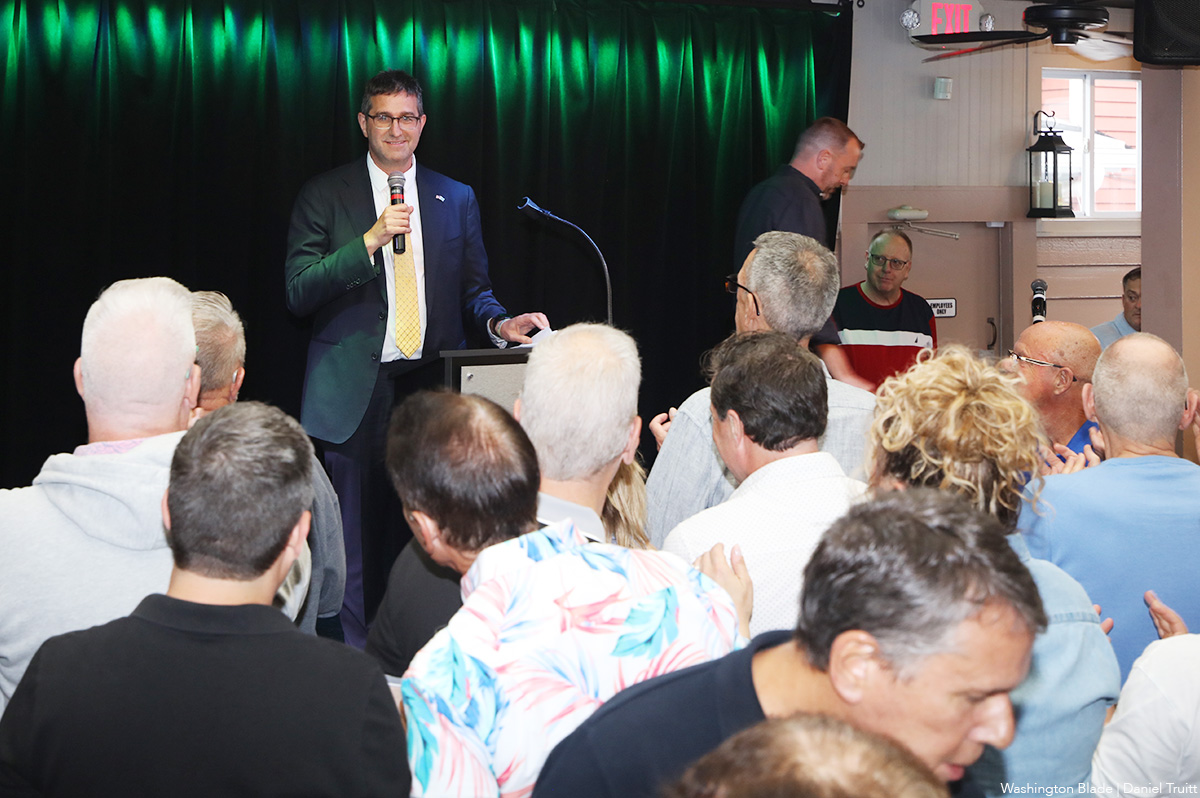
Delaware Gov. Matt Meyer on June 9 signed SB 250, a bill that helps fill the gaps in the state’s parentage law.
SB 250 amends the 2017 Uniform Parentage Act to broaden the state’s legal framework for surrogacy. Prior to SB 250, some children, particularly those born through assisted reproduction or surrogacy, did not have a clear path to a legally recognized relationship with their parents. This created issues around parental decision-making and children’s access to health insurance.
According to the bill’s prime sponsor, Sen. Marie Pinkney, SB 250 ensures that every child in the state has a secure legal relationship with their parents. She said the bill modernizes outdated statutes and strengthens protections for children born through assisted reproduction or surrogacy.
These issues are more likely to affect queer families that rely on assisted reproduction methods to have children. Parentage laws are critical to the well-being of children and the ability of parents to care for them without unnecessary legal barriers.
“Today, we celebrate a victory for all children and families in Delaware. By modernizing its laws to better reflect and protect today’s families, Delaware has set an example for states across the country,” said Jordan Wilson, executive director of COLAGE.
COLAGE is a nonprofit organization dedicated to supporting and empowering youth in LGBTQ+ families through activism and community.
“We are grateful to the many families and advocates who worked tirelessly to advance this legislation, from the bill’s drafters to the COLAGErs who shared their lived experiences directly with lawmakers,” said Wilson.
“Delaware is strongest when the law respects and protects all families,” said Mark Purpura, board member of Equality Delaware, a statewide organization focused on promoting and ensuring dignity, safety, and equality for all LGBTQ+ Delawareans.
The bill’s sponsors and co-sponsors include Sen. Pinkney, Rep. Krista Griffith, Sens. Russ Huxtable, Raymond Seigfried, and David Sokola; and Reps. Alonna Berry, Mara Gorman, Kerri Harris, Eric Morrison, DeShanna Neal, Sophie Phillips, and Cyndie Romer.
El Salvador
‘Mani Fiesta tu Orgullo’: memoria, resistencia y celebración marcan inicio del Mes del Orgullo en El Salvador
Actividad reunió a cientos de personas en un espacio de encuentro, cultura y reivindicación

Entre los sonidos vibrantes de la batucada, las luces de colores, la música y los mensajes de reivindicación, el 5 de junio se llevó a cabo una nueva edición de “Mani Fiesta tu Orgullo”, un evento que durante los últimos cuatro años se ha convertido en una de las actividades más emblemáticas para dar inicio a las celebraciones y acciones de incidencia política, cultural y comunitaria del Mes del Orgullo en El Salvador.
La actividad, organizada por la Federación Salvadoreña LGBTI en conjunto con el Centro Cultural de España en El Salvador, congregó entre 200 y 300 personas que se dieron cita para compartir un espacio de encuentro, reflexión, memoria histórica y celebración de la diversidad.
Desde las 7 p.m. y hasta las 10 p.m., el recinto se transformó en un punto de reunión para activistas, artistas, organizaciones de la sociedad civil, personas de la comunidad LGBTQ y aliados que año con año encuentran en esta actividad una oportunidad para reafirmar su identidad y fortalecer los lazos comunitarios.
Más allá de una fiesta, los organizadores destacan que “Mani Fiesta tu Orgullo” representa un acto político y social de gran importancia, pues marca oficialmente el inicio de las actividades que diversas organizaciones desarrollan durante junio y permite posicionar públicamente las demandas, preocupaciones y aspiraciones de la comunidad LGBTQ salvadoreña.
Cuatro años construyendo comunidad y visibilidad
La iniciativa nació hace cuatro años como una propuesta para abrir el Mes del Orgullo desde un espacio cultural, inclusivo y accesible para todas las personas. Desde entonces, la actividad ha evolucionado hasta convertirse en una referencia dentro de la agenda de junio, permitiendo que organizaciones, activistas y miembros de la comunidad encuentren un espacio para compartir experiencias, fortalecer alianzas y proyectar mensajes de incidencia.
Para la Federación Salvadoreña LGBTI, uno de los aspectos más significativos ha sido el respaldo constante del Centro Cultural de España, institución que ha abierto sus puertas para albergar la actividad y contribuir a la promoción de los derechos humanos y la diversidad.
“Para nosotras y nosotros es muy gratificante contar con el apoyo del Centro Cultural de España, que ha sido un aliado importante para poder desarrollar este espacio y hacerlo crecer cada año”, destacaron integrantes de la Federación.
La continuidad del evento también refleja la capacidad de resistencia y organización de la comunidad LGBTQ en un contexto que continúa presentando desafíos relacionados con la igualdad, el reconocimiento y la garantía de derechos.
Durante estos cuatro años, “Mani Fiesta tu Orgullo” ha servido como un espacio de expresión artística, pero también como una plataforma para visibilizar las realidades que enfrenta la población diversa en el país.
Un hecho histórico: la participación activa de la Asamblea Feminista
Uno de los aspectos que marcó esta edición fue la participación activa de la Asamblea Feminista, organización que desde el año pasado se ha incorporado de manera más directa a la coordinación y desarrollo de las actividades del Mes del Orgullo.
Aunque históricamente mujeres lesbianas y bisexuales han formado parte de las marchas y acciones impulsadas por la comunidad LGBTQ, su participación en los procesos organizativos había sido limitada. La incorporación de la Asamblea Feminista representa, según activistas, un paso importante hacia la construcción de un movimiento más amplio, inclusivo y articulado.
Para Karla Guevara, secretaria general de la Federación Salvadoreña LGBTI, este acercamiento constituye un hecho sin precedentes dentro de la historia reciente del movimiento.
“Creo que esto es inédito, y a nosotras y nosotres como Federación nos llena de orgullo que las compañeras lesbianas y bisexuales se hayan podido sumar a estas actividades del Mes del Orgullo”, expresó.

La participación de organizaciones feministas también evidencia una creciente convergencia entre distintas luchas sociales que comparten principios relacionados con la igualdad, la dignidad humana y la defensa de los derechos fundamentales. Para muchas personas asistentes, esta articulación representa una oportunidad para fortalecer redes de apoyo y construir agendas comunes frente a desafíos que afectan a diversos sectores históricamente excluidos.
Arte, música y celebración como herramientas de resistencia
La jornada estuvo marcada por expresiones artísticas que aportaron energía y color a la celebración. La reconocida batucada Las Musas fue una de las agrupaciones encargadas de animar la noche, aportando ritmos vibrantes que acompañaron gran parte de la actividad.
Asimismo, la participación de la DJ Drag Alexa Evangelista contribuyó a crear un ambiente festivo y diverso, donde la música se convirtió en un lenguaje común para las personas asistentes.
Más allá del entretenimiento, las expresiones artísticas desempeñan un papel fundamental dentro de los movimientos sociales, especialmente en aquellos relacionados con la diversidad sexual y de género.
El arte, la música, la danza y las expresiones culturales permiten construir comunidad, fortalecer identidades y generar espacios seguros donde las personas pueden expresarse libremente. En este sentido, “Mani Fiesta tu Orgullo” demuestra cómo la celebración también puede convertirse en una forma de resistencia frente a la discriminación y la exclusión.
Un manifiesto dedicado a la memoria y la gratitud
Uno de los momentos más significativos de la noche fue la lectura del manifiesto del orgullo correspondiente a este año. A diferencia de otros años, el documento estuvo enfocado principalmente en la memoria histórica y el reconocimiento de quienes construyeron los primeros espacios de organización y resistencia en condiciones mucho más adversas.
El mensaje recordó a aquellas personas que, en décadas pasadas, comenzaron a construir comunidad desde la clandestinidad, cuando la discriminación social era aún más intensa y los espacios seguros prácticamente inexistían. También rindió homenaje a quienes fallecieron durante la pandemia del VIH/Sida en las décadas de 1980 y 1990, una de las etapas más dolorosas para la población LGBTQ a nivel mundial.
El manifiesto destacó además la importancia de recordar la primera Marcha del Orgullo realizada en El Salvador en 1997, un acontecimiento histórico que marcó un antes y un después en la visibilidad pública de la comunidad diversa. Asimismo, se hizo un reconocimiento especial a las personas adultas mayores de la comunidad, incluyendo mujeres lesbianas, hombres gays, personas bisexuales y mujeres trans, cuyas experiencias y luchas han contribuido a abrir camino para las nuevas generaciones.
Para muchas de las personas presentes, este enfoque representó una invitación a mirar hacia atrás con gratitud, reconociendo que los avances actuales son el resultado de décadas de trabajo, organización y valentía.
El orgullo como memoria, comunidad y esperanza
Aunque junio suele asociarse con celebraciones, desfiles y manifestaciones públicas, para muchas organizaciones LGBTQ el orgullo también implica memoria, reflexión y compromiso con las generaciones futuras.
Eventos como “Mani Fiesta tu Orgullo” permiten recordar que detrás de cada conquista existen historias de personas que enfrentaron discriminación, violencia y exclusión para abrir espacios de participación y reconocimiento. Al mismo tiempo, estas actividades fortalecen los vínculos comunitarios y generan oportunidades para que nuevas personas se integren a los movimientos de defensa de derechos humanos.
La edición de este año dejó en evidencia que la comunidad LGBTQ salvadoreña continúa apostando por la organización colectiva, la construcción de alianzas y la recuperación de la memoria histórica como herramientas fundamentales para avanzar. Con una asistencia que superó las expectativas de los organizadores y una creciente participación de distintos sectores sociales, “Mani Fiesta tu Orgullo” reafirmó su lugar como una de las actividades más significativas del inicio del Mes del Orgullo en El Salvador.
Más que una celebración, fue un espacio para recordar, agradecer y reconocer que cada paso dado en la búsqueda de igualdad ha sido posible gracias a quienes, desde distintos momentos de la historia, decidieron levantar la voz y construir comunidad. Y precisamente allí radica la esencia de esta actividad: en recordar que el orgullo no solo se celebra, también se hereda, se construye y se comparte.
New York
N.Y. governor’s race presents stark contrast on LGBTQ rights
Democratic Gov. Kathy Hochul expected to face Republican Bruce Blakeman

As states across the country grapple with a rapidly changing federal landscape under President Donald Trump, governors have increasingly become the first line of defense — or enforcement — on issues ranging from healthcare and education to LGBTQ rights.
Nowhere is that more apparent than in New York, Trump’s home state, where the 2026 gubernatorial race is shaping up as a high-profile battle over the future of LGBTQ protections.
Incumbent Democratic Gov. Kathy Hochul is seeking a second full term as New York’s 57th governor and the state’s first female governor. She enters the race with strong support from LGBTQ advocates and organizations, including an endorsement from the Stonewall Democrats of New York City. Earlier this year, Hochul was also endorsed by progressive leaders like New York City Mayor Zohran Mamdani and U.S. Rep. Alexandria Ocasio-Cortez. She is running alongside New York City Council Speaker Adrienne Adams as her lieutenant governor candidate.
Throughout her tenure, Hochul has signed a series of measures aimed at strengthening protections for LGBTQ New Yorkers, particularly transgender residents.
Among the most notable is New York’s “Trans Safe Haven Act,” which protects out-of-state trans youth, their parents, and medical providers who travel to New York to access legally protected gender-affirming care. Hochul has also signed legislation requiring health insurance plans to cover HIV prevention medications, including PrEP and Post-Exposure Prophylaxis (PEP), without out-of-pocket costs.
Additionally, Hochul signed a Long-Term Care Bill of Rights that prohibits discrimination against LGBTQ seniors and people living with HIV in long-term care facilities.
“As the birthplace of the LGBTQ+ rights movement, New York has long been at the forefront of advancing equality,” Hochul said in a statement during Pride month. “During Pride month, we celebrate New York’s vibrant LGBTQ+ community and acknowledge the importance of protecting the rights and freedoms of LGBTQ+ New Yorkers. This month and every month, we proudly stand with the LGBTQ+ community and remain committed to building a more inclusive and equitable future for all where everyone can live freely with dignity, safety, and respect.”
On the Republican side, Nassau County Executive Bruce Blakeman has emerged as the party’s leading candidate. Blakeman is running with Madison County Sheriff Todd Hood as his lieutenant governor pick.
Blakeman, Nassau County’s 10th county executive, was first elected in 2021 after defeating Democratic incumbent Laura Curran. He previously served as a commissioner of the Port Authority of New York and New Jersey, a Nassau County legislator, and a Hempstead town councilman.
A longtime supporter of Trump, Blakeman appeared alongside the president during a 2024 event honoring slain NYPD Officer Jonathan Diller.
LGBTQ advocates have frequently criticized Blakeman for his positions on trans issues, particularly his opposition to trans women participating in women’s sports.
In February 2024, Blakeman signed an executive order barring women’s sports teams that include trans women from using Nassau County athletic facilities. The policy applies to youth, collegiate, and professional teams. Teams that include trans men were not affected. The order has since been halted by the New York State Appellate Division swiftly issued an injunction halting enforcement while the plaintiffs appeal the decision
Ahead of announcing the order, Blakeman repeatedly referred to trans women as “biological males” and argued they should compete on men’s or co-ed teams. LGBTQ rights groups condemned the policy, saying it discriminates against trans athletes and contributes to the marginalization of trans youth.
Trump endorsed Blakeman’s gubernatorial campaign in December 2025, shortly after U.S. Rep. Elise Stefanik (R-N.Y.) announced she would not seek the Republican nomination. The president made his endorsement via Truth Social that “Bruce is MAGA all the way, and has been with me from the very beginning.”
The Washington Blade contacted Blakeman’s campaign seeking comment on his LGBTQ policy priorities and views on issues including nondiscrimination protections, trans rights, and healthcare access. The campaign did not respond.
The race highlights two sharply different approaches to LGBTQ policy in a state widely regarded as the birthplace of the modern LGBTQ rights movement, home to the 1969 Stonewall uprising that helped launch the contemporary movement for LGBTQ equality.
Despite the ideological contrast, early polling suggests Hochul remains the clear favorite. Most public surveys show the incumbent holding a double-digit advantage over her potential Republican challengers, with some polls placing her lead at roughly 20 percentage points ahead of the November election.

Delaware guv signs bill to protect children born using assisted reproduction

Calendar: June 19-25

My trans daughter thrived in Chicago public schools

Minor league team in York, Pa., forfeits Pride Night game after some players refuse to wear special jersey

Congratulations to Lewis George and all winners in D.C.’s primary

PHOTOS: Lost River Pride

Gay San Diego mayor elected US Conference of Mayors president

PHOTOS: Pride on the Pier

UFC fighter says ‘Michelle Obama is a man’ at White House event