Commentary
GOP egos more important than serving U.S. citizens
Government shutdown tactic an alarming precedent
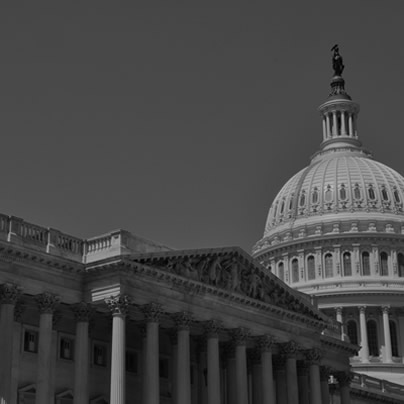
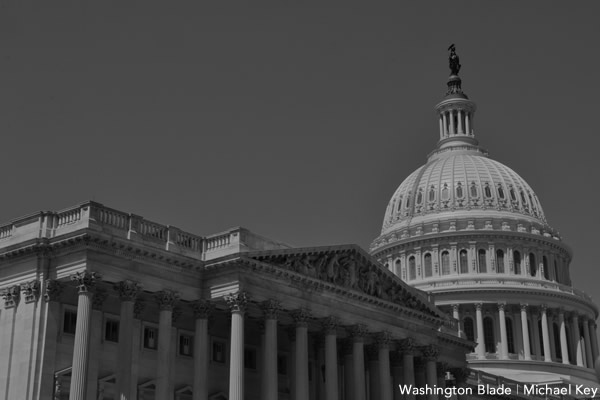
On Oct. 1, congressional Republicans allowed the federal government to shut down for the first time in 17 years. (Washington Blade photo by Michael Key)
On Oct. 1, congressional Republicans allowed the federal government to shut down for the first time in 17 years. It might have been understandable if this occurred due to a disagreement about federal budget issues that were on the table, but that is not the case. Instead, the shutdown has occurred because the far right wing of the Republican Party decided to use the federal spending bill as a vehicle to delay the implementation of Obamacare, a law President Obama signed in 2010.
Even when it became apparent that Democratic senators were not going to be bullied into undermining a healthcare reform law that, as President Obama noted, passed Congress; was signed by the president; upheld by the U.S. Supreme Court; and allowed to stand by American voters; House Republicans decided that their egos were more important than continuing to provide vital services to American citizens.
These actions should make the LGBT community feel uneasy. In this instance, congressional Republicans are using the spending bill to attempt to delay and defund Obamacare, but if they are successful, it may embolden them to use similar mechanisms to reverse or oppose LGBT-rights laws. In the past, Congress has blocked D.C. laws that the LGBT community has supported, such as needle exchange, so what’s to stop them from attempting to undermine marriage equality or continuing to prevent the Employment Non-Discrimination Act from passing.
Many marginalized groups have sought employment with the federal government to escape discrimination in the private sector. According to NPR, the government (local, state, and federal) is the largest employer of African Americans and numerous studies have shown that the majority of the black middle-class work in public sector jobs. The number of Latinos in government has increased by 10.6 percent, despite losses of government jobs by other groups, NPR noted. While federal law does not prevent employment discrimination based on sexual orientation or gender identity, many in the LGBT community have also sought out federal employment as a refuge from worse discrimination in the private sector.
The poison provisions that House Republicans added to the spending bill that would delay Obamacare and deny contraception to women should also concern the LGBT community because Congress is meddling in people’s personal affairs, which never turns out well for our community. As D.C. residents, we are keenly aware of Congress’ ability to impose its will on American citizens with no regard to those citizens’ rights and views on the matter. Unfortunately, the rest of the country is now getting to see this firsthand, although local residents will still pay a disproportionate price, due to the large number of federal employees in the area and the number of local businesses that depend on tourism, which will take a hit if the federal government remains closed for a prolonged period of time.
Thankfully, local D.C. politicians understand that the decision to keep the government open is not about them, it’s about the residents that they serve. Remaining open also helps the District’s cause for budget autonomy. After all, there is nothing like the city acting independently to illustrate that it can do so. Council member David Grosso should be applauded for pushing for the D.C. government to remain open and for D.C. government employees to be paid as normal with city funds; Mayor Gray should be applauded for acting on the suggestion and classifying all city workers as essential; and Chairman Mendelson should be applauded for circulating legislation among his colleagues to use reserve funds to pay for city operations. The federal government can learn a thing or two from District government leaders in how to put residents first.
President Obama has been shown more disrespect than any president in American history. Congressional Republicans would rather shut down the government than implement an Obamacare plan that most Americans support. Apparently, they will go to great lengths to see the president fail.
What they fail to understand is it is not the president who suffers in the government shutdown. It’s the hardworking government worker who will now be without a paycheck. It’s the family that has planned a vacation to D.C. for a year and now all of the Smithsonian museums and national parks are closed. It’s the senior citizen that depends on nutrition grants and will now need to find another source of food. Average Americans are the ones who suffer and I am fairly confident that average Americans will not forget the actions of House Republicans anytime soon.
Lateefah Williams’ biweekly column, ‘Life in the Intersection,’ focuses on the intersection of race, gender and sexual orientation. She is the immediate past president of the Gertrude Stein Democratic Club. Reach her at [email protected] or follow her at twitter @lateefahwms.


Today, on World AIDS Day, we honor the resilience, courage, and dignity of people living with HIV everywhere especially refugees, asylum seekers, and queer displaced communities across East Africa and the world.
For many, living with HIV is not just a health journey it is a journey of navigating stigma, borders, laws, discrimination, and survival.
Yet even in the face of displacement, uncertainty, and exclusion, queer people living with HIV continue to rise, thrive, advocate, and build community against all odds.
To every displaced person living with HIV:
• Your strength inspires us.
• Your story matters.
• You are worthy of safety, compassion, and the full right to health.
• You deserve a world where borders do not determine access to treatment, where identity does not determine dignity, and where your existence is celebrated not criminalized.
Let today be a reminder that:
• HIV is not a crime.
• Queer identity is not a crime.
• Seeking safety is not a crime.
• Stigma has no place in our communities.
• Access to treatment, care, and protection is a human right.
As we reflect, we must recommit ourselves to building systems that protect not punish displaced queer people living with HIV. We must amplify their voices, invest in inclusive healthcare, and fight the inequalities that fuel vulnerability.
Hope is stronger when we build it together.
Let’s continue to uplift, empower, and walk alongside those whose journeys are too often unheard.
Today we remember.
Today we stand together.
Today we renew hope.
Abraham Junior lives in the Gorom Refugee Settlement in South Sudan.
Commentary
Perfection is a lie and vulnerability is the new strength
Rebuilding life and business after profound struggles

I grew up an overweight, gay Black boy in West Baltimore, so I know what it feels like not to fit into a world that was not really made for you. When I was 18, my mother passed from congestive heart failure, and fitness became a sanctuary for my mental health rather than just a place to build my body. That is the line I open most speeches with when people ask who I am and why I started SWEAT DC.
The truth is that little boy never really left me.
Even now, at 42 years old, standing 6 feet 3 inches and 225 pounds as a fitness business owner, I still carry the fears, judgments, and insecurities of that broken kid. Many of us do. We grow into new seasons of life, but the messages we absorbed when we were young linger and shape the stories we tell ourselves. My lack of confidence growing up pushed me to chase perfection as I aged. So, of course, I ended up in Washington, D.C., which I lovingly call the most perfection obsessed city in the world.
Chances are that if you are reading this, you feel some of that too.
D.C. is a place where your resume walks through the door before you do, where degrees, salaries, and the perfect body feel like unspoken expectations. In the age of social media, the pressure is even louder. We are all scrolling through each other’s highlight reels, comparing our behind the scenes to someone else’s curated moment. And I am not above it. I have posted the perfect photo with the inspirational “God did it again” caption when I am feeling great and then gone completely quiet when life feels heavy. I am guilty of loving being the strong friend while hating to admit that sometimes I am the friend who needs support.
We are all caught in a system that teaches us perfection or nothing at all. But what I know for sure now is this: Perfection is a lie and vulnerability is the new strength.
When I first stepped into leadership, trying to be the perfect CEO, I found Brené Brown’s book, “Daring Greatly” and immediately grabbed onto the idea that vulnerability is strength. I wanted to create a community at SWEAT where people felt safe enough to be real. Staff, members, partners, everyone. “Welcome Home” became our motto for a reason. Our mission is to create a world where everyone feels confident in their skin.
But in my effort to build that world for others, I forgot to build it for myself.
Since launching SWEAT as a pop up fundraiser in 2015, opening our first brick and mortar in 2017, surviving COVID, reemerging and scaling, and now preparing to open our fifth location in Shaw in February 2026, life has been full. Along the way, I went from having a tight trainer six pack to gaining nearly 50 pounds as a stressed out entrepreneur. I lost my father. I underwent hip replacement surgery. I left a relationship that looked fine on paper but was not right. I took on extra jobs to keep the business alive. I battled alcoholism. I faced depression and loneliness. There are more stories than I can fit in one piece.
But the hardest battle was the one in my head. I judged myself for not having the body I once had. I asked myself how I could lead a fitness company if I was not in perfect shape. I asked myself how I could be a gay man in this city and not look the way I used to.
Then came the healing.
A fraternity brother said to me on the phone, “G, you have to forgive yourself.” It stopped me in my tracks. I had never considered forgiving myself. I only knew how to push harder, chase more, and hide the cracks. When we hung up, I cried. That moment opened something in me. I realized I had not neglected my body. I had held my life and my business together the best way I knew how through unimaginable seasons.
I stopped shaming myself for not looking like my past. I started honoring the new ways I had proven I was strong.
So here is what I want to offer anyone who is in that dark space now. Give yourself the same grace you give everyone else. Love yourself through every phase, not just the shiny ones. Recognize growth even when growth simply means you are still here.
When I created SWEAT, I hoped to build a home where people felt worthy just as they are, mostly because I needed that home too. My mission now is to carry that message beyond our walls and into the city I love. To build a STRONGER DC.
Because strength is not perfection. Strength is learning to love an imperfect you.
With love and gratitude, Coach G.
Gerard Burley, also known as Coach G, is a D.C.-based fitness entrepreneur.
Commentary
Elusive safety: what new global data reveals about gender, violence, and erasure
Movements against gender equality, lack of human rights data contributing factors.
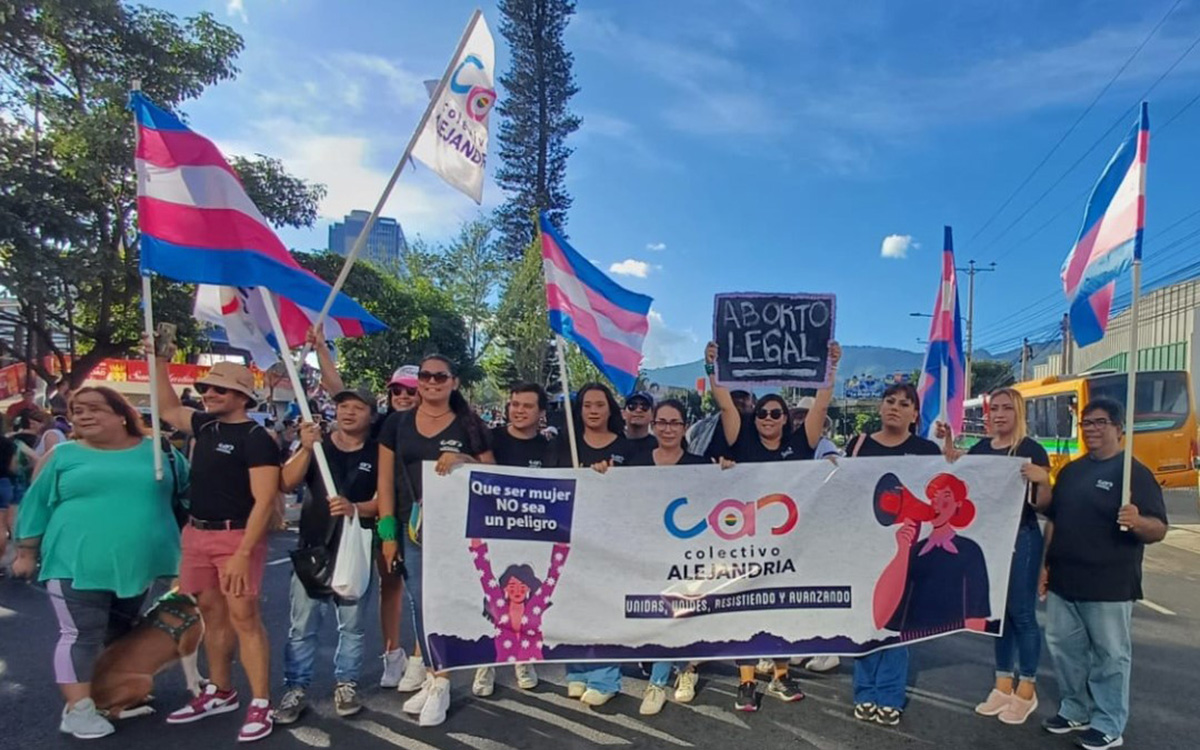
“My identity could be revealed, people can say whatever they want [online] without consequences. [Hormone replacement therapy] is illegal here so I’m just waiting to find a way to get out of here.”
-Anonymous respondent to the 2024 F&M Global Barometers LGBTQI+ Perception Index from Iraq, self-identified as a transgender woman and lesbian
As the campaign for 16 Days Against Gender-Based Violence begins, it is a reminder that gender-based violence (GBV) — both on– and offline — not only impacts women and girls but everyone who has been harmed or abused because of their gender or perceived gender. New research from the Franklin & Marshall (F&M) Global Barometers and its report A Growing Backlash: Quantifying the Experiences of LGBTQI+ People, 2022-2024 starkly show trends of declining safety among LGBTQI+ persons around the world.
This erosion of safety is accelerated by movements against gender equality and the disappearance of credible human rights data and reporting. The fight against GBV means understanding all people’s lived realities, including those of LGBTQI+ people, alongside the rights we continue to fight for.
We partnered together while at USAID and Franklin & Marshall College to expand the research and evidence base to better understand GBV against LGBTQI+ persons through the F&M Global Barometers. The collection of barometers tracks the legal rights and lived experiences of LGBTQI+ persons from 204 countries and territories from 2011 to the present. With more than a decade of data, it allows us to see how rights have progressed and receded as well as the gaps between legal protections and lived experiences of discrimination and violence.
This year’s data reveals alarming trends that highlight how fear and violence are, at its root, gendered phenomena that affect anyone who transgresses traditional gender norms.
LGBTQI+ people feel less safe
Nearly two-thirds of countries experienced a decline in their score on the F&M Global Barometers LGBTQI+ Perception Index (GBPI) from 2022-2024. This represents a five percent drop in global safety scores in just two years. With almost 70 percent of countries receiving an “F” grade on the GBPI, this suggests a global crisis in actual human rights protections for LGBTQI+ people.
Backsliding on LGBTQI+ human rights is happening everywhere, even in politically stable, established democracies with human rights protections for LGBTQI+ people. Countries in Western Europe and the Americas experienced the greatest negative GBPI score changes globally, 74 and 67 percent, respectively. Transgender people globally reported the highest likelihood of violence, while trans women and intersex people reported the highest levels of feeling very unsafe or unsafe simply because of who they are.
Taboo of gender equality
Before this current administration dismantled USAID, I helped create an LGBTQI+ inclusive whole-of-government strategy to prevent and respond to GBV that highlighted the unique forms of GBV against LGBTQI+ persons. This included so-called ‘corrective’ rape related to actual or perceived sexual orientation, gender identity, or expression” and so-called ‘conversion’ therapy practices that seek to change or suppress a person’s gender identity or expression, sexual orientation, or sex characteristics. These efforts helped connect the dots in understanding that LGBTQI+ violence is rooted in the same systems of inequality and power imbalances as the broader spectrum of GBV against women and girls.
Losing data and accountability
Data that helps better understand GBV against LGBTQI+ persons is also disappearing. Again, the dismantling of USAID meant a treasure trove of research and reports on LGBTQI+ rights have been lost. Earlier this year, the US Department of State removed LGBTQI+ reporting from its annual Human Rights Reports. These played a critical role in providing credible sources for civil society, researchers, and policymakers to track abuses and advocate for change.
If violence isn’t documented, it’s easier for governments to deny it even exists and harder for us to hold governments accountable. Yet when systems of accountability work, governments and civil society can utilize data in international forums like the UN Universal Periodic Review, the Convention on the Elimination of All Forms of Discrimination Against Women, and the Sustainable Development Goals to assess progress and compliance and call for governments to improve protections.
All may not be lost if other countries and donors fill the void by supporting independent data collection and reporting efforts like the F&M Global Barometers and other academic and civil society monitoring. Such efforts are essential to the fight against GBV: The data helps show that the path toward safety, equality, and justice is within our reach if we’re unafraid of truth and visibility of those most marginalized and impacted.
Jay Gilliam (he/him/his) was the Senior LGBTQI+ Coordinator at USAID and is a member of the Global Outreach Advisory Council of the F&M Global Barometers.
Susan Dicklitch-Nelson (she/her/hers) is the founder of the F&M Global Barometers and Professor of Government at Franklin & Marshall College.

PHOTOS: The Holiday Show

The best books to give this holiday season

Studio’s ‘Mother Play’ draws from lesbian playwright’s past

Choose U ambassadors share lived experiences with HIV, personal reflections, and insights

DOJ seeks to join lawsuit against Loudoun County over trans student in locker room

EXCLUSIVE: George Santos speaks out on prison, Trump pardon, and more

Victory Institute honors transgender Spanish senator in D.C.

The beginning of the fall of Trump

Markey reintroduces International Human Rights Act in Senate