News
Marriage efforts in Latin America advance amid resistance
A Colombian judge annulled a gay couple’s marriage on October 2.
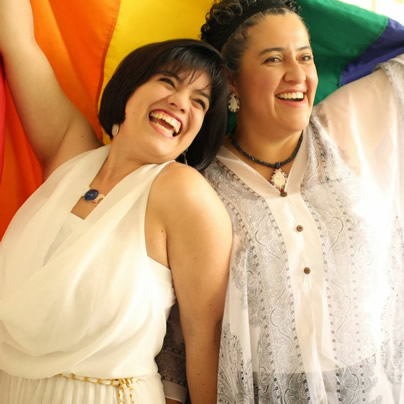
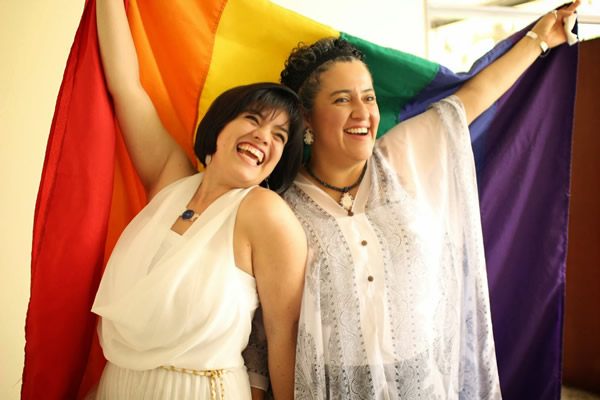
Caludia Zea and Elizabeth Castillo married in Gachetá, Colombia, on September 25. (Photo by Paola Zuluaga)
A civil judge in Bogotá, the Colombian capital, on September 20 married Julio Albeiro Cantor Borbón and William Alberto Castro Franco. Elizabeth Castillo and Claudia Zea tied the knot five days later in a ceremony in Gachetá in the province of Cundinamarca that Judge Julio González officiated.
Another Bogotá judge on October 4 married Adriana Elizabeth González and Sandra Marcela Rojas.
Colombia’s Constitutional Court in 2011 ruled gays and lesbians could seek legal recognition of their relationships within two years if lawmakers in the South American country did not extend to them the same benefits heterosexuals receive through marriage.
The Colombian Senate in April overwhelmingly rejected a bill that would have extended marriage rights to gays and lesbians. And the Constitutional Court’s June 20 deadline passed amid lingering confusion as to whether same-sex couples could actually marry in the country.
Many notaries have said they will allow gays and lesbians to enter into a “solemn contact” as opposed to a civil marriage.
A Bogotá judge in July solemnized Carlos Hernando Rivera Ramírez and Gonzalo Ruiz Giraldo’s relationship. Marcela Sánchez, executive director of Colombia Diversa, an LGBT advocacy group, and other activists maintain the two men and other same-sex couples whose relationships have been formally recognized are legally married.
“I am not doing any type of favor; it is not important that I may be sympathetic to the LGBTI movement or that I am from a liberal political group,” Julio González told the Colombian newspaper El Espectador after he married Castillo and Zea. “These things cannot dictate whether a judge acts according to the law and the Constitution.”
A Bogotá judge on October 2 annulled Cantor and Castro’s marriage after a group opposed to nuptials for gays and lesbians challenged it in court. The organization has said it plans to file suit against Julio González and other judges who have officiated same-sex marriages.
Out Bogotá City Councilwoman Angélica Lozano on September 30 also filed a complaint against Inspector General Alejandro Ordoñez, who vehemently opposes nuptials for gays and lesbians, for ordering notaries to report any same-sex couple who seeks a marriage licenses to his office.
“I am legally denouncing the inspector general for abuse of power, arbitrary acts and injustices against homosexuals,” Lozano tweeted after she filed her complaint.
Mexican, Chilean advocates push for marriage
Argentina and Uruguay are among the 14 countries in which gays and lesbians can legally marry.
Brazil’s National Council of Justice in May ruled registrars in the South American country cannot deny marriage licenses to same-sex couples. São Paulo and other Brazilian states had already extended marriage rights to same-sex couples, but the country’s lawmakers have yet to pass a nationwide gay nuptials bill.
The Mexican Supreme Court in February unveiled its decision that found a law in the state of Oaxaca that bans same-sex marriage unconstitutional.
Same-sex couples have been able to legally marry in Mexico City since 2010, and the Mexican Supreme Court has ruled that states must recognize these unions.
A gay couple in Mérida on the Yucatán Peninsula exchanged vows in August after a federal judge said they could tie the knot. Judges in the states of Chihuahua and México in recent months have also ruled in favor of same-sex couples seeking marriage rights.
Gays and lesbians in Jalisco, in which the resort city of Puerto Vallarta is located, and other Mexican states have also begun to petition local authorities to allow them to marry.
Chilean LGBT rights advocates continue to pressure President Sebastián Piñera to allow gays and lesbians to tie the knot after the Inter-American Court of Human Rights in July gave the country’s government a two month deadline to respond to a same-sex marriage lawsuit the group Movement for Homosexual Integration and Liberation (Movilh) filed in 2012.
Movilh said in an October 3 press release that two members of Piñera’s cabinet with whom it met assured them the government has already begun the “process of internal consultations” to respond to its lawsuit.
More than 40 Chilean lawmakers on October 8 urged Piñera to make a bill that would allow gays and lesbians to enter into civil unions a priority before he leaves office early next year.
Former President Michelle Bachelet, who is the frontrunner to succeed Piñera in the country’s presidential elections that will take place on November 17, earlier this year publicly backed marriage rights for same-sex couples.
“More than two million people live together in Chile and they find a lack of this law socially and judicially indefensible,” the letter to Piñera reads. “They remind you that your presidential platform clearly referenced these topics.”
Civil unions bill introduced in Perú
Peruvian Congressman Carlos Bruce last month introduced a bill that would allow same-sex couples to enter into civil unions. It would extend economic benefits to them, but not adoption rights.
Victor Cortez and his boyfriend, Antonio Capurro, formed the group Plural Perú to help build support for the civil unions measure and expanded LGBT rights in the country. The two activists told the Washington Blade during an interview from the Peruvian capital of Lima on Tuesday the bill faces an uphill battle before lawmakers consider it in March.
A recent poll found 65 percent of Peruvians oppose any efforts to allow same-sex couples to enter into a civil union. Lima Archbishop Juan Luis Cipriani and Evangelicals are among those who frequently speak out against gays and lesbians and any proposal to legally recognize their relationships.
Cortez told the Blade he feels machismo and conservative attitudes within Peruvian society will continue to hamper efforts to extend marriage rights to same-sex couples.
“These types of unions go against these values,” he said. “For them this is very unacceptable.”
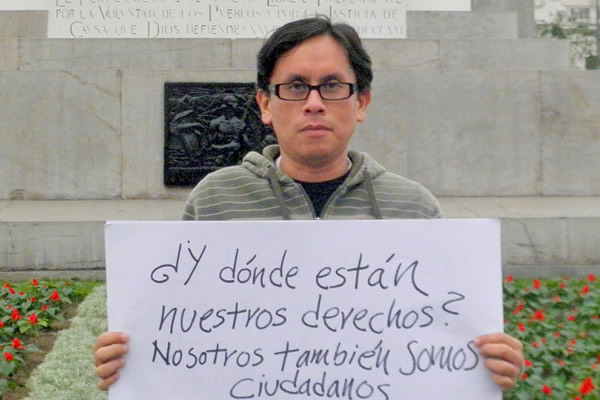
Peruvian LGBT rights activist Antonio Capurro holds a sign that reads “And where are our rights? We are also citizens.” (Photo courtesy of Antonio Capurro)




The White House
HHS to restrict gender-affirming care for minors
Directive stems from President Donald Trump’s Jan. 28 executive order

The U.S. Department of Health and Human Services announced Thursday that it will pursue regulatory changes that would make gender-affirming healthcare for transgender children more difficult, if not impossible, to access.
The shift in federal healthcare policy stems directly from President Donald Trump’s Jan. 28 executive order, Protecting Children From Chemical and Surgical Mutilation, which formally establishes U.S. opposition to gender-affirming care and pledges to end federal funding for such treatments.
The executive order outlines a broader effort to align HHS with the Trump–Vance administration’s policy goals and executive actions. Those actions include defunding medical institutions that provide gender-affirming care to minors by restricting federal research and education grants, withdrawing the 2022 HHS guidance supporting gender-affirming care, requiring TRICARE and federal employee health plans to exclude coverage for gender-affirming treatments for minors, and directing the Justice Department to prioritize investigations and enforcement related to such care.
HHS has claimed that gender-affirming care can “expose them [children] to irreversible damage, including infertility, impaired sexual function, diminished bone density, altered brain development, and other irreversible physiological effects.” The nation’s health organization published a report in November, saying that evidence on pediatric gender-affirming care is “very uncertain.”
The Centers for Medicare and Medicaid Services is now in the process of proposing new rules that would bar hospitals from performing what the administration describes as sex-rejecting procedures on children under age 18 as a condition of participation in Medicare and Medicaid programs. Nearly all U.S. hospitals participate in Medicare and Medicaid. HHS said that “this action is designed to ensure that the U.S. government will not be in business with organizations that intentionally or unintentionally inflict permanent harm on children.”
Health and Human Services Secretary Robert F. Kennedy Jr. released a statement alongside the announcement.
“Under my leadership, and answering President Trump’s call to action, the federal government will do everything in its power to stop unsafe, irreversible practices that put our children at risk,” Kennedy said. “This administration will protect America’s most vulnerable. Our children deserve better — and we are delivering on that promise.”
Those claims stand in direct opposition to the positions of most major medical and healthcare organizations.
The American Medical Association, the nation’s largest and most influential physician organization, has repeatedly opposed measures that restrict access to trans healthcare.
“The AMA supports public and private health insurance coverage for treatment of gender dysphoria and opposes the denial of health insurance based on sexual orientation or gender identity,” a statement on the AMA’s website reads. “Improving access to gender-affirming care is an important means of improving health outcomes for the transgender population.”
Jennifer Levi, senior director of transgender and queer rights at GLBTQ Legal Advocates and Defenders, warned the proposed changes would cause significant harm.
“Parents of transgender children want what all parents want: to see their kids thrive and get the medical care they need. But this administration is putting the government between patients and their doctors. Parents witness every day how their children benefit from this care — care backed by decades of research and endorsed by major medical associations across the country. These proposed rules are not based on medical science. They are based on politics. And if allowed to take effect will serve only to drive up medical costs, harm vulnerable children, and deny families the care their doctors say they need. These rules elevate politics over children — and that is profoundly unAmerican.”
Human Rights Campaign President Kelley Robinson echoed Levi’s sentiments.
“The Trump administration is relentless in denying health care to this country, and especially the transgender community. Families deserve the freedom to go to the doctor and get the care that they need and to have agency over the health and wellbeing of their children,” Robinson said. “But these proposed actions would put Donald Trump and RFK Jr. in those doctor’s offices, ripping health care decisions from the hands of families and putting it in the grips of the anti-LGBTQ+ fringe. Make no mistake: these rules aim to completely cut off medically necessary care from children no matter where in this country they live. It’s the Trump administration dictating who gets their prescription filled and who has their next appointment canceled altogether.
The announcement comes just days after U.S. Rep. Marjorie Taylor Greene (R-Ga.) advanced legislation in Congress that would make it a felony to provide gender-affirming care to a child.
Kazakhstan
Kazakh Senate approves anti-LGBTQ propaganda bill
Measure ‘would undermine fundamental rights guaranteed under’ constitution

The Kazakh Senate on Thursday approved a bill that would ban so-called LGBTQ propaganda in the country.
Members of Kazakhstan’s lower house of parliament last month unanimously approved the measure that would ban “‘LGBT propaganda’ online or in the media” with “fines for violators and up to 10 days in jail for repeat offenders.” Senators earlier this month delayed a vote on the bill.
President Kassym-Jomart Tokayev has indicated he would sign it.
“If enacted, these provisions would undermine fundamental rights guaranteed under Kazakhstan’s Constitution, particularly the principle of equality and non-discrimination, by directly targeting and stigmatizing LGBTI people and anyone perceived to support them,” said ILGA-Europe in a statement after Thursday’s vote.
Kazakhstan is a predominantly Muslim former Soviet republic in Central Asia that borders Russia, Turkmenistan, Uzbekistan, Kyrgyzstan, and China. Russia, Georgia, and Hungary are among the other countries with anti-LGBTQ propaganda laws.
District of Columbia
Brian Footer suspends campaign for Ward 1 D.C. Council seat
Race’s third LGBTQ candidate cites family reasons for ‘stepping back’
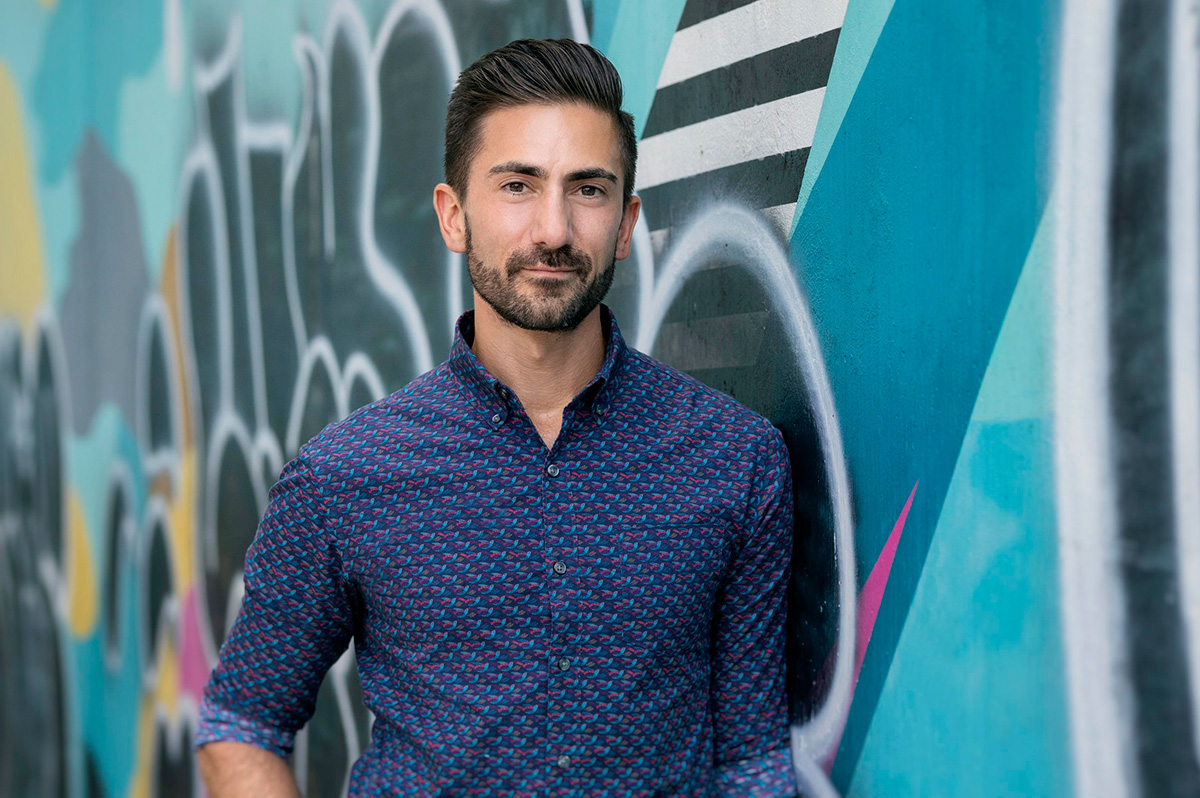
Gay Advisory Neighborhood Commissioner Brian Footer, who was one of three out LGBTQ candidates running for the open Ward 1 D.C. Council seat in the city’s June 16, 2026, Democratic primary, announced on Dec. 17 he has decided to “suspend” his campaign to focus on his family.
“After deep reflection and honest conversations with my family, I have decided to suspend my campaign for the D.C. Council,” he said in a statement. “This moment in my life requires me to be present with the people I love most and honor the responsibilities I carry both at home and in the community,” he states. “This was not an easy decision, but it is the right one for me and my family at this time.”
Footer, a longtime Ward 1 community activist and LGBTQ rights advocate, announced his candidacy for the Ward 1 Council seat in July, one month before bisexual Ward 1 community activist Aparna Raj announced her candidacy for the Council seat on Aug. 12.
Gay Ward 1 Advisory Neighborhood Commissioner Miguel Trindade Deramo announced his candidacy for the Ward 1 Council seat on Nov. 18, becoming the third out LGBTQ candidate in what appeared to be an unprecedented development for a race for a single D.C. Council seat.
At least three other candidates who are not LGBTQ are running for the Ward 1 Council seat. They include Ward 1 ANC member Rashida Brown, longtime Ward 1 community activist Terry Lynch, and Jackie Reyes-Yanes, the former director of the Mayor’s Office of Community Affairs.
In his statement announcing the suspension of his candidacy, Footer said he would continue to be involved in community affairs and advocate for the issues he discussed during his campaign.
“I want to be clear: I am stepping back from the race, not the work,” he says in his statement. “Public service has always been my calling. I will continue advocating for affordability, for safer streets, for stability for small businesses, and for a government that responds to people with urgency and respect,” he wrote. “And I will continue showing up as a partner in the work of building a stronger Ward 1.”
Footer concluded by thanking and praising his campaign supporters and calling his campaign suspension a “transition,” suggesting he is not likely to resume his candidacy.
His campaign press spokesperson did not immediately respond to a question from the Washington Blade asking if Footer might later resume his campaign or if his latest action was in effect an end to his candidacy.
“To everyone who knocked on doors, hosted conversations, donated, shared encouragement, and believed in this campaign, thank you,” he says in his statement. “I am deeply grateful for every person who helped this campaign take root,” he added. “This isn’t an ending, it’s a transition. And I’m excited for the work ahead, both in Ward 1 and at home with my family.”
Longtime gay D.C. Democratic Party activist Peter Rosenstein said in a statement to the Blade, “I respect Brian Footer’s decision to end his campaign for Council. It is not easy to run a campaign in D.C. and there are many others running in Ward 1.” He added, “While not living in Ward 1, I thank Brian for all he has done and clearly will continue to do for the people in the ward.”

HHS to restrict gender-affirming care for minors

Candidates should pledge to nominate LGBTQ judge to Supreme Court

Kazakh Senate approves anti-LGBTQ propaganda bill

Local, last-minute holiday gift ideas

2026 elections will bring major changes to D.C. government

PHOTOS: The Holiday Show

Studio’s ‘Mother Play’ draws from lesbian playwright’s past

The best books to give this holiday season

Far-right José Antonio Kast elected Chile’s next president