News
Dutch diplomat attacked in Moscow
LGBT acronym scrawled onto mirror inside Otto Elderenbosch’s apartment

Two men attacked a Dutch diplomat in his Moscow apartment on Oct. 15. (By David Crawshaw via Wikimedia Commons.)
The Moscow Times cited a Russian newspaper that reported Onno Elderenbosch, who is the deputy chief of mission at the Dutch embassy in Moscow, saw an elevator in his apartment building was not working when he returned home. The publication said Elderenbosch saw two men dressed as electricians when he walked up to his apartment.
The Moscow News cited a Russian law enforcement official who said the two men beat Elderenbosch and ransacked his apartment once he opened the door. The newspaper said the source indicated Elderenbosch’s assailants also drew a heart with an arrow throughout it and the LGBT acronym in lipstick on a mirror inside the diplomat’s home.
Dutch Foreign Minister Frans Timmermans wrote on his Facebook page on Tuesday that Elderenbosch, whom he did not identify by name, was “slightly injured” during the attack. He said he had summoned Russia’s ambassador to the Netherlands to The Hague over the incident.
“Our people must be able to work safely,” Timmermans said. “I want assurances that the Russian authorities will uphold their responsibilities on that point.”
The Associated Press reported that a Russian Foreign Ministry spokesperson described the attack as a “deplorable incident.” He said authorities would continue to seek those responsible.
The attack against Elderenbosch took place against the backdrop of growing tension between the Dutch and Russian governments over the Kremlin’s LGBT rights record and a host of other issues.
COC Nederland, a Dutch LGBT rights organization, in April staged a protest outside a meeting between Russian President Vladimir Putin and Dutch Prime Minister Mark Rutte that coincided with the 400th anniversary of friendship between the two countries. Amsterdam Mayor Eberhard van der Laan refused to meet with Putin during his trip.
Russian authorities in July arrested four Dutch LGBT rights advocates under a law that bans gay propaganda to minors. More than 3,000 people protested the statute and other anti-LGBT measures in the country during a Kremlin-sponsored concert in Amsterdam.
COC Nederland has also criticized the International Olympic Committee over its response to the gay propaganda law and the country’s LGBT rights record ahead of the 2014 Winter Olympics that will take place in Sochi, Russia, in February. The group has also urged Dutch King Willem-Alexander and Queen Maxima to raise the aforementioned issues on their upcoming trip to Russia next month during which they are scheduled to meet with Putin.
Rutte, who has publicly criticized the Kremlin over its LGBT rights record, described the attack against Elderenbosch as “extremely serious” as the AP reported. The news agency noted he said “we need to get the facts on the table” first.
A Dutch Foreign Ministry spokesperson did not return the Washington Blade’s request for comment on the attack against Elderenbosch and whether he is gay.
COC Nederland Chair Tanja Ineke described the incident as “scandalous.”
“The police must get to the bottom of this,” she said. “It is terrible for the person involved and it appears to be another expression of the rapidly deteriorating climate for LGBT people in Russia.”


New York
N.Y. governor’s race presents stark contrast on LGBTQ rights
Democratic Gov. Kathy Hochul expected to face Republican Bruce Blakeman

As states across the country grapple with a rapidly changing federal landscape under President Donald Trump, governors have increasingly become the first line of defense — or enforcement — on issues ranging from healthcare and education to LGBTQ rights.
Nowhere is that more apparent than in New York, Trump’s home state, where the 2026 gubernatorial race is shaping up as a high-profile battle over the future of LGBTQ protections.
Incumbent Democratic Gov. Kathy Hochul is seeking a second full term as New York’s 57th governor and the state’s first female governor. She enters the race with strong support from LGBTQ advocates and organizations, including an endorsement from the Stonewall Democrats of New York City. Earlier this year, Hochul was also endorsed by progressive leaders like New York City Mayor Zohran Mamdani and U.S. Rep. Alexandria Ocasio-Cortez. She is running alongside New York City Council Speaker Adrienne Adams as her lieutenant governor candidate.
Throughout her tenure, Hochul has signed a series of measures aimed at strengthening protections for LGBTQ New Yorkers, particularly transgender residents.
Among the most notable is New York’s “Trans Safe Haven Act,” which protects out-of-state transyouth, their parents, and medical providers who travel to New York to access legally protected gender-affirming care. Hochul has also signed legislation requiring health insurance plans to cover HIV prevention medications, including PrEP and Post-Exposure Prophylaxis (PEP), without out-of-pocket costs.
Additionally, Hochul signed a Long-Term Care Bill of Rights that prohibits discrimination against LGBTQ seniors and people living with HIV in long-term care facilities.
“As the birthplace of the LGBTQ+ rights movement, New York has long been at the forefront of advancing equality,” Hochul said in a statement during Pride month. “During Pride month, we celebrate New York’s vibrant LGBTQ+ community and acknowledge the importance of protecting the rights and freedoms of LGBTQ+ New Yorkers. This month and every month, we proudly stand with the LGBTQ+ community and remain committed to building a more inclusive and equitable future for all where everyone can live freely with dignity, safety, and respect.”
On the Republican side, Nassau County Executive Bruce Blakeman has emerged as the party’s leading candidate. Blakeman is running with Madison County Sheriff Todd Hood as his lieutenant governor pick.
Blakeman, Nassau County’s 10th county executive, was first elected in 2021 after defeating Democratic incumbent Laura Curran. He previously served as a commissioner of the Port Authority of New York and New Jersey, a Nassau County legislator, and a Hempstead town councilman.
A longtime supporter of Trump, Blakeman appeared alongside the president during a 2024 event honoring slain NYPD Officer Jonathan Diller.
LGBTQ advocates have frequently criticized Blakeman for his positions on trans issues, particularly his opposition to trans women participating in women’s sports.
In February 2024, Blakeman signed an executive order barring women’s sports teams that include trans women from using Nassau County athletic facilities. The policy applies to youth, collegiate, and professional teams. Teams that include trans men were not affected. The order has since been halted by the New York State Appellate Division swiftly issued an injunction halting enforcement while the plaintiffs appeal the decision
Ahead of announcing the order, Blakeman repeatedly referred to trans women as “biological males” and argued they should compete on men’s or co-ed teams. LGBTQ rights groups condemned the policy, saying it discriminates against trans athletes and contributes to the marginalization of trans youth.
Trump endorsed Blakeman’s gubernatorial campaign in December 2025, shortly after U.S. Rep. Elise Stefanik (R-N.Y.) announced she would not seek the Republican nomination. The President made his endorsement via Truth Social that “Bruce is MAGA all the way, and has been with me from the very beginning.”
The Washington Blade contacted Blakeman’s campaign seeking comment on his LGBTQ policy priorities and views on issues including nondiscrimination protections, trans rights, and healthcare access. A response was not received by press time.
The race highlights two sharply different approaches to LGBTQ policy in a state widely regarded as the birthplace of the modern LGBTQ rights movement, home to the 1969 Stonewall uprising that helped launch the contemporary movement for LGBTQ equality.
Despite the ideological contrast, early polling suggests Hochul remains the clear favorite. Most public surveys show the incumbent holding a double-digit advantage over her potential Republican challengers, with some polls placing her lead at roughly 20 percentage points ahead of the November election.
Rehoboth Beach
Rehoboth’s ‘Poodle Beach’ to be honored with historical marker
Delaware Public Archives to hold ceremony June 27
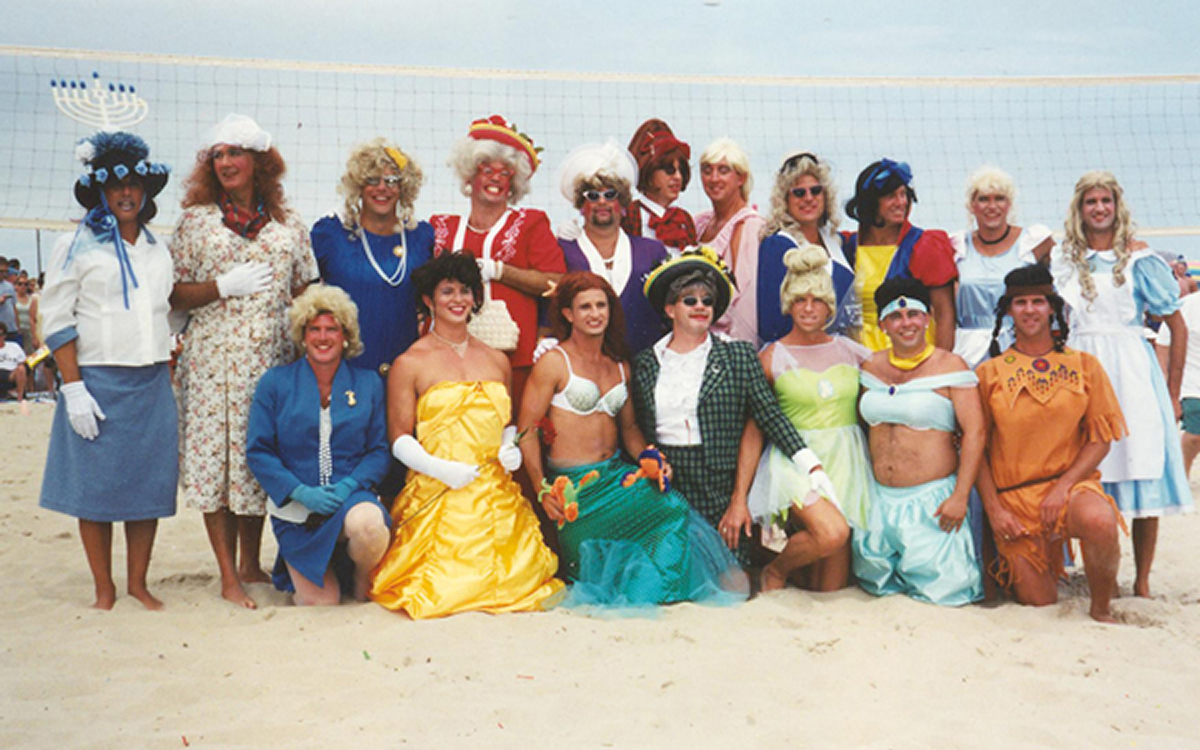
The Delaware Public Archives is set to unveil a new State of Delaware Historical Marker recognizing Rehoboth’s Poodle Beach Saturday, June 27, at 9 a.m. The unveiling will take place at the corner of Prospect Street and the South Boardwalk in Rehoboth Beach, Del.
The unveiling ceremony is free and open to the public and will include remarks from members of the community, government officials, and representatives from the Delaware Public Archives.
Located at the southern end of the boardwalk near Queen Street, Poodle Beach is one of the most famous sections of Rehoboth Beach, having served as a gathering place for the LGBTQ community for decades.
The Delaware Public Archives said that, “The marker recognizes the site’s longstanding role in the social and cultural history of both Rehoboth Beach and the State of Delaware.”
The petition to have Poodle Beach recognized with a historical marker was started by a group of Rehoboth Beach residents in June 2020 and was officially approved in December 2020.
Although the origins of where Poodle Beach got its name are unknown, its history can be traced back to du Pont heiress and well-known lesbian Louisa Carpenter. Carpenter and her LGBTQ group of friends would travel to ‘Carpenter Beach’ toward Dewey Beach in the19 30s and ‘40s.
Over time, the beach grew in popularity and began to be used predominantly by gay men in the following decades. It wasn’t until the ‘80s when the beach spread back toward the boardwalk as people stopped making the journey to Carpenter beach.
Poodle Beach was initially called “Lazy Gay Beach” because gay men got tired of walking so far from the boardwalk to get to Carpenter Beach.
There are multiple theories that explain how the name ‘Poodle Beach’ came to be. One of the most popular is the ‘Two cousin theory’ where it is rumored that a pair of cousins would drive up from Maryland and bring their poodle dogs onto the beach.
Poodle was also the site of the popular Labor Day weekend drag volleyball games that were started in 1988 and ended with COVID in 2020.
District of Columbia
McDuffie concedes to Lewis George in D.C.’s mayoral primary
Democratic Socialist presumed winner while official vote count continues
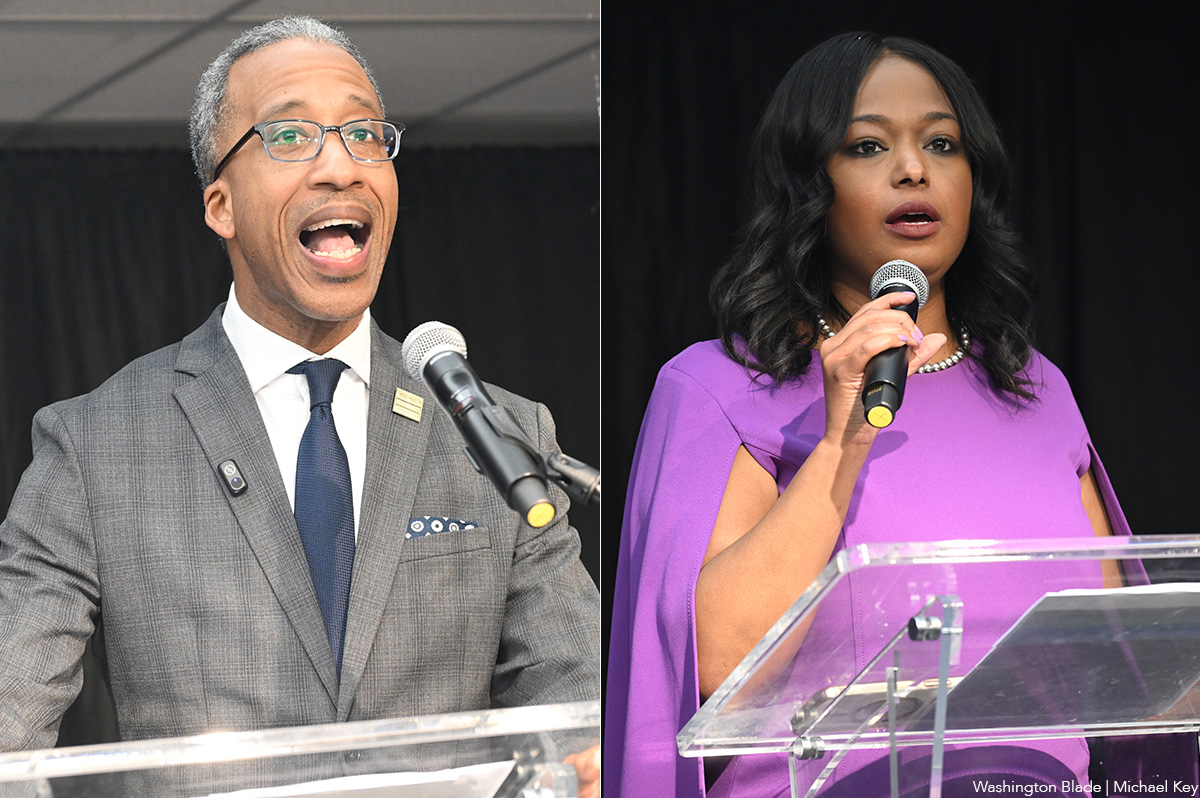
D.C. Councilmember Janeese Lewis George (D-Ward 4) emerged as the presumed winner in the city’s June 16 Democratic primary for D.C. mayor as her lead opponent, former Councilmember Kenyan McDuffie (D-At-Large) conceded the race Thursday, June 18.
Both Lewis George and McDuffie have strong records of support for the for the LGBTQ community, and local LGBTQ rights activists appeared divided in their support between the two mayoral candidates.
“Earlier this morning, I called Councilmember Janeese Lewis Geroge to congratulate her on her victory and wish her success as she prepares for the general election,” McDuffie said in a statement. “The campaign may be over, but the work of building a safer, more affordable, more prosperous city continues,” he said
It its most recent release of the official first-choice vote count at 1:54 p.m. on Thursday, June 18, the D.C. Board of Elections reported Lewis George had 55,214 votes or 52.87 percent of the vote. McDuffie had 38,033 votes, or 36.42 percent.
Each of the five other Democratic mayoral candidates had less than 4 percent of the vote, including Rini Sampath, who self-identifies as queer, who had 3.093 votes or 3.02 percent.
With about 75 percent of D.C. voters registered a Democrats, Lewis George’s status as the apparent Democratic nominee makes here the odds-on favorite to win the general election in November. Board of Elections records show that no Republican candidate ran for mayor in the D.C. Republican primary on June 16 and one Statehood Green Party candidate — Robert G. Gross — ran unopposed. The latest vote count shows he received 312 votes from registered Statehood Green Party members.
With Lewis George running as a democratic socialist and left leaning “progressive” candidate and McDuffie running as a more moderate Democrat on a wide range of issues, LGBTQ activists, like voters in general, appear to backed either of the two on non-LGBTQ issues since both are strongly supportive of the LGBTQ community, including transgender-related issues.
Lewis George received the endorsement of the Capital Stonewall Democrats, D.C.s largest local LGBTQ political group.
D.C. Councilmember Robert White (D-At-Large), who supported Lewis Geroge for mayor, emerged as the apparent winner in the race for D.C. delegate to the U.S. House of Representatives. He received 62.9 percent of the vote in a five-candidate race. His closest opponent, D.C. Councilmember Brooke Pinto (D-Ward 2), who conceded the race to White, received 21.52 percent of the vote. White and Pinto have been longtime supporters of the LGBTQ community.
In other races, D.C. Councilmember Zachary Parker (D-Ward 5), the Council’s only gay member, received 76.51 percent of the vote in a three-candidate race, making him the clearcut winner in the primary.
In the Ward 1 D.C. Council race, where five LGBTQ supportive candidates were competing for the seat being vacated by incumbent Brianne Nadeau, who is not running for re-election, community activist Aparna Raj, who identifies as bisexual, has emerged as the apparent winner with 46.91 percent of the vote. Her closest opponent, gay candidate and LGBTQ rights advocate Miguel Trindade Deramo, had 20.63 percent.
D.C. Council Chair Phil Mendelson (D-At-Large) and Councilmember Matthew Frumin (D-Ward 3) ran unopposed for re-election in the primary and emerged as winners. Also emerging as apparent primary winners were Councilmember Charles Allen (D-Ward 6), with 74.4 percenter of the vote, and D.C. Attorney General Brian Schwalb, with 90.4 percent.
In the At-Large D.C. Council race where nine Democrats were competing for the seat being vacated by incumbent Anita Bonds, who is retiring, local pharmacist and community activist Oye Owolewa, who was endorsed by Capital Stonewall Democrats, was leading with 33.89 percent
In the special election to fill the other At-Large Council eat that under the city’s Home Rule Charter must go to a non-Democrat, former Councilmember Elissa Silverman was leading with 54.87 percent of the vote in a three-candidate race. Incumbent Doni Crawford, who was temporarily appointed to the seat, was in second place with 24.09 percent.
At least 14 known LGBTQ candidates were among several dozen candidates competing for seats on the D.C. Democratic State Committee in the June 16 primary.
Longtime local gay Democratic activist and Ward 8 community leader Philip Pannell emerged as the apparent winner in the race for D.C. Democratic National Committee, one of the two highest-level State Committee positions, along with the National Committeewoman post. Pannell received 40,073 votes or 49.32 percent of the vote, according to the latest vote count.
Coming in second place in the National Committeeman race was gay Democratic activist David Meadows, who had 34,875 votes or 42.92 percent. The third candidate in the race, Mike Panetta, had 5,904 votes or 7.27 percent.
The winners couldn’t immediately be determined in the races where most of the other LGBTQ State Committee candidates were running. Two of the presumed winners who had a sufficient number of votes to win prior to the final vote count were trans candidate Vida Rangel for the Ward 1 Democratic Committeewoman seat; and Stevie McCarty for the Ward 2 Democratic Committeeman seat.
N.Y. governor’s race presents stark contrast on LGBTQ rights

Rehoboth’s ‘Poodle Beach’ to be honored with historical marker

McDuffie concedes to Lewis George in D.C.’s mayoral primary

Obama Center opens with tributes to marriage equality, LGBTQ progress

Intersex teacher alleges Fla. school fired him over perceived trans identity

PHOTOS: Lost River Pride

PHOTOS: Pride on the Pier

David Archuleta on Mormon faith, ‘Idol,’ more in new book

The advantages of owning your home