News
European LGBT rights advocates gather in Croatia
Uzra Zeya of U.S. State Department addressed ILGA-Europe conference participants
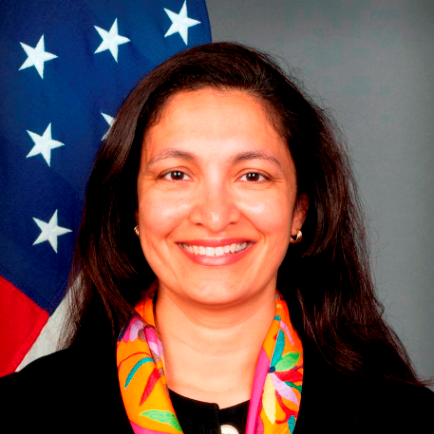
Uzra Zeya (Photo courtesy of the State Department)
Croatian President Ivo Jospović on Thursday welcomed those who attended the gathering in Zagreb, the country’s capital, in a video message.
“I take this opportunity to congratulate you on your courage and perseverance in the struggle for your right to be different, your right to be public and visible,” Jospović said.
Uzra Zeya, acting assistant secretary of the Bureau of Democracy, Human Rights and Labor at the U.S. State Department joined European Union Special Representative for Human Rights Stavros Lambrinidis, Portuguese LGBT rights advocate Miguel Vale de Almeida and other officials who spoke during the conference. Denis Dison of the Gay and Lesbian Victory Fund, Russian LGBT rights advocates Igor Kochetkov and Polina Andrianova, Neil Grungras of the Organization for Refugee Asylum and Migration and Hilde Vossen of the European Bisexual Network are among the activists who attended the gathering.
“The exchange of experiences and policy development is highly beneficial to us in Europe, as the European societies as well as the national laws differ widely across the continent,” Søren Laursen of LGBT Denmark, a Danish advocacy group, told the Washington Blade. “The activists fighting the course need to understand the differences and learn the different political realities to be able to formulate policies. An ILGA-Europe conference is a big sharing experience.”
The ILGA-Europe conference took place less roughly five months after same-sex couples began to marry in France.
Gays and lesbians can also legally tie the knot in Portugal, Spain, Iceland, the Netherlands, Belgium, Norway, Sweden and Denmark.
Same-sex couples will be able to legally marry in England and Wales in the spring, while Scottish lawmakers have begun to debate their own gay marriage measure. Irish voters next year will consider a proposed constitutional amendment that would extend marriage rights to same-sex couples in the country.
Maltese parliamentarians earlier this month began to debate a measure that would allow gays and lesbians to enter into civil unions. A Croatian parliamentary commission on Thursday approved a December referendum on whether to amend the country’s constitution to ban same-sex marriage.
The upper house of the Dutch Parliament later this fall is expected to vote on a measure that would allow trans people to petition a judge to change their gender on their birth certificates, passports and other official documents without undergoing sterilization and sex-reassignment surgery.
Activists continue to combat homophobia, transphobia
Anti-LGBT discrimination and violence in Europe remains a serious concern in spite of these legislative advances.
Nearly half of the respondents who took part in a survey the European Union Agency for Human Rights conducted in E.U. countries in 2012 said they experienced anti-gay discrimination or harassment. A quarter of respondents said they experienced violence or were threatened during the past year — this figure increases to 35 percent among trans people who took part in the survey.
The annual ILGA-Europe conference took place less than a week after police in Montenegro clashed with protesters who sought to disrupt a Pride march in Podgorica, the country’s capital.
Hundreds of Serbian LGBT rights advocates late last month criticized their government’s decision to ban a Pride march in Belgrade because of what officials described as the threat of violence from anti-gay extremists.
The European Union and the governments of the Netherlands and other member countries have also repeatedly criticized Russia over its LGBT rights record that includes a law that bans gay propaganda to minors.
“Laws that validate discrimination, as we have seen in Russia, can lead to an increase in violence and harassment,” Zeya said during her speech at the ILGA-Europe conference. “This is particularly true when authorities don’t act to protect all of their citizens and when they fail to investigate and prosecute crimes committed by or against particular groups.”
Jospović did not specifically reference Russia in his remarks, but he did stress human rights “imply the right of every human being to achieve his or her potential in that which he or she is.”
“This includes the right to freely express one’s sexual orientation and gender identity without the threat of anyone being humiliated, insulted and subjugated to violence as a result or to be excluded from social and public life,” the Croatian president said.
Saša Gavrić, executive director of the Sarajevo Open Centre, an LGBT rights group in the Bosnian capital, co-presented a workshop on responding to hate crimes in the country.
“We believe [in] high level events, like this one,” Gavrić told the Blade. “The grassroots work like our work in Sarajevo will together contribute to achieving full equality of LGBT persons in Europe.”
Members of Famiglie Arcobaleno, an Italian group that advocates on behalf of LGBT parents and those who want to have children, also presented at the ILGA-Europe conference.
Luca Possenti of the Famiglie Arcobaleno Board of Directors noted to the Blade his organization continues to work with schools and other institutions to recognize same-sex couples and their families, even though gays and lesbians remain unable to marry or adopt children in Italy. He stressed working with teachers in particular to become more LGBT-friendly is “fundamental throughout Europe” because prejudice, homophobia and transphobia remain pervasive in many European countries.
Transgender Europe, a continent-wide trans advocacy organization with more than 70 affiliates in 35 countries, also participated in the conference.
The group notes 71 anti-trans murders have been reported in Europe over the last five years. Two dozen European countries still require trans people to become sterilized before they can legally change their gender.
“The ILGA-Europe conference is one of the regular opportunities to meet, work and network in one place with many relevant stakeholders in the field of LGBTI work,” Transgender Europe Secretary Alecs Recher told the Blade. “ILGA-Europe strengthens trans representation in this meeting space and supports greater cohesion of the joint struggle for human rights on grounds of sexual orientation and gender identity.”




District of Columbia
Brian Footer suspends campaign for Ward 1 D.C. Council seat
Race’s third LGBTQ candidate cites family reasons for ‘stepping back’
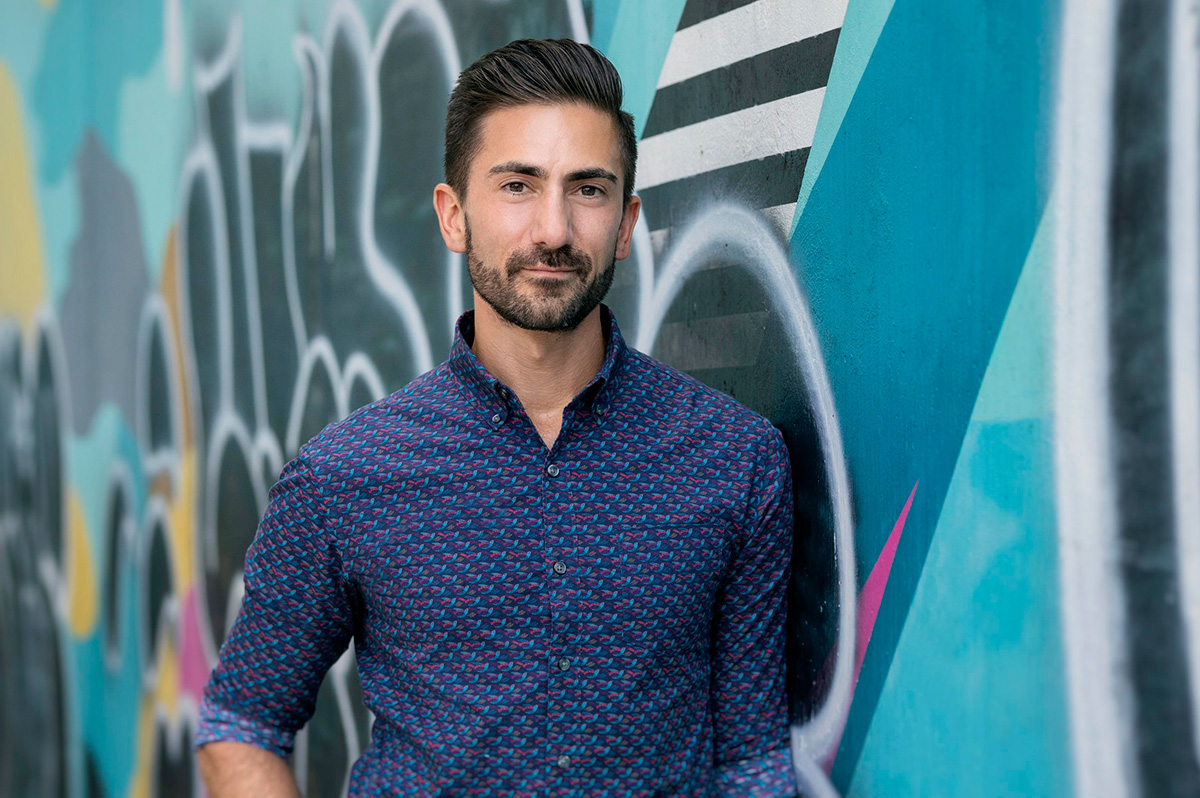
Gay Advisory Neighborhood Commissioner Brian Footer, who was one of three out LGBTQ candidates running for the open Ward 1 D.C. Council seat in the city’s June 16, 2026, Democratic primary, announced on Dec. 17 he has decided to “suspend” his campaign to focus on his family.
“After deep reflection and honest conversations with my family, I have decided to suspend my campaign for the D.C. Council,” he said in a statement. “This moment in my life requires me to be present with the people I love most and honor the responsibilities I carry both at home and in the community,” he states. “This was not an easy decision, but it is the right one for me and my family at this time.”
Footer, a longtime Ward 1 community activist and LGBTQ rights advocate, announced his candidacy for the Ward 1 Council seat in July, one month before bisexual Ward 1 community activist Aparna Raj announced her candidacy for the Council seat on Aug. 12.
Gay Ward 1 Advisory Neighborhood Commissioner Miguel Trindade Deramo announced his candidacy for the Ward 1 Council seat on Nov. 18, becoming the third out LGBTQ candidate in what appeared to be an unprecedented development for a race for a single D.C. Council seat.
At least three other candidates who are not LGBTQ are running for the Ward 1 Council seat. They include Ward 1 ANC member Rashida Brown, longtime Ward 1 community activist Terry Lynch, and Jackie Reyes-Yanes, the former director of the Mayor’s Office of Community Affairs.
In his statement announcing the suspension of his candidacy, Footer said he would continue to be involved in community affairs and advocate for the issues he discussed during his campaign.
“I want to be clear: I am stepping back from the race, not the work,” he says in his statement. “Public service has always been my calling. I will continue advocating for affordability, for safer streets, for stability for small businesses, and for a government that responds to people with urgency and respect,” he wrote. “And I will continue showing up as a partner in the work of building a stronger Ward 1.”
Footer concluded by thanking and praising his campaign supporters and calling his campaign suspension a “transition,” suggesting he is not likely to resume his candidacy.
His campaign press spokesperson did not immediately respond to a question from the Washington Blade asking if Footer might later resume his campaign or if his latest action was in effect an end to his candidacy.
“To everyone who knocked on doors, hosted conversations, donated, shared encouragement, and believed in this campaign, thank you,” he says in his statement. “I am deeply grateful for every person who helped this campaign take root,” he added. “This isn’t an ending, it’s a transition. And I’m excited for the work ahead, both in Ward 1 and at home with my family.”
Longtime gay D.C. Democratic Party activist Peter Rosenstein said in a statement to the Blade, “I respect Brian Footer’s decision to end his campaign for Council. It is not easy to run a campaign in D.C. and there are many others running in Ward 1.” He added, “While not living in Ward 1, I thank Brian for all he has done and clearly will continue to do for the people in the ward.”
Politics
LGBTQ Democrats say they’re ready to fight to win in 2026
DNC winter meetings took place last weekend in Los Angeles

The Democratic National Committee held its annual winter meetings in Downtown Los Angeles over the weekend, and queer Democrats showed up with a clear message for the national organization: don’t abandon queer and transgender people.
Following last year’s disastrous presidential and congressional elections, many influential pundits and some powerful lawmakers called on Democrats to distance the party from unpopular positions on trans rights, in order to win swing districts by wooing more conservative voters.
But members of the DNC’s LGBTQ Caucus say that’s actually a losing strategy.
“There are still parts of our party saying we need to abandon trans people in order to win elections, which is just not provable, actually. It’s just some feelings from some old consultants in DC,” LGBTQ Caucus Chair Sean Meloy says.
Some national Democrats are already backtracking from suggestions that they walk back on trans rights.
California Gov. Gavin Newsom grabbed national attention in March when he suggested that it was “deeply unfair” for trans girls to play in women’s sports. But last week, he doubled down on support for trans rights, claiming to have signed more trans-rights legislation than any governor in the country, and entering into feuds on X with Elon Musk and Nicki Minaj over his support for trans kids.
Democrats are also clearly feeling the wind in their sails recently after major election victories in Virginia and New Jersey last month, as well as victories in dozens of local and state legislative elections across the country in 2025.
“[Abigail] Spanberger in Virginia didn’t win by dodging the trans question. She won by attacking it, confronting it, and that’s how she got ahead,” says Vivian Smotherman, a trans activist and at-large member of the DNC’s LGBTQ Caucus.
“Trans people are not a problem. We are a resource,” Smotherman says. “For my community, surviving into adulthood is not a guarantee, it’s an accomplishment. You don’t walk through a survival gauntlet without learning things … I’m not begging the DNC to protect my community. I’m here to remind you that we are the warriors tempered by fire, and we are fully capable of helping this party win.”
At its own meeting on Friday, the LGBTQ Caucus announced several new initiatives to ensure that queer and trans issues stay top of mind for the DNC as it gears up for the midterm elections next year.
One plan is to formalize the DNC’s Trans Advisory Board as distinct from the LGBTQ Caucus, to help introduce candidates across the country to trans people and trans issues.
“One in three people in this country know a trans person. Two-thirds of Americans don’t think they do,” Smotherman says. “So the real problem is not being trans, it’s that you don’t know us. You cannot authentically support a trans person if you’ve never met one.
“That’s why my first goal with this Trans Advisory Board is to host a monthly Meet a Trans Person webinar. Not as a spectacle, as a debate, but as a human connection, and I will be charging every state chair with asking every one of their candidates up and down the board if they know a trans person. And if that person doesn’t know a trans person, I’m gonna have that state chair put them on that webinar.”
The LGBTQ caucus is also opening up associate membership to allies who do not identify as LGBTQ, in order to broaden support and connections over queer issues.
It’s also preparing for the inevitable attacks Republicans will throw at queer candidates and supporters of LGBTQ issues.
“These attacks are going to come. You have to budget money proactively. You have to be ready to fight,” Meloy says. “There are some local party chairs who don’t want to recruit LGBTQ candidates to run because these issues might come up, right? That’s an absolutely ludicrous statement, but there are still people who need support in how to be ready and how to respond to these things that inevitably come.”
“The oldest joke is that Democrats don’t have a spine. And when they come after us, and we do not reply, we play right into that.”
Meloy also alluded to anti-LGBTQ tropes that queer people are out to harm children, and said that Democrats should be prepared to make the case that it’s actually Republicans who are protecting child abusers – for example, by suppressing the Epstein files.
“They are weak on this issue. Take the fight, empower your parties to say, ‘These people have nothing to stand on,’” Meloy says.
Local
LGBTQ, LGBTQ-friendly congregations to hold holiday services
Bet Mishpachah’s Hanukkah service to take place on Friday

LGBTQ and LGBTQ-friendly congregations in D.C. will hold services and other events throughout the holiday season.
Bet Mishpachah on Friday will hold its Sparks in the Dark Happy Hour at Spark Social on 14th Street from 5:30-7:30 p.m. It’s Chanuka Shabbat Service will begin at the Edlavitch DC Jewish Community Center (1529 16th St., N.W.) at 8 p.m.
Hanukkah began on Sunday and will end on Dec. 22.
Two gunmen on Sunday killed 15 people and injured more than two dozen others when they opened fire at a Hanukkah celebration on Sydney’s Bondi Beach.
Jake Singer-Beilin, Bet Mishpachah’s chief rabbi, in a Facebook post mourned the victims.
“We grieve for the victims and send heartfelt prayers of healing for those who were wounded,” he wrote.
“This Chanuka, our lights will shine brightly in the darkness, but our hearts will be heavy with mourning for those who were murdered on Bondi Beach while observing what should have been a joyous day,” added Singer-Beilin. “We will still celebrate our Festival of Lights and we will commit ourselves to illuminating and repairing our broken world. Let us channel the bravery of the Maccabees who found hope where there seemed to be none, and who fought to create a better future. We must do the same.”
LGBTQ Catholic group to hold annual Christmas Day Mass
Dignity Washington’s Christmas Day Mass will take place at St. Margaret’s Episcopal Church (1820 Connecticut Ave., N.W.) on Dec. 25 from 6-7 p.m. Parishioners can attend in person or watch it online via Facebook.
The Metropolitan Community Church of Washington D.C.’s Christmas Eve service will take place at the church (474 Ridge St., N.W., on Dec. 24 at 6 p.m.
St. Thomas Episcopal Church (1517 18th St., N.W.) in Dupont Circle will hold its Christmas Eve Festival Eucharist from 5-6 p.m. A Christmas Eve dinner will take place in the Parish Hall from 6-8:30 p.m. The church’s Christmas Eve Festival Eucharist will occur on Dec. 25 from 10-11 a.m.
Washington National Cathedral throughout the holiday season has a number of services and events scheduled. These include the virtual Gospel Christmas Service on Dec. 21 from 6-7:30 p.m., the Family Christmas Service on Dec. 23 from 11 a.m. to noon, the Christmas Eve Festival Holy Eucharist on Dec. 24 from 10-11:45 p.m., and the Christmas Day Festival Holy Eucharist on Dec. 25 from 11:15 a.m. to 12:45 p.m.
The Foundry United Methodist Church (1500 16th St., N.W.) in Dupont Circle will hold its Christmas Eve Family Service on Dec. 24 at 4:30 p.m. Its Carols and Candlelight Service will take place at 8 p.m.
Smithsonian Anacostia Community Museum to celebrate Kwanzaa
The Smithsonian Anacostia Community Museum (1901 Fort Place S.E.) in Anacostia will mark the first day of Kwanzaa on Dec. 26 with storytelling and drumming with Mama Ayo and Baba Ras D from noon to 2 p.m. The museum will hold a series of other events through the 6-day celebration of African American culture that ends on Jan. 1.
The Creative Suitland Arts Center (4719 Silver Hill Road) in Suitland, Md., on Friday will hold their Almost Kwanzaa: A Creative Kind of Holiday event from 6-8:30 p.m.

Brian Footer suspends campaign for Ward 1 D.C. Council seat

LGBTQ Democrats say they’re ready to fight to win in 2026

PHOTOS: 10’s Across the Board

Lighting candles in a time of exhaustion

LGBTQ, LGBTQ-friendly congregations to hold holiday services

PHOTOS: The Holiday Show

Choose U ambassadors share lived experiences with HIV, personal reflections, and insights

Studio’s ‘Mother Play’ draws from lesbian playwright’s past

The best books to give this holiday season