
National
Gay mayor-elect vows to ‘clean up’ Atlantic City
Republican beat incumbent with support from Democrats
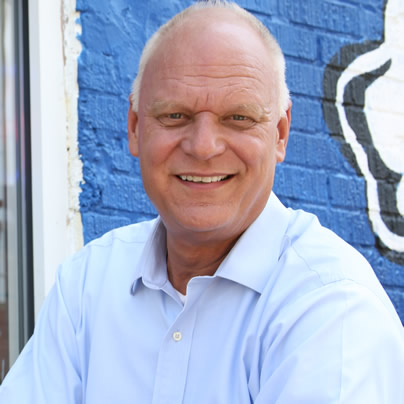
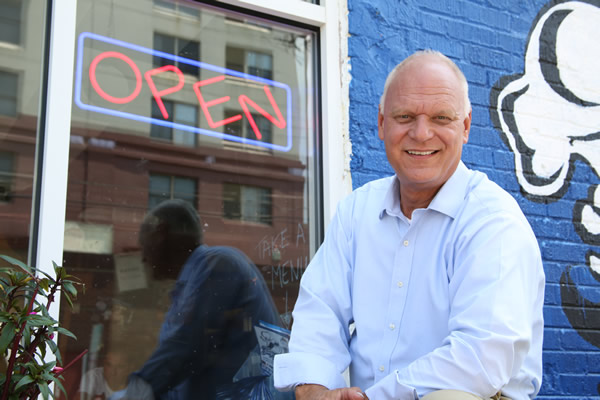
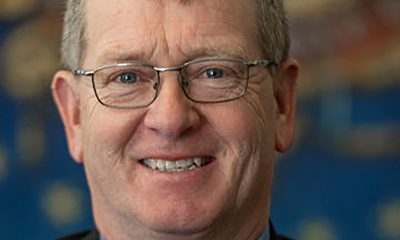
Don Guardian shocked Atlantic City’s political establishment by defeating the Democratic incumbent earlier this month. (Photo courtesy of Guardian)
Don Guardian said he never became involved in politics until recently when he “got fed up with how bad things were” in his hometown of Atlantic City, New Jersey.
Guardian, 60, a gay Republican, ran for mayor this year in the Nov. 5 election. He shocked Atlantic City’s political establishment by defeating incumbent Mayor Lorenzo Langford, a Democrat, in a city where Democrats outnumber Republicans among registered voters by a nine to one margin.
“I said I thought we needed to bring all of the different groups within Atlantic City together,” Guardian told the Blade. “And that extended to race, color, creed, national origin, political parties, sexual orientation and gender.”
For the past 21 years, Guardian has worked as executive director of the Atlantic City Improvement District, a non-profit corporation recently acquired by the state government that provides services to the city’s tourism district where more than a dozen casinos and upscale hotels are located.
Guardian said he believes he succeeded in defining himself as a good-government reform candidate capable of using his knowledge and experience in running the tourism district to address the longstanding problems plaguing the rest of the city, where most of the residents live.
“From a city standpoint the services are very, very poor,” he said. “From not cleaning the streets or replacing lights, paving roads, maintaining parks and playgrounds, cleaning beaches, maintaining the boardwalk – services that you would expect from a city to be commonplace – are not,” he said.
“And yet we have the third highest budget in the State of New Jersey. Only Newark and Jersey City are larger than us,” he said. “And we have the largest workforce in the state.”
Added Guardian, “I ran on a platform that I was going to bring those services to the other half of the city that was not receiving them.”
Pointing to his promise to limit his tenure in office to two terms, Guardian said he also “ran on a campaign that I needed eight years to clean up this city, to bring development back, to bring housing back, to bring up the standards, to lower taxes and to reduce crime.”
To the surprise of many of the city’s political observers, he attracted the support of constituency groups that traditionally back Democratic candidates, including a key local labor union and Latino and Asian-Pacific Islander advocacy groups.
Also on his agenda, he said, are plans to strengthen efforts already under way to promote Atlantic City as an entertainment and beach destination in addition to its well-known reputation as a center for casino gambling. With many other states legalizing casino gambling, Atlantic City no longer has an East Coast monopoly on gaming, Guardian said, making it essential that the city “reinvent itself” as a destination with attractions other than gaming.
Among the groups that endorsed Guardian were the International Brotherhood of Electrical Workers, the Latino Leadership Alliance of New Jersey, and the Pakistani-American Muslim Organization of South Jersey.
Guardian said rank-and-file Democrats clearly crossed over to vote for him following what he says was an aggressive grassroots campaign in which he knocked on the doors of more than 3,000 homes to listen to what people’s concerns were.
“There’s no question – Democrats and independents are the reason that I’m the mayor-elect today,” he said. “They provided the majority of my volunteers, the majority of the funding.”
Following a recount and careful examination of mail-in and provisional ballots counted during a 10-day period after the Nov. 5 election, the Atlantic County Board of Elections last week issued its final vote count in the mayoral race.
Guardian received 3,929 votes compared to Langford, who received 3,568 votes, showing Guardian won by a razor-thin 361-vote margin. An independent candidate, John McQueen, received 230 votes.
Although Guardian beat Langford by a close margin, election results show he received 1,032 more votes in Atlantic City than Gov. Chris Christie, who won his statewide re-election bid by a landslide.
In Democratic dominated Atlantic City, Democratic State Sen. Barbara Buono beat Christie, a Republican, by a vote of 4,293 to 2,897. In the statewide vote, Christie trounced Buono by a margin of 60 percent to 38 percent, catapulting him into the national spotlight as a possible presidential candidate in 2016.
Guardian said that although he has yet to meet Christie, the governor initiated policies in his first term to boost economic development efforts in Atlantic City. He said he looks forward to an amicable relationship with the Christie administration.
Most political observers said Langford’s relationship with Christie became strained last year when he and Christie clashed over an evacuation plan for Atlantic City during the onset of Tropical Storm Sandy, which devastated much of the Southern New Jersey coast.
Guardian, in describing himself as a political newcomer, said he was unaware of the existence of the Gay and Lesbian Victory Fund, a national political organization that raises money for openly LGBT candidates running for public office. Had he applied for and received an endorsement from the Victory Fund, he could have received additional financial support for his campaign.
“I have to tell you I was very naïve in not knowing there was such a thing as organized gay, lesbian, transgender support, either financial or otherwise,” he said. “And so no, I never applied and no one contacted me.”
Gregory Angelo, president of the Log Cabin Republicans, said there is no state Log Cabin organization in New Jersey, which prevented Log Cabin from endorsing Guardian under the group’s bylaws.
“I had my eye on this but we were not involved,” Angelo told the Blade. “But the fact that we have an elected gay Republican is a good thing.”
While he had few connections with LGBT organizations, Guardian said he supported LGBT equality during his tenure with the Atlantic City Special Improvement District, which he said adopted its own internal non-discrimination policy for LGBT employees.
As a longtime member and leader of the Rotary Clubs of Southern New Jersey, Guardian said he and his partner of 19 years, Louis Fatato, used the occasion of Guardian’s 2005 induction ceremony as district governor of the Rotary International organization of South Jersey to formally announce they had legally filed for a domestic partnership.
“It was great for us to announce it,” he said. “This was a great day for Rotary and for me personally. I have a domestic partnership and I’m also being inducted as a governor of Rotary International.”
During this year’s mayoral campaign, Guardian said he expressed his support for same-sex marriage in New Jersey in response to a question presented to him and Langford during a candidate debate.
“He said that was a national issue and he was a Christian and everybody has their own views,” said Guardian. “My response was the courts have made it very clear that gay marriage is a civil rights issue and that I would always stand on the right side of civil rights.”
Added Guardian: “In other words, I’m not supporting it because I’m a gay guy. I’m supporting it because the courts have already ruled that New Jersey has to provide gay marriage and that our current domestic partnership is not the same as civil marriage and therefore it had to be changed.”
According to Guardian, Langford never raised Guardian’s sexual orientation directly on the campaign trail in his public statements. But Guardian said a letter that the Langford campaign sent to voters urged voters to ask Guardian about “his unacceptable lifestyle.”
Neither Langford’s office nor his campaign responded to a request from the Blade for comment on this and other issues surrounding the campaign.
Similarly, the Atlantic County Democratic Party Chair, James Schroeder, and the county’s Republican Party Chair, Keith Davis, did not return calls seeking comment on Guardian’s election as mayor. Atlantic City is located within Atlantic County.
Also not responding to calls from the Blade for comment on Guardian’s election were spokespersons for Christie.


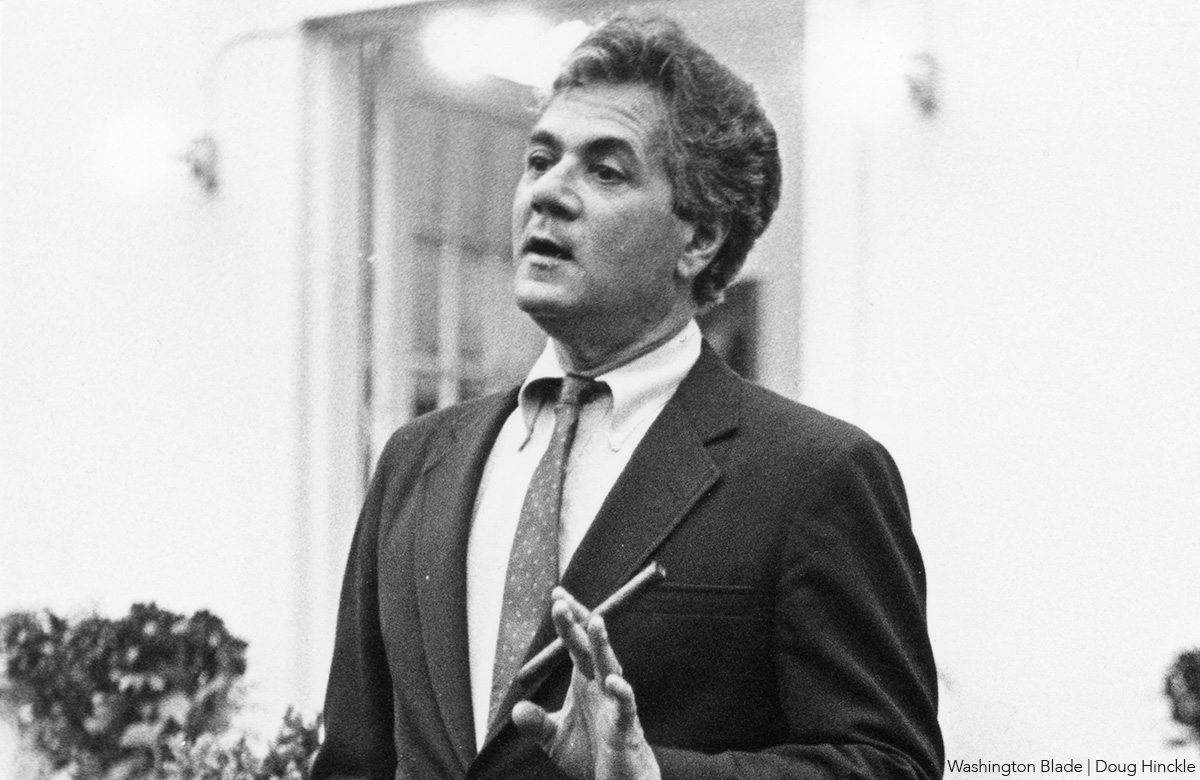
Former U.S. Rep. Barney Frank (D-Mass.), who served in the U.S. House of Representatives from 1981 until his retirement in 2013 and who became the first member of Congress to voluntarily come out as gay in 1987, died on May 19, at the age of 86, at his home in Ogunquit, Maine.
His passing came less than a month after he announced he had entered home hospice care due to terminal congestive heart failure under the care of his husband, Jim Ready, and shortly after finishing writing a new book entitled, “The Hard Path to Unity: Why We Must Reform the Left to Rescue Democracy.”
Despite his frail health, during the last few weeks of his life, Frank agreed to do interviews with multiple news media outlets, including the Washington Blade, where he reflected on his sometimes-controversial positions on issues such as transgender rights.
He told the Blade he had been living with his husband in their shared home in Maine since the time of his retirement in 2013 and called his husband a “saint” for caring for him during his illness. In 2012, at the age of 72, Frank married Ready, becoming the first sitting member of Congress to marry someone of the same sex.

News of his passing prompted an outpouring of praise and reflection on his life as a groundbreaking out gay lawmaker by current and former members of Congress and LGBTQ rights leaders.
Massachusetts Gov. Maura Healey announced on May 20 that she had ordered the U.S. flag and the state flag to be lowered to half-staff at all state buildings in honor of Frank’s life and legacy and the recognition of his passing.
“Barney Frank was nothing short of a trailblazer,” said Kelley Robinson, president of the Human Rights Campaign, the nation’s largest LGBTQ advocacy organization, in a statement. “At a time when being openly gay in public service could cost you everything, he chose visibility,” Robinson said.
Robinson and other LGBTQ advocates also pointed to Frank’s role in speaking out in Congress for stronger efforts to address the AIDS epidemic during the early years of HIV/AIDS, his push for the repeal of the “Don’t Ask, Don’t Tell” policy to initially allow gays to serve openly in the military, the enactment of marriage equality for same-sex couples, and broader anti-discrimination protections.
Frank has also been credited with helping to pass the federal Matthew Shepard and James Byrd Jr. Hate Crimes Protection Act of 2009.
In addition to his longstanding support for LGBTQ rights, political observers have said one of his most important achievements in Congress was his role, as chair of the House Financial Services Committee, in becoming co-author of what became known as the Dodd-Frank Wall Street Reform and Consumer Protection Act of 2010.
Coming at the time of a nationwide banking crisis, the New York Times has called the Frank bill that he and then-U.S. Sen. Christopher Dodd (D-Conn.) wrote “the most significant overhaul of the nation’s financial regulations since the Great Depression.”
Frank was born and raised in Bayonne, N.J., and graduated from Bayonne High School.
He graduated from Harvard College in Massachusetts in 1962 and worked in various places, including as an assistant to then-Boston Mayor Kevin White, before winning election to the Massachusetts House of Representatives in 1972, where he served for eight years representing a Boston area district. During that time he attended and graduated from Harvard Law School and became a member of the Massachusetts bar in 1979 after passing the bar exam.
In 1980, Frank became a candidate for the U.S. House in the Massachusetts 4th Congressional District, which he won with 52 percent of the vote in a four-candidate race, taking office in January 1981. He won re-election decisively over the next 30 years until announcing in 2012 his plans to retire and he would not run for re-election that year.
The New York Times is among the publications that have reported this week since Frank’s passing that his record as an esteemed and admired lawmaker helped him survive a sex scandal that surfaced in 1990 linking him to male prostitute Stephen Gobie.
Media reports at the time said Frank had patronized Gobie as one of his customers and for a time had Gobie as a roommate in Frank’s D.C. residence in the Capitol Hill neighborhood. In its article this week, the New York Times says Gobie “claimed that in the mid-1980s he had run a prostitution ring out of Mr. Frank’s home.”
Like other media accounts, the Times report adds that following an investigation, “The House Ethics Committee did not substantiate that claim, but it did find that Mr. Frank had fixed 33 parking tickets for Mr. Gobie and sought to shorten his probation on drug and sex-offense convictions by writing a misleading memorandum on congressional stationery to an official involved in supervising Mr. Gobie’s probation.”
The full House voted 408-18 to reprimand Frank for misuse of his office, but it rejected calls by some to censure or expel him.
“I should have known better,” Frank said in a speech on the House floor at that time, according to the New York Times. “There was in my life a central element of dishonesty,” the Times quoted him as saying. “Three years ago, I decided concealment wouldn’t work. I wish I decided that long ago,” he said referring to his 1987 decision to come out publicly as gay.
Despite all of this, Frank was re-elected that year with 66 percent of the vote, a development that his friends and supporters attribute to his reputation as a beloved and highly regarded public figure.
PFLAG, the national advocacy group for parents and friends of LGBTQ people, is among the groups that issued statements this week reflecting on Frank’s positive impact on the LGBTQ community.
“Frank was not only the first openly gay member of Congress, but he was also co-author of the Dodd-Frank Wall Street Reform and Consumer Protection Act of 2010 as chair of the House Financial Services Committee, which helped enshrine housing access for LGBTQ+ people,” PFLAG says in a statement.
“He was also a leading advocate on laws to combat HIV/AIDS,” the statement says, adding that PFLAG’s national office honored Frank with its Champion of Justice Award in 2018.
“Barney was candid, outspoken, quick-witted and downright funny, and he always had his eye on making progress,” said U.S. Sen. Tammy Baldwin (D-Wis.), the first openly lesbian woman elected to the U.S. Senate, in a statement. “He was willing to take on anyone who was in his way, regardless of who they were — I should know, I was one of the many who on occasion got an earful from him,” Baldwin said.
‘But I, and anyone else who spent time with him, were lucky to watch him in action and learn from him,” her statement continues. “Barney was a masterful legislator, savvy and strategic, and always thinking of the long game,” she said. “Our country is a better, more just, more equal place because of him, and he will be sorely missed.”
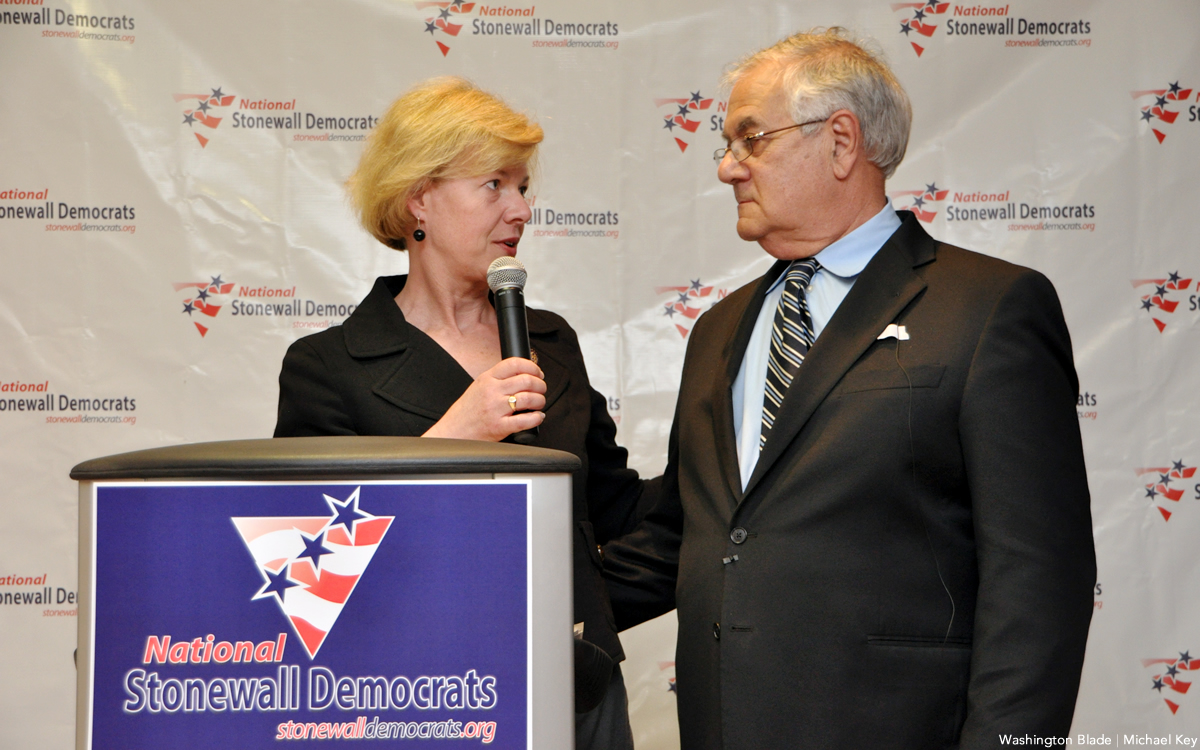
U.S. Rep. Mark Takano (D-Calif.), who serves as chair of the Congressional Equality Caucus, which represents LGBTQ members of Congress and their congressional allies, issued his own statement on behalf of the caucus pointing out that Frank was one of the two founding members of the caucus.
“I was honored that he came to campaign for me during my run for Congress just a few years after he co-founded the Congressional Equality Caucus, which I now have the distinct honor of leading,” Takano said.
He was referring to Frank and then-Congresswoman Tammy Baldwin’s action in 2008 to found the House LGBT Equality Caucus as the only two openly gay members of Congress, which evolved into the Congressional Equality Caucus.
“Barney proved that what mattered most was the work you did for others,” Takano says in his statement. “I truly believe that we are closer to a more equal world because of Barney Frank,” he said, adding, “Congressman Frank’s legacy touches every part of our fight for LGBTQI+ equality: from his work advocating for HIV and AIDS research to helping pass major pro-equality legislation like the Don’t Ask, Don’t Tell Repeal Act and the Hate Crimes Prevention Act into law.”
In his May 5 interview with the Blade, Frank responded to criticism he received during his tenure in Congress from some LGBTQ rights advocates, especially trans activists, who claimed he had not provided sufficient support for trans rights legislation.
He said he fully supported ongoing efforts to advance trans rights but said those efforts could be jeopardized by pushing issues for which many voters have yet to accept, such as “male to female transgender people playing in women’s sports.”
Among those praising Frank’s life and legacy at the time of his passing is longtime trans activist Diego Sanchez, who became the first openly trans congressional staffer when Frank hired Sanchez as his office’s Senior Policy Advisor. Sanchez remained on Frank’s staff until Frank’s retirement in 2013.
“Barney was a revered statesman for our country at the local, state, and federal levels and a treasured friend to me,” Sanchez told the Blade in a statement. “His belief that prejudice comes from ignorance and is only stricken by visibility explains how he came out openly and how he brought me to his staff, with intent and without apology,” Sanchez said.
He added, “I miss him terribly and am glad I got to spend a week with his husband Jim and him this month. Barney made sure that members of Congress could not say they had never met a trans person. I was honored to be a groomsman in their wedding and will miss Barney’s brilliance, counsel, friendship, and wit.”
Sanchez said celebration of life events are expected to take place in Boston and D.C. and details of those events will be announced soon.
Wyoming
U.S. attorney nominee confirmed despite anti-LGBTQ history, no trial experience
Nine felony grand jury indictments tied to Darin Smith dismissed last week
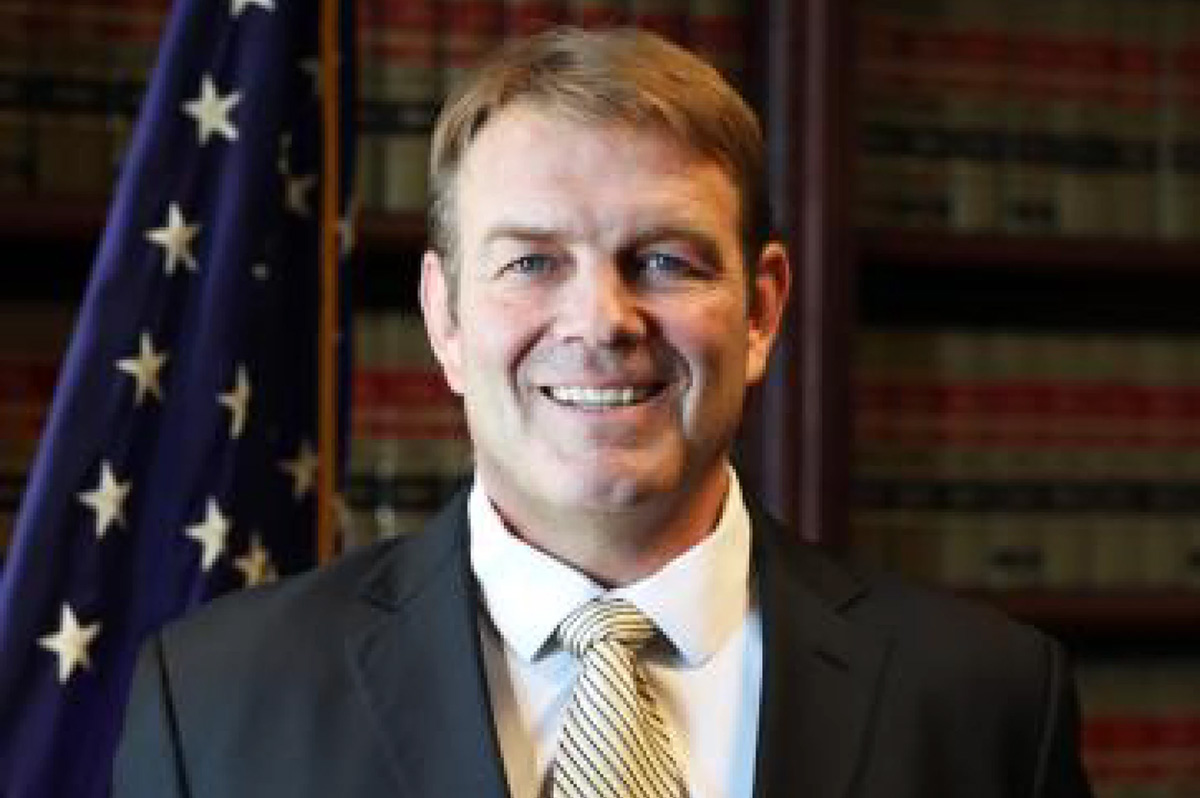
Republicans confirmed Darin Smith as U.S. Attorney for the District of Wyoming on Monday, regardless of his history as interim U.S. Attorney for Wyoming and a state senator.
While serving as interim U.S. Attorney for Wyoming — after being appointed by President Donald Trump last July despite never trying a case outside of his time as a law student intern — former state Sen. Darin Smith likely prejudiced jurors during grand jury proceedings.
Nine felony grand jury indictments tied to Smith’s tenure were dismissed last week.
Judges dismissed felony indictments against Cheyenne Swett, Richard Allen, Michael Scott Hopper, Brian Joseph Johnson, Dennison Jay Antelope, Matthew Christopher Jacoby, Matthew Miller Jr., Wolf Elkins Duran, and Jose Benito Ocon. The now-dismissed charges included felony firearm possession, drug distribution, and possession of child pornography, among other allegations.
Smith allegedly told the grand jury that the defendants were “bad guys,” described them as “murderers,” and said deliberations “won’t take long.”
Even the U.S. Attorney’s Office for the District of Wyoming acknowledged that Smith’s comments were “ill-advised.”
Smith has a history of aligning with Trump over the Constitution and supporting anti-LGBTQ legislation.
In 2025, Smith co-sponsored House Bill 0194, titled “Obscenity amendments,” which, among other provisions, would have criminalized drag shows. The bill also would have repealed exemptions for public and school librarians from the crime of “promoting obscenity” to minors. The wording of the bill was so vague that Republican state Rep. Lee Filer said, “We will end up having to arrest somebody for allowing a child to read the Holy Bible.”
Smith also co-sponsored SF0062, a bill requiring public school students to use restrooms, sex-designated changing facilities, and sleeping quarters that align with their sex assigned at birth. In March 2025, the Wyoming governor signed the bill into law, along with its House companion.
He also attended the Jan. 6 Capitol riot alongside thousands of other Trump supporters.
“Smith was on the Capitol grounds on Jan. 6 … and made the reprehensible claim … that the hundreds of Capitol Police officers who risked their lives that day were guilty of ‘massive incompetence.’ Smith blames the police for what happened on Jan. 6. Without evidence, he claimed that rioters who breached the Capitol were victims of entrapment,” U.S. Sen. Dick Durbin (D-Ill.) said. “Moreover, Smith is not remotely qualified to be a U.S. Attorney. He’s going to be in the package — take it or leave it. Prior to becoming the interim U.S. Attorney, he had no courtroom or litigation experience whatsoever. None. And Smith’s lack of experience has had real-world consequences.”
Prior to his work in the Wyoming state legislature, Smith worked as Director of Planned Giving for the Family Research Council, an organization that describes homosexuality as “harmful” to society with “negative physical and psychological health effects.”
The organization also believes that sexual orientation “should [not] be included as a protected category in nondiscrimination laws or policies, as it is not comparable to inborn, immutable characteristics such as race or sex.”
During questioning before the U.S. Senate, he denied that his work with the organization shows he has loss of impartiality when it comes to matters of LGBTQ rights.
Also questioning, Smith was asked about a now-deleted Facebook post in which he appeared to express support for Kim Davis, the Kentucky county clerk who was found to be unconstitutional in her refusal to issue same-sex marriage licenses, despite Obergefell v. Hodges.
“Perhaps Hillary and Obama can share the cell with Kim Davis for refusing to uphold the Defense of Marriage Act,” the post said.
When asked why he posted it, Smith told Durbin: “I do not recall.”
Josh Sorbe, spokesperson for the Senate Judiciary Committee Democrats and Durbin, said:
“Anti-LGBTQ+ extremist Darin Smith has no business serving as a top law enforcement officer in any state — let alone a state with as much history of queer importance as Wyoming. He’s an unqualified insurrectionist with no experience litigating criminal or federal matters, and his bigotry puts into serious question his commitment to upholding the law for all Americans.”
Human Rights Campaign Vice President of Government Affairs David Stacy also condemned Smith’s confirmation to the U.S. Attorney’s office.
“The justice system in America is supposed to be about ensuring the law is applied fairly and equally. But Darin Smith has spent his career obsessed with making life worse for LGBTQ+ people, opposing marriage equality, cosponsoring state legislation targeting transgender youth, and smearing LGBTQ+ people in public statements,” Stacy said. “Just over two decades after Matthew Shepard was brutally murdered in that same state, Wyoming deserves better than tired anti-LGBTQ+ hate at the helm of federal law enforcement. The Senate should reject Darin Smith and demand a nominee who will put the people — and justice — first.”
Vermont
Vt. lawmaker equates transgender identity with bestiality
Vermont Democrats condemned comments, demanded apology
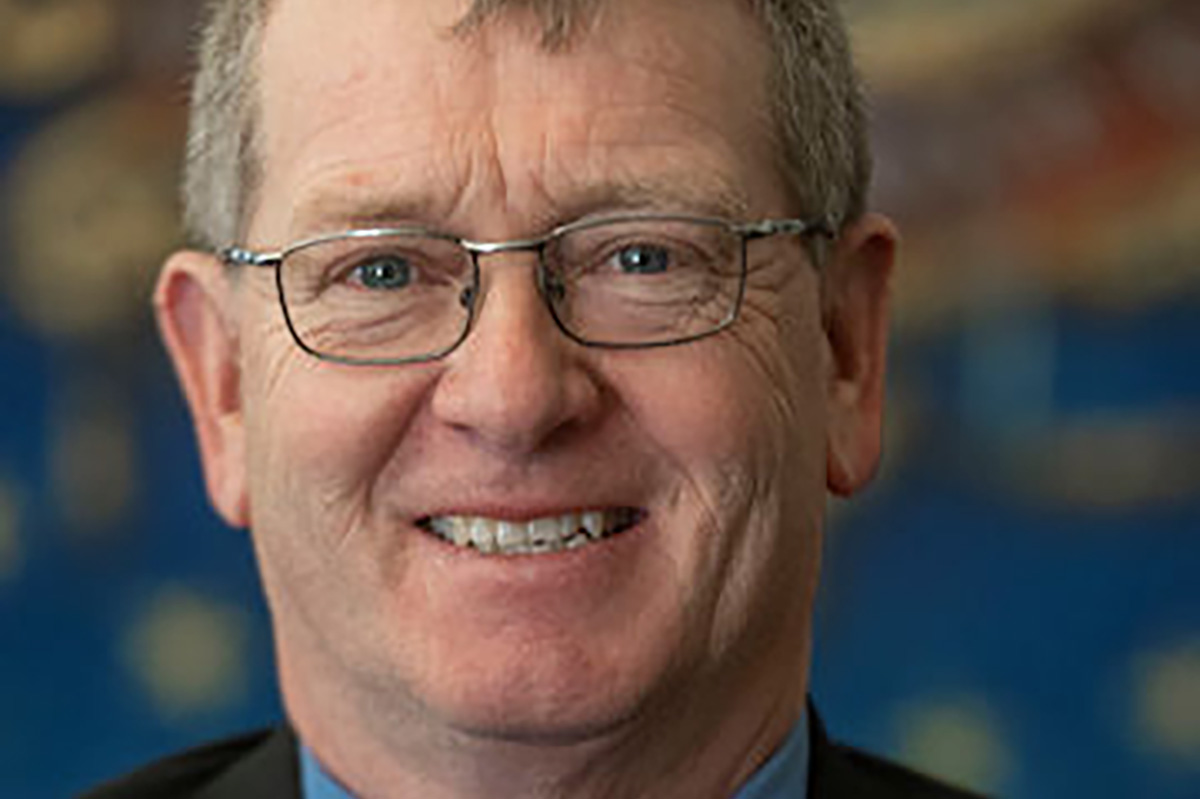
State Sen. Steven Heffernan (R-Addison) equated transgender people to bestiality on the Vermont Senate floor on May 15 while debating an animal cruelty bill.
Heffernan, who was elected in 2024 to the state Senate, constructed a scenario in which a trans person is indistinguishable from someone committing bestiality.
“In these crazy times, what happens if the individual identifies as an animal having intercourse with an animal? How is the courts going to handle that?” the former member of the Vermont Air National Guard said while debating House Bill 578. “Being that we voted through Prop Four, and if it does make it through this state, and I have a gender identity that I identify as a dog and had sex with my dog, is this law going to affect me?”
State Sen. Tanya Vyhovsky (D-Chittenden Central), who presented H. 578 responded professionally.
“The bill that we are putting forward in the current law is quite clear that any act between a person and an animal that involves contact with the mouth, sex organ, or anus of the person, and the mouth, sex organ, or anus of the animal, without a bona fide veterinary purpose, will be a crime.”
In the video, Heffernan continued to ask inappropriate questions — questions that Vyhovsky answered.
“If I identify as that animal, will this be able to … It says a person. I’m not a person. I’m identifying as this animal I’m having intercourse with,” he said. “We are identifying genders, of whatever gender we decide we want to be, and I think I like this bill. I’m going to vote for this bill, but I want to make this chamber aware of what’s coming.”
Vyhovsky made a statement saying this was a planned move in an attempt to “other” trans Vermonters instead of protecting them.
“Senator Heffernan knew exactly what he was doing,” said Vyhovsky. “Sen. Heffernan is using the same dehumanizing playbook that has been used against LGBTQ+ people for generations — the false, ugly suggestion that queer and trans identity is synonymous with deviance and harm. It was wrong then and it is wrong now.”
This derogatory action at the expense of trans people appears to be part of a pattern of behavior from Heffernan in his official capacity.
In March, Heffernan left the floor right before lawmakers voted on Proposal 4, conveniently missing the bill vote. PR 4, if passed by the state’s voters in the fall, would amend the state constitution to enshrine protections against unjust treatment, including discrimination based on a “person’s race, ethnicity, sex, religion, disability, sexual orientation, gender identity, gender expression, or national origin.”
Heffernan told VTDigger at the time that he left because his stomach was feeling “agitated” and he needed to use the restroom. He said he had not made up his mind on how to vote on the amendment, largely because he’d heard from constituents urging him both to vote for and against it.
“My pizza hit at the right time, I guess,” he said, calling the timing “convenient.”
Despite his leaving — and being the only lawmaker to do so — the state Senate voted to pass it 29-0, with Heffernan marked “absent.” This came after the state House of Representatives voted to pass it 128-14 last week.
Vermont Senate Democrats condemned the statement and used the opportunity to emphasize the need for the state to pass PR 4 on Nov. 4.
“In the wake of Sen. Heffernan’s comments, the stakes of this election couldn’t be more clear,” the statement provided to the Washington Blade read. “Transgender and nonbinary Vermonters are our neighbors, our friends, and our family members. On Friday, Sen. Heffernan used his platform as an elected official representing the people of Vermont to dehumanize them. Senate Democrats will never stop fighting for dignity for all Vermonters. We demand Senator Heffernan apologize to those he has harmed with his words and actions.”
State Sen. Kesha Ram Hinsdale (D-Chittenden Southeast), speaking in her capacity as chair of the Senate Ethics Panel, responded to similar transphobic comments made by President Donald Trump in a White House counterterrorism strategy document last week, in which he said those with “extreme transgender ideologies” should know “we will find you and we will kill you,” stating:
“A lot of people are living in fear in this country because of what somebody with the power of the pen and the power of the military is saying every day,” Hinsdale said. “Just because [speech] is protected does not mean it is worthy of this institution, and does not mean it is worthy of the office we hold and the power that we wield in the lives of Vermonters.”
The Blade reached out to Heffernan for comment but has not heard back.

When impunity meets history

Comings & Goings

I’m a 64-year-old single gay man and I hate my life

Quest for fame becomes an obsession in entertaining ‘Lurker’

Here’s how to celebrate Black queer joy

Cuba marks IDAHOBiT amid heightened tensions with U.S.

Texas Children’s Hospital reaches $10 million settlement with DOJ over gender-affirming care

Anti-LGBTQ commentator Tyler O’Neil to testify in Southern Poverty Law Center probe

Vt. lawmaker equates transgender identity with bestiality

A case of retaliation, not stalking
-

 Cuba4 days ago
Cuba marks IDAHOBiT amid heightened tensions with U.S.
-
Federal Government4 days ago
Texas Children’s Hospital reaches $10 million settlement with DOJ over gender-affirming care
-
LGBTQ Non-Profit Organizations4 days ago
Anti-LGBTQ commentator Tyler O’Neil to testify in Southern Poverty Law Center probe
-
Vermont2 days ago
Vt. lawmaker equates transgender identity with bestiality


