News
Clinton’s VP pick Kaine reliable on LGBT rights
Running mate called ‘solidly pro-LGBT equality’ after evolution
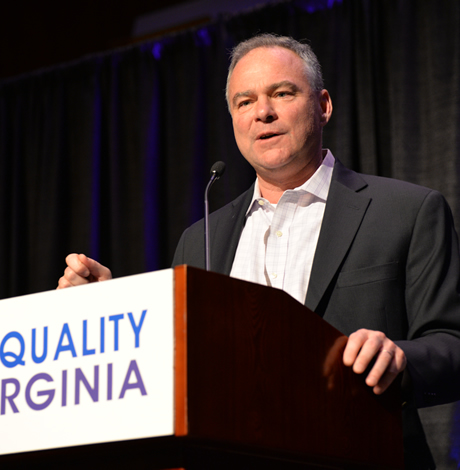
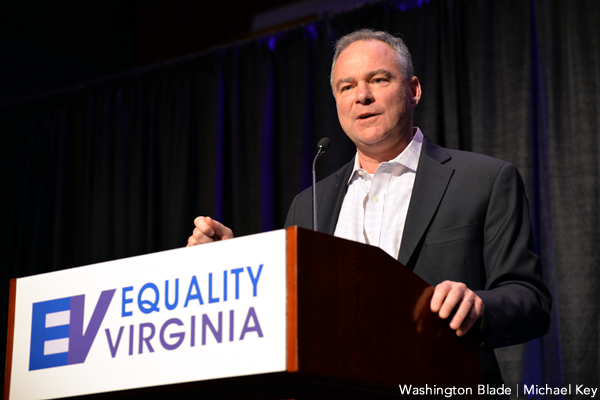
Hillary Clinton has selected Sen. Tim Kaine (D-Va.) as her running mate. (Washington Blade file photo by Michael Key)
Hillary Clinton has selected as her running mate a U.S. senator from Virginia who’s been a largely reliable voice in support of LGBT rights.
As first reported by The New York Times, Clinton announced late Friday her choice is Sen. Tim Kaine (D-Va.), who’s also former chair of the Democratic National Committee and former Virginia governor. A Spanish speaker, Kaine is set to make his joint campaign appearance with Clinton on Saturday in Miami.
Since his tenure as Virginia governor between 2006 and 2010, Kaine has taken action on behalf of LGBT rights. Upon taking office, Kaine signed an executive order barring anti-gay discrimination in the state workplace (the direction didn’t contain explicit protections on the basis of gender identity). His Republican successor, Virginia Gov. Bob McDonnell reversed the order, but Gov. Terry McAuliffe, a Democrat, reinstated it and added protections for gender identity.
Upon election to the U.S. Senate in 2012, Kaine generally hasn’t been at the forefront of initiatives advancing LGBT rights, but has rose to the occasion as needed. In the Human Rights Campaign’s most recent congressional scorecard, Kaine scored a “90” out of possible “100,” losing points for not co-sponsoring the Student Non-Discrimination Act and the Safe Schools Improvement Act.
Kaine is an original co-sponsor of comprehensive LGBT non-discrimination legislation known as the Equality Act. The senator also cast votes in favor of the Employment Non-Discrimination Act and an amendment along the lines of the Student Non-Discrimination Act. However, he isn’t a co-sponsor of the Therapeutic Fraud Prevention Act, which seeks to ban widely discredited “ex-gay” therapy nationwide by classifying it as fraud.
Kaine has signed amicus briefs urging the U.S. Supreme Court to overturn the Defense of Marriage Act and state bans prohibiting same-sex marriage. More recently, Kaine signed a brief urging the U.S. Second Circuit Court of Appeals to find sexual orientation discrimination is prohibited under current law.
In 2010, Kaine, as chair of the Democratic National Committee, took part in a three-and-a-half minute video to answer on questions on LGBT rights, outlining accomplishments already made under the Obama administration.
“We have a long way to go, but we’re already making progress for LGBT individuals,” Kaine says. “President Obama and congressional Democrats have already begun to address barriers to equality for LGBT Americans by guaranteeing these families the right to visit and make medical decisions for a partner in America’s hospitals, by enacting hate crimes legislation to protect LGBT Americans — to name just two significant accomplishments.”
Chad Griffin, president of the Human Rights Campaign, drew a stark contrast between Kaine and Indiana Gov. Mike Pence, whom Donald Trump has selected as his running mate.
“While Donald Trump doubled down on discrimination by picking Mike Pence, Hillary Clinton has bolstered her campaign’s historic commitment to LGBTQ equality by choosing Tim Kaine,” Griffin said. “Having proven time and time again that they have the experience, determination, and leadership needed to move equality forward for all Americans, we are confident Clinton and Kaine will tear down the walls of discrimination that hold all of us back.”
But Kaine, like many Americans, including President Obama and Clinton, appears to have gone through an evolution on LGBT rights. When running to become Virginia governor in 2006, Kaine said he didn’t support adoption by gay couples, but reversed his position by 2011.
Kaine was also initially opposed to same-sex marriage. Although he now supports marriage equality, it’s hard to say exactly when he changed his mind. In 2012, he sought to find a middle ground, not yet clearly supporting same-sex marriage, but backing some kind of relationship recognition.
“The underlying issue is, should committed couples have the same legal rights and responsibilities, and the answer to that is an unequivocal yes,” Kaine said, according to The Washington Post.
In 2013, when many U.S. senators declared their newfound support for same-sex marriage, Kaine joined them in declaring his support for marriage equality.
“I believe all people, regardless of sexual orientation, should be guaranteed the full rights to the legal benefits and responsibilities of marriage under the Constitution,” Kaine said at the time. “I hope the Supreme Court will affirm that principle.”
Rick Zbur, executive director of Equality California, said Kaine is “now solidly pro-LGBT equality” after undergoing the same kind ‘evolution’ on LGBT rights as the nation as a whole.
“With her selection of Sen. Tim Kaine, Hillary Clinton has highlighted the stark differences between her ticket and her opponent’s,” Zbur said. “In contrast to the extremes of racism, xenophobia, misogyny, and homo- and transphobia on display this week at the Republican National Convention, Kaine presents an alternative: a pragmatist who works across ideologies and across the aisle to get things done.”



America 250
40 defining moments in LGBTQ pop culture history
From 19th century drag balls to ‘Heated Rivalry’ craze
As America turns 250 this year, what better time to look back on the defining LGBTQ pop culture moments in our country’s history? Here are our picks for 40 of the top pop culture moments along with a few honorable mentions. In today’s volatile political climate, these selections are a reminder of the power that comes with fair representation in the films, shows, and music we consume every day. As with all such lists, these choices are subjective but offer a good overview of our community’s progress.
• “Moonlight” wins Best Picture — after the wrong movie is announced
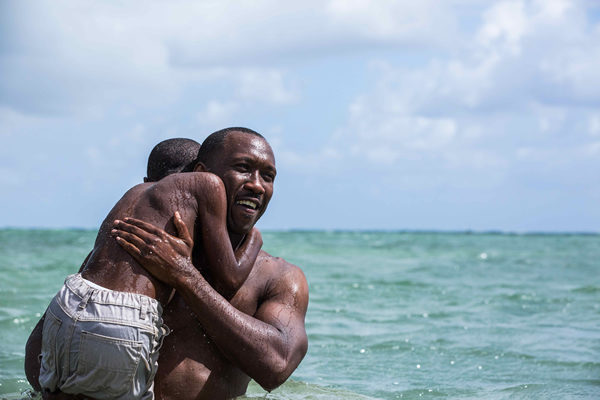
When Barry Jenkins’s acclaimed indie “Moonlight”won the 2017 Best Picture Oscar (in a famous fiasco in which “La La Land”was accidentally named the winner), it was a landmark moment for Black and queer cinema, and stories told on a personal, intimate scale. At just $1.5 million, the film reportedly had the lowest budget of any Best Picture winner in history.
• “Angels in America”premieres on Broadway and wins Pulitzer Prize
Tony Kushner’s “Angels in America: Millennium Approaches”premiered on Broadway in 1993, going on to win the Tony for Best Play alongside three other awards; the second part, “Perestroika,” opened in fall 1993 to similar acclaim. The show explored AIDS during the Reagan era and remains one of the most ambitious theater productions in Broadway history.
• Ellen comes out on TV

Although Ellen DeGeneres has unfortunately tainted her legacy after allegations of harassment on the set of “The Ellen DeGeneres Show,” she made LGBTQ history in 1997 after coming out as gay on her sitcom “Ellen,” and on the cover of Time magazine. In that famous “Ellen”episode, DeGeneres told Laura Dern, “Susan, I’m gay!”
• “All in the Family” makes history by featuring gay character in 1971
One of the most successful American sitcoms, “All in the Family,”made history by featuring a gay character in the Season 1 episode “Judging Books by Covers,” which debuted in 1971. The episode featured a character named Steve (Phil Carey) who explains that he is gay, much to the shock of the lead character Archie (Carroll O’Connor), one of Steve’s old football friends.
• “Roseanne”sparks outrage after airing “Don’t Ask, Don’t Tell”episode
In Season 6, “Roseanne”aired an episode that featured a same-sex kiss between Roseanne (played by Roseanne Barr) and Sharon (played by Mariel Hemingway), prompting outrage from ABC, the network airing the show. (Read more about this history through the Blade’s interview with “Roseanne”writer Stan Zimmerman.)
• “Dawson’s Creek” becomes first primetime show to feature gay kiss
In Season 3, “Dawson’s Creek”became the first primetime network show to include a gay kiss. The episode featured characters Jack (played by Kerr Smith) and Ethan (played by Adam Kaufman) sharing a passionate on-screen moment. The show’s creator, Greg Berlanti, is out and proud himself, and helped usher in a new era of LGBTQ representation on teen-centered shows.
• The smash hit that is “Heated Rivalry”

Talk about an unexpected hit. One of the more recent entries on this list, the Canadian show “Heated Rivalry,” was adapted from a novel by Rachel Reid and became an overnight sensation after releasing on Crave and HBO Max at the end of 2025. The show’s leads, Connor Storrie and Hudson Williams, instantly became stars to watch at every awards season event.
• “Schitt’s Creek”sweeps the Emmys for final season
“Schitt’s Creek”had gone unrecognized at the Emmys, but pulled off a clean sweep with nine wins for its sixth and final season. The moment was made all the more impactful since that season happened to finish airing during the pandemic — seeing Dan Levy, Eugene Levy, Catherine O’Hara and Annie Murphy all take home awards was a true feel-good moment for a show celebrating queer love.
• Pop divas penning queer anthems
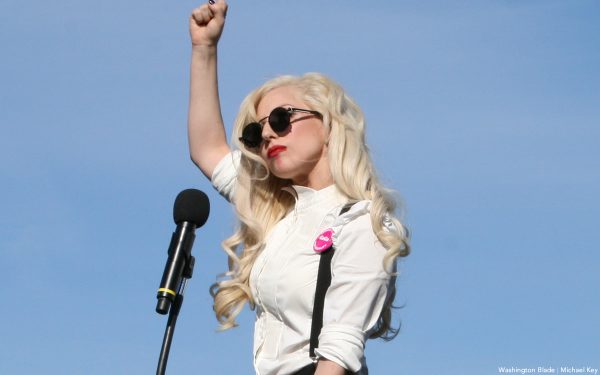
Many pop divas have paid tribute to their gay fans, everyone from Diana Ross to Taylor Swift. Lady Gaga’s “Born This Way” wasreleased in 2011 and debuted at #1 on the Billboard 200. Rolling Stone named it the most inspirational LGBT song of all time in 2023. In 1997-1998, two divas released iconic hit songs: Cher with “Believe” and Janet Jackson with “Together Again,” a No. 1 hit that paid joyful tribute to her friends who died of AIDS. More recently, Chappell Roan became one of the 21st century’s defining artists with the release of her solo album, “The Rise and Fall of a Midwest Princess,” in 2023. The album included multiple catchy hits, including the smash “Pink Pony Club.”
• “Will & Grace” starts airing
“Will & Grace”started airing in 1998 and brought a gay lawyer’s (played by Eric McCormack) romantic and personal journey into millions of households. The show ran on NBC for eight seasons and also starred Debra Messing, Sean Hayes, and queer icon Megan Mullally.
• Michaela Rodriguez wins Golden Globe for “Pose”
For her work as Blanca Evangelista in Ryan Murphy’s “Pose,” Michaela Rodriguez made history as the first trans person to win a Golden Globe. While the 2022 ceremony was private that year, Rodriguez took to Instagram to celebrate the gravity of the moment: “This is for the LGBTQAI, Black, Latina, Asian, the many multi beautiful colors of the rainbow around the freaking world. This not just for me, this is for y’all.”
• Alex Newell and J. Harrison Ghee make Tony Awards history
In 2023, Alex Newell and J. Harrison Ghee made Tony Awards history after becoming the first nonbinary actors to win competitive awards. Ghee won Lead Actor in a Musical for their performance in “Some Like it Hot,” while Newell won Featured Actor in a Musical for their work in “Shucked.”
• New Queer Cinema
In the ‘90s, notable filmmakers like Todd Haynes, Gregg Araki, and Tom Kalin were part of the blossoming New Queer Movement, coined by B. Ruby Rich in the Village Voice. These films challenged traditional norms and paved the way for a new manner of imagining queer bodies on camera.
• “Paris is Burning” debuts in 1990
In 1990, Jennie Livingston’s groundbreaking documentary “Paris is Burning”brought audiences right into New York City’s drag ball scene, featuring queens Dorian Corey, Pepper LaBeija, Willi Ninja, Octavia Saint Laurent and Venus Xtravaganza. The film would later inspire the creation of “Pose”and is considered one of the most essential queer documentaries ever made.
• “But I’m a Cheerleader” becomes a cult classic
The term “cult classic” gets overused now — “But I’m a Cheerleader”is a true example of one. Although the film was under appreciated by critics when it debuted in 1999, queer movie fans have since embraced its campy tone, which was ahead of its time. The cast included Natasha Lyonne, Clea DuVall, Melanie Lynskey and, of course, RuPaul.
• “Common Threads: Stories from the Quilt” wins documentary Oscar
In 1990, “Common Threads: Stories from the Quilt” won the Oscar for Best Documentary. Directed by Jeffrey Friedman and Rob Epstein, the film told the story of the NAMES Project AIDS Memorial Quilt and how it honored the lives lost to HIV/AIDS. The film even recently screened at the Academy Museum and continues to leave an impact.
• Caitlyn Jenner comes out as trans
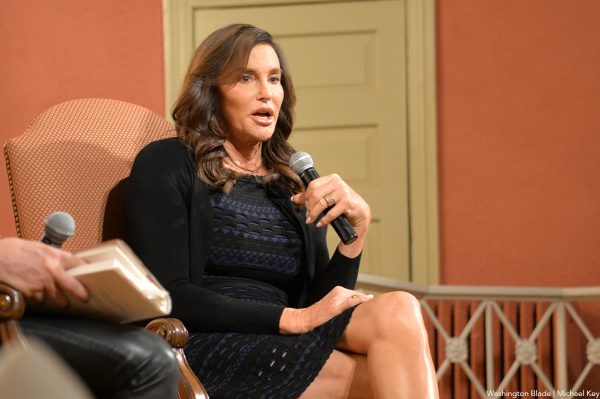
For those not in the LGBTQ community, Caitlyn Jenner was likely one of the first trans people they saw come out publicly. Jenner graced the cover of Vanity Fair after coming out in 2015, capturing the world’s attention, although the former Olympic gold medalist’s legacy has become more complicated in recent years after supporting bans on trans people in sports.
• James Ivory wins Oscar for writing “Call Me by Your Name”
At 89, James Ivory became the oldest Oscar winner in 2018 when he took home the Best Adapted Screenplay Oscar for penning “Call Me by Your Name,” the acclaimed adaptation of André Aciman’s novel that starred Timothée Chalamet and Armie Hammer. Ivory previously wrote the 1987 queer classic “Maurice.” It was a big night for “Call Me by Your Name”at the 2018 Oscars as, in addition to the film’s adapted screenplay win, Sufjan Stevens performed his nominated song “Mystery of Love”in a tender, heartbreaking performance. That year, the song was up against “Remember Me”from “Coco”(which won) and “This is Me” from “The Greatest Showman.”
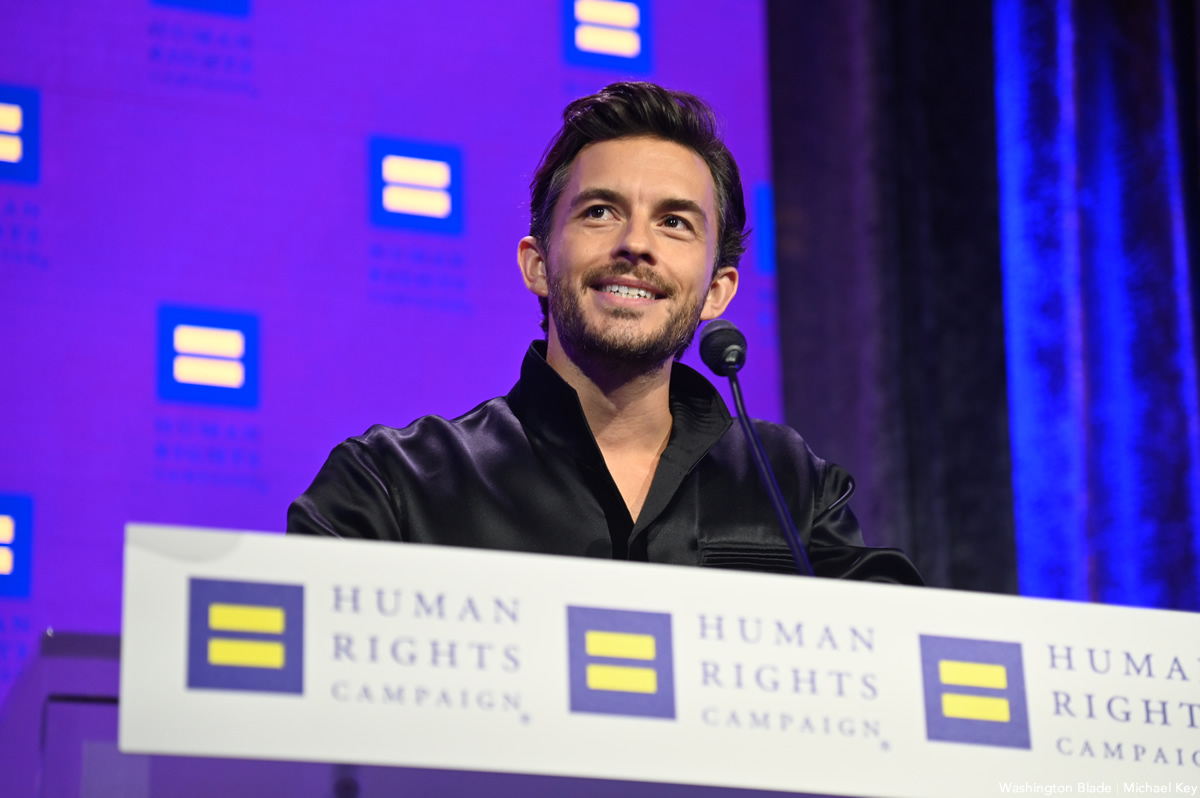
• Jonathan Bailey makes history as People’s “Sexiest Man Alive”
“Wicked”star Jonathan Bailey made history as the first openly gay man to be chosen as People’s “Sexiest Man Alive” in 2025. “There’s so many people that want to do brilliant stuff who feel like they can’t,” he told the magazine, “and I know the LGBT sector is under immense threat at the moment. So it’s been amazing to meet people who have the expertise and see potential that I could have only dreamed of.”
• RuPaul wins first Emmy for hosting “Drag Race”
RuPaul won his first Emmy in 2016 for hosting “RuPaul’s Drag Race,” and continued to dominate that category through 2023. The last two years, Alan Cumming has won the award for “The Traitors, representing a new era of reality TV. Upon winning the award in 2016, RuPaul said backstage, “I really didn’t expect this.”
• Lil Nas X comes out on last day of Pride 2019
Lil Nas X came out on the last day of 2019 Pride, although he humorously tweeted “deadass thought i made it obvious.” The announcement came at a peak in his career after releasing “Old Town Road.” In 2021, his hit single “MONTERO (Call Me By Your Name)” also made waves after the rap-country artist seduced the devil in the memorable music video.
• “Brokeback Mountain” almost completes awards season sweep
Ang Lee’s “Brokeback Mountain”was a landmark queer film and nearly swept the 2006 awards season, winning top awards at the Golden Globes, BAFTAs, Producers Guild and Directors Guild Awards. Despite famously losing Best Picture in a shocking upset to “Crash,” “Brokeback Mountain” is the film that has stood the test of time, and Heath Ledger and Jake Gyllenhaal’s performances remain heartbreaking. Some anonymous voting members of the Academy later told news outlets that they couldn’t vote for a “gay film” for Best Picture.
• Hitchcock’s ‘gay’ films
Iconic filmmaker Alfred Hitchcock made several films with gay subtext. Although audiences and critics may not have realized it at the time, modern audiences have rediscovered films like “Rope” and “Strangers on a Train” for their gay themes.
• Two of TV’s gay firsts in early ‘70s
The 1973 PBS show “An American Family” followed the Loud family, including eldest son Lance, who came out as gay to his family during the show’s run and, thus, became what is widely believed to be the first openly gay “character” on television, as well as the first gay character on an early example of reality television, as ABC reported. Meanwhile, the ABC sitcom “The Corner Bar” featured the first recurring gay character on TV in 1972.
• Netflix reboots “Queer Eye”for the modern era
In 2018, Netflix rebooted the popular Bravo show “Queer Eye for the Straight Guy”for a new generation of fans, bringing together Antoni Porowski, Bobby Berk (later replaced by Jeremiah Brent), Jonathan Van Ness, Karamo Brown and Tan France for weekly makeovers. The reboot was titled simply “Queer Eye” and its final season aired in January 2026.
• Billy Porter makes Emmys history with “Pose”nod

In addition to his iconic red carpet looks, Billy Porter is remembered for becoming the first openly gay Black man to be Emmy-nominated in the Lead Actor in a Drama Series category. He would go on to win this category in 2019, and was nominated the following two years.
• Sean Baker releases “Tangerine”in 2015
Ten years before winning four Oscars for “Anora,” Sean Baker released “Tangerine,” a low-budget film shot entirely on the iPhone 5S. The two trans stars were Mya Taylor and Kitana Kiki Rodriquez, who were new to acting; Baker cast the two after meeting them at the Los Angeles LGBTQ Center.
• “30 Something” depicts two men in bed
On Nov. 7, 1989, ABC hit show “30 Something” created a firestorm of controversy when it aired an episode featuring two male characters, Russell and Peter, in bed just after having sex. They did not touch on camera but the outrage led some advertisers to pull out of the episode and ABC did not rebroadcast it.
• Madonna brings vogueing into the mainstream
Pop icon Madonna has been a queer ally since the 1980s, standing up to everyone from the pope to the Boy Scouts. But she reached peak gay on 1990’s “Vogue,” which brought ballroom culture into the mainstream. Madonna later brought vogueing to the most unlikely place: the Super Bowl during her 2012 halftime performance. Her film “Truth or Dare” brought her mostly gay and out backup dancers to mainstream cineplexes across the world.
• Kim Petras wins a Grammy
In 2023, musician Kim Petras became the first openly trans person to win a Grammy.
• “LA Law” airs same-sex kiss
In 1991, hit show “LA Law” aired a kiss between two women — lesbian CJ Lamb (Amanda Donohoe) and lawyer Abby Perkins (Michele Greene). Advertiser boycotts ensued. The scene is blamed for a rise in shows airing “lesbian kiss episodes” to boost ratings.
• Elton John comes out
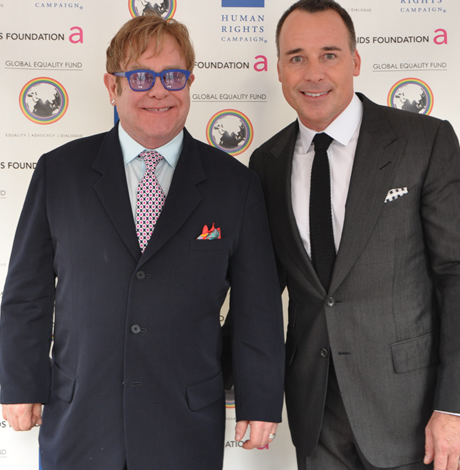
Elton John has been a ubiquitous presence in popular music since the 1970s. He came out as bisexual in a 1976 Rolling Stone interview and later as gay in 1992. He went on to marry his partner, David Furnish. Elton John is regarded as an iconic and leading figure in the LGBTQ movement, raising hundreds of millions of dollars for AIDS research via his Elton John AIDS Foundation.
• Laverne Cox makes history
Laverne Cox, breakout star of “Orange Is the New Black,” became the first transgender person ever to be featured on the front cover of Time magazine in 2014. She later made more history after becoming the first out trans person to score an Emmy nomination.
• The enduring popularity of camp
Gay audiences have always embraced camp and this list would be incomplete without acknowledging perhaps the four greatest camp classic films of all time: “The Wizard of Oz” (1939), “What Ever Happened to Baby Jane” (1962), “The Rocky Horror Picture Show” (1975), and “Mommie Dearest” (1981). “Oz” brought us Judy Garland and hence the expression “friend of Dorothy.” “Baby Jane” was, of course, best known for its pairing of feuding divas Joan Crawford and Bette Davis. Tim Curry’s portrayal of Frank-N-Furter in “Rocky” remains iconic 50 years later and was recently rebooted for Broadway with Luke Evans wearing the bustier. And Faye Dunaway’s career may not have recovered but her over-the-top performance in “Dearest” caused us all to reconsider wire hangers. (Honorable mentions: “Sunset Boulevard,” “All About Eve.”)
• Drag balls of the 19th century
Drag culture has its origins in ancient Greek theater, when women were barred from acting, forcing men to play female roles. The first documented drag balls in America were held in the 1860s in Harlem. William Dorsey Swann, a former slave, became the first known figure to use the term “queen of drag,” hosting balls in D.C. in the late 19th century.
• “Billy Elliot”nabs 10 Tony Awards
In 2009, it was “Billy Elliot”all night at the Tony Awards, taking home 10 trophies including for Best Musical and Best Actor (which David Alvarez, Trent Kowalik and Kiril Kulish shared). The musical was adapted from the 2000 film directed by Stephen Daldry, which itself was adapted from a 1999 play titled “Dancer” by Lee Hall.
• Androgynous pop stars challenge gender norms
Modern pop stars often flaunt gender norms but it wasn’t always safe to do so. Three stars who did it best were David Bowie, Boy George, and k.d. Lang. Bowie famously came out as bisexual and performed in androgynous costumes in the 1970s. Boy George’s breakout hit “Do You Really Want to Hurt Me” in 1982 upended audience expectations of a male pop singer. And Lang, who came out in 1992 as a lesbian, challenged norms, perhaps most memorably on the cover of Vanity Fair with Cindy Crawford in 1993.
• Newer queer-themed movies hit and miss at box office
Adapted from the 2015 book “Simon vs. the Homo Sapiens Agenda,” the 2018 film “Love, Simon”brought a young high schooler’s coming out story to the big screen. The film managed to gross $66.7 million worldwide on a $17 million budget, and led to the spin-off show “Love, Victor,” which ran for three seasons. In 2023, Casey McQuiston’s hit novel “Red, White & Royal Blue”was turned into an Amazon original movie starring Nicholas Galitzine, Taylor Zakhar Perez and Uma Thurman. The film received solid reviews and was the #1 movie on Prime Video’s platform upon release, drawing more subscribers to the platform. At the other end of the spectrum, “Bros” became the first R-rated gay romcom to be released by a major studio, Universal Pictures. While the film was not a box office hit, it helped pave the way for more studio films positioning openly queer actors as romcom material, and it made a huge splash when it premiered at the Toronto International Film Festival.
• Oscar’s biggest queer winners
John Schlesinger won Best Director for Midnight Cowboy in 1970. Sir John Gielgud is recognized as the first openly gay actor to win an Oscar for 1982’s “Arthur.” Howard Ashman won for Best Original Song (“Under the Sea” and “Beauty and the Beast”) in 1990 and 1992 respectively. Elton John won Best Original Song for “Can You Feel the Love Tonight” from “The Lion King” in 1995. Alan Ball won Best Original Screenplay for “American Beauty” in 2000. And Dustin Lance Black won Best Original Screenplay for “Milk” in 2009.
• Little Richard comes out, goes back in
Little Richard was a leading pioneer of rock ’n roll, bursting into national prominence with his 1955 hit song “Tutti Frutti.” “I’m not gay now but I was gay all my life,” he once told David Letterman. Richard acknowledged being gay but later said he wanted to “overcome it,” citing his religious beliefs.
Honorable mentions:
• Lisa Cholodenko and “The Kids Are All Right”
For “The Kids Are All Right,” Lisa Cholodenko became the first openly queer woman to direct a film to a Best Picture nomination at the Oscars. The film starred Julianne Moore and Annette Bening as a couple who have been together for 20 years, with a cast rounded out by Mark Ruffalo, Josh Hutcherson and Mia Wasikowska. The film is credited with helping shift popular opinion about gay marriage in a more positive direction.
• Jazz Jennings gets her own series “I Am Jazz”
For many households, Jazz Jennings, who came out as transgender at the age of five, was the youngest person they ever saw publicly discuss their transition on national television. In 2015, her own show, “I Am Jazz,” launched on TLC and ran for eight seasons.
• Elliot Page releases memoir “Pageboy”
After coming out in late 2020, “Juno”star Elliot Page detailed his transition in the memoir “Pageboy,” which was released by Flatiron Books in 2023. It would go on to win the 2023 Libby Book Award for Best Memoir and Autobiography.
• Will Byers makes it official on “Stranger Things” Season 5
Although the show had dropped some not-so subtle hints at Will Byers’s sexuality, the fifth and final season of “Strangers Things”made it official during Episode 7. “The truth is,” he said, “I am different. I just pretended like I wasn’t because I didn’t want to be.” Noah Schnapp, who played Byers, is gay himself, adding an extra touch of authenticity to the emotional scene.
• Bowen Yang and Matt Rogers launch Las Culturistas podcast
Bowen Yang and Matt Rogers have broken the internet numerous times with viral interviews from their Las Culturistas podcast, which launched in March 2016 and was recently renewed with iHeartMedia and the Big Money Players Podcast Network.
District of Columbia
Pride is here!
Parade, festival, parties planned for 51st annual D.C. celebration
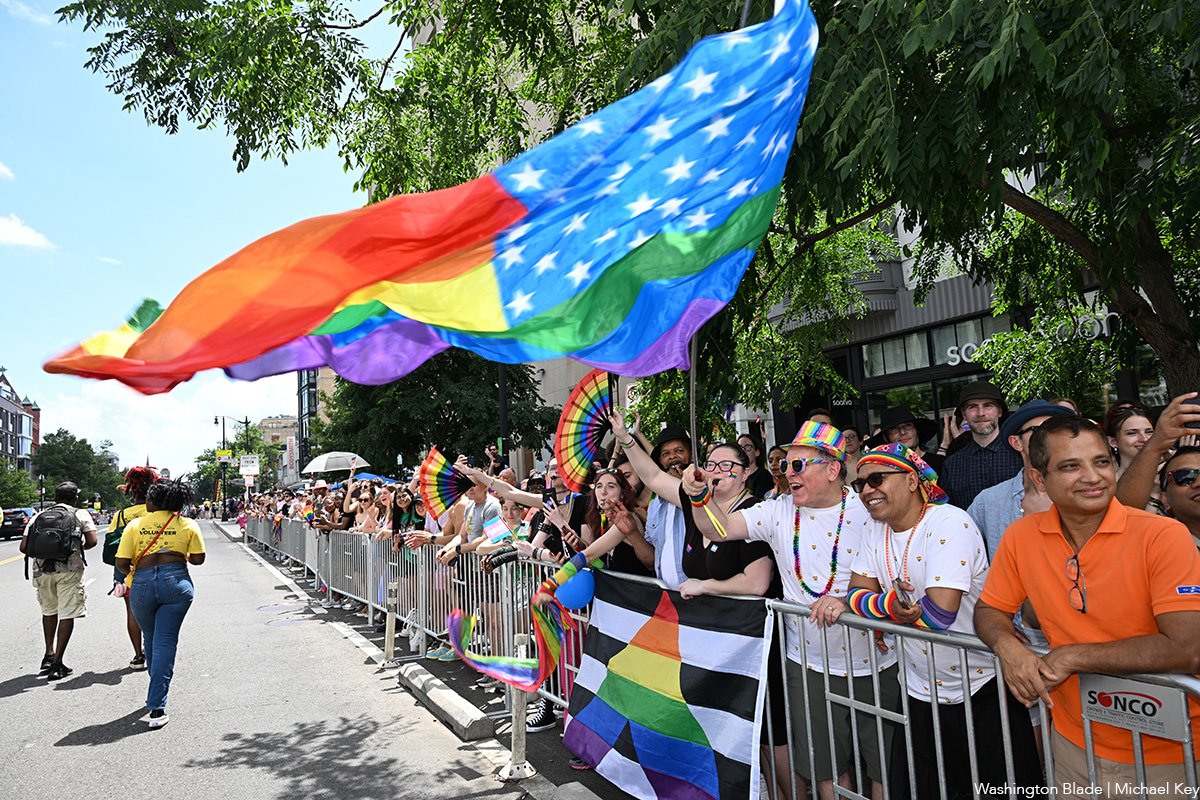
The 51st annual Capital Pride is already underway with parties and events throughout D.C. The Capital Pride Parade and Capital Pride Festival are the two large signature events slated for this weekend, though there are many other LGBTQ Pride celebrations planned for venues throughout the city in the days to come.
Friday, June 19
The Capital Pride Alliance and the Mayor’s Office of LGBTQ Affairs are hosting the LGBTQ+ Women’s Symposium at Arlo Washington DC (333 G St., N.W.) with sessions scheduled from 10:30 a.m.-2:30 p.m. and a day party from 3-7 p.m. The symposium brings together community leaders and advocates for panel discussions and dialogue. RSVP for the free event on capitalpride.org.

The RIOT! Official Capital Pride Opening Party is scheduled for 9 p.m.-3:30 a.m. at Echostage (2135 Queens Chapel Rd., N.E.). Bob the Drag Queen will be running a DJ set and Myki Meeks scheduled as the headlining performer. Area DJs and performers include: Bambi, Baphomette, Bumper, Cake Pop!, Connor, DJ Ed Bailey, DJ Diyanna Monet, Evry Pleasure, Jakknife Complex, Mari Con Carne, Pussy Noir and WessTheDJ. Advance tickets run from $49-$59 and will be $69 at the door. Capital Pride General and VIP pass packages also include admission and can be purchased on capitalpride.org. The event is 18+.
KINETIC Presents is holding a Pride opening party, UNCUT XXL: Heavy Load from 10 p.m.-4 a.m at A.i. Warehouse (530 Penn St. N.E.). There will be music by Alex Acosta, Felipe Lira and Mitch Ferrino. Tickets are $80.33-$96.62 + fees on Eventbrite. The event is 21+.
Saturday, June 20
A Capital Pride Family Fun Festival will be held at Stead Park (1625 P St., N.W.) from 11 a.m.-3 p.m. The event is designed for families and children with games, crafts, glitter tattoos, hair tinsel, story time, an inflatable obstacle course, and more. The event is free and especially designed for children ages 2-10, though is open to everyone.
The Crack of Noon Parade Brunch is scheduled for 12-3 p.m. at Viceroy Washington DC (1430 Rhode Island Ave., N.W.). It is an all-you-can-eat gourmet brunch with mimosas. Tickets for the event are limited and range from $75-$90 or as a part of the VIP package available on capitalpride.org. The event is 21+.
The 17th Street Pride Block Party will run concurrently with the Capital Pride Parade from noon-10 p.m. on 17th St., N.W. between P and S streets. The event is presented by Absolut.

The Capital Pride Parade is one of the largest in the region and is expected to draw tens of thousands of participants and spectators. The annual parade is scheduled for 3-7:30 p.m. and will move through the Shaw, Logan Circle, Downtown and Penn Quarter neighborhoods. The parade is anticipated to begin at 14th Street and T Street, N.W. and end at Pennsylvania Avenue and 9th Street, N.W. The event is free to spectate and open to people of all ages, however, there are grandstand bleachers set up at Franklin Park (957 14th St., N.W.) for a shaded, seated spot for $40 in advance. Tickets for the grandstand bleachers are available on capitalpride.org. Monroe Alise and David Archuleta are serving as the parade grand marshals.
The Official Capital Pride Women’s Party, ELIX-Her, is slated for 10 p.m.-3 a.m. at Decades DC (1219 Connecticut Ave., N.W.) The multi-floor event has a different “vibe” for each floor: Latin/reggaeton/Caribbean, house/dance/pop, and hip-hop/rap/afro/reggae musical genres. Tickets are $32.15-$42.59 + fees and can be purchased on capitalpride.org. The event is 21+.
The MIXTAPE Pride Party is scheduled for 10 p.m. at the 9:30 Club (815 V St., N.W.) with DJs Shea Van Horn and Matt Bailer. Tickets are $45.65 and are available on ticketmaster.com. The dance party is 21+.
KINETIC Presents partners with Capital Pride to produce the Official Main Event party, Toy Land, from 10 p.m.-4 a.m at Echostage (2135 Queens Chapel Rd., N.E.). Toy Land is 18+ and features music by GSP and Matt Suave. There will be a special performance by Alaska from “RuPaul’s Drag Race.” Tickets are $63.35-$69.15 and available on ticketmaster.com.
Sunday, June 21

The Capital Pride Festival is scheduled for 12-10 p.m. on Pennsylvania Avenue, N.W. The event will include food courts, multiple beverage gardens, vendors, community organizations, games, art, performances, dancing and more. Donations are appreciated by organizers, but the event is free. There are designated beverage garden areas for attendees 21+, but the majority of the festival is open to people of all ages. The Capital Pride Concert on the main stage of the festival runs from 1-8 p.m. with a sunset dance party with DJ Tracy Young planned for 8-10 p.m. The stage is at the east end of the festival on Pennsylvania Ave. at 3rd Street. The event is free and open to the public, but VIP passes for an area near the stage for attendees 21+ are available on capitalpride.org and range from $230-$290 or as a part of a $450 Capital Pride VIP package. Concert headliners include Maren Morris, Myki Meeks, Leikeli47 and Harrison. Other performers include Carlos Ova Dupress, Kora Edge, Ruepratt, RenRiot, Vagenesis, Kitty Lovelace, Ari Voxx, RAYSHARD, Bryce Bowyn, the 2026 Capital Pride royal court, Lisa Lisa, Ms. DC Black Pride and Destiny B. Childs. An accessibility zone is available with ASL interpretation and accessible seating.
KINETIC’s discoVERS closing party is scheduled from 10 p.m.-3 a.m. at SAX (734 11th St., N.W.). Music is provided by Alexis Tucci and Clinton Foster. Tickets are $41.76-$69.46 + fees and are available at kineticpresents.com. The event is 21+.
National
Corporate America caves to Trump, abandons Pride
Anti-DEI crusade scares off many sponsors, but organizers vow to carry on
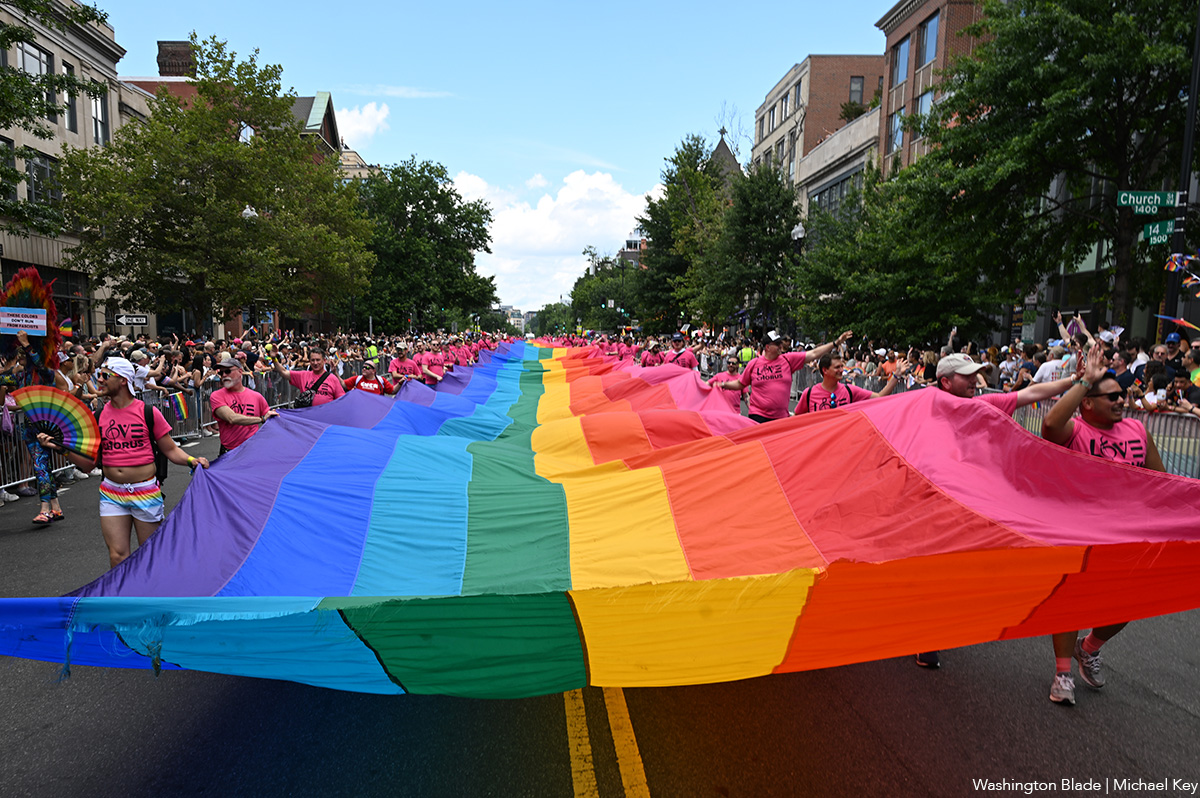
Pride began as an uprising against a political system that told LGBTQ people they did not belong.
More than 50 years later, after what many believed was a lasting cultural shift toward acceptance, that progress now feels increasingly fragile. What once seemed like hard-won inclusion is being tested in a political environment in which LGBTQ rights have re-emerged as a central point of debate, from school boards to state legislatures to the highest levels of government. While today’s backlash does not resemble police batons on the streets of Greenwich Village in 1969, advocates say it is taking a new form—through policy fights, cultural rhetoric, and a quiet retreat by corporate America from Pride itself.
For many in the LGBTQ community, Pride remains the most important event of the year. It is a moment when cities and towns—large and small, urban and rural, blue and red—attempt to create space for those who were long treated as outsiders. What was once confined to secrecy, coded meeting places, and dingy bar backrooms has become visible and celebrated openly in streets filled with music, color, and community.
Over time, however, Pride has also evolved. With each passing year and each wave of corporate sponsorship, it has drifted further from its explicitly political roots. For many observers, it is now often perceived as a cultural celebration or festival rather than a protest born out of state violence and legal discrimination against LGBTQ people.
Now, as LGBTQ communities again face intensified political attacks—this time driven by Republican officials across multiple levels of government and policies emerging from the Trump administration—some advocates say corporate sponsors are quietly pulling back to avoid offending the government amid an unprecedented crackdown on DEI. In doing so, they argue, companies risk forgetting that Pride itself began as a refusal to stay silent or invisible—a movement that, in its earliest form, quite literally overturned the status quo.
That tension between political urgency, cultural visibility, and corporate participation is now being felt in very concrete ways inside the organizations that produce Pride events.
The Washington Blade spoke with Pride organizers, marketing experts, advocacy organizations, and reviewed national reporting and corporate data to understand what the decline in Pride sponsorships reveals about corporate America’s relationship with LGBTQ people—and whether that support was ever as durable as many believed.
Declining sponsorships
For organizers, the conversation begins with numbers.
Across the country, Pride groups report declining sponsorship revenue, fewer corporate partners, and increased difficulty securing the commitments that have helped fund modern Pride celebrations for decades.
Mike Alexander, director of development for Capital Pride Alliance, which organizes D.C.’s Pride events, said the shift became noticeable almost immediately after President Donald Trump’s return to the Oval Office.
“As soon as the inauguration happened and the immediate swift attacks on DEI began, we started seeing a downturn in sponsorships. We probably had close to $10 million in pledges, and that was pretty much cut in half last year. Even though WorldPride ended up being an overall success and we had incredible support from sponsors that were able to remain on, overall support has been down quite significantly from what we usually have. Between 2016 and 2024, we typically saw anywhere from 150 to 275 corporate sponsors. Now we’re looking at probably about half of that this year, so it’s quite a significant drop.”
Yet organizers say most companies are not explicitly citing politics when they walk away.
“I can’t recall any particular sponsor that actually cited DEI. A lot of them cited budget concerns, reorganizations, and restructuring. No one in particular says, ‘We’re not coming back because of this. We don’t want to support you.’ I think the overall sentiment is that a lot of companies still want to support.”
Alexander noted that uncertainty extends beyond DEI debates alone.
“There are a lot of things happening right now. The global conflicts, the economy, and the broader political climate all play a role. D.C. is uniquely impacted because there are a lot of organizations and companies here that are directly connected to government, federal contractors, public policy, and advocacy. There’s so much uncertainty.”
Even so, he acknowledged the reasons often go unsaid.
“Nobody really says that. They cite other reasons, or they don’t respond. Sometimes they simply say they can’t participate and don’t mention the exact reasons why. I think we can read between the lines.”
Political pressure, DEI, & corporate fear
For many observers, those lines point toward a rapidly changing political environment.
Andrew Isen, founder and president of WinMark Concepts, said the current moment differs from previous periods of anti-LGBTQ backlash because companies now believe there are tangible financial consequences for visible support.
“It’s 100 percent quantifiable and 100 percent relatable to the administration’s anti-trans and, more particularly, anti-DEI policies,” Isen said. “An administration that has threatened universities, law firms, corporations, and just about any entity that supports any iteration of DEI policies has had a profound effect on the behavior of these organizations.
“In the aftermath of the Bud Light situation, companies became very afraid to put their brands out there, and they continue to do so.”
He argues the roots of the current climate stretch back several years.
“Things have changed exponentially. What’s happened in the last two and a half years we’ve never seen before,” he continued. “This started several years ago with what I’ll call trans-bashing on the right, then the adoption of the word ‘woke’ as a pejorative. When you put those two together, there was an incendiary fire waiting to happen, and it happened with the Bud Light situation.”
National Pride leaders have reached similar conclusions.
“I think that’s why some of the corporations have pulled back, because they don’t want that government scrutiny,” Jordan Braxton, co-president of the United States Association of Prides, told NPR in May. “People sometimes look at Pride festivals just as a big party, which they are, but they’re also resource fairs, job fairs, and we also use it as a fundraising event.”
Advertising researcher E. Ciszek also told NPR the trend reveals something deeper about corporate support.
“It’s important to take a step back and see this more as a moment of risk, a moment of political pressure, and looking really at the limits of corporate allyship, particularly when LGBTQ visibility has become really politically costly.”
Corporate pullbacks
That pressure is increasingly visible in how corporations present themselves publicly.
Isen pointed to the ongoing Target boycott as one of the clearest examples.
“Target, which was a huge supporter of all things LGBTQ, began to pare back its visibility. The amount of Pride merchandise it carried went from roughly 3,500 products to about 500. Instead of putting those products at the front of stores, they moved them to the back.”
That continued to be scaled back as the most vocal and those in line with Trump were considered the ones to appease.
“Because of bomb threats and other concerns, Pride merchandise appeared in far fewer stores than it had previously.”
Yet retreating from LGBTQ visibility has not necessarily insulated companies from criticism.
In a letter to shareholders, investors wrote that “Target has repeatedly entangled itself in social controversy over the past several years, including its decision to pull back its Pride collection, the rollback of its DEI initiatives, and, most recently, its limited public response to Immigration and Customs Enforcement (ICE) activities at certain store locations.”
The letter concluded that those actions may have alienated “Black, Latino, LGBTQ+, and progressive consumer segments.”
Beyond individual companies, Pride organizers describe a much broader pullback.
“We’re now in a vacuum where Pride and its sponsors have been eviscerated by fear and backlash from consumers and by retribution from the current administration through its DEI policies,” Isen said.
That said, some major brands continue to support Pride, including Absolut, Marriott, Coca-Cola, and others.
Pride’s economic reality
For organizers, the consequences of this Pride pullback extend far beyond symbolism.
Pride celebrations require significant financial resources, and corporate sponsorships have traditionally provided much of that support. This is the same game with new rules.
“It takes a lot of money to do this,” Pittsburgh Pride Director Dena Stanley told NPR. “Permitting costs, security costs, headliners costs, staging costs, cleaning crew costs, insurance costs, all of these are expenses.”
Former Tampa Pride organizer Carrie West described how quickly the situation can become unsustainable.
“All of a sudden, bingo. Here you have no money, no grant money, no supporting money, to make operations, to plan, to get any kind of anything.”
San Francisco Pride Executive Director Suzanne Ford told The Wall Street Journal that replacing lost sponsors is extraordinarily difficult.
“It’s hard to replace a $150,000 sponsor with individual donations,” Ford said. “I’ve just got to find some new corporate sponsors out there…I’m cautiously optimistic.”
Allyship under pressure
The sponsorship decline has also reignited a longstanding debate about whether corporate support for LGBTQ communities represents genuine allyship or merely marketing.
Isen argues fear—not economics—is driving much of the retreat.
“The LGBTQ community is more economically viable than it ever was.”
“The community is as economically viable as it has always been, but unfortunately the corporate fear factor has outweighed the economic viability and importance of the LGBTQ consumer community.”
He believes the Bud Light controversy fundamentally altered corporate calculations.
“Boycotts have never worked in my entire professional history. On either side, straight or gay, boycotts do not work. Until now.”
“This is the first time a boycott has ever worked as a demonstrative opposition to a brand supporting LGBTQ consumers.”
At the same time, national data suggests corporate support has not disappeared entirely.
According to the Human Rights Campaign Foundation’s 2026 Corporate Equality Index, 71% of surveyed companies still sponsor LGBTQ-inclusive events or run LGBTQ-focused marketing campaigns, 81% provide financial or in-kind support to LGBTQ organizations, and 97% maintain LGBTQ employee resource groups or diversity councils.
Still, HRC President Kelley Robinson warned that many LGBTQ employees are feeling the effects of corporate hesitation.
“Our latest community survey shows LGBTQ+ employees—especially transgender and gender-expansive people—are experiencing increased bias and heightened anxiety about job security, career advancement, and physical safety at work. And in too many workplaces, the response has been silence, retreat, or ambiguity.”
The future of Pride
Despite the uncertainty, organizers insist Pride will continue regardless of what corporations decide.
Alexander emphasized that sponsors have never been the entirety of Pride.
“There’s a misconception about corporate sponsorships. Sponsors have typically provided the majority of our funding, but they still make up only about one-third of our participants. The other two-thirds are community groups, nonprofits, small businesses, and service organizations.”
He also believes organizations must adapt.
“Because nothing is certain, it’s important to diversify funding. It’s important to create programming and partnerships that make sense, whether that’s grant funding, individual support, grassroots support, or other avenues.”
Most importantly, he said, Pride’s purpose remains unchanged.
“Pride is a protest, but it is also a celebration. Being joyful, being happy, and being who you are is in itself a protest. If you show up to Pride and celebrate yourself, you’re sending the message that you’re not living in fear.”
And regardless of sponsorship totals, he said the movement itself belongs to the people who show up.
“We’re going to keep moving forward no matter what. There’s important work to do, important voices to be heard, people who need support, and communities that are marginalized. We’re going to find a way to move forward.”
“We are not Pride. Pride is the community. It is the people who show up and participate. We provide the platform and the amplification, but Pride belongs to the community.”

40 defining moments in LGBTQ pop culture history

Corporate LGBTQ Pride 2026 on life support

Pride is here!

Dwayne Bensing looks to make history in Delaware AG race

Corporate America caves to Trump, abandons Pride

PHOTOS: Lost River Pride

PHOTOS: Pride on the Pier

The advantages of owning your home

David Archuleta on Mormon faith, ‘Idol,’ more in new book