Theater
Revisiting ‘Cabaret’
Touring rigors don’t deter veteran stage actor
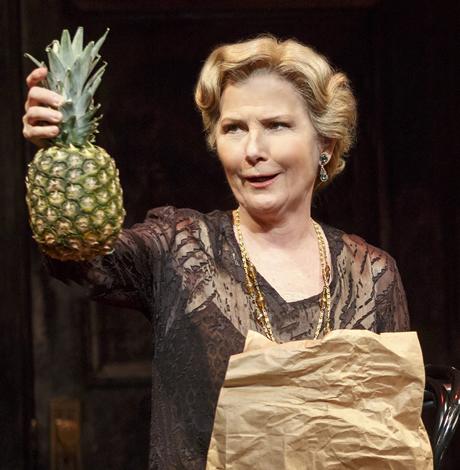
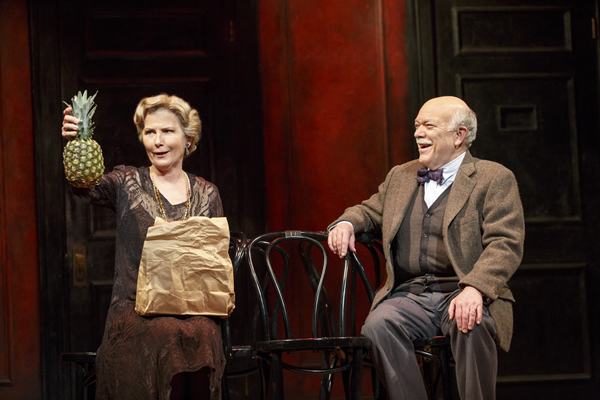
Mary Gordon Murray and Scott Robertson in ‘Cabaret.’ (Photo by Joan Marcus)
‘Cabaret’
Through Aug. 6
The Kennedy Center
Eisenhower Theater
$59-149
Kennedy-center.org
Veteran actor Scott Robertson leapt at the chance to play Herr Shultz in the national tour of Roundabout Theatre’s “Cabaret.”
“At 63, not a lot of great parts come your way,” he says.
“Cabaret” is set in decadent 1930 Berlin. The Weimar Republic is breathing its last gasps and fascism is on the rise, but singer Sally Bowles remains blissfully unaware working at the louche Kit Kat Klub under the leering watch of its Emcee. During off hours at Fräulein Schneider no-frills boarding house, Sally develops a complicated relationship with fellow tenant Clifford Bradford, a bisexual aspiring writer. The secondary plot follows the sweet but ill-fated romance between the landlady and Jewish shopkeeper Herr Shultz.
“Herr Shultz is an optimist,” Robertson says. “He seems to think bad times will blow over. But of course that’s not how things worked out. This Roundabout production is entertaining but dark and it resonates. Throughout the tour there’s been a lot of nervous laughter in the audience. Some people think it’s a musical written to reflect America’s current political climate.”
Of course that’s not the case. “Cabaret’s” source is Christopher Isherwood’s 1939 novella “Goodbye to Berlin” based on the gay writer’s experience as an expat in Berlin in the early 1930s where he was free to explore his sexuality far from his family’s disapproving eye. John Kander, Fred Ebb and Joe Masteroff’s Tony-winning musical premiered in 1966 introducing an iconic score including familiar tunes like “Cabaret” and “Willkommen.” The show was a huge success.
The deglamorized production now moored at the Eisenhower Theater through early August is Sam Mendes and Rob Marshall’s 2014 Broadway revival, a re-creation of their 1998 Broadway revival, which was based on Mendes’ 1993 London production. And there have been innumerable productions before, after and in between including Bob Fosse’s screen adaptation with Liza Minelli. So the play has been around. And Robertson has played Herr Shultz before.
“But now with my big white mustache I’m finally the right age for the part,” he says.
Others currently featured include Broadway and West End veteran Jon Peters as the Emcee. Leigh Ann Larkin plays Sally Bowles and Benjamin Eakeley is Clifford Bradshaw. Mary Gordon plays Fräulein Schneider. Some of the cast double as band members.
A Stamford, Conn., native and longtime New Yorker, Robertson has penned and performed two autobiographical pieces titled “Buck Naked” and “Noises On.” In the monologues with music he reflects on the men who made the biggest impact on his life — his musically talented father who died when he was just 15 and his late husband of 35 years Peter Flint, drama coach and director felled by prostate cancer four years ago.
In these monologues, Robertson talks about briefly coming out at 15 and then coming out again for good in his early 20s.
“My mother said she’d rather I was a drug addict than gay, but she got over that. My husband became very close with my family.”
And very interestingly, he discusses being diagnosed with Tourette syndrome in his 30s.
“Mostly it’s some throat stuff and tics. But onstage there’s a state of flow that happens which allows me to act and sing. I’m more symptomatic offstage.”
Robertson’s professional theater career began at 19 with a part in “Grease.” He has worked consistently in doing cabaret, stage and screen ever since.
“It’s been a combination of luck, hard work and talent. I have extremely talented friends who never find work. I had incredible desire and worked incredibly hard always doing six, seven shows a year. And when the big opportunities came up like ‘Damn Yankees’ with Jerry Lewis I’d bring all of myself to that moment.”
When the tour ends in August, Robertson will return to his home in Manhattan’s Hell’s Kitchen and his new boyfriend, also a widower.
“Touring is tough,” he says. “I wouldn’t do it for just any part. But Herr Shultz is worth it.”





Theater
Studio’s ‘Mother Play’ draws from lesbian playwright’s past
A poignant memory piece laced with sadness and wry laughs
‘The Mother Play’
Through Jan. 4
Studio Theatre
1501 14th St., N.W.
$42 – $112
Studiotheatre.org
“The Mother Play” isn’t the first work by Pulitzer Prize-winning lesbian playwright Paula Vogel that draws from her past. It’s just the most recent.
Currently enjoying an extended run at Studio Theatre, “The Mother Play,” (also known as “The Mother Play: A Play in Five Evictions,” or more simply, “Mother Play”) is a 90-minute powerful and poignant memory piece laced with sadness and wry laughs.
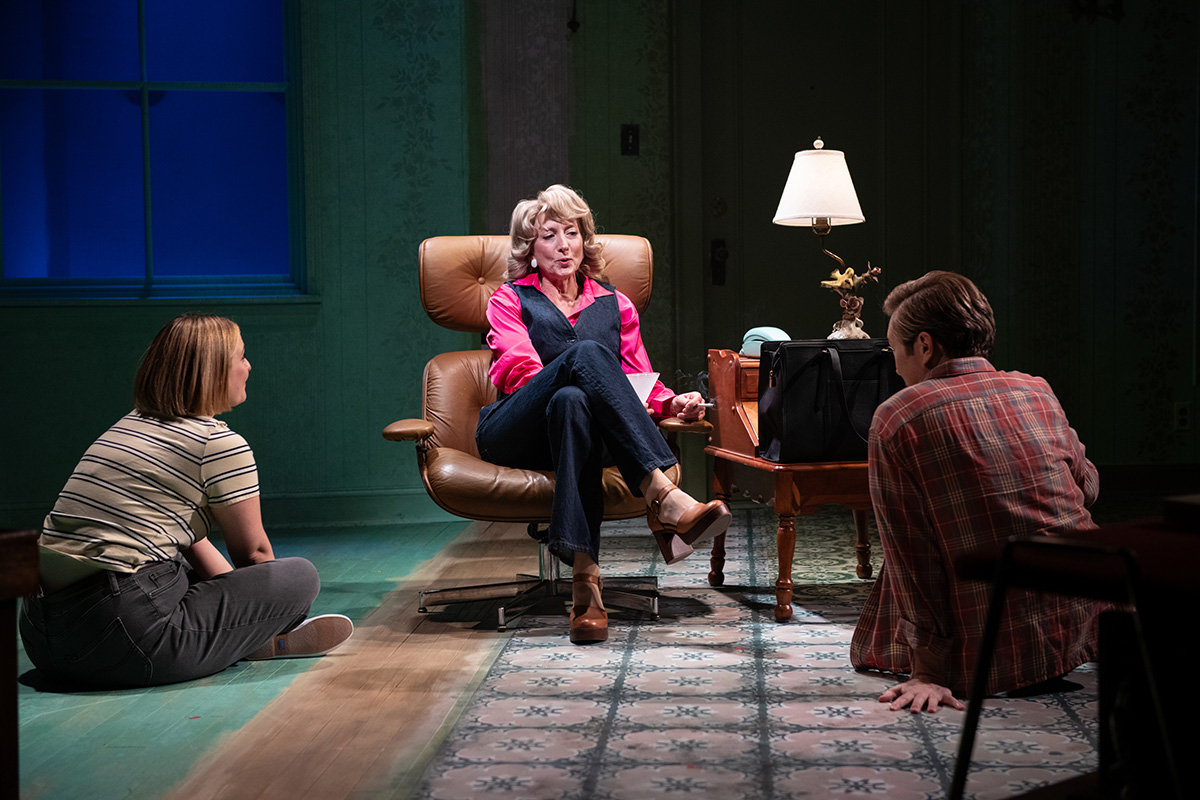
The mother in question is Phyllis Herman (played exquisitely by Kate Eastwood Norris), a divorced government secretary bringing up two children under difficult circumstances. When we meet them it’s 1964 and the family is living in a depressing subterranean apartment adjacent to the building’s trash room.
Phyllis isn’t exactly cut out for single motherhood; an alcoholic chain-smoker with two gay offspring, Carl and Martha, both in their early teens, she seems beyond her depth.
In spite (or because of) the challenges, things are never dull in the Herman home. Phyllis is warring with landlords, drinking, or involved in some other domestic intrigue. At the same time, Carl is glued to books by authors like Jane Austen, and queer novelist Lytton Strachey, while Martha is charged with topping off mother’s drinks, not a mean feat.
Despite having an emotionally and physically withholding parent, adolescent Martha is finding her way. Fortunately, she has nurturing older brother Carl (the excellent Stanley Bahorek) who introduces her to queer classics like “The Well of Loneliness” by Radclyffe Hall, and encourages Martha to pursue lofty learning goals.
Zoe Mann’s Martha is just how you might imagine the young Vogel – bright, searching, and a tad awkward.
As the play moves through the decades, Martha becomes an increasingly confident young lesbian before sliding comfortably into early middle age. Over time, her attitude toward her mother becomes more sympathetic. It’s a convincing and pleasing performance.
Phyllis is big on appearances, mainly her own. She has good taste and a sharp eye for thrift store and Goodwill finds including Chanel or a Von Furstenberg wrap dress (which looks smashing on Eastwood Norris, by the way), crowned with the blonde wig of the moment.
Time and place figure heavily into Vogel’s play. The setting is specific: “A series of apartments in Prince George’s and Montgomery County from 1964 to the 21st century, from subbasement custodial units that would now be Section 8 housing to 3-bedroom units.”
Krit Robinson’s cunning set allows for quick costume and prop changes as decades seamlessly move from one to the next. And if by magic, projection designer Shawn Boyle periodically covers the walls with scurrying roaches, a persistent problem for these renters.
Margot Bordelon directs with sensitivity and nuance. Her take on Vogel’s tragicomedy hits all the marks.
Near the play’s end, there’s a scene sometimes referred to as “The Phyllis Ballet.” Here, mother sits onstage silently in front of her dressing table mirror. She is removed of artifice and oozes a mixture of vulnerability but not without some strength. It’s longish for a wordless scene, but Bordelon has paced it perfectly.
When Martha arranges a night of family fun with mom and now out and proud brother at Lost and Found (the legendary D.C. gay disco), the plan backfires spectacularly. Not long after, Phyllis’ desire for outside approval resurfaces tenfold, evidenced by extreme discomfort when Carl, her favorite child, becomes visibly ill with HIV/AIDS symptoms.
Other semi-autobiographical plays from the DMV native’s oeuvre include “The Baltimore Waltz,” a darkly funny, yet moving piece written in memory of her brother (Carl Vogel), who died of AIDS in 1988. The playwright additionally wrote “How I Learned to Drive,” an acclaimed play heavily inspired by her own experiences with sexual abuse as a teenager.
“The Mother Play” made its debut on Broadway in 2024, featuring Jessica Lange in the eponymous role, earning her a Tony Award nomination.
Like other real-life matriarch inspired characters (Mary Tyrone, Amanda Wingfield, Violet Weston to name a few) Phyllis Herman seems poised to join that pantheon of complicated, women.
Theater
D.C. theater scene has something for everyone this holiday season
‘Nutcracker,’ ‘A Christmas Carol,’ and much more
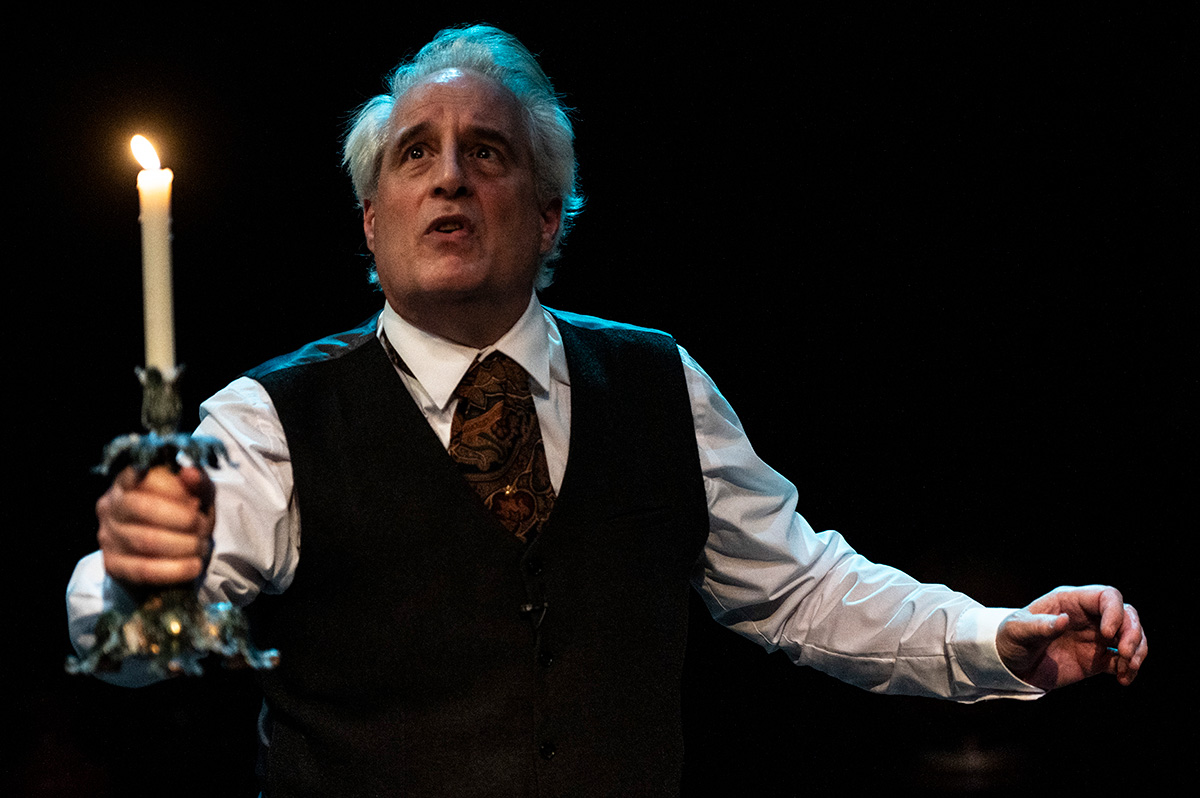
With its familiar music, yuletide imagery, and storytelling, theater can be a big part of the holidays. Add to that making memories and theater tickets wrapped as presents under the tree, and it’s a seasonal no brainer.
Folger Theatre presents “Resplendent Joy: Christmas Traditions from Spain and Portugal” (Dec. 5-14); the marvelous Folger Consort will perform early Spanish Christmas carols and traditional holiday music from early modern Spain and Portugal: folger.edu/resplendent
At Round House Theatre, playwright Sam Holcroft’s “Rules for Living” (Dec. 3-Jan. 4) makes its U.S. premiere. The darkly funny holiday comedy was a hit in London and is now hoping to repeat that success with a version tailored for the states. The seven-person cast includes versatile actors Naomi Jacobson and real-life spouse John Lescault. Ryan Rillette directs. roundhousetheatre.org
Theatre J presents “Chanukah in the Dark” (Dec. 6-21), an hour-long play ideal for ages five and up. “When the lights go out during Chanukah, Max and family begin sharing songs, stories, and traditions — only to discover the lights they needed and the miracles they searched for were in their midst all along.” edcjcc.org
The Cathedral Choral Society’s “Joy of Christmas” (Dec. 13-14) presents a wonderful program of carols and beloved holiday favorites at the festively decorated National Cathedral. The program features Seraph Brass, organist Edward Hewes, Carillonneur Edward M. Nassor, percussionist Mary La Blanc of “The President’s Own” U.S. Marine Band, and the Eastern Concert Choir from Eastern Senior High School. Cathedralchoralsociety.org
With “The Holiday Show,” (Dec. 13, 14, and 20), the Gay Men’s Chorus returns to entertain audiences with its annual and most popular show.
This year the holiday extravaganza is bigger than ever at historic Lincoln Theatre with new, soulful arrangements of favorite holiday carols: “The reindeer will be high-kicking and the snowflakes will sparkle. Songs include “O Holy Night,” “Rudolph the Red Nosed Reindeer,” “Let It Snow,” “We Wish You the Merriest,” and “Go Tell It on the Mountain.’” gmcw.org
At Olney’s intimate Mulitz-Gudelsky Theatre Lab, out actor Michael Russotto is back for the holiday season in his solo show “Christmas Carol: A Ghost Story of Christmas” (through Dec. 28). The talented Russotto portrays nearly 50 different characters from the Charles Dickens classic, that proves “funnier and far more relevant than you might imagine.” Olneytheatre.org
Also on holiday offer in the DMV are a jolly bunch of musical chestnuts as well as reliable Christmas crowd-pleasers.
Included on the roster is Olney Theatre’s production of Jerry Herman’s “Hello, Dolly!” (through Jan. 4) starring the mega-talented Nova Y. Payton. Based on the play “The Matchmaker” by famed gay playwright Thornton Wilder, the musical has proved a vehicle for many a diva including Carol Channing, Pearl Bailey, Bette Midler, and Barbra Streisand. Now Payton dons the mantle and the buzz is good.
Another beloved musical is “Fiddler on the Roof” (through Jan. 25), the story of Tevye, a poor Jewish milkman, his family and their tight-knit community who honor tradition while contending with pogroms in Czarist Russia. Currently being performed intimately in the round at Signature Theatre in Arlington and directed by Joe Calarco, the large cast features actors Douglas Sills, Chrisopher Bloch, and terrific out actor Jake Loewenthal as the poor tailor Motel Kamzoil, all singing Broadway favorites like “Sunrise, Sunset” “If I Were a Rich Man” and “Matchmaker.” sigtheatre.org
At Shakespeare Theatre Company’s Harman Hall is Frank Loesser’s “Guys and Dolls” (through Jan. 4). Based on tales from famed American journalist Damon Runyon, the show focuses on two overlapping love stories set in Depression-era Times Square. The terrific score includes songs like “Luck Be a Lady,” “Sit Down, You’re Rockin’ the Boat,” “A Bushel and a Peck,” and more songs you’ll know. Directed by Francesca Zambello and choreographed by Joshua Bergasse.
The cast includes Julie Benko, Lamont Brown, and Holly Twyford as General Matilda B. Cartwright, which is reason enough to buy a ticket. shakespearetheatre.org
And for hardcore traditionalists there’s the Washington Ballet’s “The Nutcracker” (through Dec. 29) with its balletic magic at the charming gilded Warner Theatre. The beloved production of Tchaikovsky’s ballet, here set in 1882 Georgetown, features a retinue of agile partiers, children, soldiers, rats, and notable figures from American history. washingtonballet.org
And last but hardly least, historic Ford’s Theatre presents “A Christmas Carol” (through Dec. 31), an enduring Washington tradition since I was youngish. Conceived by Michael Baron, this charming Dickens’ moneymaker again spotlights Craig Wallace as miserly Ebenezer Scrooge who after a night of ghostly visits, rediscovers Christmas joy. Fords.org
Theater
New take on ‘Some Like It Hot’ offers diverse casting
National Theatre production includes non-binary character
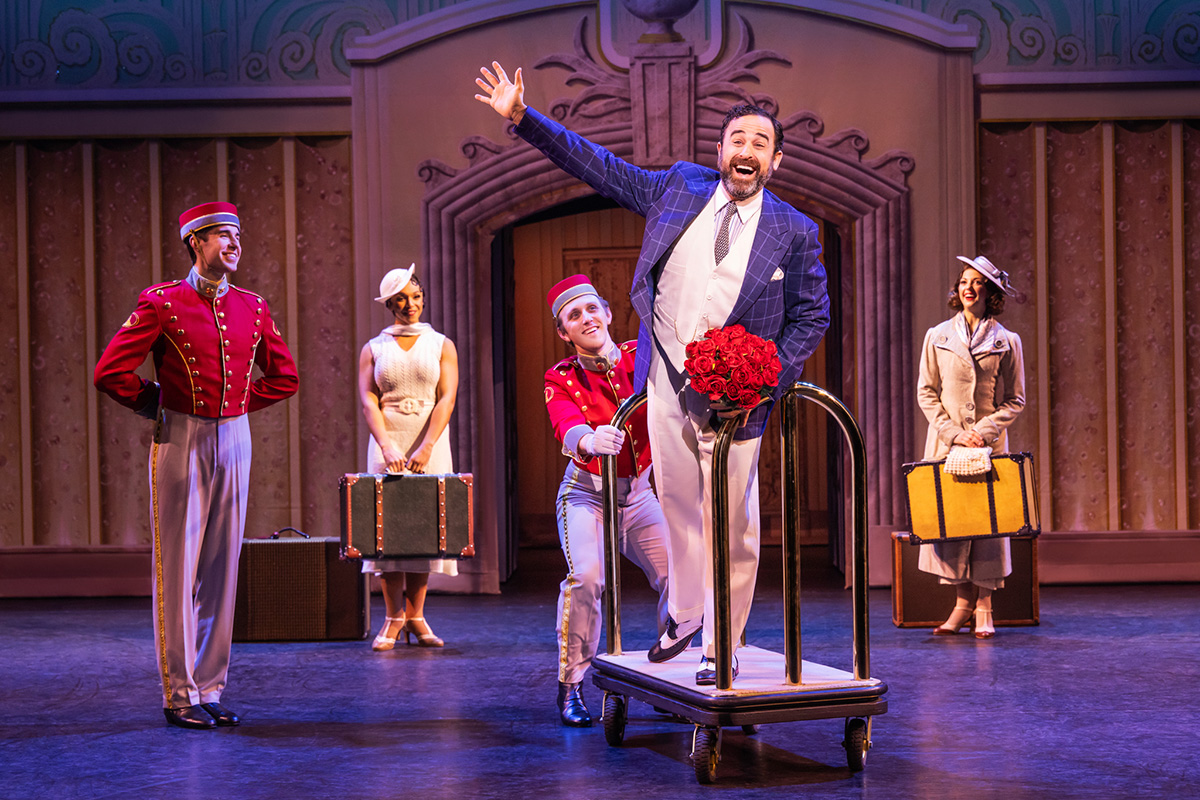
‘Some Like It Hot’
Nov. 25 – Dec. 7
The National Theatre
1321 Pennsylvania Ave., N.W.
Tickets starting at $67
Broadwayatthenational.com
For more than a year, out actor Edward Juvier has been part of the national tour of “Some Like It Hot,” the musical adaption of the 1959 classic comedy starring Marilyn Monroe and written and directed by Billy Wilder.
Juvier, 49, plays Osgood Fielding III, a cheery millionaire in Depression-era America.
With music by Marc Shaiman, lyrics by Scott Wittman and Shaiman, and a book by Matthew López and Amber Ruffin, the 2022 musical is quite different as well with diverse casting, increasingly complicated backstories, and a non-binary character (Daphne).
A talented tenor and Houston native, Juvier is a Cuban American who’s been working in musical theater since graduating from the Boston Conservatory in 2000.
“I personally love touring,” says Juvier. “I like the life on the road and visiting these old theater houses across the country. Seeing the locals that I remember and my friends and family that live all over. For me, a transient life is great. Maybe not so great for others.”
Early in his career, he toured with “Phantom of the Opera” for six years. He began in the ensemble and covered two principal roles, and moved to swing which gave him the longevity covering 11 different roles in that show, a life-changing gig that he remembers fondly.
WASHINGTON BLADE: As a gay actor touring in a hot musical with some queer themes do you feel that you make an impact?
EDWARD JUVIER: Oh yeah, it’s important for queer people to see representation on stage. Our version of the show is a sneak attack; it doesn’t hit you over the head with themes. Seeing an old story that takes a turn where you’re left to accept what’s happening onstage and by that time, you’re in love and rooting with the characters. You feel it from the audiences and we play some of the reddest of states.
Queer, trans, nonbinary people meet us at the stage door in tears thanking us for the representation. They didn’t even know when they came to the show that they’re going to see something with such an affirming message to their lives, and they’re thrilled when they find that out.
BLADE: How were you drawn into musical theater?
JUVIER: I was lucky that my Texas high school made annual trips to New York to see Broadway shows. On one trip, I remember seeing “Will Rogers Follies,” I felt like Keith Carradine was looking and talking right to me.
And the next day, we saw “Falsettos,” the original production. After seeing those two very different shows it was as if I blasted off into the Broadway world.
BLADE: Did “Falsettos,” a musical about AIDS, resonate with you as young gay student?
JUVIER: Absolutely. It shook me to the core.
BLADE: Has being gay made you a better actor?
JUVIER: I think what makes a great actor is somebody who has enormous empathy, able to put themselves in someone else’s shoes, and what better than a queer artist to be able to empathize.
I came out pre- “Will and Grace.” A different time to be coming out than it is now, which shows immense progress but also put us through challenges. It’s been a part of my journey.
I’m lucky to have the best, most supportive family. No Trumpers to deal with when I go home for the holidays. So, I’m grateful for that especially at this time of year.
BLADE: How do you approach a comic character like Osgood.
JUVIER: I approach him with honesty and simplicity and try to get out of the way of cheap jokes.
When I’m feeling that I’m pushing myself I remind myself to just say the words. I think the musical is so beautifully crafted in a way to brings the show to a new audience. Changes aren’t a diss on the original but the world has changed.
BLADE: Are you a big fan of the original?
JUIVIER: I respect the original. It’s been with me all my life especially being a queer artist. We grew up watching “Some Like It Hot.” This takes old themes and jokes that don’t land so well and brings it to a new audience.
Particularly with my role played originally and so brilliantly by famed comedian Joe E. Brown. In the movie he’s not a multi-dimensional character. He’s more of an old, rich pervy guy. That’s just how it was back then. And I’ve had the great privilege to play him differently.

PHOTOS: The Holiday Show

The best books to give this holiday season

Studio’s ‘Mother Play’ draws from lesbian playwright’s past

Choose U ambassadors share lived experiences with HIV, personal reflections, and insights

DOJ seeks to join lawsuit against Loudoun County over trans student in locker room

EXCLUSIVE: George Santos speaks out on prison, Trump pardon, and more

Victory Institute honors transgender Spanish senator in D.C.

The beginning of the fall of Trump

Markey reintroduces International Human Rights Act in Senate