News
Pence responds to criticism from Pete Buttigieg, says he ‘knows better’
Pence touts having ‘fully implemented’ Obergefell decision

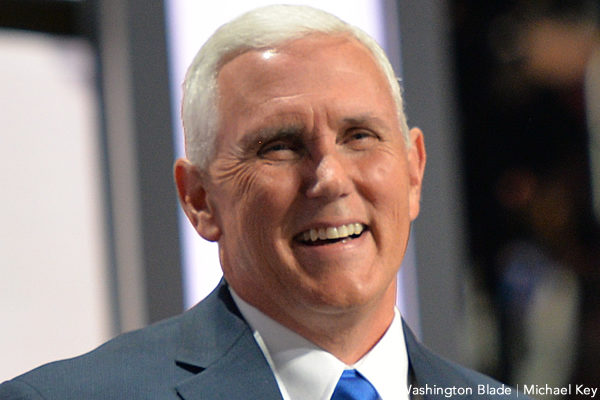
Following remarks in which 2020 hopeful Pete Buttigieg in defense of his same-sex marriage criticized Mike Pence, the vice president responded by saying the South Bend mayor “knows better,” ignoring his own longtime opposition to LGBT rights.
“I worked very closely with Mayor Pete when I was governor of the state of Indiana,” Pence said. “We had a great working relationship, and he said some things that are critical of my Christian faith and about me personally, and he knows better, he knows me.”
Pence made the remarks during an interview Wednesday with Joe Kernen on CNBC’s “Squawk Box” that was set to air Thursday morning.
The vice president suggested he thinks Buttigieg made the remarks to stand out amid the field of Democratic candidates vying for the 2020 presidential nomination.
“They got 19 people running for president on that side, and the party is sliding off to the left, and they’re all competing with one another for how much more liberal they can be,” Pence said. “I get that.”
Alluding to polls showing a supermajority of the American public now backs same-sex marriage, Kernen asked Pence whether he has evolved on LGBT rights.
“Look, the Supreme Court has made their decision,” Pence responded. “When I was governor of Indiana we fully implemented that decision into law.”
But Pence concluded with additional comments indicating his opposition to LGBT rights hasn’t changed.
“I have my Christian values,” Pence said. “My family and I have a view of marriage that’s informed by our faith, and we stand by that. That doesn’t mean that we’re critical of anyone else that has a different point of view.”
Drew Anderson, a spokesperson for the LGBT media watchdog GLAAD, said on Twitter Pence was lying about his remarks when he asserted he “fully implemented” the 2015 Obergefell decision in favor of same-sex marriage.
“Mike Pence claimed he helped implanted marriage equality in Indiana in 2015,” Anderson said. “Spoiler: It’s Because had had to.”
Anderson also pointed out Pence as Indiana governor backed a state constitutional amendment that sought to prohibit same-sex marriage in the Hoosier State. The measure ultimately failed in the state legislature.
Buttigieg invoked Pence during his speech before the LGBTQ Victory Fund brunch in D.C. on Sunday in a emotional speech in which the South Bend mayor talked about his personal struggle accepting being gay.
Reflecting on the Pence’s notorious anti-LGBT history, Buttigieg had a message with respect to his marriage for the Vice President, saying his marriage to his spouse, Chasten Buttigieg, has made him closer to God.
“I wish the Mike Pences of the world could understand, that if you have a problem with who I am, then your problem is not with me, your quarrel is with my Creator,” Buttigieg said.
The right-wing media had a field day with the remarks, asserting Buttigieg was unfairly criticizing the vice president.
Among those expressing indignation with Buttigieg was conservative commentator Ben Shapiro.
“You have not pushed back honestly against Pence’s policies,” Shapiro said on Twitter. “You have maligned his religious beliefs and character.”
The right-wing response ignores Pence’s long anti-LGBT history, which includes promoting as U.S. House member a Federal Marriage Amendment that would have banned same-sex marriage, signing as Indiana governor a “religious freedom” bill enabling anti-LGBT discrimination and defending as vice president his wife for teaching at a Christian school that refuses to admit LGBT student or employ LGBT teachers.
LGBT advocates have asserted Pence supports widely discredited “ex-gay” conversion therapy and engineered the transgender military ban, although spokespersons for Pence have denied that.
It should be noted that in 2015 when Buttigieg came out as gay, Pence as governor of Indiana had good things to say about the South Bend mayor.
“I hold Mayor Buttigieg in the highest personal regard,” Pence told WSBT-TV. “We have a great working relationship, and I see him as a dedicated public servant and a patriot.’
A Buttigieg campaign spokesperson referred the Washington Blade back to Buttigieg’s remarks and Pence’s anti-LGBT history in response to Pence’s remarks.
North Carolina
Authorities investigate officer-involved shooting outside Asheville gay bar
Incident took place near Shakey’s on Wednesday

An officer-involved shooting outside of a gay dive bar, Shakey’s, in downtown Asheville, N.C., left one man dead Wednesday.
The bar released a statement the following morning regarding the incident, stating that bar staff had asked a patron to leave earlier in the night citing concerning behavior. The bar said that later the man was spotted with a gun in the parking lot.
The bar proceeded to call 911, locked the doors to the establishment, and followed dispatcher instructions on how to keep patrons of the bar safe while officers arrived. These protocols included getting patrons away from the windows and staying low to the ground.
According to Shakey’s, shots were fired outside of the business. When the Asheville Police Department officers arrived, they fired back. The individual died from their injuries, according to the police.
“Because of everyone’s quick actions, cooperation, and concern for one another, every customer and every employee inside Shakey’s made it home safely. We are incredibly thankful,” Shakey’s said on their Instagram page. They thanked Asheville police, emergency dispatchers, EMS, and all first responders who were on scene.
On Thursday, a spokesperson for the North Carolina State Bureau of Investigation, Chad Flowers, stated that the suspect involved in the shooting was Arturo Castillo Palomar.
The Washington Blade reached out to the North Carolina State Bureau of Investigation for a comment regarding the possibility of the event being considered a hate crime. They said the issue is currently under investigation and that the findings would be turned over to the district attorney for review.
Baltimore
Popular Mount Vernon gay bar Leon’s to temporarily close after owner’s death
Ron Singer passed away on July 7
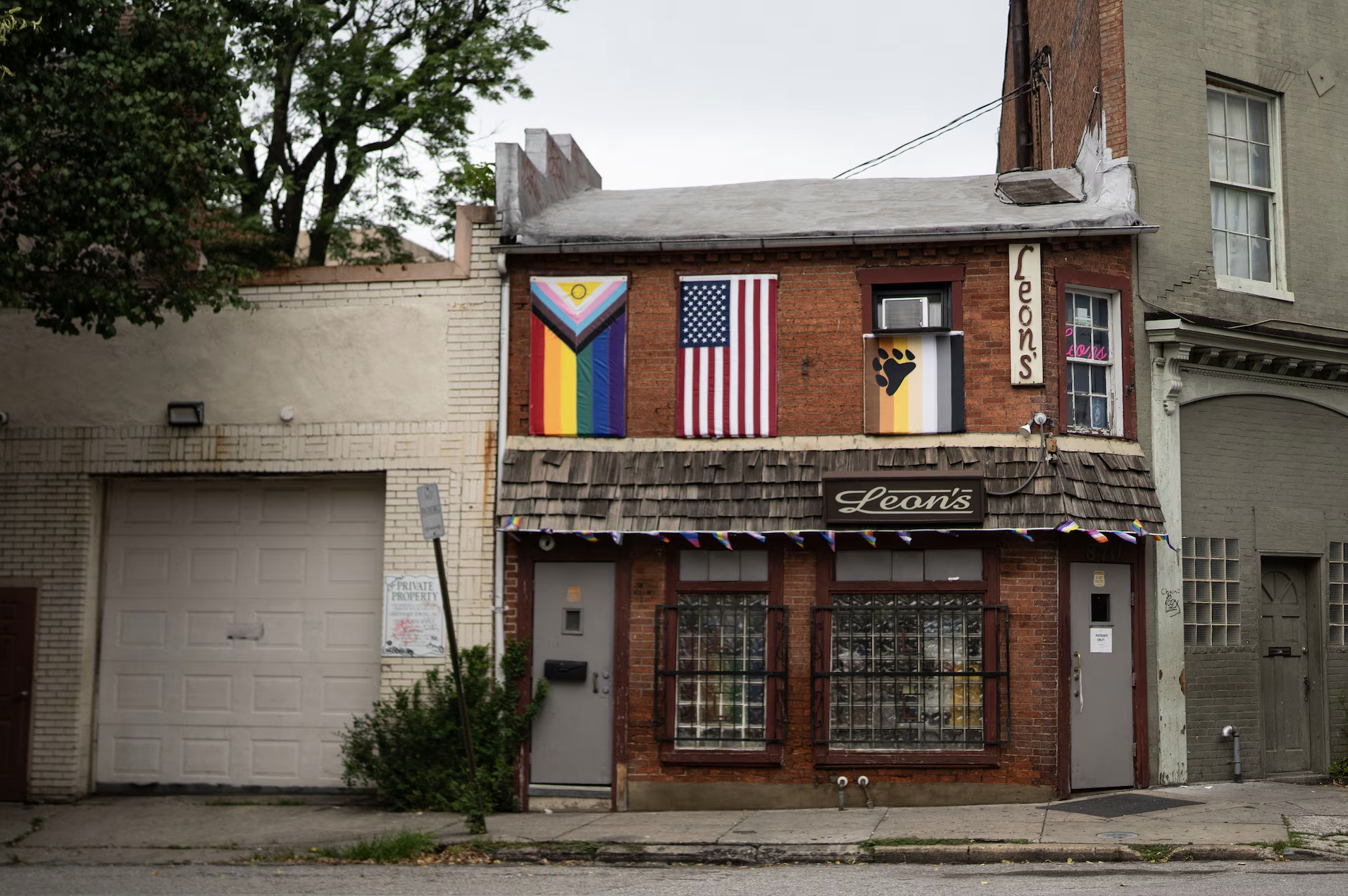
By WESLEY CASE | Leon’s Backroom, Baltimore’s oldest gay bar, temporarily shut down after service on Wednesday night, according to a post on the business’s Instagram page.
The announcement comes a little more than a week after the death of the Mount Vernon bar’s owner, Ron Singer, who died at 66 on July 7.
The rest of this article can be found on the Baltimore Banner’s website.

The Comings & Goings column is about sharing the professional successes of our community. We want to recognize those landing new jobs, new clients for their business, joining boards of organizations and other achievements. Please share your successes with us at [email protected].
Congratulations to Stuart Ortel and Scott Marker, and Dave Lyons and Rick Hardy, on the recent opening of their garden center on Route 1 in Rehoboth Beach, in the former Farmer Girl site. It is called Bay Laurel Home and Garden and debuted earlier this year. The four owners are all well known to the denizens of Rehoboth Beach.
Stuart and Scott have been active members of the Rehoboth Beach community since 1999. Stuart is a landscape architect, and has established relationships with many local folks in the building and landscape industry. When this opportunity for Bay Laurel Home & Garden presented itself, and they had the perfect team of people in place, he and Scott were committed to making it a reality. So, when Scott and Stuart introduced this opportunity to create a new garden center to Dave and Rick, they embraced the chance to cultivate a business where beautiful plants, inspiring home and garden products, and outstanding customer service come together. Dave and Rick knew about owning a business in Rehoboth as they previously owned Coho’s Market, where they discovered firsthand the value of serving their community, and the rewards of running a locally owned business.
The garden center launched with a refreshed brand identity, updated merchandising, and expanded product lines, all designed to create an inspiring and welcoming environment for your home. Bay Laurel Home & Garden offers a beautifully appointed garden center and curated home and gift shop.
The new center features a full nursery with annuals, perennials, shrubs, trees, and seasonal selections; a garden center offering pottery, fountains, and garden ornamentation, and essential tools and garden supplies. It has a garden shop featuring unique indoor/outdoor furnishings and accessories, and a gift shop featuring botanical and coastal style items for home and entertaining.

Authorities investigate officer-involved shooting outside Asheville gay bar

Popular Mount Vernon gay bar Leon’s to temporarily close after owner’s death

30 years on, ‘The Birdcage’ remains a landmark

Comings & Goings

Whitman-Walker to host legal services workshop

Mexico’s first openly gay mayor killed

Expected India Supreme Court ruling could shape future LGBTQ rights cases

Celebrate Pride in Rehoboth Beach this weekend

Christa Tichy hopes to preserve LGBTQ representation in Md. House of Delegates

Advocacy groups join Venezuela earthquake relief efforts
-

 Mexico5 days ago
Mexico’s first openly gay mayor killed
-
India4 days ago
Expected India Supreme Court ruling could shape future LGBTQ rights cases
-
Rehoboth Beach4 days ago
Celebrate Pride in Rehoboth Beach this weekend
-
Maryland4 days ago
Christa Tichy hopes to preserve LGBTQ representation in Md. House of Delegates