Arts & Entertainment
Tituss Burgess calls Andy Cohen a ‘messy queen’ after awkward ‘WWHL’ interview
The ‘Unbreakable Kimmy Schmidt’ star defends Eddie Murphy
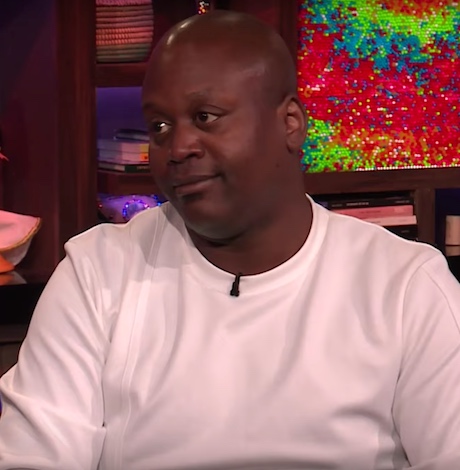
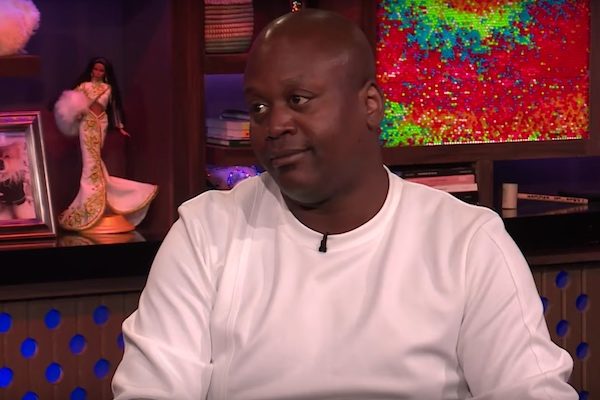
Tituss Burgess called Andy Cohen a “messy queen” following the actor’s tense appearance on “Watch What Happens Live” on Sunday.
During the show, Cohen asked Burgess what it was like working with Eddie Murphy on their upcoming film “Dolemite Is My Name.”
“Did you get to chat with him at all?” Cohen asks.
“Of course I did. Why wouldn’t I?” Burgess replies.
“Yeah, of course. Well, no, I wonder if you got close at all. He was very problematic for the gays at one point when I was coming up,” Cohen says referencing Murphy’s homophobic jokes from his stand-up routines in the 1990s.
“Oh, I see. He wasn’t problematic for Tituss, and we had a wonderful time,” Burgess responds. “Any troubles he may have had with gay people I guess are gone because he loved me.”
Cohen moves on but Burgess, who appears to be irritated, is seen mouthing something to someone off-screen. When Cohen asks what he said Burgess replies, “Keep going, girl. Do your show.”
Burgess addressed the interview in an Instagram comment calling Cohen a “messy queen.”
“She can be a messy queen! Yes I said it! Don’t care he knows either! He should remember his talk show isn’t an episode of the ‘Real Housewives of Atlanta’! It’s a place where artists come to talk about art and have a little fun. NOT a place to rehash old rumors or bring a star negative press,” Burgess writes. “Sunday was a display of ratchet behavior by a well connected man having blatant disregard for one of his guests,” he continued. “If only time were taken to know who I am and not assuming that I am the character I play on TV he would know how to conduct a proper interview with at all! I received 4 Emmy nominations for acting! NOT for being myself. He was lucky I had my wits and Christian values THAT day. Always keep it classy. Being friends with other talented celebrities doesn’t make you talented it makes you friends with other famous celebrities! He should rip a page from Anderson Cooper and learn how to do his job.”
Burgess addressed the interaction with Cohen again while appearing on “The Wendy Williams Show” on Tuesday.
“I will not tolerate the dismantling of anyone’s legacy, especially not my own,” the “Unbreakable Kimmy Schmidt” star said. “And who we were speaking about has done a beautiful job being the comedic giant that he is. And he has a wonderful movie coming out, and I was not going to participate in talking about that.”
“Andy asked Tituss, ‘How was it working with Eddie Murphy? Eddie was not kind to gays back in the day.’ And you said, ” Williams says.
“I said what I said,” Burgess replies.
“Obviously it was wonderful working [with Murphy], and Andy might have been trying to trap you into saying something, and you didn’t say it,” Williams explains.
“Tituss will not be trapped,” Burgess retorts. “No. We have way too much work to do. We have far more important things to talk about.”


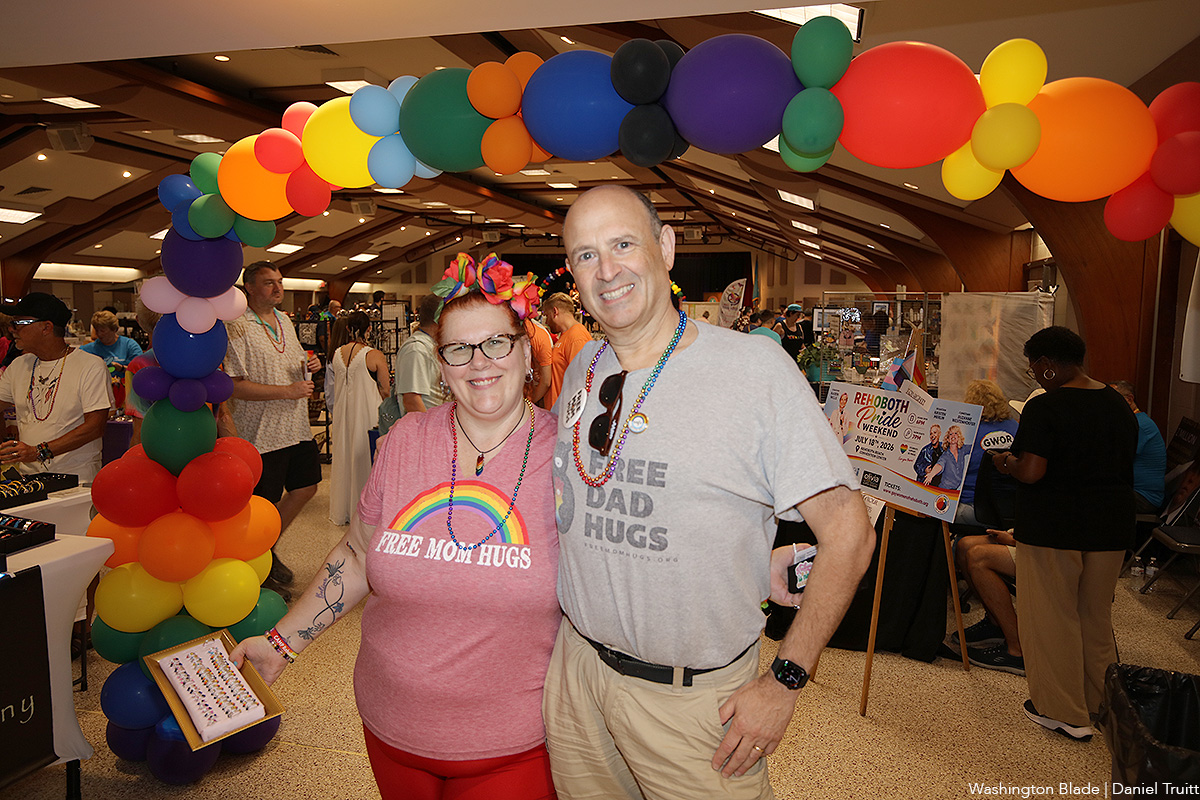
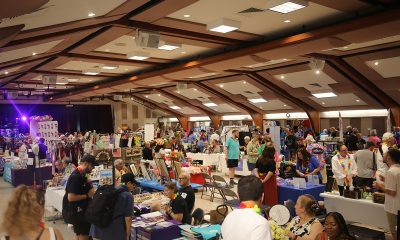
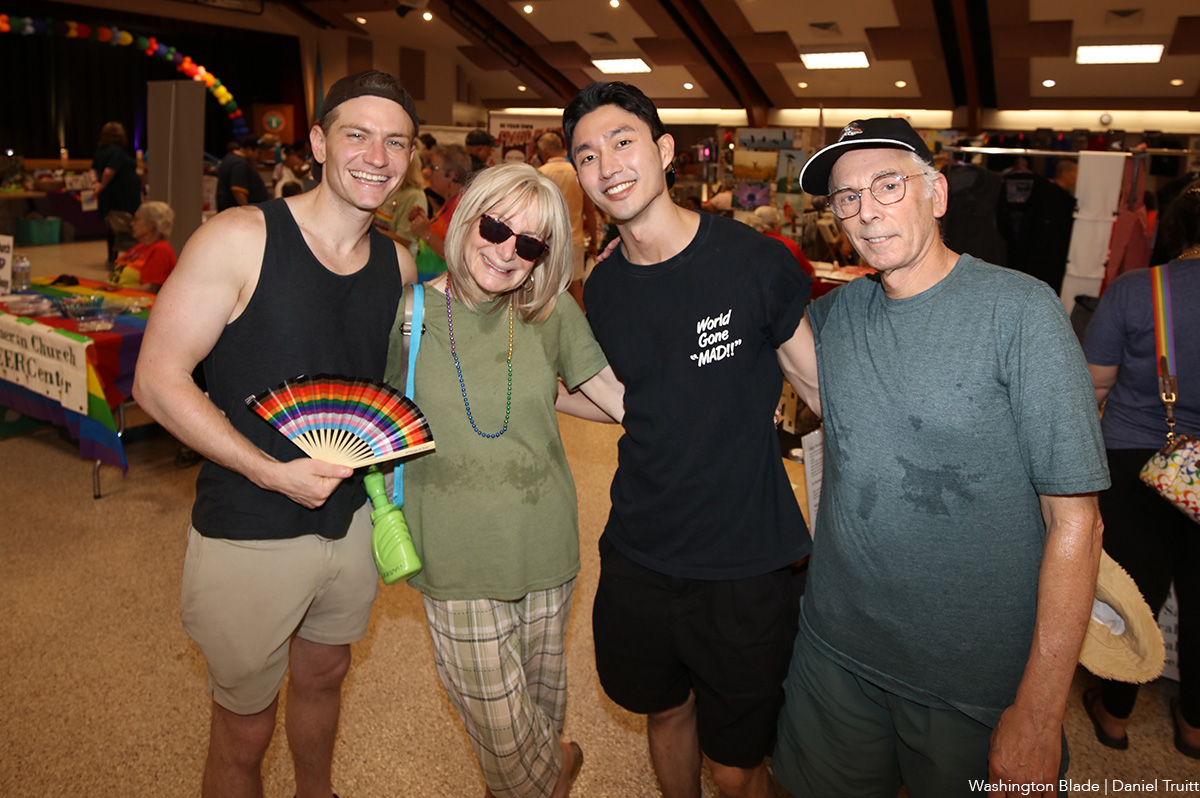
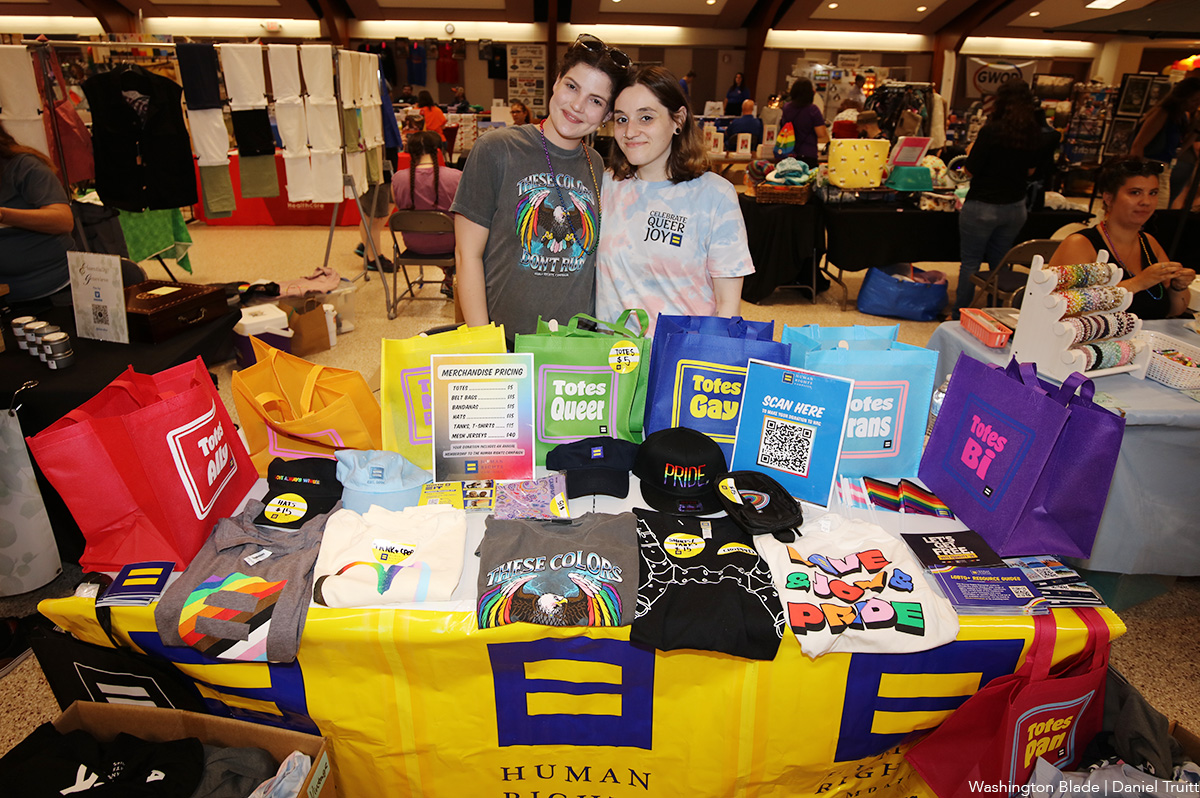
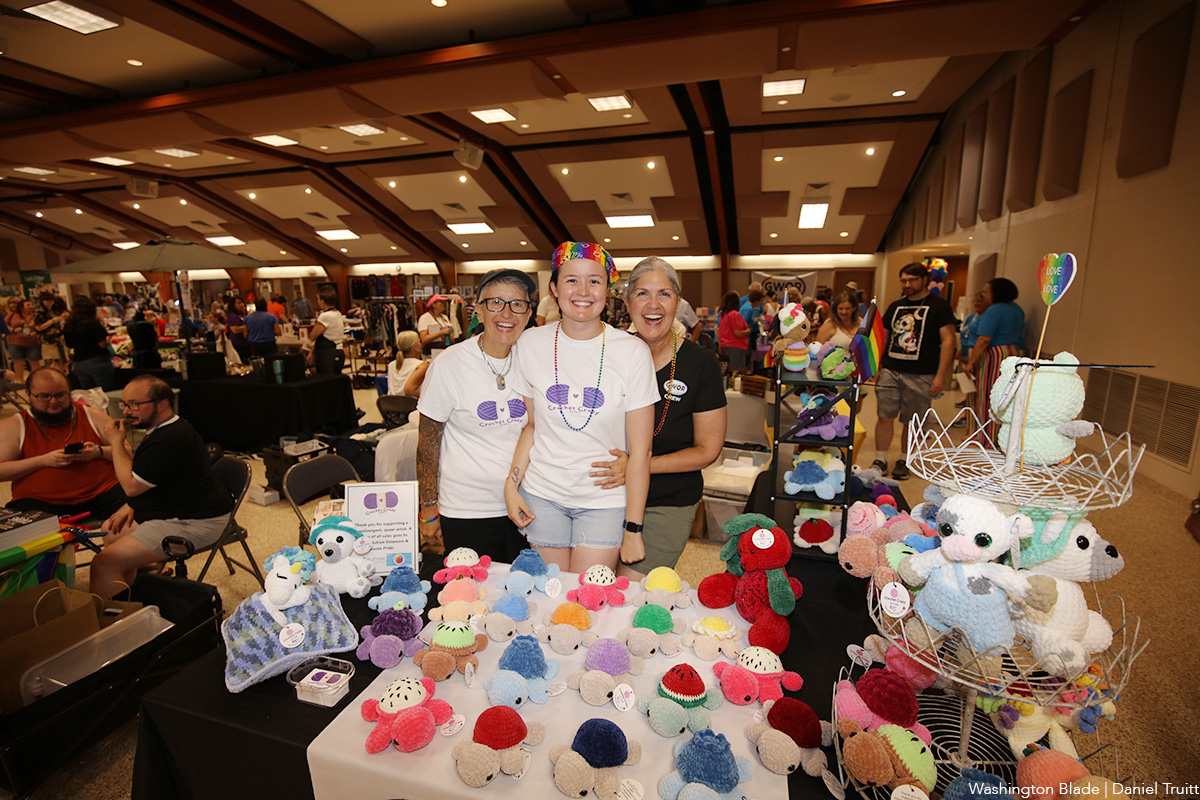
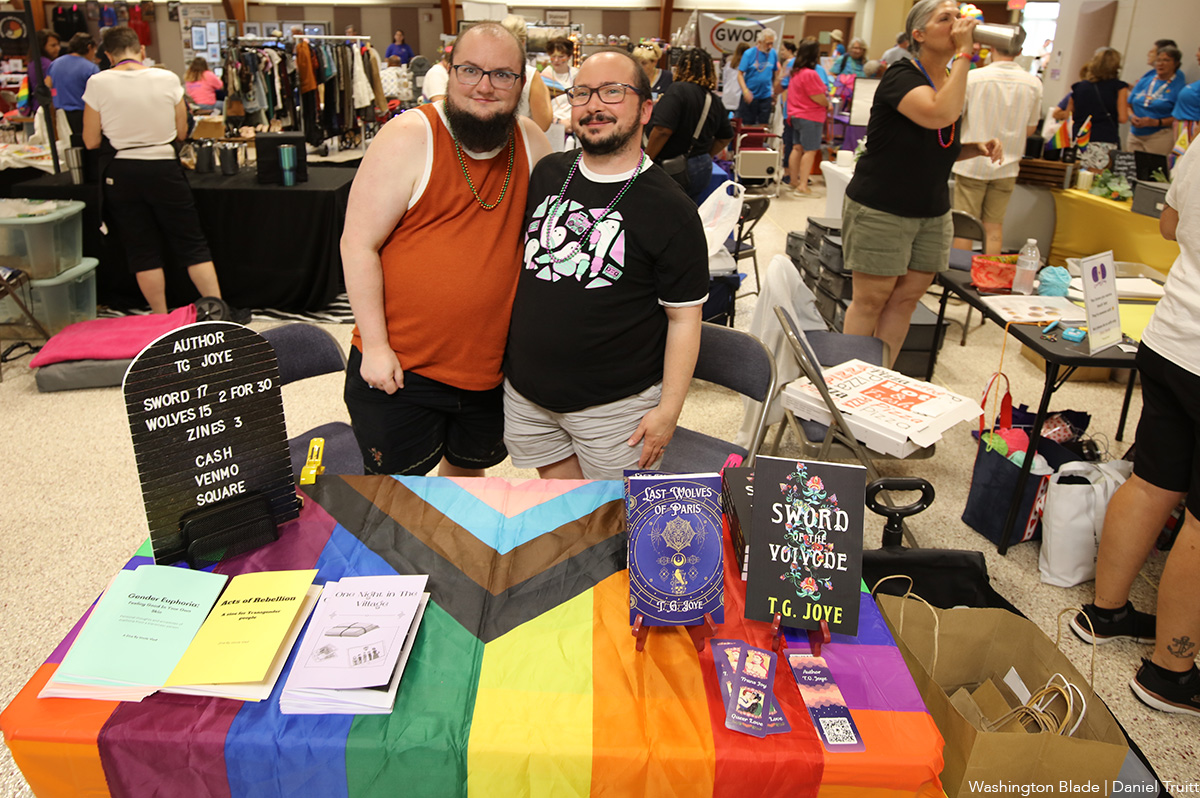
The 2026 Rehoboth Beach Pride Festival was held at the Rehoboth Beach Convention Center on Saturday, July 18.
(Washington Blade photos by Daniel Truitt)






Books
Liza’s book a tale that’s better than most celebrity memoirs
‘Kids, Wait Till You Hear This!’ dishes on marriages, heartbreak

‘Kids, Wait Till You Hear This! My Memoir’
By Liza Minnelli, as told to Michael Feinstein
c.2026, Grand Central
$36/ 421 pages
Twenty feet In front of you, and you can’t see a thing.
Even the closest faces are in shadow – lit, but not quite enough for you to see for sure what the people there are thinking. Still, you can hear them, their gasps, their laughter, and applause. Such is life, on-stage. Now read “Kids, Wait Till You Hear This! My Memoir” by Liza Minnelli, as told to Michael Feinstein, and read about it beyond the spotlight.

Almost from the moment she was born, Liza Minnelli was famous.
It was inevitable: her mother was Judy Garland. Her father was director Vincente Minnelli. Her godparents were Hollywood glitterati, her neighbors were famous, her playmates would be famous someday, too.
But her life wasn’t all starlight and happiness.
She made her stage debut as a toddler. She became her “mother’s caretaker” at age 13.
At 16, she had a growing career of her own – one that her mother tried to stop. But, she says, “In her own way, Mama was wonderful to me. Try understanding – she was my mother, not a movie star…. I knew her as the person who loved me and always would.”
At 19, Minnelli was working, happy, and madly in love with the man who’d become her first husband, and life was wonderful – until she came home one day to find him in their bed with another man. Before they were divorced, she lost her beloved mother, and became “engaged” to two other men simultaneously, neither of which made it to the altar with her.
She married her second husband, the son of one of her mother’s former co-stars, in 1974 but her love affairs and addictions led to a second divorce.
Her third husband was a stage manager.
She doesn’t have much good to say about her fourth, and last, husband.
Overall, she says, “You gotta play the comedy for all it’s worth and leave ‘em laughing. Even when your heart is breaking.”
Are you expecting bluntness, sass, or attitude here? Good, because that’s what you get inside “Kids, Wait Till You Hear This!” It’s strong on honesty and don’t-give-a-flip. It’s wonderfully edited, so it moves fast. It’s eye-opening and funny and a pleasant surprise for a first, and only (so far), memoir.
Even better, author Liza Minnelli (with best friend, Michael Feinstein) is really quite candid and nicely gossipy, starting from the beginning. There are some Hollywood folks, in fact, who are feeling edgy because of what’s inside this book and the secrets spilled. Minnelli and Feinstein seemed to have fun telling her story, and they comfortably lure readers in.
That’s not to say that it’s all a cabaret. Minnelli tells about her addictions and recoveries, her marriages and why she wed two gay men, and the losses she endured, including miscarriages, deaths, and broken relationships. The bad balances well with the good for a tale that’s several notches above most celebrity memoirs. “Kids, Wait Till You Hear This!” is, in fact, a real joy to read, a genuine bright spot.
The Blade may receive commissions from qualifying purchases made via this post.
Movies
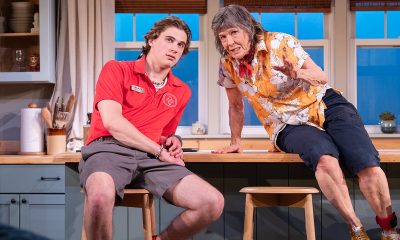
30 years on, ‘The Birdcage’ remains a landmark
A reminder that the only thing required to make a family is love

In 1996, after the AIDS epidemic had cast its shadow over the gay community for a decade and a half, the breakthrough finally came: the success of antiretroviral medication turned a fatal disease into a manageable and survivable condition — and suddenly, “queer joy” began to feel like a possibility again.
The year 1996 also saw the release of “The Birdcage,” a remake of the farcical French film comedy “La Cage aux Folles,” about a gay couple who attempt to “play it straight” when their son brings his fiancée’s conservative parents over for dinner, starring Robin Williams and Nathan Lane — in one of his first (non-animated) film roles — as the couple. It was notable as one of the rare studio films of the era to center on gay characters, and the fact that it was a certified box office hit represented a welcome cultural shift after the years of homophobic stigma fostered by Reagan-era “moral majority” conservatism.
These two landmarks were coincidental, of course, and obviously the significance of the first (though it came a few months later) was, in the scheme of things, far more monumental. Nevertheless, there’s something about the timing that marked a definitive moment in the ongoing struggle for queer acceptance. It was a palpable turn of the tide, a moment in time when we could collectively “unclench” — and 30 years later, in the midst of a whole new onslaught of conservative bigotry that threatens to erode the progress of the intervening years, it’s a moment worth celebrating, if for no other reason than to remind ourselves of what is possible when we refuse to hide who we are.
That, after all, is the central conflict in “The Birdcage,” just as it was in the earlier French play (by Jean Poiret) and film that inspired it, as well as the hit Broadway musical (“La Cage aux Folles” (adapted by queer writer Harvey Fierstein and queer composer Jerry Herman) that came in between. Set in the famously gay Miami neighborhood of South Beach, it centers on a popular queer nightclub owned by longtime partners Armand (Williams), who runs the business, and Albert (Lane), a flamboyant drag performer known as “Starina” who serves as the club’s headlining act; as a result of a long-ago one-night stand, Armand is father to Val (Dan Futterman), whom the couple have raised together, and who has become engaged to Barbara (Calista Flockhart), the daughter of a prominent conservative senator (Gene Hackman). Fearing that knowledge of his parents’ true relationship will prevent the senator from allowing the marriage, Val convinces Armand and Albert to temporarily “straightwash” themselves for a dinner party with the would-be future in-laws. Naturally, things do not go as planned (this is a farce, after all), but by the end, the gays “save the day,” as they say, by helping the senator and his wife (Dianne Wiest) avoid a scandal, and the kids get to have their wedding, after all.
It’s true that “The Birdcage” has invited criticism from within the community over the years for offering exaggerated stereotypes, especially in its depictions of “femme” characters like Albert and Agador (Hank Azaria), the couple’s Guatemalan housekeeper — and, in more recent times, from younger queer viewers who brand Val as “the real villain” of the movie for his insistence on making his parents pretend to be straight. There’s also the quibble that two of the film’s leading gay characters are played by heterosexual actors (Williams and Azaria) and that neither the writer nor director of the film were queer themselves. We can’t dispute the validity of such positions, but we can certainly suggest that they might be missing the point.
The director, Mike Nichols, was a man who had transitioned from being a comedian to becoming a celebrated director for both stage and screen, responsible for (among many other films) “Who’s Afraid of Virginia Woolf?” and “The Graduate,” and the script was by Elaine May, his former comedy partner, known for her witty, sophisticated, and savvy screenwriting. Both came with a pedigree that included extensive collaboration with queer performers and creators, and a track record that clearly showed their dedication for humanity and truth over the social constructs they repeatedly undermined with shrewd observational satire.
Williams, known then and now for his manic, over-the-top cartoonishness, plays Armand with complete sincerity, balancing his signature lunacy (like the classic “Fosse, Fosse” moment as he directs a new act for the club) with a deeply considered emotional solidity that never strikes a false note; and Azaria, whose performance became an instantly iconic fan favorite of outrageous femme-boy camp, is lovable precisely because his iteration of the cliché is so completely un-self-conscious, and is still beloved arguably as much for this as for his decades of voice work on “The Simpsons” — not because he is ridiculous (he is, and hilariously so) but because he is so recognizably real.
As for Lane, Albert’s character is explicitly written as a “diva,” the kind of gay male “show queen” stereotype that never quite offends because we all know someone — or are someone — who fits that profile to a tee; underneath it all is a person determined to live life on their own terms, and it makes his emergence as an eleventh-hour hero/heroine all the more satisfying. Let’s face it, when the chips are down, none of us could ask for a better mom than he turns out to be.
Of course, the participation of incomparable actors Hackman and Wiest is invaluable, allowing even their stodgy characters enough grace to keep them from coming off as complete buffoons (though Hackman’s reprehensible senator, appropriately enough, comes close); for good measure, there’s even the delicious Christine Baranski as Val’s biological mother.
All those performances — along with the fabulous explosion of Miami decor in the scenic design, the depictions of vibrant queer nightlife, and a soundtrack that includes both spicy nuggets of iconic club music and a handful of songs by the great gay genius Stephen Sondheim — are enough to make “The Birdcage” a classic, but the reason it continues to resonate with queer joy emanates from the material itself.
Wrapped up in all the absurdity of its humor, “La Cage aux Folles” (in all its forms) proffers a simple story in which — despite misunderstandings, hurt feelings, and all the various kerfuffles which erupt throughout — everyone shows up for each other. It’s a portrait of a household built on love, about a family willing to leap hurdles and place the happiness of those dear to them above their own inconveniences. In the end, the queerness is really not the point; but the fact that it’s a queer family who embodies these values (and a messy one, at that) is, as the queer expression goes, everything.
Thirty years ago, “The Birdcage” was a fun celebration; today, in a world that once more feels weaponized against queerness, it’s more than that: It’s a great film that reminds us that our greatest victories arise from being ourselves, unapologetically — and that the only thing required to make a family is unconditional love.

PHOTOS: Rehoboth Beach Pride Festival

Liza’s book a tale that’s better than most celebrity memoirs

Hot hatchbacks: Honda Civic, Subaru Impreza

When buying a home, it’s decisions, decisions, decisions

Authorities investigate officer-involved shooting outside Asheville gay bar

Expected India Supreme Court ruling could shape future LGBTQ rights cases

Celebrate Pride in Rehoboth Beach this weekend

Christa Tichy hopes to preserve LGBTQ representation in Md. House of Delegates

Advocacy groups join Venezuela earthquake relief efforts

Rehoboth’s Aqua to celebrate 20th anniversary Sunday
-

 India4 days ago
Expected India Supreme Court ruling could shape future LGBTQ rights cases
-
Rehoboth Beach4 days ago
Celebrate Pride in Rehoboth Beach this weekend
-
Maryland4 days ago
Christa Tichy hopes to preserve LGBTQ representation in Md. House of Delegates
-
Venezuela4 days ago
Advocacy groups join Venezuela earthquake relief efforts