Opinions
Continued violence means Trump wins
Don’t take the bait
Donald Trump is fomenting violence and blaming it on peaceful #blacklivesmatter protesters. We must not take the bait. He is urging his supporters to do counter protests and they arrive with guns, even AK47s. They shoot paintballs into a crowd and a few among the peaceful protesters respond by setting fires and throwing things at police. Trump loves this as it helps his election. Don’t take the bait.
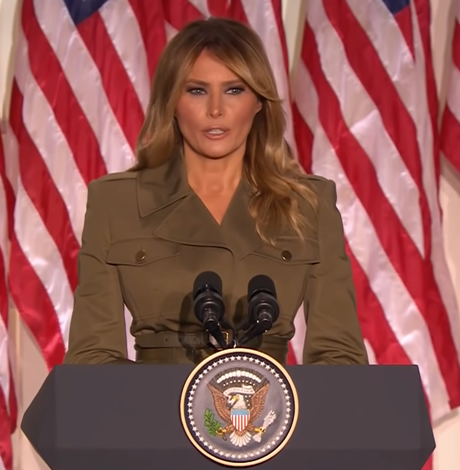
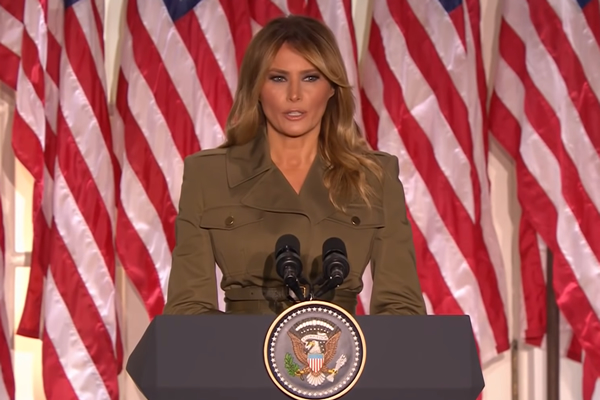
Those who live in Trump’s world are in an alternate universe where alternative facts are the reality. They listened to Melania Trump, maybe on Fox News, deliver her convention speech speaking about her husband and his administration and actually believed she was talking about the Donald Trump we all know. With due credit to her very good speech writers it was a herculean effort to portray a world that doesn’t exist. I was left to wonder if she had another husband hidden somewhere. Many speakers at the convention tried to do what Melania did and reality only occasionally slipped in. One dose of that was Kimberly Guilfoyle’s speech. She went off message and seemed to be yelling at the audience spouting more of the garbage we hear from Trump himself. Like Trump, who often doesn’t know simple facts, she didn’t seem to know those born in Puerto Rico and moving to the mainland aren’t immigrants but rather U.S. citizens.
White House Press Secretary Kayleigh McEnany, who lies to the American people daily from her podium, continued the tradition with her convention speech discussing her mastectomy and breast cancer scare. She said, “This president stands with Americans who have pre-existing conditions.” This while it’s clear, “The president has actively sought to dismantle the Affordable Care Act of which a crucial component prevents health providers from denying coverage to people with pre-existing conditions. He has not offered a replacement, should the U.S. Supreme Court rule against the law, which has insured millions of people.”
It seems the president’s message of law and order is effective with Republicans. According to polling, support for the BLM protests has gone down a little across the board. Will it make a difference to those who support Biden? We will learn more in a couple of weeks how effective the Trump people were in confusing voters when a broader section of new swing state polls comes out. Hopefully not based on the new ABC poll. The question for an undecided voter is: “What is it you are undecided about?” After nearly four years of Trump we know exactly what he stands for, what he thinks is important and what he has done and said. Either you are for those things or not. It is clear he won’t change so what is it you are undecided about?
I understand a 2016 Trump voter may not be in love with Joe Biden. You may have bought into Trump’s being a great businessman who will bring back your manufacturing job. Who will build that wall Mexico will pay for; create new high-paying jobs; give you better healthcare. But now you know he has done none of that.
So look at Joe Biden, one of the most decent people you will ever meet. He is basically a moderate with a strong record of moving the country forward without the constant sturm and drang Trump creates. Without the racism, sexism and homophobia. Biden believes Americans are tired of waking up each morning to another crisis, another set of disgusting tweets, another tirade from Trump against someone who didn’t kiss his ass the day before.
Biden has been clear: He believes Americans are ready for some peace and quiet and honest, rational leadership focusing on the issues we talk about around our kitchen table. He will ensure we have affordable healthcare covering pre-existing conditions; can send our kids to a good local school; afford to send them to college; and get back to work after the COVID-19 pandemic ends and make a decent wage for our hard work. He has promised families won’t have to worry each day whether Social Security and Medicare will be there for them when they are ready to retire. He knows climate change is not a hoax.
So stay calm, continue to protest and speak out peacefully, and make sure you and everyone you know votes on Nov. 3 and we will win.
Peter Rosenstein is a longtime LGBTQ rights and Democratic Party activist. He writes regularly for the Blade.





Commentary
The boy they refused to forget
Jonathan David Muir Burgos released from Cuban prison after participating in protest
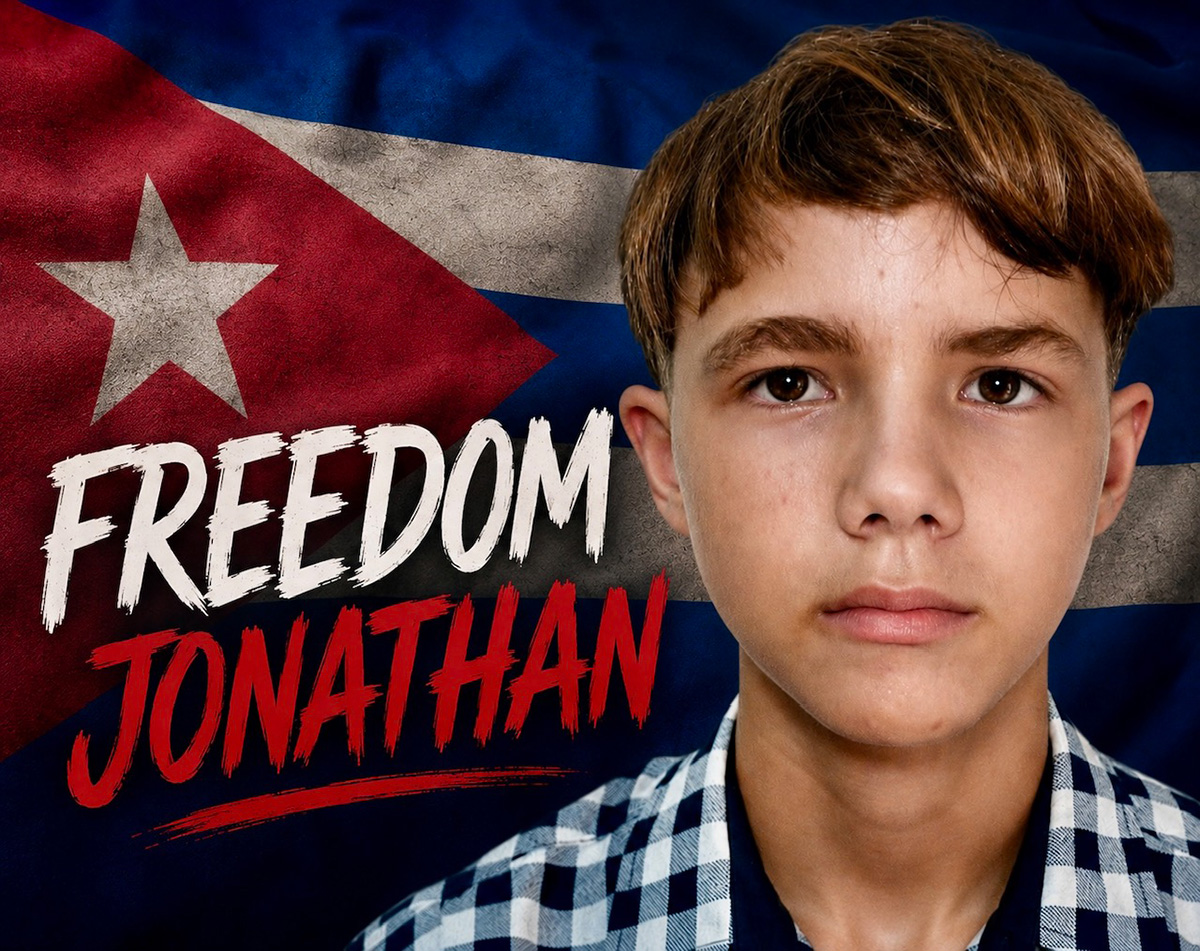
When the Washington Blade first reported the story of Jonathan David Muir Burgos, the news centered on a 16-year-old Cuban teenager who had been sent to prison after taking part in a public protest in Morón, Ciego de Ávila. At the time, the facts were straightforward. A minor had lost his freedom, and his case was beginning to attract attention beyond Cuba’s borders.
Today there is another fact that deserves to be recorded with the same rigor.
Jonathan is no longer in prison.
His release, confirmed by multiple news organizations, closes one chapter of a story that, for months, was followed by journalists, human rights organizations, religious communities, and countless individuals who refused to let his name disappear from public view. Each of them became part of a much larger effort to ensure that the imprisonment of a Cuban teenager would not fade into silence as the news cycle moved on.
That collective attention does not explain every decision that ultimately led to Jonathan’s release, and it would be irresponsible to suggest otherwise. Judicial processes are rarely shaped by a single factor. What can be said with certainty is that Jonathan’s story never disappeared. It continued to be documented, discussed and followed long after the initial headlines were published.
Behind every widely reported case there is a family living a reality that rarely appears in the news. In Jonathan’s case, there was a father who also serves as a Protestant pastor and who spent months speaking publicly about his son while asking others not to forget him. There was a mother enduring the uncertainty familiar to any parent separated from a child. There were classmates, friends, and neighbors waiting for the day when Jonathan would no longer be known as the teenager behind bars, but simply as the young man returning home.
The image of a prison gate opening often marks the end of a news story. In reality, it marks the beginning of something far more difficult. A teenager must resume an interrupted education, reconnect with friends, rebuild ordinary routines, and recover a sense of normalcy after months in confinement. Those experiences seldom become headlines, yet they are part of the true cost of imprisonment.
Jonathan’s release is therefore more than an update to a story previously reported. It is a reminder that public attention has value. Journalism matters because it documents. Human rights organizations matter because they investigate. Communities matter because they refuse indifference. Families matter because they continue to wait, even when the waiting becomes unbearable. None of these efforts should be viewed in isolation. Together they ensure that a person’s story does not disappear simply because time has passed.
Many people leave prison after being forgotten.
Jonathan David Muir Burgos walked out of prison knowing that, throughout those months, thousands of people had continued to speak his name, follow his case and hope for the day when this story could be told differently.
Today, that day has arrived.
Opinions
Is Pride over at the end of June?
A reminder that we must be vigilant, visible all year long
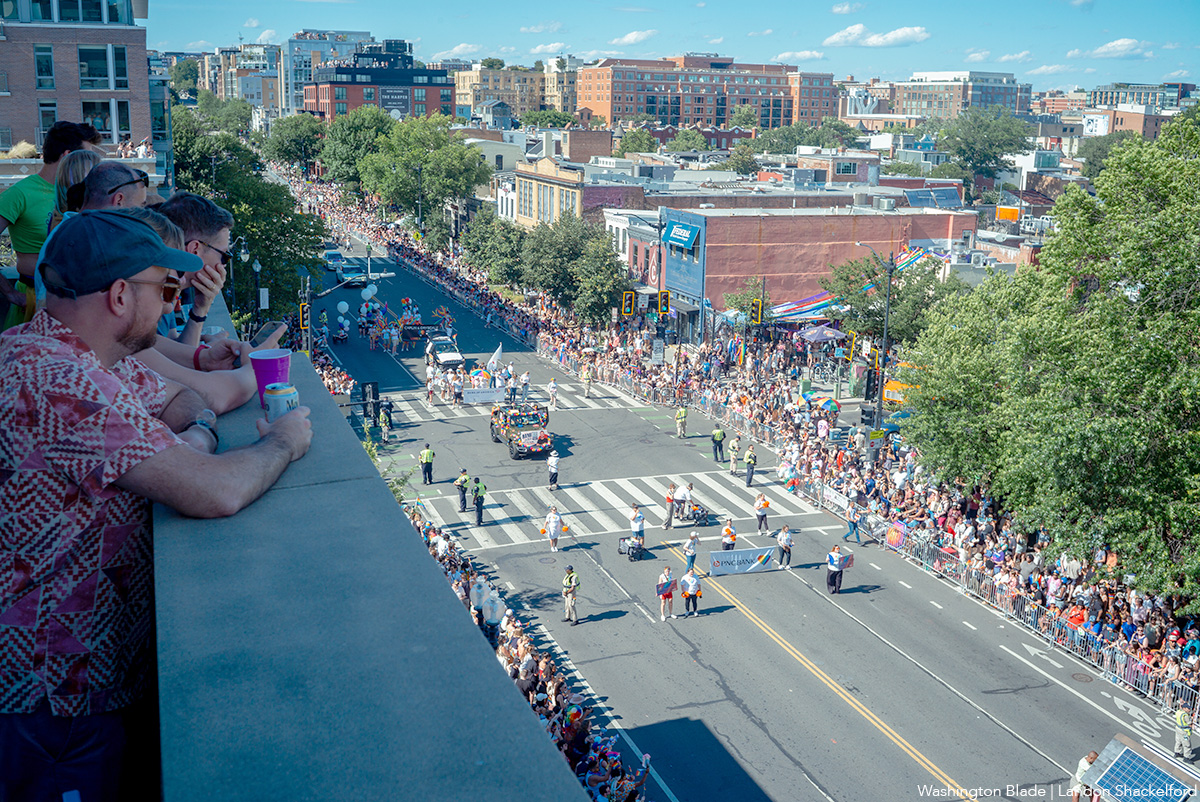
Pride month was first celebrated in June 1970, one year after the Stonewall Riots of 1969. Pride month commemorates the Stonewall Riots, which occurred on June 28, 1969, at the Stonewall Inn in New York City’s Greenwich Village. The first organized Pride marches were held on June 28, 1970, in New York City, Chicago, Los Angeles, and San Francisco, marking the first anniversary of the Stonewall Riots.
In June 2000, President Bill Clinton officially designated June as Gay and Lesbian Pride Month, and in 2009, President Barack Obama updated the designation to Lesbian, Gay, Bisexual, and Transgender Pride Month, recognizing the contributions and struggles of the LGBTQ community. We have fought a long time to be able to be open and out. Activists since Stonewall have fought so we can live with the promise of “life, liberty, and the pursuit of happiness” as promised in the Declaration of Independence. We just want to be recognized, and accepted, for who we were born as, or for who we are.
For me, and so many others, Pride is not only something we celebrate for the month of June, but we celebrate it all year long, for our whole lives. I am not denigrating the month of June celebrations. They are important, and bring visibility to our community. The diversity represented in D.C. Pride is wonderful. There is Trans Pride, Black Pride, youth Pride, among other events. We all have one thing in common, and just want to live our lives in peace. We want to enjoy our families, the ones we were born into, and those we choose. We want a good job, good friends, and good health, like everyone else. But because we are still seen as ‘different’ by so many, we have had to fight for our rights, and ask the government to grant them. When marriage laws were first promulgated, they didn’t include us, we had to fight for marriage equality. When healthcare is given to everyone, it was denied to trans people, and we have to fight for the government’s approval. When government gave the right to others for jobs, and housing, we were often denied. We still have no guarantees for either in 27 states. These fights go on.
I recognize we were not the only ones who had to fight for our rights. This country was founded by white Christian men, and they didn’t offer the rights they guaranteed themselves, to anyone else. They discriminated against women, Black people, and so many others, as they have discriminated against the LGBTQ community. So, we all had to fight for our rights, and today, are all still fighting for them.
While they did not mention religion, it was mentioned in the Establishment Clause of the First Amendment, which states: “Congress shall make no law respecting an establishment of religion, or prohibiting the free exercise thereof.” This clause has been interpreted to mean the government cannot favor one religion over another, or establish a national religion, thereby ensuring a degree of separation between religious institutions and government.
It is sick, very sick, that today, we are faced with a lying felon in the White House, who once again is sanctioning discrimination against every group that is not white, Christian men. Through his attack on Diversity, Equity, and Inclusion, he has set the fight for equality for all back a couple of hundred years. Nowhere can it be seen more clearly than in the Department of Defense where his stooge, Pete Hegseth, is trying to fire, and in any way he can, rid the military of women, Black service members, and members of the LGBTQ community. He is doing it so blatantly no one can deny it is happening. The felon is doing this across the government, and coercing those in the private sector to do the same.
So, in the month of June, here in D.C., in the home of our federal government, and in front of the people’s house, the White House, we in the LGBTQ community are all out. We share our parade, our festival, our parties, our experiences, our friends and lovers, husbands and wives, in public. We do so, and demand, that we can do it all year long, without being afraid. We do it so those who have yet to come out — young people maybe living in rural Virginia, or rural Maryland, those who still feel unsafe coming out — know there is a large community here who will welcome them with open arms and who will support them if their families and community don’t. We do it so they see they have heroes to emulate and can have a positive vision of their future.
So, we celebrate Pride in June, so we can celebrate our pride in who we are, all year long.
Peter Rosenstein is a longtime LGBTQ rights and Democratic Party activist.
Opinions
Administration must stop targeting LGBTQ kids
Trump is doing all he can to harm trans students

I’m a gay man, I’m a graduate student, here is why I’m afraid of what the Trump administration is doing with the Office of Civil Rights.
I consider myself lucky to have grown up as a gay man in the time that I did. As a millennial, I came of age at the tail end of when it was still almost entirely socially unacceptable to be gay. That decision, 17 years ago, has defined much of my life since. While it is nowhere near perfect, I am mostly happy with the current times as a gay man, though I often lament for how my trans brothers and sisters are treated.
That’s why I’m so terrified with some of the moves the Trump administration has made, especially most recently with its rescission of Title IX provisions. Title IX of the Education Amendments of 1972 is a landmark civil rights law that prevents any school or education program from discriminating on the basis of sex if they receive federal funding. It is a funding pact that effectively remodeled the American education landscape, providing equal opportunity for male and female athletes, outlawing discriminatory admissions practices, ensuring pregnant people have accommodations on campuses, and finally compelling schools to address and investigate sexual assault or harrassment in schools. In short, Title IX exists to create gender and sex based equity primarily in schools that receive federal funding; schools found to have been routinely violating this pact are subject to penalties, including even losing federal funding.
Recently, K-12 Dive reported that the Department of Education rescinded the Title IX provisions that established anti-discrimination protections for LGBTQ+ students. In principle, the provisions barred discrimination against LGBTQ+ students in educational facilities that receive federal funding. Going by the Department’s public statements, Education Secretary Linda McMahon believes that these provisions, which were advanced by the past two Democratic administrations “distorted the law to police discrimination on the basis of ‘gender identity.’”
Essentially, the Trump administration is signaling its inclination to withhold student loans, the lifeblood of higher education finance, from schools that don’t make life miserable for trans students. The administration’s desire to turn back the clock is a real slap in the face of my community, and the activists who fought fiercely for acceptance, protection, and the recognition of gay rights. Beyond the usual anti-queer, right wing slop, this is an indicator that the administration is fundamentally trying to erase the queer identity. This will have unequivocally bleak effects on queer youth.
A bit of background might help. In 2019, the Supreme Court made a landmark employment law ruling in Bostock v Clayton County, which held that Title VII of the Civil Rights Act of 1964 protects employees against discrimination on the basis of sexual orientation or gender identity. The plain text of Title VII only protects against discrimination on the basis of “sex,” but in Bostock, the court found that to be a gay employee requires first being a man, and to be a lesbian employee requires first being a woman. Likewise, to be discriminated against for trans or non-binary identity is to be discriminated against because your gender identity does not match your birth sex. Thus, the court held that workplace discrimination against LGBTQ identities are necessarily forms of sex discrimination, so protections for LGBTQ+ people in the workplace should be read into Title VII’s existing language.
This landmark decision was one of the biggest victories for advocates for LGBTQ employees in more than 50 years. Trump appointee Justice Neil Gorsuch even wrote for the majority that “an employer who fires an individual merely for being gay or transgender defies the law,” showing how patently unfair the state of LGBTQ employment was prior to the ruling. Personally, I have navigated so many spaces in fear of what could happen to me if anyone found out that I’m gay, but since Bostock, I’ve been so much more at ease.
But Bostock only considered Title VII of the Civil Rights Act, the section that prohibits discrimination in employment. It didn’t consider Title IX, which prohibits discrimination at colleges and universities that receive federal funding, even though both Title VII and Title IX are parts of the same statute. As a result, Bostock only prohibited homophobia and transphobia in employment practices, not on college campuses.
Early in his administration, President Joe Biden signed an executive order in hopes of rectifying that limitation. He directed heads of federal agencies to review workforce actions to ensure that departments were complying with the Bostock rule – essentially, even though Bostock only requires anti-discrimination protections for LGBTQ people in employment, Biden established a national policy of voluntarily extending the same anti-discrimination protections into other parts of American life governed by the Civil Rights Act.
As part of that effort, the Department of Justice issued a memorandum instructing federal agencies to apply Bostock to both Title VII and Title IX (the latter of course is enforced by the Office of Civil Rights in the Education Department). Later, in 2024, the Department of Education amended Title IX regulations to explicitly protect LGBTQ people from discrimination in federally funded buildings (most obviously schools).
The result of all these legal technicalities is that under the Biden rules, OCR must protect trans students who want to use the bathroom of their choice; a gay student cannot be discriminated against for being gay; and most importantly, a student cannot be rejected from a school, or expelled, for simply being who they are.
This small change is actually revolutionary for LGBTQ+ students. Beyond the fact that the second leading cause of death among LGBTQ youth is suicide, queer kids are twice as likely to be called names, verbally harassed, or physically assaulted. This often leads to increased substance abuse, self-harm, chronic absenteeism, and poor academic performance. With younger people coming out earlier than ever, it is critically important that we ensure we are protecting our queer youth.
The administration wants society to backslide. They want these kids to face discrimination. Never mind that one of Trump’s own Supreme Court picks wrote the majority opinion in Bostock, he and his cronies think it is perfectly fine for LGBTQ students to face harassment because they (falsely) claim the Biden administration had a warped interpretation ofBostock. After all, this is the same administration that cut funding to the 988 suicide hotline, banned trans people from serving in the military, and systematically weaponizes federal law against trans people across the country.
Republican-led states are clearly treating this as an opportunity to declare war on queer students as well. In May, South Carolina Gov. Henry McMaster signed the Student Physical Privacy Act which mandates “multi-person facilities be designated for use by one sex at a time, defined by biological sex at birth. It also requires schools and colleges to provide single-user restrooms or changing spaces for students who request them.” In practice, trans students in South Carolina are basically relegated to port-a-potties. State Sen. Jason Elliot of Green said, “[T]he bill would allow the use of a portable restroom facility, if necessary, to meet that need [for a trans student]. So it’s not going to be an overly burdensome financial responsibility on K-12 schools or colleges or universities.” Rather than address the Palmetto state’s biggest actual policy issues like cost of living, health care accessibility, poor response to extreme weather events, dependency on tourism and a state graduation rate of less than 85%, they choose to attack trans kids, which again will only exacerbate the latter of these problems.
As a gay man, I find this troubling and deeply demoralizing. The second Trump administration is doing everything in its power to harm an already deeply marginalized community. Sending signals to state governments as well means Americans are rolling back the years to a time in which young LGBTQ people were fearful to be who they are. It’s the younger generations who are going to feel the immediate effects of these policies – even if a future Democratic administration reinstates the Biden-era policies, you only get the four years of high school or college once. If your time as a young person coincides with this administration and its bigotry, that can leave an indelible mark on your life and understanding of yourself in this country.
Am I protected as an adult? Well, yes, but as an educational policy wonk and gay man, I fear for younger queer people who just want to live authentically. The next Democratic administration must make reversing these changes to Title IX a priority. Any Democrat who claims to care about queer people, must ensure that these students are protected.
Chris Lewis is deputy research director of the Revolving Door Project.

Comings & Goings

‘Leviticus’ demonizes homophobia for gripping queer horror yarn

Calendar: June 26-July 2

Orioles take on Nats for Pride Night

My boyfriend is almost perfect

Abelardo de la Espriella elected Colombia’s next president

Capital Pride draws tens of thousands to D.C.

British Prime Minister Keir Starmer to resign

PHOTOS: Capital Pride Festival and Concert