News
LGBTQ Trump supporters tiptoe away from president after U.S. Capitol attack
One-time won’t commit to forcibly removing Trump from office


In the aftermath of the assault on the U.S. Capitol instigated by President Trump, his one-time LGBTQ supporters are now distancing themselves from him without outright renouncing their previous support.
Many LGBTQ Trump supporters didn’t respond to the Washington Blade’s request for comment. Others condemned the violence at the U.S. Capitol, but sought to artfully distance themselves from Trump while minimizing their previous support for him as an incumbent president running for re-election in 2020.
One-time Trump supporters — amid talk of Trump being forced to resign, impeached and removed from office or being stripped of the presidency through never-before invoked powers of executive officers under the 25th Amendment — wouldn’t commit to supporting any of those outcomes.
Charles Moran, managing director of Log Cabin Republicans, condemned the assault on the U.S. Capitol as “a dark day in the current chapter of American history,” but compared it to racial unrest of 2020 and said “it brought into the new year the anger and violence that we experienced only recently in the summer of 2020.”
“That said, the violence and un-American acts committed yesterday by those who stormed the Capitol building were completely unacceptable and those who took part in trying to forcefully stop our democracy from working should be identified, arrested, tried and punished to the fullest extent of the law,” Moran said, “Full stop, no exceptions.”
Moran said Log Cabin Republicans, which endorsed Trump in the 2020 election, learned from the success it enjoyed in increasing the LGBTQ vote for the Republican presidential nominee (according to exit polls) but said those efforts were never about Trump himself.
“While the gay left has had a deranged obsession with Donald Trump, our movement has never been about one man,” Moran said. “We can and will achieve continued success, with or without Donald Trump.”
Moran also side-stepped the issue of what should happen with Trump amid talk of removing him from office before end of his presidential term.
“President Trump’s last day in office will be January 20, when Vice President Biden will be sworn into office,” Moran said. “I don’t know what President Trump will do next. The Republican Party today, however, is transformed, and I think for the better.”
Chad Felix Greene, who wrote a self-published book “Without Context,” disputing each of the LGBTQ media watchdog GLAAD’s accounts of anti-LGBTQ attacks by Trump, told the Blade the assault on the Capitol was “an act of domestic terrorism and should not be tolerated.”
“The right has attracted a population of people that think anarchy and obscenity are political activism,” Greene added. “White supremacists, antisemites and other assorted idiots latched onto the MAGA movement because it was rebellious and counter culture and controversial.”
Greene said he lost his respect for Trump “when he began behaving as a conspiratorial voice leading his followers into madness,” and is now looking to Mike Pence for leadership, despite the vice president’s long anti-LGBTQ record.
“While I appreciated [Trump’s] policies as a leader, he proved himself to be a threat to everything we built over the last four years over his ego,” Greene added. “Pence is the perfect mirror image of this. Consistent. Calm. Trustworthy and a man of integrity. He’s not the face of what MAGA became as an aggressive and passionate movement. He reminded us of what good Republican and conservative leadership can be.”
Greene said he expects Trump to “leave office” and “won’t support” him in future political efforts, but at the same time doesn’t back efforts to forcibly remove the president from office before the end of his term.
“Honestly it’s in two weeks,” Greene said. “He reluctantly gave a statement on an orderly exit. I think current efforts at removing him are political and short-sighted. We’ve completely forgotten the stimulus and vaccine rollout that needs attention. Trump is done. Further political theater seems petty and unnecessary to me.”
Dan Innis, a Republican former New Hampshire state senator who supported Trump and after the 2020 election said on Twitter he wouldn’t accept the results, told the Blade the assault on the U.S. Capitol was “very sad,” but wouldn’t give up his previous position.
“My concerns about the validity of the election remain,” Innis said. “If the election was fair, and I hope it was, show us. Why the secrecy? If there is nothing to hide, don’t hide it. However, given yesterday’s events, we will never know the truth about the election. As a result, millions of Americans, me included, will forever doubt the integrity of the American election process.”
Innis also sought to minimize Trump as a leader of the conservative movement, adding “vanquishing” him “will not change my views, or the views of those millions” who don’t trust the nation’s leaders and institutions.
“Trump was nothing but a figurehead of a larger movement, and that movement is not going to just go away just because Trump goes away,” Innis said. “If the Democrats, including Joe Biden, think that is going to happen, I think they will be surprised.”
The distancing from Trump corresponds to the growing list of administration aides resigning in the aftermath of the assault on the U.S. Capitol.
Among them was Tyler Goodspeed, who’s gay and was acting chair of the White House Council of Economic Advisers, who resigned Thursday. “The events of yesterday made my position no longer tenable,” Goodspeed was quoted as saying to the New York Times.
But several other LGBTQ officials with ties to Trump had little to say for themselves and didn’t respond to the Blade’s request for comment. Among them was Richard Grenell, who was the face of LGBTQ outreach for Trump’s re-election. Although Grenell condemned the assault on the U.S. Capitol on Twitter as it was unfolding, by the next day his focus shifted to California Gov. Gavin Newsom, Iran, Big Tech and the media, but not Trump.
Brandon Straka, the gay conservative who founded the “Walk Away” movement and was among the speakers at the “Stop the Steal” rally that led to the assault on the U.S. Capitol also didn’t respond to the Blade’s request for comment.
After the assault, Straka posted on Twitter a one-hour video skirting the violence and expressing outrage at the rioters and issued a call to “completely gut the conservative movement and start again.” On Friday, Straka indignantly tweeted about Facebook disabling the “Walk Away” campaign on the social media platform.
Also not responding to the Blade was Gregory Angelo, who cheered Trump on after stepping down as head of the Log Cabin Republicans and later took a job at the Trump White House; and Rob Smith, a “Don’t Ask, Don’t Tell” activist who later became a chief spokesperson for the pro-Trump student group Turning Point USA.
Other LGBTQ conservatives who spoke to the Blade, but didn’t support Trump for re-election in 2020, weren’t shy about saying the assault on the U.S. Capitol confirmed their fears about him.
Brad Polumbo, a D.C.-based conservative journalist and host of the podcast “Breaking Brad,” said the Trump administration yielded good policy — including for LGBTQ people, despite Trump’s anti-LGBTQ reputation — but the recent events proved him right.
“The crazed mob attack on the Capitol and President Trump’s denial of the election results that fomented it, for me, vindicate the decision to never get on board the Trump train,” Polumbo said. “From tax cuts to deregulation to the confirmation of several excellent Supreme Court justices to Middle East peace deals and an unprecedented openness to gay Americans, there are many successes gay conservatives like me can take away from the Trump presidency. But recent events have also served as a painful reminder to LGBT conservatives, and all conservatives, really, that policy aside, our leaders’ character matters.”
Jennifer Williams, a New Jersey-based Republican transgender advocate who challenged Trump over his supporters using anti-trans campaign tactics that ended up failing in the 2020 election, denounced the assault on the U.S. Capitol.
“The people who stormed and violently entered the Capitol to disrupt yesterday’s election certification acted not as Americans, but as vandals to democracy,” Williams said. “Every single one of the perpetrators should be prosecuted to the fullest extent of the law. These people did not act as Republicans, because what they did is not in the spirit of what Republicans stand for or how we conduct ourselves. However, that is the least of my worries. I fear our children seeing our country as they saw it yesterday.”
Williams, who said the results of the 2020 election are clear, issued a clarion call that the time has come for Trump to step down before the end of his term, or that officials should do the job for him.
“President Trump should consider stepping down and/or ceding his day-to-day authority to Vice President Pence for these last few days in order to restore a sense of peace to our country,” Williams said. “The president and his son — after using strong anti-transgender and vulgar language in his own speech — encouraged the protesters to march on our Capitol building. That is unconscionable and every American, liberal or conservative and LGBTQ or not, must recognize this. We are a country of laws and freedom, not anarchy and mob rule.”


North Carolina
Authorities investigate officer-involved shooting outside Asheville gay bar
Incident took place near Shakey’s on Wednesday

An officer-involved shooting outside of a gay dive bar, Shakey’s, in downtown Asheville, N.C., left one man dead Wednesday.
The bar released a statement the following morning regarding the incident, stating that bar staff had asked a patron to leave earlier in the night citing concerning behavior. The bar said that later the man was spotted with a gun in the parking lot.
The bar proceeded to call 911, locked the doors to the establishment, and followed dispatcher instructions on how to keep patrons of the bar safe while officers arrived. These protocols included getting patrons away from the windows and staying low to the ground.
According to Shakey’s, shots were fired outside of the business. When the Asheville Police Department officers arrived, they fired back. The individual died from their injuries, according to the police.
“Because of everyone’s quick actions, cooperation, and concern for one another, every customer and every employee inside Shakey’s made it home safely. We are incredibly thankful,” Shakey’s said on their Instagram page. They thanked Asheville police, emergency dispatchers, EMS, and all first responders who were on scene.
On Thursday, a spokesperson for the North Carolina State Bureau of Investigation, Chad Flowers, stated that the suspect involved in the shooting was Arturo Castillo Palomar.
The Washington Blade reached out to the North Carolina State Bureau of Investigation for a comment regarding the possibility of the event being considered a hate crime. They said the issue is currently under investigation and that the findings would be turned over to the district attorney for review.
Baltimore
Popular Mount Vernon gay bar Leon’s to temporarily close after owner’s death
Ron Singer passed away on July 7
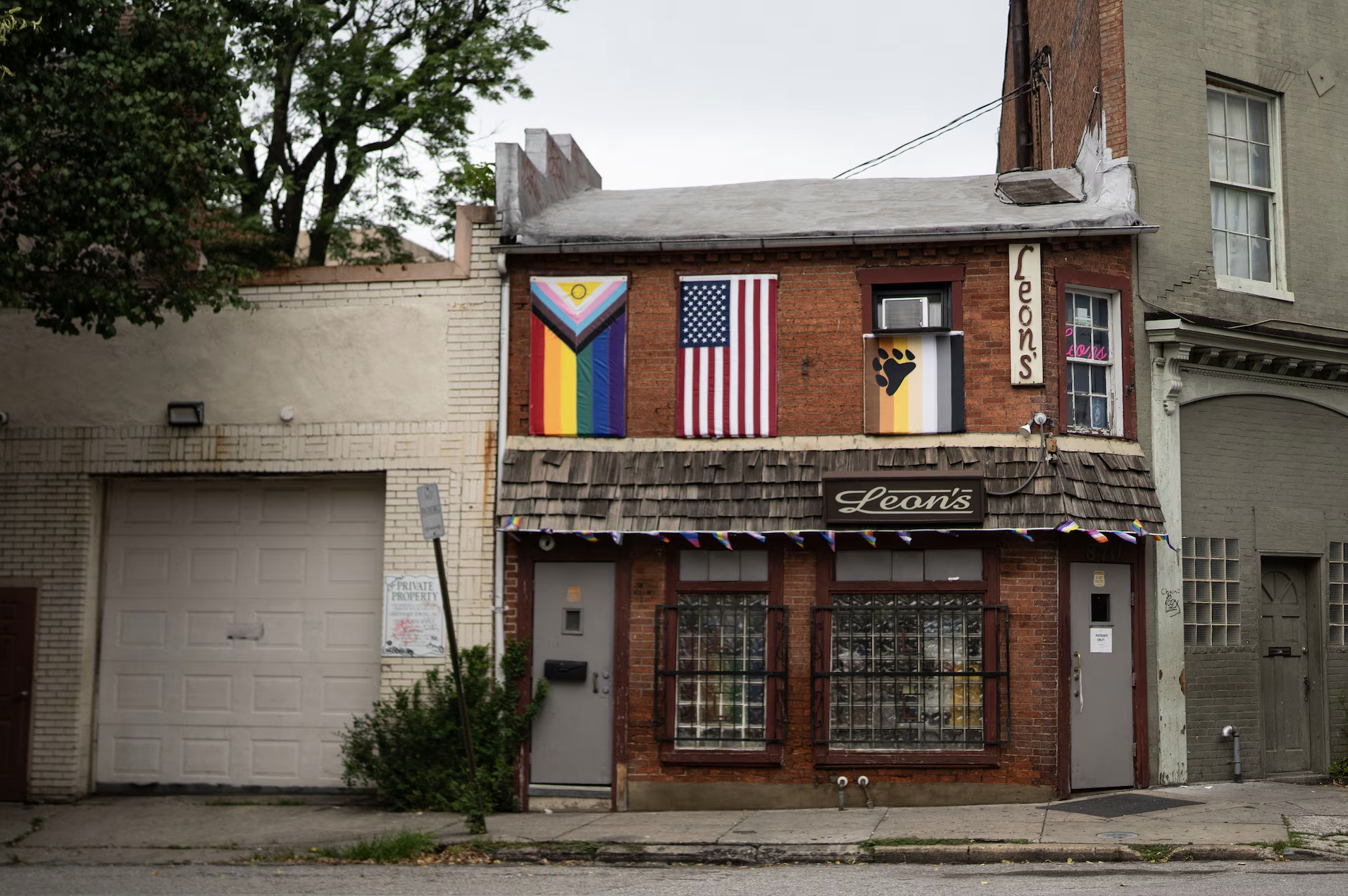
By WESLEY CASE | Leon’s Backroom, Baltimore’s oldest gay bar, temporarily shut down after service on Wednesday night, according to a post on the business’s Instagram page.
The announcement comes a little more than a week after the death of the Mount Vernon bar’s owner, Ron Singer, who died at 66 on July 7.
The rest of this article can be found on the Baltimore Banner’s website.

The Comings & Goings column is about sharing the professional successes of our community. We want to recognize those landing new jobs, new clients for their business, joining boards of organizations and other achievements. Please share your successes with us at [email protected].
Congratulations to Stuart Ortel and Scott Marker, and Dave Lyons and Rick Hardy, on the recent opening of their garden center on Route 1 in Rehoboth Beach, in the former Farmer Girl site. It is called Bay Laurel Home and Garden and debuted earlier this year. The four owners are all well known to the denizens of Rehoboth Beach.
Stuart and Scott have been active members of the Rehoboth Beach community since 1999. Stuart is a landscape architect, and has established relationships with many local folks in the building and landscape industry. When this opportunity for Bay Laurel Home & Garden presented itself, and they had the perfect team of people in place, he and Scott were committed to making it a reality. So, when Scott and Stuart introduced this opportunity to create a new garden center to Dave and Rick, they embraced the chance to cultivate a business where beautiful plants, inspiring home and garden products, and outstanding customer service come together. Dave and Rick knew about owning a business in Rehoboth as they previously owned Coho’s Market, where they discovered firsthand the value of serving their community, and the rewards of running a locally owned business.
The garden center launched with a refreshed brand identity, updated merchandising, and expanded product lines, all designed to create an inspiring and welcoming environment for your home. Bay Laurel Home & Garden offers a beautifully appointed garden center and curated home and gift shop.
The new center features a full nursery with annuals, perennials, shrubs, trees, and seasonal selections; a garden center offering pottery, fountains, and garden ornamentation, and essential tools and garden supplies. It has a garden shop featuring unique indoor/outdoor furnishings and accessories, and a gift shop featuring botanical and coastal style items for home and entertaining.

Authorities investigate officer-involved shooting outside Asheville gay bar

Popular Mount Vernon gay bar Leon’s to temporarily close after owner’s death

30 years on, ‘The Birdcage’ remains a landmark

Comings & Goings

Whitman-Walker to host legal services workshop

Mexico’s first openly gay mayor killed

Expected India Supreme Court ruling could shape future LGBTQ rights cases

Celebrate Pride in Rehoboth Beach this weekend

Christa Tichy hopes to preserve LGBTQ representation in Md. House of Delegates

Advocacy groups join Venezuela earthquake relief efforts
-

 Mexico5 days ago
Mexico’s first openly gay mayor killed
-
India4 days ago
Expected India Supreme Court ruling could shape future LGBTQ rights cases
-
Rehoboth Beach4 days ago
Celebrate Pride in Rehoboth Beach this weekend
-
Maryland4 days ago
Christa Tichy hopes to preserve LGBTQ representation in Md. House of Delegates