Politics
Obama vs. Biden: No easy task comparing the two on LGBTQ records
One president moved with caution, the other with speed
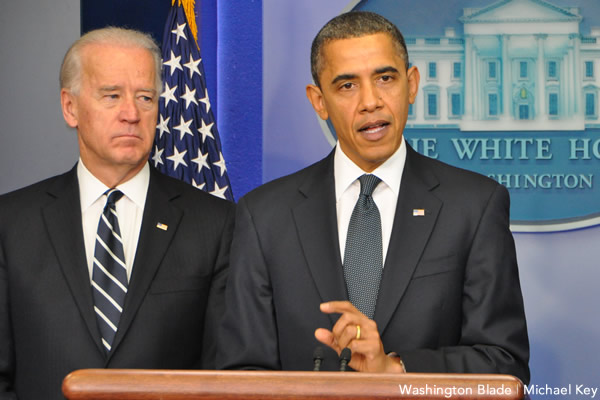
More than seven months into his administration, President Biden has quickly gained a reputation for being a champion for the LGBTQ community — but don’t ask whether that LGBTQ record is superior to his predecessor Barack Obama’s without expecting a fight.
Among the LGBTQ initiatives marking Biden’s tenure within a few months: Undoing the transgender military ban; ordering federal agencies to implement a U.S. Supreme Court ruling against anti-LGBTQ discrimination to the fullest extent possible; and integrating LGBTQ human rights into his foreign policy vision. When Obama was in office, policies along those lines for the LGBTQ community were more spanned out and took an entire eight years to implement.
Take, for example, transgender military service. Biden through an executive order within the first week of his administration reversed Trump’s policy-by-tweet banning transgender people from serving in the U.S. armed forces “in any capacity.” During the time of President Obama, who took office when “Don’t Ask, Don’t Tell” for openly gay service members was still law of the land, it took until the last six months before the end of his second term to lift older regulations similarly against transgender service.
Matt Hill, a White House spokesperson, wasn’t shy about ticking off each of these achievements when asked about the comparison between Obama and Biden on LGBTQ issues, but didn’t discount the work of the earlier president.
“President Biden is proud of the work accomplished alongside President Obama to advance LGBTQ+ equality from championing marriage equality, enabling LGBTQ+ Americans to serve openly in the military, combatting and preventing discrimination and more,” Hill said. “The Obama-Biden administration made historic progress for LGBTQ+ people at home and abroad, and the Biden-Harris administration is proud to continue making historic progress in the march toward full equality.”
If the chorus from the Lily Allen song “Not Fair” is coming to you in terms of comparing Biden to Obama on LGBTQ issues, that response would be justified. Trying to reach a definite conclusion about who was better is complicated simply because of different times.
Obama came into office when LGBTQ rights were unpopular compared to today and no president ever before had billed themselves fully as an ally the LGBTQ community. Not long ago, President George W. Bush scored political points and possibly won re-election as the war in Iraq turned into a fiasco by making a U.S. constitutional amendment against same-sex marriage a centerpiece of his campaign.
Mara Keisling, who as former executive director of the National Center for Transgender Equality advocated for LGBTQ issues in both the Obama and Biden administrations, said “it is that way” Biden’s achievements have been more rapid and Obama’s more spread out over eight years, but added comparing the two is “apples and oranges.”
“We were in a very different place in 2009,” Keisling said. “There had never been a federal government administration that did trans policy before, and so they had to go about it more slowly or they had to figure out how to do it. Second, there weren’t there weren’t a lot of experienced advocates in the LGBT movement. There were really very few people who had done any administrative advocacy in 2009, and now we’re starting this administration with 50 or 60 experienced advocates who got right to it.”
Keisling said the preceding Trump administration, with all its anti-LGBTQ rollbacks, was ironically helpful in getting Biden started because “Donald Trump accidentally left the whole blueprint for what to do, which is just fix a lot of the things he broke.”
The difference in times is key to understanding why to bother comparing Obama and Biden on LGBTQ issues in the first place when they’re both generally regarded of supporters of LGBTQ people. It’s more a way to reflect on changing times, recognizing moving quickly on LGBTQ issues was more difficult 12 years ago than it is now.
Nonetheless, despite the Obama years being a different epoch, LGBTQ rights advocates at the start of his administration were outright hostile to Obama for not moving more quickly to push the nation forward, particularly on holding out on “Don’t Ask, Don’t Tell” repeal until two years in office. An initial legal brief defending the anti-gay Defense of Marriage Act in court, which compared same-sex relationships to underage and ancestral marriages, had LGBTQ people up in arms against a president they worked hard to elect.
The gay blogosphere, in its heyday at the end of the 2000s, skewered White House press secretaries Robert Gibbs and Jay Carney for inartful answers on Obama’s commitment to LGBTQ issues. Liberal bloggers such as John Aravosis at AMERICAblog, Pam Spaulding at Pam’s House Blend and Andy Towle at Towleroad had anti-Obama content alongside posts against Republicans.
Aravosis, in response to an email inquiry from the Blade, said making comparisons of Obama and Biden at this point in their presidencies is difficult given the different nature of the times.
“It’s always hard to compare 2008 and 2021,” Aravosis said. “They were different eras, with different demands. The three big issues for Obama were ‘Don’t Ask, Don’t Tell,’ DOMA and marriage equality. And we got him on board all three of those, with a little cajoling — DADT they delayed action on, DOMA they were defending in court, and marriage took until 2012 to get Obama on board. But eventually he did, on all those issues.”
Aravosis conceded at this time Biden comparatively has made “a ton of small to medium accomplishments early on,” and cited the confirmation of Pete Buttigieg as the first openly gay Senate-confirmed Cabinet secretary as one of “a few big ones.”
Even during the Obama years, Biden was credited with moving Obama forward, famously speaking out in favor of same-sex couples getting married on “Meet the Press” as Obama’s “evolution” on the issue was still taking place. Obama would come out for marriage equality days later. Biden had also spoken out in favor of an LGBTQ non-discrimination order in the workplace for federal contractors before Obama made that happen.
Keisling said even though some of Obama’s early caution and missteps had angered LGBTQ advocates at the time, such as excluding transgender people from a 2009 presidential memorandum seeking to expand partner benefits for same-sex couples, they ended up proving beneficial.
“I don’t think any of us really understood what a momentous thing that was,” Keisling said. “But it was from that memo that they immediately realized that the federal government had to protect trans federal employees.”
In contrast to early consternation under Obama, seven months into the Biden administration nary an objection has been heard from LGBTQ leaders, save for a legal brief claiming a right to defend an exemption to LGBTQ non-discrimination law for religious schools that wasn’t even based on the merits. To the contrary, Biden has been lauded as the greatest supporter of LGBTQ people in the White House as his administration has rolled back Trump’s anti-LGBTQ initiatives, fully embracing LGBTQ people in his first months without the need for public cajoling from voices seeking equality.
One person who has worked both in and outside the White House on LGBTQ issues is Brian Bond, now executive director of PFLAG and the first LGBTQ White House liaison under Obama. Bond, however, would not agree to an interview for this article.
Despite the early consternation, the long view on Obama is different. By the time his administration was over after eight years, the LGBTQ community could look back on hate crimes legislation signed into law, “Don’t Ask, Don’t Tell” repeal, marriage equality nationwide and transgender people being more visible and respected.
When the Washington Blade reached out to the Office of Barack and Michelle Obama for a comment on the comparison between Obama and Biden on LGBTQ issues, a spokesperson ticked off many of these achievements.
“We are so proud of President Obama’s record on LGBTQ issues, including repealing Don’t Ask, Don’t Tell, ending the government’s legal defense of the Defense of Marriage Act, and signing historic hate crimes legislation, but he’s always said the presidency is a relay race and there’s nobody he’d rather have holding the baton right now than Joe Biden, especially when it comes to matters of equality,” the spokesperson said.
It was based on Obama’s overall record, especially his endorsement of same-sex marriage at a critical time in 2012 when the issue was at the polls in four states, that gay commentator Andrew Sullivan in 2012 dubbed him the “First Gay President” for a high-profile cover article in Newsweek.
Sullivan, who has declared the fight for gay rights now over and has been critical of continued efforts in the LGBTQ movement, said the comparison between Obama and Biden on LGBTQ issues is no contest.
“Neither president is responsible for gay equality. We are,” Sullivan wrote in an email to the Blade. “But there is no comparison. Marriage equality and openly gay troops under Obama dwarf anything Biden has done. The Bostock decision — the biggest advance in history for trans rights — happened under Trump.”
Obama, in an interview published in The Advocate last month, said he would “love my legacy to be overshadowed, because it would mean another president was doing even more to protect LGBTQ rights,” which he said was why he was pleased with Biden’s initiatives.
“Now, we obviously have more work to do,” Obama added. “We need to do even more to guarantee basic rights and protections for every American. My hope is that whatever success we had while I was president proves that progress is possible.”
A continued one-up Obama has over Biden in terms of LGBTQ issues is major legislative achievements. For all the hurdles Biden has already cleared on LGBTQ issues compared to Obama, the Equality Act — the centerpiece of Biden’s campaign promise for LGBTQ people — continues to languish in the U.S. Senate and is all but dead.
By this time in the Obama years, the measure honoring gay teenager Matthew Shepard, who was brutally murdered, was on its way to the White House as an amendment to major defense spending authorization legislation in Congress. The Equality Act, on the other hand, hasn’t even gotten a vote in the Senate Judiciary Committee.
Aravosis said the lack of traction for the Equality Act in the Senate is a “similar dilemma” to the one supporters of gay rights faced in 2010 with hurdles in getting “Don’t Ask, Don’t Tell” repealed.
“We were extremely concerned that we’d lose the House in the 2010 midterm elections, so we wanted to get DADT repealed BEFORE that,” Aravosis said. “Same problem today. We need to get the Equality Act passed BEFORE the 2022 midterm elections, lest we lose the House or Senate.”
At the end of the day, however, unlike his criticism for Obama for not moving quickly on “Don’t Ask, Don’t Tell” repeal, Aravosis said he doesn’t fault Biden for not getting the Equality Act on his desk.
“With a one-vote margin in the Senate, and the filibuster still in place, I’m not sure how we do that,” Aravosis said. “So, no, I don’t blame Biden for the current vote count being extremely difficult in the Senate.”
Biden last month signed a resolution designating the Orlando, Fla.-based Pulse nightclub, where 49 people were killed in a mass shooting, as a national monument, but that went through Congress unanimously and required no significant political power.
Keisling, when asked if the lack of major legislative achievements on LGBTQ issues detracts from Biden’s record, said the fault lies elsewhere.
“Nothing’s happening in Congress,” Keisling said. “What he has gotten done is kind of amazing — I mean in general not the LGBT stuff, because there really hasn’t been LGBT stuff — because Congress is currently broken. The Senate is broken anyway.”
When the Blade pointed out by this time in his administration Obama was on track to sign hate crimes legislation into law in October 2009 and asked what has changed, Keisling replied, “Talk to me about that in December.”
“I’m more optimistic than you are,” Keisling said. “I know the Blade has tried really hard to express pessimism. But we’re working it, it is still very much alive and there’s actual conversations going on between the right senators. I’m very hopeful still.”
The Human Rights Campaign, which has lobbied on LGBTQ issues in both the Obama and Biden administrations, didn’t respond to a request to comment for this article.



2026 Midterm Elections
LGBTQ political candidates see surge in threats, harassment: report
Majority fear physical attack, discouraging them from running
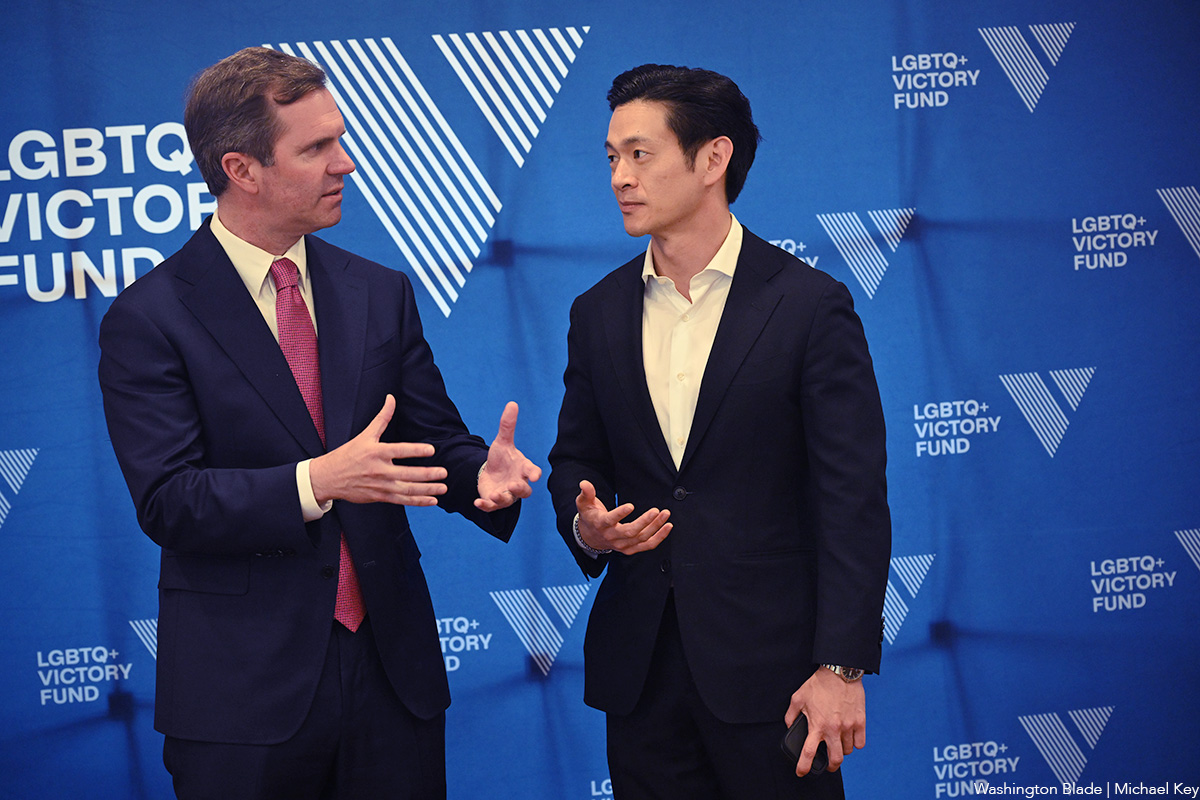
A new study reveals that LGBTQ candidates running for public office are seeing an unprecedented amount of harassment and threats as President Trump and his far-right MAGA supporters continue to strip protections for minority groups at all levels of government.
The LGBTQ+ Victory Institute, the nation’s largest LGBTQ candidate training and leadership organization, recently partnered with Loyola Marymount University to collect data on the rising political violence experienced by LGBTQ candidates. The organization is closely affiliated with the LGBTQ+ Victory Fund, its sister political action arm dedicated to helping LGBTQ candidates get elected.
The Washington Blade sat down with Evan Low, president and CEO of the LGBTQ+ Victory Institute and LGBTQ+ Victory Fund, to discuss what the data reveals about the climate LGBTQ candidates have found themselves in.
Low argued that the findings cannot be separated from the broader political environment facing LGBTQ Americans in 2026. Anti-transgender legislation continues to surge across the country while federal recognition of LGBTQ communities has diminished. This is the second consecutive year Trump has declined to recognize June as Pride month. He also made no public statement commemorating Juneteenth, the anniversary marking the emancipation of enslaved people in the United States.
The survey included 215 LGBTQ+ candidates who ran for office between 2023 and 2025 from 42 states, Puerto Rico, and Washington, D.C., and asked about their experiences while running for office.
The data, while not particularly surprising given the highly divisive political era we have been living through under Trump 2.0, contains stark findings showing that LGBTQ candidates are not only finding it more difficult to run for office — something protected under the First and Fourteenth Amendments — but that it has also become increasingly dangerous for openly LGBTQ candidates to do so.
One of the report’s most significant findings focuses on what happens before an LGBTQ person’s name ever appears on a ballot or yard sign: widespread fear among prospective candidates. Nearly 9 in 10 candidates worried that running as an openly LGBTQ+ person would increase their risk of harassment or attack, while 4 in 5 feared physical violence.
Key Takeaways From the Data
Harassment Is the Norm — Not the Exception: Nearly two-thirds of LGBTQ candidates experienced in-person harassment, while nearly 8 in 10 faced online abuse, with many encountering it regularly.
The escalation from rhetoric to serious threats mirrors the current political climate. One in three candidates received death threats online, and one in seven experienced them in person, highlighting the severity of the current threat environment.
Campaigns Altered by Safety Concerns: More than half of candidates changed how or where they campaigned due to safety fears, and nearly 1 in 5 described the impact as significant — limiting public engagement and visibility.
Security Out of Reach: Fewer than 1 in 10 candidates could afford private security, even as threats escalated, underscoring a growing inequity in who can safely run for office.
Severe Mental Health Impact: Nearly two-thirds of candidates said attacks negatively impacted their mental health, with some reporting long-term trauma and lasting psychological effects.
“What we’re seeing is not just harassment, it’s a systemic challenge to participation,” said Elliot Imse, the now former executive director of LGBTQ+ Victory Institute. “When candidates are forced to change their behavior, limit public engagement, or reconsider running altogether because of safety concerns, that’s not just a personal issue — it’s a breakdown in the conditions required for a healthy democracy.”
“This isn’t theoretical — I, like so many LGBTQ+ candidates and elected leaders, have lived it,” said Daniel Hernandez, vice president of political programs at LGBTQ+ Victory Fund. “From surviving gun violence to having my own campaign office targeted, I know how real these threats are and how deeply they affect candidates, their teams, and their families. The LGBTQ+ Victory Institute has been doing this work for years — preparing candidates, supporting them through these challenges, and making sure they’re not facing it alone. This report makes clear the stakes are higher than ever. If we want people to step up and serve, we have to meet this moment with the resources, support, and commitment to their safety demands.”
Low, who before leading the Victory organizations was an openly gay elected official representing California’s 26th Assembly District, which includes portions of Silicon Valley and San Jose, views the findings as both a political violence issue and a threat to democracy itself.
“We’re living in a moment in a time in which the pendulum is swinging backwards,” Low told the Blade. “We’ve seen a historic amount of anti-LGBTQ+ legislative proposals across this country. So naturally, when members of our community are targeted, it gives that license then to be harassed and discriminated against accordingly. It absolutely is a challenge to democracy.”
The data also shows that LGBTQ candidates face unique barriers to entry — many of them financial. Low argued that reducing those barriers would help diversify candidate pools and create a more representative democracy.
“Does [the current system] disproportionately then impact and limit the segment within our populations to serve? The answer is absolutely yes. When you think about the increased challenges of a barrier to entry– that’s why we’re focused on doing the report in the first place. It also then goes to show the importance of how we utilize taxpayer dollars and budgets accordingly to help encourage and support members of the community to run for office.”
He used that point to emphasize the importance of the LGBTQ+ Victory Institute, not only in collecting data on these trends but also in helping LGBTQ candidates navigate them.
“That’s the fundamental reason why there’s the need for the Victory Fund of the Victory Institute,” he said. “It’s to say that the members of our community will not face this or run alone. They should know that there is a national network, a national organization that will be the wind in their sails to help guide them.”
So far in 2026, the Victory Fund has endorsed at least 249 candidates.
In addition to providing financial support, the Victory Institute helps LGBTQ candidates prepare for the realities of the campaign trail, including coping with harassment, threats, and personal security concerns.
Low expanded on what that reality looks like in 2026 as anti-transgender legislation continues to surge and federal recognition of LGBTQ communities has diminished.
“Part of that discussion is we don’t try to sugarcoat it,” he said when emphasizing the realities facing LGBTQ candidates. “We will speak truth about ‘Here’s how to put a campaign budget together’ and ‘Here’s best practices on public speaking.’ But also we have to deal with showing the unfortunate reality on ‘Here’s how to keep your family safe.’ ‘Here’s how to retain and keep in mind your mental health’…especially when you see members of our community being doxxed constantly by bots and such hate speech.”
He also highlighted the unique challenges facing transgender candidates running for office, particularly as hundreds of bills across the country continue to target transgender people.
“We hear that many times there may be individuals from the community, specifically the trans community, who may want to run for office, but their existence is criminalized, which is to say that they may live in a state or jurisdiction in which it’s criminal to exist; laws prohibiting them from being who they are,” Low said.
“When many of our candidates run for office, they are not running because they are trans, they’re not running because they’re gay or a member of their community, they’re running to advance the quality of life on the key issues on housing affordability, health care, education, you name it, and so these are the campaign issues, but the challenge exists as well.”
Those pressures often lead candidates to question whether running for office is worth the personal toll.
“Many times the candidate and/or elected official will speak candidly with members of our organization to say, ‘Is it worth it anymore? What should I do? Is this something that I should continue? This is taking a personal toll on my family, but I care about the call to service and making a difference in my community.'”
Low also spoke about what he sees as more than simple anti-LGBTQ bias in politics, pointing instead to the growing number of laws targeting LGBTQ people.
“I don’t think it’s simply bias — it’s fact. Again, we can cite laws on the books and proposals across the country, so no wonder why the conversation is so toxic and hostile to members of our community.”
Despite those threats, Low said LGBTQ candidates continue to run for office in record numbers.
“While this political violence report does reflect the hard truth about the challenges to our community, we have seen more candidates apply for an endorsement and sign up for our programs than we’ve ever seen before. We have seen more candidates run for federal office than we ever have had in the history of our 35 years as an organization. What does that tell us? It tells us that yes, it is a challenging and harmful time, yet members of our community are willing to run toward the front lines and answer the call for service.”
The data shows that queer women and transgender candidates are among those most heavily impacted by political violence and heightened political polarization.
“We’ve seen specifically LGBTQ+ women and members of our trans community being disproportionately impacted by [political violence]. When you disaggregate the data, it is also really important to address within our community. We do know anecdotally, as well as from the report, that it may be more challenging for LGBTQ+ women and our trans individuals given some of the other cited conclusions.”
Two of the issues that disproportionately affect transgender candidates and LGBTQ women are mental health challenges and increased security needs.
“What we’ve seen is some of the top demands for services. In many jurisdictions, governmental entities do not have budgets for it– either access to mental health services, as well as public safety services,” he explained. “Security — whether it be surveillance cameras around their homes — those are the key areas. Oftentimes candidates are left to their own devices and may not have access to those key areas to support them.”
Low noted that when LGBTQ candidates are elected, they can advance policies aimed at reducing discrimination, pointing to legislation he championed while serving in California.
“I passed a bill to require Peace Officers Standards and Training curriculum on diversity training for members of the LGBT community. Police officers would have to go through diversity and sensitivity training with respect to members of the LGBT community. That’s something that I very much would like to see amplified, not just state by state, but at the federal level — federal funding to support standards and trainings in dealing with members of the LGBT community.”
“The key data points reflect an increase in not only violence but also intimidation and increased barriers to entry over the years. You can make the direct nexus between that of the increase in anti-LGBTQ legislation and the current rhetoric that exists in this political environment. It’s not just here in the United States — you see it globally as well. So it is something that most certainly we’re seeing increase.”
When asked about the long-term consequences, Low warned that political violence could make American democracy less representative and discourage future generations of LGBTQ leaders from seeking office.
“I think we will likely see a decrease in the diversification of candidates and their lived experiences. It can be insurmountable for those from a younger generation who have to put food on the table and support their families. When it takes political violence to a different level and doxxing and being harassed online, it’s taken on a whole new meaning. We may see that deterioration of the quality and caliber of candidates, or not as much participation from the wide segment of our LGBTQ+ community.”
The Blade also asked how he feels about the future given the current political climate.
“One can always be optimistic and hopeful for the future, but I won’t hold my breath.”
When asked what success would look like for the LGBTQ+ Victory Fund and LGBTQ+ Victory Institute, Low said he hopes to see a decrease in threats against candidates, more LGBTQ people elected to office, and fewer legislative efforts targeting the community.
“I think certainly a decrease when we do this report again and have seen a decrease [in threats] is oftentimes telling. But similarly, seeing less of the legislative proposals in various state houses that are hostile, that criminalize our existence, is another key factor. Those are the two data points that we would cite and highlight as it relates to the political climate with respect to LGBTQ+ leaders.”
Congress
EXCLUSIVE: Pelosi reflects on four decades of LGBTQ advocacy
Blade spoke with House speaker emerita before her 2027 retirement
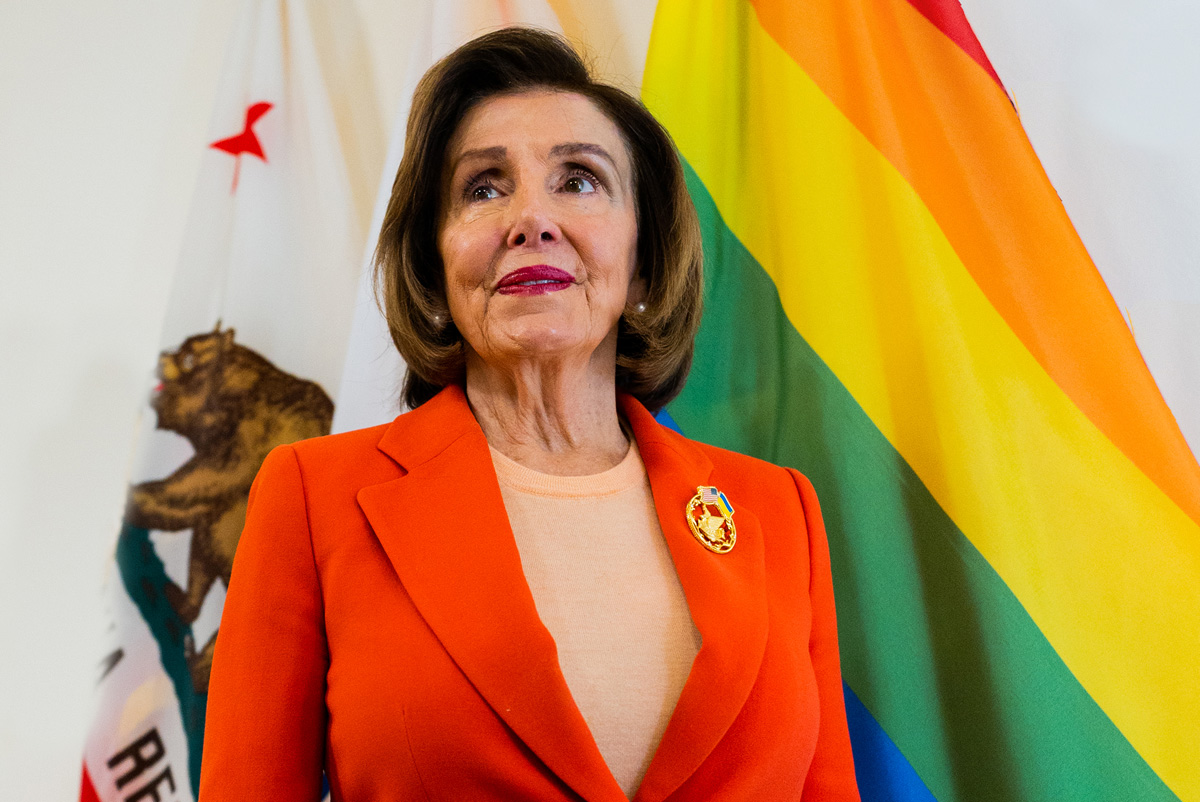
For nearly four decades, House Speaker Emerita Nancy Pelosi (D-Calif.) has been one of the most influential champions of LGBTQ rights in American politics.
The former U.S. House of Representatives speaker helped lead landmark LGBTQ legislation through Congress; including the repeal of “Don’t Ask, Don’t Tell,” passage of the Matthew Shepard and James Byrd Jr. Hate Crimes Prevention Act, and multiple House approvals of the Equality Act. She also played a central role in congressional efforts to combat HIV/AIDS and oppose restrictions targeting transgender Americans.
In an exclusive interview with the Washington Blade; Pelosi reflected on those accomplishments, the role grassroots activists played in achieving them, and the ongoing challenges facing the LGBTQ community during President Donald Trump’s second term.
When asked which LGBTQ-related achievement she is most proud of, Pelosi pointed not to a specific bill, but to the movement that made those victories possible — and the loud, strong-willed grassroots believers in a better America than the one they had found themselves in.
“Anything that we accomplished, whether it was fighting HIV and AIDS, ending discrimination, passing hate crimes legislation, or ending ‘Don’t Ask, Don’t Tell,’ would never have happened without outside mobilization,” Pelosi said, expressing gratitude for those who saw a problem and dared to speak its solution into existence. “Our inside maneuvering was important, but we couldn’t do our best job without the community. Every chance I get, I thank them for their patriotism because they make democracy function.”
Pelosi explained that her initial LGBTQ advocacy efforts were directly shaped by the LGBTQ community in the San Francisco area and by the HIV/AIDS epidemic that decimated the community during the 1980s.
The former speaker recalled arriving in Congress in 1987 and making HIV/AIDS a centerpiece of her agenda from the start.
“My first words on the House floor were that I had come here to fight HIV and AIDS,” Pelosi told the Blade. “People asked why I would make that my first statement. To me, that reaction showed just how much discrimination still existed and how much work remained to be done.”
She continued, explaining that advocating for San Francisco — with its once-vibrant LGBTQ community that was dying more with every passing day — became a joint effort between community-driven activists and government officials trying to manage and mitigate the crisis that claimed more American lives than the Vietnam War.
“When we were trying to bring the Democratic convention to San Francisco, people were saying they couldn’t come because of HIV/AIDS,” she said. “What emerged from that moment was community-based advocacy, community-based care, prevention, and research. Every success we had sprang from the community itself.”
Multiple times during the interview, Pelosi returned to those four pillars of the effort to combat HIV/AIDS: community-based advocacy, community-based care, prevention, and research.
She argued that the epidemic, despite its horrific toll, ultimately helped many Americans better understand and accept LGBTQ people in a society that had not been as tolerant.
“When families learned that a son or daughter was HIV-positive and gay, barriers started to break down,” Pelosi said. “Love prevailed in many cases. I actually give HIV/AIDS some credit for the acceptance of marriage equality because people began seeing these issues through the lens of family.”
Pelosi also highlighted the passage of federal hate crimes legislation as one of her — and the LGBTQ rights movement’s — most defining victories.
“Matthew Shepard’s mother came and spoke to members. (The late-former Massachusetts Congressman) Barney Frank told his story. We had to convince people that leadership means leading, not following,” Pelosi said. “That legislation was incredibly important because it forced people to confront the real consequences of hate.”
She said she refused pressure to remove transgender protections from the bill, despite promises from others that it would pass more easily if lawmakers only protected what they viewed as the least vulnerable groups.
“People told me, ‘You can pass this in a minute if you take out trans,'” Pelosi recalled. “I said, ‘I won’t pass it in 100 years because I’m not ever taking out trans.’ We passed it with trans protections included.”
The Blade also asked Pelosi about the stalled passage of the Equality Act — which would add federal protections for LGBTQ people through amendments to the Civil Rights Act of 1964 that would explicitly prohibit discrimination based on sex, sexual orientation, and gender identity. She expressed confidence that the Equality Act will eventually become law, though she acknowledged the political obstacles that have persisted since its creation in the 1970s.
In her office, among bowls of Ghirardelli chocolates and prints depicting national parks in her district, a large photo hangs on the wall showing Pelosi standing at the House rostrum with LGBTQ advocates beneath the words “#EQUALITY ACT” — photographic proof that she had already passed the landmark legislation in the House, if only the U.S. Senate had agreed.
“We passed it in the House again and again,” she said. “The Senate is more difficult because of the procedural hurdles, but we’re not stopping. We’ll stick with it until the job is done.”
The longtime Democratic leader also credited civil rights icon John Lewis with helping build support for the legislation when others argued the growing LGBTQ rights movement was, as one California Democratic legislator put it, “too fast, too much, too soon.”
“There were people who worried about opening up the Civil Rights Act to include LGBTQ protections,” Pelosi said. “John Lewis told us, ‘We can’t wait. We must do it now.’ He was instrumental in helping move that effort forward.”
Much of the conversation eventually turned to the Trump-Vance administration’s policies affecting trans Americans.
Pelosi argued that Executive Order 14183, “Prioritizing Military Excellence and Readiness,” which puts restrictions on trans military service weakens national security, and efforts to limit gender-affirming healthcare for trans children with the Executive Order “Protecting Children From Chemical and Surgical Mutilation” ignores the needs of families.
“When they diminish the ability of transgender people to serve in the military, they diminish our national security,” she said. “At the same time, families are being told they can’t get the care their children need. That is deeply troubling.”
She recounted hearing testimony from conservative parents whose views changed after their own children came out as trans — a transformation she said changed hearts and minds, even among people she had once seen wearing red MAGA hats.
“One mother told us she was a Trump supporter until her child needed medical care and her state wouldn’t allow it,” Pelosi said. “She said she had to leave Texas to care for her child. Hearing stories like that reminds people that these are families, not political talking points.”
Pelosi described efforts to restrict healthcare access for trans youth as both discriminatory and morally wrong.
“Some of the things they’re doing by refusing to support clinics that meet the needs of trans kids are sinful,” she said. “I’m a religious person, and I believe every child is God’s child. We have a responsibility to meet their needs.”
Asked what she would say to people who oppose LGBTQ equality, Pelosi returned to a theme that surfaced throughout the interview: love.
“I’ve seen families completely transform when these issues become personal,” she said. “People who once opposed HIV/AIDS funding became advocates when someone they loved was affected. Love has a way of changing hearts.”
As for how she hopes history remembers her role in the movement, Pelosi again shifted attention away from herself and toward activists.
“People were dying, and the community demanded action,” she said. “I hope people remember that the progress we made came from the very vocal participation of LGBTQ people and their allies. I was honored that they trusted me to carry that fight in Congress.”
Pelosi, who has announced she will not seek reelection and plans to retire from the House in 2027, said the struggle for equality is far from over.
“Every major expansion of rights in this country has been a long struggle,” she said. “We’ve laid a foundation, but there is still more work to do. We still have to pass the Equality Act.”
When asked what she credits for the change in public understanding and the growth of the LGBTQ movement, she said respect lies at its foundation.
“This month, Pride Month, people would say to me, ‘It’s easy for you because you’re from San Francisco, and San Francisco is so tolerant,'” Pelosi said. “And I would say to them, ‘Tolerant to me is a condescending word.’ Tolerance is a good word writ large, but in terms of the subject, it’s not about tolerance — it’s about respect. Respect is what made it almost inevitable that I would have nothing but enthusiasm for what I was doing. We don’t just respect — we take pride in our community. But that pride springs from respect that people have to have for everything, including the differences that they see.”
Congress
Ogles faces bipartisan backlash over anti-gay social media post
Tenn. congressman blamed the comment on staffer
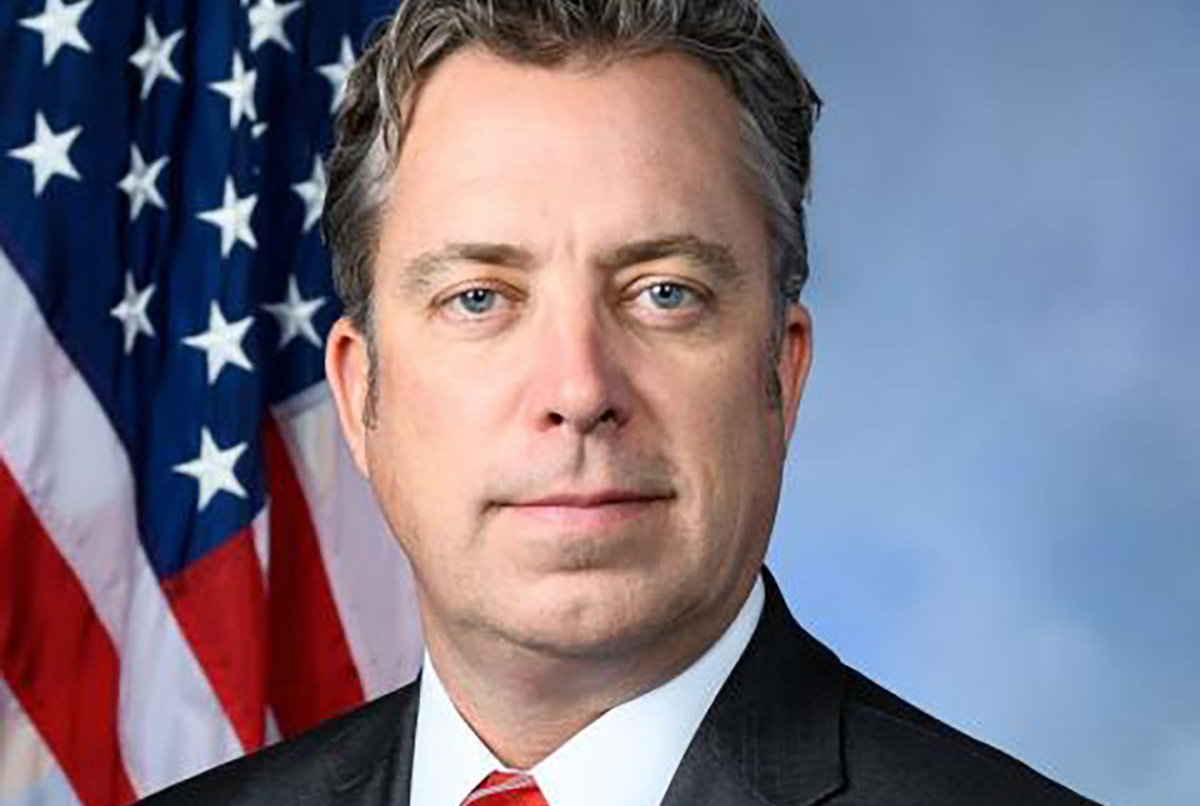
U.S. Rep. Andy Ogles (R-Tenn.), who represents Tennessee’s 5th Congressional District, is facing backlash from LGBTQ advocates and fellow Republicans after a social media post declared that “homosexuality has no place in America.”
“Homosexuality has no place in America. Happy Nuclear Family Month,” the congressman wrote in a post on X that was later deleted.
According to the Williams Institute at UCLA School of Law, an estimated 6.3 percent of U.S. adults identify as LGBTQ.
Following widespread criticism, Ogles removed the post and blamed it on a staff member.
“The post was stupid, hurtful and a complete distraction from my America First focus. The employee has been reprimanded,” Ogles said in a statement.
The Washington Blade reached out to Ogles’s office for comment but did not receive a response by press time.
Among those condemning the message was U.S. Rep. Mike Lawler (R-N.Y.), who called it “absolutely idiotic” in a social media post.
“Homosexuality exists. In America,” Lawler wrote on X. “In fact, Andy, you have family, friends, neighbors, colleagues, and constituents who are gay and lesbian. It doesn’t make them less than or somehow unworthy of being an American.”
U.S. Sen. Ted Cruz (R-Texas) also criticized Ogles’s remarks.
“For all of recorded history, homosexuals have been a part of humanity,” Cruz told TMZ DC. “I think the behavior of consenting adults is their business.”
Chris Sanders, the executive director for the Tennessee Equality Project and Tennessee Equality Project Foundation provided a statement to the Blade about Ogles’s comment.
“The Tennessee Nuclear Family Month resolution has really backfired on conservatives by ensnaring Congressman Ogles in scandal. He used the resolution as a pretext to say that our community doesn’t belong in America, resulting in incredible backlash from across the partisan divide,” Sanders said. “It is a good opportunity for him to pause and reflect on whether it’s time for him to resign. Fighting one’s own constituents is not the purpose of serving in Congress.”
Human Rights Campaign Senior Press Secretary Jarred Keller provided a statement to the Blade regarding Ogles’s comments.
“LGBTQ+ people are woven into the fabric of America, and any politician who questions that is severely out of touch with reality. When so many people are worried about whether they can afford gas to get to work or groceries for their families, the last thing we need is right-wing Republicans targeting marginalized communities with hateful attacks,” Keller said. “Representative Ogles should spend less time attacking LGBTQ+ people and start addressing the issues that actually matter, because last I checked, our community isn’t the reason families are struggling to make ends meet.”
The controversy comes as Tennessee continues to advance legislation affecting LGBTQ residents. The state already has several laws on the books that LGBTQ advocates have criticized, including the Adult Entertainment Act, enacted in 2023, which restricts certain “adult cabaret performances.”
Lawmakers have also introduced additional measures this legislative session, including the “No Pride Flag or Month Act,” which would prohibit state employees, volunteers, and agents from displaying Pride flags or participating in Pride observances while acting in an official capacity.
Another proposal, the “Banning Bostock Act” would seek to limit the application of state anti-discrimination protections based on the U.S. Supreme Court’s decision in Bostock v. Clayton County. Tennessee lawmakers have also passed other measures restricting LGBTQ rights and access to gender-affirming health care.

Eswatini’s government ordered to allow LGBTQ group to legally register

Does Pride decor resemble Trump’s design aesthetic?

Nearly 6,000 turn out for Pride Night Out at the Nationals

White House to end PEPFAR funding for South Africa

Washington Blade names new publisher

Union leader files assault complaint against gay Md. delegate after fight at early-voting site

PHOTOS: 2026 Capital Pride Parade

US no longer refuge for LGBTQ refugees

Cool convertibles