Local
Top 10 local stories of 2021
Hate crimes, book bans, and Nellie’s protests
#10: Gay Asian man, parents assaulted in Northwest
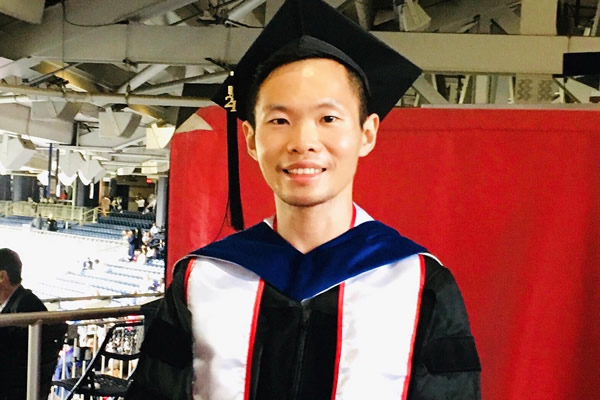
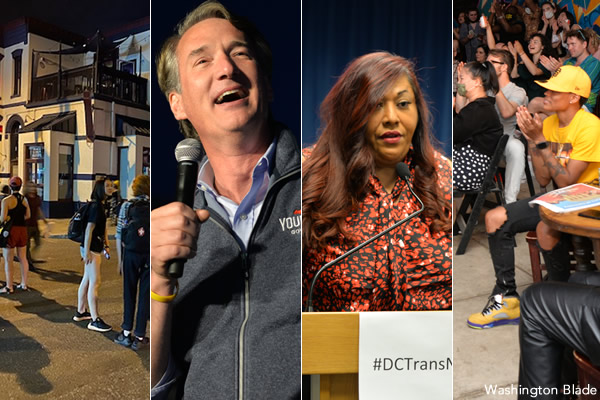
A gay Asian man and his parents were treated and released from a local hospital after they were attacked and assaulted on Aug. 7 on a street near the Washington National Cathedral by a male assailant who shouted homophobic and anti-Asian slurs, according to D.C. police and court records.
Charging documents filed in D.C. Superior Court state that D.C. police, who arrived on the scene a short time after the attack, arrested D.C. resident and American University graduate student Patrick Trebat, 38, on one count of felony assault, two counts of simple assault, and one count of destruction of property. The charging document says Trebat allegedly damaged the cell phone of Sean Lai, 30, an out gay man of Chinese ancestry, as he allegedly punched and kicked Lai and Lai’s elderly parents on the 3700 block of Fulton St., N.W. while shouting the words “faggots” and “You’re not Americans.”
Prosecutors with the U.S. Attorney’s Office changed the charges to two counts of felony assault with significant bodily injury and listed the incident as an anti-Asian bias related crime. American University in October announced Trebat was no longer a student at the school.
#9: D.C., Md, Va. pass laws banning panic defense
The D.C. Council and the Maryland and Virginia General Assemblies each passed their own laws in 2021 banning the use of the so-called LGBTQ panic defense in criminal trials.
LGBTQ rights organizations and legal experts have said attorneys representing defendants charged with committing violent crimes against LGBTQ people, including murder, have used the panic defense to confuse juries into finding them not guilty by arguing that their clients committed an act of violence against an LGBTQ person in a form of self-defense in a state of “panic” after they learned that the victim was an LGBTQ person. Supporters of banning the defense say it improperly places the blame for a violent act on the LGBTQ victim.
D.C. Mayor Muriel Bowser (D) and Virginia Gov. Ralph Northam (D) signed the legislation banning the panic defense after expressing strong support for the measures. Maryland Gov. Larry Hogan (R) declined to sign the Maryland bill but announced he would allow the bill to become law without his signature.
#8: Gay men arrested under Md. sodomy law in bookstore raid

Harford County, Md., Sheriff’s Office deputies arrested four men on a charge of Perverted Sexual Practice under the Maryland sodomy law during a May 20 raid on the Bush River Books & Video store in the town of Abington, located 25 miles north of Baltimore.
Four other men were charged with indecent exposure, and another was charged with solicitation for prostitution for a total of nine arrests during the May 20 raid that was prompted by complaints from nearby residents, according to a statement released by the Sheriff’s Office.
An attorney with the LGBTQ litigation group Lambda Legal said the sodomy arrests appeared to be a violation of the U.S. Supreme Court’s 2003 ruling declaring state sodomy laws unconstitutional. Lambda attorney Greg Nevins said that although the Supreme Court ruling does not cover acts of sodomy committed in public places, the men arrested in the May 20 raid engaged in alleged consenting sexual acts in a locked video booth, which Sheriff’s deputies unlocked after obtaining keys from a bookstore employee. He said it would be up to a judge to decide whether the video booths could be considered a private space as argued by attorneys representing the arrested men, who were released while awaiting court appearances.
The bookstore raid, meanwhile, drew attention to a little noticed development that the Maryland General Assembly in 2020 repealed only one of Maryland’s two antiquated sodomy statutes, the one outlawing anal sex. At the request of conservative Republican lawmakers, the General Assembly left in place Maryland’s Unnatural or Perverted Sexual Practice Act, which outlaws oral sex. LGBTQ supportive Maryland House of Delegates Member David Moon (D-Montgomery County) said he plans to introduce a bill in 2022 to repeal that statute.
#7: Loudoun County schools’ trans nondiscrimination policy under fire
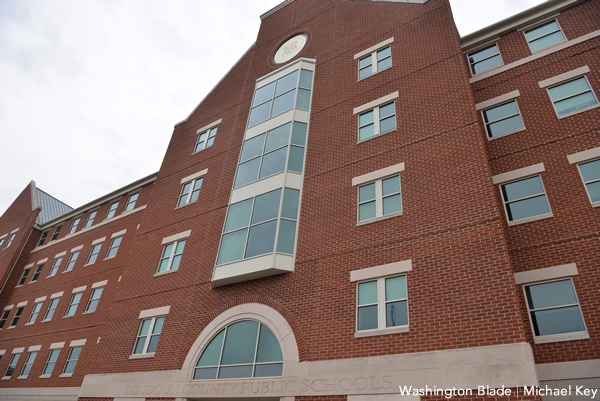
The Loudoun County, Va., public school system’s policy of allowing students to use the bathroom or locker room that matches their gender identity came under fire in October after news surfaced that a 15-year-old “gender fluid” boy allegedly sexually assaulted two girls in different high schools.
Law enforcement officials said one of the assaults allegedly occurred on May 28 in the girl’s bathroom at Stone Bridge High School in Ashburn, Va., while the boy was dressed in a skirt. The other assault allegedly occurred on Oct. 6 in a vacant classroom at Broad Run High School, also in Ashburn, after the boy was transferred there while facing charges for the first assault.
“The sexual assault on our daughter and the subsequent sexual assault by the same individual were both predictable and preventable,” the parents of the girl involved in the first alleged assault said in a statement released by their attorney. “Subsequent to the sexual assault on our daughter, Loudoun County Public Schools formalized the policy regarding restroom use that was easily exploitable by a potential sexual assailant,” the parents’ statement says.
The LGBTQ advocacy group Equality Loudoun released its own statement saying sexual assault cases should be prosecuted to the fullest extent of the law regardless of the sexual orientation or gender identity of the perpetrator. However, the group said allegations that the perpetrator of the two school assaults was transgender or genderfluid had not been verified. “Attempts to shift the blame of this incident to any individual, group, or policy – other than the alleged perpetrator – does a grave disservice to the victims of these crimes and already marginalized youth in our community,” the Equality Loudoun statement says.
#6: Supreme Court upholds Va. trans rights ruling
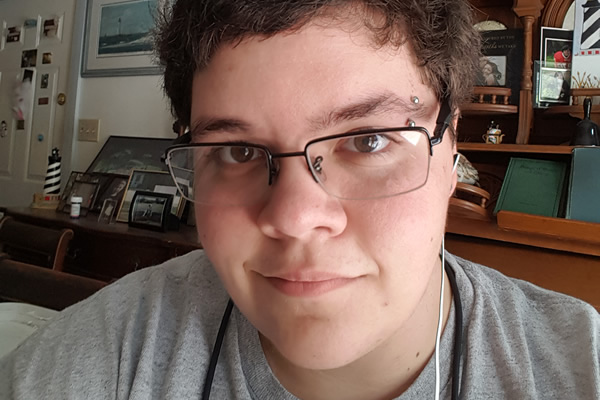
The U.S. Supreme on June 28 refused to hear an appeal by the Gloucester County, Va., School Board challenging a lower court ruling that transgender former high school student Gavin Grimm had a legal right to use the men’s bathroom at his high school. The high court’s decision not to hear the case leaves in place U.S. district court and U.S. appeals court rulings declaring the school board violated federal law and the Equal Protection Clause of the U.S. Constitution by prohibiting Grimm from using the same bathrooms as other boys and forcing him to use separate bathrooms. The ACLU, which represented Grimm in his more than five-year legal battle that continued after his high school graduation, called the development a major victory for the rights of trans students.
Four months after the Supreme Court’s action, the Gloucester School Board agreed to settle the case by paying Grimm $1.3 million to cover attorney’s fees that the ACLU says the school board is responsible for.
#5: Casa Ruby shakeup
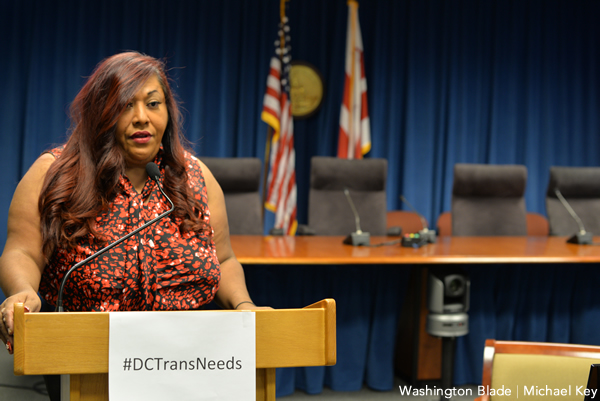
Ruby Corado, the founder and executive director of D.C.’s LGBTQ community services center Casa Ruby, announced in a Facebook live broadcast in October that she had resigned from her executive director’s position. Corado stated in her broadcast that her resignation was in response to an ongoing dispute with the D.C. government that resulted in a decision by the city one week earlier to discontinue an $850,000 annual city grant to fund Casa Ruby’s emergency low barrier shelter for homeless LGBTQ youth and adults.
Corado called the decision by the D.C. Department of Human Services not to renew the grant for fiscal year 2022 an act of retaliation based, in part, on what she says was her refusal to agree to a request by the city agency to move the Casa Ruby shelter to a neighborhood unsafe for trans women and LGBTQ youth. The DHS has declined to disclose its reason for ending the grant, saying only that it has arranged for other LGBTQ supportive organizations to carry out LGBTQ-related homeless services.
Longtime D.C. transgender rights advocate Alexis Blackmon, who had been serving as Casa Ruby’s Government Affairs Director, was named the organization’s interim executive director. Corado said that, following a six-month sabbatical, she plans to organize fundraising efforts to support Casa Ruby’s programs independent of D.C. government funding.
#4: GOP victories in Va. could endanger LGBTQ rights
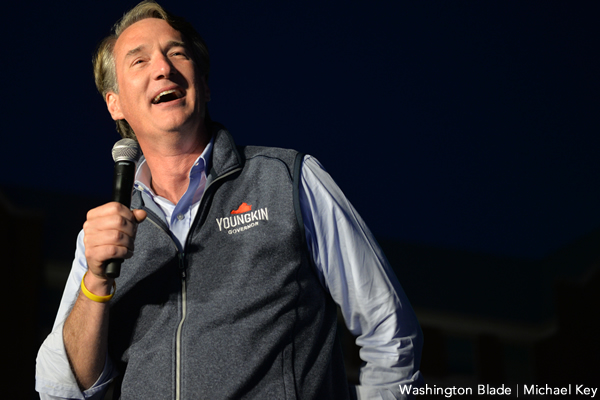
The close but decisive wins in the November election in Virginia by Republicans Glenn Youngkin as governor, Winsome Sears as lieutenant governor, and Jason Miyares as attorney general and Republicans winning control of the Virginia House of Delegates raises questions about whether the recent sweeping advances in LGBTQ rights in Virginia put in place by the outgoing Democratic Gov. Ralph Northam, and the Democratic-controlled General Assembly could be in jeopardy.
Youngkin, who defeated Democratic candidate and former Virginia Gov. Terry McAulliffe, expressed opposition to nondiscrimination protections enacted by the Democratic-controlled General Assembly in 2020 for transgender and nonbinary students in the state’s public schools. He has also expressed opposition to same-sex marriage while saying he would not likely take steps to repeal the legal standing of marriage equality.
But of greatest concern among Virginia’s LGBTQ activists is Attorney General-elect Miyares’s voting record on LGBTQ issues in his role as a member of the state’s House of Delegates from the Virginia Beach area since 2016. Since Democrats took control of the legislature in January 2020, Miyares has voted against nearly all of the LGBTQ supportive bills passed during that time, including bills adding LGBTQ people to the state’s anti-discrimination law, adding LGBTQ people to the state’s hate crimes law, banning the use of the so-called LGBTQ panic defense in criminal trials, restricting the use of conversion therapy for minors, and repealing the state’s longstanding but unenforceable statute banning same-sex marriage.
With Democrats retaining control of the Virginia Senate, Republican elected officials hostile to LGBTQ rights cannot — without the unlikely defection of Democratic lawmakers — repeal these and other LGBTQ supportive laws in the state. But activists have expressed concern that, as attorney general, Miyares might be in a position to curtail the enforcement of the LGBTQ supportive laws.
Among the few positive outcomes of the Virginia election, according to LGBTQ activists, was that the three openly LGBTQ members of the House of Delegates, each of whom are Democrats, won re-election, including Danica Roem of Manassas, who is the first openly trans person to be seated in any state legislature in the U.S.
#3: LGBTQ books removed, reinstated in Fairfax schools

The Fairfax County, Va., Public Schools announced in November that it had returned two LGBTQ-themed books to the libraries of the school system’s high schools after temporarily removing the books in response to objections from some parents who claimed they included sexually explicit content inappropriate for students.
The two books, “Lawn Boy,” a novel by author Jonathan Evison, and “Gender Queer: A Memoir,” an autobiography by non-binary author Maia Kobabe, were deemed to be important works of literature suitable to young adults following a thorough review by two school system committees, according to an announcement by Fairfax Public Schools officials. The officials said that although the books include descriptions of sexual acts, they do not constitute pornography and do not promote pedophilia as claimed by some parents and others opposing the books.
The decision to reinstate the books “reaffirms Fairfax Public Schools’ ongoing commitment to provide diverse reading materials that reflect our student population, allowing every child an opportunity to see themselves reflected in literary characters,” a statement by school officials says.
News of the controversy surrounding the two books in the Fairfax County school libraries triggered efforts by conservative groups to ban LGBTQ-themed books in other school districts throughout the country.
#2: D.C. LGBTQ bars and events rebound as COVID restrictions eased
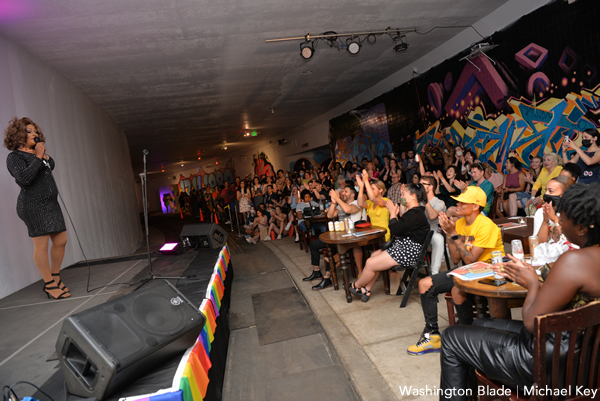
Owners of the city’s gay bars and LGBTQ friendly bars and restaurants joined nightlife businesses across the city in rejoicing over D.C. Mayor Muriel Bowser’s announcement in May that restaurants and bars could resume operations at full capacity and return to pre-pandemic operating hours on May 21.
The mayor’s announcement followed what nightlife businesses said was severe financial hardship caused by the earlier full business shutdowns due to COVID public health restrictions followed by a partial reopening with strict limits of only 25 percent of the normal number of customers inside bars and restaurants and a ban on standing in bars or sitting at bar stools.
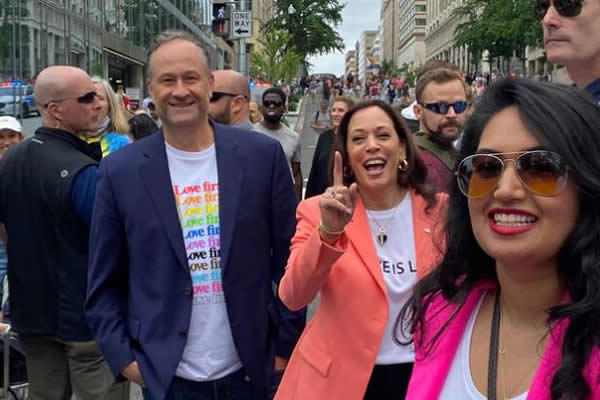
The lifting of the bar, restaurant and other nightlife business restrictions in May was followed by the city’s decision to lift all restrictions on indoor and outdoor events on June 11. That cleared the way for D.C.’s Capital Pride Alliance to organize several scaled back LGBTQ Pride events, including a June 12 Pride Walk, which began at Dupont Circle and traveled to Freedom Plaza, where a rally was held. The Walk drew widespread attention when U.S. Vice President Kamala Harris and her husband joined the walk as it approached Freedom Plaza.
The enthusiasm over the full reopening of LGBTQ nightlife venues, especially the bars, became evident with long lines of patrons waiting to get into some of the bars that were filled to capacity.
#1: Nellie’s hit with protests after Black woman dragged down stairs
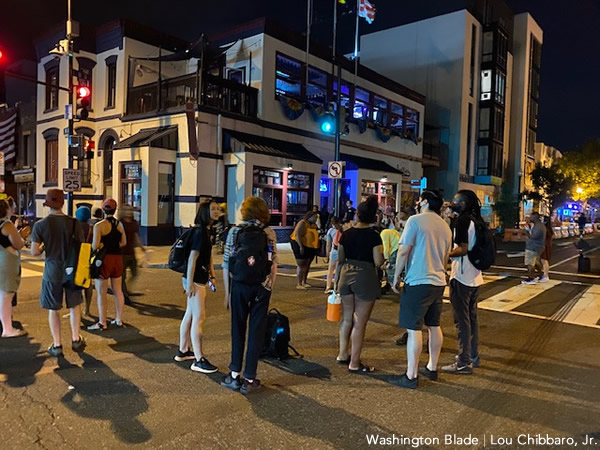
A June 13 incident in which a black woman was dragged down a flight of stairs by a security guard during a brawl that broke out at the D.C. gay bar Nellie’s Sports Bar led to a boycott and months of protests against the bar, an investigation into the incident by the city’s liquor board, and charges by some LGBTQ activists that Nellie’s and other D.C. gay bars had racially biased policies and practices.
The action by the security guard was captured on video taken by one of the customers on their phone that went viral on social media, prompting LGBTQ activists and Black Lives Matter organizers to demand that Nellie’s take appropriate action to review its security procedures. Nellie’s issued an apology for the incident the following day and announced it had fired the private security company whose employee, who is Black, dragged college student Keisha Young, 22, down the stairs. Nellie’s also announced it would temporarily close for business to assess what happened and develop plans to reopen as a safer space for all members of the community.
After two months of staging Friday night protests outside Nellie’s from June through most of August, protest leaders announced at a community meeting that they would discontinue the protests but continue to ask the community to boycott Nellie’s.
Nellie’s reopened 35 days after its self-imposed closing. But on Oct. 20, the D.C. Alcoholic Beverage Control Board, following an investigation into the June 13 incident, approved a compromise agreement with Nellie’s that called for Nellie’s to pay a $5,000 fine and serve a seven-day license suspension for violations that liquor board investigations found had occurred in Nellie’s handling of the fight on its premises that led to Young being dragged down the stairs.
An order issued by the ABC Board said the license suspension would take place from Dec. 20-26 of this year.




Virginia
DOJ seeks to join lawsuit against Loudoun County over trans student in locker room
Three male high school students suspended after complaining about classmate
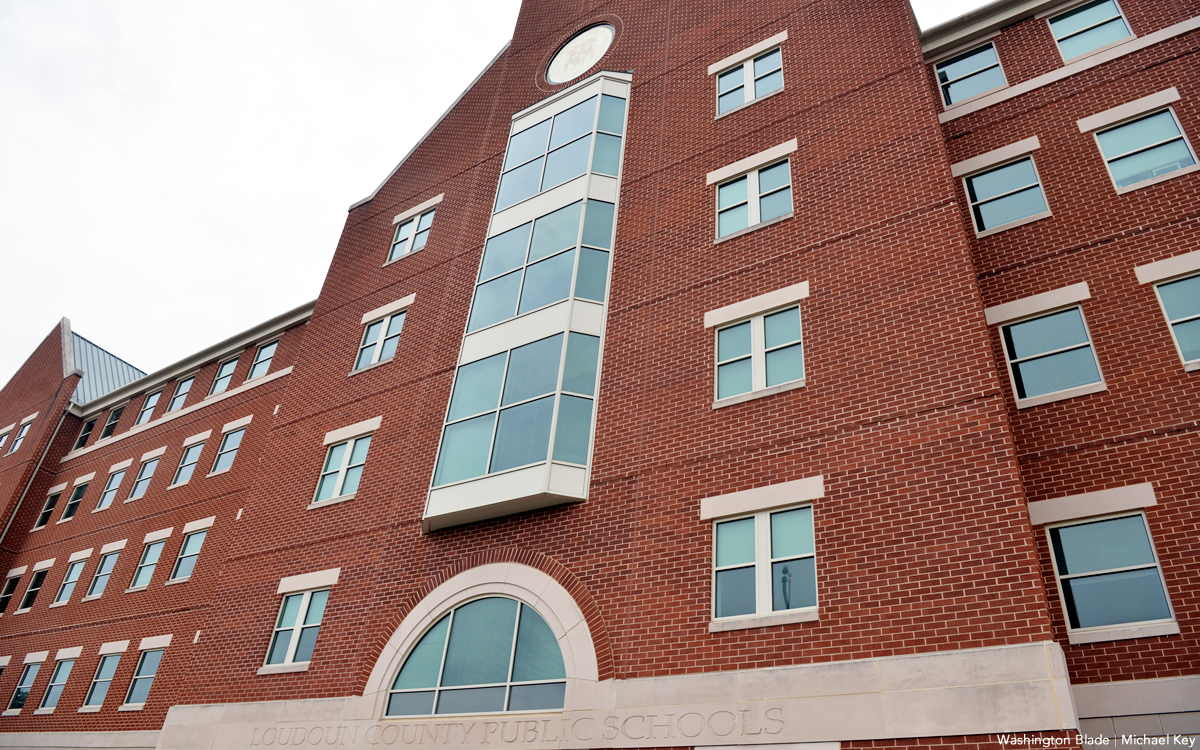
The Justice Department has asked to join a federal lawsuit against Loudoun County Public Schools over the way it handled the case of three male high school students who complained about a transgender student in a boys’ locker room.
The Washington Blade earlier this year reported Loudoun County public schools suspended the three boys and launched a Title IX investigation into whether they sexually harassed the student after they said they felt uncomfortable with their classmate in the locker room at Stone Bridge High School in Ashburn.
The parents of two of the boys filed a lawsuit against Loudoun County public schools in U.S. District Court for the Eastern District of Virginia in Alexandria. The Richmond-based Founding Freedoms Law Center and America First Legal, which White House deputy chief of staff Stephen Miller co-founded, represent them.
The Justice Department in a Dec. 8 press release announced that “it filed legal action against the Loudoun County (Va.) School Board (Loudoun County) for its denial of equal protection based on religion.”
“The suit alleges that Loudoun County applied Policy 8040, which requires students and faculty to accept and promote gender ideology, to two Christian, male students in violation of the Equal Protection Clause of the 14th Amendment to the U.S. Constitution,” reads the press release.
Assistant Attorney General Harmeet K. Dhillon of the Justice Department’s Civil Rights Division in the press release said “students do not shed their First Amendment rights at the schoolhouse gate.”
“Loudoun County’s decision to advance and promote gender ideology tramples on the rights of religious students who cannot embrace ideas that deny biological reality,” said Dhillon.
Outgoing Virginia Gov. Glenn Youngkin and outgoing Virginia Attorney General Jason Miyares in May announced an investigation into the case.
The Virginia Department of Education in 2023 announced the new guidelines for trans and nonbinary students for which Youngkin asked. Equality Virginia and other advocacy groups claim they, among other things, forcibly out trans and nonbinary students.
The U.S. Department of Education’s Office of Civil Rights in February launched an investigation into whether Loudoun County and four other Northern Virginia school districts’ policies in support of trans and nonbinary students violate Title IX and President Donald Trump’s executive order that prohibits federally funded educational institutions from promoting “gender ideology.”
District of Columbia
Capital Pride announces change in date for 2026 D.C. Pride parade and festival
Events related to U.S. 250th anniversary and Trump birthday cited as reasons for change

The Capital Pride Alliance, the D.C. based group that organizes the city’s annual LGBTQ Pride events, has announced it is changing the dates for the 2026 Capital Pride Parade and Festival from the second weekend in June to the third weekend.
“For over a decade, Capital Pride has taken place during the second weekend in June, but in 2026, we are shifting our dates in response to the city’s capacity due to major events and preparations for the 250th anniversary of the United States,” according to a Dec. 9 statement released by Capital Pride Alliance.
The statement says the parade will take place on Saturday, June 20, 2026, with the festival and related concert taking place on June 21.
“This change ensures our community can gather safely and without unnecessary barriers,” the statement says. “By moving the celebration, we are protecting our space and preserving Pride as a powerful act of visibility, solidarity, and resistance,” it says.
Ryan Bos, the Capital Pride Alliance CEO and President, told the Washington Blade the change in dates came after the group conferred with D.C. government officials regarding plans for a number of events in the city on the second weekend in June. Among them, he noted, is a planned White House celebration of President Donald Trump’s 80th birthday and other events related to the U.S. 250th anniversary, which are expected to take place from early June through Independence Day on July 4.
The White House has announced plans for a large June 14, 2026 celebration on the White House south lawn of Trump’s 80th birthday that will include a large-scale Ultimate Fighting Championship (UFC) event involving boxing and wrestling competition.
Bos said the Capital Pride Parade will take place along the same route it has in the past number of years, starting at 14th and T Streets, N.W. and traveling along 14th Street to Pennsylvania Ave., where it will end. He said the festival set for the following day will also take place at its usual location on Pennsylvania Avenue, N.W., between 2nd Street near the U.S. Capitol, to around 7th Street, N.W.
“Our Pride events thrive because of the passion and support of the community,” Capital Pride Board Chair Anna Jinkerson said in the statement. “In 2026, your involvement is more important than ever,” she said.
District of Columbia
Three women elected leaders of Capital Pride Alliance board
Restructured body includes chair rather than president as top leader
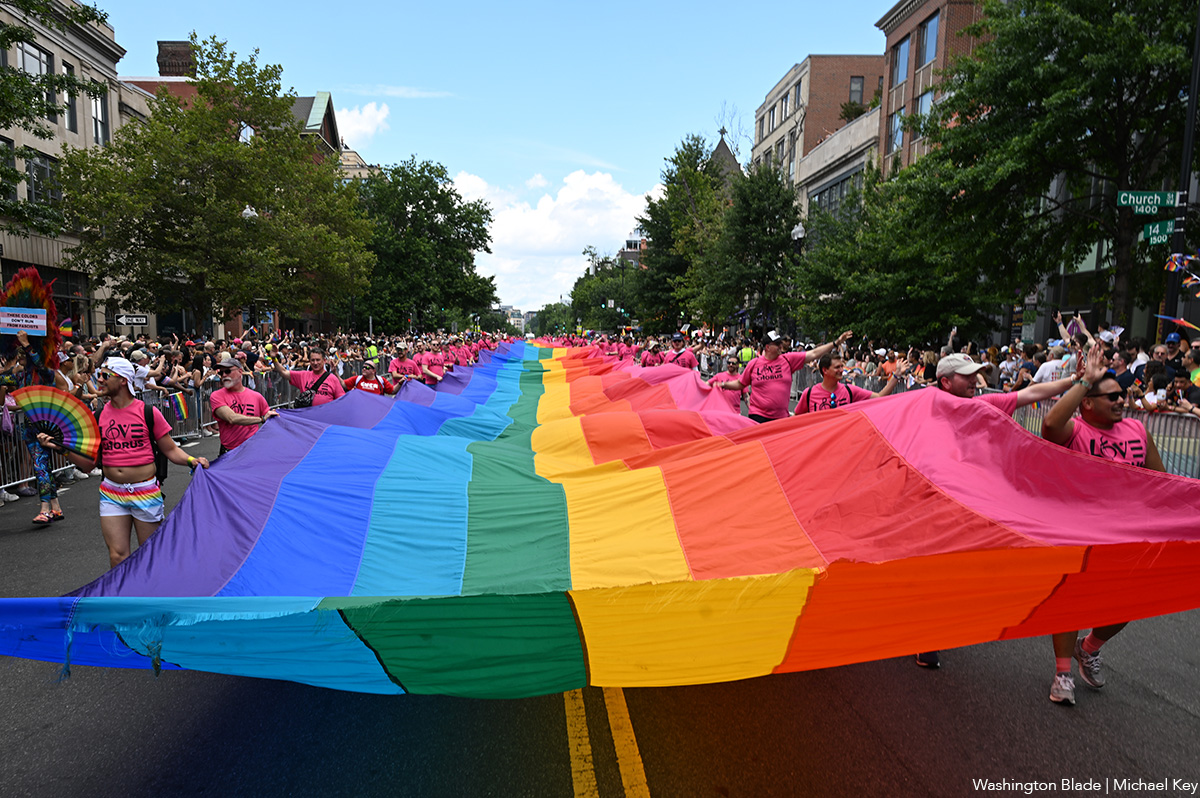
The Capital Pride Alliance, the D.C.-based group that organizes the city’s annual LGBTQ Pride events, announced it has restructured its board of directors and elected for the first time three women to serve as leaders of the board’s Executive Committee.
“Congratulations to our newly elected Executive Officers, making history as Capital Pride Alliance’s first all-women Board leadership,” the group said in a statement.
“As we head into 2026 with a bold new leadership structure, we’re proud to welcome Anna Jinkerson as Board Chair, Kim Baker as Board Treasurer, and Taylor Lianne Chandler as Board Secretary,” the statement says.
In a separate statement released on Nov. 20, Capital Pride Alliance says the restructured Board now includes the top leadership posts of Chair, Treasurer, and Secretary, replacing the previous structure of President and Vice President as the top board leaders.
It says an additional update to the leadership structure includes a change in title for longtime Capital Pride official Ryan Bos from executive director to chief executive officer and president.
According to the statement, June Crenshaw, who served as acting deputy director during the time the group organized WorldPride 2025 in D.C., will now continue in that role as permanent deputy director.
The statement provides background information on the three newly elected women Board leaders.
• Anna Jinkerson (chair), who joined the Capital Pride Alliance board in 2022, previously served as the group’s vice president for operations and acting president. “A seasoned non-profit executive, she currently serves as Assistant to the President and CEO and Chief of Staff at Living Cities, a national member collaborative of leading philanthropic foundations and financial institutions committed to closing income and wealth gaps in the United States and building an economy that works for everyone.”
• Kim Baker (treasurer) is a “biracial Filipino American and queer leader,” a “retired, disabled U.S. Army veteran with more than 20 years of service and extensive experience in finance, security, and risk management.” She has served on the Capital Pride Board since 2018, “bringing a proven track record of steady, principled leadership and unwavering dedication to the LGBTQ+ community.”
• Taylor Lianne Chandler (Secretary) is a former sign language interpreter and crisis management consultant. She “takes office as the first intersex and trans-identifying member of the Executive Committee.” She joined the Capital Pride Board in 2019 and previously served as executive producer from 2016 to 2018.
Bos told the Washington Blade in a Dec. 2 interview that the Capital Pride board currently has 12 members, and is in the process of interviewing additional potential board members.
“In January we will be announcing in another likely press release the full board,” Bos said. “We are finishing the interview process of new board members this month,” he said. “And they will take office to join the board in January.”
Bos said the organization’s rules set a cap of 25 total board members, but the board, which elects its members, has not yet decided how many additional members it will select and a full 25-member board is not required.
The Nov. 20 Capital Pride statement says the new board executive members will succeed the organization’s previous leadership team, which included Ashley Smith, who served as president for eight years before he resigned earlier this year; Anthony Musa, who served for seven years as vice president of board engagement; Natalie Thompson, who served eight years on the executive committee; and Vince Micone, who served for eight years as vice president of operations.
“I am grateful for the leadership, dedication, and commitment shown by our former executive officers — Ashley, Natalie, Anthony, and Vince — who have been instrumental in CPA’s growth and the exceptional success of WorldPride 2025,” Bos said in the statement.
“I look forward to collaborating with Anna in her new role, as well as Kim and Taylor in theirs, as we take on the important work ahead, prepare for Capital Pride 2026, and expand our platform and voice through Pride365,” Bos said.

PHOTOS: The Holiday Show

The best books to give this holiday season

Studio’s ‘Mother Play’ draws from lesbian playwright’s past

Choose U ambassadors share lived experiences with HIV, personal reflections, and insights

DOJ seeks to join lawsuit against Loudoun County over trans student in locker room

EXCLUSIVE: George Santos speaks out on prison, Trump pardon, and more

Victory Institute honors transgender Spanish senator in D.C.

The beginning of the fall of Trump

Markey reintroduces International Human Rights Act in Senate