Virginia
Trans lawmaker impacted by Va. redistricting changes
Roem placed in new district, will address political future after session ends
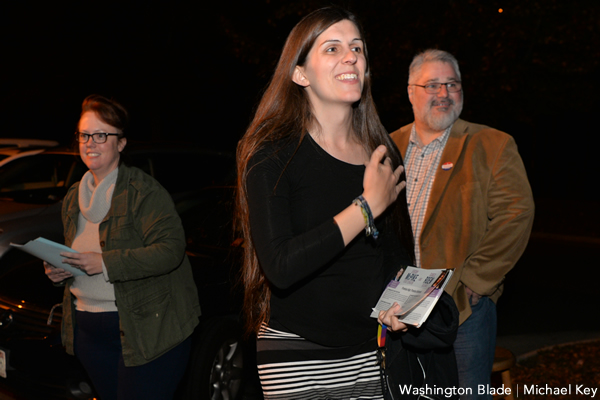
Sweeping changes in Virginia’s state legislative and congressional districts brought about by a redistricting order issued on Dec. 28 by the Virginia Supreme Court have significantly changed the makeup of the Manassas area district of Virginia House of Delegates member Danica Roem (D).
In 2018, Roem became the nation’s first out transgender person to be seated in a U.S. state legislature after she defeated longtime Republican incumbent and LGBTQ rights opponent Bob Marshall in the November 2017 election.
Roem, who is one of four out LGBTQ members of the Virginia General Assembly, appears to have been impacted the most by the redistricting among her three LGBTQ colleagues.
Gay state Sen. Adam Ebbin (D-Alexandria), gay state Del. Mark Sickles (D-Fairfax County), and lesbian state Del. Dawn Adams (D-Richmond area) were assigned new districts that retained most of their existing Democratic constituents or include new Democratic leaning areas, according to sources familiar with their districts.
State Del. Joshua Cole (D-Fredericksburg area), who identifies as bisexual, ended his tenure as a delegate this week after losing his re-election bid in the November election to Republican Tara Durant by 647 votes. The state’s redistricting changes place both Cole and Durant in a newly created 65th District that Stafford County Democratic Party activist Matt Rowe said makes the highly competitive district slightly more Democratic leaning.
Rowe said Cole, who the Blade was unable to reach for comment this week, indicated he plans to run again for the delegate seat in the next election.
The Virginia Supreme Court assumed the responsibility of redrawing the state’s congressional and state legislative districts under a state constitutional amendment approved by voters in a 2020 referendum. The redistricting measure approved by voters assigns the authority of creating the new districts to a bipartisan redistricting commission made up equally of Democrats and Republicans.
But the commission became deadlocked after each of the two-party representatives was unable to agree on a redistricting plan. Under a provision of the redistricting law, if the commission cannot reach an agreement, the matter is sent to the state Supreme Court, which appointed two redistricting experts called masters to redraw the state’s congressional and state legislative district maps to conform with population changes determined by the 2020 U.S. Census. One of the masters was selected by Democrats and the other by Republicans, according to a statement released by the court.
“We drew maps which did not unduly favor either party,” special masters Sean Trende and Bernard Grofman said in a statement. “These maps came about as part of a partisan and incumbency blind process based on good government map making,” the two said.
The changes made by the two masters carved Roem’s existing District 13 into three new districts – District 20, 21, and 22. Roem, who lives in the new District 20, is now the state delegate representing that district. Under rules established under the new redistricting law approved by voters, all the new districts took effect immediately on Dec. 28.
In response to a request by the Blade for her assessment of these changes, Roem said her new district consists of just six and a half of the 18 voter precincts that made up her former District 13. The other two-thirds of the precincts in her new district include residents that she had not represented before in Prince William County.
It couldn’t immediately be determined whether her new constituents are mostly Democrats, Republicans, independents, or a mix of all three.
“I live in the new House District 20 and will deal with my political future after this year’s Virginia General Assembly session ends in March,” Roem told the Blade in an email message.
“I’m confident the people of greater Prince William would continue to support me as a lifelong Prince William County resident from Manassas who served as their newspaper reporter for more than nine years from 2006-2015 before earning three terms now to serve them as a member of the Virginia House of Delegates,” she said.
“During my first two terms in office, the governor signed 23 of my bills into law – all with bipartisan support – including three bills to advance LGBTQ equality, so I’ve been effective at delivering for all of my constituents, LGBTQ residents included,” Roem said.
Gay Democratic activist Jim O’Connor of Prince William County, where Roem’s new district is located, said he believes the voter makeup of the new district would likely make it possible for her to win re-election in 2023 or possibly in 2022. Rowe, who said he also follows Prince William County politics, said he too thinks Roem is in a good position to win re-election whether in 2022 or 2023.
A lawsuit filed in federal court by some redistricting opponents is calling for a special House of Delegates election in 2022 on grounds that the redistricting resulted in large numbers of residents being represented by lawmakers they had no opportunity to vote for in an election, which may be in violation of the U.S. Constitution. The lawsuit is expected to be resolved sometime early this year to make it known whether a special Virginia House of Delegates election will take place this year in addition to the regularly scheduled election in 2023.



Virginia
DOJ seeks to join lawsuit against Loudoun County over trans student in locker room
Three male high school students suspended after complaining about classmate
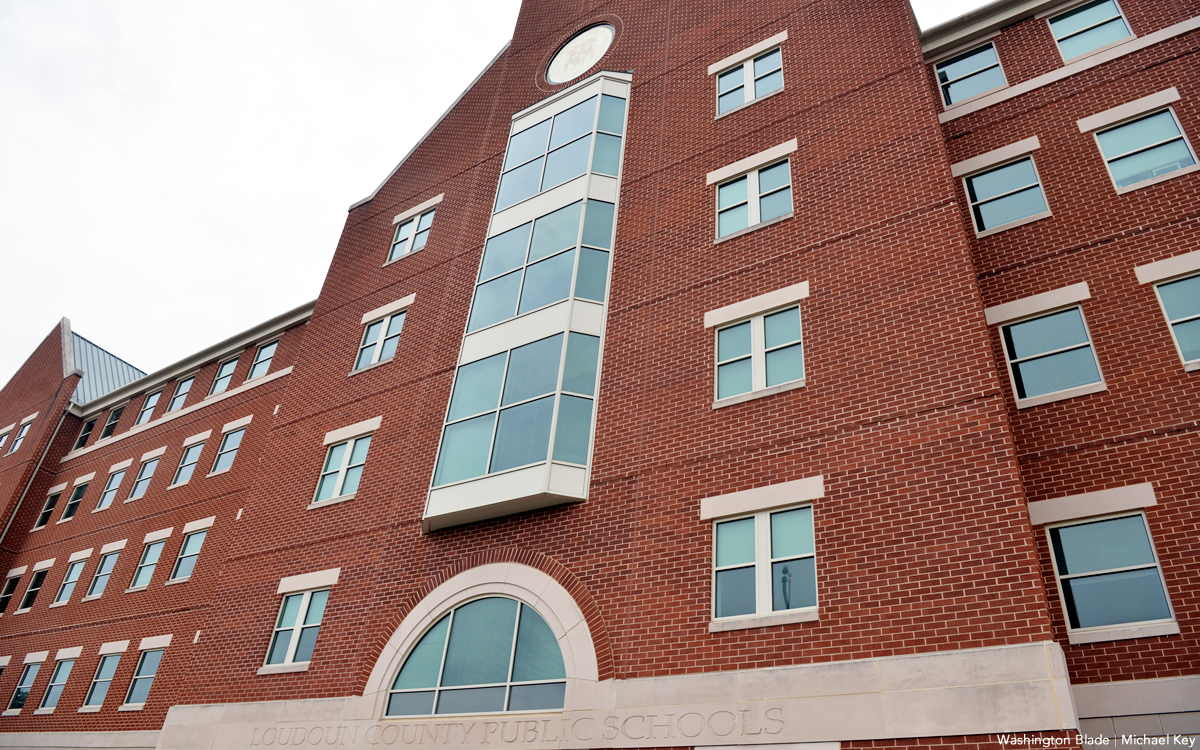
The Justice Department has asked to join a federal lawsuit against Loudoun County Public Schools over the way it handled the case of three male high school students who complained about a transgender student in a boys’ locker room.
The Washington Blade earlier this year reported Loudoun County public schools suspended the three boys and launched a Title IX investigation into whether they sexually harassed the student after they said they felt uncomfortable with their classmate in the locker room at Stone Bridge High School in Ashburn.
The parents of two of the boys filed a lawsuit against Loudoun County public schools in U.S. District Court for the Eastern District of Virginia in Alexandria. The Richmond-based Founding Freedoms Law Center and America First Legal, which White House deputy chief of staff Stephen Miller co-founded, represent them.
The Justice Department in a Dec. 8 press release announced that “it filed legal action against the Loudoun County (Va.) School Board (Loudoun County) for its denial of equal protection based on religion.”
“The suit alleges that Loudoun County applied Policy 8040, which requires students and faculty to accept and promote gender ideology, to two Christian, male students in violation of the Equal Protection Clause of the 14th Amendment to the U.S. Constitution,” reads the press release.
Assistant Attorney General Harmeet K. Dhillon of the Justice Department’s Civil Rights Division in the press release said “students do not shed their First Amendment rights at the schoolhouse gate.”
“Loudoun County’s decision to advance and promote gender ideology tramples on the rights of religious students who cannot embrace ideas that deny biological reality,” said Dhillon.
Outgoing Virginia Gov. Glenn Youngkin and outgoing Virginia Attorney General Jason Miyares in May announced an investigation into the case.
The Virginia Department of Education in 2023 announced the new guidelines for trans and nonbinary students for which Youngkin asked. Equality Virginia and other advocacy groups claim they, among other things, forcibly out trans and nonbinary students.
The U.S. Department of Education’s Office of Civil Rights in February launched an investigation into whether Loudoun County and four other Northern Virginia school districts’ policies in support of trans and nonbinary students violate Title IX and President Donald Trump’s executive order that prohibits federally funded educational institutions from promoting “gender ideology.”
Virginia
Repealing marriage amendment among Va. House Democrats’ 2026 legislative priorities
Voters approved Marshall-Newman Amendment in 2006

Democrats in the Virginia House of Delegates on Monday announced passage of a resolution that seeks to repeal a state constitutional amendment that defines marriage as between a man and a woman is among their 2026 legislative priorities.
State Del. Mark Sickles (D-Fairfax County) has introduced the resolution in the chamber. State Sen. Adam Ebbin (D-Alexandria) is the sponsor of an identical proposal in the state Senate.
Both men are gay.
Voters approved the Marshall-Newman Amendment in 2006.
Same-sex couples have been able to legally marry in Virginia since 2014. Republican Gov. Glenn Youngkin last year signed a bill that codified marriage equality in state law.
A resolution that seeks to repeal the Marshall-Newman Amendment passed in the General Assembly in 2021. The resolution passed again this year.
Two successive legislatures must approve the resolution before it can go to the ballot.
Democrats on Election Day increased their majority in the House of Delegates. Their three statewide candidates — Gov.-elect Abigail Spanberger, Lt. Gov.-elect Ghazala Hashmi, and Attorney General-elect Jay Jones — will take office in January.
“Virginians elected the largest House Democratic Majority in nearly four decades because they trust us to fight for them and deliver real results,” said House Speaker Don Scott (D-Portsmouth) on Monday in a press release that announced his party’s legislative priorities. “These first bills honor that trust. Our agenda is focused on lowering costs, lifting wages, expanding opportunity, protecting Virginians rights, and ensuring fair representation as Donald Trump pushes Republican legislatures across the country to manipulate congressional maps for partisan gain. House Democrats are ready to meet this moment and deliver the progress Virginians expect.”
Virginia
Ghazala Hashmi names Equality Virginia executive director to transition team
Narissa Rahaman will join Adam Ebbin, Mark Sickles on LG-elect’s committee.
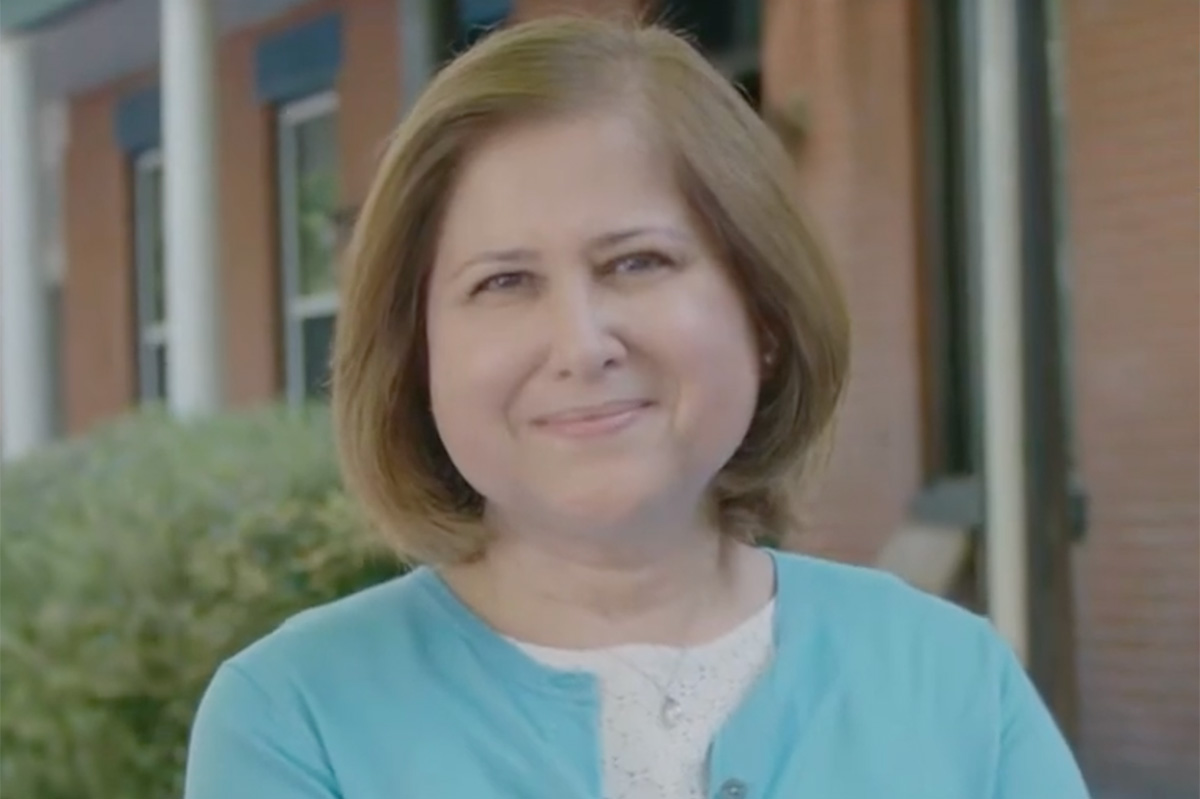
Virginia Lt. Gov.-elect Ghazala Hashmi has named Equality Virginia Executive Director Narissa Rahaman to her transition team.
State Sen. Adam Ebbin (D-Alexandria) and state Del. Mark Sickles (D-Fairfax County) are among those who Hashmi also named to her Transition Committee.
“I am honored to have this diverse group of leaders join our transition,” said Hashmi in a statement. “Their experience, perspective, and commitment to public service will help build an Office of the Lieutenant Governor that is responsive, innovative, and relentlessly focused on improving the lives of every Virginia resident.”
“Together, we will develop a thoughtful roadmap for the work ahead — one that ensures we are engaging communities, strengthening partnerships across the state, and preparing this office to serve with purpose and conviction from Day One,” she added. “I am grateful to each member for bringing time, expertise, and passion to this effort.”
Hashmi, a Democrat, defeated Republican John Reid, who is openly gay, on Nov. 4.
Hashmi will succeed outgoing Lt. Gov. Winsome Earle-Sears on Jan. 17.

PHOTOS: The Holiday Show

The best books to give this holiday season

Studio’s ‘Mother Play’ draws from lesbian playwright’s past

Choose U ambassadors share lived experiences with HIV, personal reflections, and insights

DOJ seeks to join lawsuit against Loudoun County over trans student in locker room

EXCLUSIVE: George Santos speaks out on prison, Trump pardon, and more

Victory Institute honors transgender Spanish senator in D.C.

The beginning of the fall of Trump

Markey reintroduces International Human Rights Act in Senate