Sports
The NFL embraces LGBTQ+ inclusion ahead of Super Bowl LVI
“LGBTQ athletes need to see more stories of athletes like them supported by their teammates because many are accepted just as they are”
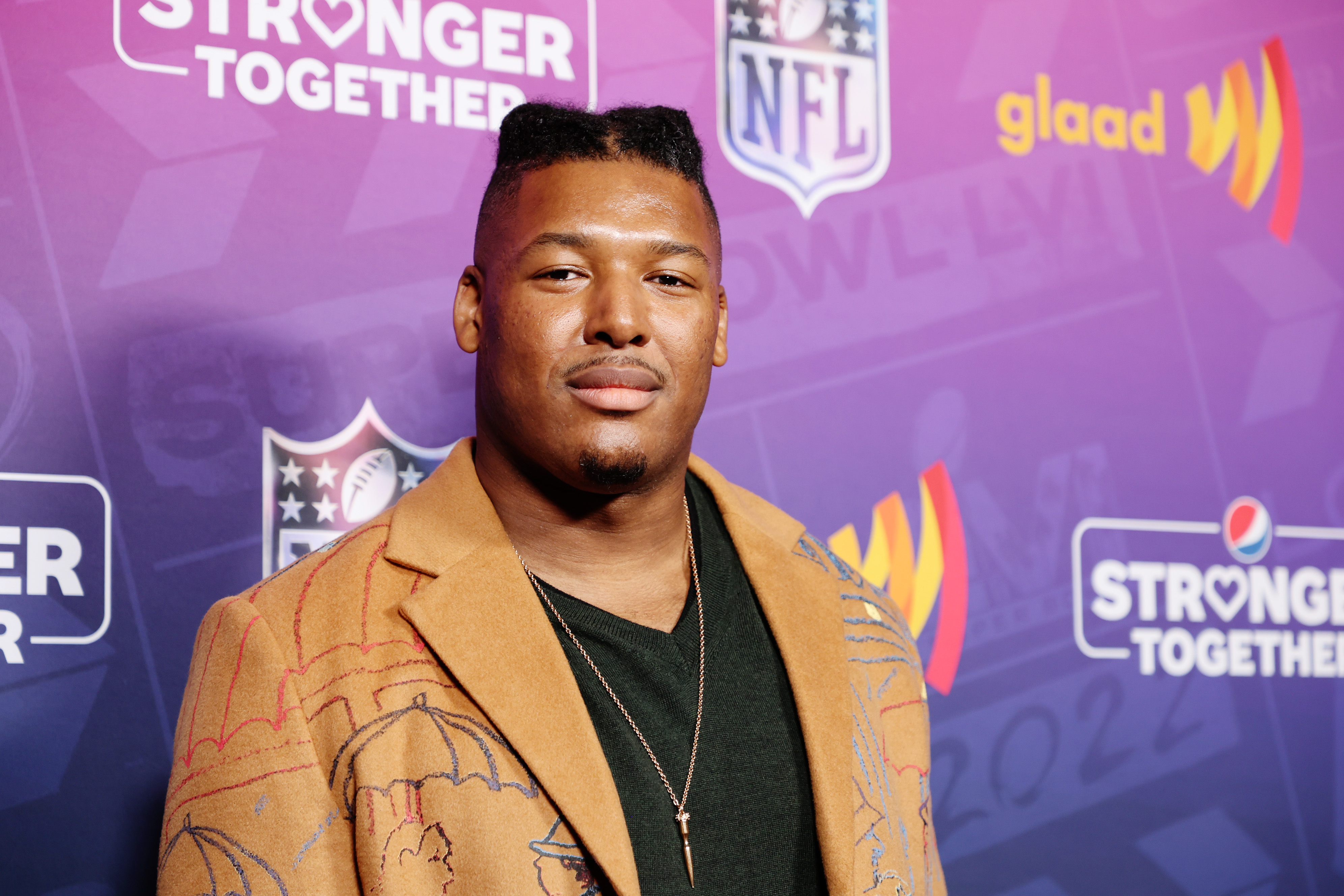
LOS ANGELES – LGBTQ+ History was made Thursday night atop the National Football League’s Los Angeles headquarters rooftop, overlooking the glittering new SoFi Stadium, site of Super Bowl LVI, as about 150 NFL players, sports professionals and fans mingled with supporters of GLAAD to celebrate the league’s now very public embrace of the LGBTQ+ community.
GLAAD and the National Football League (NFL) hosted ‘A Night of Pride,’ sponsored by Pepsi Stronger Together, at SoFi Stadium in Inglewood California.
Jonathan Beane, Senior Vice President, Chief Diversity & Inclusion Officer at National Football League (NFL) welcomed the crowd and minced no words.
“This is long overdue, isn’t it?” he exclaimed, referring to the league’s commitment to the LGBTQ community. “This (event) is just the beginning; there’s a lot more that we’re going to do as a league.”
LGBTQ community icon and LA Dodger Baseball team owner Billy Jean King, the first female athlete to receive the Presidential Medal of Freedom, for instance, has been selected as a Legendary Coin Toss Captain on Sunday.
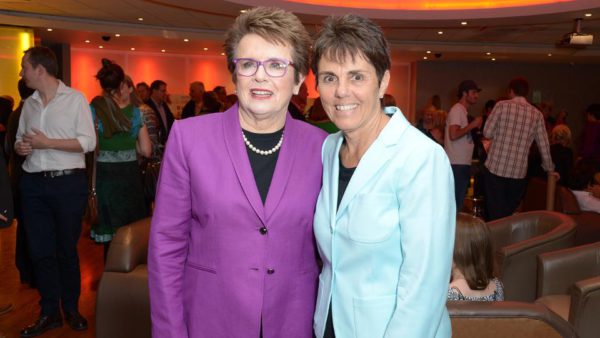
(Photo courtesy of Major League Baseball Inc/The Los Angeles Dodgers)
“LGBTQ athletes need to see more stories of athletes like them, who are supported by their teammates, because so many of them are accepted, just as they are,” GLAAD Deputy President and COO Darra Gordon said in her remarks. “I hope young LGBTQ athletes see posts from tonight and know that they have a rightful place to be out in the NFL, in football, in sports, and at any cultural milestone they aim for.”
LZ Granderson, host of the ABC News podcast ‘Life Out Loud with LZ Granderson, moderated a discussion of LGBTQ inclusion in the NFL featuring out NFL Legend Ryan O’Callaghan and NFL free agent R.K. Russell, who came out as bi in 2019.
R.K., aka Ryan Russell, who is one of more than 20 players in NFL history to come out as gay or bisexual (with Michael Sam and Carl Nassib, he is one of three to do so before retiring) and O’Callaghan (who played six seasons with the NFL retiring in 2012) tackled the hard stuff.
O’Callaghan says, in his day, he never imagined a moment like this would be possible, “not a chance in hell” that there could ever be such a full on embrace of LGBTQ identity and players by the NFL.
“Back then” he said, “they didn’t do anything much at all. Especially not publicly. Up until the last few years, the NFL was absent (on LGBT issues).”
O’Callaghan, who came to the GLAAD event from the prestigious annual NFL Honors awards that bestows MVP Award, Players of the Year, etc, reported significant news of a very public LGBTQ moment.
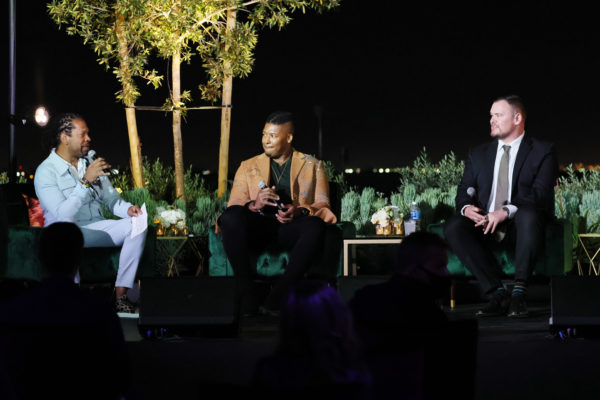
(Photo by Mike Coppola/Getty Images for GLAAD)
During the Honors event, the LGBTQ community was also honored with a video montage of thanks from out gay and bisexual players, honoring Carl Nassib.
“A few months ago we filmed a piece for the NFL Network for their 360 show talking about LGBTQ in sports and the work of the Trevor Project. They had another player, Michael Irving — his brother is gay — and four us (from the NFL 360 segment) appear (tonight) onstage.”
They received a standing ovation.
“It was very powerful,” he said, “a big step for the NFL to broadcast that to America.”
“What they did tonight was a whole other step,” O’Callaghan said of the world wide television broadcast.
Moderator Gunderson seized the moment with an obvious question: “Are we done or is this like the Obama moment where we got the Black man in the White House but racism is still hanging around.”
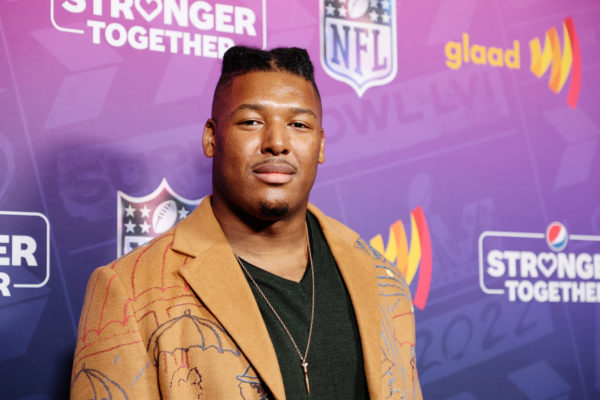
Russell jumped at the chance to answer, saying “Things are certainly accelerating. As a generation of sports fans, as writers, as journalists, as athletes, we want to see ourselves in the game because we’ve always been there, because we built this game — honestly.”
“With the Black Lives Matters movement, seeing players really take a stand we know we are more than just these athletes. We are more than these titles. When we step off the field, we take those helmets off, I am a Black man and I am a bi-sexual man. That carries with me everywhere I go. I don’t have to wear a jersey for that.”
“But when I do wear that jersey you need to know that and respect that. You can either ride with me or not,” he said, adding “I think we’re just getting started.”
“But,” moderator Granderson ominously asked, “Where are we going?”
“We’ve got a race issue still in the NFL,” he continued. “If a league that is 70 percent openly Black can’t confront racism issues then how do you think a league that has one openly gay player has addressed its homophobia issues?”
“I think that’s where the community, the writers, people like us keep the league accountable as well,” said Russell. “It’s about holding them accountable and we need to see that from everybody — players, coaches, staff, journalists, fans. Keep the NFL to its word.”
Russell said that Covid downtime had helped people realize that “surface level, performative” actions are not enough.
“That’s not going to cut it anymore,” he said. “We want to see Black head coaches, we want to see out players, we want to see it in the media, on the field, we want to see you actually do the things you say you’re going to do.”
Asked if he felt the LGBT highlight moment during the evening’s Honors award was performative or a significant step forward, O’Callaghan said he felt “it was genuinely sincere” and that while it was perhaps the most significant thing the league had done to date, it was not the only thing.
O’Callaghan talked about the league’s sponsorship of New York’s Heritage of Pride and float entries into its parade. “They started with small things like that and doing things on social media and the NFL network, changing the logo during Pride month and sharing that on social media.”
“Now it’s kind of expected.,” O’Callaghan said. “The hardest thing was the first step.”
“Doing what they did tonight at Honors, and this party…I’m sure they will be participating in the parades again this year,” he said.
O’Callaghan pointed out that in 2021 the NFL and the Arizona Cardinals owner Michael Bidwill sponsored the National Gay Flag Football Super Bowl in Tempe. “It means the world to have the NFL and a team owner supporting LGBT players and fans,” he said.
Of course the evening was wrapped around the Super Bowl, an event that may champion triumph over adversity but also, famously, a commercial opportunity that has in recent years also found marketers paying millions of dollars for seconds long TV commercials that often celebrate cultural issues.
GLAAD’s Visibility Project, a program dedicated to growing LGBTQ inclusion in advertising, announced today that LGBTQ people and issues will be nearly invisible during Super Bowl LVI ads, with only one ad that expressly features LGBTQ people or issues released prior to the Sunday broadcast. The ad for the Google Pixel 6 features a queer couple.
Additionally, Vrbo will air a LGBTQ-inclusive pre-game ad. In 2020, at least-eleven LGBTQ-inclusive ads from Amazon Alexa, Budweiser, Doritos, HGTV, Microsoft, Olay, Pop Tarts, Sabra, Tide, TurboTax, and Under Armour aired during Super Bowl LIV. In 2021, at least four LGBTQ-inclusive ads from M&M’s, Michelob ULTRA, Logitech, and Paramount + aired during Super Bowl LV. GLAAD will track ads during Super Bowl LVI at GLAAD.org and release a comprehensive list following the game.
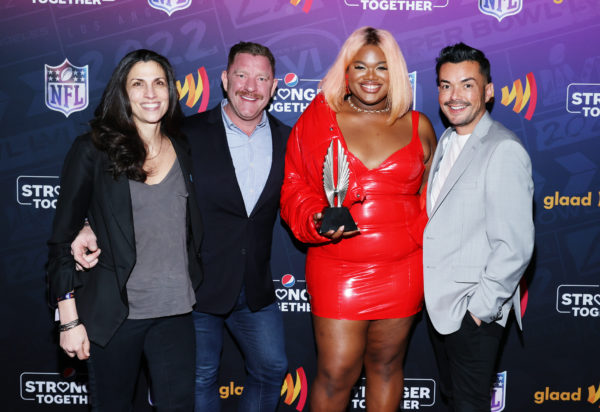
GLAAD Board Chair Pamela Stewart moderated a panel on LGBTQ inclusion in advertising featuring Mohit Jolly, Senior Director of Marketing for the Global Ads Marketing Organization at Google, trans actress model and producer Jari Jones, and Brent Miller, Senior Director for Global LGBTQ Equality at P&G.
P&G’s Miller told the story of an 18 year old youth from North Carolina who sent him a letter praising a 2018 Olympics ad in which out gay Olympic gold medalist Gus Kenworthy’s coming out story was featured, thanking P&G for saving a life.
“Thank you for saving another soul,” he wrote. He said “Something as short as an ad can be life changing,” telling the story of a 54 year old man who described a sense of empowerment watching a Pride flag unfold on an Olympic venue mountainside in South Korea. That kind of marketing, Miller said, is “what we’re supposed to do.”
Miller also said he was particularly proud that his work moves not just a younger generation but the generations before them who fought “so hard and now get to see their work come to fruition.”
Andrew Beaver, an advertising and marketing executive who serviced P&G advertising accounts, agreed with Miller, “I worked with P&G during a time when it wasn’t easy to support our community. They put put their money where their mouth approving LGBT+ inclusive advertising.”
Mojit Jolly, Senior Director for Global Ads Marketing at Google, who grew up in Chandigarh, India, a small, conservative city about five hours north of New Delhi, said he knew early on that something about him was different. “I come from the most intensely conservative background and coming out was not easy.”
He and actress Jari Jones spoke of the necessity for inclusion in marketing and the power of LGBT stories.
Jones said that images of trans people she was exposed to as a young person had set her back but today’s more authentic representations of people like her have changed her life and the lives of millions of people.
Google, said Jolly, recognizes the power of representation and information to transform our lives and highlighted several tools the mega-powered company provides, including LGBTQ safe spaces and LGBTQ business features on maps worldwide.
“Every day we reach billions and billions of people and so we have a responsibility,” he said. “I believe our commitments are profound.”
As the event drew to a close, Big Fredia took the stage and opened with her signature song of affirmation and call to be your true color, the aptly named “Big Dick Energy.”
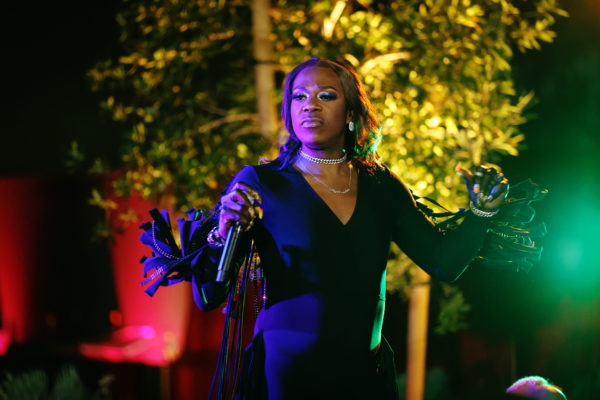
Guests included out NFL Legend Ryan O’Callaghan as well as LGBTQ leaders and allies including Alyssa Milano, Anthony Bowens, August Getty, Big Freedia, Braunwyn Windham-Burke, Jai Rodriguez, Jari Jones, Jeka Jane, Joey Zauzig, Justin Sylvester, Kent Boyd, LZ Granderson, Mollee Grey, Peter Porte, Philemon Chambers, R.K. Russell, Sonya DeVille, Victoria Brito, Cyd Zeigler, Los Angeles Blade Publisher Troy Masters, Andrew Beaver, GLAAD’s Rich Ferraro and Pamela Stewart, Chair of GLAAD’s Board of Directors.
********************





Egypt
Iran, Egypt object to playing in Seattle World Cup ‘Pride Match’
Game to take place on June 26
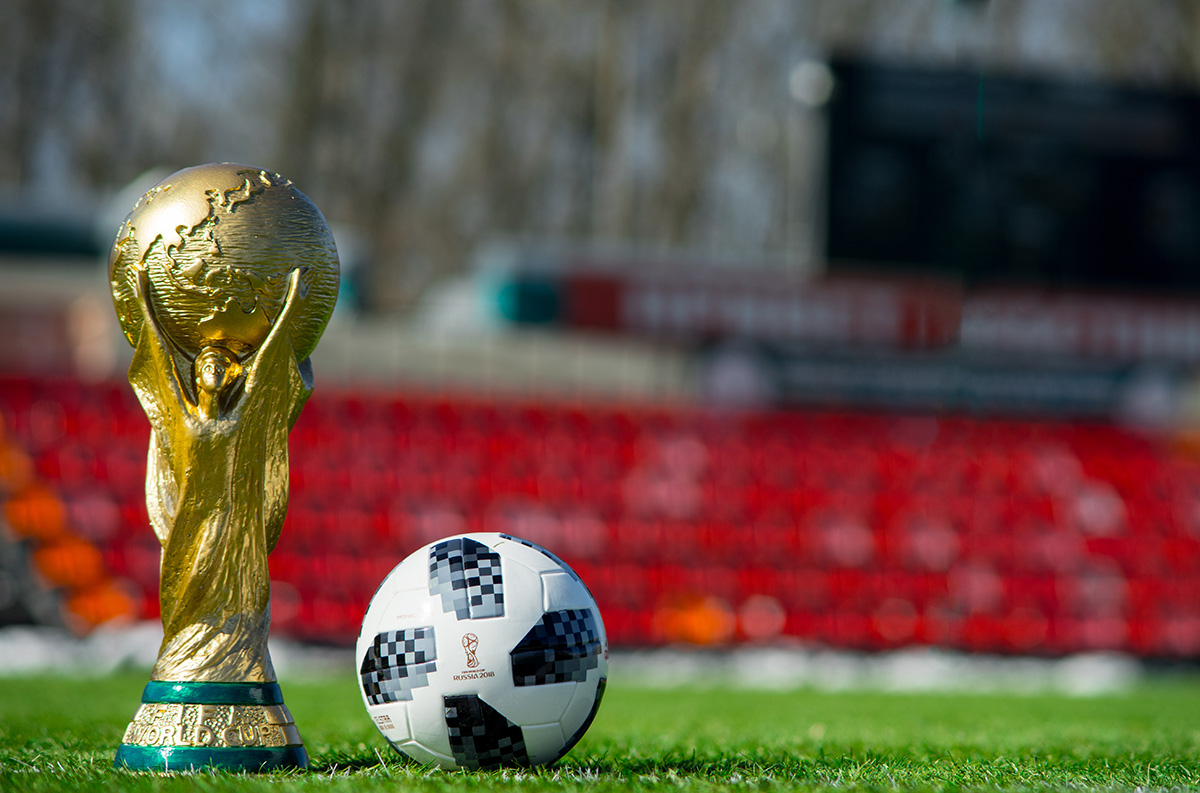
Iran and Egypt have objected to playing in a “Pride Match” that will take place in Seattle during the 2026 World Cup.
The Egyptian Football Association on Tuesday said it told FIFA Secretary General Mattias Grafström in a letter that “it categorically rejects holding any activities related to supporting (homosexuality) during the match between the Egyptian national team and Iran, scheduled to be held in Seattle, USA, on June 26, 2026, in the third round of the group stage of the 2026 World Cup.” Football Federation Islamic Republic of Iran President Mehdi Taj told ISNA, a semi-official Iranian news agency that both his country and Egypt “protested this issue.”
The 2026 World Cup will take place in the U.S., Canada, and Mexico. The draw took place at the Kennedy Center on Dec. 5.
Iran is among the handful of countries in which consensual same-sex sexual relations remain punishable by death.
The State Department’s 2023 human rights report notes that while Egyptian law “did not explicitly criminalize consensual same-sex sexual activity, authorities regularly arrested and prosecuted LGBTQI+ persons on charges including ‘debauchery,’ prostitution, and ‘violating family values.’” Egyptian authorities “also reportedly prosecuted LGBTQI+ individuals for ‘misuse of social media.’”
“This resulted in de facto criminalization of same-sex conduct and identity,” notes the report.
The 2024 human rights report the State Department released earlier this year did not include LGBTQ-specific references.
Soccer has ‘unique power to unite people across borders, cultures, and beliefs’
The June 26 match between Iran and Egypt coincides with Seattle Pride. The Washington Post reported the Seattle FIFA World Cup 2026 Local Organizing Committee decided to hold the “Pride Match” before last week’s draw.
“As the Local Organizing Committee, SeattleFWC26’s role is to prepare our city to host the matches and manage the city experience outside of Seattle Stadium,” said SeattleFWC26 Vice President of Communications Hana Tadesse in a statement the committee sent to the Washington Blade on Wednesday. “SeattleFWC26 is moving forward as planned with our community programming outside the stadium during Pride weekend and throughout the tournament, partnering with LGBTQ+ leaders, artists, and business owners to elevate existing Pride celebrations across Washington.”
“Football has a unique power to unite people across borders, cultures, and beliefs,” added Tadeese. “The Pacific Northwest is home to one of the nation’s largest Iranian-American communities, a thriving Egyptian diaspora, and rich communities representing all nations we’re hosting in Seattle. We’re committed to ensuring all residents and visitors experience the warmth, respect, and dignity that defines our region.”
The 2034 World Cup will take place in Saudi Arabia.
Consensual same-sex sexual relations remain punishable by death in the country. The 2022 World Cup took place in neighboring Qatar, despite concerns over the country’s anti-LGBTQ rights record.
Sports
Gay speedskater racing toward a more inclusive future in sports
Conor McDermott-Mostowy says anti-DEI push is driving away corporate sponsors
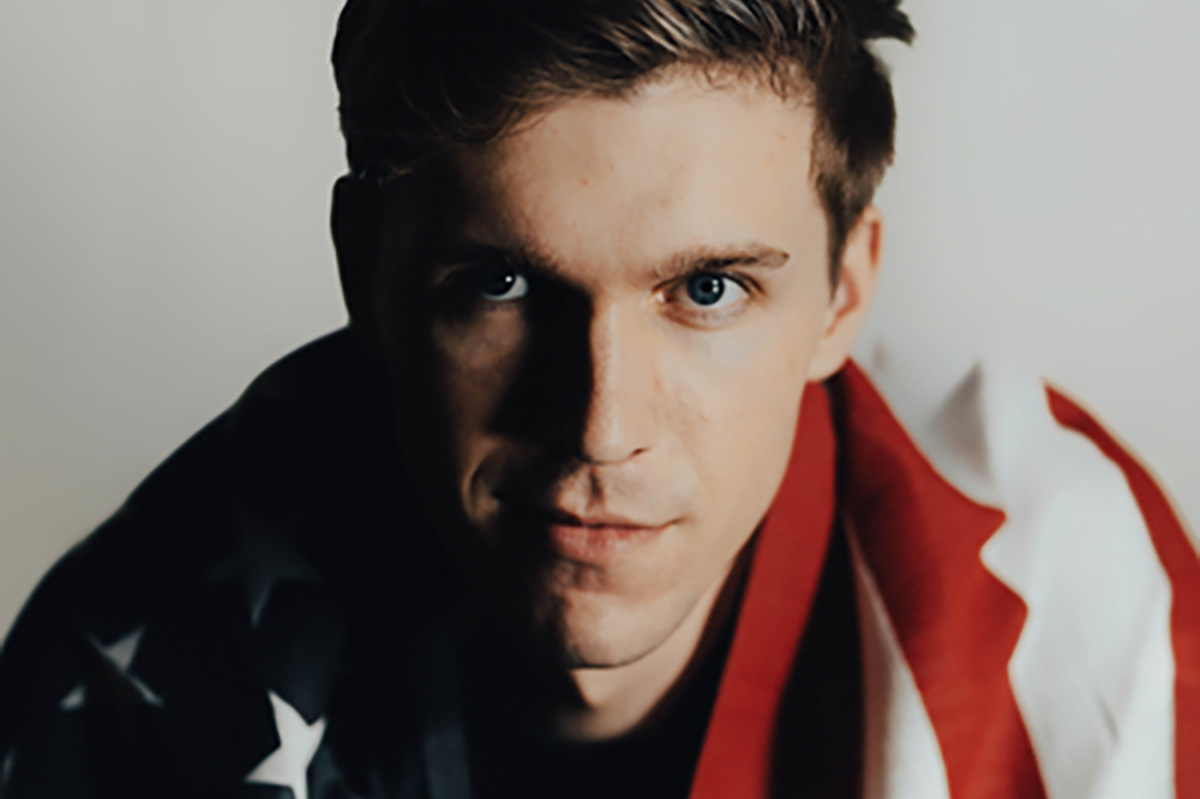
LOS ANGELES — As the countdown begins to the February Winter Olympic Games in Milan, Pride House LA is shining a spotlight on queer athletes who are breaking boundaries both on and off the field. Among them is Team USA speedskater Conor McDermott-Mostowy – a fierce competitor and proud member of the queer community. With blistering speed on the ice and a steadfast commitment to equity in sports, Conor is doing so much more than winning medals – he’s redefining what it means to represent one’s country while representing one’s community.
McDermott-Mostowy is one step closer to the 2026 Winter Olympics after winning the recent silver and bronze medals at the U.S. Championships in speedskating. He appeared at a Nov. 1 event presented by Out Athlete Fund/Pride House LA in the organization’s efforts to raise funds to support Conor and other out athletes as they pursue their Olympic dreams in Milan 2026 and beyond.The Blade spoke to the star athlete to talk about resilience, representation, and the legacy he hopes to leave one day.
Blade: Huge congrats, Conor! Winning a World Cup gold is no small feat. Do you feel like this win proved something to the world – or more importantly, to yourself?
McDermott-Mostowy: Winning gold with my team last year was definitely a major goal achieved. That said, the event we won isn’t yet an Olympic event. The races that have had the most profound impact on me actually happened two years ago.
The first was the team pursuit in Obihiro, Japan. I’d always been more of an alternate for that event, since it’s typically raced by skaters who compete in both the 1500m and 5000m. But I’d been itching for the opportunity to race it at the World Cup level. I finally got that chance when a teammate had to pull out at the last minute due to a back issue. We led the race through six of eight laps, ultimately finishing third. While it was a little disappointing to fall out of the lead, I was proud to prove that I could contribute meaningfully and help the team medal.
The second race was later that year in Salt Lake City, my home ice. After competing in Japan, I came down with a lung infection that affected my performance at the next few World Cups. Fortunately, I had time to recover before the North American World Cups and World Championships. At the Salt Lake City World Cup, I was balancing competition with completing my undergraduate degree. I didn’t know what to expect, but I ended up finishing fifth in the 1000m—my highest individual finish ever—and posted a time of 1:06.91. That’s a very significant time in speedskating; only three other Americans have gone under 1:07 in that event, all of whom became world champions. That result felt like a turning point, showing me that an Olympic or World Championship medal wasn’t just a dream—it was within reach.
Blade: This PrideHouse LA event is a huge moment. What does that support from the queer community mean to you?
McDermott-Mostowy: It’s incredibly meaningful. Being queer in Olympic sport can be very isolating, both inside and outside the sport. I barely have time to socialize outside of skating, and relocating to Salt Lake City doesn’t exactly help when it comes to queer community. So having that kind of solidarity and support from the wider LGBTQ+ community really means a lot.
Blade: Do you remember the moment you realized skating could take you all the way to the Olympics?
McDermott-Mostowy: There hasn’t been one single moment. It’s been a series of them. Over the years, I’ve had many races that shattered the limits I thought I had and inspired me to reach higher. That Salt Lake City race was one of them. It made me realize I shouldn’t just aim for the Olympics. I should aim for medals.
Another key moment came in 2018 at my last Junior World Cup, when my teammate and I finished 2nd and 3rd in the mass start. That event is similar to short track but held on a long track. It was my first full year focusing on long track after previously dabbling in it, and we had no expectation of medaling. But after we did, I realized I might actually have a future in this discipline—and that I could be competitive on the world stage. It was a pivotal realization, especially as I was trying to decide whether to continue skating or pursue a traditional college experience.
Blade: What initially drew you to speedskating? How did you get into the sport—and what’s kept you motivated?
McDermott-Mostowy: I grew up on skates. I started at age two and became a strong skater early on. But I never had any interest in hockey or figure skating. One winter, I was skating with my family on the C&O Canal in Washington, D.C., when a guy skated past us on these wild-looking speed skates. I was immediately intrigued. My parents found a local club, which happened to be run by three-time Olympian Nathaniel Mills, and I was hooked.
What’s kept me going is simple: I love it. This isn’t a sport you get rich in. I’ve only earned more than $20,000 a year twice in my career, and you can’t use it to pay for college either. The motivation has to come from within—the pursuit of excellence, the dream of going to the Olympics, and pure love for the sport.
Blade: What’s been your toughest race to date, and what did it teach you?
McDermott-Mostowy: That would be the team pursuit in Japan. I wasn’t expecting to race it and had already competed in a full weekend of events before getting the call. Team pursuit is arguably the toughest event in speedskating. Stepping up without being mentally or physically prepared was a challenge, but I did it. It showed me I could push through, even under extreme circumstances.
Blade: You’ve made headlines not just for your speed, but for your openness. What was it like coming out publicly in the world of elite sport?
McDermott-Mostowy: By the time I was publicly identified as gay, I had already been out to anyone who asked. So “coming out” doesn’t feel like the right term. It wasn’t a big declaration. I had the benefit of growing up seeing openly gay athletes and being part of a supportive community. I never felt the need to hide who I was.
Eventually, as I started achieving more on the ice, people began noticing me and the content I posted, and they put two and two together. When I was asked to speak publicly about being an openly gay athlete in speedskating, I didn’t hesitate.
Blade: What have been the biggest challenges in your career – physically, mentally, or otherwise?
McDermott-Mostowy: Honestly, my entire career has been about overcoming challenges. The two biggest obstacles have been illness and finances.
I’ve dealt with asthma, a norovirus that derailed my chances in 2022, and a fatigue condition last season that affected my performance. These setbacks take a toll. Not just physically, but mentally. When you invest everything into your sport, being forced to pause or scale back is a huge emotional hurdle.
Financially, speedskating is a tough path. Even as a consistent top-20 skater in the world, I’ve only broken $20k twice in a year, and we’re paid for just nine months, even though we train year-round. I’ve leaned on friends and family for support many times just to make ends meet.
Blade: Have you ever been told – explicitly or implicitly – that being openly gay could hurt your chances with sponsors or coaches?
McDermott-Mostowy: Never with coaches. In our sport, selections are based on the clock, not someone’s opinion. My coaches have always been great.
But when it comes to sponsorships, especially over the past year, I’ve noticed a shift. As anti-DEI sentiment grows, brands are backing away from anything that could be seen as “controversial.” Being openly gay seems to fall into that category now. Since most of our income comes from sponsorships, that retreat is deeply felt.
Sports
Trans cyclist’s victory sparks outrage in conservative media
Katheryn Phillips is originally from DC
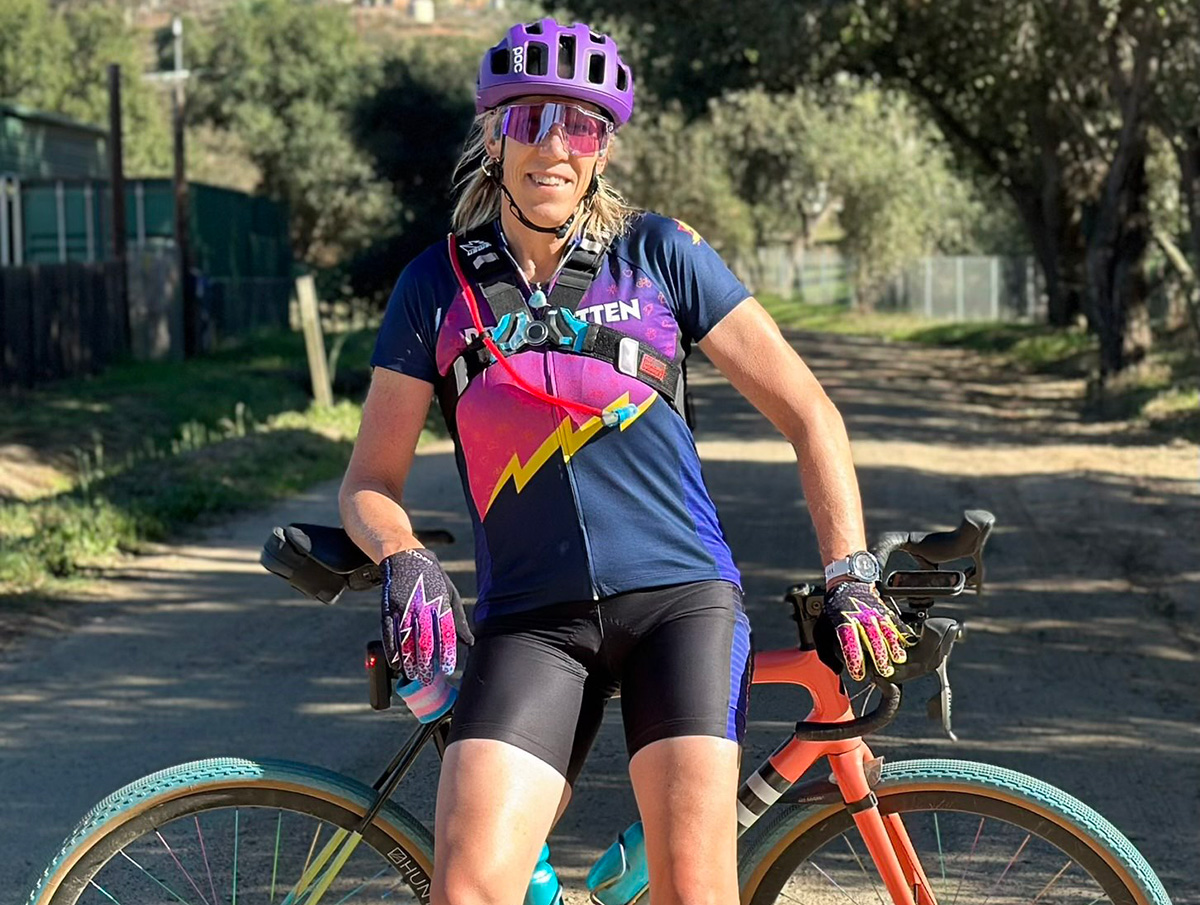
On the heels of UPenn erasing the record of the first openly transgender NCAA Division I All-American swimmer and the U.S. Supreme Court’s decision to tackle bans on trans student-athletes, right wing media is now all hot and bothered about the latest trans woman who won a cycling championship — even though she competed according to the rules.
On Tuesday, 58-year-old Katheryn Phillips finished first in USA Cycling’s Lyons Masters National Championship race for women aged 55-59, with a time of 1:42:10, according to the official results posted by the organization. The record shows her gender as “F” for female.
One second behind Phillips was Julie Peterson, with a time of 1:42:11 — as were three other cyclists: Mary Beth Grier, Andrea Cherniak-Tyson, and Carolyn Maddox.
Peterson, 57, was so outraged, she told Fox News she refused to stand on the podium in second place next to Phillips. Her story was swiftly shared by the New York Post (also owned by Fox’s parent company News Corp.), the Daily Mail, Breitbart, and other conservative media.
Both Peterson and another competitor are accusing USA Cycling of “hiding” that a transgender woman had registered to race.
“It was hidden from us. Katheryn Phillips, KJ’s name, was not on that list. And I checked it up all the way to the point of closure when we couldn’t register online anymore,” Debbie Milne told Fox.
“If I had known, I wouldn’t have spent thousands of dollars in travel and time off work to come and do a race,” Peterson said. Fox welcomed Milne, 56, who finished seventh on Tuesday, to Fox & Friends Thursday morning.
(Video courtesy of Fox News)
Peterson told Fox she did complain to USA Cycling officials prior to the race. Both Milne and Peterson referred to Phillips as a male, and with “he/him” pronouns.
“To be fair to all humans, if we want to say ‘him’ or ‘her,’ he was born a biological male, that is a fact,” Milne said. “And that is the thing that makes it an unfair advantage. Whatever has happened after that is a whole different topic.”
“I said, ‘I don’t want to race against a man,’ and they quickly scolded me and said ‘Oh, you can’t call him a man,’ and I’m like ‘Well, he is a man,’ so I was quickly scolded and corrected that it is a woman and I don’t even know what to say.”
USA Cycling did not respond to the Washington Blade’s emails requesting comment.
Phillips, who goes by Kate and by “KJ,” is a former rugby player with the D.C. Furies, who stated in the comments of a 2024 article published by Zwift Insider that she was the first out trans athlete in the U.S. to compete under the 2004 International Olympic Committee’s guidelines on trans participation.
“When USA Rugby told me about the IOC decision in 2004, I raised my hand to be included. I experience nothing but joy when I play, ride, and race,” Phillips said.
As the Blade has reported, the International Olympic Committee drastically revised those rules in 2021, and in March, Republican lawmakers in D.C. demanded the IOC ban trans female athletes from women’s sporting events altogether.
The Blade also reached out to Phillips for comment but as of press time we have not received a response. She told Zwift Insider in March 2024 she does not let those who disapprove or spread hate impact her performance or her attitude.
“I am unaffected by dissent. I love, I share joy, I am me, and I have been my authentic self for decades,” she said. It’s been reported Phillips came out in 1999, and told Zwift Insider she considers herself a lifelong cyclist.
“I’ve been on a bike for as long as I can remember,” said Phillips. “As kids, my friends and I rode all over town, we were feral kids; no cell phones, no trackers … we just roamed, and nobody got in trouble or hurt bad enough not to ride home … Scrapes/bruises/cuts were not an issue for us. In my teens, I worked for myself as a court/legal messenger, doing all of the work via my bike until I got a car. Raced BMX as a kiddo (when I mowed lawns to cover the race entry fees), I did MTB stuff (non-racing) and Sprint/Olympic Triathlons in my 30’s, and now I’m racing on Zwift, Road/Gravel, and CX in my 50s.”
In the comments section, Phillips made clear she’s not competing to win.
“I don’t do sports for victory, I do it because like many other women, I am an athlete to my core,” she said. “Unlike some, I am not there to WIN, I am there to do my best with the competitors and teammates I have around me trying to do the same…we are in it for the experience. I rejoice in their wins, and a lot of joy is reflected back to me when I have a good day.”

PHOTOS: The Holiday Show

The best books to give this holiday season

Studio’s ‘Mother Play’ draws from lesbian playwright’s past

Choose U ambassadors share lived experiences with HIV, personal reflections, and insights

DOJ seeks to join lawsuit against Loudoun County over trans student in locker room

EXCLUSIVE: George Santos speaks out on prison, Trump pardon, and more

Victory Institute honors transgender Spanish senator in D.C.

The beginning of the fall of Trump

Markey reintroduces International Human Rights Act in Senate