World
Guatemala lawmakers pass bill to ban same-sex marriage
Measure also defines family as a man and woman with children
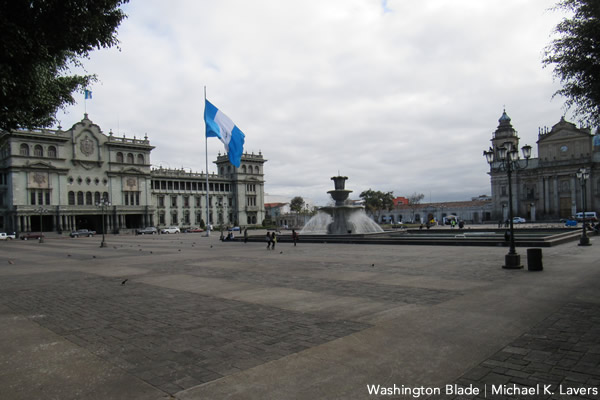
Lawmakers in Guatemala on Tuesday approved a bill that would formally ban same-sex marriage and define a family as a man and a woman who are raising children together.
The Guatemalan Congress by a 101-8 vote margin approved the “Law for the Protection of Life and the Family” under which a woman who has an abortion would face up to 10 years in prison. Media reports indicate 51 lawmakers did not attend the vote, which took place on International Women’s Day.
Visibles, a Guatemala City-based LGBTQ rights group, described the bill as “a law that promotes hate, violence, disqualification and dehumanization of those who dare to demand a more free and just world.”
“It is a regressive law that criminalizes girls, women and the LGBTIQ community through the exercise of their rights and freedoms,” said Visibles in a tweet.
El Decreto 18-2022 es una ley que promueve el odio, la violencia, la descalificación y la deshumanización de quienes se atreven a exigir un mundo más libre y justo. #NoALa5272 #NoALaLeyDelOdio pic.twitter.com/3V23SV0ZEs
— Visibles (@visibles_gt) March 9, 2022
“I never see marriage equality in Guatemala,” former Visibles Executive Director Daniel Villatoro told the Washington Blade on Friday.
Villatoro is currently a human rights fellow at Columbia University and the coordinator of the International Women’s Media Foundation’s LGBTQI+ and Women’s Rights Reporting Initiative in Latin America. Villatoro noted the bill would also codify the government’s official position that sexual education in the country’s schools should not promote “any sexuality that is not heterosexuality.”
“It is something broader,” Villatoro told the Blade. “It is a very heavy pathologization. It is anti-LGBT.”
The Inter-American Court of Human Rights in 2018 issued a landmark ruling that recognizes same-sex marriage and transgender rights in the Western Hemisphere. Guatemala is among the countries in which the decision is legally binding.
Media reports indicate President Alejandro Giammattei has said he would veto the bill because it violates international treaties. Villatoro noted Giammattei plans to send the measure back to Congress for further review.
“The law from its inception is unconstitutional,” said Congressman Aldo Dávila, who is openly gay and living with HIV, on Thursday in a video he posted to social media.




Kazakhstan
Kazakh Senate approves anti-LGBTQ propaganda bill
Measure ‘would undermine fundamental rights guaranteed under’ constitution
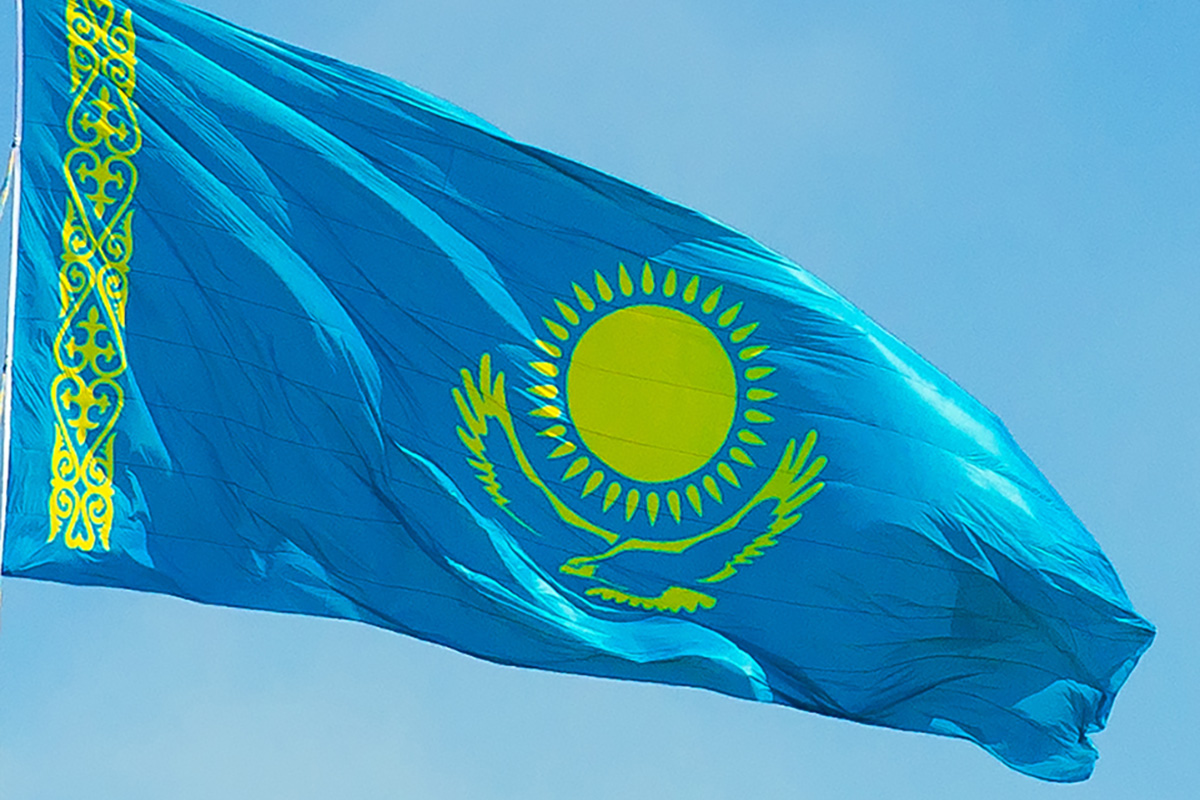
The Kazakh Senate on Thursday approved a bill that would ban so-called LGBTQ propaganda in the country.
Members of Kazakhstan’s lower house of parliament last month unanimously approved the measure that would ban “‘LGBT propaganda’ online or in the media” with “fines for violators and up to 10 days in jail for repeat offenders.” Senators earlier this month delayed a vote on the bill.
President Kassym-Jomart Tokayev has indicated he would sign it.
“If enacted, these provisions would undermine fundamental rights guaranteed under Kazakhstan’s Constitution, particularly the principle of equality and non-discrimination, by directly targeting and stigmatizing LGBTI people and anyone perceived to support them,” said ILGA-Europe in a statement after Thursday’s vote.
Kazakhstan is a predominantly Muslim former Soviet republic in Central Asia that borders Russia, Turkmenistan, Uzbekistan, Kyrgyzstan, and China. Russia, Georgia, and Hungary are among the other countries with anti-LGBTQ propaganda laws.
Chile
Far-right José Antonio Kast elected Chile’s next president
Advocacy group declares ‘state of alert’ over president-elect’s opposition to LGBTQ rights

José Antonio Kast on Sunday won the second round of Chile’s presidential election.
Kast is the far-right leader of the Republican Party who was a member of the country’s House of Deputies from 2002-2018. He defeated Jeannette Jara, a member of the Communist Party of Chile who was former labor and social welfare minister in outgoing President Gabriel Boric’s government, by a 58.2-41.8 percent margin.
The election’s first round took place on Nov. 16.
Kast and Jara faced each other in the runoff after no candidate received at least 50 percent of the vote in the first round. Kast will take office on March 11.
“Under his leadership, we are confident Chile will advance shared priorities to include strengthening public security, ending illegal immigration, and revitalizing our commercial relationship,” said U.S. Secretary of State Marco Rubio on Sunday in a statement. “The United States looks forward to working closely with his administration to deepen our partnership and promote shared prosperity in our hemisphere.”
The Washington Blade has previously reported Kast has expressed his opposition to gender-specific policies, comprehensive sex education, and reforms to Chile’s anti-discrimination laws. The president-elect has also publicly opposed the country’s marriage equality law that took effect in 2022.
The Movement for Homosexual Integration and Liberation, a Chilean LGBTQ and intersex rights group known by the acronym Movilh, in a statement acknowledged the election result. Movilh also declared a “state of alert, given this leader’s (Kast’s) public and political trajectory, characterized for decades by systematic opposition to laws and policies aimed at equality and nondiscrimination of LGBTIQ+ individuals.”
“We urge the president-elect and far-right sectors that follow him to understand and internalize (the fact) that the rights of LGBTIQ+ people are inscribed in the universality of human rights, and they are not built upon an ideology or a political trend,” said Movilh in its statement. “This is not, and never has been, a left-wing or right-wing issue, although some on both sides have gone to great lengths to suggest otherwise, without any basis other than their own partisan or electoral aspirations.”
Organizado Trans Diversidades, a group that advocates on behalf of trans and nonbinary Chileans, on social media said it will “continue the fight for our community’s human rights.”
Egypt
Iran, Egypt object to playing in Seattle World Cup ‘Pride Match’
Game to take place on June 26

Iran and Egypt have objected to playing in a “Pride Match” that will take place in Seattle during the 2026 World Cup.
The Egyptian Football Association on Tuesday said it told FIFA Secretary General Mattias Grafström in a letter that “it categorically rejects holding any activities related to supporting (homosexuality) during the match between the Egyptian national team and Iran, scheduled to be held in Seattle, USA, on June 26, 2026, in the third round of the group stage of the 2026 World Cup.” Football Federation Islamic Republic of Iran President Mehdi Taj told ISNA, a semi-official Iranian news agency that both his country and Egypt “protested this issue.”
The 2026 World Cup will take place in the U.S., Canada, and Mexico. The draw took place at the Kennedy Center on Dec. 5.
Iran is among the handful of countries in which consensual same-sex sexual relations remain punishable by death.
The State Department’s 2023 human rights report notes that while Egyptian law “did not explicitly criminalize consensual same-sex sexual activity, authorities regularly arrested and prosecuted LGBTQI+ persons on charges including ‘debauchery,’ prostitution, and ‘violating family values.’” Egyptian authorities “also reportedly prosecuted LGBTQI+ individuals for ‘misuse of social media.’”
“This resulted in de facto criminalization of same-sex conduct and identity,” notes the report.
The 2024 human rights report the State Department released earlier this year did not include LGBTQ-specific references.
Soccer has ‘unique power to unite people across borders, cultures, and beliefs’
The June 26 match between Iran and Egypt coincides with Seattle Pride. The Washington Post reported the Seattle FIFA World Cup 2026 Local Organizing Committee decided to hold the “Pride Match” before last week’s draw.
“As the Local Organizing Committee, SeattleFWC26’s role is to prepare our city to host the matches and manage the city experience outside of Seattle Stadium,” said SeattleFWC26 Vice President of Communications Hana Tadesse in a statement the committee sent to the Washington Blade on Wednesday. “SeattleFWC26 is moving forward as planned with our community programming outside the stadium during Pride weekend and throughout the tournament, partnering with LGBTQ+ leaders, artists, and business owners to elevate existing Pride celebrations across Washington.”
“Football has a unique power to unite people across borders, cultures, and beliefs,” added Tadeese. “The Pacific Northwest is home to one of the nation’s largest Iranian-American communities, a thriving Egyptian diaspora, and rich communities representing all nations we’re hosting in Seattle. We’re committed to ensuring all residents and visitors experience the warmth, respect, and dignity that defines our region.”
The 2034 World Cup will take place in Saudi Arabia.
Consensual same-sex sexual relations remain punishable by death in the country. The 2022 World Cup took place in neighboring Qatar, despite concerns over the country’s anti-LGBTQ rights record.

Candidates should pledge to nominate LGBTQ judge to Supreme Court

Kazakh Senate approves anti-LGBTQ propaganda bill

Local, last-minute holiday gift ideas

2026 elections will bring major changes to D.C. government

Brian Footer suspends campaign for Ward 1 D.C. Council seat

PHOTOS: The Holiday Show

The best books to give this holiday season

Choose U ambassadors share lived experiences with HIV, personal reflections, and insights

Studio’s ‘Mother Play’ draws from lesbian playwright’s past