Opinions
The LGBTQ+ community, telehealth, and rural broadband access
Congress must act to preserve lifeline of remote healthcare
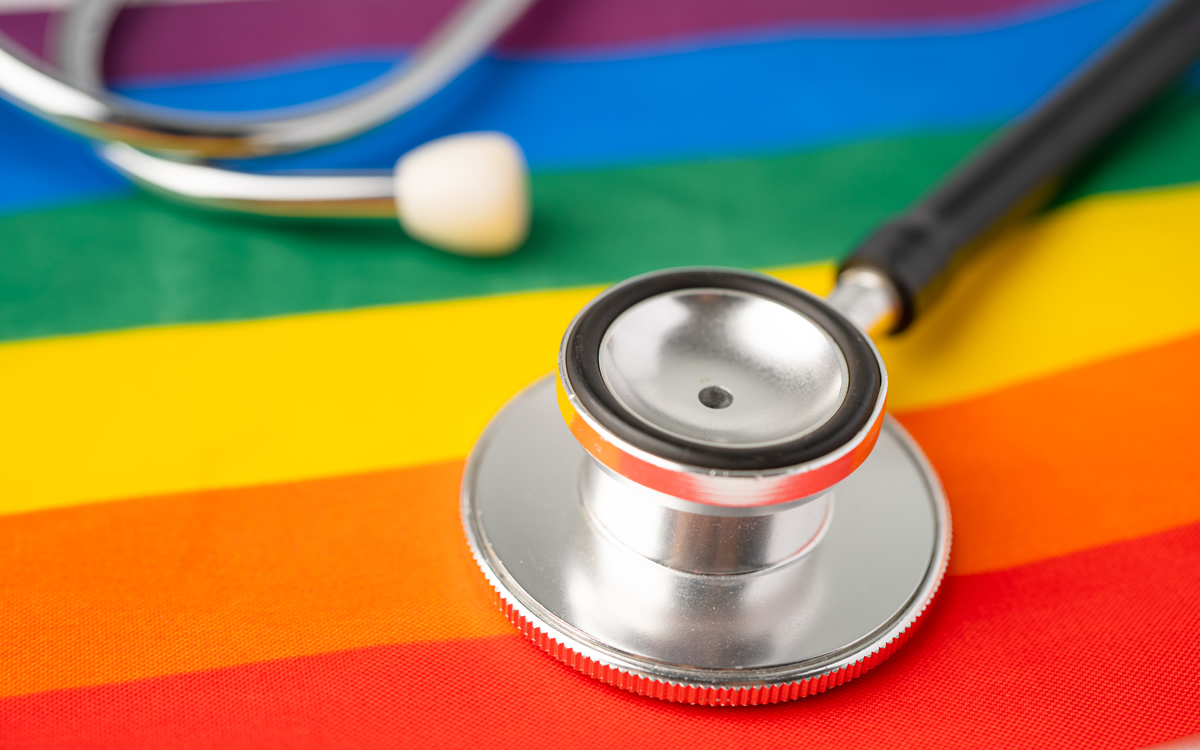
The LGBTQ+ community has come to rely more and more on remote general and specialized healthcare as the pandemic continues to limit access to in-person services. This lifeline is in danger of going away unless Congress acts, delivering a serious blow to the diverse community of people who struggle to access care in-person in their communities.
Telehealth allows doctors and other providers to provide care without an in-person visit. More specifically, telehealth refers to the health care services accessible through telecommunications services, including via audio and video (either real time or asynchronous). These services are best delivered via high-speed broadband services. Medical care appointments, consultations, prescriptions, follow-up visits, and more can be done safely and virtually.
Telehealth is a modern necessity made even more relevant due to the ongoing COVID-19 pandemic, and demand for these resources is growing. The LGBTQ+ community in particular is experiencing a significant need for improved telehealth provisions and access. Recent relaxations of telehealth regulations have expanded the reach of telehealth and positively impacted marginalized communities including the LGBTQ+ community, especially in rural and remote areas. Effective and reliable broadband access is instrumental for telehealth services and as telehealth expands, advancements to universal broadband access will be critical to reach these communities.
Telehealth and the LGBTQ+ community
More than 18 million Americans identify as lesbian, gay, bisexual, transgender, queer, questioning, or intersex (LGBTQ+), and more younger Americans than ever before are identifying as LGBTQ+. The health concerns of these individuals deserve utmost respect and care, demonstrable through high-quality health care both in person and online. Telehealth plays an important role in connecting the LGBTQ+ community with competent and affirming health care providers and services. The LGBTQ+ community has always been more heavily reliant on internet connectivity, and healthcare is no different, with 81% of LGBTQ+ youth reportedly using the internet to search for health information.
LGBTQ+ communities face many of the same healthcare concerts as non-LGBTQ+ communities, though there are differences in rates of some chronic conditions including cancer, diabetes, obesity, HIV/AIDS and other sexually transmitted infections (STIs), and tobacco-related health conditions. LGBTQ+ individuals have higher rates of mental and physical disability, and the impact of loneliness on health quality is experienced at higher rates by LGBTQ+ individuals in both urban and rural settings. Routine healthcare for these conditions improves quality of life, but LGBTQ+ individuals often report high cost as a deterrent from going to the doctor. Telehealth provides an affordable avenue to routine health care.
Many individuals in the LGBTQ+ community report a history of medical trauma as a barrier to receiving healthcare. Gender-affirming health care is one major motivator for telehealth access in the LGBTQ+ community. Nearly one-fifth of transgender individuals have been refused healthcare due to their gender identity. Online servers such as Folx Health, Plume, and QueerDoc provide gender-affirming care including hormone therapy, mental health, and documents for gender marker change. Telehealth allows users to bypass the barrier of proximity to medical care and to access providers who are informed on medical concerns and considerations that uniquely impact the LGBTQ+ community.
Regulations that previously restricted the delivery of telehealth have been eased since the onset of the COVID-19 pandemic. Specifically, rules previously limited telehealth to rural areas received in a clinical setting. The new rules allow urban and suburban patients to access telehealth from their home or other convenient setting. This makes sense as many urban areas lack convenient access to physicians and other providers. Individuals across America have benefitted from the ability to access basic health services at home, but those whose care has been most significantly enhanced are poor, elderly, members of marginalized communities such as the LGBTQ+ community, and/or those who live in remote areas of the country. For example, the total number of telehealth visits in Medicare increased from less than 1 million to more than 50 million during COVID.
There are currently hundreds of proposals pending before state and federal legislatures that address extending or expanding telehealth beyond the pandemic’s public health emergency. Current changes to telehealth regulations include loosened restrictions around telephone-based check-ins and the allowance for telehealth visits between providers and persons across state borders. Before the pandemic, patients filled a prescription after first meeting with a doctor in-person, but telehealth expansion has eliminated the required in-person appointment. Telehealth treatment for addiction is also on the rise, with addiction-specific treatments available online. General mental health resources are also increasingly accessible virtually and by phone. Now that these practices are commonplace, regulators are looking to pass legislation that will maintain this ease of service.
The expansion of telehealth has proven especially effective for the LGBTQ+ community. Easing accessibility of telehealth and prescriptions reduces the cost of care for routine medicines and check-ups for conditions that disproportionately affect the LGBTQ+ community, such as HIV. Increased availability of telehealth mental resources is critical for all youth, but especially for those in the marginalized LGBTQ+ community. Through online resources, transgender adults can safely and reliably access gender-affirming healthcare including hormone replacement therapy and counseling with specialized professionals. Additionally, telehealth access can reduce or eliminate the stigma and discrimination that LGBTQ+ individuals face daily when selecting providers, especially in remote or rural areas where there may be few providers to choose from and even fewer knowledgeable about and sympathetic to the special health care needs of LGBTQ+ individuals. Making permanent the COVID-19 exemptions currently in place that regulate telehealth services will have far-reaching, positive impacts for the LGBTQ+ community.
Rural need for telehealth
An estimated 2.9 to 3.8 million Americans living in rural and remote parts of the country identify as LGBTQ+ and deserve high-quality and informed healthcare. Accessing a healthcare provider is, in general, more challenging in rural areas. Consider, for example, costs associated with distance. To add insult to injury, where providers are available in rural communities, the potential for discrimination against LGBTQ+ individuals and misdiagnosis of medical conditions is prevalent. Lack of access to sympathetic providers or specialized providers makes telehealth a crucial tool for the rural LGBTQ+ community.
Given the need for broadband access to ensure quality telehealth services (to access video consultations, for example), the quality of an individual’s access to broadband services will directly affect their health care experience. Rural Americans are routinely left behind in broadband deployment, contributing to the digital divide, or the gap in use of online resources. Improvements to broadband access is key for expanding the reach of telehealth services across the country, especially in rural America. The recently enacted infrastructure law includes $65 billion in new broadband funding. It must be rolled out quickly to ensure marginalized communities in rural areas gain from improvements to broadband access and the telehealth resources that come along with it.
Telehealth has become a critical tool to expand access for all patients, but especially the LGBTQ+ community. Marginalized individuals benefit the most from increased telehealth access and those living in rural areas may be the most significantly impacted. Telehealth offers a number of benefits including facilitating community health and social wellness, the delivery of gender-affirming medical care, accessible mental health care, and ease of prescription access.
Recently relaxed regulations around telehealth delivery have increased the reach of these services and provided healthcare to individuals who may have gone without care. Rural and remote marginalized communities, such as the LGBTQ+ community, will experience an especially positive impact from telehealth, and increasing rural broadband access is critical to expanding high-quality, informed healthcare to LGBTQ+ individuals across America. Crucially, Congress can permanently expand telehealth services and capitalize on the recent infrastructure law to roll out high-speed broadband that facilitates telehealth in areas with limited internet access. Without congressional action, many of the benefits marginalized communities have experienced from telehealth services will expire thereby reducing or eliminating supportive and specialized care options for these communities.
For more information visit www.LGBTQ+tech.org/telehealth.
Carlos Gutierrez is deputy director and general counsel for the LGBT Technology Partnership & Institute, which works to improve access, increase inclusion, ensure safety and empower entrepreneurship for LGBTQ+ communities around technology.



Opinions
Reflecting on six years on the CAMP Rehoboth board
Purpose, people, and the power of community

Some people let life happen; I prefer to plan it—meticulously, intentionally, and yes, sometimes overboard. After losing many loved ones and navigating my own setbacks, I learned not to let life drift by; instead, I live it with intention—curating the people, commitments, and actions that bring joy and meaning, even if others mistake that intentionality for control.
True to form, I close each year with an annual life audit reflecting to see if my personal goals were achieved and, if not, why did I fall short. This habit reflects a simple philosophy: fulfillment doesn’t happen by accident. It comes from daring to imagine the life you want and living deliberately at work, in service to others, and in the everyday moments that make life meaningful.
This year’s assessment is a bit more complicated because on Dec. 31 I will conclude six years on the board of CAMP Rehoboth Community Center — two full three-year terms, including three years as board president. When putting pen to paper, I quickly realized the lessons from the last 12 months were six years in the making.
For those who may not know, CAMP Rehoboth (CAMP is an acronym for Create A More Positive) is widely recognized as the leading provider of life-affirming programs and services in support of LGBTQ people in Rehoboth Beach, Del., and the greater Sussex County area. Since its founding 34 years ago, CAMP’s work has enabled LGBTQ people to thrive. In fact, it is the reason my husband Greg and I (along with thousands of other LGBTQ people) decided to make this part of Delaware our home.
If the past few years have taught me anything, it is that leadership is not a position—it is a practice. It is a daily decision to show up with clarity, steadiness, and a willingness to hold space for others as we navigate change together.
Purpose is the compass. Purpose gives direction when circumstances shift, resources tighten, and competing demands threaten to pull us off course. At CAMP Rehoboth, our purpose has always been to ensure LGBTQ people have access to life-affirming programs, culturally competent services, and a place where they feel seen, valued, and supported. Purpose guided our leadership transition and executive director search, reminding us that the leader our community deserves must bring experience, emotional intelligence, and a deep understanding of what belonging means.
Values are the guardrails. They keep us aligned when opportunities, distractions, or pressures arise. Our values show up in our strategic planning, financial stewardship, and insistence that inclusion is a practice, not a slogan. They ensure that when challenges—political hostility, funding uncertainty, changing community needs—emerge, we respond with integrity instead of reaction.
People are the engine. Organizations don’t create impact — people do. Staff, volunteers, board members, donors, and community members together make the mission real. Investing in their capacity, wellness, and professional development ensures they can do their best work. When we take care of our people, they take care of the community.
I am a gay man who knows how obstacles can feel insurmountable and hope can falter having lived through the AIDS epidemic and fought for civil rights like the legalization of same-sex marriage. In those moments, I chose to focus on what I could control rather than what I could not. Getting involved gave me purpose and proved that fulfillment comes from taking action to make a difference—for yourself and for the broader community.
Gratitude is the culture.
As I close this chapter, what I feel most is gratitude. Gratitude honors those who built the foundation, celebrates those who carry the work forward, and reminds us that progress is a collective effort. Thank you to our staff, especially Executive Director Kim Leisey, who serve with skill and heart; to our volunteers like former board member Chris Beagle and current board president Leslie Ledogar, who give more than anyone will ever know; to our donors, who invest in possibility; and to the community that trusts us to be there in moments of celebration, struggle, and change. Finally, none of this would have been possible without the steadfast love of my husband and the unwavering support of close friends who lifted me in the moments I needed it most.
Reflection, planning, and intentionality do not guarantee perfection — but they make fulfillment possible. Life is too short to leave it to chance. By daring to dream, acting deliberately, and giving generously, we can create lives that are both meaningful and impactful — not just for ourselves, but for the communities we touch.
Wes Combs is an outgoing board member of CAMP Rehoboth.
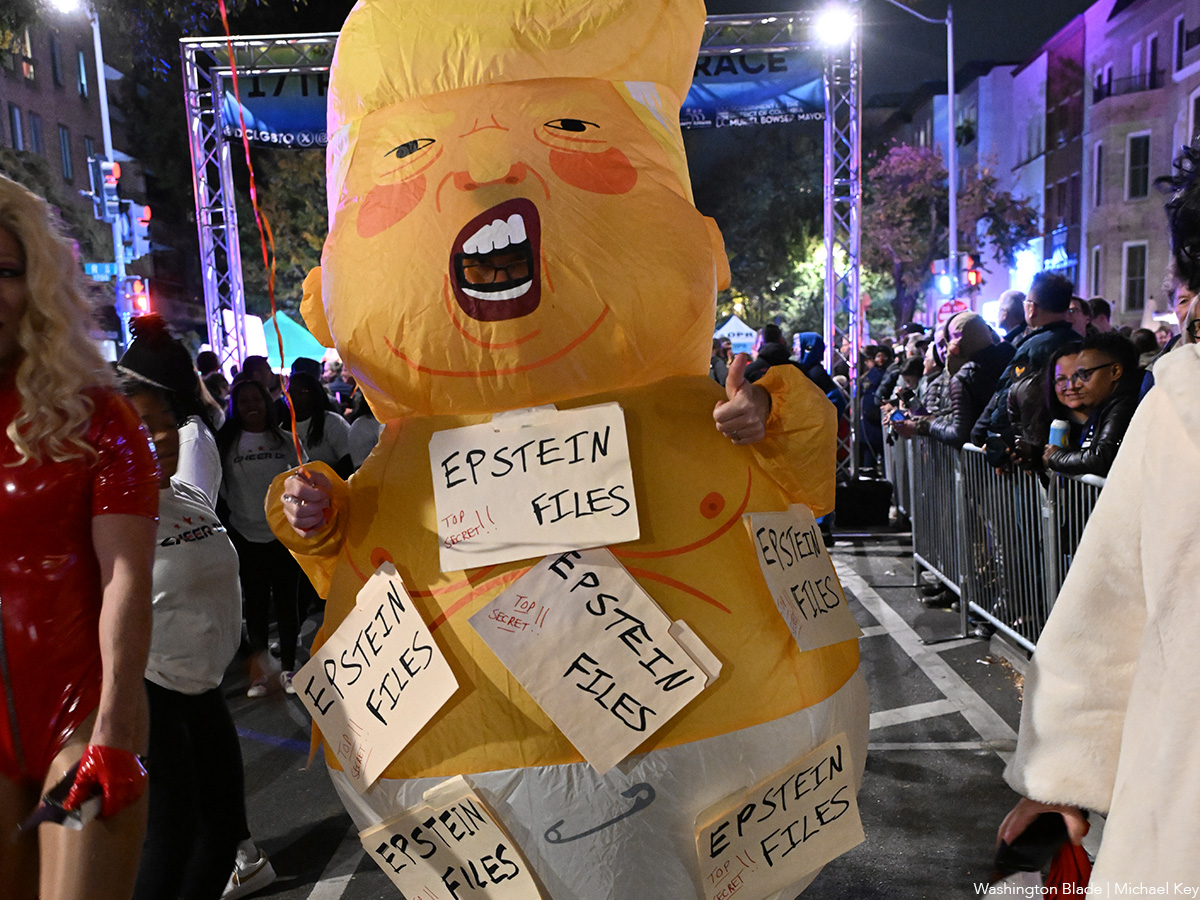
Trump saw the writing on the wall with regard to releasing the Epstein files. He tried to get ahead of the parade by asking Republicans to vote for release, instead of facing his biggest embarrassment when they were going to anyway. Then there were the major Republican losses in the last election. Now House Armed Services Committee Chair Mike Rogers (R-Ala.), and Senate Armed Services Committee Chair Roger Wicker (R-Miss.), and their Democratic ranking members, are investigating the Pentagon after it was reported Secretary of Defense Pete Hegseth potentially committed a war crime with regard to the bombing of boats suspected of running drugs. It really seems we are seeing the beginning of the fall of Trump.
That’s not to say the felon doesn’t continue to have the power to screw the country, and the world. He does. Those around him like Vought at OMB, and his personal Goebbels, Stephen Miller, will push him harder to advance Project 2025 before the mid-term elections. There are so many things in that 900-page document that have yet to be perpetrated on the American people. I am sure the felon doesn’t know half of them, as one can be quite confident, he never read it. Each day we wake to some new outrage by the grifter in the White House. His family cutting deals with the Saudis, upping and lowering tariffs as the mood strikes. Not in a rational way because they have already proven to be a disaster for the American people. Then the continuing destruction of our healthcare system by RFK Jr.
Then the felon threatens Venezuela, and illegally declares the airspace around it closed. The felon threatens Indiana Republican legislators who don’t go along with his request for redistricting, with primaries. A judge in Texas rules their redistricting is illegal, though the Trump Supreme Court did overrule that. He calls Marjorie Taylor Green a traitor, then his MAGA cult threatens her life. She resigns. He does the same to Democratic legislators who made a video telling the military they do not have to obey unconstitutional orders. The felon called that “SEDITIOUS BEHAVIOR, punishable by DEATH!” He went further and reposted a Truth Social post that read “HANG THEM GEORGE WASHINGTON WOULD !!” This now has his MAGA base threatening their lives. They are not resigning. All of this adding to the feeling his acts, and statements, clearly reek of desperation.
He continues to blame Biden, nearly a year after taking office, for his own failures. He blames Biden for not vetting the Afghani immigrant who shot the two National Guard members from West Virginia patrolling D.C. This, while it was his administration, that granted him asylum without any vetting, in April.
I find it incomprehensible there are still some people, who can’t, or don’t, want to understand attacking Democrats for what is going on today, makes no sense, when the felon controls the White House, Congress, and the Supreme Court. Staying home, or voting for third party candidates, with no chance of winning, is like voting for the Republican. In the recent elections we began to see those who don’t like what is happening, wake up. They realize only a vote for a Democrat will make a difference. We saw that across New York, New Jersey, Pennsylvania, Virginia, and Georgia.
As we approach the midterm elections, I plead with those who are not there yet, look at history, count how many independents were ever elected to Congress. In our system that rarely happens. Wishful thinking doesn’t win elections. Yes, I want Congress to look younger. I am happy Nancy Pelosi (D-Calif.), and Jerald Nadler (D-N.Y.), among others, have retired, allowing for primaries in their districts. I could name a few more in safe Democratic seats who I hope do the same. While not in office, young people should appreciate those who retire, might still have some wisdom from their years of service to share.
The young aren’t compelled to listen, yet someone like Pelosi, with her vast experience, could help a new person as they run to win, and then navigate the halls of Congress. If you look at all the demonstrations against the felon, and his administration, the age of the people demonstrating often skews older. Those like me have the time to demonstrate, and we do. We want to see the felon fall, and will work hard to make it happen. While too old to run for office, I will continue to voice my opinions. I will even endorse candidates I like. I suggest to all candidates it is important to do more than talk in generalities. You need an issues section on your website. Tell voters what you will do when elected. What bills will you introduce, which ones will you support. That may be old-fashioned, but it’s still important. And definitely be clear which party you will support if elected. I know, another old-fashioned idea.
As the felon continues to lose the support of the American people, I see young people begin to move to the Democratic Party, realizing if they step up to be counted, it will make a difference for their future. If this trend continues, I believe we are headed toward a better time in America.
Peter Rosenstein is a longtime LGBTQ rights and Democratic Party activist.
Opinions
Tammy Bruce, Trump’s lesbian nominee for deputy UN ambassador. Just say no!
Senate Foreign Affairs Committee advanced former State Department spokesperson’s nomination this week

One evening In the late 1990’s, I drove over to the home of my late friend, Jim Hormel, to review a number of countries to which he was being considered by the Clinton administration to serve as our country’s first openly gay ambassador. It was a very big deal. Secretary Madeleine Albright would eventually swear him in during a teary-eyed ceremony, but only after a recess appointment in order to avoid an ugly, partisan fight in the Senate over Jim’s sexuality.
Fast-forward to today, and our country has had over 30 openly gay male ambassadors — both career diplomats and political appointees — and one, single lesbian at an ambassador-ranked position at the Asian Development Bank, Chantale Wong. (Ambassador Wong is also one of only two people of color among the openly gay or lesbian ambassadors.) I am very proud to have helped convince Amb. Wong to come out of retirement to take on that important role, because the time was right for someone with her passion, experience, and commitment to push for inclusive development policies at a major international financial institution. In fact, she had occupied the position once before as acting executive director of the ADB under the George W. Bush administration, and used that expertise to successfully champion an inclusive development policy that explicitly names sexual orientation and gender identity as a non-discrimination category, as well as other programs that benefit community members. But getting through the Senate confirmation process was not an easy task before this second Trump administration, especially for those without the resources or connections to deploy their own personal lobbyists, even when the candidate was superbly qualified.
So, a few months ago, when I read that Tammy Bruce was nominated by President Trump to be one of our ambassadors to the United Nations, I choked on my coffee. I couldn’t believe that our second ever openly lesbian ambassador would be a far-right, anti-trans, anti-Muslim, Trump loyalist. But, maybe the choice was not so surprising after all, which then says a lot about the Biden administration’s priorities. Trump was also the president who made good on the Human Rights Campaign’s longtime push for an openly gay G7 ambassador, with the appointment of another far right, anti-Muslim, gay ambassador, Richard Grenell to Germany. These two people alone should convince any sane human why identity-politics alone has severe limits.
After 16 years of submitting short lists of qualified lesbian-identified and trans-identified candidates to the White House Office of Personnel Management to be considered for appointed ambassador positions, and also simultaneously trying to support senior, career diplomats who are lesbian or trans to advance in their careers, I was particularly frustrated and enraged. While I believe it’s time to move beyond identity politics, I also deeply believe that diverse representation matters. Not tokenization (and not donor-purchased ambassadorships) but exceptionally well-qualified, diverse American people, who represent the actual plurality of our nation, which makes us stronger. The foreign affairs arena, in particular, is overly white and male dominated. Think what you may about “DEI,” but a diplomatic corps that doesn’t reflect the diversity of our nation doesn’t make our country stronger — it actually makes us less globally relevant and decreases our understanding of this rapidly changing, multi-polar world.
The 34:1 ratio of gay men to lesbians among our nation’s openly queer ambassadors that exists today is infuriating to me as a woman, a feminist, a lesbian, and as a human rights leader. And yet, the nomination of Tammy Bruce, infuriates me even more. She is an extremist ideologue who uses her platform for hate.
Bruce’s hate centers on her anti-Muslim extremism. According to CNN’s Andrew Kaczynski and Em Steck, “Trump’s pick for deputy UN job questioned [the] loyalty of American Muslims … (Bruce) for years promoted inflammatory, anti-Muslim and conspiratorial claims, including suggesting that former President Barack Obama was a secret Muslim bent on harming America. A CNN KFile review of Bruce’s blog posts, social media posts, columns and radio commentaries starting in the early 2000s shows a pattern of demeaning language about Muslims, including suggesting that American Muslims needed to prove their loyalty after the Sept. 11, 2001, terrorist attacks … Bruce didn’t respond for comment.”
When nominating Bruce, Trump said, “after being a liberal activist in the 1990s, (Bruce) saw the lies and fraud of the Radical Left, and quickly became one of the strongest Conservative voices on Radio and Television.” Bruce wrote the book “The New Thought Police,” aiming to “expose the dangerous rise of left-wing McCarthyism.” In addition to poking fun at feminists, anti-racists, and progressives, she has particularly promoted misguided anti-trans ideology, such as championing the cause of Chloe Cole, a “detransitioner” who had top surgery at age 17. Bruce uses this outlier case to justify legislation to ban trans health care in the United States.
The extremist right loves to scapegoat trans people and their right to appropriate, life-saving health care. Confirming Ms. Bruce for this role as a U.S. representative at the United Nations, with all of her whacky and fringe ideology, is incredibly dangerous for U.S. citizens and for others throughout the world. The person who represents the United States at the United Nations must be able to talk to every other country representative, in order to be effective. Ms. Bruce will be viewed with suspicion and avoided because of her past statements and views. Again, such extremism has no place in our government or representing our country. In her confirmation hearing, Ms. Bruce called President Trump’s leadership at the United Nations “inspirational.” She refused to call the massacre in Sudan a genocide. She didn’t seem to understand what leverage the U.S. might have with the UAE to stop arming this genocide. She deferred multiple times to serving this President in whatever foreign policy aims he has. In this era of increasing authoritarianism, we do not need more obsequious servants to King Trump. Now that Ms. Bruce has been voted out of committee, this proud lesbian, respectfully requests all U.S. Senators to not confirm Ms. Bruce for U.S. Deputy Ambassador to the United Nations.
Julie Dorf is co-chair of the Council for Global Equality.

Rob Reiner, wife killed in LA home

In real estate, trust the process

Far-right José Antonio Kast elected Chile’s next president

PHOTOS: The Holiday Show

The best books to give this holiday season

EXCLUSIVE: George Santos speaks out on prison, Trump pardon, and more

The beginning of the fall of Trump

Markey reintroduces International Human Rights Act in Senate

Iran, Egypt object to playing in Seattle World Cup ‘Pride Match’

PHOTOS: Team DC holiday party
-

 Congress3 days ago
EXCLUSIVE: George Santos speaks out on prison, Trump pardon, and more
-
Opinions4 days ago
The beginning of the fall of Trump
-
Congress5 days ago
Markey reintroduces International Human Rights Act in Senate
-
Egypt4 days ago
Iran, Egypt object to playing in Seattle World Cup ‘Pride Match’