News
Karine Jean-Pierre on her firsts: ‘I am a Black, gay, immigrant woman’
High praise for first out WH press secretary
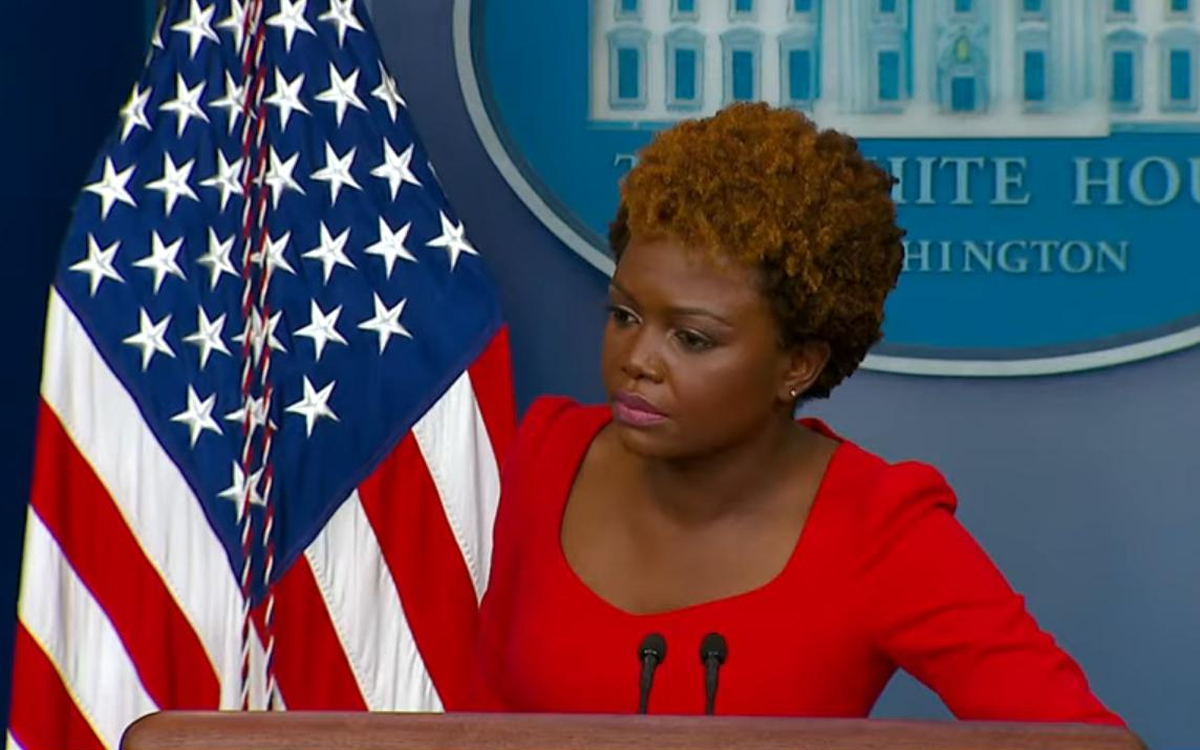
Karine Jean-Pierre is no stranger to progressive politics.
She takes on the role of White House press secretary as part of a long career working on building political coalitions and as a spokesperson for advocates before coming to the Biden administration, which has won her close allies and admirers who continue to cheer her on. Jean-Pierre’s new position as top spokesperson for President Biden — and the first Black, first openly gay person to become White House press secretary — is the latest endeavor she pursues in that broader mission.
Rahna Epting, executive director of MoveOn.org, knew Jean-Pierre from when she worked at the progressive organization and she quickly became a rising star “because she’s so incredibly skilled at communicating in a way that real people understand.”
“She was incredibly relatable to people that were watching her at home on TV,” Epting said. “And she could speak to you know, she she did that role during the Trump era for MoveOn and she really spoke to the hearts and minds of what people were feeling and thinking during that time.”
It was during Jean-Pierre’s time with MoveOn when she was serving as a moderator for a panel with Kamala Harris and famously rose to block an animal-rights activist who was physically threatening the candidate.
When protests emerged during the Trump era over policies such as his travel ban on Muslim countries, efforts to repeal the Affordable Care Act, and the two impeachment votes seeking to remove Trump from office, Epting said Jean-Pierre was key in MoveOn.org being at the front lines of those efforts.
“Karine was on TV and she was representing the movement in ways that sparked or electrified the energy that was actually being felt out there,” Epting said.
Jean-Pierre, 45, has a distinctive story of rising to become White House press secretary as an immigrant from a Haitian family whose parents brought her to the United States, where she was raised in Queens, N.Y., from the age of five. Jean-Pierre cared for her younger siblings growing up as her mother worked as a home health aide and her father worked as a taxi driver.
Despite these humble beginnings, Jean-Pierre nonetheless reached astonishing heights. After receiving her master’s degree from the School of International & Public Affairs at Columbia University, Jean-Pierre went on to work for President Obama, serving as regional political director for the White House Office of Political Affairs during the Obama administration’s first term, before returning to the White House after Biden was elected president.
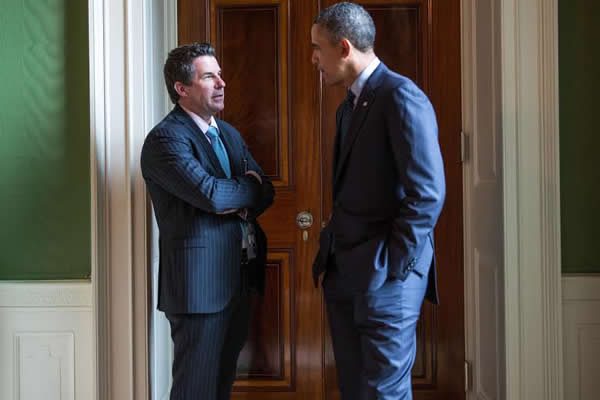
Michael Strautmanis, now executive vice president for public engagement at the Obama Foundation, worked with Jean-Pierre in the 2008 presidential campaign and at the White House under Obama and said the first thing that came across to him was how she “always had it covered.”
“She never came and asked me for advice on something where she didn’t already have one or two or three possible solutions to the challenge that she always had,” Strautmanis said. “She was always very, very well prepared, so she just sort of stood out to me.”
Jean-PIerre brings all this background to the role of White House press secretary in addition to achieving many firsts in the appointment as a Black woman, an LGBTQ person and an immigrant. Her partner is Suzanne Malveaux, a CNN reporter and former White House correspondent.
In her maiden briefing on Monday as White House press secretary, Jean-Pierre said the opportunity granted to her in her new role was not just an achievement, but the culmination of work from many who came before her.
“I am obviously acutely aware that my presence at this podium represents a few firsts,” Jean-Pierre said,. “I am a Black, gay, immigrant woman, the first of all three of those to hold this position. I would not be here today if it were not for generations of barriers — barrier-breaking people before me. I stand on their shoulders. If it were not for generations of barrier-breaking people before me, I would not be here.”
Asked by April Ryan of The Grio, a Black news outlet, about the many firsts she achieved by taking on the role as White House press secretary, Jean-Pierre recognized the signal that sends and brought up an article from a newspaper that went to her elementary school in Hampstead, N.Y.
“And these kids wrote me a letter,” Jean-Pierre said. “And in the letter, they talked about how they can dream bigger because of me standing behind this podium. And that matters. You know, as I started out at the beginning: Representation matters. And not just for girls, but also for boys.”
A White House spokesperson said Jean-Pierre was unable to make the Washington Blade’s deadline in response to an interview request for this article. Among the questions the Blade planned to ask was whether or not she feels a special obligation to represent and speak for the communities in her role as White House press secretary.
It wasn’t a straight line for Jean-Pierre to get to the position as White House press secretary. Although she worked for Harris in the Biden campaign, she came to the White House as deputy White House press secretary under Jen Psakl, who was responsible for Biden. (At the start of the Biden administration, Politico reported that Jean-Pierre’s relationship with the vice president became strained and Jean-Pierre was effectively estranged in the final five months of the campaign.)
But Jean-Pierre quickly won high praise in her role as a Biden spokesperson. In May 2021, when she gave her first on-camera briefing as a substitute for Psaki, Jean-Pierre was considered effectively to have knocked the ball out of the park and reportedly won a round of applause from her colleagues upon retuning to the press office.
Ester Fuchs, who was an instructor for Jean-Pierre when she was at Columbia University’s School of International & Public Affairs and later her colleague when she returned as a lecturer, said key to understanding Jean-Pierre’s success in communications is her balance of optimism and realism.
“She showed really a deep understanding of American politics, and particularly divisions in American politics,” Fuchs said. “But she was very much committed to the idea that the American Dream was still real for people like her, but with a kind of realpolitik understanding of what were the roadblocks, and always very committed to equity and fairness and making sure that people who were new immigrants or from high -needs population had a chance to be heard.”
The high praise Jean-Pierre receives from her former colleagues and friends undermines the argument in conservative media she was selected for the role of White House press secretary only because she checks off numerous boxes in the base of the Democratic Party’s coalition. Tucker Carlson of Fox News, for example, aired a segment last week deriding the appointment as the latest example of identity politics. Carlson mocked supporters for saying being LGBTQ is “the only thing you need to know” about Jean-Pierre, essentially ignoring the commitment and achievement she has made in getting there.
But there’s also a boon of having a good personality. Jean-Pierre’s smile as a means of being effective in disarming and comforting people was one of her features that came up two times independently among the people close to her the Blade consulted for this article.
Strautmanis said he’ll be watching to see whether or not Jean-Pierre’s humor comes out in her new role in White House press secretary as well as her capability to make people around her implicitly trust her, but ultimately predicted she would “kick ass.”
“She just engenders a tremendous confidence,” Strautmanis said. “And so, I think that’s the other thing that people are going to see, which is that as she speaks, you’re just gonna have a sense that, ‘You know, I trust what this person is saying,’ and I think that’s a really hard thing to do in that in the work that she’s done before in that job. But I think that’s why she transitioned from being a political staffer into communications, because she has that ability in communications to be up front, be direct, be honest, and yet still kind of push forward a particular agenda. I think that’s a rare combination.”



Kazakhstan
Kazakh Senate approves anti-LGBTQ propaganda bill
Measure ‘would undermine fundamental rights guaranteed under’ constitution

The Kazakh Senate on Thursday approved a bill that would ban so-called LGBTQ propaganda in the country.
Members of Kazakhstan’s lower house of parliament last month unanimously approved the measure that would ban “‘LGBT propaganda’ online or in the media” with “fines for violators and up to 10 days in jail for repeat offenders.” Senators earlier this month delayed a vote on the bill.
President Kassym-Jomart Tokayev has indicated he would sign it.
“If enacted, these provisions would undermine fundamental rights guaranteed under Kazakhstan’s Constitution, particularly the principle of equality and non-discrimination, by directly targeting and stigmatizing LGBTI people and anyone perceived to support them,” said ILGA-Europe in a statement after Thursday’s vote.
Kazakhstan is a predominantly Muslim former Soviet republic in Central Asia that borders Russia, Turkmenistan, Uzbekistan, Kyrgyzstan, and China. Russia, Georgia, and Hungary are among the other countries with anti-LGBTQ propaganda laws.
District of Columbia
Brian Footer suspends campaign for Ward 1 D.C. Council seat
Race’s third LGBTQ candidate cites family reasons for ‘stepping back’
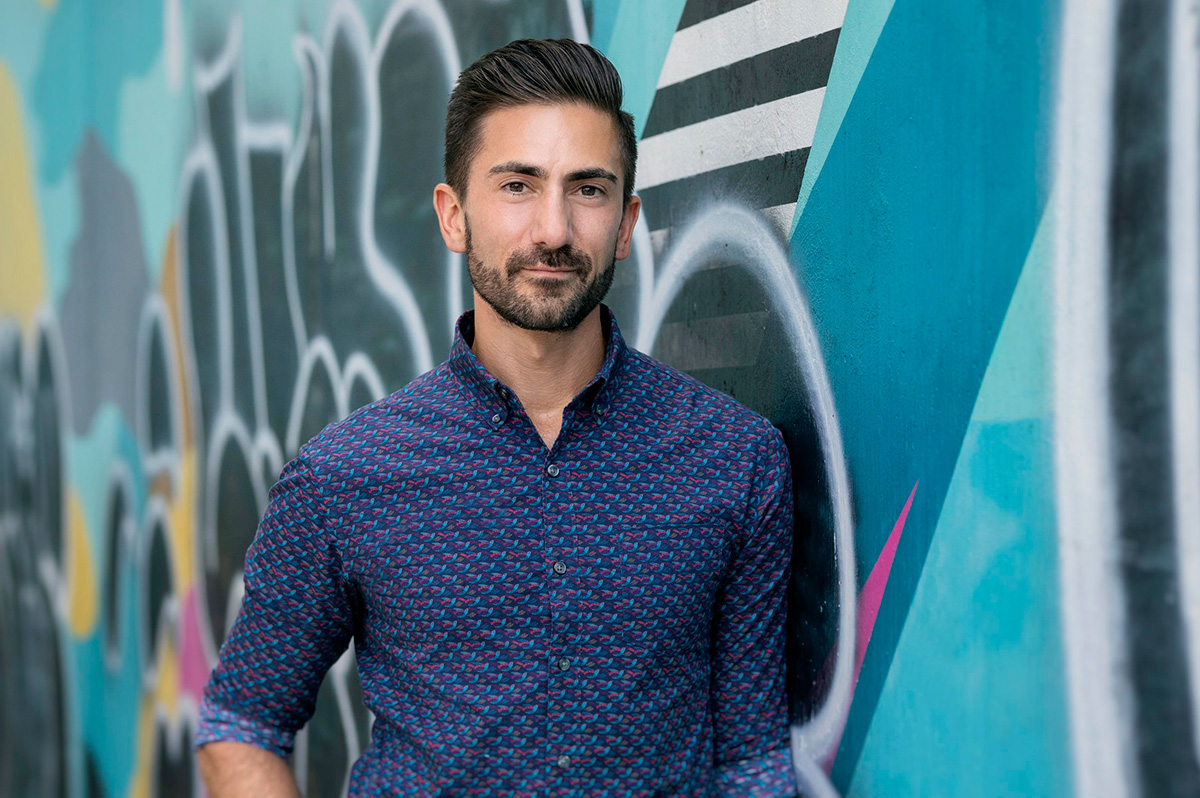
Gay Advisory Neighborhood Commissioner Brian Footer, who was one of three out LGBTQ candidates running for the open Ward 1 D.C. Council seat in the city’s June 16, 2026, Democratic primary, announced on Dec. 17 he has decided to “suspend” his campaign to focus on his family.
“After deep reflection and honest conversations with my family, I have decided to suspend my campaign for the D.C. Council,” he said in a statement. “This moment in my life requires me to be present with the people I love most and honor the responsibilities I carry both at home and in the community,” he states. “This was not an easy decision, but it is the right one for me and my family at this time.”
Footer, a longtime Ward 1 community activist and LGBTQ rights advocate, announced his candidacy for the Ward 1 Council seat in July, one month before bisexual Ward 1 community activist Aparna Raj announced her candidacy for the Council seat on Aug. 12.
Gay Ward 1 Advisory Neighborhood Commissioner Miguel Trindade Deramo announced his candidacy for the Ward 1 Council seat on Nov. 18, becoming the third out LGBTQ candidate in what appeared to be an unprecedented development for a race for a single D.C. Council seat.
At least three other candidates who are not LGBTQ are running for the Ward 1 Council seat. They include Ward 1 ANC member Rashida Brown, longtime Ward 1 community activist Terry Lynch, and Jackie Reyes-Yanes, the former director of the Mayor’s Office of Community Affairs.
In his statement announcing the suspension of his candidacy, Footer said he would continue to be involved in community affairs and advocate for the issues he discussed during his campaign.
“I want to be clear: I am stepping back from the race, not the work,” he says in his statement. “Public service has always been my calling. I will continue advocating for affordability, for safer streets, for stability for small businesses, and for a government that responds to people with urgency and respect,” he wrote. “And I will continue showing up as a partner in the work of building a stronger Ward 1.”
Footer concluded by thanking and praising his campaign supporters and calling his campaign suspension a “transition,” suggesting he is not likely to resume his candidacy.
His campaign press spokesperson did not immediately respond to a question from the Washington Blade asking if Footer might later resume his campaign or if his latest action was in effect an end to his candidacy.
“To everyone who knocked on doors, hosted conversations, donated, shared encouragement, and believed in this campaign, thank you,” he says in his statement. “I am deeply grateful for every person who helped this campaign take root,” he added. “This isn’t an ending, it’s a transition. And I’m excited for the work ahead, both in Ward 1 and at home with my family.”
Longtime gay D.C. Democratic Party activist Peter Rosenstein said in a statement to the Blade, “I respect Brian Footer’s decision to end his campaign for Council. It is not easy to run a campaign in D.C. and there are many others running in Ward 1.” He added, “While not living in Ward 1, I thank Brian for all he has done and clearly will continue to do for the people in the ward.”
Politics
LGBTQ Democrats say they’re ready to fight to win in 2026
DNC winter meetings took place last weekend in Los Angeles

The Democratic National Committee held its annual winter meetings in Downtown Los Angeles over the weekend, and queer Democrats showed up with a clear message for the national organization: don’t abandon queer and transgender people.
Following last year’s disastrous presidential and congressional elections, many influential pundits and some powerful lawmakers called on Democrats to distance the party from unpopular positions on trans rights, in order to win swing districts by wooing more conservative voters.
But members of the DNC’s LGBTQ Caucus say that’s actually a losing strategy.
“There are still parts of our party saying we need to abandon trans people in order to win elections, which is just not provable, actually. It’s just some feelings from some old consultants in DC,” LGBTQ Caucus Chair Sean Meloy says.
Some national Democrats are already backtracking from suggestions that they walk back on trans rights.
California Gov. Gavin Newsom grabbed national attention in March when he suggested that it was “deeply unfair” for trans girls to play in women’s sports. But last week, he doubled down on support for trans rights, claiming to have signed more trans-rights legislation than any governor in the country, and entering into feuds on X with Elon Musk and Nicki Minaj over his support for trans kids.
Democrats are also clearly feeling the wind in their sails recently after major election victories in Virginia and New Jersey last month, as well as victories in dozens of local and state legislative elections across the country in 2025.
“[Abigail] Spanberger in Virginia didn’t win by dodging the trans question. She won by attacking it, confronting it, and that’s how she got ahead,” says Vivian Smotherman, a trans activist and at-large member of the DNC’s LGBTQ Caucus.
“Trans people are not a problem. We are a resource,” Smotherman says. “For my community, surviving into adulthood is not a guarantee, it’s an accomplishment. You don’t walk through a survival gauntlet without learning things … I’m not begging the DNC to protect my community. I’m here to remind you that we are the warriors tempered by fire, and we are fully capable of helping this party win.”
At its own meeting on Friday, the LGBTQ Caucus announced several new initiatives to ensure that queer and trans issues stay top of mind for the DNC as it gears up for the midterm elections next year.
One plan is to formalize the DNC’s Trans Advisory Board as distinct from the LGBTQ Caucus, to help introduce candidates across the country to trans people and trans issues.
“One in three people in this country know a trans person. Two-thirds of Americans don’t think they do,” Smotherman says. “So the real problem is not being trans, it’s that you don’t know us. You cannot authentically support a trans person if you’ve never met one.
“That’s why my first goal with this Trans Advisory Board is to host a monthly Meet a Trans Person webinar. Not as a spectacle, as a debate, but as a human connection, and I will be charging every state chair with asking every one of their candidates up and down the board if they know a trans person. And if that person doesn’t know a trans person, I’m gonna have that state chair put them on that webinar.”
The LGBTQ caucus is also opening up associate membership to allies who do not identify as LGBTQ, in order to broaden support and connections over queer issues.
It’s also preparing for the inevitable attacks Republicans will throw at queer candidates and supporters of LGBTQ issues.
“These attacks are going to come. You have to budget money proactively. You have to be ready to fight,” Meloy says. “There are some local party chairs who don’t want to recruit LGBTQ candidates to run because these issues might come up, right? That’s an absolutely ludicrous statement, but there are still people who need support in how to be ready and how to respond to these things that inevitably come.”
“The oldest joke is that Democrats don’t have a spine. And when they come after us, and we do not reply, we play right into that.”
Meloy also alluded to anti-LGBTQ tropes that queer people are out to harm children, and said that Democrats should be prepared to make the case that it’s actually Republicans who are protecting child abusers – for example, by suppressing the Epstein files.
“They are weak on this issue. Take the fight, empower your parties to say, ‘These people have nothing to stand on,’” Meloy says.

Candidates should pledge to nominate LGBTQ judge to Supreme Court

Kazakh Senate approves anti-LGBTQ propaganda bill

Local, last-minute holiday gift ideas

2026 elections will bring major changes to D.C. government

Brian Footer suspends campaign for Ward 1 D.C. Council seat

PHOTOS: The Holiday Show

Choose U ambassadors share lived experiences with HIV, personal reflections, and insights

The best books to give this holiday season

Studio’s ‘Mother Play’ draws from lesbian playwright’s past