Maryland
Gay, lesbian incumbents, candidates on Md. county ballots
State’s primary is on July 19
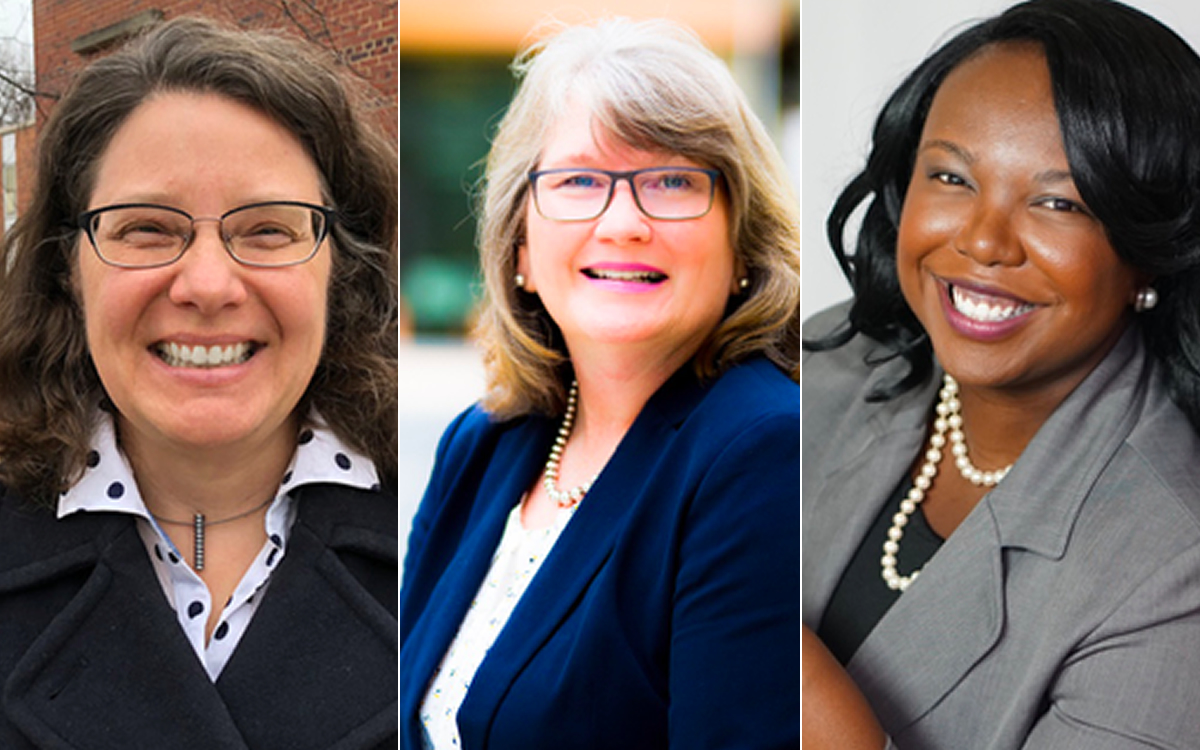
The Washington Blade this week spoke with five openly gay and lesbian candidates who are either running for office or are seeking re-election in Montgomery, Prince George’s and Howard Counties.
Montgomery County Councilman Evan Glass
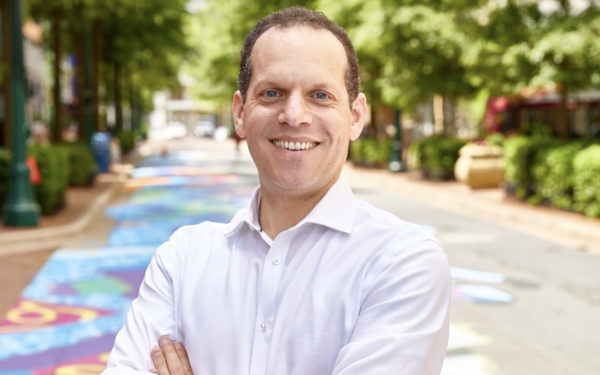
Evan Glass serves as the vice president of the Montgomery County Council and as its first openly LGBTQ member. Previously working for 12 years as a CNN journalist, he was first elected in 2018.
Glass told the Blade that running to continue as a member of the Council was rooted in the change that has been able to be made thus far.
“When I first raised the Pride flag in an official manner in 2019, I received a lot of pushback and hate,” Glass said. “But we persisted and have continued expanding Pride events and celebrating our beautiful diversity.”
Since his election, Glass’ initiatives in Montgomery County have included a host of local legislation aimed at promoting and furthering social justice and LGBTQ equality in the county.
Along with measures, such as the county’s Housing Justice Act and Oversight and Small Business Investment Act, Glass’ efforts led to the Council to pass its Pay Equity Act designed close the gender wage gap by modifying how the county determines salaries for employees. He also worked to spearhead the passage of the county’s LGBTQ Bill of Rights, which expanded its anti-discrimination code to include gender expression and HIV status and ban discrimination in areas such as healthcare facilities, nursing homes and personal care facilities.
As he makes his bid for reelection later this summer, Glass said that he hopes to expand on the accomplishments he has been able to make so far.
“I’m proud of my work to create more affordable housing, to make our buses free for all youth, and to keep our residents healthy and safe during the pandemic,” Glass said. “These efforts haven’t been easy, but they are critical to fostering a more fair and equitable community.”
Montgomery County Circuit Court Clerk Karen Bushell
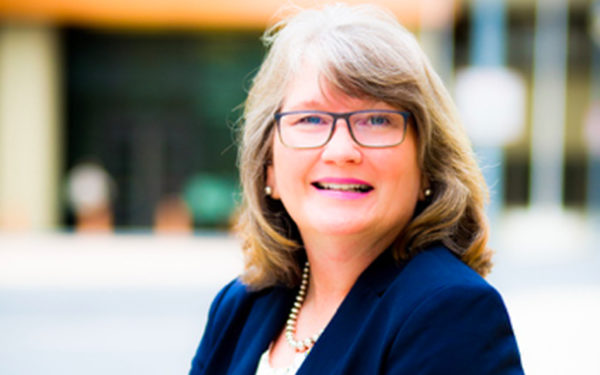
Karen Bushell grew up in the Midwest before moving to the D.C. area in 1985, where she met her wife in 1995. Bushell had four children and her wife had two children when they met, and according to Bushell, “we had a very, very busy house.”
Bushell started serving in the judiciary in 2001 — as an HR associate, and then as a judicial assistant for many years. When Barbara Michael retired as Clerk of the Court in April 2021, Bushell was appointed to the position, making her the first openly LGBTQ person to hold it.
The Clerk of the Court serves as an independent record keeper of what happens in the courts, and Bushell described the clerk’s role as primarily that of a public servant.
“I love my job; I love being part of the judiciary. Being a public servant, it’s always good to know at the end of the day, that you help somebody,” Bushell said. “I think being a public servant is something that is important to me, so that is one of the reasons that that I’m running.”
Prince George’s County Public Schools Board of Education member Pamela Boozer-Strother
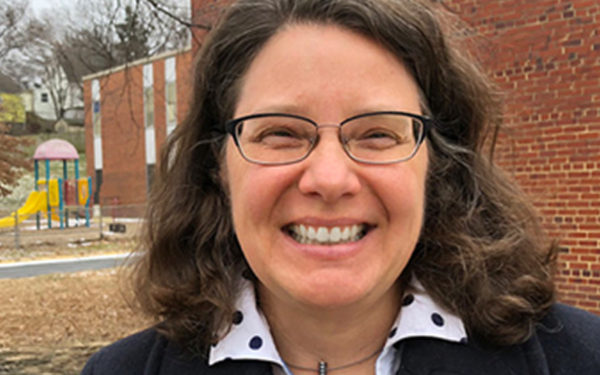
Pamela Boozer-Strother first became involved in LGBTQ and reproductive rights advocacy in the late 1980s as part of what was then called the National Lesbian and Gay Journalists Association. During the decade she spent working with NLGJA; she worked towards inclusive workplace policies, fair and accurate news coverage of LGBTQ issues, and domestic partner benefits.
After living in Adams Morgan for years, Boozer-Strother moved to Prince George’s County with her spouse Margaret, where they adopted a child and built a life together. Boozer-Strother first became involved in the school system when her son started attending public school in Prince George’s County, and in 2018 she ran for the Board of Education and won.
“I had an opportunity to make a difference by being visible, and finding other gay, lesbian, bisexual and transgender families and staff — and ultimately, students — and helping to build that network of support,” Boozer-Strother said. “It’s taken some time; I ran for the board in 2018 as an out candidate and I won, and I am thrilled to live in a community that saw that as an asset.”
Boozer-Strother has worked extensively on school construction, educational equity policy, LGBTQ-inclusive curricula and the board’s climate change action plan.
“Of course, I focused in on the relevance of my representation and my skills and background that I could bring to [my platform.] But really, I got into this because of school construction,” Boozer-Strother said. “I’m really proud to say that, as of today, seven projects that serve District 3 students are fully funded.”
Prince George’s County Council candidate Krystal Oriadha
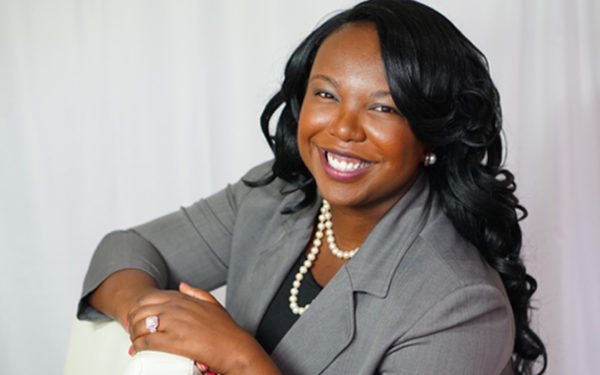
Krystal Oriadha studied business at Howard University before getting an MBA and working at Hewlitt-Packard. After a few years with HP, Oriadha moved back to the DMV area, where she said that “I wanted to use my skill set to help people and make an impact.”
Oriadha has now been a community organizer and advocate for more than 12 years — she worked with the U.S. Department of Health and Human Services on human trafficking prevention, reproductive healthcare, domestic violence campaigns and tribal nations issues for about four years before she made her first run for office, for the same seat for which she is running now. Although Oriadha lost that election by 30 votes, she became the new council member’s policy director, which gave her the chance to work on making legislation as a staffer.
“I think I learned that I wanted to be the principal even more, because they had the ability to make deals, cancel what I thought was really good legislation,” Oriadha said. “It’s really different when you’re the person that gets the make that last call — that’s the difference between having a seat at the table and being outside of the room when decisions are being made.”
Oriadha currently serves as the executive director of PG Change Makers, a local nonprofit she co-founded after returning to Prince George’s County to do community work in the aftermath of George Floyd’s murder. Although she was not initially planning to run for office again, Oriadha said that she is doing so at the request of her community.
“I was not planning on running again because it is a lot of work and I never really cared about being elected, but the community is asking me to, so I decided to go ahead and give it another try,” Oriadha said.
Oriadha said that proudly representing all aspects of her identity is a crucial part of her campaign.
“When I first ran, there was a lot of talk about how not to talk about the LGBTQ+ part, because I’m straight presenting. And for me, what was so important is that I made it very clear who I am, and that I didn’t shy away or hide that part of myself, because to me, you’re not breaking the [glass] ceiling if people don’t even know the ceiling existed. I think that we’ve never had an openly elected LGBTQ+ person sit on our County Council before,” Oriadha said.
“I think what this will show is that you can run and be yourself and it won’t cost you anything. I think that’s what is so important about this election.”
Howard County Register of Wills Byron Macfarlane
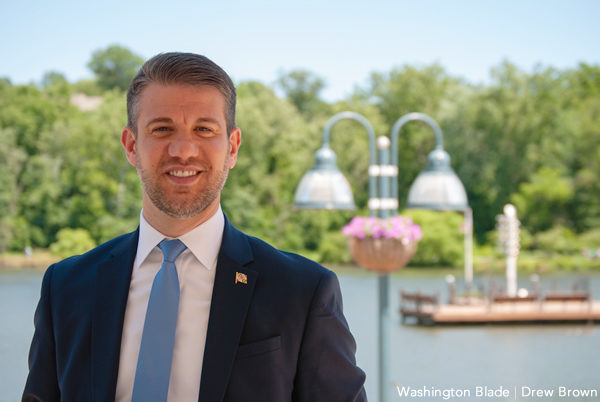
Howard County Register of Wills Byron Macfarlane has served in the position since 2010 and was the first openly LGBTQ person elected in Howard County.
Along with his involvement in a plethora of state and local groups and organizations and being admitted to the state bar association, Macfarlane gained experience working for multiple prominent lawyers and politicians including County Councilman Guy Guzzone, Circuit Court Judge Richard Bernhardt, state Sen. Edward Kasemeyer and the late-U.S. Sen. Ted Kennedy (D-Mass.)
During his tenure in office, Macfarlane has made supporting the LGBTQ community an integral facet of his identity as a public official and a fellow citizen.
“Queer kids see the hate coming from the dark corners of our community,” Macfarlane wrote on Twitter. “They need to hear from us — from you — that we love and support every one of them.”
Since being elected, Macfarlane has overseen a number of reforms implemented in the Register’s office, including modernization of its technological aspects and a cut on taxpayer expenditures for antiquated procedures. Modernizing the Register’s office and leading on reform, while also being receptive to his constituents, Macfarlane has said, have been some of his top priorities.
“I’ve proven myself as a reliable and responsive figure in our local government, that I’ve been extremely effective delivering meaningful reform, and that now more than ever our community needs steady, forward-looking leadership they can trust,” Macfarlane told the Blade. “I’m running for re-election because representation matters, because I want to continue serving the public with professionalism, compassion, and fairness, and because I want to continue pushing reforms to make probate faster, fairer and less expensive for Marylanders.”
Editor’s note: Somerset Mayor Jeffrey Slavin, who is openly gay, won re-election on May 10.






Maryland
Md. groups receive state grants to fight hate crimes
Pride Center of Maryland among recipients
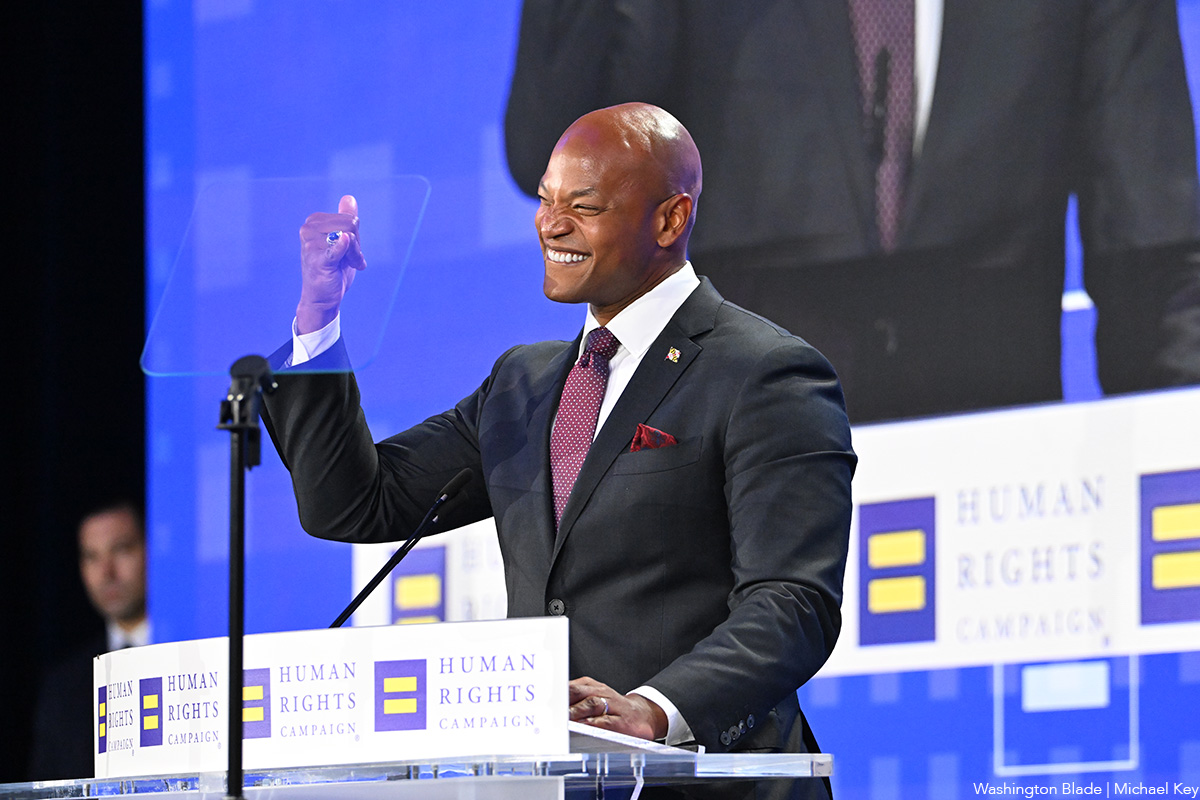
Maryland Gov. Wes Moore and the Governor’s Office of Crime Prevention and Policy are awarding a total of $10 million in grants in the 2027 fiscal year to nonprofit organizations that work to prevent hate crimes in the state.
The funds will be used to support those who feel targeted or discriminated against because of their race, religion, sexual orientation, gender identity, or disability status.
The Pride Center of Maryland is among the recipients. Churches, synagogues, mosques, and LGBTQ organizations are all eligible to receive grants
“The safety and security of all Marylanders is my top priority, so we are drawing a hard line because we have no tolerance for hate,” said Moore, according to media reports. “We are committed to protecting and ensuring safe and sacred spaces stay that way by investing in non-profit organizations, houses of worship, and community centers to protect and honor every community that makes our state so diverse and special.”
“Protection Against Hate Crime funding has strengthened the Pride Center of Maryland’s ability to protect, educate, and support the communities we serve … at a time of heightened concern associated with the Trump administration’s anti-LGBTQ/SGL (same-gender-loving) policies and pressures,” Pride Center of Maryland CEO Cleo Manago said. “PAHC funding helps us do more than improve physical security — it strengthens our community’s knowledge, preparedness, connection to resources, and ability to respond to hate with greater awareness and support.”
Maryland’s hate crimes law includes both sexual orientation and gender identity. The state’s nondiscrimination statute is also LGBTQ-inclusive.
Maryland
Anne Arundel schools now need parent permission to call trans students by preferred names
Conservative groups challenged system’s policy
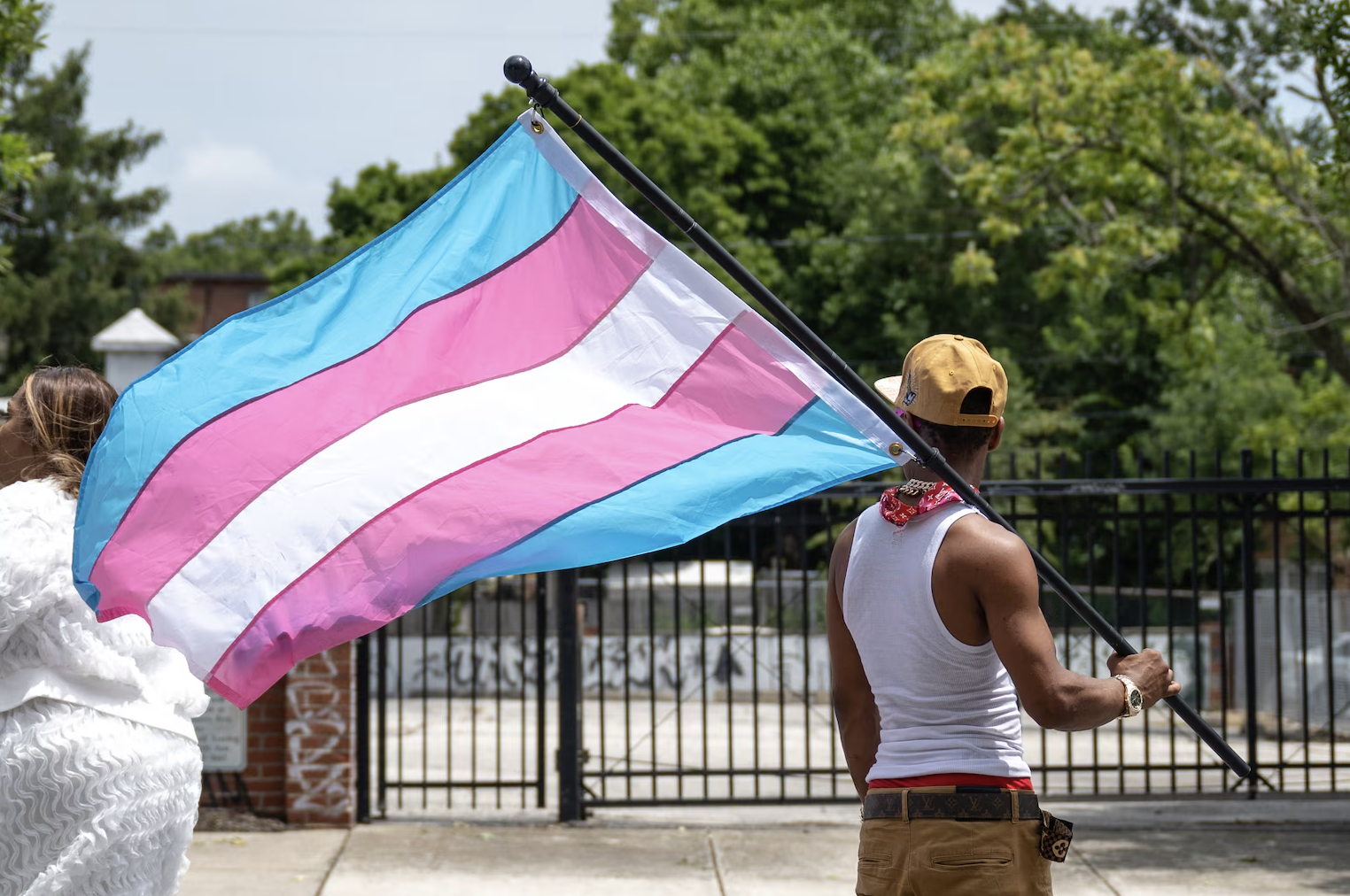
By JESSICA CALEFATI | Anne Arundel County Public Schools staff cannot use transgender students’ preferred names if their parents oppose it, according to an internal document reviewed by the Banner, a change that comes after conservative groups challenged the school system’s approach to gender identity.
Teachers union president Kristina Korona told members in an Aug. 20 email that the new guidance undermines district policy on acceptance and inclusivity and “will begin harming affected students immediately.”
Previously, the district didn’t require parental permission to use a high school student’s chosen name and pronouns corresponding to their gender identity, the internal document says. Now it does. The change comes as parents challenge the suburban school system’s gender identity policy and regulation in court and the Trump-Vance administration threatens the district’s funding.
The rest of this article can be found on the Baltimore Banner’s website.
Maryland
Girlfriends charged with Silver Spring murder to go on trial in 2027
Prosecutors charged both women with killing mother of one of them
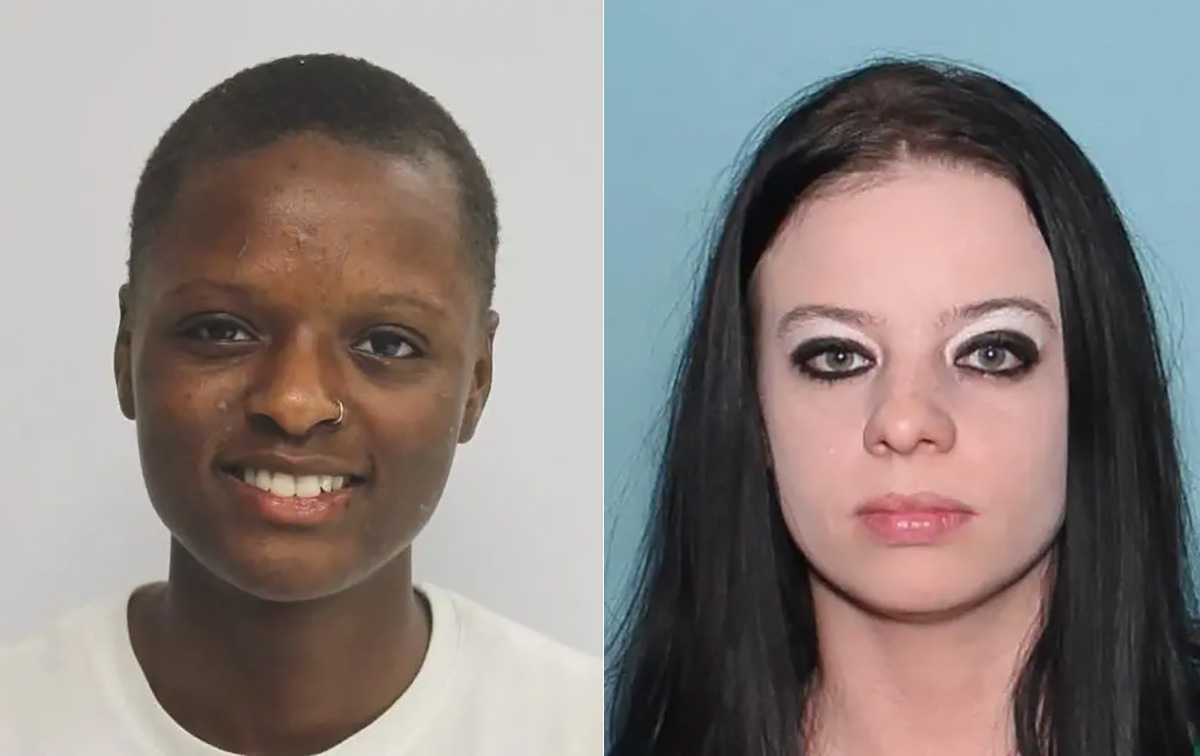
Two women identified as a couple who are charged with the May 22, 2026, murder of the mother one of them in her Silver Spring home and who were arrested three weeks later in Ohio are scheduled to go on trial for murder April 19, 2027.
According to online records filed with Montgomery County Circuit Court in Rockville, Vanessa Tjongarero-Henderson, 29, of Clarksburg, Md., and Samantha Raebel, 36, of Phoenix are being held without bond in the Montgomery County Correctional Facility until the time of their trial.
Statements from Montgomery County police show the two women were arrested June 10 in Genoa, Ohio, after fleeing from the scene of the murder in Silver Spring. Police statements and court records show they were extradited back to Maryland in July, where prosecutors with the Montgomery County State’s Attorney’s Office obtained indictments against them for murder.
Earlier statements from Montgomery County police say their investigation into the murder led to their decision to initially charge the two women with first-degree murder for the death of Hilde Henderson, 67, who was Tjongarero-Henderson’s mother.
“Through the course of the investigation, detectives identified Henderson’s daughter, Vanessa Tjongarero-Henderson, and Vanessa’s girlfriend, Raebel, as the suspects,” one of the police statements says. It says police obtained arrest warrants for both women and launched a nationwide search seeking help from the public in in locating them.
One of the police statements says an autopsy determined the cause of Hilde Henderson’s death was blunt-force trauma injuries brought about by a murder. Police and the State’s Attorney’s Office, which is prosecuting the case, have yet to disclose whether they have determined a motive for the murder.
Court records show that prior to the start of the April 19, 2027, trial a “motion” hearing was scheduled for Oct. 30, 2026, a pre-trail conference was scheduled for Feb. 12, 2027, and another motion hearing and a status hearing were scheduled for March 12, 2027.
Court records also show that Tjongarero-Henderson is being represented by attorneys with the Montgomery County court system’s public defender service. The records show that Raebel initially had been represented by a public defender service attorney, but updated records show Aug. 14 is listed as the “removal date” for that attorney.
The docket shows that on Aug. 20, two new attorneys with the prominent D.C. law firm of Covington & Burling made their official appearance as her attorneys in the murder case. One of them, Daniel Solomon, told the Washington Blade in response to an inquiry that the defense has no comment at this time on the case.
He confirmed that Covington & Burling is representing Raebel on a no-cost, pro bono bass.
The office of the Montgomery County public defender service didn’t immediately respond to a phone message from the Blade asking for a comment on the Tjongarero-Henderson case.

Advocate, Out parent company adds Trump supporter to board, prompting outrage

78th annual Emmy Awards recapped

Indonesia’s top Muslim clerical body proposes criminalizing LGBTQ people, advocacy

Hands Off the Arts to form ‘human chain’ around Kennedy Center

LGBTQ issues, attacks on Democrats dominate unusual RNC midterm convention

Multi-billion-dollar 9/11 Victim Compensation Fund to continue until 2090

Calendar: September 11-17

LGBTQ Military Happy Hour set for Sept. 15

Comings & Goings