Asia
LGBTQ and intersex communities in Pakistan forge ahead
Colonial-era criminalization law remains in place
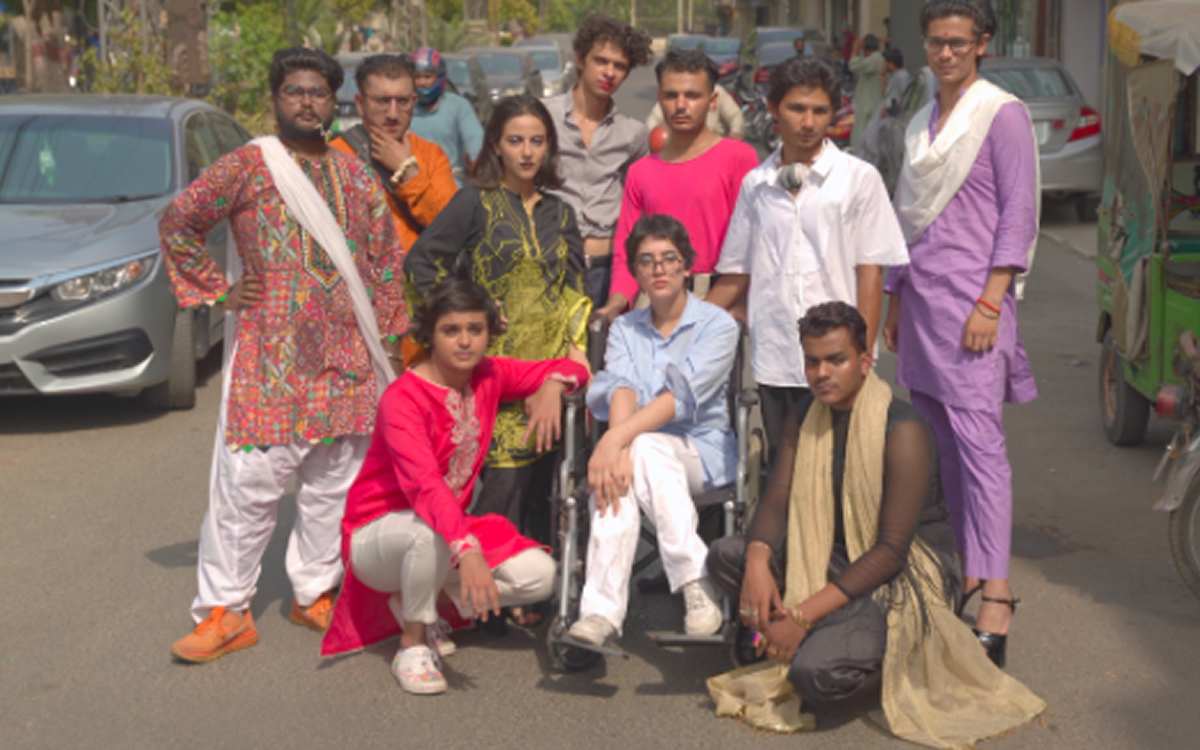
Pakistan is a country that is notorious for its human rights violations, and the LGBTQ and intersex community is one of the most vulnerable groups in the country. Despite the challenges, the community is fighting for their rights and slowly making progress.
Since homosexuality is illegal in Pakistan, the LGBTQ and intersex community is often forced into hiding. This makes it difficult to estimate the size of the community, but it is thought that there are tens of thousands of LGBTQ and intersex people living in Pakistan. Many of them live in wealthy areas of Karachi, the country’s largest city, without fear, as do community members in similar parts of Pakistan.
The community, however, continues to face many challenges in Pakistan. They experience discrimination and violence both from individuals and the government.
In 2018, for example, the Pakistani government passed a law under Section 377 of the country’s colonial-era penal code that made same-sex marriage punishable by up to 10 years in prison. Homosexuality remains criminalized in Pakistan.
In addition to the criminalization of LGBTQ and intersex Pakistanis, the community also continues to face discrimination and violence that family members often perpetuate.
Many LGBTQ and intersex people face verbal, emotional and even physical abuse from their families due to societal and religious pressures. This can lead to them dropping out of school or foregoing higher education altogether.
Discrimination in the workplace and education system forces many LGBTQ and intersex Pakistanis to remain in the closet, and those who are out often cannot find work or continue their education. Access to health care — including testing and treatment for sexually transmitted diseases and infection — is an ongoing challenge.
A law that permits transgender people to legally change the gender on their national ID cards and other official documents, allows them to vote and bans discrimination based on gender identity in employment, health care, education and on public transportation took effect last year. Pakistan’s Supreme Court in 2009 ruled in favor of recognizing trans people as a third gender on identity cards. Discrimination against trans Pakistanis remains pervasive in spite of these advances.
Pakistan’s LGBTQ and intersex rights organizations fight for change
Some of the country’s LGBTQ and intersex advocacy groups organizations are based in Lahore, but most of them are in Karachi.
Pakistan’s first gay rights organization was founded in Lahore in 1994. There are now more than 20 groups that are working to spread awareness and understanding about the LGBTQ and intersex community.
O, also known as O Collective, was founded in Lahore in March 2009 by activists dedicated to the protection of the rights of sexual minorities, specifically LGBTQ and intersex people. They are committed to the education and support of queer communities, sexual minorities, and their families and friends. O provides a safe space for the community to meet and discuss issues such as sexual health and legal rights.
The Naz Health Alliance is a public health NGO that works with the government and other stakeholders to provide technical assistance to public health programs, conduct research, provide capacity building, advocate for policy changes and social inclusion, and create awareness regarding the sexual health and human rights of MSM (men who have sex with men) and transgender communities.
The group also works towards building a healthy and inclusive society by addressing social exclusion faced by the MSM and transgender community. Qasim Iqbal founded the Naz Health Alliance in 2011.
Uzma Yaqood founded the Forum for Dignity Initiatives in 2013.
FDI is a research and advocacy organization that aims to improve the lives of sexual and gender minorities in Pakistan through education, health and other social services that are sensitive to their respective identities. The organization works to ensure women, young people and trans individuals are able to live their lives without fear.
Jannat Ali — who describes herself as an “artivist” — is the executive director of Track T, a trans rights organization that is based in Lahore.
Her organization in 2018 organized Pakistan’s first-ever trans Pride parade that nearly 500 people attended. The country’s first-ever Pride parade — which violence marred — took place in Karachi the year before.
Ali in March 2021 launched a program with episodes on Instagram and YouTube. She is the first openly trans person to host her own show in Pakistan.
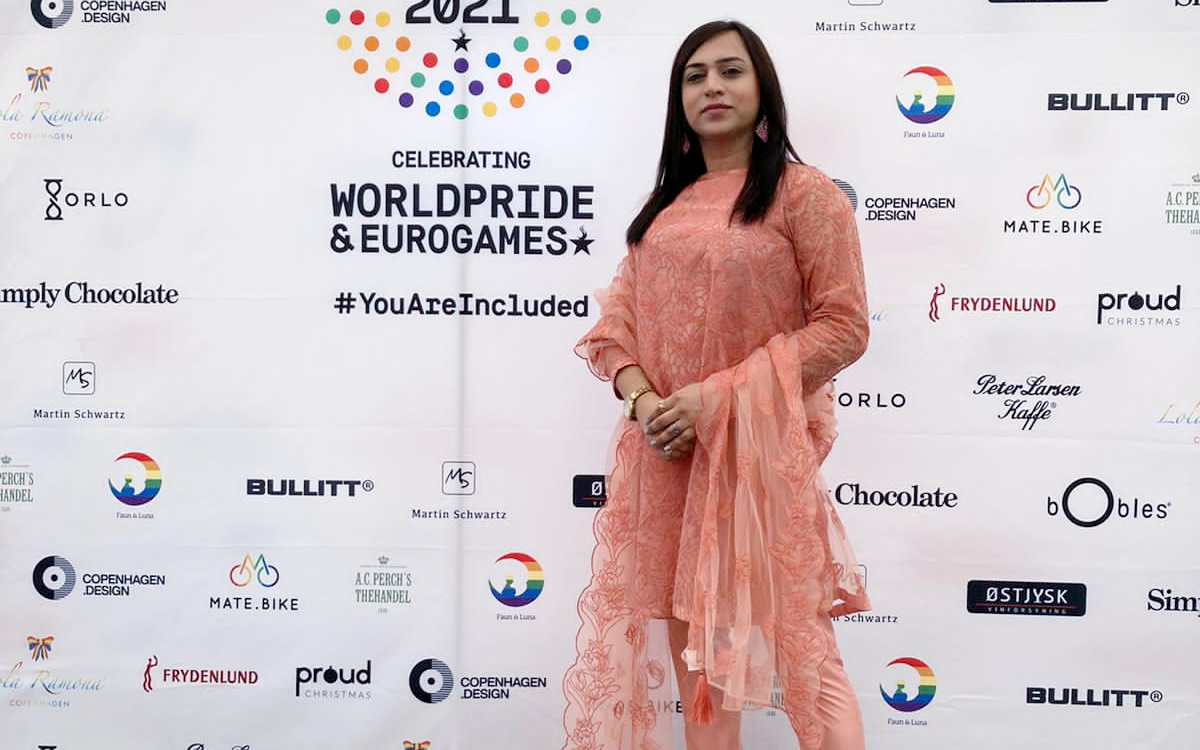
Hussain Zaidi is a recent Swarthmore College graduate who has worked tirelessly to ensure trans people can access public health care in Pakistan. Zaidi spoke with the Washington Blade about how Pakistani’s view LGBTQ and intersex communities and what can be done to ensure their safety.
“LGBTQ+ communities are typically seen as communities adopting a Western framework for sexuality that is incongruent with the cultural norms within Pakistan,” said Zaidi. “There is an indigenous culture in Pakistan where queerness and trans bodies can thrive, but our conception of this cultural praxis and way removed from global narratives of LGBTQ+ freedom and self-autonomy.”
Zaidi added “labels for the LGBTQ+ community are considered illegitimate and propaganda arguing that Pakistani individuals on the queer/trans spectrum are coopting identities oriented towards Western frameworks and lenses.”
“Even within communities that would be considered LGBTQ+, we see people rejecting the LGBTQ+ framework and instead arguing for the acceptance of local, indigenous praxis of transness and queerness,” added Zaidi. “So overall the social landscape of LGBTQ+ rights is complex and intersectional, with the perception of the label differing based on what class, status, educational level and background the Pakistani acting as the perceiver comes from.”
Zaidi said safety for LGBTQ and intersex Pakistanis “starts first by doing the work to understand how communities in Pakistan want to represent themselves in broader Pakistani culture.”
“Practicing the construction of systems of protection for LGBTQ+ allied people requires a culturally sensitive and community-informed approach,” said Zaidi. “Often foreign organizations providing aid and support expect programming to revolve around terminologies and ideas that are globally accessible and originated from/digestible by the West. Due to this, the important work of understanding how to support existing communities in establishing and advocating for their identities and rights goes ignored or under-prioritized.”
“By understanding what existing communities want, a community-informed strategy to safely advocate for LGBTQ+ aligned people can be implemented that also doesn’t put the community itself at risk in any way,” added Zaidi. “There are not many organizations doing work of this nature, due to the level of public censorship and policing that is arranged by dissenting opponents to the LGBTQ+ framework. By guaranteeing basic systems of protection and safety, we can expect the number of people and organizations committed to supporting variant sexual and gender identities to increase.”
U.S., German embassies support LGBTQ, intersex activists
The U.S. Embassy in Pakistan works to raise awareness and understanding of LGBTQ and intersex issues and people in the country.
It organizes community and educational events to build connections and support among LGBTQ and intersex Pakistanis and works to fight discrimination and oppression based on sexual orientation or gender identity. The embassy, which is located in Islamabad, the Pakistani capital, in 2011 hosted an LGBTQ and intersex event.
“Mission Pakistan works to strengthen and support the LGBTQI+ community,” tweeted the embassy on May 17, which is the International Day Against Homophobia, Biphobia and Transphobia. “We strive every day to ensure the human rights of the LGBTQI+ community are respected and protected from oppression. We continue to press for full equality.”
The German Embassy in Karachi in 2021 also hosted an event for queer Pakistanis.



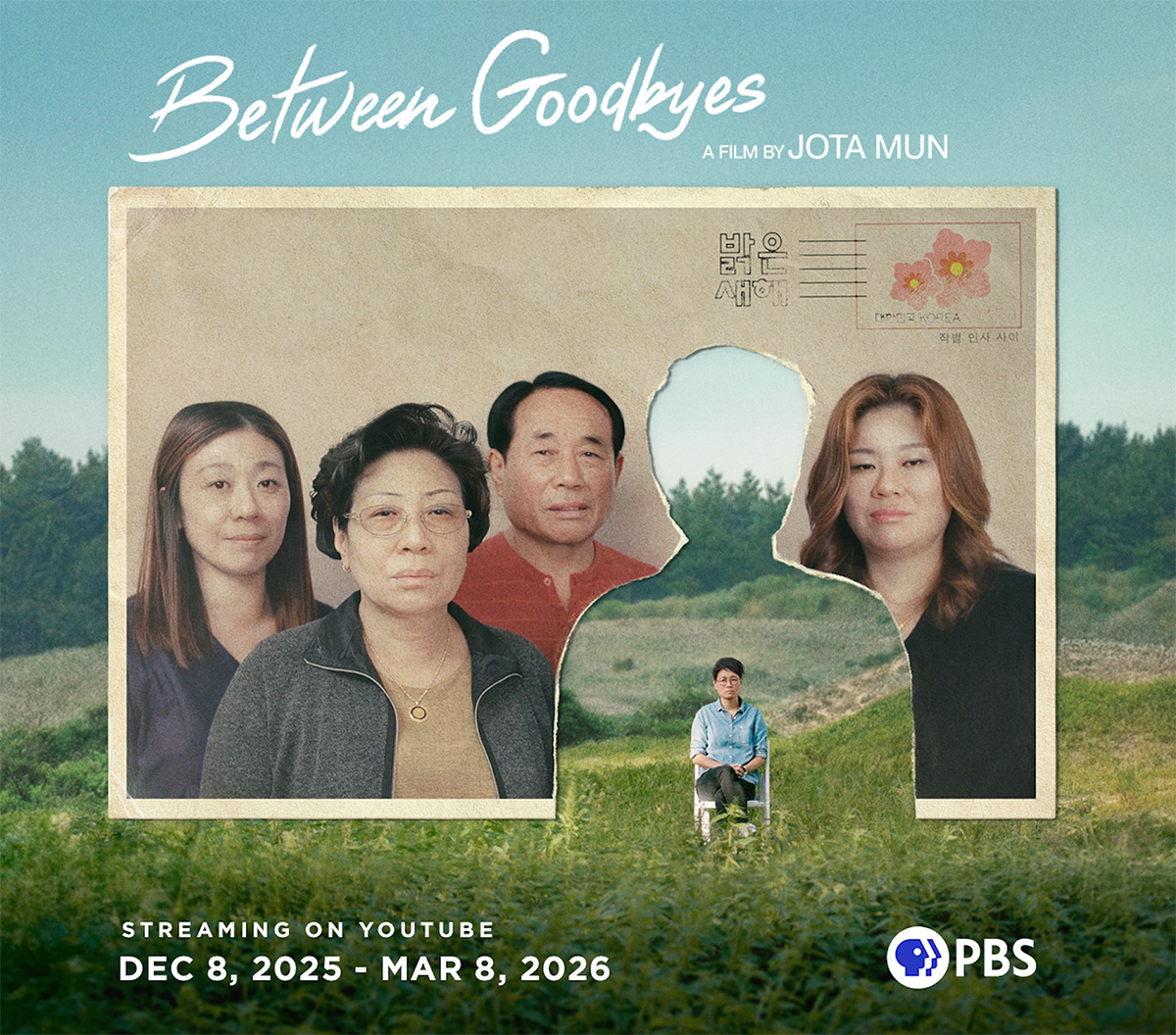
What does longing for your child look like? What happens when they resurface in front of you, when that rift was once an immeasurable open sea — a searing pain that silently hollowed you out for decades? For the child wrenched away by circumstance and thrown into the purgatory of always feeling in-between: in between home, in between being a whole person, in between who you could have been and who you are now — what does it mean to become and belong?
In filmmaker Jota Mun’s documentary “Between Goodbyes”, the fragmented yearning for home, family and identity are woven together into a tremendous and at times dream-like contemplation of the self, focused on various family members set adrift by a deceitful international adoption machine.
The story is focused on Mieke Murkes, a queer Korean adoptee who grew up in the rural village of Vaassen in the Netherlands. Shortly after her birth in 1982, she was raised by Willy, a devout evangelical Christian woman. But the story does not begin with Mieke in Vaassen. It begins with Okgyun, her original mother, walking through an ephemeral meadow as she makes her way to a shoreline. This is our first point of loss.
It is important to understand how the stories of Okgyun and Mieke exist. In “Between Goodbyes”, we see a frustrating glimpse into the cultural and political forces that created this separation. Since 1955, 200,000 children have been adopted from South Korea, and just three years ago, several of these adoptees found that their documents had been falsified. Murkes would sift through her own papers in “Between Goodbyes”, noting their dull and rote descriptions of her physical appearance and health. “The paperwork is as if you’re buying a new car,” Murkes says.
Written nearby: “Both parents are unknown,” a falsehood that leaves the family breathless. It is a gut punch.
This March, a South Korean governmental agency admitted that it had violated the rights of adoptees, but an investigation that began in 2022 at the behest of over 350 Korean adoptees has been halted. Whether or not retribution can ever be paid is up in the air, but the reeling grief and complicated self-reckoning many of these adoptees and their families face are rendered and expressed with deep tenderness in Mun’s documentary. “I did not know how to fit the Korean part of me in there,” Murkes said.
When Okgyun was pregnant with Mieke, she was also raising three other daughters: Mijin, Mikyung and Taekyung. The population was booming, and mothers like herself were being shamed for continuing to have children. Considering abortion, Okgyun recounts a midwife who convinced her not to go through with it — that if the child were a boy, she should keep him. If it turned out to be a girl, she could give her away to live “a good life” in the U.S. “Men are always positioned above women,” Okgyun said. “I always hated that.”
After Mieke was born, Okgyun’s mother-in-law told her to give her away. “She was gone before I saw her face,” Okgyun said. “I let her go.” Her guilt tightens her throat, trembles in her voice. “I dreamed of Mieke a lot. I can’t tell you how many times,” Okgyun said. “Dreaming and forgetting, dreaming, and forgetting. The thought that kept me going is that one day I can find Mieke.”
What ensued was a several years-long search. Kwangho, Mieke’s original father, pleaded with an adoption agency for any leads about Mieke. They denied him several times and his desperation only grew. “I had to find her to be at peace before I die,” he said.
Meanwhile, Mieke’s own grief and confusion were compounding. When she was beginning to discover her queerness, she was deeply ingrained in local religious spaces. What made her feel free, the church treated as an aberration — as behavior that resulted from loss.
When she would eventually meet her original family, they, too, had trouble processing her queer identity and masculine presentation. To them, queerness was “acquired” from being raised in a foreign land. With time, they grew to embrace Mieke and her partner, Marit, even as misunderstandings arose. Of this, Mieke’s conflictedness is explored. Gay rights are more advanced and accepted in the Netherlands than in South Korea, but this does not mean contending with her queerness would have been easy with her adoptive mother, Willy. “It probably would have disappointed her a lot,” Mieke tearfully revealed.
Mieke’s stepping in between knowing and unknowing is reminiscent of Okgyun’s dreaming and forgetting — their grief and confusion move within them, replicating themselves over and over again. “Between Goodbyes” dives deeply into this in order to offer a portrait of healing: of its complications and the necessity of community support to achieve this.
Mun discusses the film with the Los Angeles Blade, diving into how reunification between adoptees and original family members is, in many ways, made nearly impossible by factors like language and cultural barriers enforced and held tightly in place by the international adoption system. This film illustrates a break in this narrative and the mighty efforts behind it all.
A broadcast version of “Between Goodbyes” is now available to stream on PBS. See below for more information.
Can you tell me about the inception of making “Between Goodbyes”? Have you always wanted to tell a story about international Korean adoption from a queer perspective?
As a queer Korean adoptee myself, [there are] so many intersections that I haven’t quite seen on screen before. So I was always really excited about making something about my community. And then I’d say, in 2017, is around when I started getting closer to zeroing in on the idea. I think part of it was through befriending Mieke and hearing her parents’ story. Hearing about their efforts really blew my mind.
So much of the standard narrative is that adoptees initiate the search. So even before meeting [Okgyun and Kwangho], it just felt like it spoke so loudly of not only their character, but a piece of the puzzle that I had never considered — that they could be longing for us. And I think as an adoptee, you always wonder what [your original parents] would think. So it’s very noticeable that we almost don’t ever hear from them directly. Even in narrative stories of adoption, they’re usually deleted, or they’re written in a really flat way that feels like they’re serving the plot. I’ve never seen a depiction of birth mothers in particular who are questioning their own circumstances or feel angry about it.
There’s a lot of nuance given to all of the different people that we see in the story. The pain is layered and deep, and we don’t just view it from one perspective. What was it like having to portray this hurt, when many adoption stories typically focus solely on the adoptee’s emotional and personal journey?
It’s so unique through each lens, even though it’s the same pain. Like her sisters — of course, it’s going to affect them. Even if she never said anything, they must have felt it. It just ripples out to everyone and keeps expanding.
Originally, it was focused on Mieke, because that’s who I had the most access to, and she’s the closest to me in terms of general identity markers. So in my mind, I felt more confident that I could tell her story in a nuanced way. But what about Okgyun? I was hitting a similar barrier of communication that Mieke had hit. That’s part of why our main producer, Zoe Sua Cho, was so essential in conveying more about Okygun and the original family’s side of the story.
When I was in the early stages of developing the film, there was a quote that I felt was really inspirational: “In our hurting, we did not realize that we were stolen from each other” (by SN Désirée Cha from Outsiders Within Writing on Transracial Adoption.) The same quote came back to me in the edit and helped us find a narrative structure that went beyond just one person’s perspective.
What if the main character is the collective trauma, a singular event that causes the family to splinter and suffer across decades? I wanted to explore how tempting it is in these moments of righteous anger at systemic problems to end up fighting with each other. I feel like they both had to mourn something that was so much bigger than any one family. Mieke’s adoption affected so many people that I almost wanted that to be the main character. How do we not get lost in that pain and still try to come back together? It’s too much to carry alone.
So the main character is not necessarily one person, but the issue that you’re trying to tackle throughout the story. It also makes me think about how the documentary itself, or the making of it, also participates in this community healing that I feel like was the focus of “Between Goodbyes”.
I hope it’s an important layer. Suffice to say I think I always deflect to name a singular main character. I wanted to show everyone’s point of view while of course highlighting especially Okgyun and Mieke.
What else can you share about your approach to filmmaking?
You know, I was on this wonderful panel earlier this year, hosted by A-DOC, and I kind of surprised myself in preparing for it. I realized, actually, I have a lot of strong beliefs on filmmaking ethics that I hope come through in the film. For example, I reject the genius artist myth. The fantasy that if an artist is talented enough, they get permission to treat everyone around them terribly. That exploitation and squeezing things out of people is the best way to make great art.
Instead, I want to believe that the sensitivity, the care, and emotional work I poured in is going to come shining through in the film. And I do think that’s part of why we witnessed so many intensely vulnerable moments that I couldn’t have predicted.
This emotional connection to the film is also, visually, represented in artistic and inventive ways. There are sequences interspersed throughout that feel dream-like and cinematic. Creatively, what was it like to structure and craft how you wanted those scenes to be, the weight that they carried, and why you wanted to represent them in that way?
Aw, thanks for saying so! I was clear from the beginning that I wanted certain moments in the film to look as cinematic and epically life-changing as they feel in real life. Because visually, sometimes these moments of heartbreak can look rather dull. The deep heartbreak of a farewell at the airport. What does it look like? It looks like two people hugging in a very normal-looking terminal. But that’s not what it feels like. It feels larger than life. So to me, every single one of the art [scenes] has a very literal symbolism in my mind.
I really enjoy the complexity given to the family, both through the artistic symbolism and through the different angles we get to view them in. When it comes to Mieke’s queer identity, there are varying levels of acceptance and also tension that co-exist. One of her sisters, Mikyung, skirts around terms and labels, instead saying Mieke is “like that,” and “I don’t know anyone like that.” There was this feeling that queerness is learned or acquired elsewhere — that Mieke “wouldn’t have turned out like that” if she had grown up with her original family in Korea.
I can’t be sure what they were implying but you know, I definitely didn’t want to fall into a common trope of seeing Western values as being so liberal and accepting and framing all other cultures as homophobic. I want to be clear that there is a queer community in Seoul. It’s not the same as Amsterdam, of course, but it does exist.
That’s part of why it was important for me to include Mieke mentioned what she thinks her Dutch mom would have thought — just to clarify that homophobes are everywhere. There are plenty of them here in the West as well. Mieke’s Dutch parents were Evangelist Christians. So it’s not like everyone in the West is free to be a lesbian, you know?
Another moment that struck me in the film was a moment where we, as the audience, get to see you clearly. In this scene, we see you and Mieke on a rooftop, and you’re consoling her as she’s trying to prepare for a difficult conversation with her original mother, Okgyun. Did you have to find a balance in terms of being the director of this film and being Mieke’s friend?
It was really important to me to show friendship and how much that can help you along the journey. You think that for her to emotionally process things, it would have to be with her mom. But that rooftop conversation felt so transformative in itself. And then what ended up being the kind of mirror scene to that was Okgyun talking to Ruth [a fellow original mother]. She needed a buddy, too. How many times in life are we like: the opposing party doesn’t need to get it, but if my friend just could — that would give me so much relief and patience to enter the actual conversation with the person I’m upset with.
Being so personally close to Mieke and her family meant that my film was about all people I loved and cared about. I think the documentary field comes from such a long history of an anthropological approach. It’s like, “I’ve helicoptered in, and I just met you, but I’m the expert artist.” I wish the ethos were the opposite; we need to care about everyone, from the participants to the crew. I don’t want the blood, sweat, and tears to come through on the screen. I hope that watching it makes people feel cloaked in tenderness and care.
I was so worried about everyone, probably too much. It’s such a weird thing to ask people to do, to be in a film, so I took that with a lot of responsibility. Be aware of the impact you’re having. I am having an effect on this family’s life. I almost wanted to be like: “Forget my art project.” This is about the rest of their lives as a family, and that’s more important. So it became a light on my path, trying to make decisions as best I could to have a positive impact on their relationship.
It almost made me question my ethics in a different direction. “Am I intervening too much?” And that’s a strange thing: I have to admit I exist. I’m not a fly on the wall. And I think that’s why the conversation on the roof was really the most vulnerable for me, because I was showing myself. I’ve actually been here the whole time, cheering them on or trying to diffuse tension. I set out to make a film about how hard it is to stay in reunion, but now I’ve realized I’ll be heartbroken if their reunion doesn’t last. So in many ways the film was really just a vehicle for my attempt at keeping us all connected across so many distances, and that’s my own emotional journey or connection to their story.
Mun plans to release the full-length film in 2026, along with deleted scenes and additional footage. Up-to-date information can be found on the film’s Instagram page.
Kazakhstan
Kazakh Senate tables anti-LGBTQ propaganda bill
Lawmakers say they need more time to consider proposal
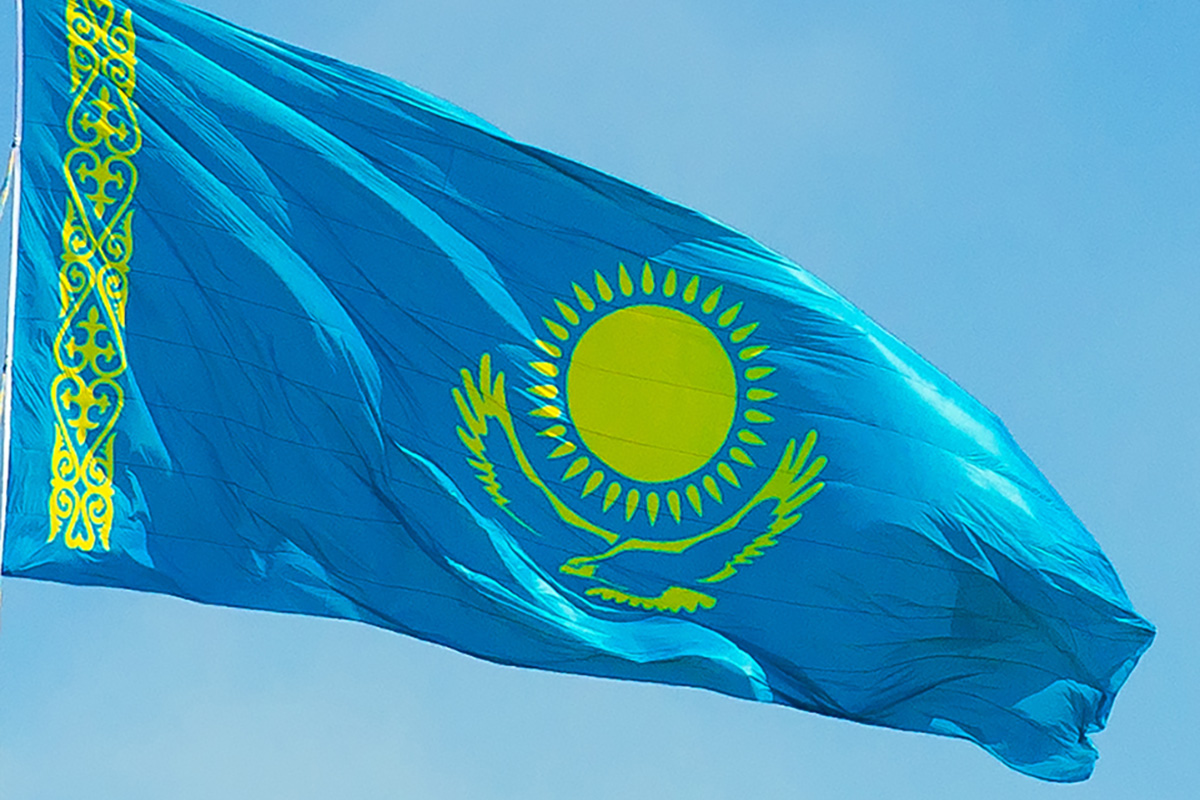
The Kazakh Senate has tabled a vote on a bill that would ban so-called LGBTQ propaganda in the country.
Members of Kazakhstan’s lower house of parliament last month unanimously approved the measure that would ban “‘LGBT propaganda’ online or in the media” with “fines for violators and up to 10 days in jail for repeat offenders.” The Kazakh Telegraph Agency, an independent news organization, reported the Senate in a statement said senators needed more time to consider the measure.
“It is important to note that the law introduces amendments and additions to the Labor Code of Kazakhstan as well as to 12 other laws of the Republic of Kazakhstan. This is a significant amount of work and requires additional time,” reads the statement. “Moreover, given that the law also regulates issues related to the protection of children’s rights, this is always a matter requiring special consideration and increased attention … “
Kazakhstan is a predominantly Muslim former Soviet republic in Central Asia that borders Russia, Turkmenistan, Uzbekistan, Kyrgyzstan, and China.
Russia, Georgia, and Hungary are among the other countries with anti-LGBTQ propaganda laws.
Japan
Tokyo court upholds Japan’s same-sex marriage ban
Country is only G7 nation without legal recognition of same-sex couples
The Tokyo High Court on Nov. 28 ruled the lack of marriage rights for same-sex couples in Japan is constitutional.
The Associated Press notes Judge Ayumi Higashi upheld the legal definition of a family in Japan as a man and a woman and their children. The court also dismissed the eight plaintiffs’ demand for 1 million yen ($6,406.85) in damages.
Hiromi Hatogai, one of the plaintiffs, told reporters after the court ruled that she is “so disappointed.”
“Rather than sorrow, I’m outraged and appalled by the decision,” said Hatogai, according to the AP. “Were the judges listening to us?”
Japan remains the only G7 country without legal recognition of same-sex couples, even though several courts in recent years have ruled in favor of it.
The Sapporo District Court in 2021 ruled the denial of marriage benefits to same-sex couples violates the constitution’s equality clause. The Nagoya District Court in 2023 issued a similar ruling. The Fukuoka District Court in a separate decision said Japan’s current legal framework is unconstitutional. The Tokyo High Court in 2024 came to the same conclusion.
The Washington Blade last month noted Prime Minister Sanae Takaichi, who is Japan’s first female head of government, opposes marriage equality and has reiterated the constitution’s assertion the family is an institution based around “the equal rights of husband and wife.”

PHOTOS: The Holiday Show

The best books to give this holiday season

Studio’s ‘Mother Play’ draws from lesbian playwright’s past

Choose U ambassadors share lived experiences with HIV, personal reflections, and insights

DOJ seeks to join lawsuit against Loudoun County over trans student in locker room

EXCLUSIVE: George Santos speaks out on prison, Trump pardon, and more

Victory Institute honors transgender Spanish senator in D.C.

The beginning of the fall of Trump

Markey reintroduces International Human Rights Act in Senate