South America
Biden, Lula reiterate support of LGBTQ, intersex rights
Two presidents met at the White House on Friday
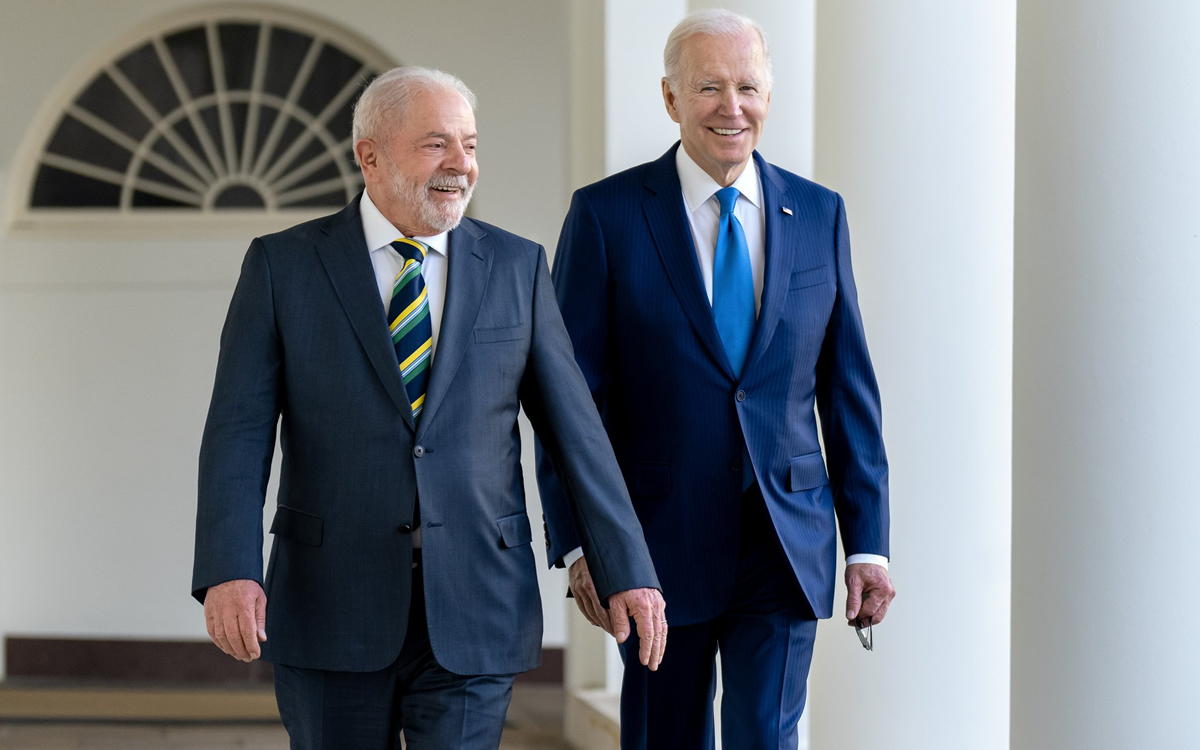
President Joe Biden and Brazilian President Luiz Inácio Lula da Silva on Friday in a joint statement issued after they met at the White House reiterated their support of LGBTQ and intersex rights.
“Both leaders noted they continue to reject extremism and violence in politics, condemned hate speech, and reaffirmed their intention to build societal resilience to disinformation and agreed to work together on these issues,” reads the statement. “They discussed common objectives of advancing the human rights agenda through cooperation and coordination on such issues as social inclusion and labor rights, gender equality, racial equity and justice and the protection of the rights of LGBTQI+ persons.”
Biden and Da Silva, among other things, committed to “reinvigorating the U.S.-Brazil Joint Action Plan to Eliminate Racial and Ethnic Discrimination and Promote Equality to mutually benefit marginalized racial, ethnic and indigenous communities, including people of African descent, in both countries.”
The Brazilian Foreign Affairs Ministry posted the statement on its website.
The meeting took place roughly a month after thousands of supporters of former Brazilian President Jair Bolsonaro stormed their country’s Congress, Supreme Court and presidential palace. The insurrection took place a week after Da Silva’s inauguration.
Da Silva, a member of the leftist Workers’ Party, was Brazil’s president from 2003-2010. He defeated Bolsonaro, a member of the right-wing Liberal Party, in the second round of Brazil’s presidential election that took place last October.
Bolsonaro — who has not publicly acknowledged he lost the election and flew to Florida two days before Da Silva’s inauguration — while in office faced sharp criticism over his rhetoric against LGBTQ and intersex Brazilians and other marginalized groups. Bolsonaro, among other things, also said people who are vaccinated against COVID-19 are at increased risk for AIDS.
Julian Rodrigues, who coordinated the Workers’ Party’s National Working Group from 2006-2012, during a previous interview with the Washington Blade noted Da Silva in 2014 launched the Health Ministry’s “Brazil without Homophobia” campaign. Da Silva also created the Culture Ministry’s Diversity Secretariat that, among other things, worked to make Brazilian law enforcement more LGBTQ-friendly.
Congresswoman Erika Hilton, a Black travesti and former sex worker who is one of two openly transgender women in the Brazilian Congress, last October after her election told the Blade during an interview in São Paulo that Da Silva’s victory over Bolsonaro is “an important step for democracy.”







Chile
Far-right José Antonio Kast elected Chile’s next president
Advocacy group declares ‘state of alert’ over president-elect’s opposition to LGBTQ rights

José Antonio Kast on Sunday won the second round of Chile’s presidential election.
Kast is the far-right leader of the Republican Party who was a member of the country’s House of Deputies from 2002-2018. He defeated Jeannette Jara, a member of the Communist Party of Chile who was former labor and social welfare minister in outgoing President Gabriel Boric’s government, by a 58.2-41.8 percent margin.
The election’s first round took place on Nov. 16.
Kast and Jara faced each other in the runoff after no candidate received at least 50 percent of the vote in the first round. Kast will take office on March 11.
“Under his leadership, we are confident Chile will advance shared priorities to include strengthening public security, ending illegal immigration, and revitalizing our commercial relationship,” said U.S. Secretary of State Marco Rubio on Sunday in a statement. “The United States looks forward to working closely with his administration to deepen our partnership and promote shared prosperity in our hemisphere.”
The Washington Blade has previously reported Kast has expressed his opposition to gender-specific policies, comprehensive sex education, and reforms to Chile’s anti-discrimination laws. The president-elect has also publicly opposed the country’s marriage equality law that took effect in 2022.
The Movement for Homosexual Integration and Liberation, a Chilean LGBTQ and intersex rights group known by the acronym Movilh, in a statement acknowledged the election result. Movilh also declared a “state of alert, given this leader’s (Kast’s) public and political trajectory, characterized for decades by systematic opposition to laws and policies aimed at equality and nondiscrimination of LGBTIQ+ individuals.”
“We urge the president-elect and far-right sectors that follow him to understand and internalize (the fact) that the rights of LGBTIQ+ people are inscribed in the universality of human rights, and they are not built upon an ideology or a political trend,” said Movilh in its statement. “This is not, and never has been, a left-wing or right-wing issue, although some on both sides have gone to great lengths to suggest otherwise, without any basis other than their own partisan or electoral aspirations.”
Organizado Trans Diversidades, a group that advocates on behalf of trans and nonbinary Chileans, on social media said it will “continue the fight for our community’s human rights.”
Colombia
Colombia anunció la inclusión de las categorías ‘trans’ y ‘no binario’ en los documentos de identidad
Registraduría Nacional anunció el cambio el 28 de noviembre
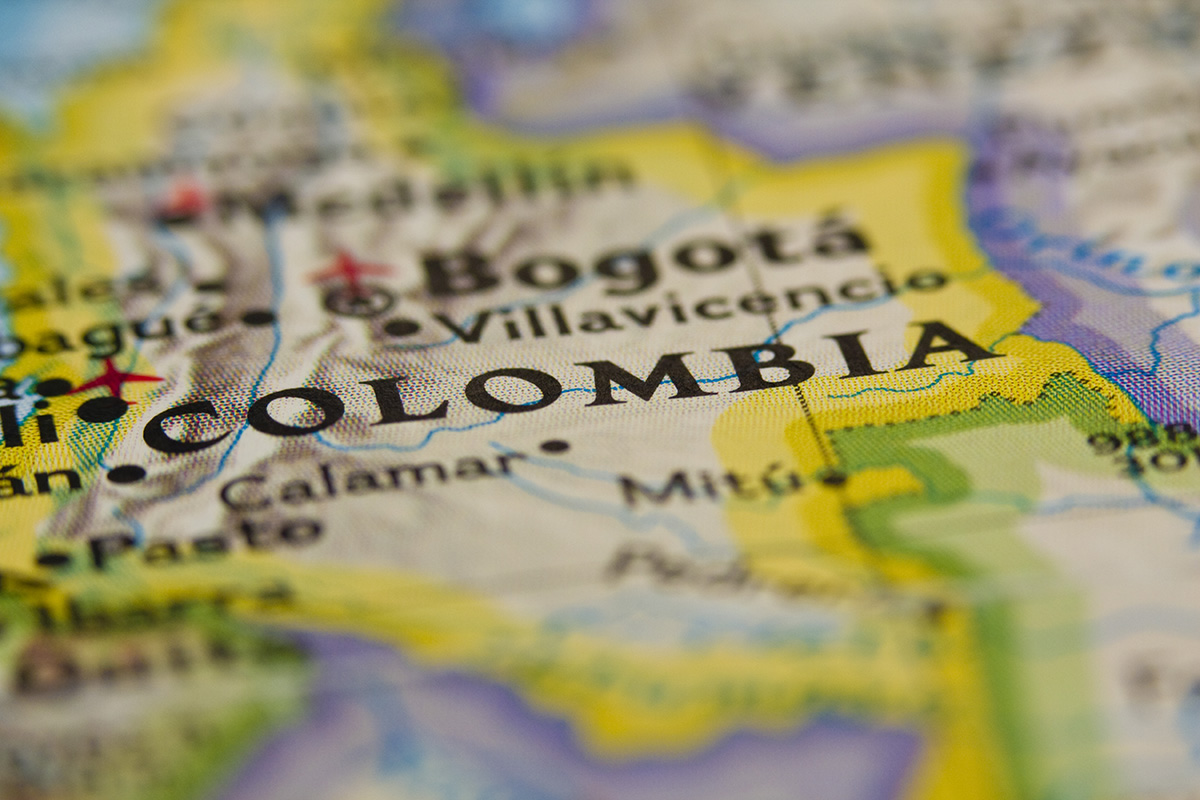
Ahora los ciudadanos colombianos podrán seleccionar las categorías ‘trans’ y ‘no binario’ en los documentos de identidad del país.
Este viernes la Registraduría Nacional del Estado Civil anunció que añadió las categorías ‘no binario’ y ‘trans’ en los distintos documentos de identidad con el fin de garantizar los derechos de las personas con identidad diversa.
El registrador nacional, Hernán Penagos, informó que hizo la inclusión de estas dos categorías en los documentos de: registro civil, tarjeta de identidad y cédula de ciudadanía.
Según la registraduría: “La inclusión de estas categorías representa un importante avance en materia de garantía de derechos de las personas con identidad de género diversa”.
Estas categorías estarán en el campo de ‘sexo’ en el que están normalmente las clasificaciones de ‘femenino’ y ‘masculino’ en los documentos de identidad.
En 2024 se inició la ejecución de diferentes acciones orientadas implementar componentes “‘NB’ y ‘T’ en el campo ‘sexo’ de los registros civiles y los documentos de identidad”.
Las personas trans existen y su identidad de género es un aspecto fundamental de su humanidad, reconocido por la Corte Constitucional de Colombia en sentencias como T-236/2023 y T-188/2024, que protegen sus derechos a la identidad y no discriminación. La actualización de la Registraduría implementa estos fallos que ya habían ordenado esos cambios en documentos de identidad.
Por su parte, el registrador nacional, Penagos, comentó que: “se trata del cumplimiento de unas órdenes por parte de la Corte Constitucional y, en segundo lugar, de una iniciativa en la que la Registraduría ha estado absolutamente comprometida”. Y explicó que en cada “una de las estaciones integradas de servicio de las más de 1.200 oficinas que tiene la Registraduría Nacional se va a incluir todo este proceso”.
Brazil
Black transgender singer from Brazil wins three Latin Grammy Awards
Liniker performed at Las Vegas ceremony
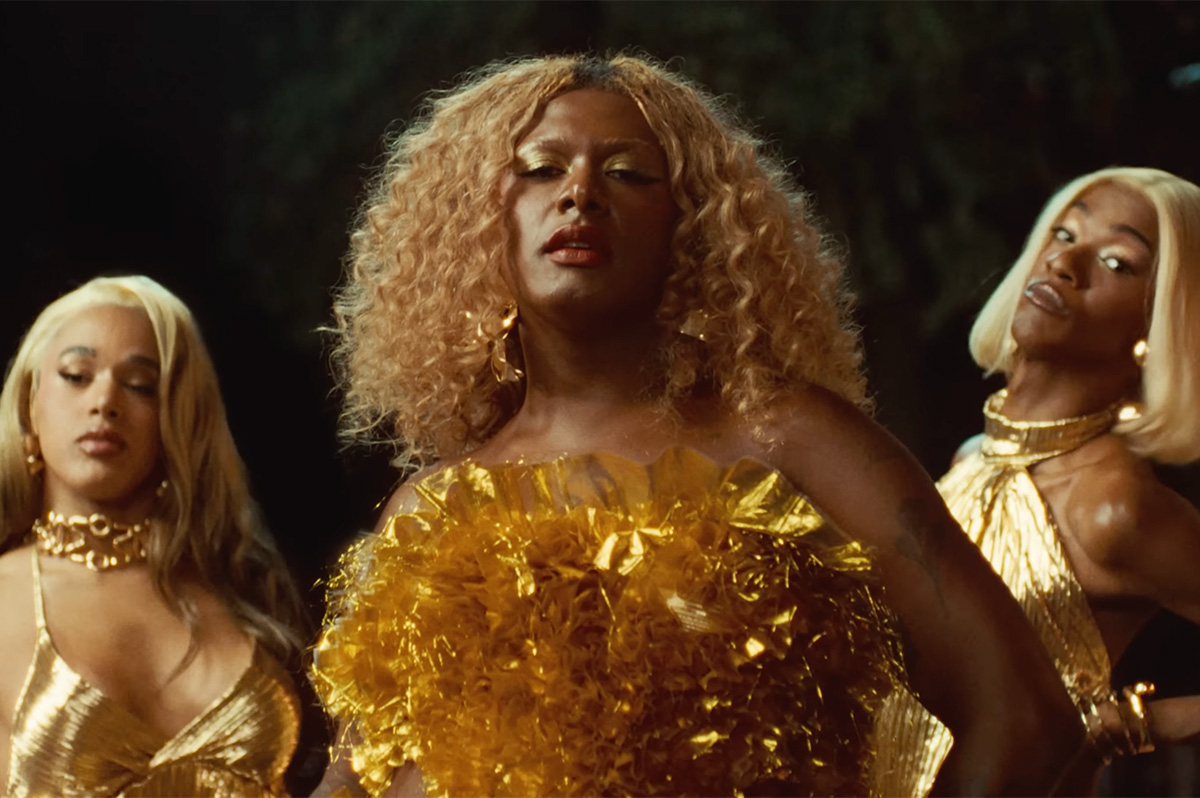
A Black transgender singer and songwriter from Brazil on Nov. 13 won three Latin Grammy Awards.
Liniker, who is from Araraquara, a city in São Paulo State, won for Best Portuguese Language Song for her song “Veludo Marrom,” Best Portuguese-Language Urban Performance for her song “Caju” from her sophomore album of the same title, and Best Portuguese Language Contemporary Pop Album for “Caju.”
She accepted the awards during the Latin Grammy Awards ceremony that took place in Las Vegas. Liniker also performed.
“I’ve been writing since I was 16. And writing, and poetry, have been my greatest form of existence. It’s where I find myself; where I celebrate so many things I experience,” said Liniker as she accepted her first Latin Grammy on Nov. 13. “And being a composer … Being a trans composer in Brazil — a country that kills us — is extremely difficult.”
Liniker in 2022 became the first openly trans woman to win a Latin Grammy.

Brian Footer suspends campaign for Ward 1 D.C. Council seat

LGBTQ Democrats say they’re ready to fight to win in 2026

PHOTOS: 10’s Across the Board

Lighting candles in a time of exhaustion

LGBTQ, LGBTQ-friendly congregations to hold holiday services

PHOTOS: The Holiday Show

Choose U ambassadors share lived experiences with HIV, personal reflections, and insights

Studio’s ‘Mother Play’ draws from lesbian playwright’s past

The best books to give this holiday season