World
‘I love Ukraine’
Country’s activists remain defiant as they mark war’s first anniversary
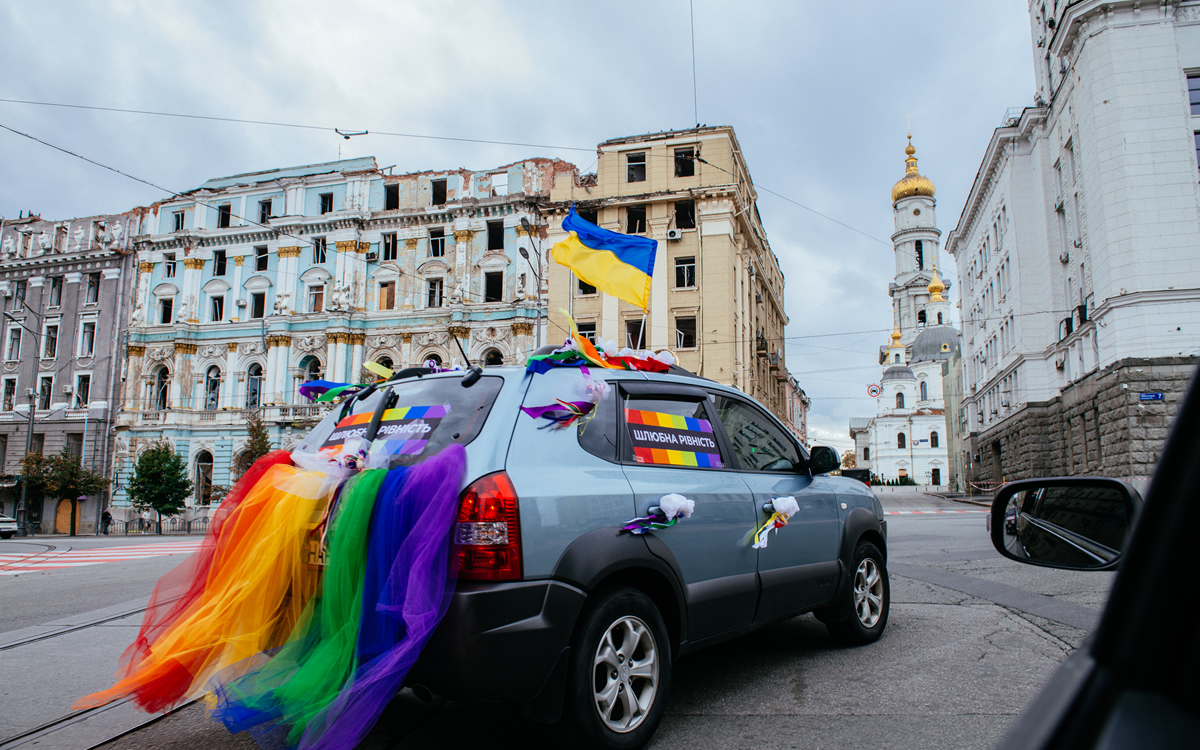
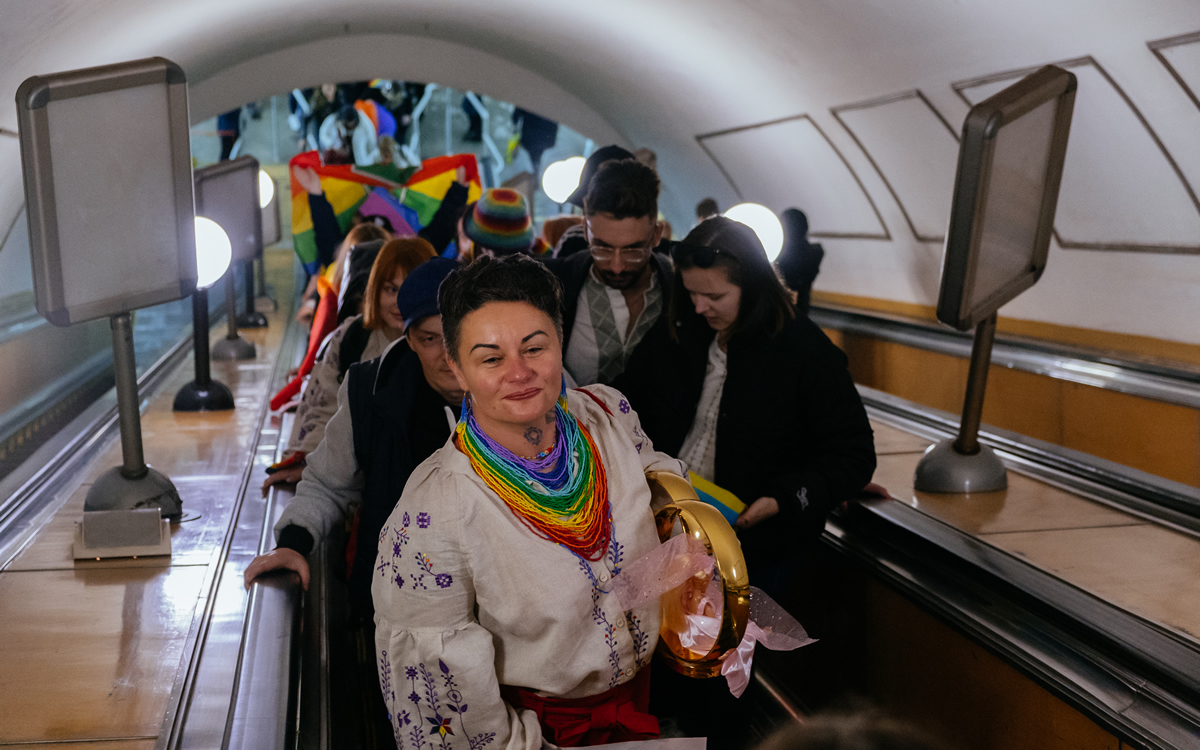
Anna Sharyhina, co-founder of the Sphere Women’s Association, a group that promotes LGBTQ and intersex rights in Ukraine, on Sept. 25, 2022, led a Pride march in a subway station in Kharkiv, the country’s second-largest city that is less than 30 miles from the Russian border in eastern Ukraine.
Kharkiv Pride took place during the Ukrainian military’s counteroffensive against Russian troops in Kharkiv Oblast. Sphere Fundraising Manager Ruslana Hnatchenko on Tuesday told the Washington Blade during a Zoom interview the subway was the only safe place for the event to happen, but she said it was “very important for us to have it in Ukraine and have it in Kharkiv.”
“Kharkiv carries a significance of being at the frontline and it is so close to Russia,” said Hnatchenko. “It was great to have it there.”
Friday marks one year since Russia launched its war against Ukraine.
Dmitry Shapoval, a gay man with HIV from Kyiv, the Ukrainian capital, and Anastasiia Baraniuk and her partner, Yulia Mulyukina, who were living together from Dniptro, a city on the Dnieper River in central Ukraine, are among the millions of people who have left Ukraine over the last year.
Hnatchenko was in Budapest, Hungary, studying for her master’s degree when the war began, and she spoke with the Blade from there. She visited her family over the Christmas holidays, but they met in Lviv, a city in western Ukraine that is close to the country’s border with Poland, because it was safer than Kharkiv.
“It was unsafe for me to come to Kharkiv,” said Hnatchenko. “It would be better for everyone to meet in the west.”
A Russian airstrike on March 1, 2022, killed Elvira Schemur, a 21-year-old law school student who was a volunteer for Kharkiv Pride and Kyiv Pride. Schemur was volunteering inside Kharkiv’s regional administration building when she was killed.
Hnatchenko said activists in Kherson, a city that Ukrainian forces liberated last November, told her Russian soldiers “were aware of where people from vulnerable groups (LGBTQ and intersex people and Roma people) lived.” Hnatchenko told the Blade people who identified as LGBTQ, intersex or nonbinary did not go outside during the occupation because they were afraid of being forcibly conscripted, attacked or sexually assaulted.
“A lot of LGBT people just tried not to go outside … and obviously not to expose anything about their identity,” she said.
Hnatchenko also told the Blade women and girls in Kherson tried to dress in a “non-attractive way” in order “to make themselves look ugly, so the troops would take less interest in them.”
‘We help our soldiers’
Activists and advocacy groups remain defiant. They also continue to support LGBTQ and intersex Ukrainians who remain inside the country and servicemembers.
Hnatchenko said Sphere has provided humanitarian assistance and psychological support to more than 1,500 people.
Outright International, RFSL (the Swedish Federation for Lesbian, Gay, Bisexual, Transgender, Queer and Intersex Rights), Hivos and private donors inside Ukraine and elsewhere have donated funds that have allowed Sphere to purchase generators, clothes and blankets that it has distributed to Kharkiv’s LGBTQ and intersex residents during blackouts that Russia’s attacks against Ukrainian infrastructure have caused.
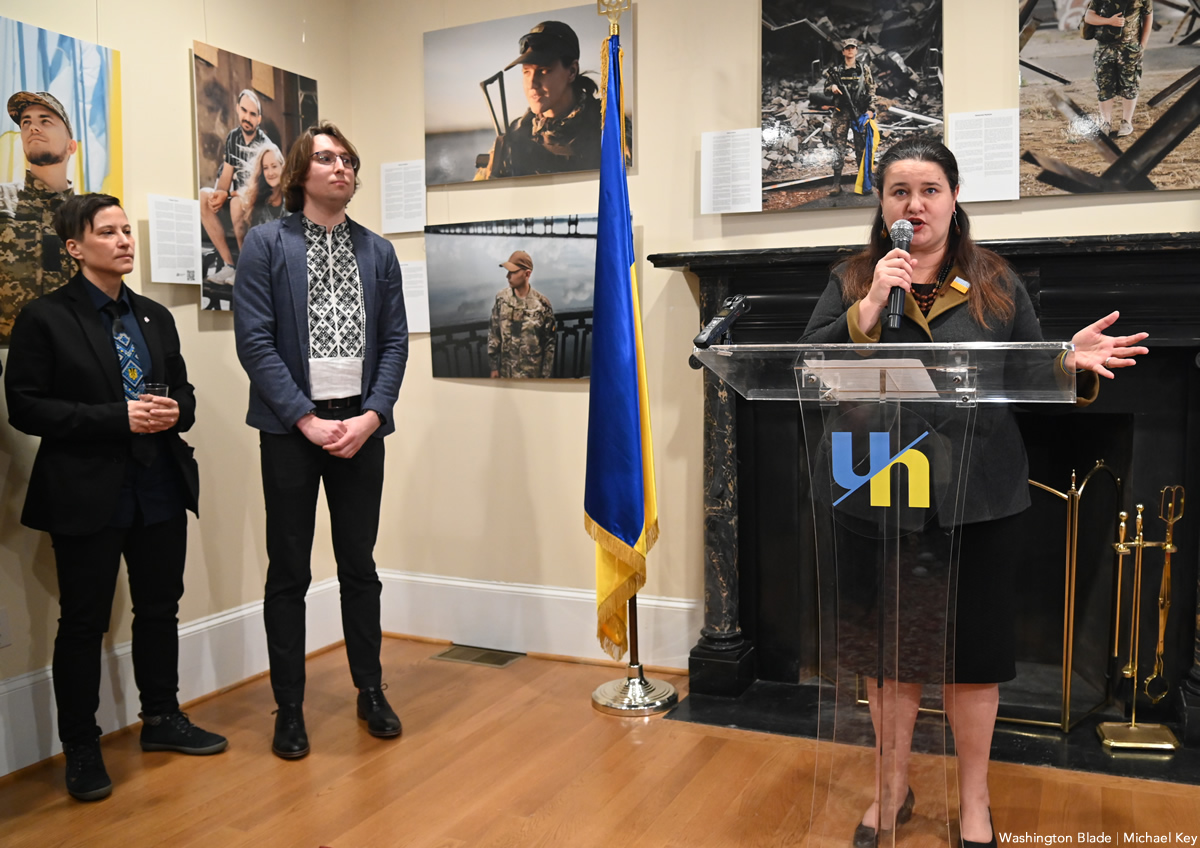
The U.S. Agency for International Development and the President’s Emergency Plan for AIDS Relief over the last year have delivered millions of doses of antiretroviral drugs for Ukrainians with HIV/AIDS. Then-Kyiv Pride Executive Director Lenny Emson last month during a photo exhibit at Ukraine House in D.C. that highlighted Ukrainian LGBTQ and intersex servicemembers noted the organization continues to purchase basic supplies for them.
“We buy shoes. We buy underwear. We buy socks. We buy heaters,” said Emson. “We help our soldiers.”
Ukrainian President Volodymyr Zelenskyy over the last year has indicated his support of LGBTQ and intersex rights.
Zelenskyy last summer said he supports a civil partnerships law for same-sex couples.
Ukrainian lawmakers late last year unanimously approved a media regulation bill that will ban hate speech and incitement based on sexual orientation and gender identity. The measure passed days before Zelenskyy, a former actor and comedian, met with President Joe Biden at the White House and addressed Congress.
Zelenskyy last month made a broad reference to LGBTQ and intersex rights in a virtual Golden Globes appearance. Ukrainian Ambassador to the U.S. Oksana Markarova during the Jan. 26 event in D.C. applauded Kyiv Pride and other LGBTQ and intersex rights groups in her country.
“Thank you for everything you do in Kyiv, and thank you for everything that you do in order to fight the discrimination that still is somewhere in Ukraine,” said Markarova. “Not everything is perfect yet, but you know, I think we are moving in the right direction. And we together will not only fight the external enemy, but also will see equality.”
Biden on Feb. 20 met with Zelenskyy in Kyiv.
Hnatchenko told the Blade she thinks Zelenskyy “does believe in human rights.”
“Maybe he’s not a full-blown ally, yet, but I think he believes in human rights,” she said, while noting she was sharing her personal thoughts about Zelenskyy. “He’s not only doing that because of the pressure from partners, but there’s pressure from within Ukraine to not do that.”
Hnatchenko further acknowledged conservative politicians, prominent figures within the Ukrainian and Russian Orthodox Churches and many Ukrainians themselves remain opposed to LGBTQ and intersex rights.
“He (Zelenskyy) is kind of between a rock and a hard place in that sense, but I believe that human rights in Ukraine will overcome, especially after our victory,” said Hnatchenko. “We will make progress.”
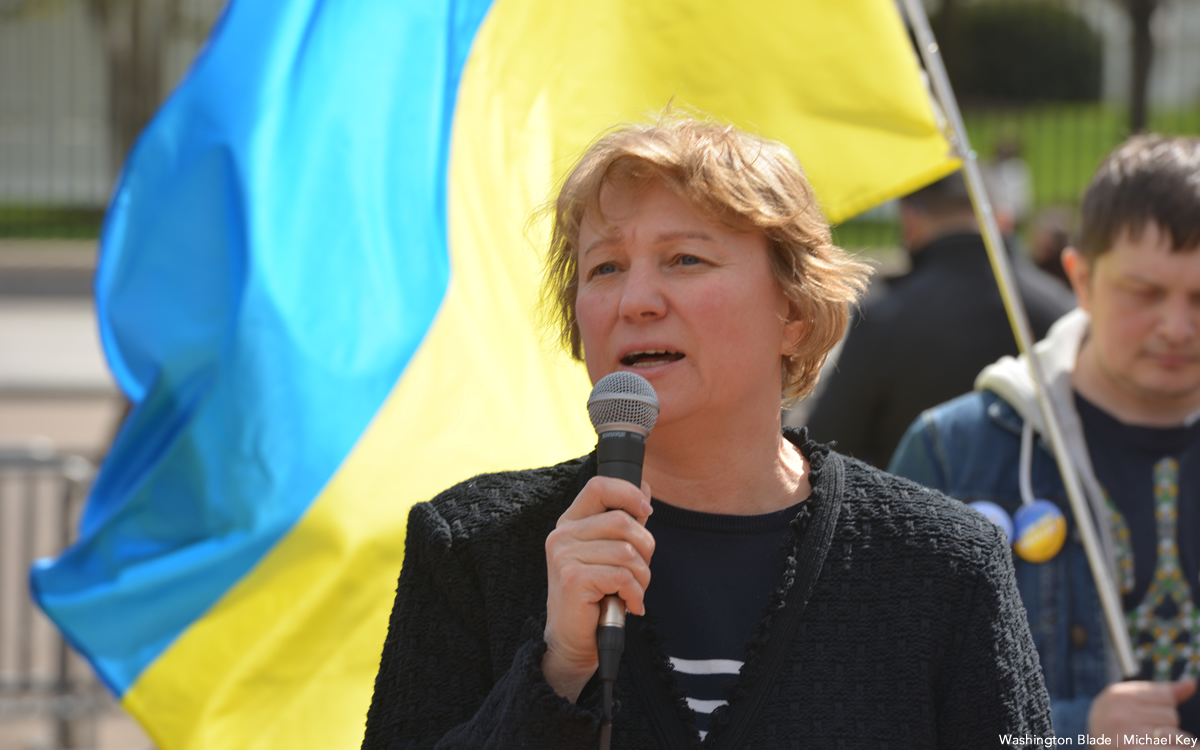
Helen Globa, co-founder of Tergo, a support group for parents and friends of LGBTQ and intersex Ukrainians, on March 2, 2022, left her apartment in the Kyiv suburb of Bucha. She lived in New York with her son, Bogdan Globa, and his husband until she returned to Ukraine last August.
Helen Globa, like Hnatchenko, acknowledged many Ukrainians remain opposed to LGBTQ and intersex rights, but she said Zelenskyy’s support of civil unions for same-sex couples and LGBTQ and intersex Ukrainians in the country’s armed forces are two tangible results of activists’ work in the country. Helen Globa also said one of the reasons she decided to return to Ukraine was to continue her support of these efforts.
“I love Ukraine and my life, my activities,” she told the Blade on Wednesday. “I do believe in our victory and further opportunities to finish my LGBTQ human rights activities by pushing our government to adopt same-sex partnership and marriages.”
Sarah Ashton-Cirillo, a transgender woman from Las Vegas who enlisted in the Ukrainian military after she covered the war, echoed Helen Globa.
“This act of war by Putin has set in motion a timely and irreversible civil rights movement in Ukraine, one that has been extraordinarily beneficial to the LGBTQ community,” Ashton-Cirillo told the Blade on Tuesday from the frontlines where she is fighting with the 209th Battalion of the 113th Brigade in the Donbas. “From hundreds of openly queer men and women serving in the Armed Forces of Ukraine to President Zelenskyy’s positive statement about civil partnerships and human rights as applied to the community, what Putin has done has allowed freedom to bloom in Ukraine.”



Kazakhstan
Kazakh Senate approves anti-LGBTQ propaganda bill
Measure ‘would undermine fundamental rights guaranteed under’ constitution
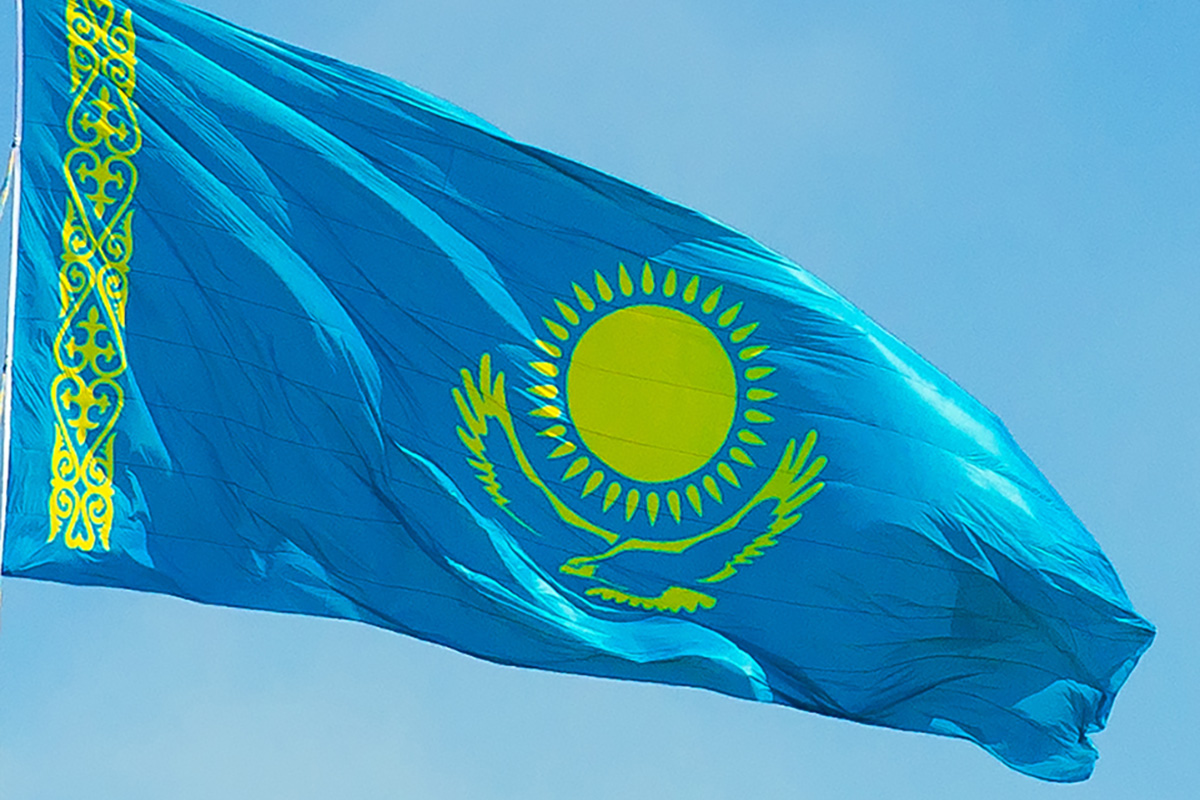
The Kazakh Senate on Thursday approved a bill that would ban so-called LGBTQ propaganda in the country.
Members of Kazakhstan’s lower house of parliament last month unanimously approved the measure that would ban “‘LGBT propaganda’ online or in the media” with “fines for violators and up to 10 days in jail for repeat offenders.” Senators earlier this month delayed a vote on the bill.
President Kassym-Jomart Tokayev has indicated he would sign it.
“If enacted, these provisions would undermine fundamental rights guaranteed under Kazakhstan’s Constitution, particularly the principle of equality and non-discrimination, by directly targeting and stigmatizing LGBTI people and anyone perceived to support them,” said ILGA-Europe in a statement after Thursday’s vote.
Kazakhstan is a predominantly Muslim former Soviet republic in Central Asia that borders Russia, Turkmenistan, Uzbekistan, Kyrgyzstan, and China. Russia, Georgia, and Hungary are among the other countries with anti-LGBTQ propaganda laws.
Chile
Far-right José Antonio Kast elected Chile’s next president
Advocacy group declares ‘state of alert’ over president-elect’s opposition to LGBTQ rights
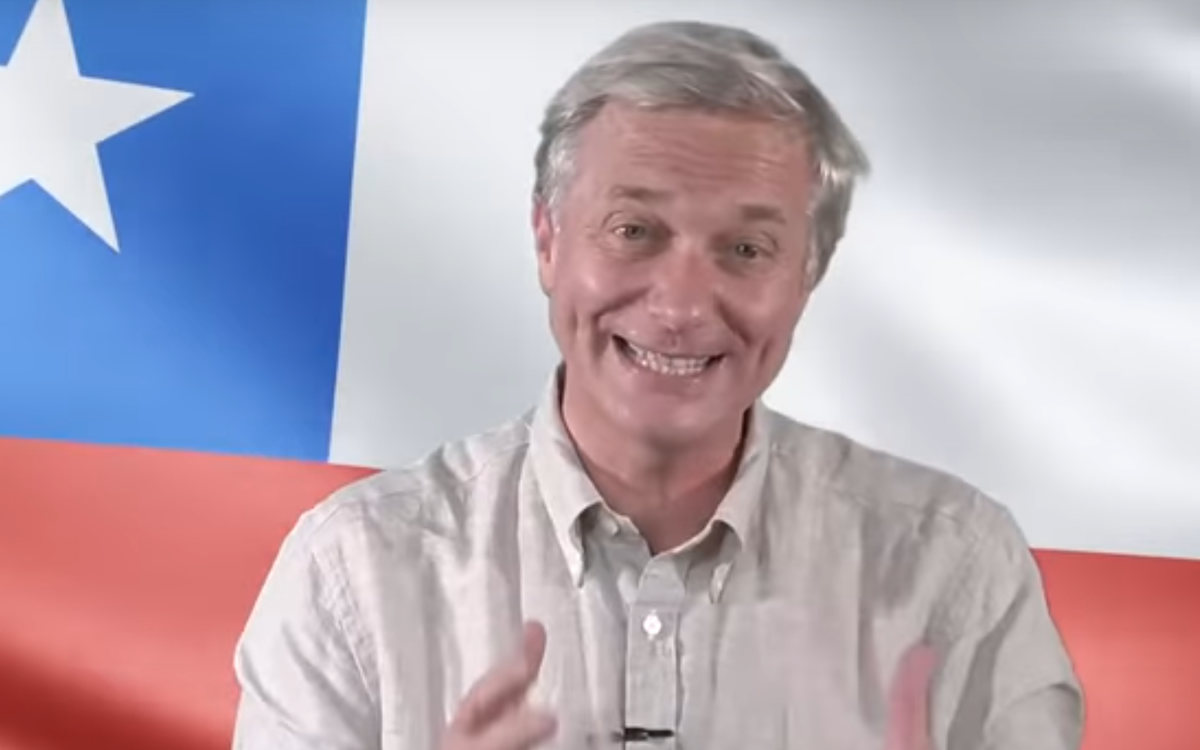
José Antonio Kast on Sunday won the second round of Chile’s presidential election.
Kast is the far-right leader of the Republican Party who was a member of the country’s House of Deputies from 2002-2018. He defeated Jeannette Jara, a member of the Communist Party of Chile who was former labor and social welfare minister in outgoing President Gabriel Boric’s government, by a 58.2-41.8 percent margin.
The election’s first round took place on Nov. 16.
Kast and Jara faced each other in the runoff after no candidate received at least 50 percent of the vote in the first round. Kast will take office on March 11.
“Under his leadership, we are confident Chile will advance shared priorities to include strengthening public security, ending illegal immigration, and revitalizing our commercial relationship,” said U.S. Secretary of State Marco Rubio on Sunday in a statement. “The United States looks forward to working closely with his administration to deepen our partnership and promote shared prosperity in our hemisphere.”
The Washington Blade has previously reported Kast has expressed his opposition to gender-specific policies, comprehensive sex education, and reforms to Chile’s anti-discrimination laws. The president-elect has also publicly opposed the country’s marriage equality law that took effect in 2022.
The Movement for Homosexual Integration and Liberation, a Chilean LGBTQ and intersex rights group known by the acronym Movilh, in a statement acknowledged the election result. Movilh also declared a “state of alert, given this leader’s (Kast’s) public and political trajectory, characterized for decades by systematic opposition to laws and policies aimed at equality and nondiscrimination of LGBTIQ+ individuals.”
“We urge the president-elect and far-right sectors that follow him to understand and internalize (the fact) that the rights of LGBTIQ+ people are inscribed in the universality of human rights, and they are not built upon an ideology or a political trend,” said Movilh in its statement. “This is not, and never has been, a left-wing or right-wing issue, although some on both sides have gone to great lengths to suggest otherwise, without any basis other than their own partisan or electoral aspirations.”
Organizado Trans Diversidades, a group that advocates on behalf of trans and nonbinary Chileans, on social media said it will “continue the fight for our community’s human rights.”
Egypt
Iran, Egypt object to playing in Seattle World Cup ‘Pride Match’
Game to take place on June 26
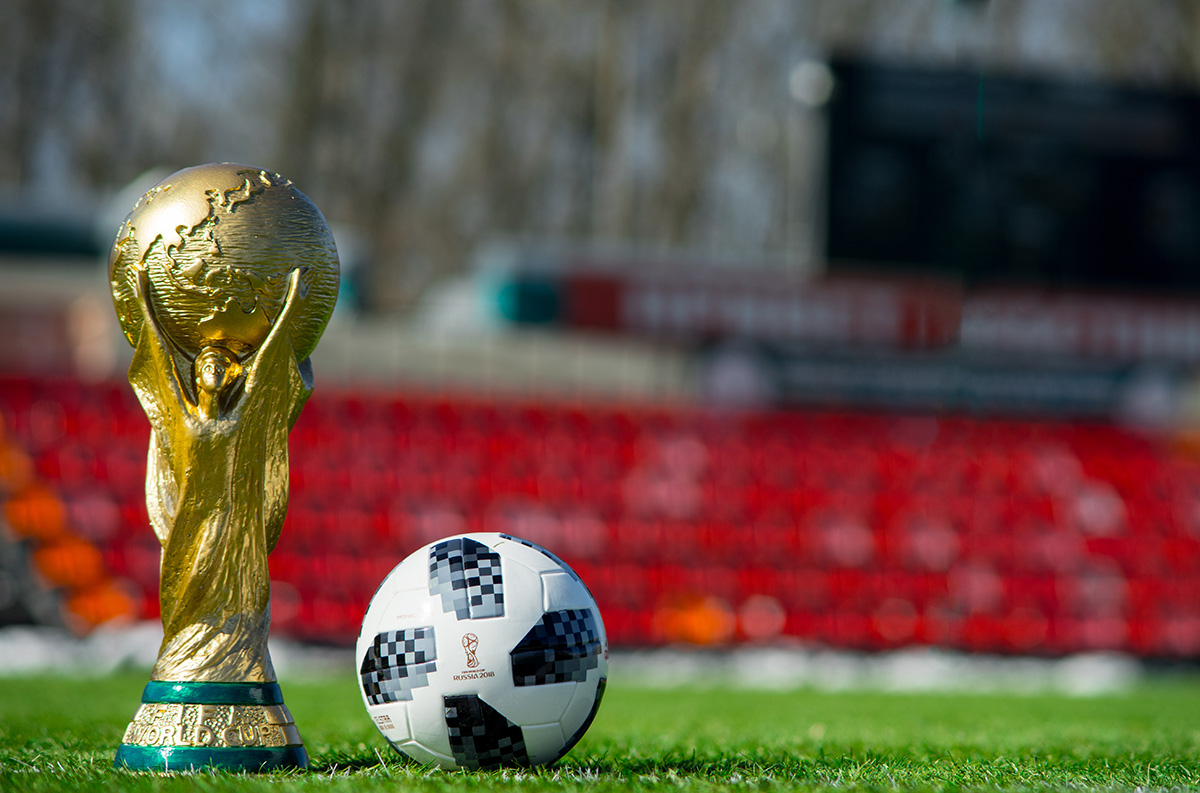
Iran and Egypt have objected to playing in a “Pride Match” that will take place in Seattle during the 2026 World Cup.
The Egyptian Football Association on Tuesday said it told FIFA Secretary General Mattias Grafström in a letter that “it categorically rejects holding any activities related to supporting (homosexuality) during the match between the Egyptian national team and Iran, scheduled to be held in Seattle, USA, on June 26, 2026, in the third round of the group stage of the 2026 World Cup.” Football Federation Islamic Republic of Iran President Mehdi Taj told ISNA, a semi-official Iranian news agency that both his country and Egypt “protested this issue.”
The 2026 World Cup will take place in the U.S., Canada, and Mexico. The draw took place at the Kennedy Center on Dec. 5.
Iran is among the handful of countries in which consensual same-sex sexual relations remain punishable by death.
The State Department’s 2023 human rights report notes that while Egyptian law “did not explicitly criminalize consensual same-sex sexual activity, authorities regularly arrested and prosecuted LGBTQI+ persons on charges including ‘debauchery,’ prostitution, and ‘violating family values.’” Egyptian authorities “also reportedly prosecuted LGBTQI+ individuals for ‘misuse of social media.’”
“This resulted in de facto criminalization of same-sex conduct and identity,” notes the report.
The 2024 human rights report the State Department released earlier this year did not include LGBTQ-specific references.
Soccer has ‘unique power to unite people across borders, cultures, and beliefs’
The June 26 match between Iran and Egypt coincides with Seattle Pride. The Washington Post reported the Seattle FIFA World Cup 2026 Local Organizing Committee decided to hold the “Pride Match” before last week’s draw.
“As the Local Organizing Committee, SeattleFWC26’s role is to prepare our city to host the matches and manage the city experience outside of Seattle Stadium,” said SeattleFWC26 Vice President of Communications Hana Tadesse in a statement the committee sent to the Washington Blade on Wednesday. “SeattleFWC26 is moving forward as planned with our community programming outside the stadium during Pride weekend and throughout the tournament, partnering with LGBTQ+ leaders, artists, and business owners to elevate existing Pride celebrations across Washington.”
“Football has a unique power to unite people across borders, cultures, and beliefs,” added Tadeese. “The Pacific Northwest is home to one of the nation’s largest Iranian-American communities, a thriving Egyptian diaspora, and rich communities representing all nations we’re hosting in Seattle. We’re committed to ensuring all residents and visitors experience the warmth, respect, and dignity that defines our region.”
The 2034 World Cup will take place in Saudi Arabia.
Consensual same-sex sexual relations remain punishable by death in the country. The 2022 World Cup took place in neighboring Qatar, despite concerns over the country’s anti-LGBTQ rights record.

Candidates should pledge to nominate LGBTQ judge to Supreme Court

Kazakh Senate approves anti-LGBTQ propaganda bill

Local, last-minute holiday gift ideas

2026 elections will bring major changes to D.C. government

Brian Footer suspends campaign for Ward 1 D.C. Council seat

PHOTOS: The Holiday Show

Choose U ambassadors share lived experiences with HIV, personal reflections, and insights

The best books to give this holiday season

Studio’s ‘Mother Play’ draws from lesbian playwright’s past