Commentary
Celebrating and supporting our LGBTQI+ co-workers
Biden-Harris administration has taken many steps to counter discrimination
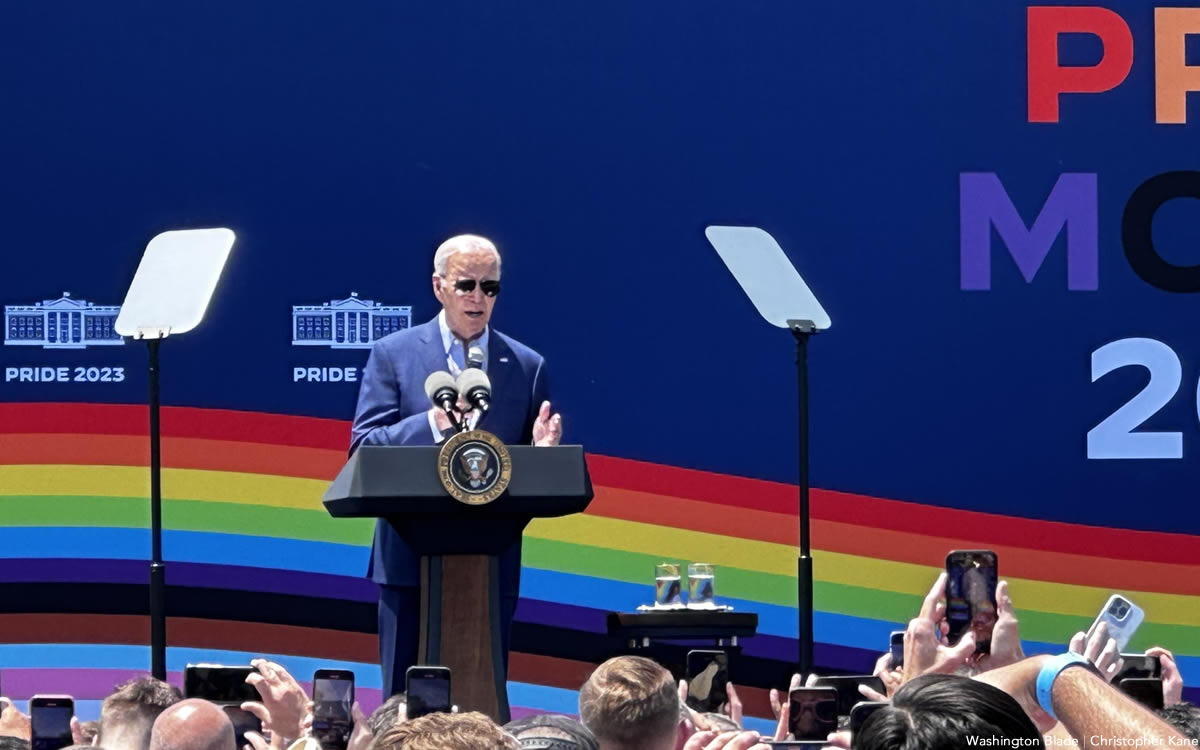
By ANTHONY GOLDEN | Diversity is an essential component of a successful team. The more skills, experiences and ideas we have to draw from, the more equipped we are to develop creative solutions. America’s diversity has always been one of our greatest strengths, which is why the Department of Labor is proud to support and enforce laws that protect America’s workers in all of our diversity.
Diversity, however, has to consider and acknowledge any barriers to full participation and inclusion of all workers. For workers in the Lesbian, Gay, Bisexual, Transgender, Queer and Intersex (LGBTQI+) community, such as myself, concerns about harassment, prejudice, and discrimination can prevent us from comfortably owning our identities in the workplace. So this Pride month, we’re taking the opportunity to joyfully celebrate our LGBTQI+ colleagues and all the policies that protect our rights at work.
The Biden-Harris administration has taken many steps to counter sexuality- and gender-based discrimination, including signing executive orders to prevent and combat discrimination on the basis of gender identity or sexual orientation, to promote diversity, equity, inclusion and accessibility in the federal workforce, and to advance equality for LGBTQI+ individuals. The administration also established the White House Gender Policy Council, issued a National Plan to End Gender-Based Violence and was the first administration to recognize Transgender Day of Visibility.
These are just a few of the policies that underscore the value of diversity and strive to address the consequences of discrimination – and they are as important today as they have ever been. As President Biden noted in his Proclamation for Pride Month, state and local legislatures have introduced more than 600 hateful laws targeting LGBTQI+ people just this year. This comes amid a rise in violent threats, bans on books and other media featuring LGBTQI+ people, as well as limits on access to necessary healthcare. Despite this vitriol, LGBTQI+ communities remain resilient and committed to equity.
We are happy to join the administration in continuing to support the ongoing work required “to ensure that everyone enjoys the full promise of equity, dignity, protection and freedom.” Within the Department of Labor, here are some of the ways we support LGBTQI+ workers:
The Office of Federal Contract Compliance Programs ensures that businesses that benefit from federal contracts don’t use that money to discriminate against LGBTQI+ workers. The Occupational Safety and Health Administration has issued guidance on best practices for restroom access for transgender workers. Job Corps, the largest residential and job training program for income-eligible youth and young adults between the ages of 16 to 24, published guidance for their staff on ensuring equal access to the program for transgender applicants and students.
The Wage and Hour Division ensures that marriage equality is respected under the Family and Medical Leave Act, and our Employee Benefits Security Administration ensures that efforts to protect workplace benefits for employees and their spouses adhere to the definitions of “spouse” and “marriage” under the Supreme Court’s Windsor decision. Their Benefits Advisors help workers and their families, including those in LGBTQI+ communities, access the health and retirement benefits available to them under their workplace-based plans.
The Employment and Training Administration has offered guidance to workforce development professionals on gender identity, gender expression and sex stereotyping. Consistent with the Supreme Court’s landmark Bostock decision, the department’s Civil Rights Center has also published a notice that it will interpret the Workforce Innovation and Opportunity Act’s prohibitions on sex-based discrimination as inclusive of sexual orientation as well as gender identity discrimination (the latter has been protected since 2017).
The Department of Labor’s internal policies reaffirm our commitment to creating an inclusive culture for all of our employees, regardless of sexual orientation, transgender status, gender identity, gender expression and variations in sex characteristics. And in 2022, we hired our first Chief Diversity and Equity Officer, who works to build and strengthen the diversity, equity, inclusion and accessibility infrastructure within the department and across every level of government.
Finally, for department employees, Pride@DOL is the department’s LGBTQI+ affinity group and is here to support all members of the community (allies welcome!).
No one should be singled out simply for how they exist in the world – be it for who they are or who they love. Everyone deserves to feel safe at work and be free from harassment or discrimination. Protecting LGBTQI+ workers and ending discrimination based on sexual orientation and gender identity is an important part of our mission – not just during Pride month, but all year round.
Anthony Golden is an equal opportunity specialist in the U.S. Department of Labor’s Civil Rights Center and secretary/treasurer of Pride@DOL.



Today, on World AIDS Day, we honor the resilience, courage, and dignity of people living with HIV everywhere especially refugees, asylum seekers, and queer displaced communities across East Africa and the world.
For many, living with HIV is not just a health journey it is a journey of navigating stigma, borders, laws, discrimination, and survival.
Yet even in the face of displacement, uncertainty, and exclusion, queer people living with HIV continue to rise, thrive, advocate, and build community against all odds.
To every displaced person living with HIV:
• Your strength inspires us.
• Your story matters.
• You are worthy of safety, compassion, and the full right to health.
• You deserve a world where borders do not determine access to treatment, where identity does not determine dignity, and where your existence is celebrated not criminalized.
Let today be a reminder that:
• HIV is not a crime.
• Queer identity is not a crime.
• Seeking safety is not a crime.
• Stigma has no place in our communities.
• Access to treatment, care, and protection is a human right.
As we reflect, we must recommit ourselves to building systems that protect not punish displaced queer people living with HIV. We must amplify their voices, invest in inclusive healthcare, and fight the inequalities that fuel vulnerability.
Hope is stronger when we build it together.
Let’s continue to uplift, empower, and walk alongside those whose journeys are too often unheard.
Today we remember.
Today we stand together.
Today we renew hope.
Abraham Junior lives in the Gorom Refugee Settlement in South Sudan.
Commentary
Perfection is a lie and vulnerability is the new strength
Rebuilding life and business after profound struggles

I grew up an overweight, gay Black boy in West Baltimore, so I know what it feels like not to fit into a world that was not really made for you. When I was 18, my mother passed from congestive heart failure, and fitness became a sanctuary for my mental health rather than just a place to build my body. That is the line I open most speeches with when people ask who I am and why I started SWEAT DC.
The truth is that little boy never really left me.
Even now, at 42 years old, standing 6 feet 3 inches and 225 pounds as a fitness business owner, I still carry the fears, judgments, and insecurities of that broken kid. Many of us do. We grow into new seasons of life, but the messages we absorbed when we were young linger and shape the stories we tell ourselves. My lack of confidence growing up pushed me to chase perfection as I aged. So, of course, I ended up in Washington, D.C., which I lovingly call the most perfection obsessed city in the world.
Chances are that if you are reading this, you feel some of that too.
D.C. is a place where your resume walks through the door before you do, where degrees, salaries, and the perfect body feel like unspoken expectations. In the age of social media, the pressure is even louder. We are all scrolling through each other’s highlight reels, comparing our behind the scenes to someone else’s curated moment. And I am not above it. I have posted the perfect photo with the inspirational “God did it again” caption when I am feeling great and then gone completely quiet when life feels heavy. I am guilty of loving being the strong friend while hating to admit that sometimes I am the friend who needs support.
We are all caught in a system that teaches us perfection or nothing at all. But what I know for sure now is this: Perfection is a lie and vulnerability is the new strength.
When I first stepped into leadership, trying to be the perfect CEO, I found Brené Brown’s book, “Daring Greatly” and immediately grabbed onto the idea that vulnerability is strength. I wanted to create a community at SWEAT where people felt safe enough to be real. Staff, members, partners, everyone. “Welcome Home” became our motto for a reason. Our mission is to create a world where everyone feels confident in their skin.
But in my effort to build that world for others, I forgot to build it for myself.
Since launching SWEAT as a pop up fundraiser in 2015, opening our first brick and mortar in 2017, surviving COVID, reemerging and scaling, and now preparing to open our fifth location in Shaw in February 2026, life has been full. Along the way, I went from having a tight trainer six pack to gaining nearly 50 pounds as a stressed out entrepreneur. I lost my father. I underwent hip replacement surgery. I left a relationship that looked fine on paper but was not right. I took on extra jobs to keep the business alive. I battled alcoholism. I faced depression and loneliness. There are more stories than I can fit in one piece.
But the hardest battle was the one in my head. I judged myself for not having the body I once had. I asked myself how I could lead a fitness company if I was not in perfect shape. I asked myself how I could be a gay man in this city and not look the way I used to.
Then came the healing.
A fraternity brother said to me on the phone, “G, you have to forgive yourself.” It stopped me in my tracks. I had never considered forgiving myself. I only knew how to push harder, chase more, and hide the cracks. When we hung up, I cried. That moment opened something in me. I realized I had not neglected my body. I had held my life and my business together the best way I knew how through unimaginable seasons.
I stopped shaming myself for not looking like my past. I started honoring the new ways I had proven I was strong.
So here is what I want to offer anyone who is in that dark space now. Give yourself the same grace you give everyone else. Love yourself through every phase, not just the shiny ones. Recognize growth even when growth simply means you are still here.
When I created SWEAT, I hoped to build a home where people felt worthy just as they are, mostly because I needed that home too. My mission now is to carry that message beyond our walls and into the city I love. To build a STRONGER DC.
Because strength is not perfection. Strength is learning to love an imperfect you.
With love and gratitude, Coach G.
Gerard Burley, also known as Coach G, is a D.C.-based fitness entrepreneur.
Commentary
Elusive safety: what new global data reveals about gender, violence, and erasure
Movements against gender equality, lack of human rights data contributing factors.
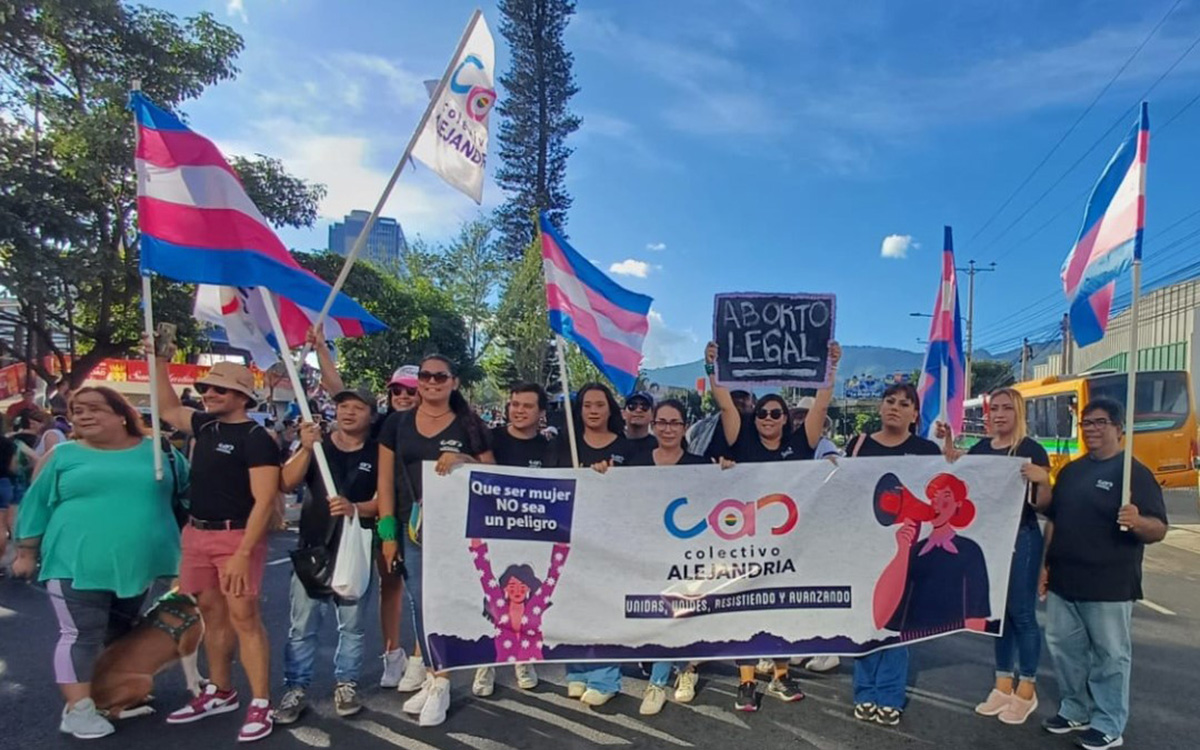
“My identity could be revealed, people can say whatever they want [online] without consequences. [Hormone replacement therapy] is illegal here so I’m just waiting to find a way to get out of here.”
-Anonymous respondent to the 2024 F&M Global Barometers LGBTQI+ Perception Index from Iraq, self-identified as a transgender woman and lesbian
As the campaign for 16 Days Against Gender-Based Violence begins, it is a reminder that gender-based violence (GBV) — both on– and offline — not only impacts women and girls but everyone who has been harmed or abused because of their gender or perceived gender. New research from the Franklin & Marshall (F&M) Global Barometers and its report A Growing Backlash: Quantifying the Experiences of LGBTQI+ People, 2022-2024 starkly show trends of declining safety among LGBTQI+ persons around the world.
This erosion of safety is accelerated by movements against gender equality and the disappearance of credible human rights data and reporting. The fight against GBV means understanding all people’s lived realities, including those of LGBTQI+ people, alongside the rights we continue to fight for.
We partnered together while at USAID and Franklin & Marshall College to expand the research and evidence base to better understand GBV against LGBTQI+ persons through the F&M Global Barometers. The collection of barometers tracks the legal rights and lived experiences of LGBTQI+ persons from 204 countries and territories from 2011 to the present. With more than a decade of data, it allows us to see how rights have progressed and receded as well as the gaps between legal protections and lived experiences of discrimination and violence.
This year’s data reveals alarming trends that highlight how fear and violence are, at its root, gendered phenomena that affect anyone who transgresses traditional gender norms.
LGBTQI+ people feel less safe
Nearly two-thirds of countries experienced a decline in their score on the F&M Global Barometers LGBTQI+ Perception Index (GBPI) from 2022-2024. This represents a five percent drop in global safety scores in just two years. With almost 70 percent of countries receiving an “F” grade on the GBPI, this suggests a global crisis in actual human rights protections for LGBTQI+ people.
Backsliding on LGBTQI+ human rights is happening everywhere, even in politically stable, established democracies with human rights protections for LGBTQI+ people. Countries in Western Europe and the Americas experienced the greatest negative GBPI score changes globally, 74 and 67 percent, respectively. Transgender people globally reported the highest likelihood of violence, while trans women and intersex people reported the highest levels of feeling very unsafe or unsafe simply because of who they are.
Taboo of gender equality
Before this current administration dismantled USAID, I helped create an LGBTQI+ inclusive whole-of-government strategy to prevent and respond to GBV that highlighted the unique forms of GBV against LGBTQI+ persons. This included so-called ‘corrective’ rape related to actual or perceived sexual orientation, gender identity, or expression” and so-called ‘conversion’ therapy practices that seek to change or suppress a person’s gender identity or expression, sexual orientation, or sex characteristics. These efforts helped connect the dots in understanding that LGBTQI+ violence is rooted in the same systems of inequality and power imbalances as the broader spectrum of GBV against women and girls.
Losing data and accountability
Data that helps better understand GBV against LGBTQI+ persons is also disappearing. Again, the dismantling of USAID meant a treasure trove of research and reports on LGBTQI+ rights have been lost. Earlier this year, the US Department of State removed LGBTQI+ reporting from its annual Human Rights Reports. These played a critical role in providing credible sources for civil society, researchers, and policymakers to track abuses and advocate for change.
If violence isn’t documented, it’s easier for governments to deny it even exists and harder for us to hold governments accountable. Yet when systems of accountability work, governments and civil society can utilize data in international forums like the UN Universal Periodic Review, the Convention on the Elimination of All Forms of Discrimination Against Women, and the Sustainable Development Goals to assess progress and compliance and call for governments to improve protections.
All may not be lost if other countries and donors fill the void by supporting independent data collection and reporting efforts like the F&M Global Barometers and other academic and civil society monitoring. Such efforts are essential to the fight against GBV: The data helps show that the path toward safety, equality, and justice is within our reach if we’re unafraid of truth and visibility of those most marginalized and impacted.
Jay Gilliam (he/him/his) was the Senior LGBTQI+ Coordinator at USAID and is a member of the Global Outreach Advisory Council of the F&M Global Barometers.
Susan Dicklitch-Nelson (she/her/hers) is the founder of the F&M Global Barometers and Professor of Government at Franklin & Marshall College.

PHOTOS: The Holiday Show

The best books to give this holiday season

Studio’s ‘Mother Play’ draws from lesbian playwright’s past

Choose U ambassadors share lived experiences with HIV, personal reflections, and insights

DOJ seeks to join lawsuit against Loudoun County over trans student in locker room

EXCLUSIVE: George Santos speaks out on prison, Trump pardon, and more

Victory Institute honors transgender Spanish senator in D.C.

The beginning of the fall of Trump

Markey reintroduces International Human Rights Act in Senate