Books
New Bayard Rustin book an essential civil rights read
‘Legacy of Protest and Politics’ overcomes minor flaws
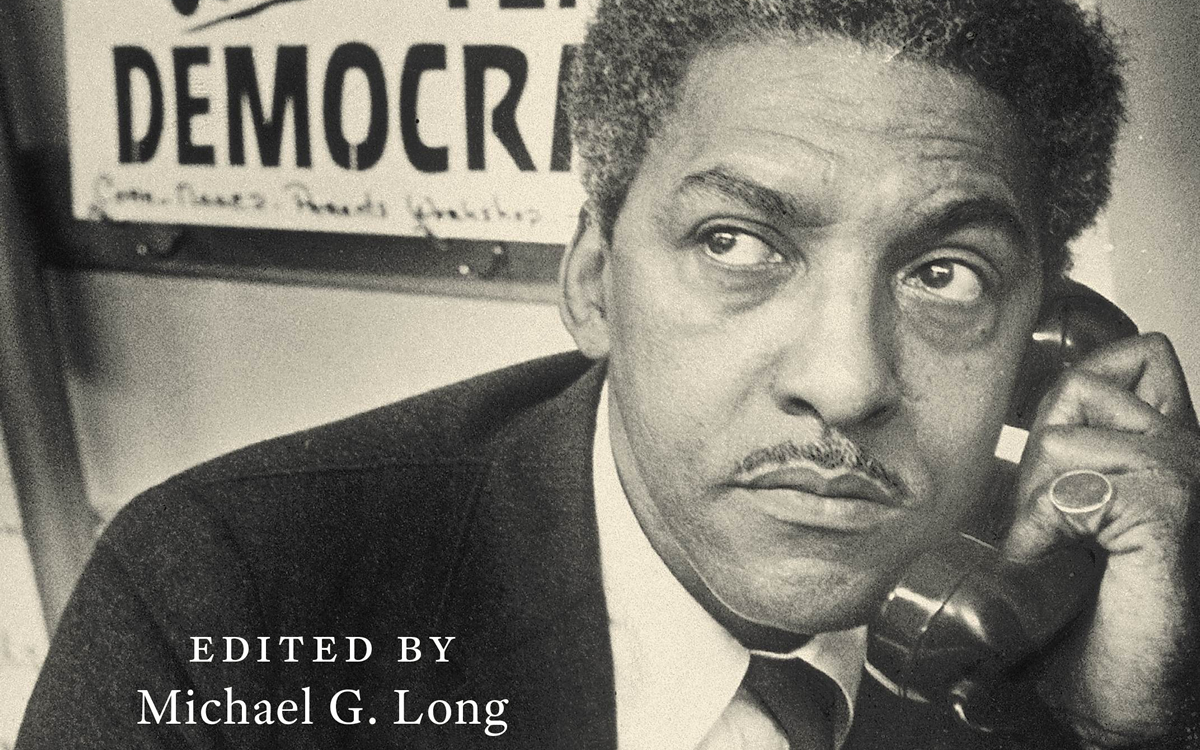
‘Bayard Rustin: A Legacy of Protest and Politics’
Edited by Michael G. Long
c.2023, NYU Press
$27.95/256 pages
You will never settle.
And why should you? If it’s not right, you make it right. If it can be better, well, then get at it. You find the solution or you go on to the next thing because good enough is never good enough. As in the new book “Bayard Rustin,” essays edited by Michael G. Long, there’s always work to do and good trouble.

Somehow, it seems, in the discussion about Martin Luther King and the leadership he brought to the Civil Rights Movement, certain details may be left out. In the case of Bayard Rustin, says Long, the record needs to be altered. Today, now.
His mother was still a teenager, and unmarried, when Rustin’s grandmother helped deliver him in the spring of 1912. The boy’s father refused to acknowledge him, so his grandparents gave him a family name and raised him in their Quaker faith.
Still, alongside the peaceful, gentle mandate of Quakerism, young Rustin experienced Jim Crow segregation. His grandmother left a major impact on him, teaching him compassion, kindness, and generosity – she reared him to do the right thing – but they lived in Pennsylvania, where racism was common and the Klan maintained a nearby presence. As if that wasn’t difficult enough, Rustin realized he was gay, which was illegal then.
At that point, though, he had seen many wrongs around him, and he became an activist. He also worked for justice as a speaker and organizer; at one time, he’d embraced communism but eventually became a socialist. By his own admission, Rustin was jailed more than 20 times and served on a chain gang for several months – but even then, his nonviolent Quaker beliefs emerged and he befriended his jailers, gaining their respect.
By the time he met a young preacher named Martin Luther King, Rustin was well-versed in civil rights work. He had direction, contacts, and the organizational skills the movement needed.
And yet, he was willing to let King take the front stage.
Pulled together as a collection of essays, “Bayard Rustin” has one flaw that probably can’t be helped: it’s quite repetitive. Each of the essayists in this book wrote extensively about Rustin, his work, and his impact, but there just doesn’t seem to be quite enough about Rustin himself – perhaps because, as editor Michael G. Long indicates in his introduction, Rustin left a legacy but history left him more in the background. This means that the nearly two dozen contributors to this book had only what they had to go on, hence, the repetition.
Even so, if you look for Rustin, you’ll find abundant tales about him and this book has a good portion of them. Readers will be entertained, confounded, and pleased by what they read here. It’s like finding treasure you never knew you needed.
This book needs to sit on the shelf next to everything written about Dr. King. It’s an essential companion to any volume about the Civil Rights Movement. If you need history, find “Bayard Rustin” and settle in.
The Blade may receive commissions from qualifying purchases made via this post.


Santa will be very relieved.
You’ve taken most of the burden off him by making a list and checking it twice on his behalf. The gift-buying in your house is almost done – except for those few people who are just so darn hard to buy for. So what do you give to the person who has (almost) everything? You give them a good book, like maybe one of these.
Memoir and biography
The person who loves digging into a multi-level memoir will be happy unwrapping “Blessings and Disasters: A Story of Alabama” by Alexis Okeowo (Henry Holt). It’s a memoir about growing up Black in what was once practically ground zero for the Confederacy. It’s about inequality, it busts stereotypes, and yet it still oozes love of place. You can’t go wrong if you wrap it up with “Queen Mother: Black Nationalism, Reparations, and the Untold Story of Audley Moore” by Ashley D. Farmer (Pantheon). It’s a chunky book with a memoir with meaning and plenty of thought.
For the giftee on your list who loves to laugh, wrap up “In My Remaining Years” by Jean Grae (Flatiron Books). It’s part memoir, part comedy, a look back at the late-last-century, part how-did-you-get-to-middle-age-already? and all fun. Wrap it up with “Here We Go: Lessons for Living Fearlessly from Two Traveling Nanas” by Eleanor Hamby and Dr. Sandra Hazellip with Elisa Petrini (Viking). It’s about the adventures of two 80-something best friends who seize life by the horns – something your giftee should do, too.
If there’ll be someone at your holiday table who’s finally coming home this year, wrap up “How I Found Myself in the Midwest” by Steve Grove (Simon & Schuster). It’s the story of a Silicon Valley worker who gives up his job and moves with his family to Minnesota, which was once home to him. That was around the time the pandemic hit, George Floyd was murdered, and life in general had been thrown into chaos. How does someone reconcile what was with what is now? Pair it with “Homestand: Small Town Baseball and the Fight for the Soul of America” by Will Bardenwerper (Doubleday). It’s set in New York and but isn’t that small-town feel universal, no matter where it comes from?
Won’t the adventurer on your list be happy when they unwrap “I Live Underwater” by Max Gene Nohl (University of Wisconsin Press)? They will, when they realize that this book is by a former deep-sea diver, treasure hunter, and all-around daredevil who changed the way we look for things under water. Nohl died more than 60 years ago, but his never-before-published memoir is fresh and relevant and will be a fun read for the right person.
If celeb bios are your giftee’s thing, then look for “The Luckiest” by Kelly Cervantes (BenBella Books). It’s the Midwest-to-New-York-City story of an actress and her life, her marriage, and what she did when tragedy hit. Filled with grace, it’s a winner.
Your music lover won’t want to open any other gifts if you give “Only God Can Judge Me: The Many Lives of Tupac Shakur” by Jeff Pearlman (Mariner Books). It’s the story of the life, death, and everything in-between about this iconic performer, including the mythology that he left behind. Has it been three decades since Tupac died? It has, but your music lover never forgets. Wrap it up with “Point Blank (Quick Studies)” by Bob Dylan, text by Eddie Gorodetsky, Lucy Sante, and Jackie Hamilton (Simon & Schuster), a book of Dylan’s drawings and artwork. This is a very nice coffee-table size book that will be absolutely perfect for fans of the great singer and for folks who love art.
For the giftee who’s concerned with their fellow man, “The Lost and the Found: A True Story of Homelessness, Found Family and Second Chances” by Kevin Fagan (One Signal / Atria) may be the book to give. It’s a story of two “unhoused” people in San Francisco, one of the country’s wealthiest cities, and their struggles. There’s hope in this book, but also trouble and your giftee will love it.
For the person on your list who suffered loss this year, give “Pine Melody” by Stacey Meadows (Independently Published), a memoir of loss, grief, and healing while remembering the person gone.
LGBTQ fiction
For the mystery lover who wants something different, try “Crime Ink: Iconic,” edited by John Copenhaver and Salem West (Bywater Books), a collection of short stories inspired by “queer legends” and allies you know. Psychological thrillers, creepy crime, cozies, they’re here.
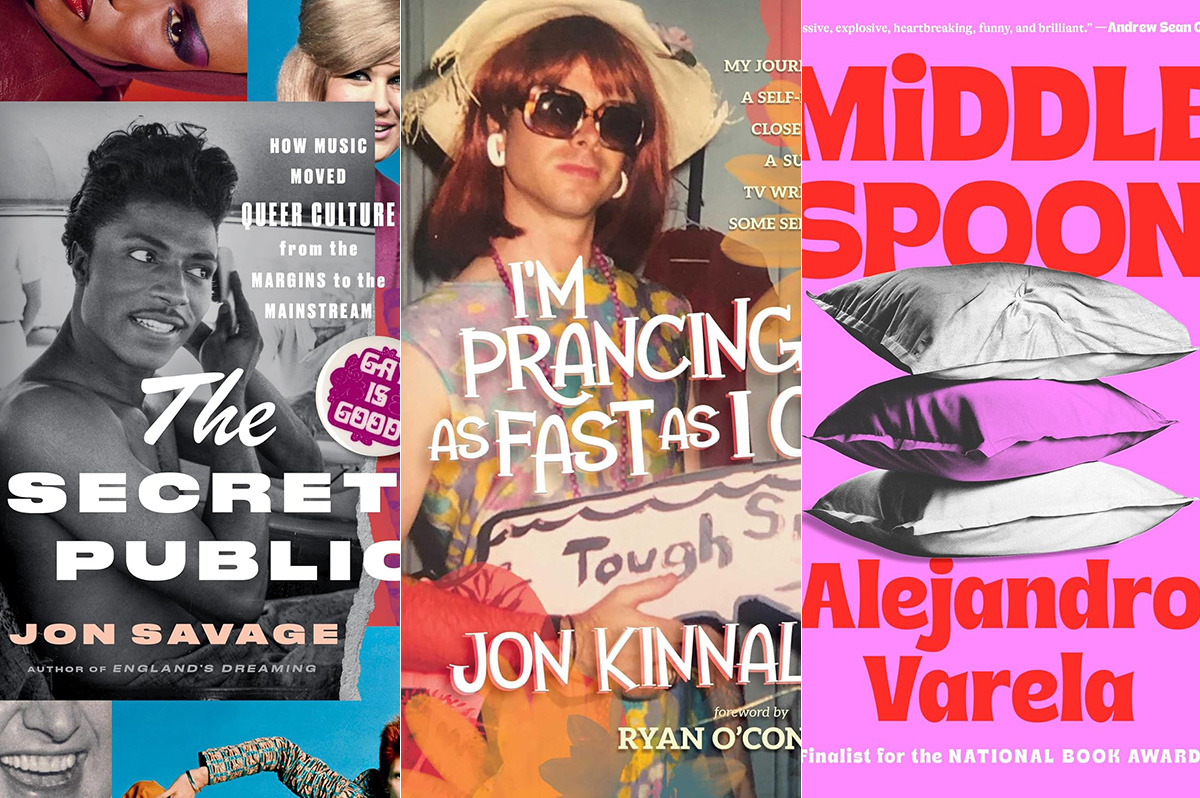
Novel lovers will want to curl up this winter with “Middle Spoon” by Alejandro Varela (Viking), a book about a man who appears to have it all, until his heart is broken and the fix for it is one he doesn’t quite understand and neither does anyone he loves.
LGBTQ studies – nonfiction
For the young man who’s struggling with issues of gender, “Before They Were Men” by Jacob Tobia (Harmony Books) might be a good gift this year. These essays on manhood in today’s world works to widen our conversations on the role politics and feminism play in understanding masculinity and how it’s time we open our minds.
If there’s someone on your gift list who had a tough growing-up (didn’t we all?), then wrap up “I’m Prancing as Fast as I Can” by Jon Kinnally (Permuted Press / Simon & Schuster). Kinnally was once an awkward kid but he grew up to be a writer for TV shows you’ll recognize. You can’t go wrong gifting a story like that. Better idea: wrap it up with “So Gay for You: Friendship, Found Family, & The Show That Started It All” by Leisha Hailey & Kate Moennig (St. Martin’s Press), a book about a little TV show that launched a BFF-ship.
Who doesn’t have a giftee who loves music? You sure do, so wrap up “The Secret Public: How Music Moved Queer Culture from the Margins to the Mainstream” by Jon Savage (Liveright). Nobody has to tell your giftee that queer folk left their mark on music, but they’ll love reading the stories in this book and knowing what they didn’t know.
The Blade may receive commissions from qualifying purchases made via this post.
Books
‘90s club kids will love Mark Ronson’s new book
‘Night People’ part esoteric hip-hop discography, part biography
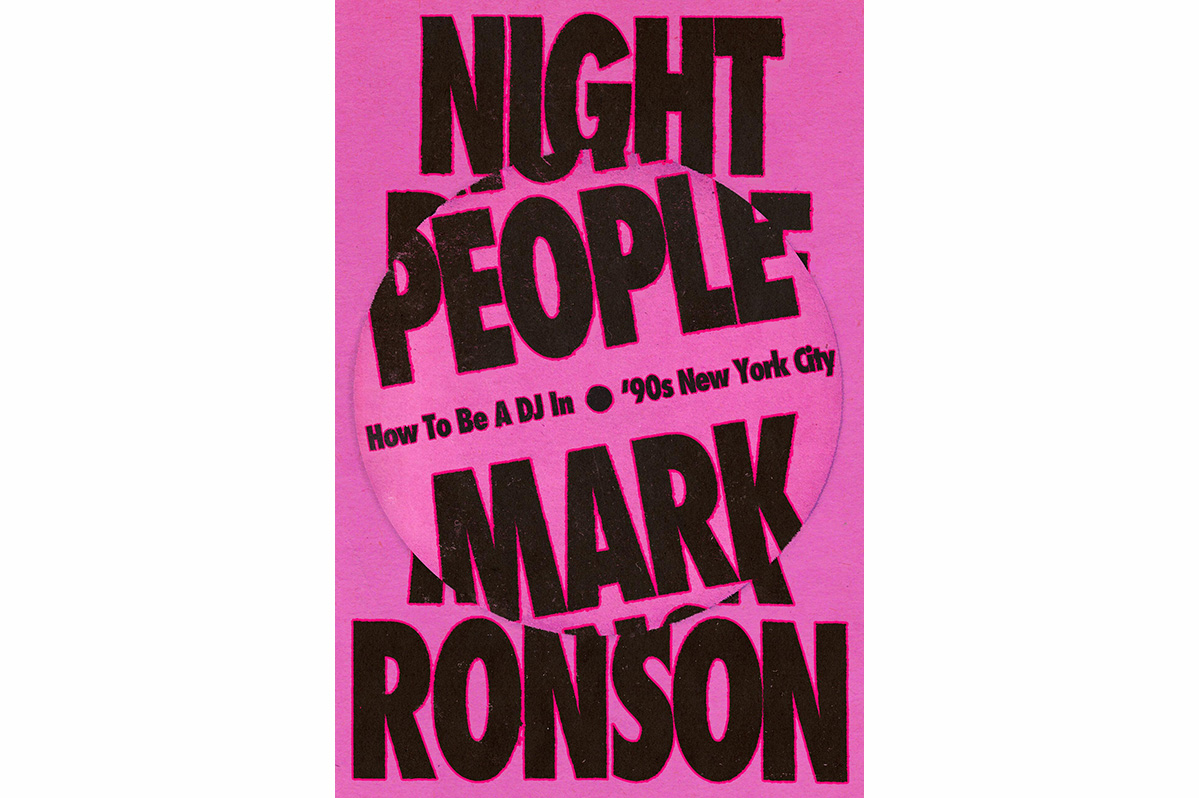
‘Night People’
By Mark Ronson
c.2025, Grand Central
$29/256 pages
You just can’t hold still.
The music starts and your hips shake, your shoulders bounce, your fingers tickle the sky to match a beat. Your air guitar is on-point, your head bops and your toes tap. You can’t help it. As in the new memoir, “Night People” by Mark Ronson, you just gotta dance.
With a mother who swanned around with rock bands, a father who founded a music publishing company, and a stepfather who founded the band, Foreigner, it was natural that Mark Ronson would fall into a music career of some sort. He says he was only 10 years old when he realized the awesome power of music.
As a pre-teen, he liked to mix music in his stepfather’s studio. As a teenager, he formed a band with Sean Lennon that didn’t quite catch on. In the fall of his senior year of high school, Ronson began sneaking into Manhattan clubs to listen to music, dance, and find drugs. It was there that he noticed the alchemy that the DJs created and he searched for someone who’d teach him how to do that, too. He became obsessed.
Finding a gig in a New York club, though, was not easy.
Ronson worked a few semi-regular nights around New York City, and at various private parties to hone his skills. His mother purchased for him the electronic equipment he needed, turntables, and amps. He befriended guys who taught him where to get music demos and what to look for at distributor offices, and he glad-handed other DJs, club owners, and music artists.
That, and the rush he got when the dance floor was packed, made the job glamorous. But sometimes, attendance was low, DJ booths were located in undesirable places, and that totally killed the vibe.
Some people, he says, are mostly day people. For others, though, sunlight is something to be endured. Nighttime is when they when they feel most alive.
Part esoteric hip-hop discography, part biography, part SNL’s Stefan, and part cultural history, “Night People” likely has a narrow audience. If you weren’t deep into clubbing back in the day, you can just stop here. If you were ages 15 to 30, 30 years ago, and you never missed club night then, keep reading. This is your book.
Author Mark Ronson talks the talk, which can be good for anyone who knows the highs of a jam-packed club and the thrill of being recognized for skills with a turntable. That can be fun, but it may also be too detailed: mixology is an extremely heavy subject here. Many of the tunes he names were hits only in the clubs and only briefly, and many of the people he name-drops are long gone. Readers may find themselves not particularly caring. Heavy sigh.
This isn’t a bad book, but it’s absolutely not for everyone. If you weren’t into clubbing, pass and you won’t miss a thing. If you were a die-hard club kid back then, though, “Night People” will make your eyes dance.
Want more? Then check out “What Doesn’t Kill Me Makes Me Weirder and Harder to Relate To” by Mary Lucia (University of Minnesota Press). It’s Lucia’s tale of being a rock DJ in Minneapolis-St. Paul, life with legions of listeners, and not being listened to by authorities for over three harrowing, terrifying years while she was stalked by a deranged fan.
The Blade may receive commissions from qualifying purchases made via this post.
Books
Pioneering gay journalist takes on Trump 2.0 in new book
Nick Benton’s essays appeared in Fall Church News-Press
Nicholas Benton is a well-known local LGBTQ advocate and journalist and the longtime owner and editor of the Falls Church News-Press, a weekly newspaper.
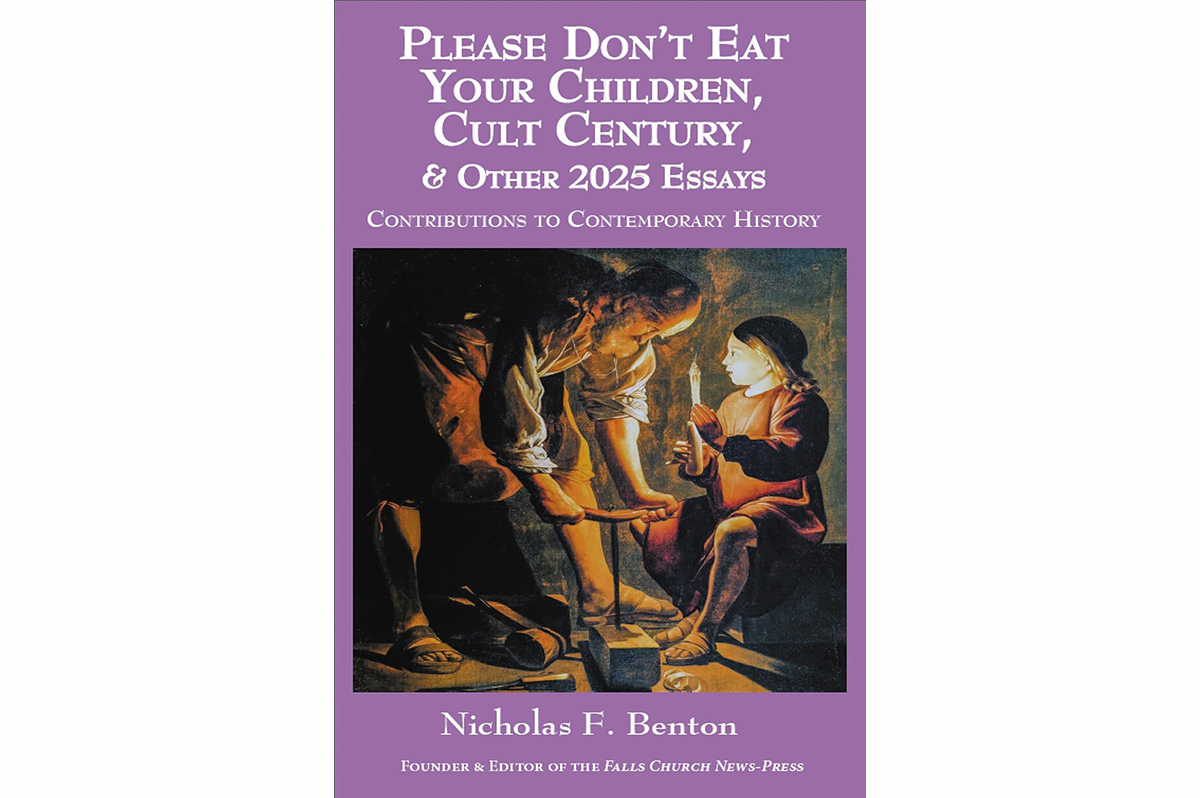
In his eighth book out now, Benton offers a new set of remarkable essays all crafted in the first eight months of Trump 2.0 and its wholesale effort at dismantling democracy and the rule of law. Most were published in the Falls Church News-Press, but he adds a new piece to this volume, as an addendum to his “Cult Century” series, revealing for the first time his experiences from decades ago in the political cult of Lyndon LaRouche, aimed at providing a clearer grasp of today’s Cult of Trump.
His “Please Don’t Eat Your Children” set takes off from the satire of Jonathan Swift to explore society’s critical role of drumming creativity out of the young.
Below is an excerpt from “Please Don’t Eat Your Children, Cult Century, and other 2025 Essays.”
Please Don’t Eat Your Children
In his famous short essay, “A Modest Proposal: For Preventing the Children of Poor People in Ireland From Being a Burden to Their Parents or Country and for Making Them Beneficial to the Public,” author and Anglican priest Jonathan Swift (1667-1745) uses cutting satire to suggest that cannibalism of the young might help solve a battery of social ills.
As we examine our broken society today, it seems to me that reflecting on Swift’s social critique can be quite useful. Now we face a nation filled with anger and division and there is little to suggest any real solutions other than insisting people “don’t do that!” We can start out with the observation that young children, left to their own, are neither hateful nor cruel. How do they get that way later on in their lives? What drives them toward such emotional states and behaviors? It is not a problem only for the margins of society, for the extreme misfits or troubled. It is defining the very center of our culture today. Our divisions are not the cause, but the result of something, and nobody is saying what that is.
Swift doesn’t say what it is in his biting little essay. But it is implied by a context of a lack of bounty, or poverty, on the one hand, and an approach to it characterized by obscenely cruel indifference, on the other. He coined the phrase “useless eaters” in defining his radical solution. In Hitler’s Germany, that term resonated through the death camps and some in our present situation are daring to evoke it again as the current administration pushes radical cuts in Medicaid funding.
But while that refers to the old and infirm, mostly, it is the young we are talking about here. The problem is that our society is structured to devour our young and as they begin to find that out, they rebel. Not in all cases is this the practice, of course. Where there is little or no lack, things are different. We nurture our young, as we should, and we love them. Lucky is the child who is born to parents who are of means, and in a community where nurture is possible and valued. But even such children are ultimately not immune from facing a destiny of pale conformity battered by tightly delimited social expectations and debt slavery. If they have enough ambition, education and doors opened for them, some can run the gauntlet with relative effectiveness. Otherwise, our young are raised to die on battlefields, or to struggle in myriad other painful social conflicts aimed at advancing the world of their elders. In the Bible, there is a great admonition against this process that comes at the very precondition for the tradition it represents that begins with Abraham.
It is in the book of Genesis at the beginning of the Biblical story when, as that story goes, God commanded Abraham to kill his son, Isaac, as a sacrifice. As Abraham is about to obey, God steps in and says no. The entire subsequent eons-long struggle to realize Abraham’s commission by God to make a great nation that would be a light to the world would have been cut short right then if Abraham had slain his own son. The message is that all of the Abrahamic traditions, Judaism, Islam and Christianity, owe their source, and in fact are rooted, in God’s command to reject the sacrifice of children to the whims of their elders. The last thousands of years can be best defined in these terms, where nurture is pitted against exploitation of our young with, at best, vastly mixed results. Scenes like that at the opening of “All Quiet on the Western Front,” the World War I novel and film where a teacher rallies a classroom full of boys to enlist in the war, is bone chilling. Or, the lyric in Pink Floyd’s iconic song, Comfortably Numb, “When I was a child, I caught a fleeting glimpse out of the corner of my eye. I turned to look but it was gone. I cannot put my finger on it now. The child is grown, the dream is gone.”
Nick Benton’s new book is available now at Amazon.
The Blade may receive commissions from qualifying purchases made via this post.

PHOTOS: The Holiday Show

The best books to give this holiday season

Studio’s ‘Mother Play’ draws from lesbian playwright’s past

Choose U ambassadors share lived experiences with HIV, personal reflections, and insights

DOJ seeks to join lawsuit against Loudoun County over trans student in locker room

EXCLUSIVE: George Santos speaks out on prison, Trump pardon, and more

Victory Institute honors transgender Spanish senator in D.C.

The beginning of the fall of Trump

Markey reintroduces International Human Rights Act in Senate