Local
Will the Slowe-Burrill House become a National Landmark?
Process raises questions about what constitutes LGBTQ history
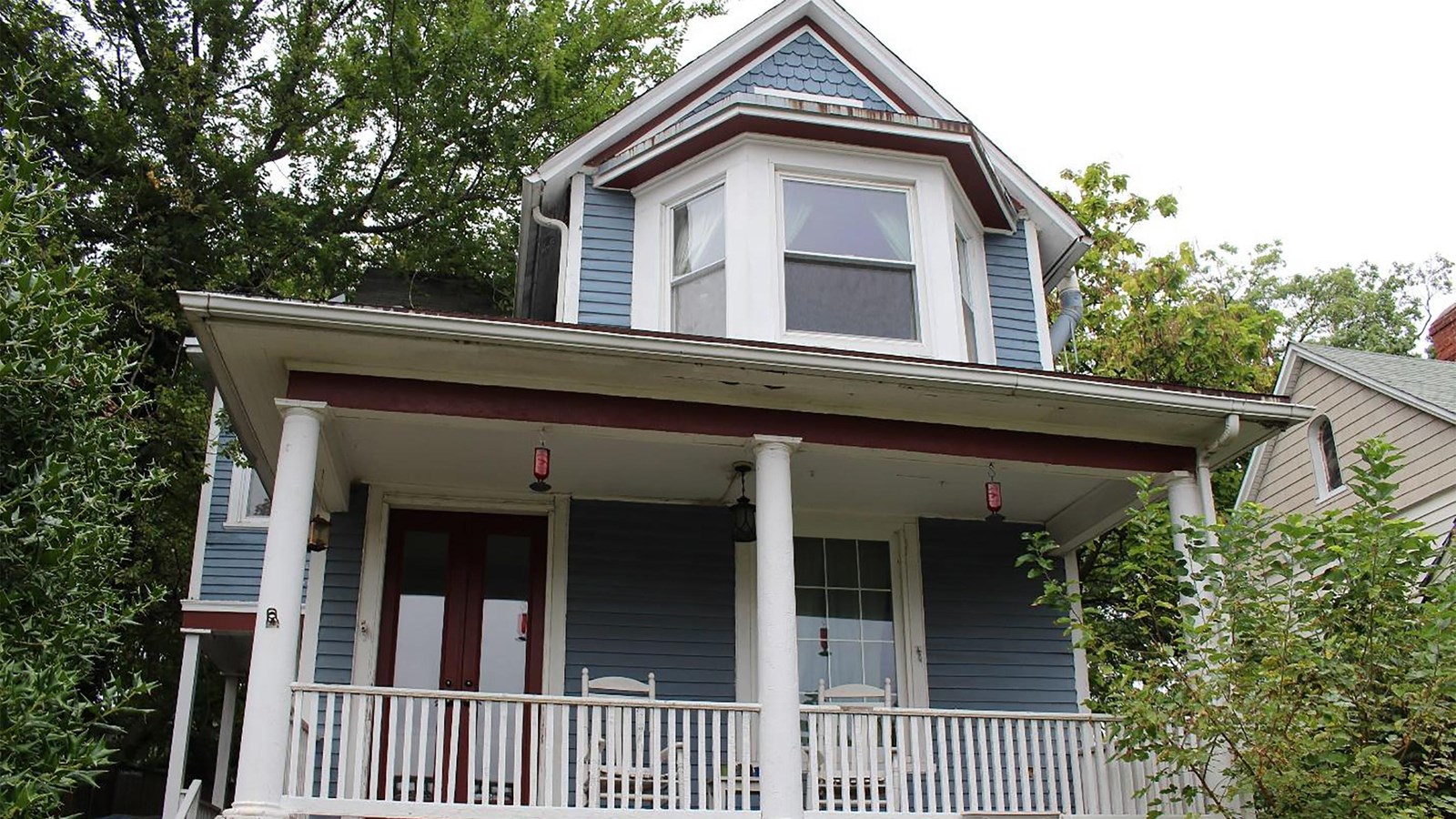
On Oct. 5, 2020, the Slowe-Burrill House was put on the National Register for Historic Places for its association with Lucy Diggs Slowe, most recognized for her work as the first Dean of Women at Howard University, where she served from 1922 until her death in 1937.
Even before her appointment at Howard, she boasted an extraordinary vitae. As an undergraduate at Howard, she was a founding member of the first sorority for African-American women. After graduating valedictorian of her class, and earning her master’s at Columbia University, Slowe took a position teaching at the Armstrong Manual High School in D.C., where she so impressed the school board that they appointed her to found the first-ever junior high school for African Americans in the national capital region.
As Tamara Beauboeuf-Lafontant describes in her book-length study of Slowe’s deanship, “To Live More Abundantly,” Slowe’s tenure at Howard was defined by her advocacy for what she called the “New Howard Woman” in her inaugural address to the students, a woman who was “of extreme culture and refinement.” She worked tirelessly, often at odds with the administration, to encourage the women of Howard to pursue the social sciences, not just the liberal arts thought to befit future mothers, and to explore careers outside of teaching, which was, as Slowe described, “the only occupation which is open to them with few handicaps.” Slowe was unsatisfied with the absence of women’s housing on campus, which she argued was necessary as a “laboratory for practical education in human relationships,” and orchestrated funding from Congress to build three new dormitories for a Women’s Campus. Slowe was so successful in her projects that, as one student reported, “we spoke among ourselves of our dean, not as Dean Slowe but as Dean Swift.”
Given Slowe’s remarkable life, and the National Park Service’s registration of her house as a historic site in recognition of that life, one would be forgiven for wondering why the site is titled the “Slowe-Burrill House” after both Slowe and her life partner, Mary Burrill. While the National Register nods to Burrill’s career as a teacher and playwright, it makes clear her historical significance is primarily as Slowe’s partner. The title of the site is less in recognition of Burrill herself than of Slowe and Burrill’s same-sex relationship at a time in which it would have been especially risky for a public figure like Slowe. While Slowe and Burrill were able to frame their partnership within 19th century ideals of romantic friendship, those ideals were coming under increasing scrutiny by the 20th century, which saw the pathologizing of women’s intimate relationships in the growing medical discourse around sexuality.
Now the Slowe-Burrill House is up for nomination as a National Landmark at the next meeting of the National Historic Landmark Committee this spring. Dr. Susan Ferentinos, a specialist in LGBTQ public history, was contacted by the National Park Service back in 2016 to help identify potential landmarks related to LGBTQ history. Ferentinos noticed there was a particular absence of LGBTQ landmarks in D.C., and put together a shortlist of sites including the Slowe-Burrill House. Ferentinos has been working through that list since, most recently preparing a national landmark nomination for the Furies Collective, which the Blade reported on in November.
But the bar for a National Historic Landmark is far higher than for the National Register of Historic Places. Only 3% of items on the National Register earn a further designation as a National Historic Landmark, and the priority for federal funding that goes with it. Will the Slowe-Burrill House meet that higher bar?
One way a site gets approved is by association with a nationally significant figure, and Lucy Diggs Slowe certainly has the national standing required. As Dean of Women, her work extended far beyond the campus of Howard University. Slowe established the National Association of College Women, an alumnae organization for Black women college graduates across the country. Under her leadership, the organization raised money to help young Black women attend college, worked to institutionalize gender equity in higher education, and led initiatives to foster interracial understanding with white college alumnae. Slowe was the first Black member of the National Association of Deans of Women, where she endlessly fielded her white peers’ concerns with racial matters on campus. And Slowe served on the national board of Young Women’s Christian Association, which gave her the connections she needed to go on a cross-country tour of colleges to talk about race relations among college women.
But if Slowe’s impact on women’s and African-American history on a national level is undoubtable, things are less clear when it comes to her mark on LGBTQ history. Slowe’s relationship with Burrill was a private matter, and not one she sought to advertise on the national stage. If Slowe’s house becomes a national landmark, will it still be as the Slowe-Burrill House? Or just the Slowe House?
That question arose early in Ferentinos’s work with Kathryn Smith, the National Historic Landmarks Coordinator for the Capital Region. On an early draft for the nomination, Dr. Ferentinos got the feedback that perhaps Slowe wasn’t really a national figure in LGBTQ history, and that they should be focusing on other criteria of national significance. But Ferentinos, who made it clear she does not speak for the National Park Service, vehemently disagreed. “I said to [Kathryn Smith], I feel so strongly that this property is significant to LGBTQ history. What this feedback is telling me is that I haven’t done a good enough job yet. I’m willing to do a couple extra rounds of revision … in order to do this right because it is really important.”
As Dr. Ferentinos sees it, LGBTQ history is often simply figured as a history of political activism, which excludes the huge number of folks who managed to carve out a professional life while leading a life as LGBTQ, however private it may have been. And if she’s ever going to get a chance to nominate someone who represents this broader vision of LGBTQ history, it’s Slowe.
It is well known that at the end of her career, Slowe had a protracted fight with the president of Howard University, Mordecai Johnson. Despite having arranged in her contract to live off-campus, as all male deans did, Johnson was intent on forcing Slowe to live on campus, so that she could better supervise the students — and from a shanty next to the college dump. Slowe fought Johnson to defend her contract right up until her death. While Slowe was dying from pneumonia in her bed, instead of appointing an interim dean, Johnson issued her an ultimatum: report to work or be replaced. Burrill refused to answer the demand, and a replacement was named. Slowe died a month later, on Oct. 21, 1937.
As Beauboeuf-Lafontant describes it in her book, this story is yet another example of Slowe’s fight for gender equality, to have the rights and privileges afforded to male deans. But while Beauboeuf-Lafontant makes no mention of the role Slowe’s relationship with Burrill played in this tale, Ferentinos thinks it was a central factor. “There are memos that could seem very innocent [to] a historian who is not trained in LGBTQ history,” Ferentinos explained. There would be a memo, for instance, asking Slowe to give an account of the financial hardship the move would cause her. “It could seem like a bureaucratic crossing of Ts,” Ferentinos said. “Or it could be read as calling her bluff. It wouldn’t cause her a financial hardship, it would cause her partner a financial hardship.”
Kathryn Smith reported being satisfied with Ferentinos’s revisions of the nomination, but was cautious about predicting whether or not they would succeed. “We are supportive of the arguments she’s making, but it will ultimately be up to the NHL [National Historic Landmark] committee to determine and to make the recommendation as to whether this argument will stand.” At stake here is more than just Slowe. Is LGBTQ history just the history of figures who publicly advocated the rights of queer people? Or is it also the history of those who worked to build whatever life they could, no matter how private they kept it?
(CJ Higgins is a postdoctoral fellow with the Alexander Grass Humanities Institute at Johns Hopkins University.)



District of Columbia
Brian Footer suspends campaign for Ward 1 D.C. Council seat
Race’s third LGBTQ candidate cites family reasons for ‘stepping back’
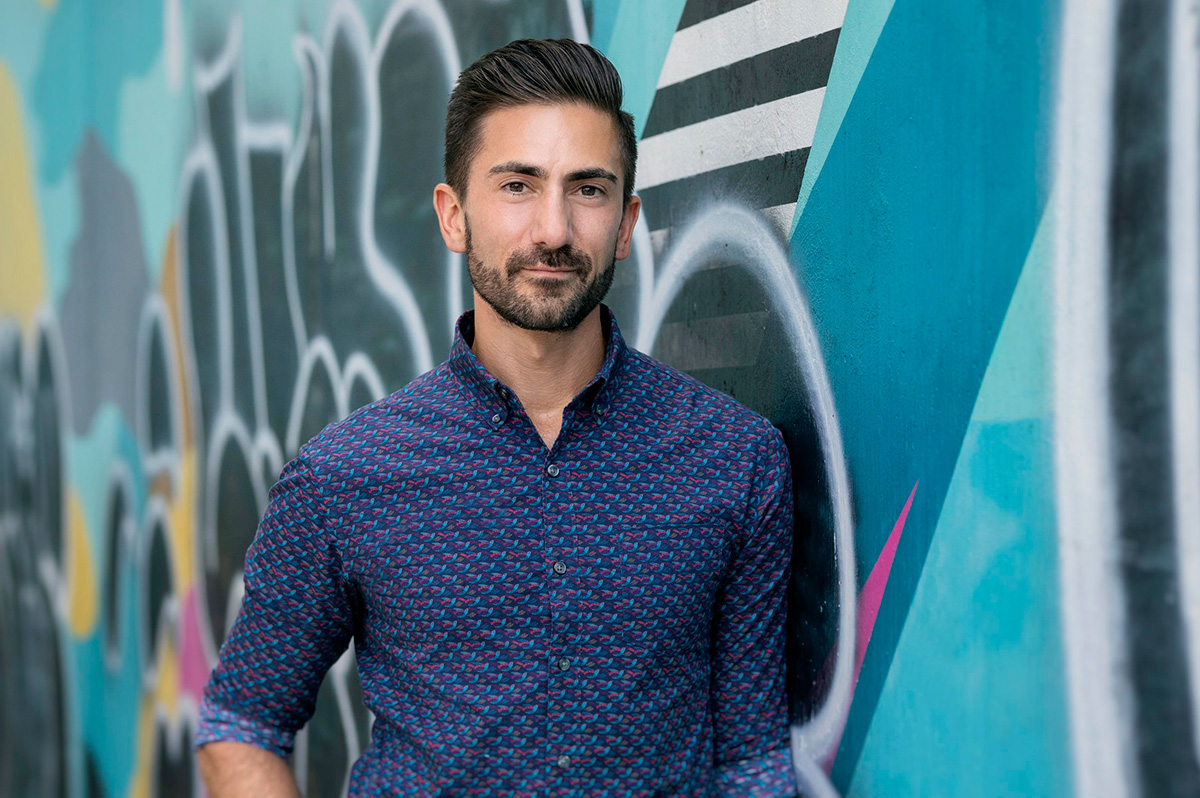
Gay Advisory Neighborhood Commissioner Brian Footer, who was one of three out LGBTQ candidates running for the open Ward 1 D.C. Council seat in the city’s June 16, 2026, Democratic primary, announced on Dec. 17 he has decided to “suspend” his campaign to focus on his family.
“After deep reflection and honest conversations with my family, I have decided to suspend my campaign for the D.C. Council,” he said in a statement. “This moment in my life requires me to be present with the people I love most and honor the responsibilities I carry both at home and in the community,” he states. “This was not an easy decision, but it is the right one for me and my family at this time.”
Footer, a longtime Ward 1 community activist and LGBTQ rights advocate, announced his candidacy for the Ward 1 Council seat in July, one month before bisexual Ward 1 community activist Aparna Raj announced her candidacy for the Council seat on Aug. 12.
Gay Ward 1 Advisory Neighborhood Commissioner Miguel Trindade Deramo announced his candidacy for the Ward 1 Council seat on Nov. 18, becoming the third out LGBTQ candidate in what appeared to be an unprecedented development for a race for a single D.C. Council seat.
At least three other candidates who are not LGBTQ are running for the Ward 1 Council seat. They include Ward 1 ANC member Rashida Brown, longtime Ward 1 community activist Terry Lynch, and Jackie Reyes-Yanes, the former director of the Mayor’s Office of Community Affairs.
In his statement announcing the suspension of his candidacy, Footer said he would continue to be involved in community affairs and advocate for the issues he discussed during his campaign.
“I want to be clear: I am stepping back from the race, not the work,” he says in his statement. “Public service has always been my calling. I will continue advocating for affordability, for safer streets, for stability for small businesses, and for a government that responds to people with urgency and respect,” he wrote. “And I will continue showing up as a partner in the work of building a stronger Ward 1.”
Footer concluded by thanking and praising his campaign supporters and calling his campaign suspension a “transition,” suggesting he is not likely to resume his candidacy.
His campaign press spokesperson did not immediately respond to a question from the Washington Blade asking if Footer might later resume his campaign or if his latest action was in effect an end to his candidacy.
“To everyone who knocked on doors, hosted conversations, donated, shared encouragement, and believed in this campaign, thank you,” he says in his statement. “I am deeply grateful for every person who helped this campaign take root,” he added. “This isn’t an ending, it’s a transition. And I’m excited for the work ahead, both in Ward 1 and at home with my family.”
Longtime gay D.C. Democratic Party activist Peter Rosenstein said in a statement to the Blade, “I respect Brian Footer’s decision to end his campaign for Council. It is not easy to run a campaign in D.C. and there are many others running in Ward 1.” He added, “While not living in Ward 1, I thank Brian for all he has done and clearly will continue to do for the people in the ward.”
Local
LGBTQ, LGBTQ-friendly congregations to hold holiday services
Bet Mishpachah’s Hanukkah service to take place on Friday
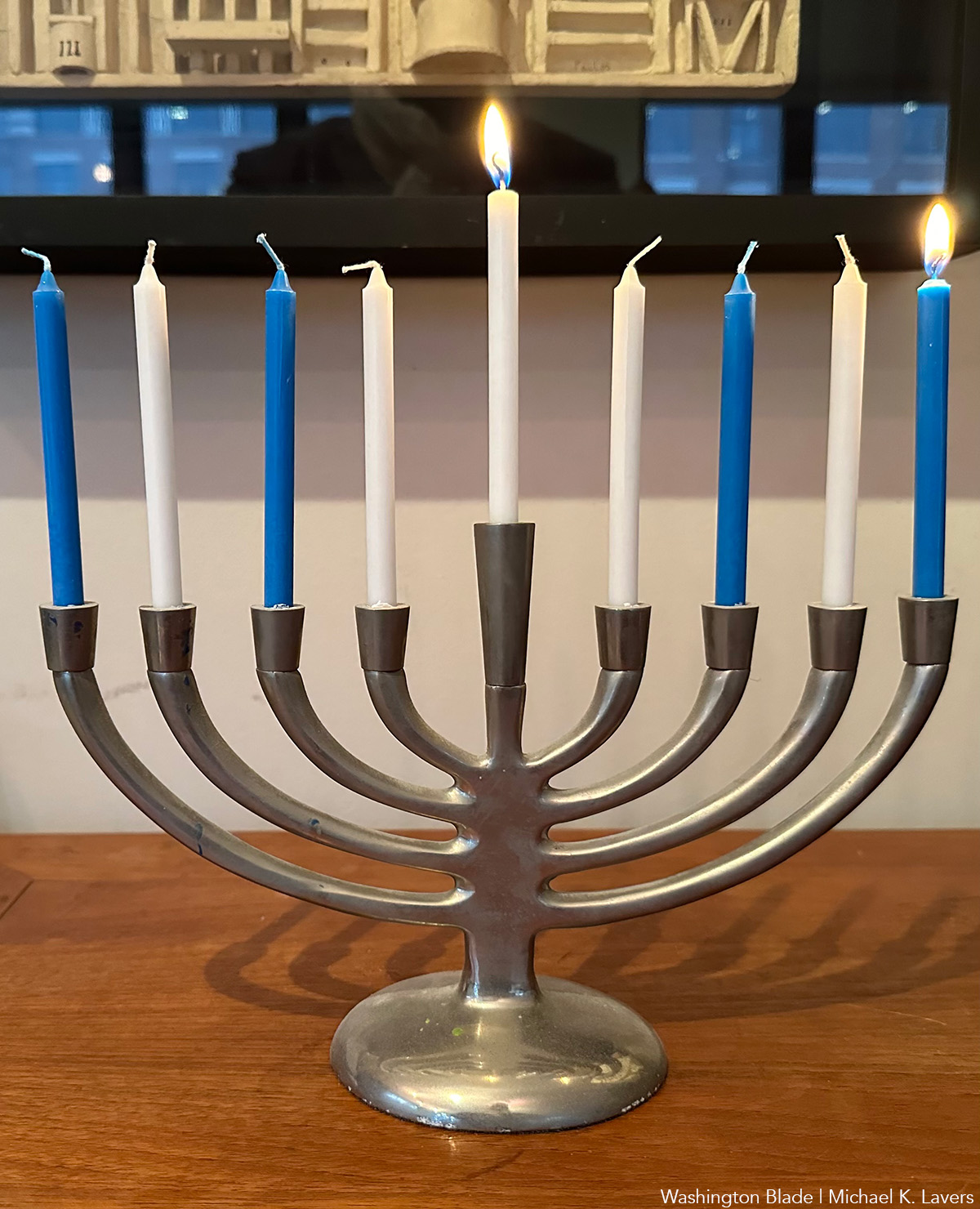
LGBTQ and LGBTQ-friendly congregations in D.C. will hold services and other events throughout the holiday season.
Bet Mishpachah on Friday will hold its Sparks in the Dark Happy Hour at Spark Social on 14th Street from 5:30-7:30 p.m. It’s Chanuka Shabbat Service will begin at the Edlavitch DC Jewish Community Center (1529 16th St., N.W.) at 8 p.m.
Hanukkah began on Sunday and will end on Dec. 22.
Two gunmen on Sunday killed 15 people and injured more than two dozen others when they opened fire at a Hanukkah celebration on Sydney’s Bondi Beach.
Jake Singer-Beilin, Bet Mishpachah’s chief rabbi, in a Facebook post mourned the victims.
“We grieve for the victims and send heartfelt prayers of healing for those who were wounded,” he wrote.
“This Chanuka, our lights will shine brightly in the darkness, but our hearts will be heavy with mourning for those who were murdered on Bondi Beach while observing what should have been a joyous day,” added Singer-Beilin. “We will still celebrate our Festival of Lights and we will commit ourselves to illuminating and repairing our broken world. Let us channel the bravery of the Maccabees who found hope where there seemed to be none, and who fought to create a better future. We must do the same.”
LGBTQ Catholic group to hold annual Christmas Day Mass
Dignity Washington’s Christmas Day Mass will take place at St. Margaret’s Episcopal Church (1820 Connecticut Ave., N.W.) on Dec. 25 from 6-7 p.m. Parishioners can attend in person or watch it online via Facebook.
The Metropolitan Community Church of Washington D.C.’s Christmas Eve service will take place at the church (474 Ridge St., N.W., on Dec. 24 at 6 p.m.
St. Thomas Episcopal Church (1517 18th St., N.W.) in Dupont Circle will hold its Christmas Eve Festival Eucharist from 5-6 p.m. A Christmas Eve dinner will take place in the Parish Hall from 6-8:30 p.m. The church’s Christmas Eve Festival Eucharist will occur on Dec. 25 from 10-11 a.m.
Washington National Cathedral throughout the holiday season has a number of services and events scheduled. These include the virtual Gospel Christmas Service on Dec. 21 from 6-7:30 p.m., the Family Christmas Service on Dec. 23 from 11 a.m. to noon, the Christmas Eve Festival Holy Eucharist on Dec. 24 from 10-11:45 p.m., and the Christmas Day Festival Holy Eucharist on Dec. 25 from 11:15 a.m. to 12:45 p.m.
The Foundry United Methodist Church (1500 16th St., N.W.) in Dupont Circle will hold its Christmas Eve Family Service on Dec. 24 at 4:30 p.m. Its Carols and Candlelight Service will take place at 8 p.m.
Smithsonian Anacostia Community Museum to celebrate Kwanzaa
The Smithsonian Anacostia Community Museum (1901 Fort Place S.E.) in Anacostia will mark the first day of Kwanzaa on Dec. 26 with storytelling and drumming with Mama Ayo and Baba Ras D from noon to 2 p.m. The museum will hold a series of other events through the 6-day celebration of African American culture that ends on Jan. 1.
The Creative Suitland Arts Center (4719 Silver Hill Road) in Suitland, Md., on Friday will hold their Almost Kwanzaa: A Creative Kind of Holiday event from 6-8:30 p.m.
Maryland
Joseline Peña-Melnyk elected Md. House speaker
Family immigrated to New York City from the Dominican Republic
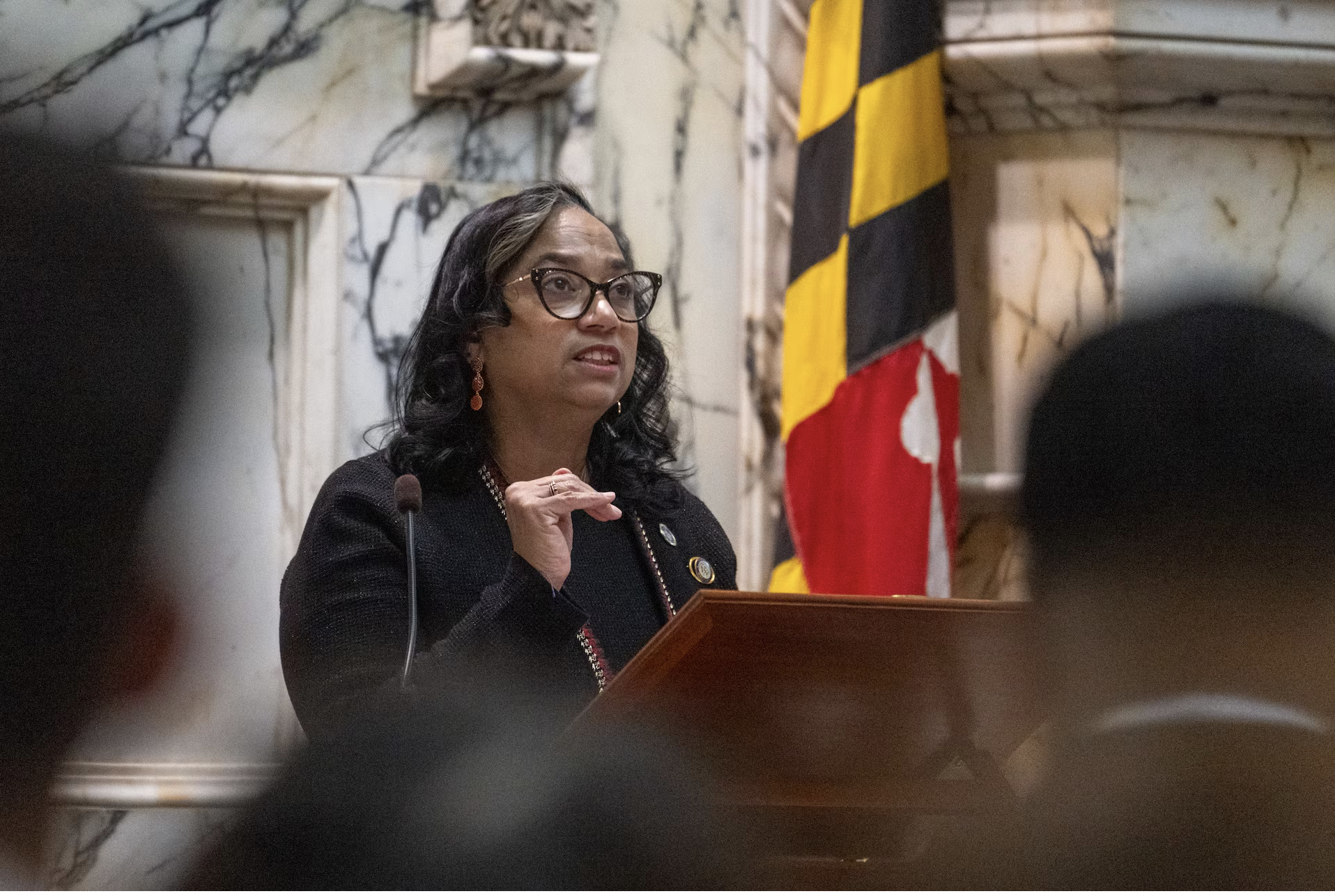
By PAMELA WOOD | Moments after being elected speaker of the Maryland House of Delegates Tuesday, state Del. Joseline Peña-Melnyk stood before the chamber and contemplated her unlikely journey to that moment.
Born in the Dominican Republic, the Peña family lived in a small wooden house with a leaky tin roof and no indoor plumbing. Some days, she said, there was no food to eat.
When she was 8 years old, the family immigrated to New York City, where Peña-Melnyk was dubbed “abogadito” or “little lawyer” for helping her mother and others by translating at social services offices.
The rest of this article can be read on the Baltimore Banner’s website.

Brian Footer suspends campaign for Ward 1 D.C. Council seat

LGBTQ Democrats say they’re ready to fight to win in 2026

PHOTOS: 10’s Across the Board

Lighting candles in a time of exhaustion

LGBTQ, LGBTQ-friendly congregations to hold holiday services

PHOTOS: The Holiday Show

Choose U ambassadors share lived experiences with HIV, personal reflections, and insights

Studio’s ‘Mother Play’ draws from lesbian playwright’s past

The best books to give this holiday season