Opinions
Truman surprised in 1948 — Biden will do the same in 2024
Democrats should stop listening to early polls and focus on the positive
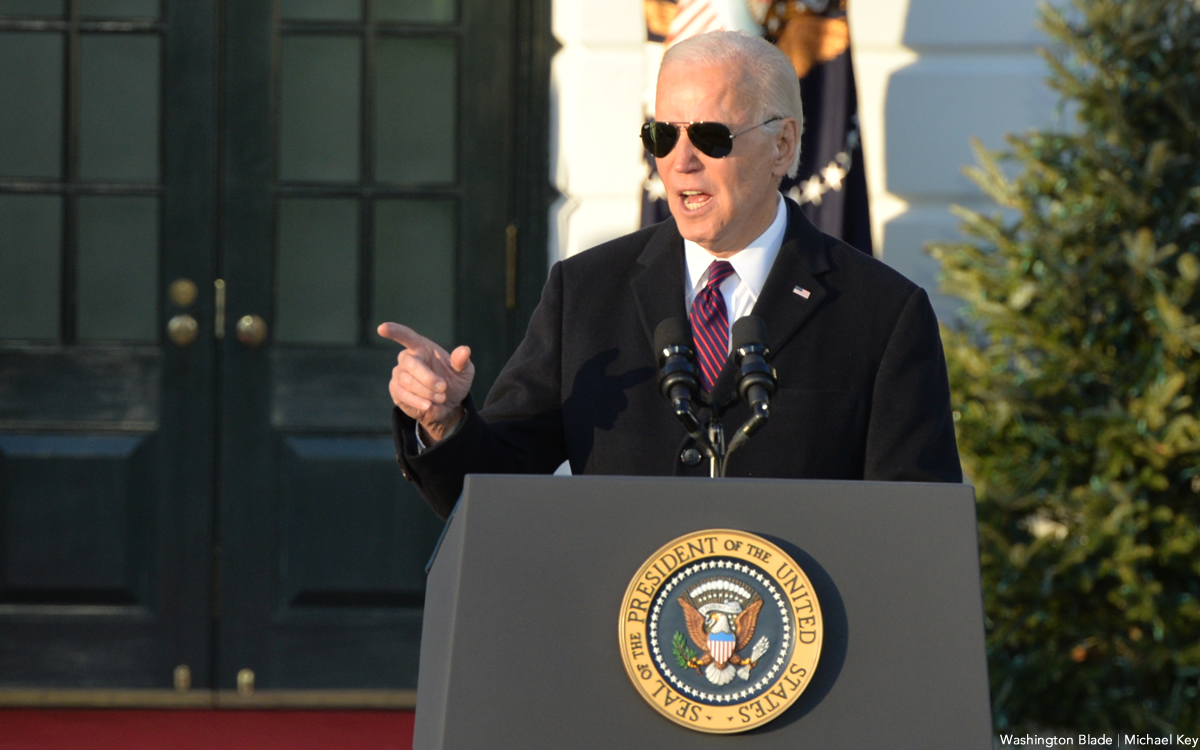
The History website tells us; “In one of the greatest upsets in presidential election history, Democratic incumbent Harry S. Truman defeats his Republican challenger, Governor Thomas E. Dewey of New York, by just over two million popular votes. In the days preceding the vote, political analysts and polls were so behind Dewey that on election night, long before all the votes were counted, the Chicago Tribune published an early edition with the banner headline ‘DEWEY DEFEATS TRUMAN.’”
“Harry Truman was thrust into the presidency by Franklin D. Roosevelt’s death in 1945. Approaching the 1948 presidential election, he seemed to stand a slim chance of retaining the White House. Despite his effective leadership at the end of World War II and sound vision in the confused postwar world, many voters still viewed Truman as an ineffectual shadow of his four-term predecessor. He also antagonized southern Democrats with his civil rights initiatives. Most were sure that Dewey would take the White House.”
The same scenario will happen in 2024. If this election is between Trump and Biden, then young, old, Black, white, gay, and straight, will vote for Biden. While some may hold their nose, they will come out, and they won’t vote for Trump.
I think reading and writing doom-and-gloom headlines and comments about this election by and about Democrats, is something Republicans want us to do. They want us to read the headlines about some of the polls without looking at the internals. It is the internals from most of the current polling that show Trump will not win. Whether it is the New York Times /Sienna polls, the Washington Post poll, or even the recently released USA Today/Suffolk University poll, they mean practically nothing at this stage of the campaign. We know there are a plethora of issues that will have an impact on this election 10 months from now. They include whether Trump gets convicted on any of the 91 counts he has been indicted on; what the state of the economy is six months from now; what is the status of the Ukraine war and the Israel/Hamas war; and whether any other war or international incident starts between now and the election.
We know our country is divided. That won’t change between now and the November election. The divisions have reached a point where the presidential election will be decided based on the electoral college votes of maybe seven states: Michigan, Arizona, Nevada, North Carolina, Georgia, Pennsylvania, and Wisconsin. Unfortunately, we can predict the results in all the others. No matter who the Republican candidate is, they will not win California or other Northwest states. Nor will they win New York and most Northeast states. Democrats will not win the Deep South. While this is a tragic state of affairs, it is reality at the moment.
Two things today are clearly in Democrats’ favor, and we can thank Donald Trump for both: the abortion issue and the threat to our democracy. He is responsible for overturning Roe v. Wade, and tried to stage a coup on Jan. 6, 2021. Had one, or both of those things not happened, this would be a very different election. The Biden campaign has nearly 10 months to make their case on these issues and the positive state of our economy. The president made a great start on this in Valley Forge, Pa., with a strong speech on how Trump would destroy our democracy. We know the majority of the nation including women (they are a majority on their own), the LGBTQ community, and African-American community, all have something to fear from Trump, and any Republican president.
So let us stop the doom and gloom headlines. Each of the columns following those headlines have good things for the Biden/Harris campaign buried in them, including the recent one in the Washington Blade. I urge everyone who knows they will vote for Biden, or knows they would never vote for Trump, to start your conversation on the election with something positive about Democrats. It is important to stop highlighting the negatives; Republicans will do enough of that on their own.
Just remember what happened in 1948 and know Democrats have a real chance to win both sides of Pennsylvania Avenue. Then let’s have the conversation about what they can do when that happens: Work toward passage of the Equality Act, guarantee women full equality and control of their bodies; forgive some student loans; and fight for policies to battle climate change. Then everyone must accept a third-party candidate will not win.
So again, Democrats must stop the negativity. Being positive and telling everyone about the successes of the first Biden/Harris administration is a winning combination. Successes including millions of jobs created, low unemployment, strong unions, curbing inflation, rising income, and rebuilding our infrastructure. This, along with a focus on abortion rights, and saving our democracy, is the winning combination. If we all do that, just like the results for Harry Truman in 1948, we will see Joe Biden reelected by millions of votes in 2024.
Peter Rosenstein is a longtime LGBTQ rights and Democratic Party activist. He writes regularly for the Blade.


Opinions
My trans daughter thrived in Chicago public schools
Washington wants to make that impossible
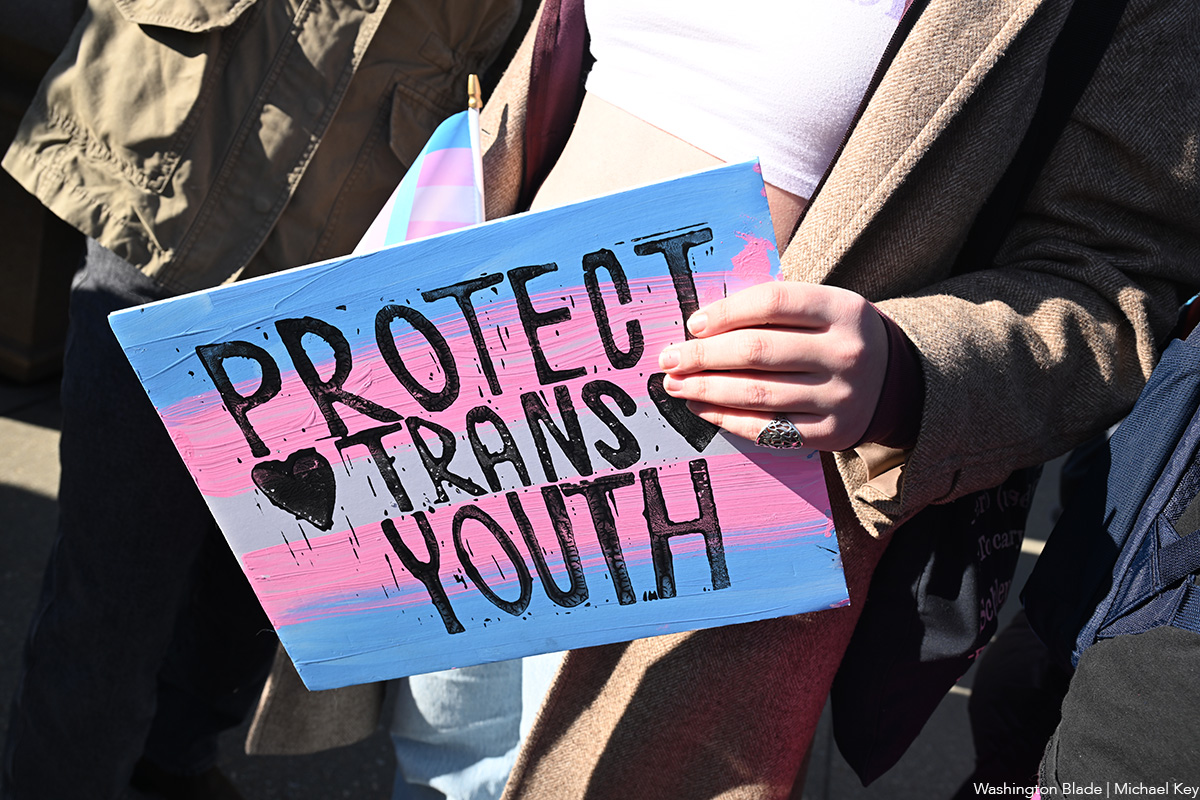
I am a Chicagoan whose daughter is transgender. But that is not the most important fact about her. My daughter loves fashion, sings in choir, is active at church, and is, by every measure, your classic American teenager.
Yet it is her gender identity that politicians in Washington have once again decided to make their business.
She’s had the benefit of attending school in a district that affirms her, with educators who have added protections for students like her to a contract, in a city that benefits from and believes in diversity.
If the Republican-led Congress that is subpoenaeing the CEO of Chicago Public Schools truly was interested in “inappropriate content” and its impact on students, they would start with the anti-trans state legislation that increases youth suicide attempts by 72%, not the school districts making them feel safe and welcomed. Protecting these kids in school is not a culture war talking point. It is suicide prevention.
But that is not what they are doing. Instead, they are calling to question the head of a school district where Chicago’s values have made our schools safer places for students of every gender, race, and nationality.
The same administration that has yet to investigate the Epstein files but is moving the FCC to put warning labels on television shows that portray inclusive families and characters of different sexualities, is telling on itself in what they think is permissible and what they think is harmful for school-age youth. They say this is about parental rights and children’s well-being, but the parental right I care most about is the right for my daughter and all children to walk into a school building and feel safe and affirmed instead of scared and threatened.
My daughter spent 13 years in Chicago public schools. Her teachers used her chosen name. Her classmates accepted her for who she is. She wore a formal dress at choir concerts, landed a female lead in the school musical, and used the women’s bathroom without anyone batting an eye. When she went to a school dance, her teachers celebrated her like any other student, gushing over her dress, cheering her on. Nobody treated her like a problem to be managed.
That is not luck. That is Chicago. It’s the result of educators who fought hard for these protections. While MAGA has moved other states to bar teachers from even acknowledging LGBTQ+ students, the Chicago Teachers Union ratified a contract that does the opposite. It puts gender support coordinators in every network, codifies protections for chosen names and pronouns, and incorporates CPS guidelines for transgender students into the collective bargaining agreement itself.
Those are not bureaucratic details. They are what stands between a child like mine and the bully who, without them, could decide she does not deserve dignity and hurt her without consequence.
Chicago believes every student, including LGBTQ+ children, belongs in school and deserves to feel safe there. Our city has grit and resolve and a deep sense of pride in the diversity that makes it what it is. I believe that is exactly why this administration has put us in its crosshairs. This is a city that shuts down its streets for the Pride parade, Puerto Rican Day Parade, St. Patrick’s Day, and the Bud Billiken Parade. This is the Chicago I am raising my daughter in. The Republicans in Congress have decided that belief is the problem.
They have already passed a bill to pull federal funding from any school that affirms a transgender student’s identity without first notifying parents. They’re attempting to withhold funds from Chicago and other districts for programs that reverse generations of discrimination and disinvestment. They want to dismantle the Department of Education and have already passed a law to fund private religious schools with public dollars. Putting our school district under the lights of their circus is just one tactic in their political agenda.
I wanted my daughter to read, to do math, to graduate ready for whatever comes next, and find her place in the world. Every parent I know wants that. My daughter recently graduated. She got there because she had good teachers, she applied herself, and she never had to walk into school ashamed of who she was or afraid of what might happen.
It matters to me that my daughter was in a district intentionally seeing to her safety, immigrant students’ sanctuary, and Black students’ success. What they see as a violation is really our city’s commitment to the dignity of all students
What they are running is not a parental rights agenda. It is a defunding agenda against parents, students, and educators who don’t subscribe to their beliefs, and Chicago is just the beginning.
Washington can hold all the hearings it wants, but they’ll never be able to erase children like my daughter. And I pray that our schools will never make children like her think twice before walking through those doors for the most formative years of their lives. Whether they attend a school district that supports them in holding their heads high or one that bends the knee to make them fearful instead is what this fight is actually all about.
Mary Kay Devine is a Chicago resident.
Opinions
Congratulations to Lewis George and all winners in D.C.’s primary
New mayor will have to navigate a hostile president
The primary is just about over and we are about to have a new mayor in D.C.
For the first time D.C. has ranked choice voting. Because of this, we don’t have a final winner for every race on election night. It will take a few days to declare some winners. I opposed ranked choice, and would rather see a run-off between the top two candidates, but the voters of D.C. spoke, so we have ranked choice.
Let me congratulate Janeese Lewis George, the apparent winner of the primary for mayor. Now it will be on to the general election where we can be close to 100% certain she will be the next mayor. I campaigned against her for a variety of reasons, and those reasons still hold. But she will have my support, and I congratulate her on her win. It is my hope she will become a good mayor for all the people of the District. That she will be a mayor we can all trust, and work with. That she will always speak up for the LGBTQ community, and speak out against anyone who wants to discriminate against us. Just as I hope she will actively fight antisemitism, Islamophobia, sexism, and racism. That she will fight for economic equality. So, again, I give her my full support at this time, trusting she will do all those things, because we all want only the best for all the people of the District. So, Janeese Lewis George, I salute you on your win, and wish you success.
In addition to a new mayor, we will have a new delegate to Congress, Robert White. I wish him well, and hope he will work to form the coalitions we will need if we are ever to get statehood. But also hope his first goal as we fight for that, will be to get us legislative and budget autonomy. Then we reelected Brian Schwalb as Attorney General, Phil Mendelson as Council Chair, and Zachary Parker as Council member for Ward 5. I hope they all continue the good work they have been doing. Then congratulations to Oye Owolewa for his win as Democratic Council member- at-Large. Then in the special election for Independent Council member-at-Large, Elissa Silverman reclaimed her seat. I hope those who endorsed her will fare better than I did when I previously endorsed her. I was nominated by the mayor for a seat on a board, and Ms. Silverman said she couldn’t participate in my committee review, or vote for me, as it would look bad for her as I had endorsed her. Figure that one out. Thankfully, the other 12 members of the Council had no problem confirming me.
I hope the people in Ward 1 will get fair and equal representation, from former Metro DC Democratic Socialists of America chair, Aparna Raj, who apparently won that election. Congratulations also to Matthew Frumin, reelected in Ward 3, and Charles Allen, reelected in Ward 6. Then congratulations to my friend Phil Pannell, and all the others elected to Democratic Party posts.
With the new members of the Council, and the new mayor, we can definitely anticipate some changes in how our government is run, and which issues will be a priority. I just hope considering the frustration we all feel with the felon in the White House, they will be able to hold in check some of their thoughts, understanding he can inflict pain, and has shown a willingness to do so, on the people of D.C., if he is challenged too fiercely, and too directly, especially true when the challenge comes from the mayor. He can, and will, react negatively, and we have seen that. The new mayor must know how to walk a tight rope, because it’s a skill she will need when dealing with the lying, racist, sexist, homophobic felon in the Oval Office. Disgusting or not, he will be around for the first two years of the new mayor’s term. I would rather see him in jail, but so be it.
The new mayor and the Council will be working on some of the same issues that have been around for a number of years, and some new ones. They will still be fighting the rat problem, and I mean the animals, and then we look forward to the new RFK stadium, and the Commanders return to D.C. The team made certain promises, and it is up to the government to hold them accountable, including working with the community, building affordable housing, a new supermarket, and a host of other commitments. They must monitor hiring to ensure residents of D.C. are given all the opportunities possible, for jobs at every level on the various projects.
Again, congratulations to all the winners.
Peter Rosenstein is a longtime LGBTQ rights and Democratic Party activist.
Letter-to-the-Editor
Primary Day is not the end of election season in D.C.
Ultra-local positions on November ballot; city’s future at stake

Fellow citizens and voters in the District of Columbia!
Primary Day has passed. By now there should be some idea whom our new Congressional representative, mayor and members of the City Council may be. Hopefully Mr. Trump’s chest beating threats to take over the District resulted in more voters than ever sending a crystal-clear message to the White House.
Election Day, Tuesday, Nov. 3, delivers the final decisions and requires every registered vote to cast final votes on the aforementioned positions. WAIT! There are other elected positions to fill.
The DC Board of Education will have candidates in Wards 1,3, 5, and 6. Finally, there are the ultra-local positions: all those running for the entire Advisory Neighbor Commissions in all eight wards. There are 345 Single Member Districts around the city representing around 2,000 neighbors.
Love your city and want to have a say in your area? Then consider running for the ANC. To learn more, check out www.oanc.dc.gov.
Of course, also check out the DC Board of Elections at www.dcboe.org.
There might also be some initiatives/referenda to be decided on the November ballots.
Do let the LGBTQ+ Victory Fund/Institute know if you are running either for the Board of Education or your local ANC at www.victoryfund.org.

‘Stop! That! Train!’ is made for fans, but fun for all

Delaware guv signs bill to protect children born using assisted reproduction

Calendar: June 19-25

My trans daughter thrived in Chicago public schools

Minor league team in York, Pa., forfeits Pride Night game after some players refuse to wear special jersey

Gay San Diego mayor elected US Conference of Mayors president

UFC fighter says ‘Michelle Obama is a man’ at White House event

There is no Pride in detention

This John Waters interview has been edited for readability — but perhaps not human decency

Calif. governor’s race spotlights Becerra’s LGBTQ advocacy
-

 California4 days ago
Gay San Diego mayor elected US Conference of Mayors president
-
National4 days ago
UFC fighter says ‘Michelle Obama is a man’ at White House event
-
Opinions5 days ago
There is no Pride in detention
-
Baltimore4 days ago
This John Waters interview has been edited for readability — but perhaps not human decency