District of Columbia
D.C. LGBTQ bars ‘hanging in there’ amid tough economy
Shakers to close; others struggling in wake of gov’t shutdown, rising prices
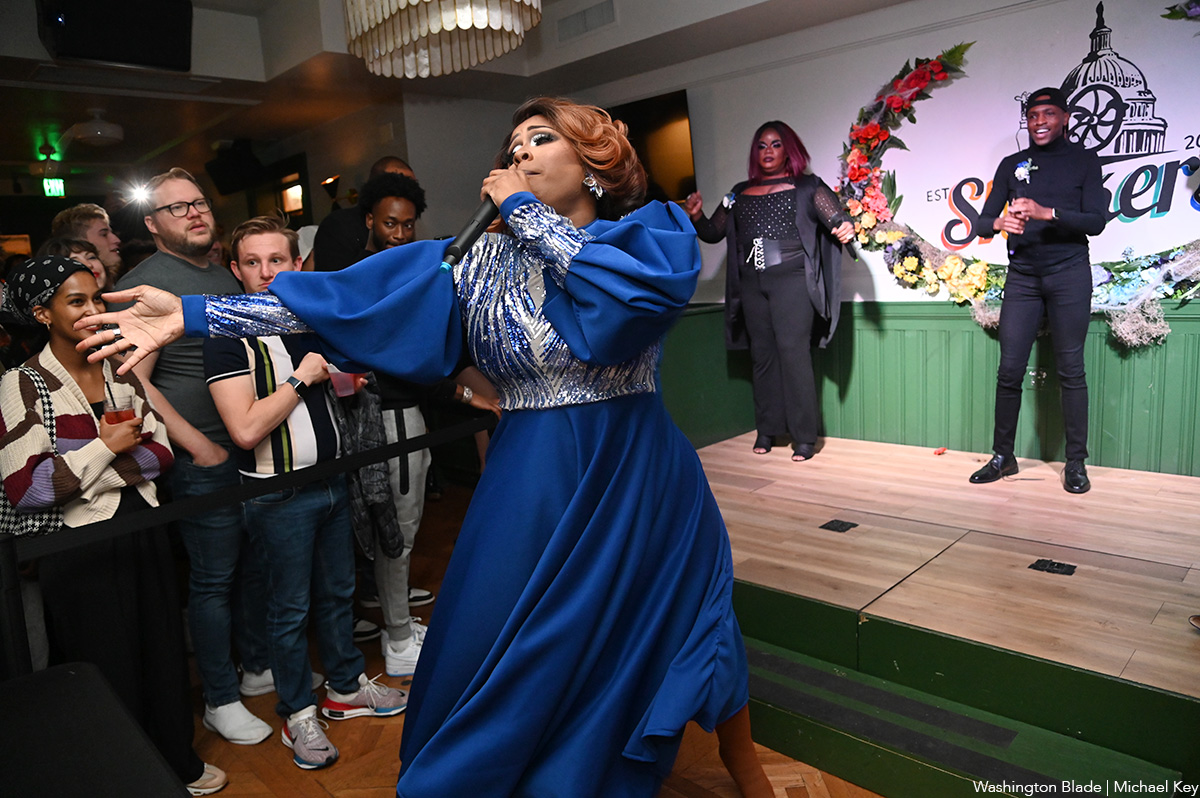
The owners of several of D.C.’s at least 24 LGBTQ bars, some of which also operate as restaurants or cafes, say they are being negatively impacted by the same forces impacting most other D.C. bars and restaurants at this time.
Among the lead issues impacting them have been the deployment by President Donald Trump of National Guard troops on city streets, the nearly two-month long federal government shutdown that just ended, and skyrocketing prices for food and other supplies brought about by the Trump administration’s controversial tariff program.
The Trump administration’s decision to lay off thousands of federal workers shortly after Trump took office in January also appears to have resulted in a decline in the number of people going out to restaurants and bars, including LGBTQ restaurants and bars, according to some of the owners who spoke to the Washington Blade.
Observers of LGBTQ nightlife businesses have pointed out that although nationwide the number of LGBTQ or “gay bars” has declined significantly since 1980, the number of LGBTQ bars in D.C. has increased from just six in 1980 to at least 24 so far in 2025.
If the popular Annie’s Paramount Steak House near Dupont Circle, Mr. Henry’s restaurant, bar and Jazz music performance site on Capitol Hill, and the Red Bear Brewing Company bar, restaurant and music performance site in Northeast near Capitol Hill – each of which have a mixed but large LGBTQ clientele — are included in the D.C. gay bar list, the total number climbs to 27.
As if that were not enough, yet another D.C. gay bar, Rush, was scheduled to open on Nov. 21 at 2001 14th Street, N.W. at the intersection of 14th and U streets, near the location of 10 other LGBTQ bars in the U Street nightlife corridor. That will bring the number of LGBTQ-identified bars to 28.
Among the first of the LGBTQ bar owners to publicly disclose the economic hardships impacting their establishment was David Perruzza, who owns the gay bar and café Pitchers and its adjoining lesbian bar A League of Her Own in the city’s Adams Morgan neighborhood.
In an Oct. 10 Facebook post, Perruzza said he was facing “probably the worst economy I have seen in a while and everyone in D.C. is dealing with the Trump drama.”
He added, “I have 47 people I am responsible for, and I don’t know how to survive in this climate. If I have ever sponsored you or your organization, now is the time to show the love. Not only for me but other bars. I went out tonight and it was depressing. If you want queer bars, we all need your help.”
Asked on Nov. 10 how things were going one month after he posted his Facebook message, Perruzza told the Blade business was still bad.
“I’m not going to sugarcoat it,” he said. “Again, we’re busy. The bar’s busy, but people aren’t buying drinks.” He added, “No, they’re coming in and drinking water and dancing. They’re not buying drinks.”
Like most of the city’s bars, including LGBTQ bars, Perruzza said he provides water jugs and plastic cups for patrons to access drinking water by themselves as needed or desired.
Jo McDaniel, co-owner of As You Are, an LGBTQ bar and café in the Barracks Row section of Capitol Hill at 500 8th Street, S.E., which has a large lesbian clientele, said she, too, was hit hard by the National Guard deployment. She said National Guard troops carrying guns began walking up and down 8th Street in front of As You Are around the last week in August and have continued to do so.
“And then from the 7th [of September] they went from pistols to rifles,” McDaniel said. “Nothing has happened. They’ve just been walking back and forth. But now they have big guns. It’s pretty terrifying.”
She noted that the National Guard presence and the other issues, including the federal shutdown, caused a sharp drop in business that prompted her and her partner to launch a GoFundMe appeal in August, a link to which was still on the As You Are website as of Nov. 16.
“We’re reaching out to you, our community, our allies, and those who believe in safe spaces for marginalized folks to help us get past this challenge so we can all ensure AYA’s survival and continued impact in D.C. and the community at large,” a message on the GoFundMe site says.
Freddie Lutz, owner of Freddie’s Beach Bar, the LGBTQ bar and restaurant in the Crystal City section of Arlington, Va., just outside D.C., said the federal shutdown, rising costs, and even the deployment of National Guard troops in D.C. appears to have had a negative impact on businesses across the river from D.C., including Freddie’s.
“Freddie’s is doing OK but not as good,” he said. “We’re down a little bit. Let’s put it that way,” he added. “I just feel like with all the chaos going in this administration and everything that’s happening it’s like we just have to hang in there and everything will be alright eventually,” he told the Blade.
“But business is down a little bit, and we can use the support of the community just like David Perruzza has been saying,” Lutz said. He said the drop in businesses for at least some of the LGBTQ bars may also be caused by the large and growing number of LGBTQ bars in D.C.
“There are a lot of new gay bars, which are also impacting the rest of us,” he said. “I’m all for it. I want to support them. But it is taking away from some of us, I think.”
Mickey Neighbors is the owner of Sinners and Saints, an LGBTQ bar at 2309 18th Street, N.W. in Adams Morgan located a few doors away from Pitchers and A League of Her Own. He said his business has mostly rebounded from a slowdown caused by the National Guard deployment.
“At first, everyone was kind of scared,” he said. “But then it kind of blew over and there really aren’t that many other bars where the demographic people that come to mine really go to.” He described Sinners and Saints as catering to a younger “BIPOC” crowd, a term that refers to Black, Indigenous, and People of Color.
“We had a downturn of business for a few weeks, but everything is back to normal,” he said.
Stephen Rutgers, co-owner of the LGBTQ bar Crush located at 2007 14th Street, N.W., a few doors down from where the new bar Rush is about to open, said Crush like most other bars was impacted by the National Guard deployment.
“Some bars are going to be fine,” he said. “We are trying to do some creative things to keep people coming in. But overall, everyone is seeing cutbacks, and I don’t think anyone is not seeing that,” he said.
Rutgers said Crush, which in recent weeks has had large crowds on weekends, said he was hopeful that his and other LGBTQ bars would fully rebound when the federal shutdown ends, which occurred the second week in November.
Among other things, Rutgers said a decline in the number of tourists coming to D.C. in response to the Trump administration’s policies has impacted all bars and restaurants, including LGBTQ bars. He said this, combined with the record number of LGBTQ bars now operating in D.C., is likely to result in fewer patrons going to at least some of them.
One of the D.C. LGBTQ bars that put in place a significant change in the way it operates in response to the developments impacting all bars is Spark Social House, a bar and café located on 14th Street, N.W. next door to Crush. In the past week, Spark Social House announced it was ending its status as the city’s only LGBTQ bar that did not serve alcoholic beverages and instead sold a wide range of alcohol-free cocktails.
Owner Nick Tsusaju told the Blade he and his associates made the difficult assessment that under the current economic environment in D.C., which is impacting all bars and restaurants, Spark Social would need to offer both alcohol and non-alcoholic beverages
“You can imagine that if the bars that are selling alcohol are struggling, we are struggling just like other small businesses with the same issues,” he said. “And I think that introducing alcohol is not really an abdication of our values.”
He noted that beginning in December, after Spark Social obtains its liquor license, “we’re introducing a one for one menu where every cocktail comes in two options, booze and boozeless.”
Ed Bailey, co-owner of the D.C. gay bars Trade and Number Nine located near the intersection of 14th and P Streets, N.W., told the Blade in September his two establishments were “ramping up for a busy fall after an unusual summer” impacted by the National Guard deployment.
His predictions of a busy fall appear to have come about at least on weekend nights, including Halloween night, where there were long lines of Trade’s mostly gay male clientele waiting to get into the bar.
Stephen Thompson, a bartender at the Fireplace, a longtime gay bar located at 2161 P Street, N.W., near Dupont Circle, said the National Guard presence and other issues impacting other bars have not negatively impacted the Fireplace.
“We are doing fine,” he said. “The National Guard has not hurt our business. The soldiers do walk by a few times a week, but we’ve been looking pretty good the last couple of months.”
One of the at least 10 LGBTQ bars in the U Street, N.W., entertainment corridor, Shakers, at 2014 9th Street, N.W., announced in a statement this week that it will close its doors on Nov. 23.
“After many, many difficult discussions, we ultimately decided it is time for Shakers to close its doors,” says the statement posted by Shakers owners Justin Parker and Daniel Honeycutt. “While we are in so many ways saddened, we are also looking forward to spending a bit more time with our three-year old son,” the statement says.
It also announces that the nearby gay bar Kiki, located around the corner on U Street, will acquire use of the Shakers building and “keep the space dedicated to our LGBTQ+ community.”
In his own statement on social media, Kiki owner Keaton Fedak said, “To now have two LGBTQ+ bars at 9th & U under the Kiki umbrella is a true full-circle moment – rooted in friendship, history, and the community that continues to grow here.”
The owners of several other D.C. LGBTQ bars couldn’t immediately be reached for comment or declined to comment for this story.
Edward Grandis, a D.C. attorney who has worked with some of the D.C. LGBTQ bars, said the COVID pandemic, which led to the temporary shutdown of all bars and restaurants, appears to have had a lasting impact on LGBTQ bars long after the pandemic subsided.
Among other things, Grandis said he has observed that happy hour sessions at most bars, including LGBTQ bars, have not returned to the level of patronage seen prior to the COVID pandemic. He notes that happy hour times, usually in late afternoon or early evening during weekdays, where bars offer reduced price drinks and some offer free drinks to attract large numbers of patrons, have not been drawing the crowds they did in past years.
“The COVID shutdown assisted the online social meeting sites,” Grandis said. “Bars were closed so guys turned to the internet for setting up parties and this has continued even though there are more bars,” he said in referring to the D.C. gay bars. According to Grandis, the gay men in the age range of their 20s and 30s appear to be the largest group that is no longer going to gay bars in large numbers compared to older generations.
“So, I think the trend started before what the feds are doing,” he said in referring to the National Guard presence and the federal shutdown. “And I think what we are witnessing right now is just sort of like another obstacle that people in the gay and entertainment community need to figure out how to attract the 20-year-olds and young 30s back to the bars.”

District of Columbia
Second trans member announces plans to resign from Capital Pride board
Zion Peters cites ‘lack of interest in the Black trans community’
Zion Peters, a member of the Capital Pride Alliance Board of Directors who identifies as transgender, told the Washington Blade he plans to resign from the board “due to the lack of interest in the trans community, specifically the Black trans community.”
Peters continued, “Nobody has checked on me in the last two months so that shows their level of unprofessionalism towards their board members and the community as a whole.”
If he resigns, Peters would be the second known trans person to resign from the Capital Pride board since February, when longtime trans activist Taylor Lianne Chandler informed the board of her resignation in a detailed letter that was sent to the Blade by an anonymous source.
Chandler, who served as chair of the Capital Pride Transgender, Gender Non-Conforming, and Intersex Committee, stated in her Feb. 24 letter that she resigned from the board out of frustration that the board had failed to address instances of “sexual misconduct” within the Capital Pride organization. The organization’s and the board’s transgender-related policies were not cited in her letter as a reason for her resignation.
The Blade learned of Peters’s plans to resign from an anonymous source who thought Peters had already resigned along with four other board members identified by the anonymous source. The others, who Capital Pride confirmed this week had resigned, include Anthony Musa, Bob Gilchrist, Kaniya Walker, and Dai Nguyen.
Musa and Gilchrist told the Blade they resigned for personal reasons related to their jobs and that they fully support Capital Pride’s work as an organization that coordinates the city’s annual LGBTQ Pride events.
The Blade has been unable to reach Walker and Nguyen to determine their reasons for resigning.
Capital Pride CEO Ryan Bos and Board Chair Anna Jinkerson didn’t respond to a Blade question asking if they knew why Walker or Nguyen resigned.
In response to a request by the Blade for comment on the resignations and the concern raised by Zion Peters about trans-related issues, Bos and Jinkerson sent separate statements elaborating on the organization and the board’s position on various issues.
“We can confirm that the individuals you referenced, except for Zion, no longer serve on the Capital Pride Alliance Board of Directors,” Jinkerson said in her statement.
She added that following the WorldPride festival hosted by D.C. last May and June that was organized by Capital Pride Alliance, the group anticipated a “significant level of board transition,” with many board members reaching the end of their terms. But she said many board members chose to extend their service or apply for an additional term, showing a “powerful reflection of commitment.”
Without commenting on the specific reasons for the resignations of Peterson, Walker, and Nygun, Jinkerson noted, “As with all volunteer leadership roles, transitions occur for a range of personal and professional reasons, and we appreciate those transitions with both understanding and gratitude.”
In his own statement, Bos addressed Capital Pride’s record on transgender issues.
“The Capital Pride Alliance is committed to supporting and uplifting the Trans community through our work with the Trans Coalition under the Diversity of Prides Initiative, our partnership with Earline Budd on the LGBTQ+ Burial Fund with a focus on our Trans siblings, our collaboration with the National Trans Visibility March, and our ongoing investment in programming for Transgender Day of Visibility and Transgender Day of Remembrance,” Bos said in his statement.
“We also recognize there is always continued work to be done, and we always welcome feedback from our community to ensure our commitment remains unwavering,” he said.
At the time of her resignation in February, Chandler said she could not provide specific details of the instances of sexual misconduct to which she referred in her resignation letter, or who allegedly engaged in sexual misconduct, saying she and all other board members had signed a Non-Disclosure Agreement preventing them from disclosing further details.
Board Chair Jinkerson in a statement released at that time said she and the board were aware of Chandler’s concerns but did not specifically address allegations of sexual misconduct.
“When concerns are brought to CPA, we act quickly and appropriately to address them,” she said. “As we continue to grow as an organization, we’re proactively strengthening the policies and procedures that shape our systems, our infrastructure, and the support we provide to our team and partners,” she said.
District of Columbia
Curve magazine honors Washington Blade publisher
Lynne Brown named to 2026 Power List
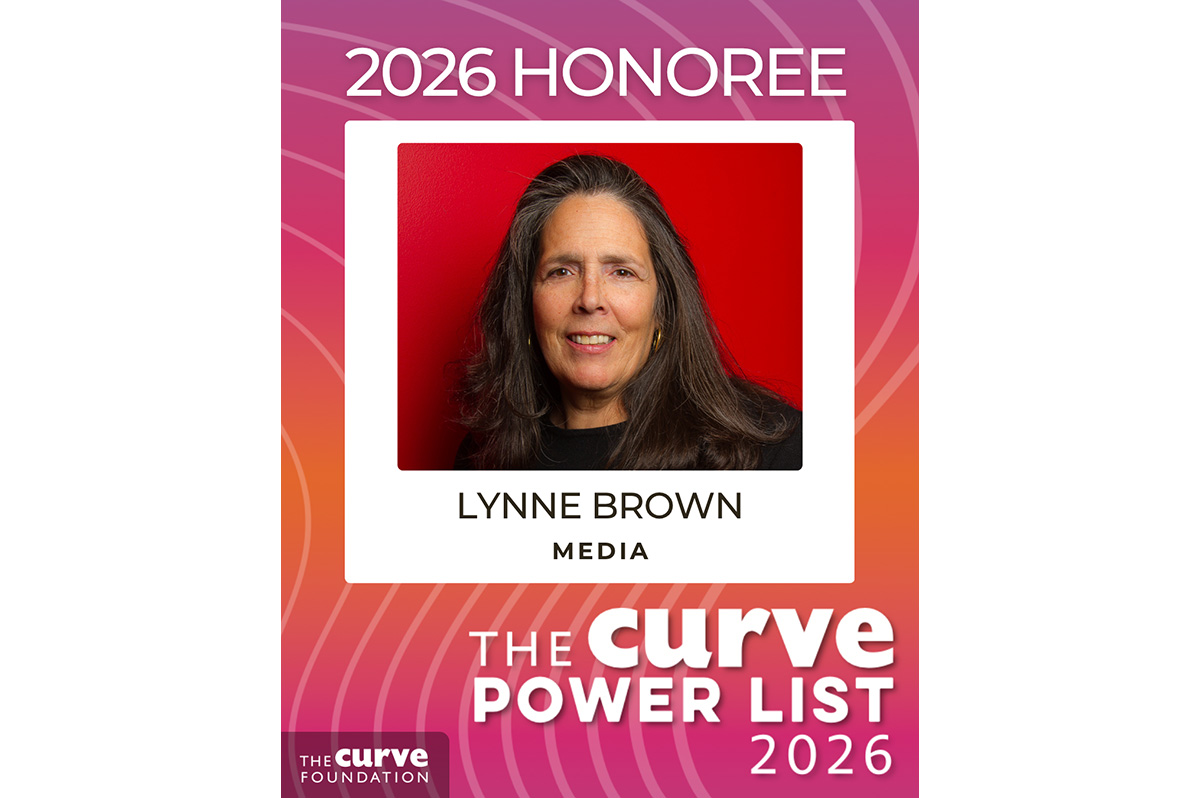
Washington Blade Publisher Lynne Brown has been named to the 2026 Curve Power List celebrating LGBTQ+ women and nonbinary individuals in North America who are blazing trails in their chosen fields.
“From sports and entertainment icons to corporate leaders and lawmakers, these individuals are breaking barriers, challenging norms, and shaping the future,” Curve Foundation/Curve magazine said in announcing this year’s list, which includes ABC newscaster Robin Roberts, comedian/actress Hannah Einbinder, and singer/actress Renee Rapp, among others.
Brown has worked for the Washington Blade for nearly 40 years. She was named publisher in 2007 before becoming a co-owner in 2010.
“I am honored to be recognized by Curve magazine during Lesbian Visibility Week,” Brown said. “Receiving this Curve honor is twofold. I was an early subscriber to Curve. I enjoy the product and know its history. Its journalism, layout and humorous features have inspired me.
“As an owner/publisher, receiving recognition from a similar source acknowledges my work and efforts, with a sincerity I truly appreciate. Franco Stevens, the publisher of Curve, is a business person of duration, experience, and purpose. The fact that they are in the media business, and honoring me and my publication makes it a tiny bit sweeter.”
Nominations for the Curve Power List come from the community: peers, mentors, fans, and employers.
Curve explained the significance of the list in its announcement: “An annual, publicly nominated list of impactful LGBTQ+ women and nonbinary changemakers is crucial in current times to counter discrimination, legislative rollbacks, hostility, and the invisibility of queer women within mainstream and marginal spaces and endeavors. Such a list also fosters encouragement and solidarity, and elevates voices and achievements—from high-profile roles to under appreciated areas of life.”
District of Columbia
Judge rescinds stay-away order in Capital Pride anti-stalking case
Evidence hearing to determine if order should be reinstated against Darren Pasha
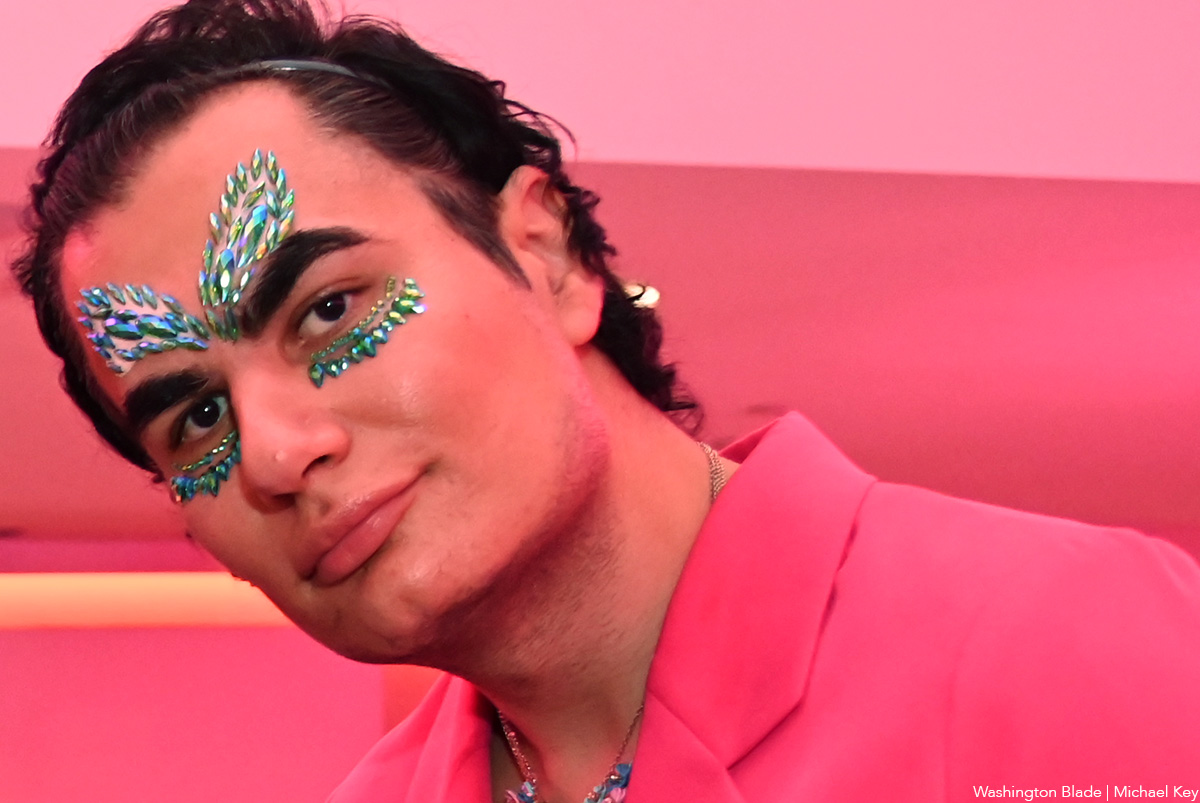
A D.C. Superior Court judge on April 17 rescinded an anti-stalking order he approved in February at the request of Capital Pride Alliance against local LGBTQ activist Darren Pasha.
In a ruling at a court status hearing, Judge Robert D. Okun agreed with defendant Darren Pasha’s stated concern that the initial order was too broad and did not specify who specifically he must stay at least 100 feet away from, as called for in the order.
Okun ruled on April 17 that the initial order, which he noted was oral rather than written, would be suspended until an evidentiary hearing takes place in which Capital Pride will need to present evidence justifying the need for such an order.
“I’m fine with scheduling a hearing at which the plaintiff can present evidence, and the defendant can present evidence,” Okun said. “But I’m not fine with just continuing this oral TRO [Temporary Restraining Order] that Mr. Pasha really doesn’t even have notice of. That seems unfair,” he said.
After asking both Pasha and Capital Pride Alliance Attorney Nick Harrison when they would be available for the evidence hearing, Okun set the date for April 29 at 11 a.m. in Superior Court.
The case began when Capital Pride Alliance, the D.C.-based LGBTQ group that organizes the city’s annual Pride events, filed a Civil Complaint on Oct. 27, 2025, against Pasha, accusing him of engaging in a year-long effort to harass, intimidate, and stalk Capital Pride’s staff, board members, and volunteers.
The complaint was accompanied by a separate motion seeking a restraining order, preliminary injunction, and anti-stalking order prohibiting Pasha from “any further contact, harassment, intimidation, or interference with the Plaintiff, its staff, board members, volunteers, and affiliates.”
In his initial ruling in February, Okun issued an order requiring Pasha to stay at least 100 feet away from Capital Pride staff, board members, and volunteers until the April 17 status hearing. He reduced the stay-away distance from the 200 yards requested by Capital Pride.
Pasha, who has so far represented himself in court without an attorney, has argued in multiple court filings and motions that the Capital Pride stalking allegations are untrue. In his initial 16-page response to the complaint, Pasha said it appears to be a form of retaliation against him for a dispute he has had with Capital Pride and its former board president, Ashley Smith, who has since resigned from the board.
“It is evident that the document is replete with false, misleading, and unsubstantiated assertions,” Pasha’s court response states.
At the April 17 hearing, Okun also ruled that, as standard procedure for civil complaints such as this one, he has ordered both parties to enter into court-supervised mediation to attempt to reach a settlement rather than go to trial.
In an earlier ruling Okun denied Pasha’s request for a jury trial, stating that civil cases such as this must undergo a trial with the judge determining the verdict under existing civil court statutes.
The April 17 court hearing was held in a courtroom at the courthouse, but as allowed under current court rules, Capital Pride attorney Harrison and Capital Pride official June Crenshaw participated virtually through a video connection. Pasha attended the hearing in the courtroom.
“This matter is proceeding through the court in the normal course,” Capital Pride released in a statement. “We look forward to presenting the relevant evidence at the scheduled hearing. Capital Pride Alliance remains committed to maintaining a safe and respectful environment for our staff, volunteers, and community, and to addressing concerns through appropriate channels.”
“This is clearly a case of retaliation,” Pasha told the Blade after the hearing. “Today the judge removed the stay-away order and asked Capital Pride Alliance to present enough evidence and examples to see if a stay-away order should be granted,” he said. “Because Pride is coming up in June, we need to see where this is going.”

Second trans member announces plans to resign from Capital Pride board

State Department implements anti-trans bathroom policy

I’m telling the scared little girl I once was it’s okay to feel free

Memorial for groundbreaking bisexual activist set for May 2

ROSENSTEIN: Chavous for Democratic D.C. Council-at-Large

Inside the lonely world of MAGA gay men

PHOTOS: Night of Champions

PHOTOS: National Champagne Brunch

‘Big Mistakes’ an uneven – but worthy – comedic showcase