Local
New D.C. Council member backs same-sex marriage
Sekou Biddle wins appointment to at-large seat

Ward 4 school board member Sekou Biddle, who won an interim appointment to the D.C. City Council Thursday night, says he’s a strong supporter of LGBT rights, including same-sex marriage.
Biddle, 39, beat former City Council member Vincent Orange (D-Ward 5) and four other Democratic candidates who competed for the interim appointment before the 80-member D.C. Democratic State Committee, which makes interim Counsel appointments.
“I support same-sex marriage,” Biddle told the Blade after the vote. “I think it’s an indication of the kind of city that we have. It’s what makes us, in my opinion, a top-flight, world-class city that we have that level of respect for human and civil rights.”
Biddle will face off against Orange and other candidates expected to enter the race from all political parties in a special city-wide election scheduled for April 26.
He was expected to take office immediately in his temporary Council appointment for a seat made vacant after Council member Kwame Brown (D-At-Large) won election as City Council Chairman.
Before getting elected to the school board, Biddle began his career as a classroom teacher for eight years. He later served in leadership positions in education advoacy organizations, including his current post as executive director of the group Jumpstart.
Thursday night’s vote by the State Committee came after each of the candidates spoke before the committee and an overflowing crowd that gathered in a meeting room at the Democratic National Committee headquarters on Capitol Hill.
The Gertrude Stein Democratic Club, the city’s largest LGBT political group, endorsed Biddle in his race for the school board, where he has served since 2007.
Three Stein Club members who also are members of the D.C. Democratic State Committee endorsed and campaigned for Biddle in his quest for the committee’s appointment. The three are Jeffrey Richardson, the Stein Club president; Lateefah Williams, the club’s vice president for legislation and political affairs; and Alexandra Beninda, the club treasurer.
He also received the endorsement of Brown, who beat Orange in the hotly contested race in November for the Council chair race. At least three other Council members – Mary Cheh (D-Ward 3), Harry Thomas (D-Ward 5), and Marion Barry (D-Ward 8) also endorsed Biddle.
Mayor Vincent Gray remained neutral in the contest but some of his top political operatives backed Biddle. This prompted many political observers to conclude that the city’s political establishment had shifted its support from Orange – who was considered the frontrunner just two weeks ago – to Biddle.
Orange came out strongly against same-sex marriage during his unsuccessful race for mayor in 2006. When he ran against Brown for the Council chair seat last year he announced he had changed his position to support the city’s same-sex marriage law. But he was less clear about whether he would support or oppose holding a voter initiative seeking to overturn the marriage equality law, which took effect last March.
It took three rounds of voting for Biddle to nail down his victory over Orange Thursday night. With 74 of the 80 State Committee members present to vote, Biddle won on the third round by a vote of 40 to 31. Three ballots cast by committee members were disqualified because they voted for one of the other candidates that were eliminated after the first round of voting.
Only Biddle, Orange and candidate Stanley Mayes, a Ward 1 political activist, received any votes in the six-candidate race.
Many of the observers at the State Committee meeting were looking toward gay Council member David Catania (I-At-Large) as a possible predictor of what might happen in the April special election.
Catania stunned the city’s political establishment in 1997 when, running as a Republican, he defeated Democratic frontrunner Arrington Dixon in a special election to win his at-large Council seat.
Just 7 percent of the city’s registered voters turned out for the special election. But gays and Republican voters turned out in force, giving Catania his margin of victory over Dixon, a former City Council chairman who some observers said was overly complacent in his campaign.
Catania won re-election to a full term the following year and has retained his seat since that time. He withdrew from the Republican Party in 2004 to become an independent after the GOP and President George W. Bush embraced a constitutional amendment to ban same-sex marriage.
Some local political pundits say pro-gay Republican Patrick Mara, who won election in November to the school board from Ward 1, could be the next “Catania” in the April special election. With a low voter turnout and support from Republicans and gays, among other groups, Mara supporters say he has a shot at winning. He has yet to announce whether he plans to run, although insiders believe he will enter the race.
Catania unofficially backed Mara when Mara ran against and defeated former Republican Council member Carol Schwartz two years ago in the Republican primary. Mara lost the general election to Democrat turned independent Michael Brown in the general election. As a friend of Mara’s, some observers are wondering if Catania will throw his support and political organization behind Mara, with the possibility of Mara coming out ahead if Biddle and Orange split the Democratic vote.
Some gays, including David Mariner, executive director of the D.C. LGBT community center, backed Orange in last year’s council chair race, saying Orange has come around to support LGBT issues and was more qualified as an attorney and accountant to address the city’s budget and economic development issues. Mariner said he has yet to decide whom to support in the April special election.
Ben Young, a spokesperson for Catania, said Catania has no comment at the present time on the upcoming Council special election and the potential candidates that might run in the race.
Richardson of the Stein Club said the comparison between Catania and Mara would not likely apply in this year’s special election because Biddle is expected to run a vigorous campaign and line up support from large numbers of gay voters.
Like Biddle, Mara supports same-sex marriage and has expressed strong support for all other LGBT-related issues.
Biddle told the Blade Thursday night that his political ties to the LGBT community are strong.
“In terms of politics and endorsements, I got my start in the LGBT community,” he said. “When I ran in 2007 for the Board of Education, the Stein Club was the first one to endorse me, and that gave my candidacy a lot of momentum and visibility. I’ve built a solid relationship since I’ve been in office and I think a level of trust.”
He said he considers himself a “progressive” on a wide range of city issues and hopes to draw support from all sections of the city.





District of Columbia
Center Arts Gallery celebration, auction to take place on Oct. 17
D.C. LGBTQ+ Community Center to mark event’s 10th anniversary

The D.C. LGBTQ+ Community Center is hosting its 10th anniversary celebration of the opening of its Center Arts Gallery on Saturday, Oct. 17, at the Center’s offices at 1827 Wiltberger St., N.W., from 6 – 9 p.m.
“For 10 years, the D.C. LGBTQ+ Community Center’s Arts Gallery has been more than a place where art is displayed,” a statement released by the center says.
“It has been a space where LGBTQ+ artists are seen, celebrated, and connected to community, and where their work has given expression to the stories of joy, resistance, grief, beauty, survival, courage, and imagination,” the statement adds.
It says those attending the event would have an opportunity to bid on donated artwork in an auction and to meet and interact with “the artists whose creativity has helped bring Center Arts Gallery to life, enjoy wonderful food and music, and celebrate a decade of LGBTQ+ artistic expression.”
But the statement posted on the LGBTQ+ Community Center’s website says free general admission tickets have sold out, with $75 VIP tickets still available. It says the proceeds from ticket sales will be used to help support the LGBTQ+ Community Center’s operations.
Attendees and others were also invited to an event after party at the LGBTQ bar and cafe Spark Social from 9-11 p.m. at 2009 14th St., N.W.

The Comings & Goings column is about sharing the professional successes of our community. We want to recognize those landing new jobs, new clients for their business, joining boards of organizations and other achievements. Please share your successes with us at [email protected].
Congratulations to Richard Garrett on being honored by Delaware Gov. Matt Meyer with the Order of the First State. Garrett is executive director of the Children’s Beach House, in Lewes, Del. Upon accepting the honor he said, “I am deeply honored to be recognized by Governor Meyer with the Order of the First State, but I hope this occasion also shines a light on children who are struggling in some of the same ways I struggled as a child and teenager. Perseverance, connection, patience, and the presence of caring adults made all the difference in my life. For 24 years, my greatest privilege has been helping Children’s Beach House create that same sense of belonging and possibility for children and families across Delaware. They are strong, smart, resilient, and resourceful—and they deserve every opportunity to discover just how much they are capable of becoming.”
He told the Blade, “In many ways, my own childhood helps explain why this work has been so deeply personal to me. I grew up in a family that struggled financially, and I had a speech impediment so severe that, as a young child, I often could not be understood without one of my siblings acting as an interpreter. Thankfully, I had strong parents and a mother who was an educator. She spent countless hours helping me practice consonant blends and trying to master the “R” and “S” sounds. Just as importantly, she understood that being around other children my own age would teach me things that no adult could. What made a difference in my life were competent, caring adults who built relationships with me and gave me the sense of safety and belonging I needed. People like Sister Kathleen Swan, OSF; Father Gerald M. Dunne, OSFS, Dr. Susan Cassidy and her husband, John Bronson, to name a few! In many respects, my story mirrors the work we do every day at Children’s Beach House. The children and families we serve are strong, smart, resilient, and resourceful. Sometimes what they need most is for someone to recognize those strengths, stand beside them, and give them the relationships and opportunities they need to flourish.”
Over the years Garrett has grown the Children’s Beach House’s annual budget from approximately $650,000 in 2003 to $4.5 million while strengthening impact, visibility, and organizational infrastructure. He raised $2.5 million in Delaware foundation capital grants, and established a $7 million endowment for the Margaret H. Rollins Center, a $1 million capital endowment, and increased the general operating endowment to $6 million.
In addition to all that Garrett is the founder and owner of Midway Motion and Fitness. He is also looking forward to the groundbreaking of Midway Pickleball in 2027. He is treasurer of the Community Foundation Board of Kiwanis Club of Coastal Delaware. He began his career as executive director of the Delaware County Children’s CAMP, Media, Pa.; and was director of Student Affairs for the Williamson Free School of Mechanical Trades, Media, Pa.
Garrett earned his bachelor’s degree in psychology from Neumann University, Aston, Pa.; and did his graduate studies in vocational education, Temple University.
District of Columbia
Physician: addiction doesn’t always look the way you think it does
Yngvild Olsen headed HHS’s Center for Substance Abuse Treatment during Biden-Harris administration
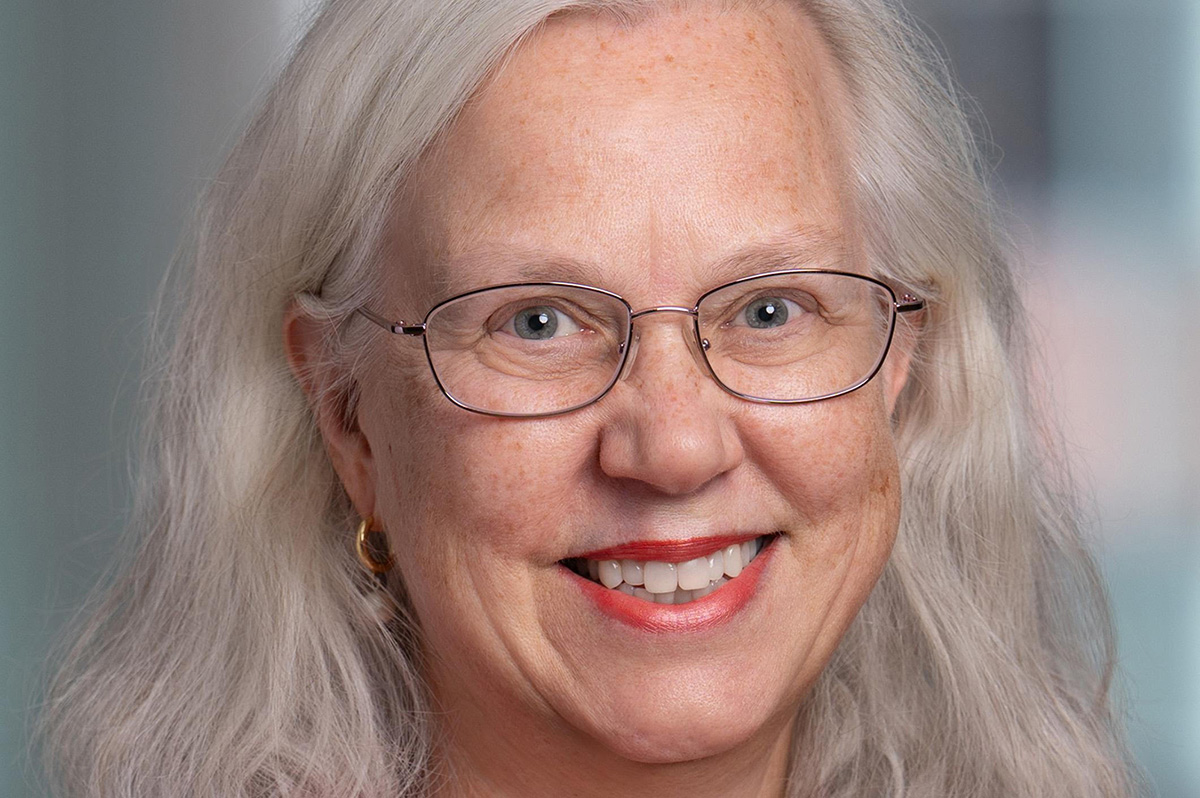
Many people think the telltale signs of drug addiction include sweating and vomiting. But a prominent addiction medicine physician says the best signals aren’t always so visible.
Dr. Yngvild Olsen says more accurate signs come from the brain, specifically the compulsion to keep using drugs, including opioids, despite damage to education, career and relationships.
While it may be harder to understand the true nature of drug addiction, it’s never been more important because of the increased fatality risk of even microscopic amounts of fentanyl, which can be found in many illegal drugs.
Olsen, who headed the Center for Substance Abuse Treatment at the Department of Health and Human Services in the Biden-Harris administration, has worked in addiction treatment for more than two decades. She is now a healthcare advisor with the law and professional consulting firm Manatt, Phelps & Phillips and a physician at the Institute for Behavior Resources/Reach Health Services in Baltimore.
Olsen met with Youthcast Media Group to discuss her career, the opioid epidemic and what to know about fentanyl. The physician, a graduate of Harvard Medical School and the John Hopkins Bloomberg School of Public Health, cited her field experiences as key in shaping her perspective on addiction treatment and recovery. This interview is edited for clarity and length.
What made you believe this work in addiction treatment is important?
I had a couple of experiences really early on in my career that very significantly shaped my interest in addiction and addiction medicine, and my belief that I had a role, and that I could really help people get better from that disease. So the first was during the summer between my first and second year in medical school. I spent the summer on the Eagle Butte and Pine Ridge reservations in South Dakota and really saw firsthand just the devastating impact that substance use — in that case, alcohol — had on not only individuals, but their families and whole communities, and just how profound that impact had been for people who had lost their lives, who had lost family members, who had physically, emotionally and spiritually negative impacts of just feeling very hopeless and and trying to find solace in their substance use, particularly their alcohol use, and doing that without really finding it. I think that was really the lesson that experience taught me.
What did you learn about treatment practices during your medical education? How was that helpful to your career?
When I was a resident in general primary care at Boston Medical Center, I was really fortunate to have a group of mentors who also were general internists, like I was training to be, who were very interested and focused on medical education and research in substance use. And so they modeled for me many of the interactions that we had with patients. I got to do a research study with one of them looking at smoking cessation among people with opiate use disorder, taking methadone. And really importantly, I got to spend a month with one of them at the Boston City Public Health Department’s Opioid Treatment Program, or what some people call a methadone clinic, because he was their medical director. I got to see people recover, and who had recovered, who had gotten their lives back together, gotten their families back together, had new families (or) businesses. It was unbelievably helpful to see that people could recover, that they did recover, and that I, as a physician, could be part of their treatment. I saw people get better, and recover, with medications like methadone and buprenorphine, and other services designed individually for them. That was really helpful and kind of a big eye-opening moment for me.
What factors contribute to addiction and why is it considered a complex disease?
People come into treatment for their addiction — or when they’re not in treatment, but are in an emergency department or on the street — with a lot of shame. They have a lot of shame about this disease that they have, that for so long, they were told, ‘Well, you know, you should just stop. Why can’t you just stop?’ Well, we know that addiction is a disease. It’s a complex disease that has lots of different factors related to it. So there’s a big genetic component that combines with environmental factors and other risk factors. For example, people have what’s called adverse childhood experiences. Some of these are if they grow up with lots of physical or sexual abuse or emotional abuse or have parents who are in jail. That’s really traumatic and so all those childhood experiences that increase stress are a big risk factor.
What is the easiest opioid to get addicted to?
It used to be heroin. That was a big problem, particularly in the Northeast and other parts of the country. That shifted to prescription opioids, beginning around the year 2000. So for about 10 years, it was really prescription opioids that were a big problem — people misusing them. And then it switched back to heroin. And then in about 2015, fentanyl came on the scene, and that really changed the game, given just how unbelievably potent fentanyl is, so it doesn’t take a lot to cause an overdose. Now there are all those other synthetic opioids, like the orphines and nitazenes and all those combinations of other substances, but fentanyl is really what’s still kind of driving a really big part of the overdose crisis.
Do LGBTQ individuals face heightened challenges when battling addictions? How do addiction specialists like you account for those challenges?
We certainly know that the prevalence of overdose and the challenges of substances is higher in the LGBTQ+ community. Where I see patients, we did a big LGBTQ+ training and had a grant to specifically provide services to that population. Where we were located, in Baltimore City, there is a big transgender community not that far from us. Particularly in the LGBTQ+ population, they have multiple stigmas. So it just compounds multiple stressors. And stress is a risk factor for substance use, and particularly a risk factor for recurrence of a substance use disorder. And so when you have all these negative factors building up in people, that can make it that much more challenging for people to find the services that they find meaningful and that are welcoming and supportive of them. So we tried very hard — and we still do — to make sure that we are a welcoming and safe space, because I think it is that safety that is really paramount.
What advice would you give someone worried about a friend or family member’s substance use?
There are two things. One is: I would talk to that person about your concerns and how that person’s personality changes or their behavior changes when they’re using or in withdrawal, and how that might be impacting their health and how they’re feeling. And then second: you can let them know that there are actual treatments that are really helpful, that can make them feel better and that can help them get back to who they were before they started using. It’s important not to be accusatory because … [people] have a lot of shame already, and so when somebody starts accusing them, that shame just gets worse. And a lot of times, people who have a substance use disorder or are using opioids won’t necessarily agree that they have a problem when you first start to talk to them. But talk to them again every time something happens and say, ‘I’m really worried about you because this now has happened and I see it as being tied to your substance use.’ And let them know that there are people who can help and that they could actually feel a lot better.
This work is part of a partnership between the Washington Blade Foundation and Youthcast Media Group, funded in part through a FY26 Community Development Grant from the Office of D.C. Mayor Muriel Bowser. Adrian Malone is a senior at Bard High School Early College DC, one of Youthcast Media Group’s journalism class partners. Shreya Jyotishi, YMG assistant manager of content and programming, is a former Washington Blade intern and 2026 graduate of American University.

PHOTOS: Miss Gay Maryland America

Ahead of the midterms, Meta has paid at least 29 anti-LGBTQ accounts for their posts

Acclaimed U.S. Justice Dept. attorney William Corcoran dies at 83

JD Vance suggests James Talarico is gay during Texas rally

Hungarian lawmakers approve bill to remove anti-LGBTQ provisions from ‘child protection’ law

Physician: addiction doesn’t always look the way you think it does

Solidarity beyond the parade: the actual cost of Pride

Essential queer horror classics for Halloween

Center for Black Equity honors leaders, activists at BE. Gala

In ‘The Lost Brontë,’ a complicated lie can lead to danger
-

 District of Columbia5 days ago
Physician: addiction doesn’t always look the way you think it does
-
Opinions4 days ago
Solidarity beyond the parade: the actual cost of Pride
-
Movies4 days ago
Essential queer horror classics for Halloween
-
Photos3 days ago
Center for Black Equity honors leaders, activists at BE. Gala