Arts & Entertainment
Dueling ‘Othellos’
Synetic brings its trademark moves to its production while Folgers goes traditional route

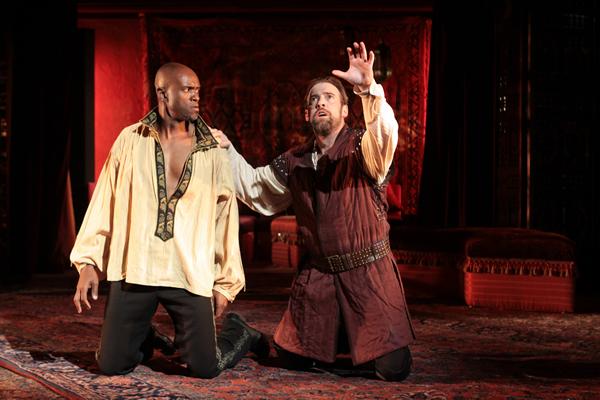
Owiso Odera and Ian Merrill Peakes in the Folger Theatre production. (Photo by Carol Pratt; courtesy of Folger Theatre)
‘Othello’
Through December
Folger Theatre
201 East Capitol Street, SE
$30-$65
202-544-7077
folger.edu‘Othello’
Closes Sunday
Synetic Theater
1800 South Bell Street, Crystal City
$25-$55
800-494-8497
synetictheater.org
Jealousy can be a dangerous emotion. In Shakespeare’s “Othello,” it’s downright lethal. Local audiences can see two vastly different takes on the dark drama at the Folger Theatre on Capitol Hill, and (if you act fast) Synetic Theater in Crystal City.
Director Robert Richmond’s Folger production sets the action during the Crusades and casts Othello as a Templar Knight, underlining the Moor’s unparalleled ascent to power. As Othello, Owiso Odera displays an innate princely confidence and occasional cockiness that works beautifully to further ignite the fury of his secretly sworn enemy Iago, played by a charmingly villainous Ian Merrill Peakes. From the start, the audience is made aware of the extent of Iago’s shocking duplicity and expects him, like most of Shakespeare’s bad guys, to meet his fate at the end of a blade by the end of the evening. Instead he’s sentenced to a smorgasbord of torture.
Despite some hammy moments, Richmond’s “Othello” is an exciting and visceral interpretation. When Odera’s darkly handsome Othello awakens a sleeping Desdemona (the luminous Janie Brookshire) to punish her for alleged sexual misdeeds with her friend Cassio (Thomas Keegan) by strangling her to death (it takes several tries before she eventually dies), it’s intense for sure. And the subsequent scenes in which Iago’s distraught wife Emilia (Karen Peakes) reveals Iago’s ongoing deception and quickly meets a horrific fate, followed by Othello’s devastating realization and a tragic ending of his own, are equally compelling.
This production reunites gay designers William Ivey Long and Tony Cisek who collaborated on last season’s Folger hit “Henry VIII.” Both take brilliant advantage of the tragedy’s disparate regions and climes. As the action moves from Venice via sea to Cyprus, Long’s costumes change from capes, fur-trimmed coats and chain mail to open shirts and sandals. Similarly, Cisek’s dazzling set morphs from a towering canopy bed elaborately crowned in carved wood to magistrate’s office to billowing ship sails to a fabulously appointed Bedouin tent (not entirely Cyprian, but beautiful still).
Synetic’s “Othello” is the second of three revivals featured in the terrific company’s “Speak No More: The Silent Shakespeare Festival.” As the title suggests, the 90-minute show is interpreted solely through movement. And while the uber-fit actors don’t utter a peep about a “green-eyed monster” or “beast with two backs,” all the elements of jealousy and lusty passion are fully conveyed through Paata Tsikurishvili smart staging and Irina Tsikurishvili’s insanely inventive and sexy choreography.
Instead of one of Iago, Synetic has opted to go with three. They’re united when the primary Iago played by a maniacally gleeful Philip Fletcher (who is gay) pulls his two alter egos (Synetic vets Alex Mills and Irina Tsikurishvili) through a Mylar mirror. At times the potent trio overpowers the production’s Othello (Roger Payano), but never for too long. The talented and well built Payano definitely holds his own among a strong cast. In fact, it was Payano who first inspired Synetic to mount “Othello” when it premiered last season.
In ways, the challenge with “Othello” is to buy into Iago’s all-consuming hate for the title character and to believe a man will turn on his beloved wife based on pretty flimsy evidence. Both productions do well convincing on these counts; still, as with so much of Shakespeare, audiences just have to go with it, remembering that jealousy can make people do ugly things.




Theater
Don’t miss summer productions at Clear Space in Rehoboth Beach
‘Cher Show,’ ‘Pretty Woman’ among season’s standouts
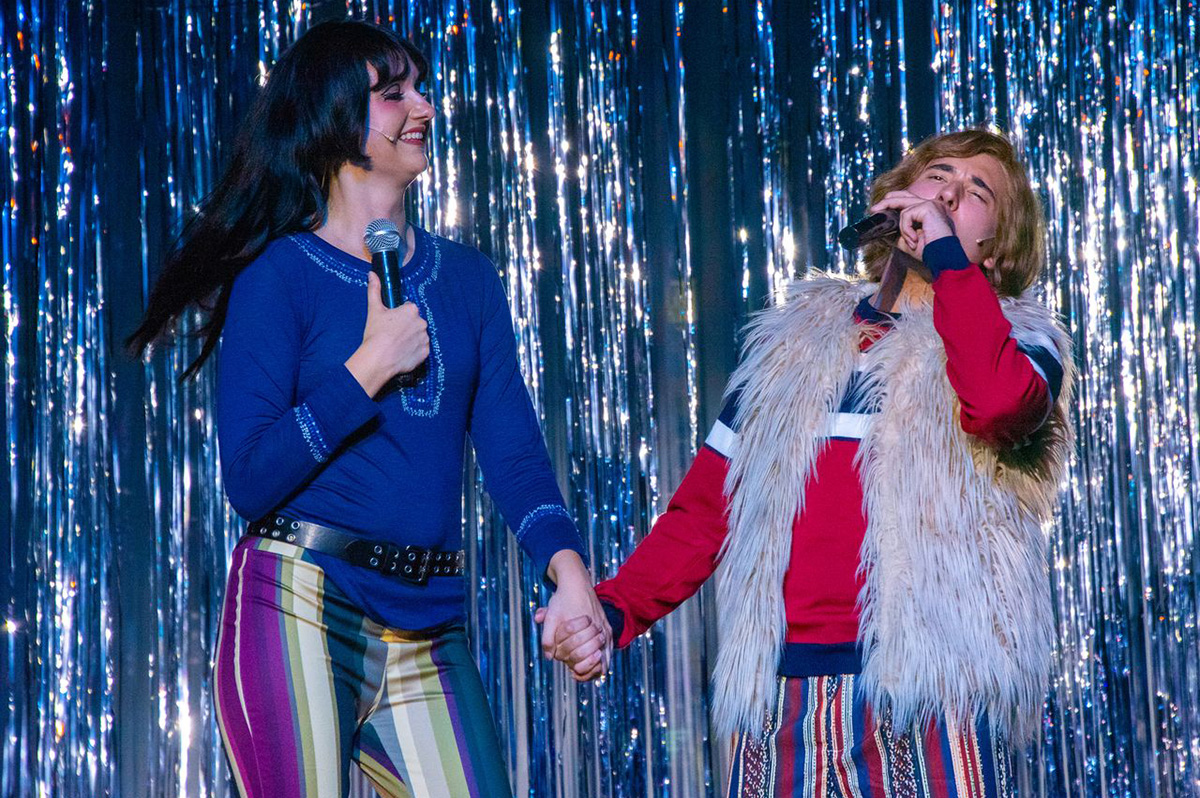
“The Cher Show” at Clear Space Theatre is wonderful. I am always amazed at the talent they attract for their summer series. Kudos to Wes Drummond, the artistic director of the theater. “The Cher Show” is written by Rick Elice. Compliments to the talented director, James FitzSimmons, who brought to life this production. His immensely talented cast includes Shannen Hofheimer as Star, Breanna Lemerise as Lady, Abby Lynne as Babe, and Anya Kay, as young Cher. Each is a pleasure to both watch and listen to. They command the stage. Then more kudos to the entire cast and ensemble. Also, the creative team, which includes among so many who make this show a hit, choreographer Shondelle Graulich; scenic designer, David Chappell; lighting designer Brendan Smith; costume designer Valerie Beardsley; and the entire orchestra led by conductor, Jerry Birl.
But the actor who I was looking forward to seeing in the production, was a young actor I had written about, and reviewed, when I saw him at Clear Space two years ago. In this production he is Sonny Bono, and he definitely didn’t disappoint.
Let me introduce Caetano de Sá. I have written about him before, but his resume is worth repeating. It says; Height: 5’7 ½, Eyes: Brown, Voice part: Tenor G2 – C5, Build: Athletic. All true. Then you add to this he speaks Brazilian Portuguese, is certified in stage combat by the Society of American Fight Directors, and is a 2nd Degree Black Belt in Taekwondo. Then as his resume of roles confirms, he can act, sing, and dance with the best. He does a great job as Sonny and is fun to watch on stage. Here he displays his talents as a singer and actor, and they are as good as I remembered them when I first met Caetano while he was still in school in 2024, and was starring as Frankie Valli in “Jersey Boys,” at Clear Space. At the time he was a rising senior at the Boston Conservatory at Berklee BFA Musical Theater program. I interviewed him, and Harry Sperduto, who played Tommy Devotee, after seeing them in the show, and being amazed by their talent. Since that time, I have followed their careers. When I heard Caetano was coming back to Clear Space for the summer, I reached out, and he agreed to sit down and chat, which we did. I knew Clear Space Theatre was planning a busy summer season. Their lineup of shows included “The Cher Show,” “Mean Girls,” and “Pretty Woman.” They always have talented casts, including the many college students who are getting their first chance to shine, which was the case for Caetano in 2024. Now he is back as a graduate, with more experience under his belt, a little more established. This season he was going to play Sonny in their production of “The Cher Show,” Martin/Coach Carr, in “Mean Girls,” and Mr. Hollister in “Pretty Woman,” and being a part of the ensemble. He told me he really enjoys being at Clear Space, and that his castmates are all talented. He is a lot more experienced than when he was here before, having performed in productions at the Prairie Repertory Theatre, the Emerald Coast Theatre Company, Firehouse Center for the Arts, and the Sullivan Rep, among others. In productions as diverse as “Oklahoma!,” “Mystic Pizza,” “Hairspray,” and “Rock of Ages.” He now lives in New York City and clearly New York is the perfect place for an aspiring actor. He has an agent at Bramante Artists, who is getting him gigs, like the one he had at 54 Below and even a TV commercial for AFLAC.
“The Cher Show” is the second show I have seen at Clear Space this summer. After our chat I got one of the last tickets available that evening for “Pretty Woman.” In that production he has a smaller role, and is part of the incredibly talented ensemble. It is also an entertaining show and its very talented stars, Abby McDonough as Vivian, and Jaiden Leo Riley as Edward, are a pleasure to watch. Kudos to the talented director, Ashley Williams, and the entire creative team.
For anyone living at the beach, or coming for a visit, I urge you to plan a night at Clear Space. You won’t regret it. But know tickets for all the shows, and Sunday evening cabaret nights, sell out fast. So, I suggest you see what’s available online and buy yours today.

The 2026 World Pride March was held on Saturday, Aug. 8 in Amsterdam. Tens of thousands of participants marched from Martin Luther Kingpark to the grounds of the Pride Village at Museumplein.
(Washington Blade photos by Michael Key)


View on Threads


View on Threads


View on Threads


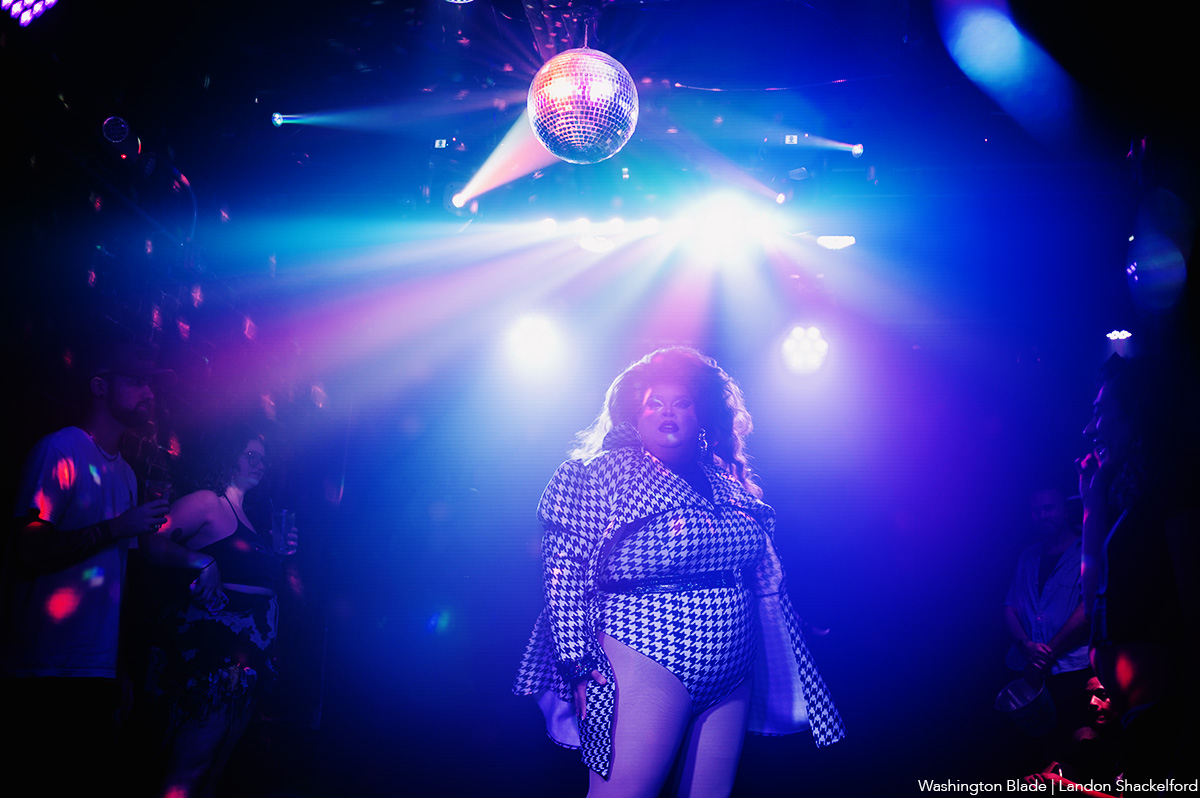
The weekly drag show “Daddy Issues” was held at Kiki on Wednesday, Aug. 5. Performers included Evry Pleasure, Indiana Bones and Tiara Missou-Sidora.
(Washington Blade photos by Landon Shackelford)


Don’t miss summer productions at Clear Space in Rehoboth Beach

New LGBTQ visitor center slated for Wilmington, Del.

PHOTOS: World Pride March

Tens of thousands take part in World Pride March

PHOTOS: Daddy Issues at Kiki

Continue to engage in community after Pride month

D.C.’s Mary’s House For Older Adults names new executive director

Suzanne Goode is not good for Rehoboth Beach

Calendar: August 7-13