Arts & Entertainment
Cherry blossoms under new leadership
D.C.’s trademark gay dance weekend returns with series of events
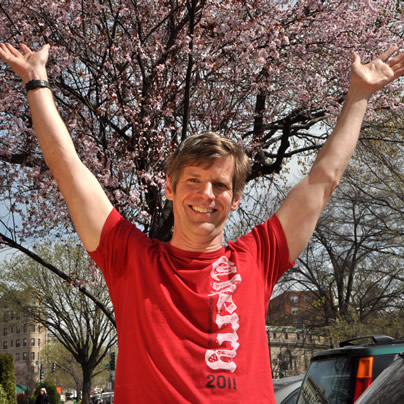
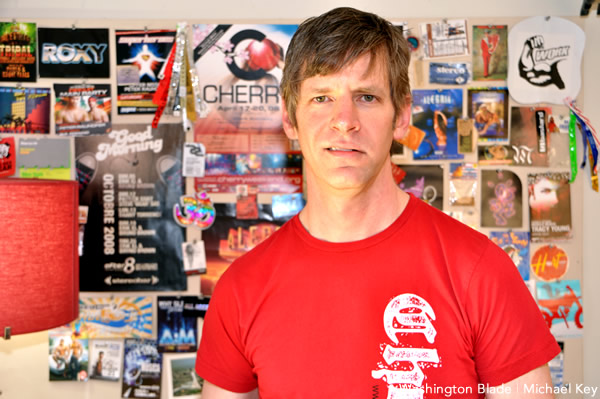
Cherry Fund board member James Decker. (Blade photo by Michael Key)
This year marks the 15th anniversary of Cherry and the Cherry Fund, which is now under new management.
The Cherry Fund has raised and provided about $980,000 in grants since its start in 1997 and 90 percent of that comes directly from ticket sales to Cherry, Washington’s trademark gay dance party. James Decker, a member of the Fund’s board, says this year’s goal is to raise $20,000, which could be double what was raised last year and would bring the organization over the $1 million milestone.
“There’s definitely something symbolic behind it,” Decker says of hitting that milestone on this anniversary. “That would be a significant achievement given the economy and a lot other factors, but there’s no reason why they couldn’t reach that goal.”
Last year’s beneficiaries were The Metro D.C. Center, Capital Pride, Us Helping Us, Whitman-Walker Health, Metro TeenAIDS, Pediatric AIDS/HIV Care, Women’s Collective, La Clinica del Pueblo, Youth Pride Alliance, Capital Trans Pride, Latino GLBT History Project (Latino Pride), API Queers United for Action and D.C. Black Pride.
“We try to spread the wealth,” Decker says.
This year’s beneficiaries will not be announced for another couple months.
“We get a lot of people from out of town,” Decker says. “That’s how the circuit works. A lot of people will just go from party to party.”
There are some new venues this year, including Phase 1 Dupont (1415 22nd St., N.W.), Ibiza Nightclub (1222 1st St., N.E.) and Warehouse Loft (411 New York Ave., N.E.).
While Fund organizers think the local DJs are great, they try to recruit those who don’t come to the D.C. area that often, making their events a bigger draw. There are many DJs who ask about participating and this year, all the opening DJs are volunteers.
Tonight’s (Friday) events start with a welcome center at No. 9 (1435 P St., N.W) from 5 to 9 p.m. followed by two events. There will be a women’s event at Phase 1 Dupont from 9 p.m. to 3 a.m. and “Boys on Fire” with DJ Paulo from Los Angeles at Warehouse Loft from 9 p.m. to 4 a.m. with DJ David Merrill (check out his Queery profile on page 32) spinning the opening set and DJ Bryan Yamasaki in the back room.
Saturday brings the “Moody Horror Picture Show,” a birthday celebration for party pioneer, Moody Mustafa featuring DJ Joe Gauthreaux from New York City at Town (2009 8th St., N.W.) from 2 to 7 p.m.
Town is also hosting that night’s “Blossom” with DJ Mark Anthony from Montreal from 10 p.m. to 4 a.m. DJ Timothy Mykael will provide the opening set. There will also be a special performance by Circuit Mom. Attendees are asked to wear red to this event.
The festival ends on Sunday with “Momentum” with Cherry alum DJ Alyson Calagna from Miami at Ibiza Nightclub from 4 to 9 a.m. with an opening set by DJ BennyK.
“She’s great, a real sweetheart and an awesome DJ,” Decker says of Calagna. “We’re honored to have her back.”
That will be followed by a brunch and tea dance at Cobalt from noon to 6 p.m. with DJ Tim e. The final event is “Ovation” with DJ Eddie Elias from New York City at Ultra Bar (911 F St., N.W.) from 9 p.m. to 2 a.m. with DJ Sean Morris opening.
“They give us that club for the night,” Decker says of Ultra Bar. “They are very generous, very supportive of our event.”
Tickets for individual events range from $17 to $50. The 2012 Cherry Host Pass is $120 and includes entrance to all six major events, access to VIP lounge at Ibiza, goodie bag, complimentary day pass to VIDA Fitness, two-hour open bar at Sunday tea, T-shirt and CD, but it does not include admission to “Moody Horror Picture Show.”
For more information and to purchase tickets visit cherryfund.org.


Music & Concerts
DJ Chanel Santini is bringing the heat and some gender-fluid diversity to XBIZ Miami
Pool party celebrates most charismatic personalities, creative artists in adult entertainment
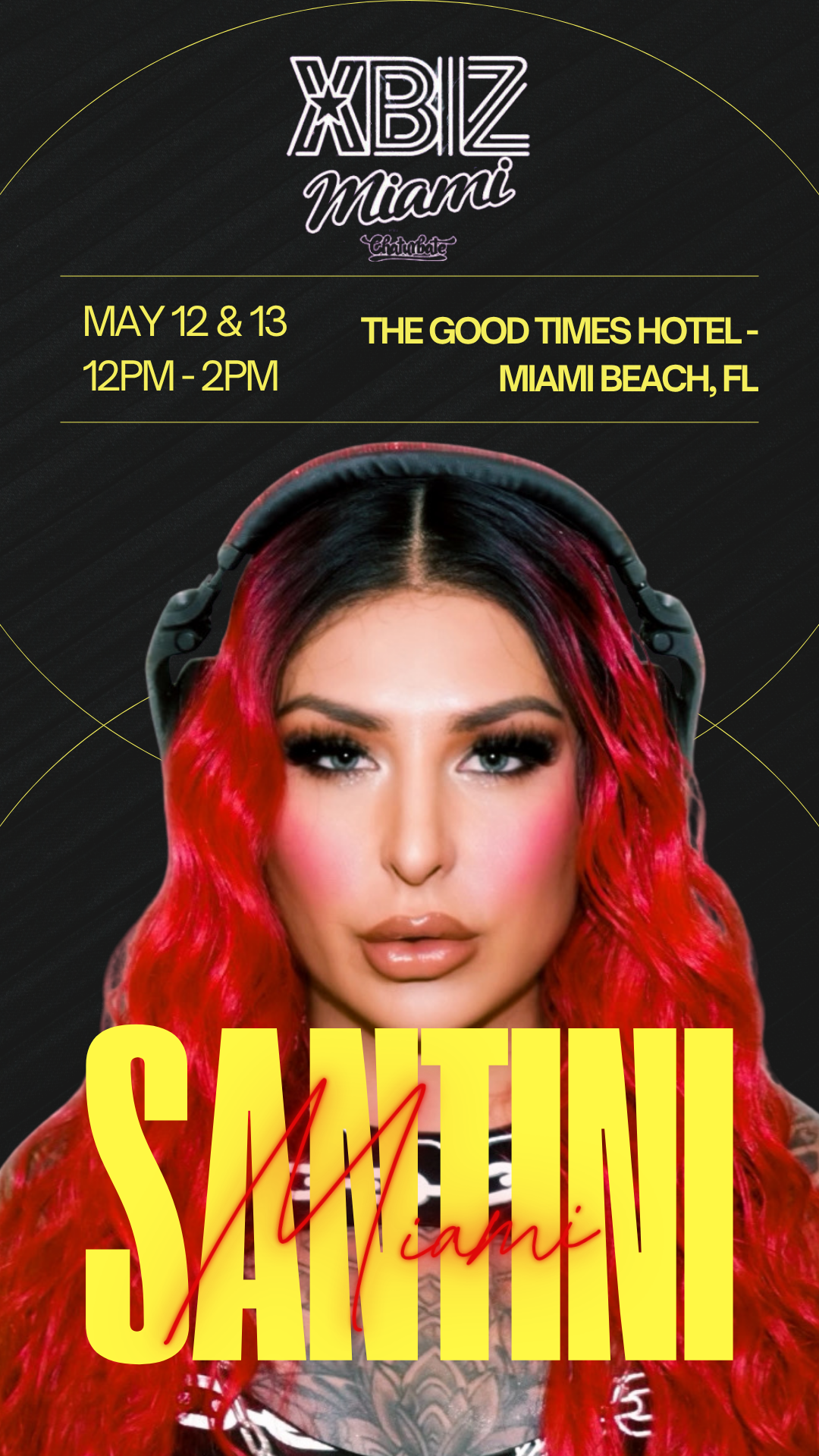
Chanel Santini has crossed over to being a DJ, performing at clubs all over the country. Now known as Santini, they will be making music and hyping the pool party, DJ-ing at XBIZ, the conference for adult creators and digital players, in Miami.
Taking place on Monday to Wednesday, the event honors the most charismatic personalities and creative artists in entertainment.
“I am honestly so excited — getting to DJ in Miami Beach is literally a DJ’s dream!” Santini told the Los Angeles Blade.
“I thought it would be a good opportunity because I haven’t been around my industry peers in a long time. It’s a great event to network and show off the new me!” said Santini.
While Santini is unsure what music they will be playing, they want everyone to have a good time. “My goal is to ignite the dance floor and play great music that everyone will vibe to. My sound includes house music, bass house, tech house, and I always like to throw a little bit of hip-hop in my sets.”
Santini loves how DJ-ing brings people together.
“Music really ignites us all! It is so universal, no matter what language you speak. I think it’s the best high in the world when you play a banger track, and everybody on the dance floor screams loudly. You can’t describe that feeling until you’re up there on that stage.”
Santini describes DJs as the “modern rock stars” in today’s world.
“I always feel like such a superstar when I’m up on that stage. The best feeling is after my set when I have people come up to me and say, ‘Thank you for sharing that amazing music.’ That’s how you know that you’re a good DJ — I love when I get those types of compliments!”
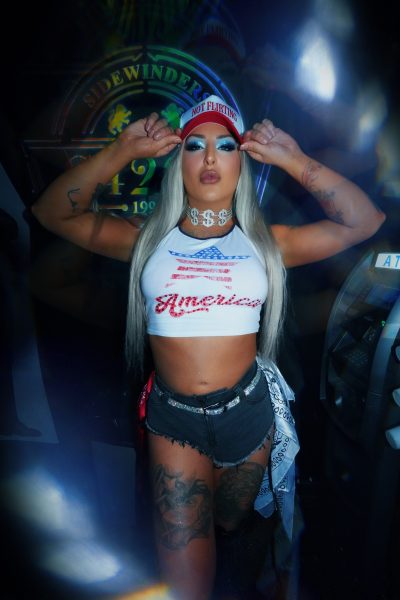
While sometimes it’s hard to please everyone’s musical tastes, Santini endeavors to try! “You just have to go out there and give it your all and be the best DJ that you can be,” he noted.
Santini, who had previously identified as transgender, recently decided to transition back to being gender fluid.
“It’s definitely been a journey, but I’m definitely happier in my own skin now than I was. I don’t go by he/him pronouns. I don’t go by they/them either. I guess I just really don’t have a preference. Whatever you see me as is your opinion. I’ve learned over the years that I’m not trying to be one specific thing. I’m just Santini. I’m just me.”
Santini acknowledged they felt respected more when dressed as a woman.
“I think it’s just because femininity runs the world. When I started to de-transition, I felt like I had to just be a boy all the time. But I’ve realized over the years that I don’t need to stick to one specific thing. I am always gonna be feminine, and that’s OK.”
Recently, Santini has been embracing their feminine side more.
“I definitely feel more comfortable in female presentation, and more powerful when I’m on stage dressed as Chanel. I love DJ-ing in drag because there are so many straight male DJs in the world. It’s almost like a superhero when he puts on his cape! I think it makes me confident and stand out more as an artist.”
And because Santini loves makeup and fashion, they can incorporate that into their sets. “I’m not just bringing you good vibes and good music. I’m bringing you a show/ production!”
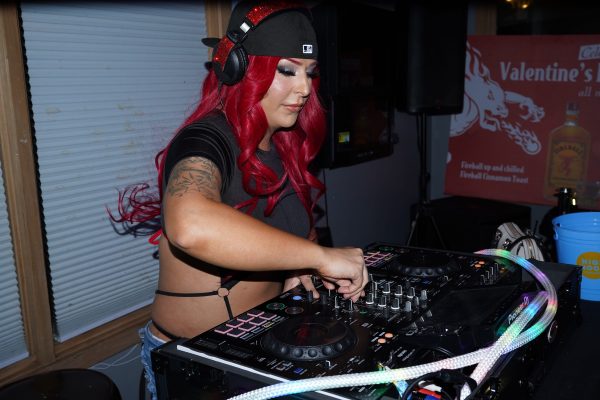
Santini is already working on big plans for the future.
“I’m opening up for a huge Pride block party in my hometown, Albuquerque, N.M., on June 12 and 13. It’s a two day festival and I’m super excited for this opportunity. I’m even hiring backup dancers and a choreographer.”
Santini plans to go “all out” for this show.
“It’s gonna be the biggest crowd that I’ve ever played for,” Santini enthused. “I’m putting my heart and soul into this performance, especially because it’s Pride in my hometown, and that means so much to me. I know the younger me would be so proud.”
Santini remembers going to Pride when they were younger and telling themself they couldn’t wait to be up on that stage.
“I’m truly living my dream right now, and I’m so excited for the future. The last 10 years of being in the adult entertainment business have been great and have given me major success. But I always knew that I didn’t want to be in this industry for long.”
Santini acknowledged that, in the recent past, it was a struggle.
“I’ve been trying to find myself and figure out what I wanna do next with my life. Now that I’ve found this passion for DJ-ing, it makes me want to go far in this business.”
In addition to being a DJ/artist, Santini is starting college next semester.
“I’m gonna get my degree in audio engineering,” Santini enthused. “I can’t wait to start producing my own tracks. I especially can’t wait till the day I’m headlining a major festival! I know with a little bit of patience and hard work that I can get there! I just have to continue believing in myself.”
Santini wanted to thank all of their fans for their support. “Truly, if it wasn’t for them, I wouldn’t be able to fund my art in the way that I have. I’m truly grateful. And I’m excited for the future!”
Out & About
Learn more about queer love
Friends of Dorothy Cafe hosts event at City-State Public House
Friends of Dorothy Cafe will host “Living History: How We Loved” on Thursday, May 14 at 7:30 p.m. at City-State Public House.
Guests will hear how queer and trans people have loved and cared for one another, especially when legal, medical, and social systems did not recognize those relationships. We’ll reflect on chosen family, long-term partnerships before marriage equality, caregiving during the AIDS crisis, hidden romances, friendship as survival, chosen family, and the loves that changed the course of our lives. This evening is about honoring lived experience, preserving community memory, and strengthening the bridge between generations.
Tickets are $24.57 and are available on Eventbrite.
Friday, May 8
Center Aging Monthly Luncheon With Yoga will be at noon at the DC Center for the LGBT Community. Email Mac at [email protected] if you require ASL interpreter assistance, have any dietary restrictions, or questions about this event.
Women in their Twenties and Thirties will be at 7 p.m. on Zoom. This is a social discussion group for queer women in the Washington, D.C. area. For more details, visit the group’s Facebook.
The DC Center for the LGBT Community will host “We Are Pat” at 12:30 p.m. This event takes a fresh look at the iconic Saturday Night Live sketch “It’s Pat” and traces how ideas about gender and what we laugh at have shifted from the ’90s to today. What began as a character born out of cultural anxiety around gender now lands in a world shaped by ongoing debates about transness and queerness. For more details, visit the DC Center’s website.
Saturday, May 9
Go Gay DC will host “LGBTQ+ Community Brunch” at 11 a.m. at Freddie’s Beach Bar & Restaurant. This fun weekly event brings the DMV area LGBTQ community, including allies, together for delicious food and conversation. Attendance is free and more details are available on Eventbrite.
Sunday, May 10
Drag Queen Sip and Paint Experience Washington DC will be at 4 p.m. at Town Tavern. This is a fabulous experience brought to you by Sip and Paint USA and combines the joy of painting with the lively energy of a drag queen, offering an hour and a half of fun, creativity, and entertainment. Participants paint a canvas while enjoying cocktails, all under the guidance of a glamorous drag queen host. Tickets are $47.19 and can be purchased on Eventbrite.
Monday, May 11
Center Aging: Monday Coffee Klatch” will be at 10 a.m. on Zoom. This is a social hour for older LGBTQ adults. Guests are encouraged to bring a beverage of choice. For more information, contact Adam ([email protected]).
Genderqueer DC will be at 7 p.m. on Zoom. This is a support group for people who identify outside of the gender binary, whether you’re bigender, agender, genderfluid, or just know that you’re not 100% cis. For more details, visit genderqueerdc.org or Facebook.
Tuesday, May 12
Trans Discussion Group will be at 7 p.m. on Zoom. This event is intended to provide an emotionally and physically safe space for trans* people and those who may be questioning their gender identity/expression to join together in community and learn from one another. For more details, email [email protected].
Coming Out Discussion Group will be at 7 p.m. on Zoom. This is a safe space to share experiences about coming out and discuss topics as it relates to doing so — by sharing struggles and victories the group allows those newly coming out and who have been out for a while to learn from others. For more details, visit the group’s Facebook.
Wednesday, May 13
Job Club will be at 6 p.m. on Zoom upon request. This is a weekly job support program to help job entrants and seekers, including the long-term unemployed, improve self-confidence, motivation, resilience and productivity for effective job searches and networking — allowing participants to move away from being merely “applicants” toward being “candidates.” For more information, email [email protected] or visit thedccenter.org/careers.
The DC Center for the LGBT Community will host “Movement for Healing” at 3 p.m. This trauma- and yoga therapy–informed class is designed to help guests gently reconnect with their body and their breath. Through mindful movement, somatic awareness, and grounding practices, guests will explore how to release tension, increase mobility, and cultivate a deeper sense of safety and ease within. For more details, visit the DC Center’s website.
Thursday, May 14
Virtual Yoga Class will be at 7 p.m. on Zoom. This free weekly class is a combination of yoga, breathwork and meditation that allows LGBTQ+ community members to continue their healing journey with somatic and mindfulness practices. For more details, visit the DC Center’s website.

DJ Chanel Santini is bringing the heat and some gender-fluid diversity to XBIZ Miami

New Hungarian prime minister takes office

Comings & Goings

Learn more about queer love

Calendar: May 8-14

A reign defined by commitment and human impact

DOE investigates Smith College’s trans-inclusive policy

Key West Pride’s state funding pulled

PHOTOS: Miss Gay Western Maryland