Local
Gay candidate elected president of D.C. Young Democrats
Toby Quaranta ran as outsider against ‘inbreeding, conflicts of interest’
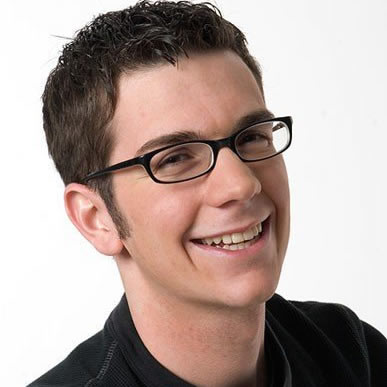
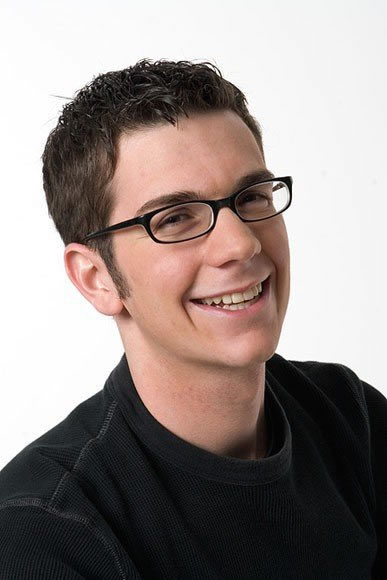
Openly gay Democratic activist Toby Quaranta — former field organizer for the Human Rights Campaign — beat Brandon Todd to become President of the DC Young Democrats by a vote of 80 to 54. (Courtesy photo)
Quaranta, 28, is an account executive with a company that provides election related services to Democratic members of Congress and former field organizer for the Human Rights Campaign. He beat Brandon Todd by a vote of 80 to 54.
Todd is operations managers for the re-election campaign of D.C. Council member Muriel Bowser (D-Ward 4) and a former member of Bowser’s Council staff.
“I’m honored and humbled,” Quaranta said in a statement. “I thank all of my supporters and I thank everyone who came out and participated in the election. I look forward to bringing together folks from all 8 wards and working with all Young Democrats in D.C. to re-elect the president,” he said.
The Young Democrats of D.C. and similar groups in other states are recognized as official arms of the D.C. and state Democratic Parties. Most state parties, including D.C.’s Democratic State Committee, include leaders of the Young Democrats as members of party committees.
Quaranta ran in an election in which eight other candidates who won election to officer and board positions for Young Democrats of D.C., including three vice presidents, each backed Todd over him as part of a slate. Seven of the eight candidates ran unopposed.
The election was held between 10 a.m. and 11 a.m. on a Saturday morning at the J.W. Marriott Hotel in downtown D.C. Quaranta expressed concern that holding an election on a Saturday morning at a time when many of the city’s college students were busy preparing for final exams would make it difficult for his student supporters to turn out.
But when the voting started it became clear that Quaranta, who bills himself as a skilled political organizer, turned out more supporters than Todd.
His supporters said they were hopeful that the other officers and board members would work with Quaranta as a team to move the organization forward following a decision last year by the national group, Young Democrats of America, to revoke the D.C. group’s charter and declare invalid the election of all of its officers.
Rod Snyder, president of Young Democrats of American, presided over the election on Saturday. Snyder told the Blade YDA revoked its recognition of the D.C. Young Democrats due to “improprieties” related to its officer and board election in April 2011. He said YDA acted after investigating a complaint that the D.C. group did not follow its own constitution and bylaws in carrying out the 2011 election.
Snyder said YDA also reviewed an allegation made by the United States Attorney’s Office that the D.C. Young Democrats’ former president in 2008 allegedly helped former D.C. City Council member Harry Thomas (D-Ward 5) launder money by accepting a $100,000 wire payment to the D.C. Young Democrats’ account.
The former D.C. Young Democrats president, Ayawana Chase, worked on Thomas’s Council staff at the time. Thomas resigned from his Council seat earlier this year after he pleaded guilty to a felony embezzlement charge. He was sentenced to 38 months in jail last week.
According to information released by the U.S. Attorney’s office, Thomas arranged for Chase to disburse the $100,000 to another organization, which paid for a “51st State Inaugural Ball” in 2009.
While making it clear that he was not linking Todd to the Thomas scandal, Quaranta issued a statement in the days prior to the D.C. Young Democrats election that Todd’s affiliation with Council member Bowser would create a conflict of interest if he were elected president of the Young Democrats of D.C.
Quaranta said Todd would be beholden to Bowser if the organization considered taking a position on a matter before the Council.
“Last year’s laundering of city funds through the D.C. Young Democrats on behalf of Harry Thomas Junior was a direct result of the conflicts of interest that arise when a Council member’s staffer does double-duty as a DCYD party officer,” Quaranta said.
“This isn’t about my opponent – this is about a broader culture of corruption that undermines our pursuit of home rule and is an embarrassment to our city and to the Democratic Party,” he said in a campaign email. “There is simply too much inbreeding and too many conflicts of interest. It’s time for new leadership.”
Todd disputed Quaranta’s claim that he would have a conflict of interest due to his role on Bowser’s campaign staff or if he were to return to Bowser’s Council staff, calling the claim “absurd.”
“I would have a board of directors, other officers,” he said. “Everything has to be voted on by the board, by the membership. Everything that happens with the Young Democrats if I’m elected will be very open and very transparent.”
Among other things, Quaranta said he would push to have Young Democrats of D.C. organize a “massive” contingent of volunteers to work on President Obama’s re-election campaign in Virginia, where a close race is predicted between the president and presumed Republican nominee Mitt Romney.




Delaware
Delaware approves amendment protecting same-sex marriage
Measure must pass second vote in next year’s session

The Delaware General Assembly passed Senate Substitute 2 for Senate Bill 100 on the last day of the legislative session on Tuesday after being rescinded last week.
Senate Substitute 2 for Senate Bill 100 (SB-100) passed with 28 ‘yes’ votes, meeting the two-thirds threshold required for the bill to pass. Tuesday was the last day of the 153rd General Assembly.
The amendment would enshrine the right to same-sex and interracial marriage in the Delaware Constitution.
SB-100 was rescinded last week after it did not receive enough votes to pass. Democrats were short by three votes, with two Democratic members missing from the vote.
Rep. Josue Ortega (D-03) voted ‘no’ on SB-100 and Rep. Medinah Anton-Wilson (D-27) did not vote. However, both members voted ‘yes’ for Senate Substitute 2 for SB-100 on Tuesday.
Prime sponsor of SB 100, Rep. Claire Snyder-Hall (D-14), made the technical decision to change her vote last week from a ‘yes’ to a ‘no’ at the last minute to keep the bill alive.
Additionally, Republican Assemblyman Michael Smith (R-22) joined the Democrats with a ‘yes’ vote after voting ‘no’ on SB-100 last week.
In order for SB 100 to be enshrined into the state Constitution, it must be passed by two consecutive General Assemblies. Thus, the amendment will not be officially added to the Constitution unless it passes in the 154th General Assembly next year.
Rep. Snyder-Hall introduced the measure earlier this week.
“Just one week ago, we failed to pass this legislation. We failed the people of Delaware. But today, on the final day of the legislative session, the 153rd General Assembly affirmed that every Delawarean has the fundamental right to marry the person they love, regardless of race or gender,” said Snyder-Hall.
“Thank you to my colleagues for recognizing that the right to marry is a right worthy of protection and for voting yes on this important constitutional amendment.”
District of Columbia
Longtime Blade staffer Stephen Rutgers steps down after 14 years
Plans to focus on running Crush Dance Bar, other ventures

Longtime Washington Blade employee Stephen Rutgers announced he is stepping down after 14 years to focus on other ventures, including his part ownership of the popular Crush Dance Bar.
Rutgers was hired by the Blade in 2012 to help plan Pride festivities and over the years was promoted to director of sales and marketing. In addition to his broad set of responsibilities, Rutgers planned the annual Pride on the Pier celebration at the Wharf, which has exploded in popularity over the seven years since its launch.
“Watching Pride on the Pier grow from a new community event into one of D.C.’s signature Pride celebrations has been incredibly rewarding,” Rutgers said. “Expanding Pride on the Pier into a two-day festival for WorldPride in 2025 was definitely a career highlight. Seeing thousands of people come together to celebrate our community while supporting the Blade’s mission is something I’ll always be proud of.”

Rutgers described his biggest challenge as navigating the changing media landscape.
“More than ever, we’ve had to remind our community that local journalism matters and that it needs their support,” he said.
He added that he’s most proud of helping to ensure the Washington Blade is positioned to thrive for the next 50 years.
“I was fortunate to be part of the Blade during its 50th anniversary — a milestone that reflects its incredible history and impact,” Rutgers said. “The Blade has been an important voice for the LGBTQ community for more than five decades, and knowing I played a small part in helping its future is most important to me.”
Blade Publisher Brian Pitts praised Rutgers for juggling multiple responsibilities.
“We wish Stephen all the best,” Pitts said. “For the past 14 years, Stephen has been a vital part of the Blade, handling many things — marketing and advertising, sponsorships, and Blade signature events. We will all miss him.”
Blade Editor Kevin Naff thanked Rutgers for his years of service to the community.
“After 14 years, it’s hard to imagine the Blade without Stephen and his boundless energy and creativity,” Naff said. “He’s one of the hardest working and most dedicated people I’ve ever known and he will be missed. But change is the only constant and I know Stephen will move on successfully to new challenges and the Blade will expand on Stephen’s important work.”
As for what’s next for Rutgers, he said he plans to focus on Crush as well as his real estate business.
“I’ve always been someone who likes to stay busy,” Rutgers said. “For the past 12 years, I’ve balanced my work at the Blade and in real estate. Two years ago when I opened Crush, I never realized just how much time and energy it would take. The passing of my father earlier this year also gave me a new perspective. It reminded me that life is short and that it’s important to make time for the people and experiences that matter most. Stepping away from the Blade will allow me to focus on those ventures while also creating more balance in my life. After 14 incredible years, it feels like the right time for a new chapter.”
Naff said that for now Rutgers’s responsibilities will be divided between existing staff along with several new freelance contractors.
“The Washington Blade plays a unique role in our community’s fight for equality,” Rutgers said. “It’s the only LGBTQ news organization with White House credentials, giving it direct access to the people and institutions shaping policies that affect our community. The Blade continues to hold elected officials accountable, report on the issues that matter most to LGBTQ people, and tell the stories that often go uncovered by mainstream media.
“The Blade has been my family for most of my adult life. For 14 years, it has been part of my daily routine, so it’s going to feel very strange waking up and not logging on each morning.”
Maryland
‘Girlfriends’ wanted for murder in Silver Spring arrested in Ohio
Montgomery County police charged both with killing mother of one of them
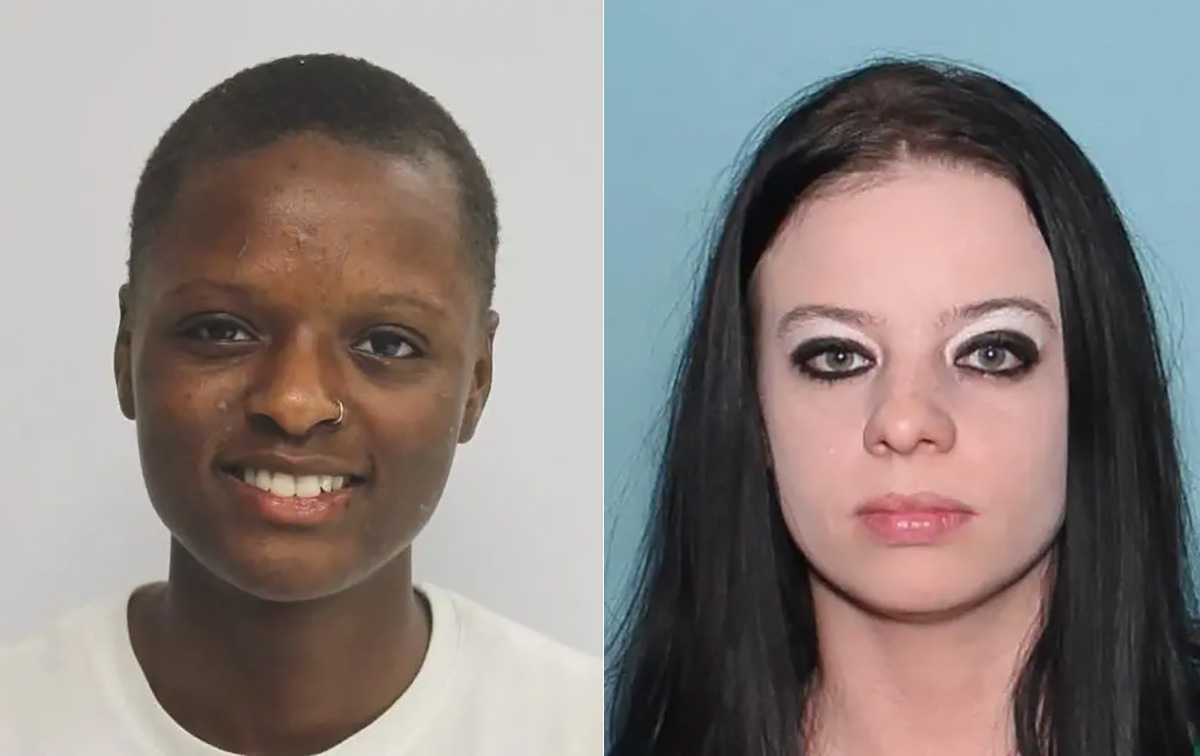
Two women identified as a couple who have been wanted by Montgomery County, Md. police for allegedly killing the mother of one of them in her Silver Spring home on May 22 were arrested on June 10 in Ohio, according to a police statement
The little-noticed statement released on June 11 says Vanessa Wahanganisa Tjongarero-Henderson, 29, of Clarksburg, Md., and Samantha Raebel, 36, of Phoenix, Ariz., who police earlier described as “girlfriends,” were apprehended by police in Genoa, Ohio after a local resident recognized them from news media coverage of the murder.
In their initial statement on June 4 announcing their investigation of the murder, Montgomery County Department of Police said they had charged the two women with first-degree murder for the death of Hilde Henderson, 67, who was the mother of Vanessa.
“Through the course of the investigation, detectives identified Henderson’s daughter, Vanessa Tjonhgarero-Henderson, and Vanessa’s girlfriend, Raebel, as the suspects,” the police statement said. It said detectives obtained an arrest warrant for the two women for first-degree murder and asked the public for help in locating them.
“A nationwide search was launched for the suspects, with media coverage extending throughout Ohio, Nashville, and Phoenix,” the most recent statement on June 11 announcing the two women’s arrest says. “Major Crimes Division detectives received multiple tips from several states before the two women were ultimately located in Genoa, Ohio,” it says.
It adds that an autopsy determined the cause of Hilde Henderson’s death was blunt-force trauma injuries brought about by a murder. Police have yet to disclose whether they have determined a motive for the murder.
“Tjongarero-Henderson and Raebel are currently being held at the Ottawa County [Ohio] Detention Center awaiting extradition to Maryland,” the statement concludes.
A spokesperson for the Office of the Montgomery County State’s Attorney, which prosecutes criminal cases in the county, told the Washington Blade the extradition was still pending and the two women had yet to be brought back to Maryland for prosecution as of June 29.
CBS News reported on June 16 that shortly after the two women fled almost 500 miles to Genoa, Ohio, they met a local resident at a fast-food restaurant and asked her for help, claiming they were homeless.
“They said they were living in Maryland,” CBS News quoted the resident, Adrienne Behrman, as saying. “They had taken what little money they had and left a toxic living situation, and they were headed to Arizona,” Behrman told CBS.
According to the CBS report, Behrman, who allowed the women to temporarily stay in her home, became suspicious that the stories they were telling her did not add up.
When one of them asked her for cigarettes and offered to reimburse her through the online Cash App payment platform, Behrman learned the woman’s real name—Henderson—through the app. Behrman then did an online search, “and that is when everything unraveled,” CBS reports, saying the search led to multiple press reports that the women were wanted for murder.
After leaving her home with the two women inside she called 911 to report the location of two people wanted for murder, CBS reports, adding that at least six police cars arrived and used a loud speaker to order the women out of the house and arrested them.
“I just hope the family and friends who knew the mother can have some peace,” Behrman told CBS News.

Actually, I’m gay and I’m queer. It matters

Centenares de personas participan en la Marcha del Orgullo en la capital salvadoreña

Delaware approves amendment protecting same-sex marriage

ACLU says trans athletes ruling is narrower than many believe

Gay US couple among four people found dead in Mexico mass grave

Iran, Egypt play in World Cup ‘Pride Match’

PHOTOS: Frederick Pride Parade

D.C. has a chance to lead on equitable transit through AVs

Carla Hall goes from ‘Top Chef’ to the stage