Arts & Entertainment
SFGMC launches campaign to support National LGBTQ Center for the Arts
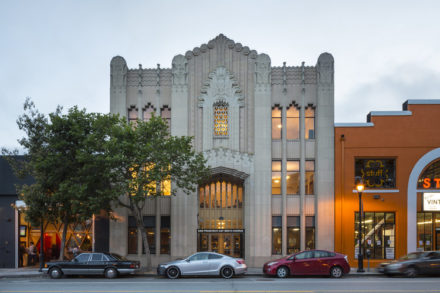
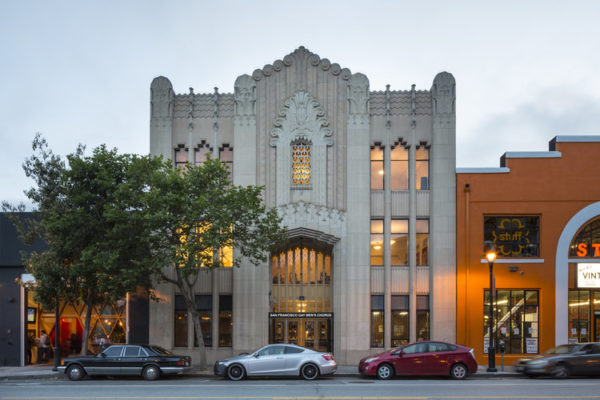
This week, the San Francisco Gay Men’s Chorus launched a public campaign to raise funds for the National LGBTQ Center for the Arts.
On Wednesday night, January 15, SFGMC announced the launch at a reception, held at the organization’s new home, a historic four-floor 1930 property near the Castro neighborhood where the chorus began four decades ago. The evening featured remarks from Mayor London Breed, California State Senator Scott Wiener, Honorary Chair Sharon Stone, SFGMC Artistic Director Dr. Timothy Seelig, Campaign Chair Edward Sell, and SFGMC Executive Director Chris Verdugo. There were also performances from members of SFGMC, San Francisco Bay Area Theatre Company, Opera Parallèle, San Francisco Philharmonic, and Oakland Interfaith Gospel Choir, along with docent-led tours of the building, and more.
According to SFGMC, the three-year, $15 million campaign “will secure and refurbish the new building and create a long-term financial foundation for SFGMC with a permanent endowment. To date, more than $9 million has been raised, with leadership gifts of $5 million from founding Chorus member Terrence Chan, $1 million from the Chorus Board of Directors, and $1 million from Zendesk Founder and CEO Mikkel Svane, along with $250,000 from the city of San Francisco and $500,000 from the state of California. The remaining $6 million will be raised through the generous support of individuals, foundations and businesses. Naming opportunities for iconic spaces within the new building include the auditorium, production studio, main lobby, second and third floor lobbies, conference rooms, offices, dressing rooms, the roof, and the building itself.”
San Francisco Mayor Breed remarked, “Creating a space for the National LGBTQ Center for the Arts and a foundation for the San Francisco Gay Men’s Chorus will help ensure these important organizations can operate for generations to come. This new space with help inspire greater advocacy through art, which, given the current political environment at the federal level, is more important than ever before.”
“As the Chorus has grown, our mission has evolved,” said Campaign Chair Sell. “Today the Chorus aspires to play a larger role, offering programming that serves the entire nation… There are few organizations like SFGMC with the history and power to unite and transform, and there has never been a more critical need for the uplifting sounds and unifying messages of SFGMC.”
Executive Director Verdugo commented, “The Arts Center will not only be SFGMC’s home, it will be home to countless artists and arts organizations nationwide who often find it a challenge to merely exist, much less have a physical space…As pioneers of the LGBTQ choral movement, we will inspire and challenge the next generation of leaders and creators to create art that not only keeps our stories alive, but moves us all forward as one collective human community.”
SFGMC purchased the National LGBTQ Center for the Arts in April 2019. The organization plans “to expand and enhance its leadership role by opening the building to composers, librettists, choreographers, and other performing artists as an incubator and workshop space for the creation of new works and collaborations.”
Additional details about SFGMC’s upcoming plans for the Center will be announced on January 21.




The Capital Pride Alliance presented the 2026 Capital Pride Honors at “The Audacity Brunch: In Full Fuchsia” at the Four Seasons Hotel Washington, D.C. on Sunday, June 7.
(Washington Blade photos by Landon Shackelford)


Out & About
Congressional Cemetery hosts Gays & Graves
Daylong Pride celebration blends history, remembrance, art and community

Historic Congressional Cemetery will host the second annual “Gays & Graves: A Big Gay Festival” on Sunday, June 14 at 11 a.m.
The event will feature pioneering activist Randy Wicker, the Gay Men’s Chorus of Washington, and new public art installations and programs celebrating LGBTQ+ history. Gays & Graves is an official partner event of Capital Pride 2026.
This event is a daylong Pride celebration blending history, remembrance, art and community. Visitors can shop from LGBTQ+ and allied artists and makers, experience performances and interactive installations, and engage with programs exploring LGBTQ+ history and lived experience.
For more details, visit the cemetery’s website.
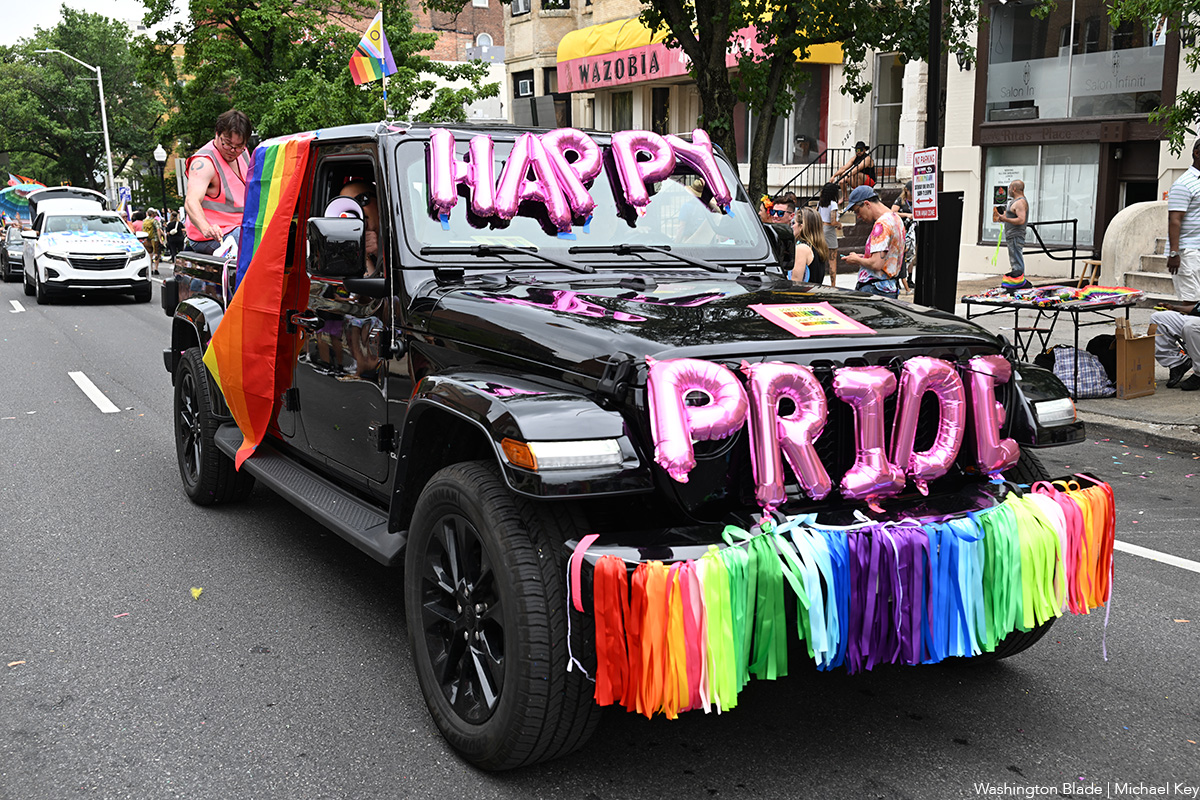
Baltimore Pride is underway, taking place from June 8-14.
The Pride Parade will be on Saturday, June 13 at 12 p.m. at Charles Street & North Avenue, followed by the Pride Block Party at 1 p.m. at Druid Hill Park. And then the Pride Festival will be held on Sunday, June 14 at 12 p.m. at Druid Hill Park.
There will be an array of additional events including: a fashion show, a “Suits and Sneakers” reception and a 5k race, among many other events.
For more details, visit Baltimore Pride’s website.

PHOTOS: The Audacity Brunch

D.C. Council approves expanded grant funding for Mayor’s Office of LGBTQ Affairs

Congressional Cemetery hosts Gays & Graves

Baltimore Pride is here

Calendar: June 12-18

Hundreds of thousands expected to attend D.C. Pride events

PHOTOS: Pride Run

Queen Jean is Tony’s first transgender winner

EXCLUSIVE: Pelosi reflects on four decades of LGBTQ advocacy