Commentary
Dearth of black LGBT characters in holiday films
Time for Hollywood to depict reality of our families

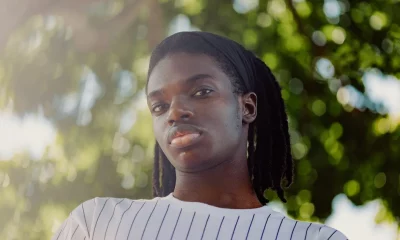
Hollywood may be consciously or unconsciously sending a message about its beliefs of black LGBT individuals. (Photo by Oreos; courtesy Wikimedia Commons)
It’s holiday season — that time of year when people from all walks of life spread holiday cheer and warm and fuzzy Christmas-themed movies fill the big screen. If you are black and LGBT, you are probably already accustomed to not seeing yourself or your family depicted in films. While there is a dearth of black LGBT characters in movies yearlong, the absence is particularly notable during the holiday season.
It may also sting more during the holiday season because it comes with the backhanded whammy that Hollywood may be consciously or unconsciously sending a message about its beliefs of black LGBT individuals. During the year, when the occasional black LGBT character makes his or her appearance in a mainstream film, that character is often the butt of jokes or depicted in a comedic role. It is rare to see loving black LGBT families depicted in mainstream movies.
Thus, when holiday season rolls around and family-oriented movies dominate the box office, it’s hard not to notice the glaring omission of black LGBT characters as a message that such characters are either deemed to be inappropriate in family-friendly films or that Hollywood is completely out of touch and doesn’t realize that it has erased black LGBT individuals from black families in holiday movies, despite the fact that most black families I know have a gay relative in their extended or immediate families.
I started thinking about this topic after discussing “The Best Man Holiday” with a friend who is also an African-American lesbian. While I don’t necessarily rush to see every romantic comedy that straight black folks rave about, my friend openly avoids such films, taking a hardline stance about not seeing herself or families like hers depicted in these black films.
I did choose to see “The Best Man Holiday” and I thoroughly enjoyed it. As an upwardly mobile black professional, I saw aspects of myself depicted in several of the characters, both male and female. While there was not a gay or lesbian couple in the film, I still saw dynamics of relationships that I have been in.
Unfortunately, there is also still a lack of quality black films, so it’s hard to not be supportive when one comes out. That said, the lack of black LGBT characters in roles similar to the characters in “The Best Man Holiday” is troubling. It would be great to see a movie in which a loving black gay or lesbian couple and their children are spending time with other couples, gay or straight, and their children, while enjoying the holiday season and reminiscing about old times.
A quick search of black LGBT characters in mainstream holiday films with predominately black casts came back with one result: “Holiday Heart,” which features an openly gay drag performer in an uplifting role. That’s it. That’s the list, and you can certainly argue about whether or not “Holiday Heart” is mainstream or independent.
While there aren’t many holiday movies with predominately white casts that depict loving LGBT couples and their families during the holidays, there are some. OK, maybe there’s one film that meets all of the ideal criteria. “Too Cool for Christmas” features a gay male couple and their two daughters during the holiday season. It is a family-friendly movie that depicts a loving family headed by a gay couple.
We continue to make progress in LGBT rights. Through exposure and dialogue, the black community’s views have shifted markedly on marriage equality and LGBT rights. Let’s hope Hollywood will realize this and catch up.
Lateefah Williams’ biweekly column, ‘Life in the Intersection,’ focuses on the intersection of race, gender and sexual orientation. She is a D.C.-based political and LGBT activist. Reach her at [email protected] or follow her on Twitter @lateefahwms.


Today, on World AIDS Day, we honor the resilience, courage, and dignity of people living with HIV everywhere especially refugees, asylum seekers, and queer displaced communities across East Africa and the world.
For many, living with HIV is not just a health journey it is a journey of navigating stigma, borders, laws, discrimination, and survival.
Yet even in the face of displacement, uncertainty, and exclusion, queer people living with HIV continue to rise, thrive, advocate, and build community against all odds.
To every displaced person living with HIV:
• Your strength inspires us.
• Your story matters.
• You are worthy of safety, compassion, and the full right to health.
• You deserve a world where borders do not determine access to treatment, where identity does not determine dignity, and where your existence is celebrated not criminalized.
Let today be a reminder that:
• HIV is not a crime.
• Queer identity is not a crime.
• Seeking safety is not a crime.
• Stigma has no place in our communities.
• Access to treatment, care, and protection is a human right.
As we reflect, we must recommit ourselves to building systems that protect not punish displaced queer people living with HIV. We must amplify their voices, invest in inclusive healthcare, and fight the inequalities that fuel vulnerability.
Hope is stronger when we build it together.
Let’s continue to uplift, empower, and walk alongside those whose journeys are too often unheard.
Today we remember.
Today we stand together.
Today we renew hope.
Abraham Junior lives in the Gorom Refugee Settlement in South Sudan.
Commentary
Perfection is a lie and vulnerability is the new strength
Rebuilding life and business after profound struggles
I grew up an overweight, gay Black boy in West Baltimore, so I know what it feels like not to fit into a world that was not really made for you. When I was 18, my mother passed from congestive heart failure, and fitness became a sanctuary for my mental health rather than just a place to build my body. That is the line I open most speeches with when people ask who I am and why I started SWEAT DC.
The truth is that little boy never really left me.
Even now, at 42 years old, standing 6 feet 3 inches and 225 pounds as a fitness business owner, I still carry the fears, judgments, and insecurities of that broken kid. Many of us do. We grow into new seasons of life, but the messages we absorbed when we were young linger and shape the stories we tell ourselves. My lack of confidence growing up pushed me to chase perfection as I aged. So, of course, I ended up in Washington, D.C., which I lovingly call the most perfection obsessed city in the world.
Chances are that if you are reading this, you feel some of that too.
D.C. is a place where your resume walks through the door before you do, where degrees, salaries, and the perfect body feel like unspoken expectations. In the age of social media, the pressure is even louder. We are all scrolling through each other’s highlight reels, comparing our behind the scenes to someone else’s curated moment. And I am not above it. I have posted the perfect photo with the inspirational “God did it again” caption when I am feeling great and then gone completely quiet when life feels heavy. I am guilty of loving being the strong friend while hating to admit that sometimes I am the friend who needs support.
We are all caught in a system that teaches us perfection or nothing at all. But what I know for sure now is this: Perfection is a lie and vulnerability is the new strength.
When I first stepped into leadership, trying to be the perfect CEO, I found Brené Brown’s book, “Daring Greatly” and immediately grabbed onto the idea that vulnerability is strength. I wanted to create a community at SWEAT where people felt safe enough to be real. Staff, members, partners, everyone. “Welcome Home” became our motto for a reason. Our mission is to create a world where everyone feels confident in their skin.
But in my effort to build that world for others, I forgot to build it for myself.
Since launching SWEAT as a pop up fundraiser in 2015, opening our first brick and mortar in 2017, surviving COVID, reemerging and scaling, and now preparing to open our fifth location in Shaw in February 2026, life has been full. Along the way, I went from having a tight trainer six pack to gaining nearly 50 pounds as a stressed out entrepreneur. I lost my father. I underwent hip replacement surgery. I left a relationship that looked fine on paper but was not right. I took on extra jobs to keep the business alive. I battled alcoholism. I faced depression and loneliness. There are more stories than I can fit in one piece.
But the hardest battle was the one in my head. I judged myself for not having the body I once had. I asked myself how I could lead a fitness company if I was not in perfect shape. I asked myself how I could be a gay man in this city and not look the way I used to.
Then came the healing.
A fraternity brother said to me on the phone, “G, you have to forgive yourself.” It stopped me in my tracks. I had never considered forgiving myself. I only knew how to push harder, chase more, and hide the cracks. When we hung up, I cried. That moment opened something in me. I realized I had not neglected my body. I had held my life and my business together the best way I knew how through unimaginable seasons.
I stopped shaming myself for not looking like my past. I started honoring the new ways I had proven I was strong.
So here is what I want to offer anyone who is in that dark space now. Give yourself the same grace you give everyone else. Love yourself through every phase, not just the shiny ones. Recognize growth even when growth simply means you are still here.
When I created SWEAT, I hoped to build a home where people felt worthy just as they are, mostly because I needed that home too. My mission now is to carry that message beyond our walls and into the city I love. To build a STRONGER DC.
Because strength is not perfection. Strength is learning to love an imperfect you.
With love and gratitude, Coach G.
Gerard Burley, also known as Coach G, is a D.C.-based fitness entrepreneur.
Commentary
Elusive safety: what new global data reveals about gender, violence, and erasure
Movements against gender equality, lack of human rights data contributing factors.
“My identity could be revealed, people can say whatever they want [online] without consequences. [Hormone replacement therapy] is illegal here so I’m just waiting to find a way to get out of here.”
-Anonymous respondent to the 2024 F&M Global Barometers LGBTQI+ Perception Index from Iraq, self-identified as a transgender woman and lesbian
As the campaign for 16 Days Against Gender-Based Violence begins, it is a reminder that gender-based violence (GBV) — both on– and offline — not only impacts women and girls but everyone who has been harmed or abused because of their gender or perceived gender. New research from the Franklin & Marshall (F&M) Global Barometers and its report A Growing Backlash: Quantifying the Experiences of LGBTQI+ People, 2022-2024 starkly show trends of declining safety among LGBTQI+ persons around the world.
This erosion of safety is accelerated by movements against gender equality and the disappearance of credible human rights data and reporting. The fight against GBV means understanding all people’s lived realities, including those of LGBTQI+ people, alongside the rights we continue to fight for.
We partnered together while at USAID and Franklin & Marshall College to expand the research and evidence base to better understand GBV against LGBTQI+ persons through the F&M Global Barometers. The collection of barometers tracks the legal rights and lived experiences of LGBTQI+ persons from 204 countries and territories from 2011 to the present. With more than a decade of data, it allows us to see how rights have progressed and receded as well as the gaps between legal protections and lived experiences of discrimination and violence.
This year’s data reveals alarming trends that highlight how fear and violence are, at its root, gendered phenomena that affect anyone who transgresses traditional gender norms.
LGBTQI+ people feel less safe
Nearly two-thirds of countries experienced a decline in their score on the F&M Global Barometers LGBTQI+ Perception Index (GBPI) from 2022-2024. This represents a five percent drop in global safety scores in just two years. With almost 70 percent of countries receiving an “F” grade on the GBPI, this suggests a global crisis in actual human rights protections for LGBTQI+ people.
Backsliding on LGBTQI+ human rights is happening everywhere, even in politically stable, established democracies with human rights protections for LGBTQI+ people. Countries in Western Europe and the Americas experienced the greatest negative GBPI score changes globally, 74 and 67 percent, respectively. Transgender people globally reported the highest likelihood of violence, while trans women and intersex people reported the highest levels of feeling very unsafe or unsafe simply because of who they are.
Taboo of gender equality
Before this current administration dismantled USAID, I helped create an LGBTQI+ inclusive whole-of-government strategy to prevent and respond to GBV that highlighted the unique forms of GBV against LGBTQI+ persons. This included so-called ‘corrective’ rape related to actual or perceived sexual orientation, gender identity, or expression” and so-called ‘conversion’ therapy practices that seek to change or suppress a person’s gender identity or expression, sexual orientation, or sex characteristics. These efforts helped connect the dots in understanding that LGBTQI+ violence is rooted in the same systems of inequality and power imbalances as the broader spectrum of GBV against women and girls.
Losing data and accountability
Data that helps better understand GBV against LGBTQI+ persons is also disappearing. Again, the dismantling of USAID meant a treasure trove of research and reports on LGBTQI+ rights have been lost. Earlier this year, the US Department of State removed LGBTQI+ reporting from its annual Human Rights Reports. These played a critical role in providing credible sources for civil society, researchers, and policymakers to track abuses and advocate for change.
If violence isn’t documented, it’s easier for governments to deny it even exists and harder for us to hold governments accountable. Yet when systems of accountability work, governments and civil society can utilize data in international forums like the UN Universal Periodic Review, the Convention on the Elimination of All Forms of Discrimination Against Women, and the Sustainable Development Goals to assess progress and compliance and call for governments to improve protections.
All may not be lost if other countries and donors fill the void by supporting independent data collection and reporting efforts like the F&M Global Barometers and other academic and civil society monitoring. Such efforts are essential to the fight against GBV: The data helps show that the path toward safety, equality, and justice is within our reach if we’re unafraid of truth and visibility of those most marginalized and impacted.
Jay Gilliam (he/him/his) was the Senior LGBTQI+ Coordinator at USAID and is a member of the Global Outreach Advisory Council of the F&M Global Barometers.
Susan Dicklitch-Nelson (she/her/hers) is the founder of the F&M Global Barometers and Professor of Government at Franklin & Marshall College.

Choose U ambassadors share lived experiences with HIV, personal reflections, and insights

DOJ seeks to join lawsuit against Loudoun County over trans student in locker room

As house Democrats release Epstein photos, Garcia continues to demand DOJ transparency

Capital Pride announces change in date for 2026 D.C. Pride parade and festival

Reflecting on six years on the CAMP Rehoboth board

EXCLUSIVE: George Santos speaks out on prison, Trump pardon, and more

The harsh truth about HIV phobia in gay dating

Cynthia Erivo, Eva Victor, and ‘Blue Moon’ bring queer representation to Golden Globe film nominations

Victory Institute honors transgender Spanish senator in D.C.

Kazakh Senate tables anti-LGBTQ propaganda bill
-

 Congress1 day ago
EXCLUSIVE: George Santos speaks out on prison, Trump pardon, and more
-
Health4 days ago
The harsh truth about HIV phobia in gay dating
-
Arts & Entertainment5 days ago
Cynthia Erivo, Eva Victor, and ‘Blue Moon’ bring queer representation to Golden Globe film nominations
-
Spain3 days ago
Victory Institute honors transgender Spanish senator in D.C.