News
LGBTQ groups stop short of criticizing Sinema for obstructing filibuster reform
Bisexual senator rebuffs Biden on voting rights proposal
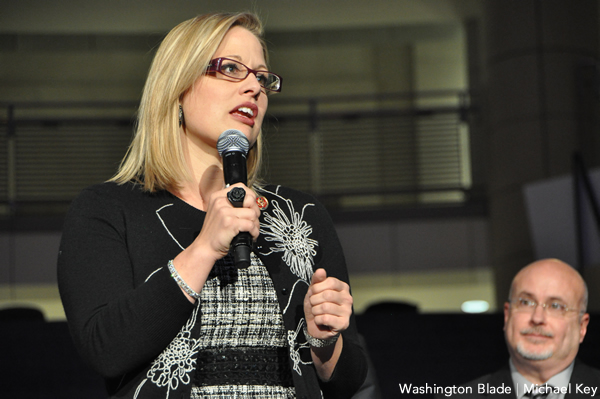
Despite an out bisexual being among two Democrats responsible for thwarting President Biden’s call to advance voting rights, LGBTQ groups that supported Sen. Kyrsten Sinema (D-Ariz.) stopped short of criticizing her directly for impeding legislation at the top of progressives’ wish lists.
Although the change being sought was limited to voting rights legislation, the refusal from Sinema to change the filibuster rule, which requires 60 votes to move legislation to the Senate floor as opposed to a simple majority, effectively put a stake in the heart of the legislative agenda for Democrats, including any possibility of enacting LGBTQ civil rights legislation like the Equality Act.
The Human Rights Campaign, the nation’s leading LGBTQ group, declined to identify Sinema by name in an organizational statement provided by a spokesperson via email in response to a Washington Blade inquiry on her refusal to change the filibuster to pass voting rights legislation.
“The core of our democracy is the right to vote,” the statement says. “The United States Senate must act on legislation to protect that right now, including passage of federal voting rights and voting protection legislation. Without its essential safeguards guaranteeing that the voices of all voters — including LGBTQ+ Black, Brown and other minority voters — will be heard at the ballot box, we cannot ensure that any other right, even those currently enshrined in law, will be protected in the years to come.”
The closest the statement comes to criticizing Sinema, without actually doing so, is the final line: “As a result, we feel that it is necessary for the Senate to take whatever actions are required, including changes to Senate rules, to ensure a majority to pass this essential legislation.”
The Human Rights Campaign endorsed Sinema in the past as a candidate for U.S. Senate and hosted her as a special guest for fundraising and promotional events. It should be noted, JoDee Winterhof, HRC’s senior vice president of policy and political affairs, once worked for Sinema as chief of staff.
Asked whether HRC’s position was informed by Winterhof’s past work, the spokesperson replied: “Many of our staff have experience working on the Hill. Regardless of who they have worked for, we continue to believe that it is necessary for the Senate to take whatever actions are required, including changes to the Senate rules, to pass federal voting reform.”
Moments before Sinema was set last Thursday to meet with Biden on the filibuster, she took to the Senate floor preemptively and declared she wouldn’t budge.
“There’s no need for me to restate my long-standing support for the 60-vote threshold to pass legislation,” Sinema said.
Added Sinema: “When one party need only negotiate with itself, policy will inextricably be pushed from the middle towards the extremes,” adding that she doesn’t support that outcome and “Arizonans do not either.”
Joining Sinema in refusing to budge on the filibuster is her fellow moderate Sen. Joe Manchin (D-W.Va.), who has proposed alternatives to the current state of Senate rules, but ultimately rejected the changes proposed by the caucus.
In contrast to the relatively muted response from LGBTQ groups, other civil rights organizations were quick to denounce Sinema and Manchin for supporting the filibuster, calling the Senate rules as they stand Jim Crow 2.0. Late Monday, Emily’s List announced it would no longer support Sinema for re-election over her position on voting rights.
Martin Luther King III, the son of the late civil rights leader, compared Manchin and Sinema to white moderates who half-heartedly supported his father’s work.
“History will not remember them kindly,” the younger King said, referring to Sinema and Manchin by name, according to PBS News Hour.
One exception to LGBTQ groups declining to criticize Sinema was the National LGBTQ Task Force, which said the senator should be coming up with alternatives to filibuster reform.
Kierra Johnson, executive director of the Task Force, said she’s been “asking questions because Sen. Sinema is known for being a supporter of so many pieces of progressive legislation and culture change related to queer people and women’s civil and human rights.”
“I want to see better and more, right?” Johnson said. “Yes, we should be working to build bridges across the aisle, across political ideology, but for me, the question is if you’re not going to support filibuster reform, then what are you supporting, and what is the pathway forward?”
Johnson added Sinema “owes it to the people who have supported her over the years to come up with these alternatives if she won’t support filibuster reform.”
Asked whether the Task Force has done any outreach to Sinema, Johnson said the organization is “in the process of trying to meet with her folks” and looking at ways to bring to her voices from LGBTQ movement community leaders.
Biden’s call to reform the filibuster — even though it was limited to voting rights legislation — may have been dead on arrival as Sinema and Manchin have consistently resisted efforts in the Senate to reform the filibuster. The efforts to change Senate rules, however, appeared to have new strength after Biden’s speech in Georgia last week making a plea for reform based on the Jan. 6 insurrection at the U.S. Capitol and the restrictive voting law passed in that state.
White House Press Secretary Jen Psaki, asked Friday about Sinema and Manchin refusing to budge on the filibuster, said the administration would continue to push for voting rights legislation.
“I would say that the president’s view, as you heard him say yesterday, is that we’re going to continue to press to get this done moving forward,” Psaki said. “And that means continuing to engage with a range of officials who are supportive, some who have questions and some who are skeptical.”
Psaki pointed out Biden ended up having the meeting with Sinema despite her remarks on the floor, adding “that’s evidence of his continued commitment to keep engaging.”
The LGBTQ community, as with any issue, isn’t uniform in thinking Sinema should be obligated to have a certain view against the filibuster simply because she’s bisexual, or that LGBTQ groups should criticize her for being obstructionist.
One LGBTQ strategist, who agreed to talk on condition of anonymity, outright rejects calls for Sinema to support a change in rules because the filibuster “ensures that minority perspectives cannot be trampled by majoritarianism.”
“Portraying an LGBTQ woman as a gender and sexuality traitor shows a deep disrespect for our history,” the strategist added. “Sinema’s success in fighting for working families, vulnerable populations and LGBTQ rights is grounded in the belief that building large coalitions is how to best effect legal and social changes. Naturally, it follows she would be against a change in decades of Senate precedent that would prioritize hyper partisanship over persuasion.”
Biden’s speech in Georgia may have been more of an attempt to excite the progressive base as opposed to making a strategic push for filibuster reform. After all, his popularity is at an all-time low, which limits his influence. A POLITICO/Morning Consult poll asking voters to grade Biden after his first year in office found 37 percent gave him an “F,” compared to the 31 who gave either “A” and “B,” which is a touch worse than Trump at this point in his presidency.
The LGBTQ Victory Fund, which has endorsed Sinema in the past, declined to make any declarations about withholding an endorsement when asked by the Washington Blade.
“Our Victory Fund Campaign Board – made up of more than 150 political leaders and advocates from across the country – votes to determine our endorsements,” said Elliot Imse, a Victory Fund spokesperson. “If Sen. Sinema runs for reelection, a review of her record as it relates to equality will of course be a primary consideration for whether she receives our endorsement. That board vote would take place, if she applies for endorsement, in late 2023 or 2024.”
Imse added as a U.S. senator Sinema is not currently up for election because after being elected in 2018 she is set to hold her seat for another four years.
“Sen. Sinema is not currently endorsed by Victory Fund and is not on an active ballot,” Imse said. “We last endorsed her in 2018 when she was running against Martha McSally – a right-wing extremist candidate vociferously opposed to equality for LGBTQ people.”


Virginia
DOJ seeks to join lawsuit against Loudoun County over trans student in locker room
Three male high school students suspended after complaining about classmate

The Justice Department has asked to join a federal lawsuit against Loudoun County Public Schools over the way it handled the case of three male high school students who complained about a transgender student in a boys’ locker room.
The Washington Blade earlier this year reported Loudoun County public schools suspended the three boys and launched a Title IX investigation into whether they sexually harassed the student after they said they felt uncomfortable with their classmate in the locker room at Stone Bridge High School in Ashburn.
The parents of two of the boys filed a lawsuit against Loudoun County public schools in U.S. District Court for the Eastern District of Virginia in Alexandria. The Richmond-based Founding Freedoms Law Center and America First Legal, which White House deputy chief of staff Stephen Miller co-founded, represent them.
The Justice Department in a Dec. 8 press release announced that “it filed legal action against the Loudoun County (Va.) School Board (Loudoun County) for its denial of equal protection based on religion.”
“The suit alleges that Loudoun County applied Policy 8040, which requires students and faculty to accept and promote gender ideology, to two Christian, male students in violation of the Equal Protection Clause of the 14th Amendment to the U.S. Constitution,” reads the press release.
Assistant Attorney General Harmeet K. Dhillon of the Justice Department’s Civil Rights Division in the press release said “students do not shed their First Amendment rights at the schoolhouse gate.”
“Loudoun County’s decision to advance and promote gender ideology tramples on the rights of religious students who cannot embrace ideas that deny biological reality,” said Dhillon.
Outgoing Virginia Gov. Glenn Youngkin and outgoing Virginia Attorney General Jason Miyares in May announced an investigation into the case.
The Virginia Department of Education in 2023 announced the new guidelines for trans and nonbinary students for which Youngkin asked. Equality Virginia and other advocacy groups claim they, among other things, forcibly out trans and nonbinary students.
The U.S. Department of Education’s Office of Civil Rights in February launched an investigation into whether Loudoun County and four other Northern Virginia school districts’ policies in support of trans and nonbinary students violate Title IX and President Donald Trump’s executive order that prohibits federally funded educational institutions from promoting “gender ideology.”
The White House
As house Democrats release Epstein photos, Garcia continues to demand DOJ transparency
Blade this week sat down with gay House Oversight Committee ranking member

Democrats on the House Oversight Committee have released new photos from Jeffrey Epstein’s email and computer records, including images highlighting the relationship between President Donald Trump and the convicted sex offender.
Epstein, a wealthy financier, was found guilty of procuring a child for prostitution and sex trafficking, serving a 13-month prison sentence in 2008. At the time of his death in prison under mysterious circumstances, he was facing charges of sex trafficking and conspiracy to traffic minors.
Among those pictured in Epstein’s digital files are Trump, former President Bill Clinton, former Trump adviser Steve Bannon, actor and director Woody Allen, economist Larry Summers, lawyer Alan Dershowitz, entrepreneurs Richard Branson and Bill Gates, and Andrew Mountbatten-Windsor.
One photo shows Trump alongside Epstein and a woman at a Victoria’s Secret party in New York in 1997. American media outlets have published the image, while Getty Images identified the woman as model Ingrid Seynhaeve.
Oversight Committee Democrats are reviewing the full set of photos and plan to release additional images to the public in the coming days and weeks, emphasizing their commitment to protecting survivors’ identities.
With just a week left for the Justice Department to publish all files related to Epstein following the passage of the Epstein Files Transparency Act, which requires the Justice Department to release most records connected to Epstein investigations, the Washington Blade sat down with U.S. Rep. Robert Garcia (D-Calif.), the ranking member on the Oversight Committee to discuss the current push the release of more documents.
Garcia highlighted the committee’s commitment to transparency and accountability.
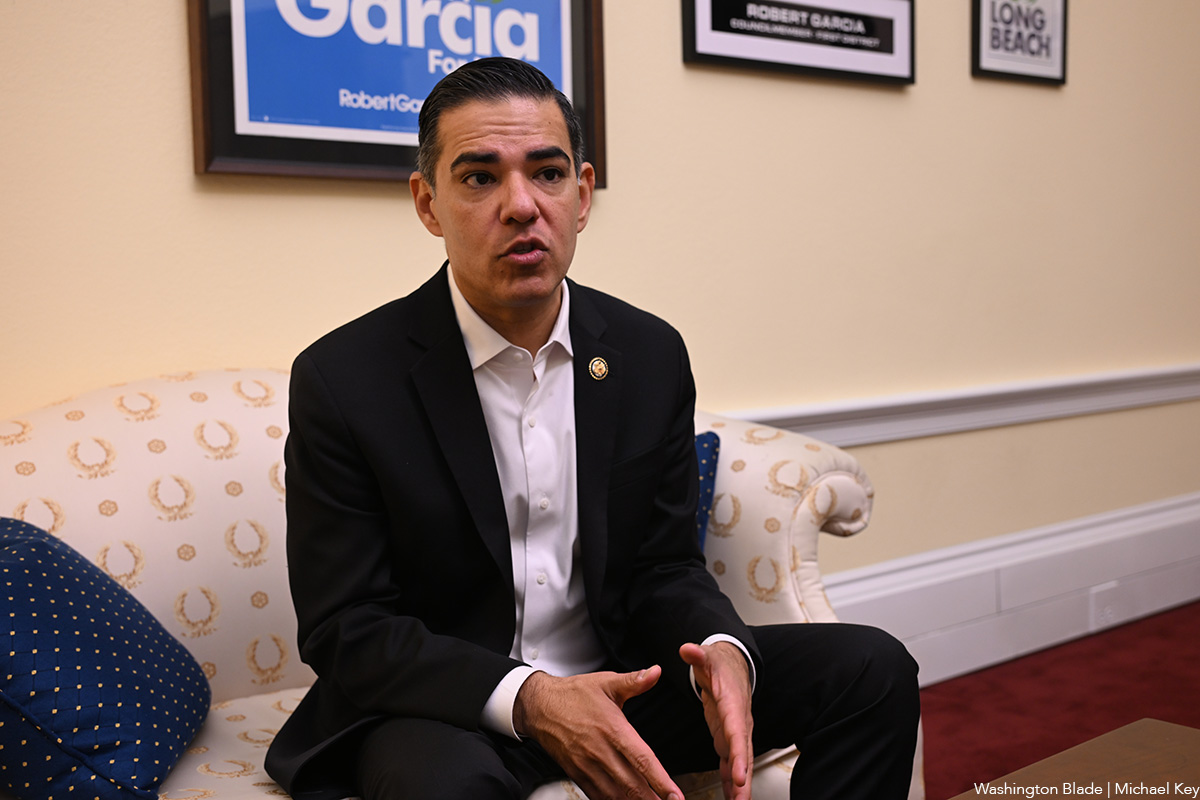
“We’ve said anything that we get we’re going to put out. We don’t care who is in the files … if you’ve harmed women and girls, then we’ve got to hold you accountable.”
He noted ongoing questions surrounding Trump’s relationship with Epstein, given their long history and the apparent break in friendship once Trump assumed public office.
“There’s been a lot of questions about … Donald Trump and Jeffrey Epstein. They were best friends for 10 years … met women there and girls.”
Prior to Trump’s presidency, it was widely reported that the two were friends who visited each other’s properties regularly. Additional reporting shows they socialized frequently throughout the 1990s and early 2000s, attending parties at Trump’s Mar-a-Lago resort in Florida and Epstein’s residences. Flight logs from an associate’s trial indicate Trump flew on Epstein’s private jet multiple times, and Epstein claimed Trump first had sex with his future wife, Melania Knauss, aboard the jet.
“We’ve provided evidence … [that leads to] questions about what the relationship was like between Donald Trump and Jeffrey Epstein.”
Garcia stressed the need for answers regarding the White House’s role in withholding information, questioning the sudden change in attitude toward releasing the files given Trump’s campaign promises.
“Why is the White House trying to cover this up? So if he’s not covering for himself … he’s covering up for his rich friends,” Garcia said. “Why the cover up? Who are you hiding for? I think that’s the question.”
He confirmed that Trump is definitively in the Epstein files, though the extent remains unknown, but will be uncovered soon.
“We know that Trump’s in them. Yeah, he’s been told. We know that Trump’s in them in some way. As far as the extent of it … we don’t know.”
Garcia emphasized accountability for all powerful figures implicated, regardless of financial status, political party, or personal connections.
“All these powerful men that are walking around right now … after abusing, in some cases, 14‑ and 15‑year‑old girls, they have to be held accountable,” he said. “There has to be justice for those survivors and the American public deserves the truth about who was involved in that.”
He added that while he is the ranking member, he will ensure the oversight committee will use all available political tools, including subpoenas — potentially even for the president.
“We want to subpoena anyone that we can … everyone’s kind of on the table.”
He also emphasized accountability for all powerful figures implicated, regardless of financial status, political party, or relationship with the president.
“For me, they’re about justice and doing the right thing,” Garcia said. “This is about women who … were girls and children when they were being abused, trafficked, in some cases, raped. And these women deserve justice.”
“The survivors are strong.”
Deputy White House Press Secretary Abigail Jackson issued a statement regarding the release the photos, echoing previous comments from Republicans on the timing and framing of the photos by the Oversight Committee.
“Once again, House Democrats are selectively releasing cherry-picked photos with random redactions to try and create a false narrative,” Jackson said.
“The Democrat hoax against President Trump has been repeatedly debunked and the Trump administration has done more for Epstein’s victims than Democrats ever have by repeatedly calling for transparency, releasing thousands of pages of documents, and calling for further investigations into Epstein’s Democrat friends,”
In a press release on Friday, Garcia called for immediate DOJ action:
“It is time to end this White House cover-up and bring justice to the survivors of Jeffrey Epstein and his powerful friends. These disturbing photos raise even more questions about Epstein and his relationships with some of the most powerful men in the world. We will not rest until the American people get the truth. The Department of Justice must release all the files, NOW.”




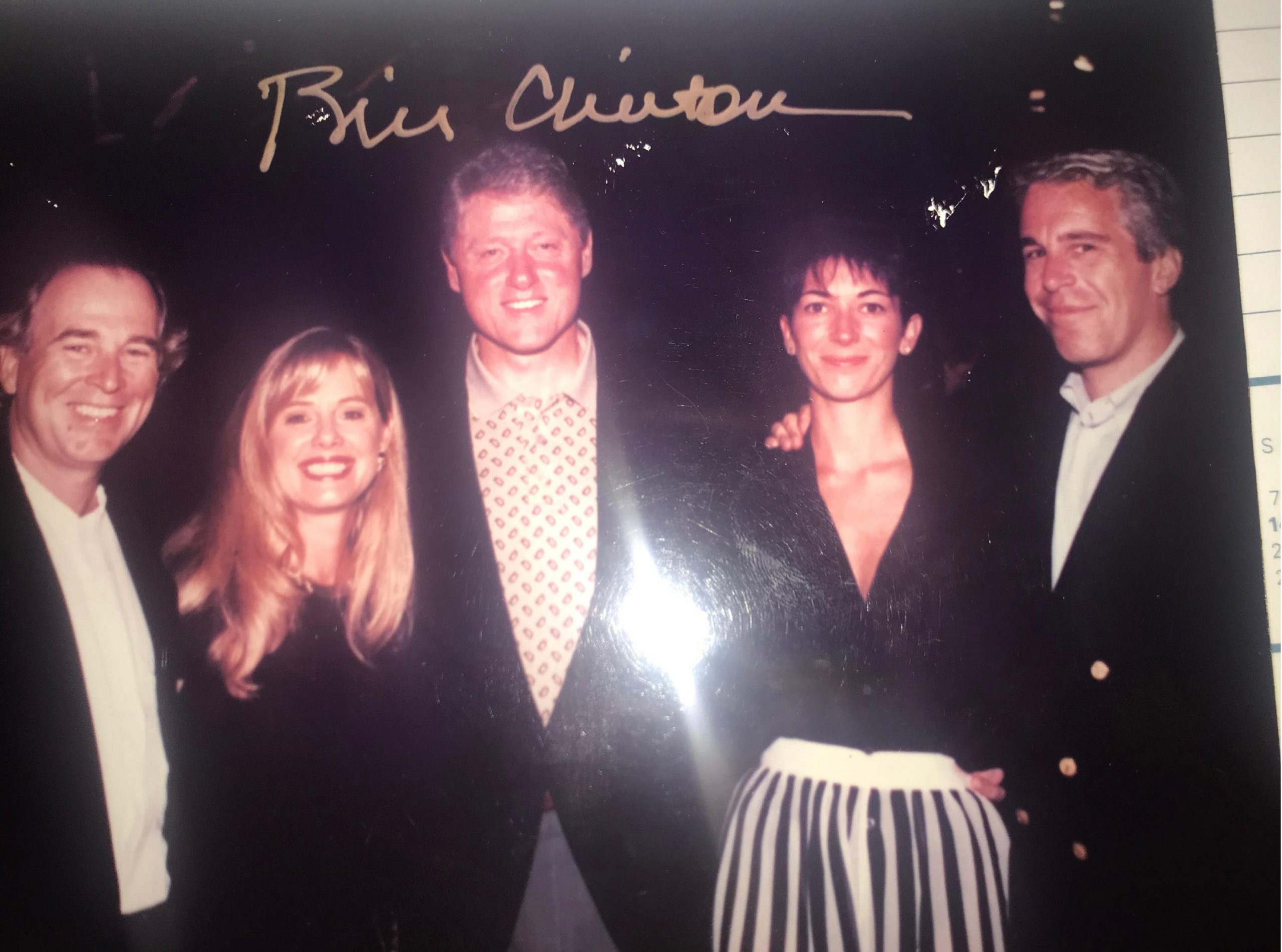
(Photo courtesy of the U.S. House Oversight Committee)
District of Columbia
Capital Pride announces change in date for 2026 D.C. Pride parade and festival
Events related to U.S. 250th anniversary and Trump birthday cited as reasons for change

The Capital Pride Alliance, the D.C. based group that organizes the city’s annual LGBTQ Pride events, has announced it is changing the dates for the 2026 Capital Pride Parade and Festival from the second weekend in June to the third weekend.
“For over a decade, Capital Pride has taken place during the second weekend in June, but in 2026, we are shifting our dates in response to the city’s capacity due to major events and preparations for the 250th anniversary of the United States,” according to a Dec. 9 statement released by Capital Pride Alliance.
The statement says the parade will take place on Saturday, June 20, 2026, with the festival and related concert taking place on June 21.
“This change ensures our community can gather safely and without unnecessary barriers,” the statement says. “By moving the celebration, we are protecting our space and preserving Pride as a powerful act of visibility, solidarity, and resistance,” it says.
Ryan Bos, the Capital Pride Alliance CEO and President, told the Washington Blade the change in dates came after the group conferred with D.C. government officials regarding plans for a number of events in the city on the second weekend in June. Among them, he noted, is a planned White House celebration of President Donald Trump’s 80th birthday and other events related to the U.S. 250th anniversary, which are expected to take place from early June through Independence Day on July 4.
The White House has announced plans for a large June 14, 2026 celebration on the White House south lawn of Trump’s 80th birthday that will include a large-scale Ultimate Fighting Championship (UFC) event involving boxing and wrestling competition.
Bos said the Capital Pride Parade will take place along the same route it has in the past number of years, starting at 14th and T Streets, N.W. and traveling along 14th Street to Pennsylvania Ave., where it will end. He said the festival set for the following day will also take place at its usual location on Pennsylvania Avenue, N.W., between 2nd Street near the U.S. Capitol, to around 7th Street, N.W.
“Our Pride events thrive because of the passion and support of the community,” Capital Pride Board Chair Anna Jinkerson said in the statement. “In 2026, your involvement is more important than ever,” she said.

DOJ seeks to join lawsuit against Loudoun County over trans student in locker room

As house Democrats release Epstein photos, Garcia continues to demand DOJ transparency

Capital Pride announces change in date for 2026 D.C. Pride parade and festival

Reflecting on six years on the CAMP Rehoboth board

Mixtape Sapphics hosts holiday party on Dec. 13

EXCLUSIVE: George Santos speaks out on prison, Trump pardon, and more
Trump’s shocking East Wing amputation—and the painful fallout Americans won’t ignore

The harsh truth about HIV phobia in gay dating

Third LGBTQ candidate running for Ward 1 D.C. Council seat

Cynthia Erivo, Eva Victor, and ‘Blue Moon’ bring queer representation to Golden Globe film nominations
-

 Congress12 hours ago
EXCLUSIVE: George Santos speaks out on prison, Trump pardon, and more
-

 The White House4 days ago
Trump’s shocking East Wing amputation—and the painful fallout Americans won’t ignore
-
Health4 days ago
The harsh truth about HIV phobia in gay dating
-
District of Columbia5 days ago
Third LGBTQ candidate running for Ward 1 D.C. Council seat