World
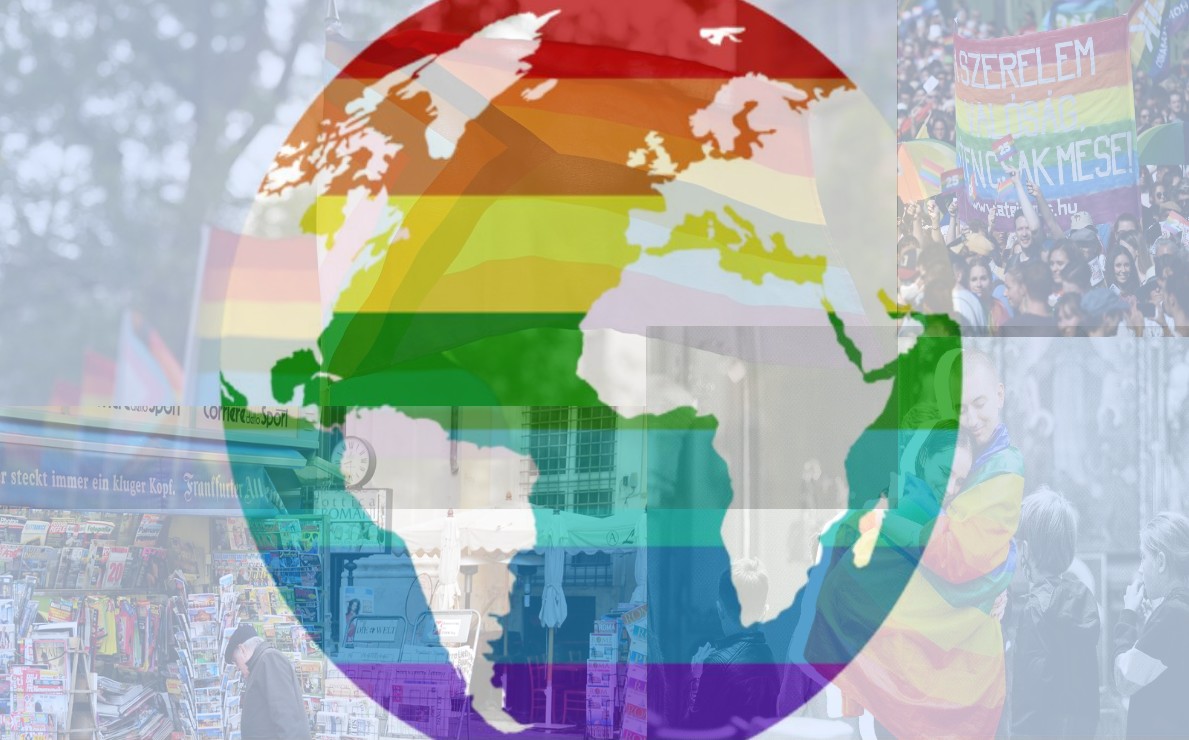
Out in the World: LGBTQ news from Europe and Asia
Human Rights Watch in new report criticizes Jordanian government
Jordan
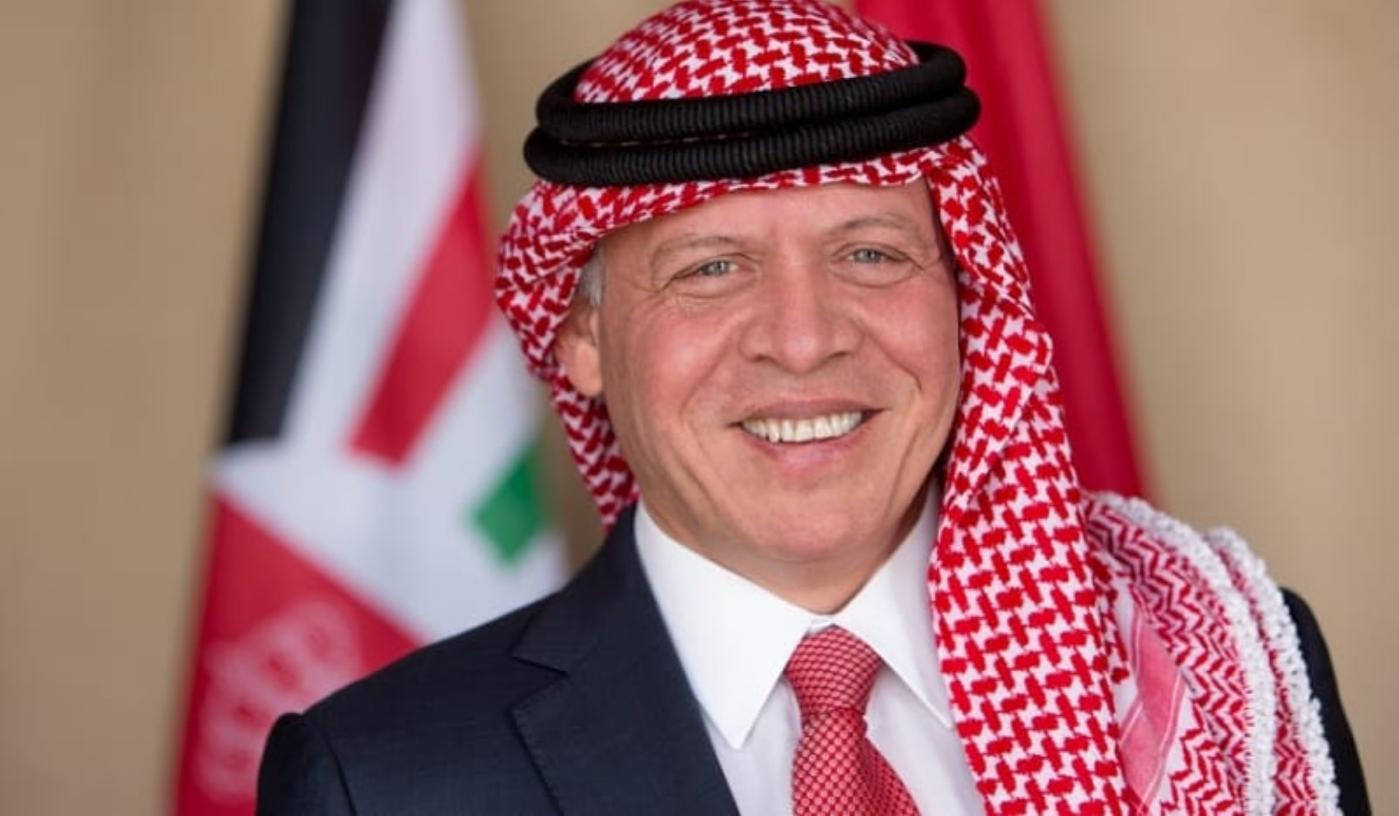
The government of Jordanian King Abdullah have systematically targeted lesbian, gay, bisexual and transgender rights activists and coordinated an unlawful crackdown on free expression and assembly around gender and sexuality, Human Rights Watch said in a report released earlier this month.
In its Dec. 4 report, HRW documented cases in which Jordan’s General Intelligence Department (GID) and the Preventive Security department of the Public Security Directorate interrogated LGBTQ activists about their work, and intimidated them with threats of violence, arrest and prosecution, forcing several activists to shut down their organizations, discontinue their activities and in some cases, flee the country.
Government officials also smeared LGBTQ rights activists online based on their sexual orientation, and social media users posted photos of LGBTQ rights activists with messages inciting violence against them.
“Jordanian authorities have launched a coordinated attack against LGBT rights activists, aimed at eradicating any discussion around gender and sexuality from the public and private spheres,” said Rasha Younes, senior LGBT rights researcher at Human Rights Watch. “Security forces’ intimidation tactics and unlawful interference in LGBT organizing have driven activism further underground and forced civil society leaders into an impossible reality: severe self-censorship or fleeing Jordan.”
Three activists said the Amman governor interrogated them after they preemptively cancelled the screening of a film depicting gay men. Two LGBTQ organization directors said that because of official intimidation, they were forced to close their offices, discontinue their operations in Jordan and flee the country.
One activist said Preventive Security officers made him sign a pledge that he would report all his venue’s activities to the governor. Another activist reported being targeted online while social media users called for him to be burned alive.
One of the few LGBTQ rights activists who has remained in Jordan described her current reality: “Merely existing in Amman has become terrifying. We cannot continue our work as activists, and we are forced to be hyperaware of our surroundings as individuals.”
More recently, in October 2023, an LGBTQ rights activist said he was summoned for investigation by the intelligence agency. During the interrogation, the activist said intelligence officers searched his phone, intimidated him and threatened him with a travel ban, while asking personal questions about his sexual orientation and sexual relations with other men. After three hours of questioning, the activist said the officers told him he could leave.
“They [Jordanian authorities] invest in intimidation to destroy our minds and isolate us,” the activist said. “Their tactic is to target us mentally, leaving no evidence of our torment behind.”
Jordan’s constitution protects the rights to nondiscrimination (article 6), the right to personal freedom (article 7), and the right to freedom of expression and opinion (article 15).
The International Covenant on Civil and Political Rights, to which Jordan is a state party, provides that everyone shall have the right to freedom of expression, assembly and association. The ICCPR, in its articles 2 and 26, guarantees fundamental human rights and equal protection of the law without discrimination.
The U.N. Human Rights Committee, which interprets the covenant, has made clear that discrimination based on sexual orientation and gender identity is prohibited in upholding any of the rights protected by the treaty, including freedom of expression, assembly and association.
France
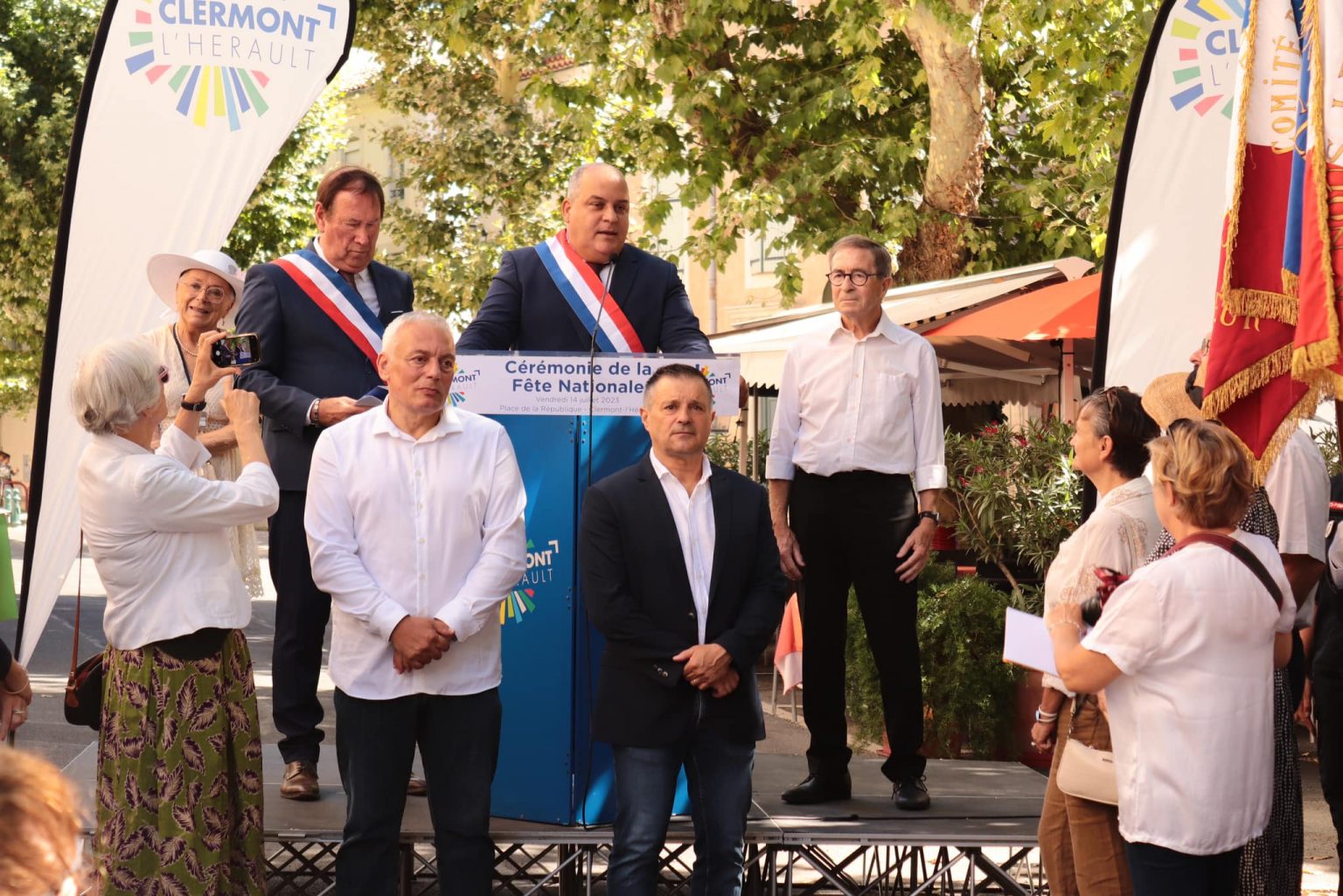
Legislation that was introduced last month by the openly gay Socialist Senator Hussein Bourgi to acknowledge the French state’s responsibility in the criminalization and persecution of gay men between 1945 and 1982 was adopted.
However, the section of bill that called for compensation of the victims of French homophobic laws, in effect during that period by offering them a lump sum of €10,000 ($10,752.75) was not approved.
Speaking with various French media outlets, Bourgi, who authored the bill, said: “It is high time to bring justice to the living victims of legislation which served as the basis for a politics of repression with brutal and punishing social, professional and familial consequences.”
Agence France-Presse reported:
Bourgi’s text focuses on a 40-year period following the introduction of legislation that specifically targeted homosexuals under the Nazi-allied Vichy regime. The 1942 law, which was not repealed after the liberation of France, introduced a discriminatory distinction in the age of consent for heterosexual and homosexual sex, setting the former at 13 (raised to 15 at the Liberation) and the latter at 21.
Some 10,000 people — almost exclusively men, most of them working-class — were convicted under the law until its repeal in 1982, according to research by sociologists Régis Schlagdenhauffen and Jérémie Gauthier. More than 90 percent were sentenced to jail. An estimated 50,000 more were convicted under a separate “public indecency” law that was amended in 1960 to introduce an aggravating factor for homosexuals and double the penalty.
“People tend to think France was protective of gay people compared to, say, Germany or the UK. But when you look at the figures you get a very different picture,” said Schlagdenhaufen, who teaches at the EHESS institute in Paris.
“France was not this cradle of human rights we like to think of,” he added. “The revolution tried to decriminalise homosexuality, but subsequent regimes found other stratagems to repress gay people. This repression was enshrined in law in 1942 and even more so in 1960.”
The legislation won the backing of Justice Minister Éric Dupond-Moretti in President Emmanuel Macron’s government. However, Dupond-Moretti agreed with the removal of the compensation provision by the right-wing and center senatorial majority. Dupond-Moretti justified this choice noting concerns over “legal difficulties,” telling French magazine Le Monde that “putting into practice” of this compensation measure “appears extremely complex” due to the difficulty of providing proof of an old conviction and its execution.
The Dupond-Moretti added “It was not the law which was responsible for this harm” but “French society, homophobic in all its components at the time” adding, “This is not the fault of the Republic. The law of memory is enough.”
The bill must now be taken up by the lower house, the National Assembly, to be passed and then adopted.
Scotland
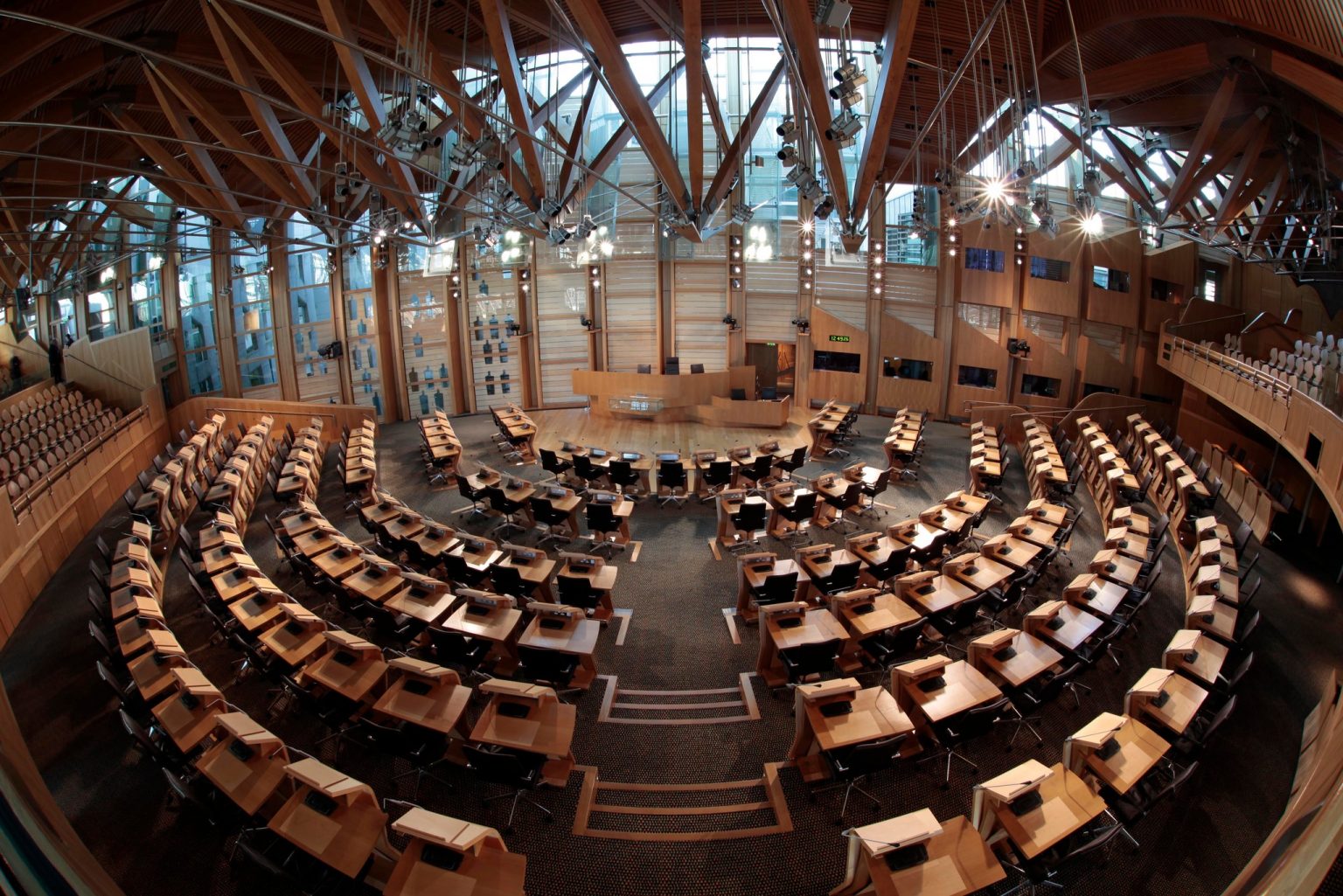
The Court of Session in Edinburgh has ruled that Prime Minister Rishi Sunak’s U.K. government acted within the law by invoking Section 35, which blocked the measure passed by the Scottish Parliament, that would have make it easier for transgender people to change their legally-recognized sex on documents.
The actions by Scottish Secretary Alister Jack, with Sunak’s backing kept the act from receiving the signature of King Charles III and becoming law.
The Gender Recognition Reform bill was introduced by the Scottish government in the country’s Parliament in the spring of 2022 was passed in a final 86-39 vote days before last Christmas. The sweeping reform bill modifies the Gender Recognition Act, signed into law in 2004, by allowing trans Scots to gain legal recognition without the need for a medical diagnosis.
The measure further stipulates that age limit for legal recognition is lowered to 16.
In a statement released in January of this year, Jack said:
“After thorough and careful consideration of all the relevant advice and the policy implications, I am concerned that this legislation would have an adverse impact on the operation of Great Britain-wide equalities legislation.
Transgender people who are going through the process to change their legal sex deserve our respect, support and understanding. My decision today is about the legislation’s consequences for the operation of GB-wide equalities protections and other reserved matters.
I have not taken this decision lightly. The bill would have a significant impact on, amongst other things, GB-wide equalities matters in Scotland, England and Wales. I have concluded, therefore, that this is the necessary and correct course of action.”
The Scottish government sued Westminster in the Court of Session, Scotland’s highest civil court, arguing that Jack did not have “reasonable grounds” to block the bill. The BBC reported that in her ruling for the UK governments, Judge Lady Haldane dismissed the Scottish government’s appeal and said the block on the legislation was lawful.
Haldance noted that Jack followed correct legal procedures when he made his decision to invoke section 35 and that the Scottish government had failed to show that he had made legal errors.
The judge wrote: “I cannot conclude that he (Mr. Jack) failed in his duty to take such steps as were reasonable in all the circumstances to acquaint himself with material sufficient to permit him to reach the decision that he did.”
Haldane also said that “Section 35 does not, in and of itself, impact on the separation of powers or other fundamental constitutional principle. Rather it is itself part of the constitutional framework.”
Stonewall UK, the nation’s largest LGBTQ advocacy group, expressed its disappointment with Haldane’s ruling in a statement released this past week:
“We’re disappointed that the Court of Session in Scotland has found in favour of the UK government’s unprecedented decision to use Section 35 to block the Gender Recognition Reform Bill from Royal Assent. This bill was one of the most debated in the Scottish Parliament’s history and was passed by a resounding majority of MSPs drawn from all major Scottish parties.
This unfortunately means more uncertainty for trans people in Scotland, who will now be waiting once again, to see whether they will be able to have their gender legally recognised through a process that is in line with leading nations like Ireland, Canada and New Zealand.
Whatever happens next in discussions with the UK and Scottish governments on this matter, Stonewall will continue to press all administrations to make progress on LGBTQ+ rights in line with leading international practice.”
UNITED KINGDOM
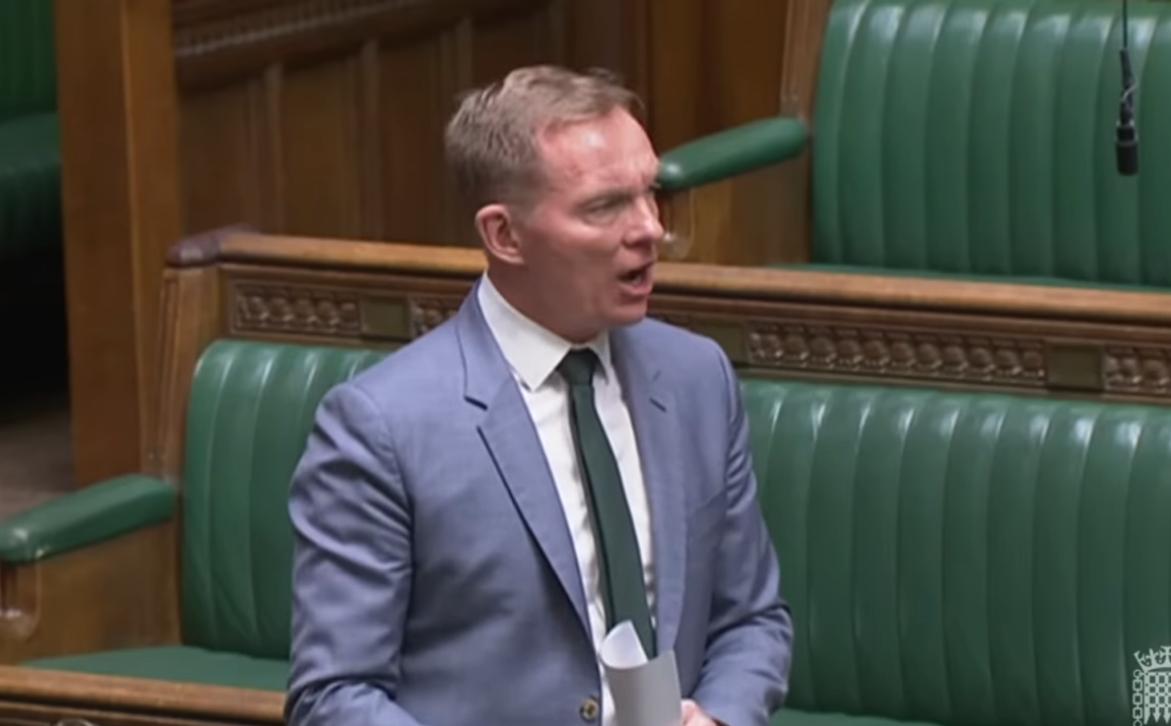
Anti-LGBTQ rhetoric used by British Equalities Minister Kemi Badenoch during her speech on the floor of the House of Commons on Dec. 6, prompted Labor MP Chris Bryant, an openly gay lawmaker, to rise in opposition and declare her speech left him feeling unsafe.
The debate was triggered by Badenoch claiming that the UK does not recognize self-ID from overseas countries for trans people, PinkNewsUK reported. In his retort to her statements, Bryant explained: “I feel, as a gay man, less safe than I did three years or five years ago.”
PinkNewsUK also noted that Bryant said: “Why? Sometimes because of the rhetoric that is used, including by herself [Badenoch] in the public debate.” He added that some MPs had cheered for Badenoch’s statements on the trans community, and for statements against gender-affirming care for trans people, which could lead to LGBTQ people feeling even less safe in the UK.
“Many of us feel less safe today, and when people over there cheer as they just did, it chills me to the bone, it genuinely does,” Bryant said.
She hit back with force, challenging him to identify which words precisely were so problematic. She later criticized the attempts of trans activists to use emotional blackmail to try to shut down debate.
The UK government has updated the list of countries from which gender-certificates will be accepted.
Replying to Bryant, Badenoch said: “He says that my rhetoric chills him to the bone. I would be really keen to hear exactly what it is I have said in this statement or previously that is so chilling.” She added that the current Tory government had done work on “our HIV action plan” and “around trans healthcare,” as well as “establishing five new community-based clinics for adults in the country.”
“There is a lot that we are doing, so it is wrong to characterize us as not caring about LGBT people,” she said.
Bryant’s colleague, Ben Bradshaw, also failed to get the better of Badenoch. He complained the UK had recently fallen in a set of international rankings on LGBTQ rights. She calmly pointed out that those rankings reward states that adopt the Stonewall-supported policy of self-ID and punish those who do not. To cheers from the Tory benches, she declared “Stonewall does not decide the law in this country,” referring to Stonewall UK, the nation’s largest LGBTQ advocacy group.
POLAND
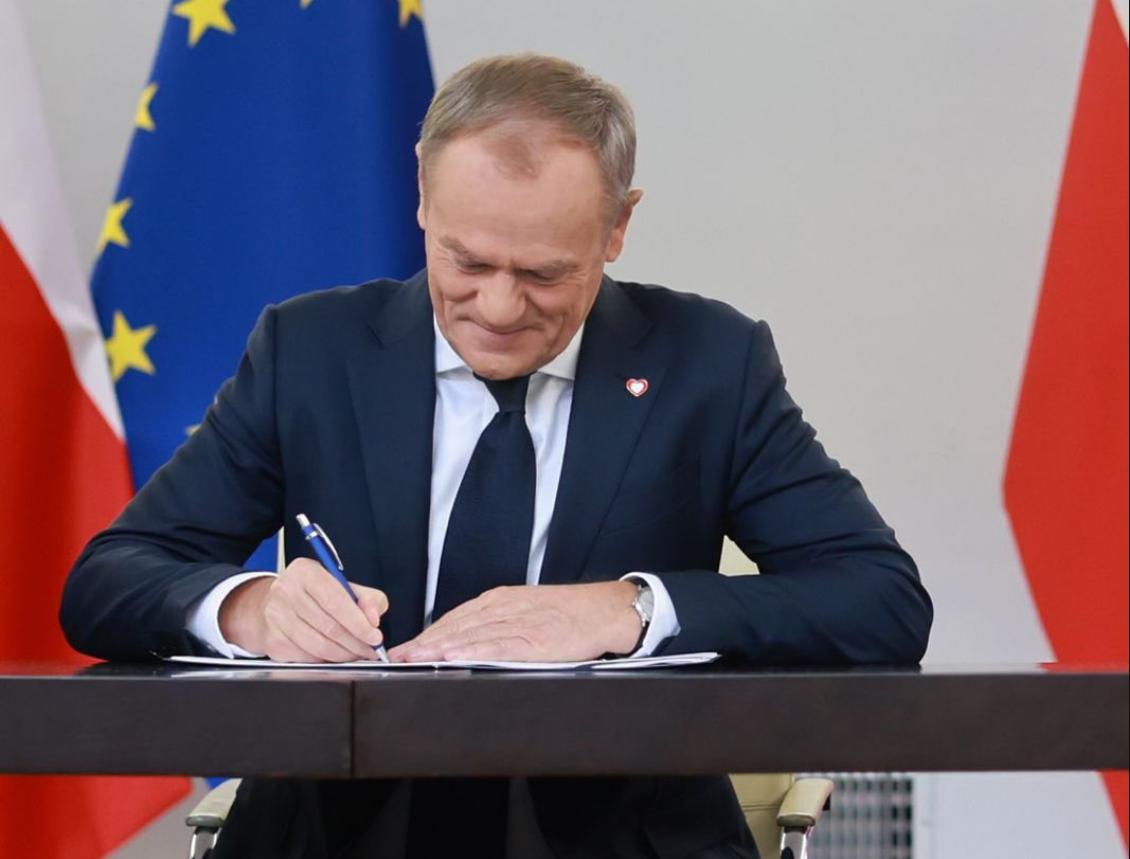
In a turn of events Monday, the lower house of the national legislature of Poland, elected Donald Tusk as the new prime minister after Prime Minister Mateusz Morawiecki failed to win a vote of confidence by lawmakers in his government.
248 MPs voted for the election of Tusk as prime minister, 201 were against and no one abstained in the 460-seat lower house of Parliament.
“This is a truly wonderful day, not only for me, but for all those who have deeply believed for many years that things will get even better, that we will chase away the darkness, that we will chase away evil,” the 66-year-old new prime minister told Parliament after his election.
There had been considerable turmoil in the Polish government, particularly in Parliament, as many accused the ruling conservative right-wing PiS (Law and Justice Party) of Jarosław Kaczyński, who until last month held the post of deputy prime minister, of leading the country backwards into an authoritarian state.
The PiS lost their parliamentary majority in the critical elections this past October after a larger proportion of the country’s 18-29 year-olds had turned out to vote than over-60s and election officials said that turnout was probably 72.9 percent, the highest since the fall of communism in 1989.
Voter anger had steadily risen over erosion of women’s reproductive rights eroded and Polish LGBTQ people who had faced a government hate campaign that drove some to leave the country and caused the European Commission to threatened to pull economic aid and as the BBC reported, the EU is still withholding more than €30 billion ($32 billion) in COVID-19 recovery funds because of its concerns about the politicization of Poland’s courts.
The Polish government has repeatedly clashed with the EU over the rule of law, media freedom, migration and LGBTQ rights since PiS came to power in 2015.
Tusk, who had served as European Council president from 2014-2019 is expected to improve Warsaw’s standing with the EU. Additionally he previously served as Poland’s prime minister from 2007-2014.
“At the invitation of President Andrzej Duda, after the vote in the Sejm, a meeting was held with Prime Minister Donald Tusk. It was agreed that after obtaining a vote of confidence, the swearing-in of the new government would take place on Wednesday, Dec. 13, at 9 a.m. at the Presidential Palace,” a spokesperson for Duda said in a statement released late Monday.
Additional reporting from Human Rights Watch, Agence France-Presse, Le Monde, The BBC and PinkNewsUK.




Egypt
Iran, Egypt object to playing in Seattle World Cup ‘Pride Match’
Game to take place on June 26
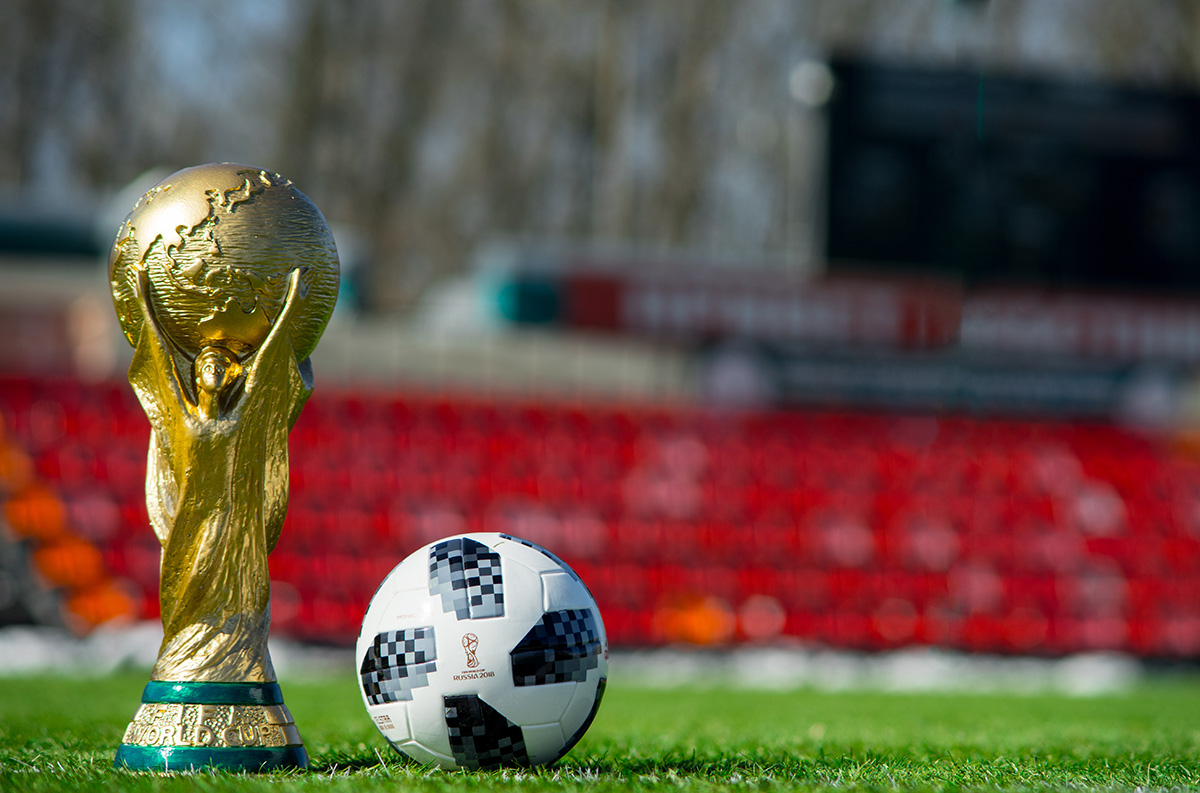
Iran and Egypt have objected to playing in a “Pride Match” that will take place in Seattle during the 2026 World Cup.
The Egyptian Football Association on Tuesday said it told FIFA Secretary General Mattias Grafström in a letter that “it categorically rejects holding any activities related to supporting (homosexuality) during the match between the Egyptian national team and Iran, scheduled to be held in Seattle, USA, on June 26, 2026, in the third round of the group stage of the 2026 World Cup.” Football Federation Islamic Republic of Iran President Mehdi Taj told ISNA, a semi-official Iranian news agency that both his country and Egypt “protested this issue.”
The 2026 World Cup will take place in the U.S., Canada, and Mexico. The draw took place at the Kennedy Center on Dec. 5.
Iran is among the handful of countries in which consensual same-sex sexual relations remain punishable by death.
The State Department’s 2023 human rights report notes that while Egyptian law “did not explicitly criminalize consensual same-sex sexual activity, authorities regularly arrested and prosecuted LGBTQI+ persons on charges including ‘debauchery,’ prostitution, and ‘violating family values.’” Egyptian authorities “also reportedly prosecuted LGBTQI+ individuals for ‘misuse of social media.’”
“This resulted in de facto criminalization of same-sex conduct and identity,” notes the report.
The 2024 human rights report the State Department released earlier this year did not include LGBTQ-specific references.
Soccer has ‘unique power to unite people across borders, cultures, and beliefs’
The June 26 match between Iran and Egypt coincides with Seattle Pride. The Washington Post reported the Seattle FIFA World Cup 2026 Local Organizing Committee decided to hold the “Pride Match” before last week’s draw.
“As the Local Organizing Committee, SeattleFWC26’s role is to prepare our city to host the matches and manage the city experience outside of Seattle Stadium,” said SeattleFWC26 Vice President of Communications Hana Tadesse in a statement the committee sent to the Washington Blade on Wednesday. “SeattleFWC26 is moving forward as planned with our community programming outside the stadium during Pride weekend and throughout the tournament, partnering with LGBTQ+ leaders, artists, and business owners to elevate existing Pride celebrations across Washington.”
“Football has a unique power to unite people across borders, cultures, and beliefs,” added Tadeese. “The Pacific Northwest is home to one of the nation’s largest Iranian-American communities, a thriving Egyptian diaspora, and rich communities representing all nations we’re hosting in Seattle. We’re committed to ensuring all residents and visitors experience the warmth, respect, and dignity that defines our region.”
The 2034 World Cup will take place in Saudi Arabia.
Consensual same-sex sexual relations remain punishable by death in the country. The 2022 World Cup took place in neighboring Qatar, despite concerns over the country’s anti-LGBTQ rights record.
Spain
Victory Institute honors transgender Spanish senator in D.C.
Carla Antonelli describes Trump policies as ‘absolutely terrifying’
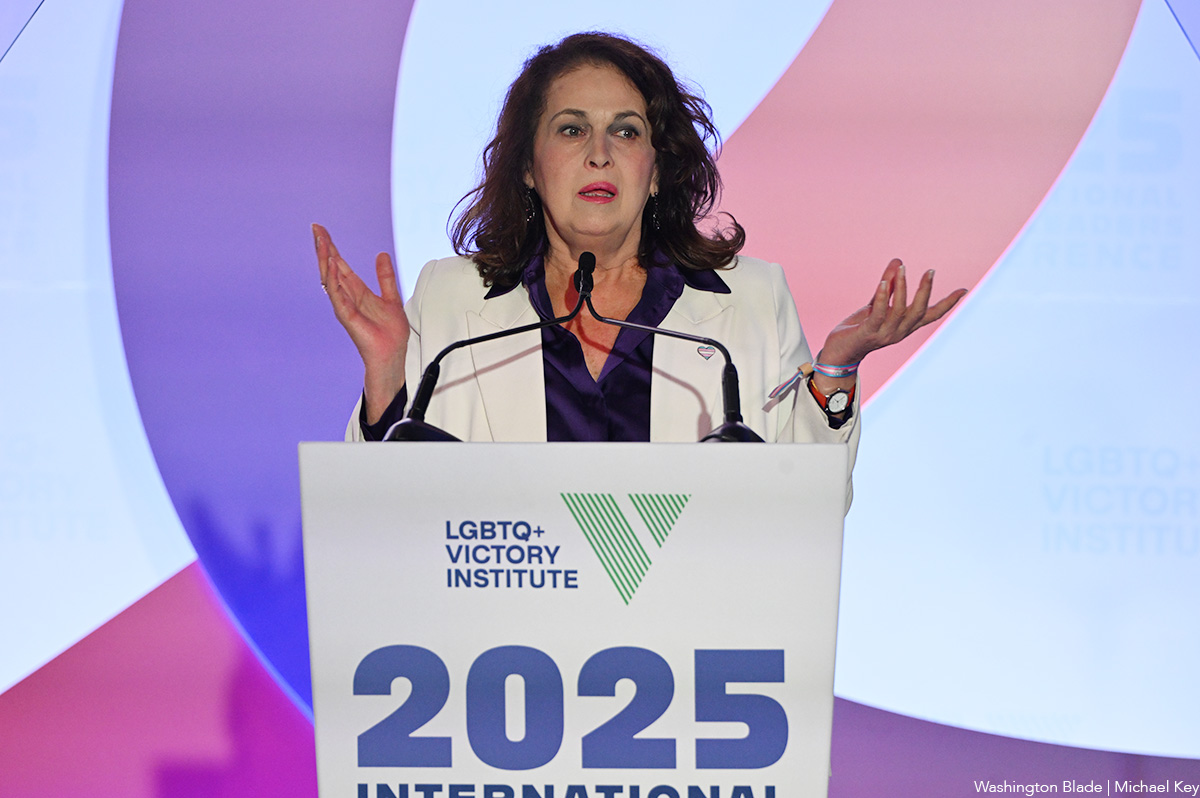
The LGBTQ+ Victory Institute on Dec. 5 inducted Spanish Sen. Carla Antonelli into its LGBTQ+ Political Hall of Fame.
Antonelli in 2011 became the first openly transgender woman elected to a regional legislative office in Spain when she won a seat in the Madrid Assembly.
She left Prime Minister Pedro Sánchez’s leftist Spanish Socialist Workers’ Party in 2022. Antonelli in 2023 became the first openly trans woman in the Spanish Senate when Más Madrid, a progressive regional party, named her Pablo Gómez Perpinyà’s successor in the chamber.
The Hall of Fame induction took place during the Victory Institute’s annual International LGBTQ+ Leaders Conference at the JW Marriott Hotel in downtown D.C. The Washington Blade spoke with Antonelli on Dec. 6.
“We are living in rather turbulent times, hence the importance and necessity of gatherings like this one … to unite in these times, come together, and develop common strategies and policies.”
Antonelli, 66, grew up in Güímar, a municipality on the island of Tenerife in Spain’s Canary Islands.
She said transphobia forced her to leave her hometown in 1977, and she turned to sex work to support herself. Antonelli’s political activism began that year when she joined the campaign against a 1970 law that criminalized consensual same-sex sexual acts and LGBTQ people.
General Francisco Franco, whose regime governed the country from 1936-1975, approved the Law on Social Danger and Rehabilitation. Spain in 1995 removed the statute’s remaining provisions from its penal code.
Antonelli in the 1980s became a well-known actress. She is also a former spokesperson for Federación Estatal de Lesbianas, Gays, Transexuales y Bisexuales, a Spanish LGBTQ advocacy group known by the acronym FELGTB.
‘We will not go back to the margins’
Antonelli in February gave an impassioned speech in support of trans rights on the Senate floor.
She specifically singled out members of Vox, a far-right political party, over their efforts to repeal a landmark 2023 law that allows people who are at least 16 to legally change their gender without medical intervention. Antonelli’s speech — and her proclamation that “we will not go back to the margins” — quickly went viral.
Antonelli told the Blade she received messages of support from people in Algeria, Australia, Turkey, Mauritius, and elsewhere around the world. She added her speech was “the conclusion of everything I can feel at any given moment, also the pride of having lived through all these historical processes.”
“For whatever reason, I was born in ’59, and I lived through the dictatorship in my country,” said Antonelli. “I lived through the dictator’s death and I lived through what Spain was like exactly 50 years ago. It began to walk in freedom, and so freedom must be defended.”
Antonelli feared US would not allow her into the country
The Victory Institute conference took place less than a year after the Trump-Vance administration took office.
Antonelli in June traveled to D.C. and participated in WorldPride 2025. She admitted the White House’s anti-trans policies left her wondering whether the U.S. would allow her into the country as a trans woman.
The White House only recognizes two genders: male and female.
President Donald Trump after he took office signed an executive order that bans the State Department from issuing passports with “X” gender markers. U.S. Citizenship and Immigration Services in August announced it will ensure “male aliens seeking immigration benefits aren’t coming to the U.S. to participate in women’s sports.”
Spain is among the countries that have issued advisories for trans and nonbinary people who are planning to visit the U.S.
“This speaks volumes about the policies of intimidation and targeting they’re implementing, policies that have made trans people scapegoats for all of humanity’s ills,” Antonelli told the Blade.
“In the United States, now with Trump, it’s absolutely terrifying because we’re talking about not just taking away a right, they’re going against our lives, against our very existence,” she added.
Antonelli in June met U.S. Rep. Sarah McBride (D-Del.), the first openly trans woman elected to Congress. Antonelli told the Blade she “watched with sorrow” how U.S. Rep. Nancy Mace (R-S.C.) and other Republicans treated the Delaware Democrat after her historic 2024 election.
“The first thing some vengeful scoundrels, thirsty for evil, do is prohibit her from entering the women’s restrooms,” said Antonelli.
“It’s nothing more than a desire to humiliate, to degrade,” she added. “Behind many of these policies lies a desire to do harm. In other words, these are bad people, evil people whose principles aren’t an ideology. They revel in it. They enjoy thinking about how they are making other human beings suffer.”
Antonelli also stressed “visibility” is “freedom.”
“The more they try to erase us, the more we have to be visible,” she said. “They know perfectly well that visibility inevitably leads to normality, to normalization, which is nothing more than what is repeated daily, routinely. What’s normal is what you see every day, so they’re trying to prevent us from being visible in every way possible, because what they don’t want is for society to accept, to live with this truth.”
Antonelli also offered advice for trans people who want to run for office.
“Always be upfront,” she said. “Don’t hold back, but above all, don’t forget where you come from. Because you might be lucky enough to rise and become a representative of the people, but don’t forget your origins.”
Antonelli noted she is the Más Madrid spokesperson for health, equality, culture, and other issues, but added she “will never, never, never abandon my trans sisters and the LGBTQ+ community.”
“I never severed times with my roots,” Antonelli told the Blade. “My roots are a conservative family, a town I had to flee and to which I didn’t return until 32 years later. My future, my past, is a street corner. My past is being able to make that journey in a democracy and go from that street corner to a seat in the Madrid Assembly and then from there to a seat in the Senate. And that is precisely the greatness of democracy.”
She ended the interview by a quote she gave to El País, a Spanish newspaper.
“Those who used to call us faggots have to now call us ‘your honors,’” said Antonelli.
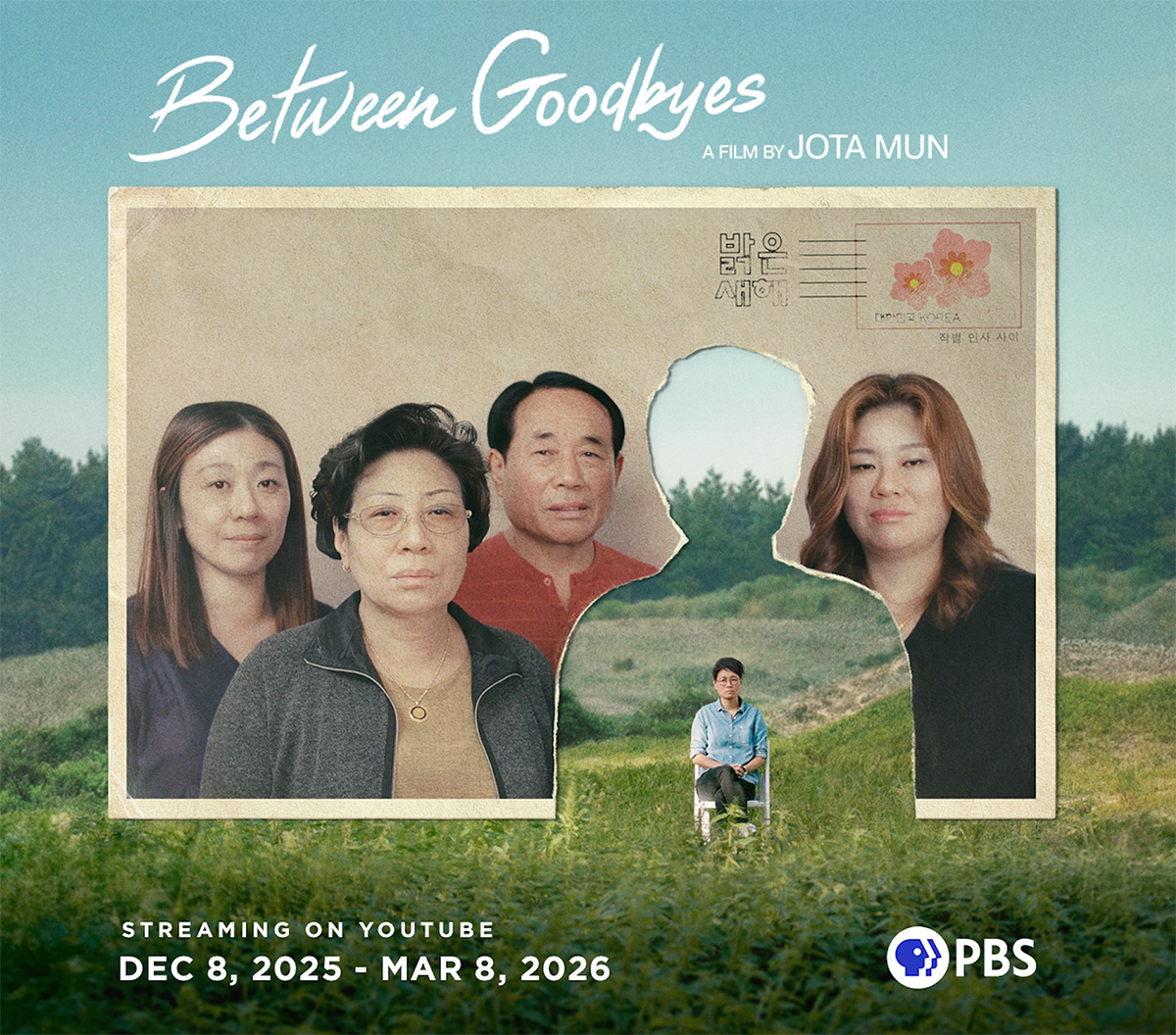
What does longing for your child look like? What happens when they resurface in front of you, when that rift was once an immeasurable open sea — a searing pain that silently hollowed you out for decades? For the child wrenched away by circumstance and thrown into the purgatory of always feeling in-between: in between home, in between being a whole person, in between who you could have been and who you are now — what does it mean to become and belong?
In filmmaker Jota Mun’s documentary “Between Goodbyes”, the fragmented yearning for home, family and identity are woven together into a tremendous and at times dream-like contemplation of the self, focused on various family members set adrift by a deceitful international adoption machine.
The story is focused on Mieke Murkes, a queer Korean adoptee who grew up in the rural village of Vaassen in the Netherlands. Shortly after her birth in 1982, she was raised by Willy, a devout evangelical Christian woman. But the story does not begin with Mieke in Vaassen. It begins with Okgyun, her original mother, walking through an ephemeral meadow as she makes her way to a shoreline. This is our first point of loss.
It is important to understand how the stories of Okgyun and Mieke exist. In “Between Goodbyes”, we see a frustrating glimpse into the cultural and political forces that created this separation. Since 1955, 200,000 children have been adopted from South Korea, and just three years ago, several of these adoptees found that their documents had been falsified. Murkes would sift through her own papers in “Between Goodbyes”, noting their dull and rote descriptions of her physical appearance and health. “The paperwork is as if you’re buying a new car,” Murkes says.
Written nearby: “Both parents are unknown,” a falsehood that leaves the family breathless. It is a gut punch.
This March, a South Korean governmental agency admitted that it had violated the rights of adoptees, but an investigation that began in 2022 at the behest of over 350 Korean adoptees has been halted. Whether or not retribution can ever be paid is up in the air, but the reeling grief and complicated self-reckoning many of these adoptees and their families face are rendered and expressed with deep tenderness in Mun’s documentary. “I did not know how to fit the Korean part of me in there,” Murkes said.
When Okgyun was pregnant with Mieke, she was also raising three other daughters: Mijin, Mikyung and Taekyung. The population was booming, and mothers like herself were being shamed for continuing to have children. Considering abortion, Okgyun recounts a midwife who convinced her not to go through with it — that if the child were a boy, she should keep him. If it turned out to be a girl, she could give her away to live “a good life” in the U.S. “Men are always positioned above women,” Okgyun said. “I always hated that.”
After Mieke was born, Okgyun’s mother-in-law told her to give her away. “She was gone before I saw her face,” Okgyun said. “I let her go.” Her guilt tightens her throat, trembles in her voice. “I dreamed of Mieke a lot. I can’t tell you how many times,” Okgyun said. “Dreaming and forgetting, dreaming, and forgetting. The thought that kept me going is that one day I can find Mieke.”
What ensued was a several years-long search. Kwangho, Mieke’s original father, pleaded with an adoption agency for any leads about Mieke. They denied him several times and his desperation only grew. “I had to find her to be at peace before I die,” he said.
Meanwhile, Mieke’s own grief and confusion were compounding. When she was beginning to discover her queerness, she was deeply ingrained in local religious spaces. What made her feel free, the church treated as an aberration — as behavior that resulted from loss.
When she would eventually meet her original family, they, too, had trouble processing her queer identity and masculine presentation. To them, queerness was “acquired” from being raised in a foreign land. With time, they grew to embrace Mieke and her partner, Marit, even as misunderstandings arose. Of this, Mieke’s conflictedness is explored. Gay rights are more advanced and accepted in the Netherlands than in South Korea, but this does not mean contending with her queerness would have been easy with her adoptive mother, Willy. “It probably would have disappointed her a lot,” Mieke tearfully revealed.
Mieke’s stepping in between knowing and unknowing is reminiscent of Okgyun’s dreaming and forgetting — their grief and confusion move within them, replicating themselves over and over again. “Between Goodbyes” dives deeply into this in order to offer a portrait of healing: of its complications and the necessity of community support to achieve this.
Mun discusses the film with the Los Angeles Blade, diving into how reunification between adoptees and original family members is, in many ways, made nearly impossible by factors like language and cultural barriers enforced and held tightly in place by the international adoption system. This film illustrates a break in this narrative and the mighty efforts behind it all.
A broadcast version of “Between Goodbyes” is now available to stream on PBS. See below for more information.
Can you tell me about the inception of making “Between Goodbyes”? Have you always wanted to tell a story about international Korean adoption from a queer perspective?
As a queer Korean adoptee myself, [there are] so many intersections that I haven’t quite seen on screen before. So I was always really excited about making something about my community. And then I’d say, in 2017, is around when I started getting closer to zeroing in on the idea. I think part of it was through befriending Mieke and hearing her parents’ story. Hearing about their efforts really blew my mind.
So much of the standard narrative is that adoptees initiate the search. So even before meeting [Okgyun and Kwangho], it just felt like it spoke so loudly of not only their character, but a piece of the puzzle that I had never considered — that they could be longing for us. And I think as an adoptee, you always wonder what [your original parents] would think. So it’s very noticeable that we almost don’t ever hear from them directly. Even in narrative stories of adoption, they’re usually deleted, or they’re written in a really flat way that feels like they’re serving the plot. I’ve never seen a depiction of birth mothers in particular who are questioning their own circumstances or feel angry about it.
There’s a lot of nuance given to all of the different people that we see in the story. The pain is layered and deep, and we don’t just view it from one perspective. What was it like having to portray this hurt, when many adoption stories typically focus solely on the adoptee’s emotional and personal journey?
It’s so unique through each lens, even though it’s the same pain. Like her sisters — of course, it’s going to affect them. Even if she never said anything, they must have felt it. It just ripples out to everyone and keeps expanding.
Originally, it was focused on Mieke, because that’s who I had the most access to, and she’s the closest to me in terms of general identity markers. So in my mind, I felt more confident that I could tell her story in a nuanced way. But what about Okgyun? I was hitting a similar barrier of communication that Mieke had hit. That’s part of why our main producer, Zoe Sua Cho, was so essential in conveying more about Okygun and the original family’s side of the story.
When I was in the early stages of developing the film, there was a quote that I felt was really inspirational: “In our hurting, we did not realize that we were stolen from each other” (by SN Désirée Cha from Outsiders Within Writing on Transracial Adoption.) The same quote came back to me in the edit and helped us find a narrative structure that went beyond just one person’s perspective.
What if the main character is the collective trauma, a singular event that causes the family to splinter and suffer across decades? I wanted to explore how tempting it is in these moments of righteous anger at systemic problems to end up fighting with each other. I feel like they both had to mourn something that was so much bigger than any one family. Mieke’s adoption affected so many people that I almost wanted that to be the main character. How do we not get lost in that pain and still try to come back together? It’s too much to carry alone.
So the main character is not necessarily one person, but the issue that you’re trying to tackle throughout the story. It also makes me think about how the documentary itself, or the making of it, also participates in this community healing that I feel like was the focus of “Between Goodbyes”.
I hope it’s an important layer. Suffice to say I think I always deflect to name a singular main character. I wanted to show everyone’s point of view while of course highlighting especially Okgyun and Mieke.
What else can you share about your approach to filmmaking?
You know, I was on this wonderful panel earlier this year, hosted by A-DOC, and I kind of surprised myself in preparing for it. I realized, actually, I have a lot of strong beliefs on filmmaking ethics that I hope come through in the film. For example, I reject the genius artist myth. The fantasy that if an artist is talented enough, they get permission to treat everyone around them terribly. That exploitation and squeezing things out of people is the best way to make great art.
Instead, I want to believe that the sensitivity, the care, and emotional work I poured in is going to come shining through in the film. And I do think that’s part of why we witnessed so many intensely vulnerable moments that I couldn’t have predicted.
This emotional connection to the film is also, visually, represented in artistic and inventive ways. There are sequences interspersed throughout that feel dream-like and cinematic. Creatively, what was it like to structure and craft how you wanted those scenes to be, the weight that they carried, and why you wanted to represent them in that way?
Aw, thanks for saying so! I was clear from the beginning that I wanted certain moments in the film to look as cinematic and epically life-changing as they feel in real life. Because visually, sometimes these moments of heartbreak can look rather dull. The deep heartbreak of a farewell at the airport. What does it look like? It looks like two people hugging in a very normal-looking terminal. But that’s not what it feels like. It feels larger than life. So to me, every single one of the art [scenes] has a very literal symbolism in my mind.
I really enjoy the complexity given to the family, both through the artistic symbolism and through the different angles we get to view them in. When it comes to Mieke’s queer identity, there are varying levels of acceptance and also tension that co-exist. One of her sisters, Mikyung, skirts around terms and labels, instead saying Mieke is “like that,” and “I don’t know anyone like that.” There was this feeling that queerness is learned or acquired elsewhere — that Mieke “wouldn’t have turned out like that” if she had grown up with her original family in Korea.
I can’t be sure what they were implying but you know, I definitely didn’t want to fall into a common trope of seeing Western values as being so liberal and accepting and framing all other cultures as homophobic. I want to be clear that there is a queer community in Seoul. It’s not the same as Amsterdam, of course, but it does exist.
That’s part of why it was important for me to include Mieke mentioned what she thinks her Dutch mom would have thought — just to clarify that homophobes are everywhere. There are plenty of them here in the West as well. Mieke’s Dutch parents were Evangelist Christians. So it’s not like everyone in the West is free to be a lesbian, you know?
Another moment that struck me in the film was a moment where we, as the audience, get to see you clearly. In this scene, we see you and Mieke on a rooftop, and you’re consoling her as she’s trying to prepare for a difficult conversation with her original mother, Okgyun. Did you have to find a balance in terms of being the director of this film and being Mieke’s friend?
It was really important to me to show friendship and how much that can help you along the journey. You think that for her to emotionally process things, it would have to be with her mom. But that rooftop conversation felt so transformative in itself. And then what ended up being the kind of mirror scene to that was Okgyun talking to Ruth [a fellow original mother]. She needed a buddy, too. How many times in life are we like: the opposing party doesn’t need to get it, but if my friend just could — that would give me so much relief and patience to enter the actual conversation with the person I’m upset with.
Being so personally close to Mieke and her family meant that my film was about all people I loved and cared about. I think the documentary field comes from such a long history of an anthropological approach. It’s like, “I’ve helicoptered in, and I just met you, but I’m the expert artist.” I wish the ethos were the opposite; we need to care about everyone, from the participants to the crew. I don’t want the blood, sweat, and tears to come through on the screen. I hope that watching it makes people feel cloaked in tenderness and care.
I was so worried about everyone, probably too much. It’s such a weird thing to ask people to do, to be in a film, so I took that with a lot of responsibility. Be aware of the impact you’re having. I am having an effect on this family’s life. I almost wanted to be like: “Forget my art project.” This is about the rest of their lives as a family, and that’s more important. So it became a light on my path, trying to make decisions as best I could to have a positive impact on their relationship.
It almost made me question my ethics in a different direction. “Am I intervening too much?” And that’s a strange thing: I have to admit I exist. I’m not a fly on the wall. And I think that’s why the conversation on the roof was really the most vulnerable for me, because I was showing myself. I’ve actually been here the whole time, cheering them on or trying to diffuse tension. I set out to make a film about how hard it is to stay in reunion, but now I’ve realized I’ll be heartbroken if their reunion doesn’t last. So in many ways the film was really just a vehicle for my attempt at keeping us all connected across so many distances, and that’s my own emotional journey or connection to their story.
Mun plans to release the full-length film in 2026, along with deleted scenes and additional footage. Up-to-date information can be found on the film’s Instagram page.

DOJ seeks to join lawsuit against Loudoun County over trans student in locker room

As house Democrats release Epstein photos, Garcia continues to demand DOJ transparency

Capital Pride announces change in date for 2026 D.C. Pride parade and festival

Reflecting on six years on the CAMP Rehoboth board

Mixtape Sapphics hosts holiday party on Dec. 13

EXCLUSIVE: George Santos speaks out on prison, Trump pardon, and more
Trump’s shocking East Wing amputation—and the painful fallout Americans won’t ignore

The harsh truth about HIV phobia in gay dating

Cynthia Erivo, Eva Victor, and ‘Blue Moon’ bring queer representation to Golden Globe film nominations

Victory Institute honors transgender Spanish senator in D.C.
-

 Congress1 day ago
EXCLUSIVE: George Santos speaks out on prison, Trump pardon, and more
-

 The White House5 days ago
Trump’s shocking East Wing amputation—and the painful fallout Americans won’t ignore
-
Health4 days ago
The harsh truth about HIV phobia in gay dating
-
Arts & Entertainment5 days ago
Cynthia Erivo, Eva Victor, and ‘Blue Moon’ bring queer representation to Golden Globe film nominations