Africa
Kenya seeks to ban intersex athletes from lowering hormone levels to compete in sports
Country’s human rights body has put forth measure
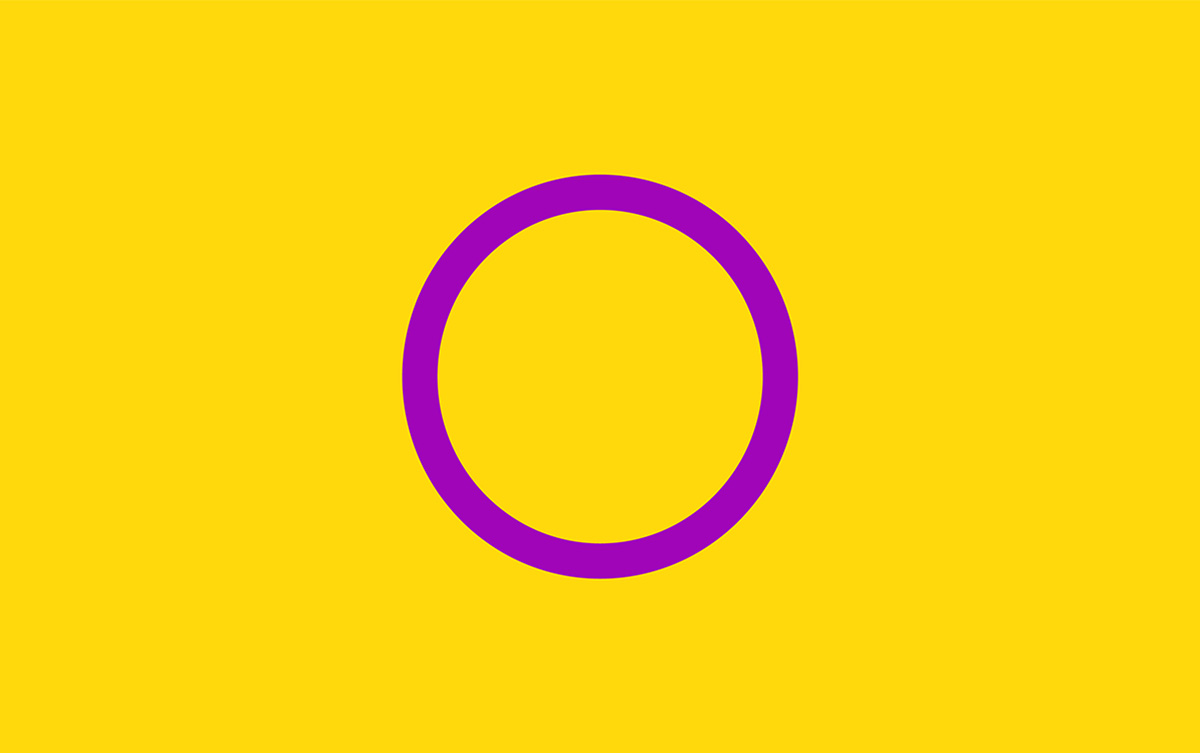
Kenya’s state-funded human rights body does not want intersex athletes in the country to lower their hormone levels as a requirement to compete in any sport.
The Kenya National Commission on Human Rights in a proposal to the National Assembly notes it will ensure non-discrimination and fairness for intersex people in sports.
The proposal in the Intersex Persons Bill, 2024, is among numerous amendments to existing laws that seek to grant intersex people equal rights after the government in 2019 officially recognized them as a third sex.
According to the bill that would amend Kenya’s Sports Act of 2013, this will require the Sports and Youth Affairs Ministry’s Cabinet secretary and the National Council for Intersex Persons, which the measure would create, to develop measures that ensure fairness for sporting intersex people when enacted.
“The measures shall not require a person to alter their biological hormonal composition as a condition to participating in any sporting activity or program,” reads the bill.
Although the measures would apply nationally, they would contradict the World Athletics Council’s 2018 regulations that similarly bar female transgender athletes from participating in international competitions, such as the Olympic Games. Intersex Kenyan athletes have to abide by these rules at the global level.
The World Athletics through the regulations noted trans women who naturally have higher levels of testosterone compared to ordinary women have to undergo medication or surgery to lower their testosterone levels as a condition before competing in races of between 400 meters and a mile. Kenya’s National Olympic Committee supports these rules.
Some top female trans athletes barred from competing in the Olympic events from the World Athletics regulations due to their high natural testosterone levels include Margaret Wambui of Kenya, Caster Semenya of South Africa, Aminatou Seyni of Niger and and Francine Niyonsaba of Burundi.
The trans athletes opposed the World Athletics regulations with Semenya challenging them in court, but lost the case, even though the U.N. Human Rights Council in 2019 criticized the rules. UNHCR cautioned sports bodies not to “force, coerce or otherwise pressure women and girl athletes into undergoing unnecessary, humiliating and harmful medical procedures.”
Kenya National Commission on Human Rights Deputy Director Veronica Mwangi, who spoke with the Washington Blade about the bill’s controversial proposal, said Kenya, which is the only African country to recognize intersex people as a third sex, has started the conversation with a “bigger picture” for the international sporting bodies to create an alternative competition for them to exploit their talents without reducing their hormonal levels or interfering with their biological characteristics as the condition before competing.
“As KNCHR, we are very clear that we cannot afford to continue discriminating and marginalizing persons who are born as intersex, but rather we can promote conversations of inclusivity where the Semenya of South Africa, an equivalent of Semenya in Uganda and an equivalent in the U.S. or Kenya can have a special sporting event like the Paralympics for persons living with disabilities,” Mwangi said.
She also questioned the fairness of World Athletics and other international sporting bodies in demanding “the Semenyas or talented intersex persons” to undergo hormonal therapy which then affects the athletes’ well-being after interfering with their biological anatomy.
“These governing sporting bodies should not come back to us that it is the intersex persons to carry the blame,” Mwangi said. “It is not the responsibility of the intersex (person) but they are duty-bearers and should think of mechanisms to grow their talents and not find an easy way out of demanding to change who they are.”
Mwangi disclosed the proposal is driven by KNCHR’s special task force report that found most intersex school children are talented and perform well in sports.
Kenya’s Intersex Persons Implementation Coordination Committee is already identifying talented intersex people, including those in schools, to support their growth in sports. Kenya’s 2019 Census found there are 1,524 intersex people in the country.
Other amendments to the Intersex Persons Bill include an employment provision that would cap an intersex person’s monthly income tax at 25 percent of wages, compared to other Kenyans whose maximum taxable income stands at 35 percent, depending on one’s monthly total earnings.
“Capping the income tax or wages for intersex persons at 25 percent is a tax consideration in the form of an affirmative action to uplift them in economic development and it is similar to that of persons living with disability who are tax exempted as marginalized groups,” Mwangi said.
The bill further seeks to amend the Health Act for any parent with an intersex child born at home to report the birth at the nearest government administration office or risk a fine of not more than $1,000 or a six-month prison term, or both, after being found guilty of concealing an intersex child’s identity.
The proposed law, moreover, seeks to create the National Council for Intersex Persons, whose mandates would include the creation of initiatives and programs to prevent discrimination against intersex people, creating a database for all intersex people and accrediting the group for employment purposes.




Egypt
Iran, Egypt object to playing in Seattle World Cup ‘Pride Match’
Game to take place on June 26
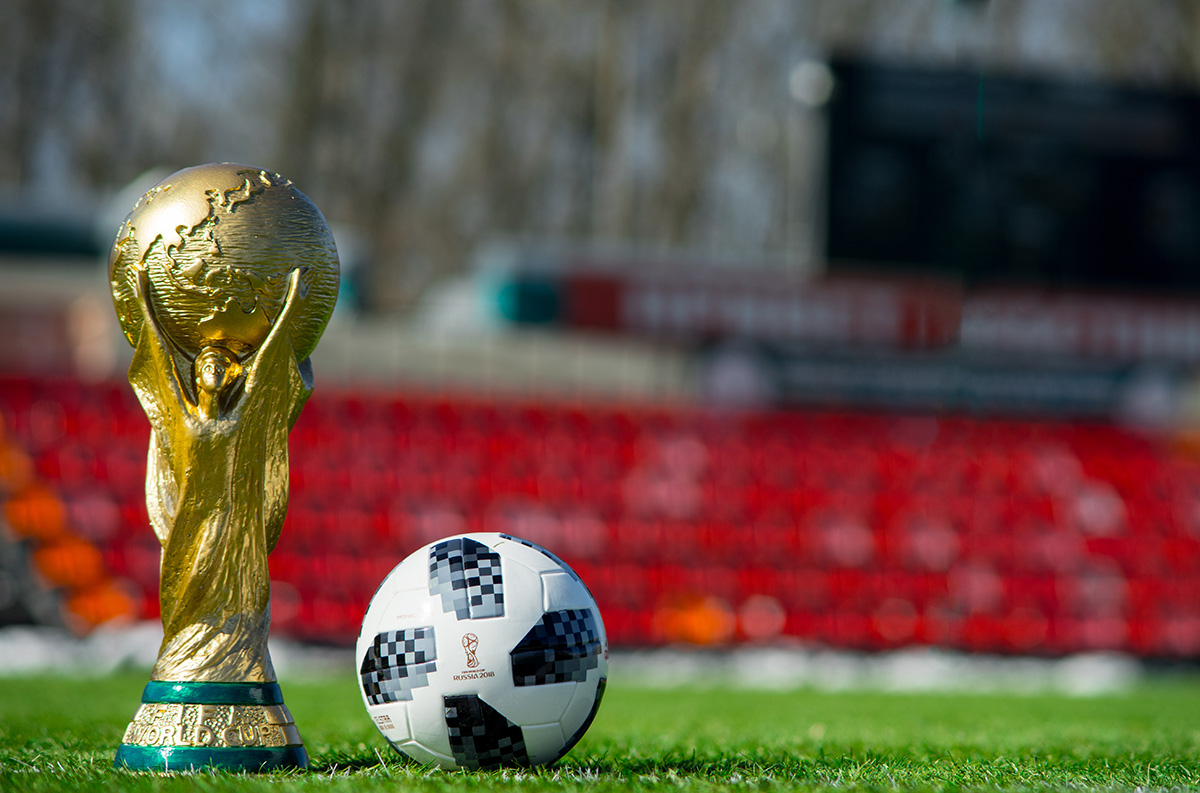
Iran and Egypt have objected to playing in a “Pride Match” that will take place in Seattle during the 2026 World Cup.
The Egyptian Football Association on Tuesday said it told FIFA Secretary General Mattias Grafström in a letter that “it categorically rejects holding any activities related to supporting (homosexuality) during the match between the Egyptian national team and Iran, scheduled to be held in Seattle, USA, on June 26, 2026, in the third round of the group stage of the 2026 World Cup.” Football Federation Islamic Republic of Iran President Mehdi Taj told ISNA, a semi-official Iranian news agency that both his country and Egypt “protested this issue.”
The 2026 World Cup will take place in the U.S., Canada, and Mexico. The draw took place at the Kennedy Center on Dec. 5.
Iran is among the handful of countries in which consensual same-sex sexual relations remain punishable by death.
The State Department’s 2023 human rights report notes that while Egyptian law “did not explicitly criminalize consensual same-sex sexual activity, authorities regularly arrested and prosecuted LGBTQI+ persons on charges including ‘debauchery,’ prostitution, and ‘violating family values.’” Egyptian authorities “also reportedly prosecuted LGBTQI+ individuals for ‘misuse of social media.’”
“This resulted in de facto criminalization of same-sex conduct and identity,” notes the report.
The 2024 human rights report the State Department released earlier this year did not include LGBTQ-specific references.
Soccer has ‘unique power to unite people across borders, cultures, and beliefs’
The June 26 match between Iran and Egypt coincides with Seattle Pride. The Washington Post reported the Seattle FIFA World Cup 2026 Local Organizing Committee decided to hold the “Pride Match” before last week’s draw.
“As the Local Organizing Committee, SeattleFWC26’s role is to prepare our city to host the matches and manage the city experience outside of Seattle Stadium,” said SeattleFWC26 Vice President of Communications Hana Tadesse in a statement the committee sent to the Washington Blade on Wednesday. “SeattleFWC26 is moving forward as planned with our community programming outside the stadium during Pride weekend and throughout the tournament, partnering with LGBTQ+ leaders, artists, and business owners to elevate existing Pride celebrations across Washington.”
“Football has a unique power to unite people across borders, cultures, and beliefs,” added Tadeese. “The Pacific Northwest is home to one of the nation’s largest Iranian-American communities, a thriving Egyptian diaspora, and rich communities representing all nations we’re hosting in Seattle. We’re committed to ensuring all residents and visitors experience the warmth, respect, and dignity that defines our region.”
The 2034 World Cup will take place in Saudi Arabia.
Consensual same-sex sexual relations remain punishable by death in the country. The 2022 World Cup took place in neighboring Qatar, despite concerns over the country’s anti-LGBTQ rights record.
Eswatini
PEPFAR delivers first doses of groundbreaking HIV prevention drug to two African countries
Lenacapavir now available in Eswatini and Zambia.
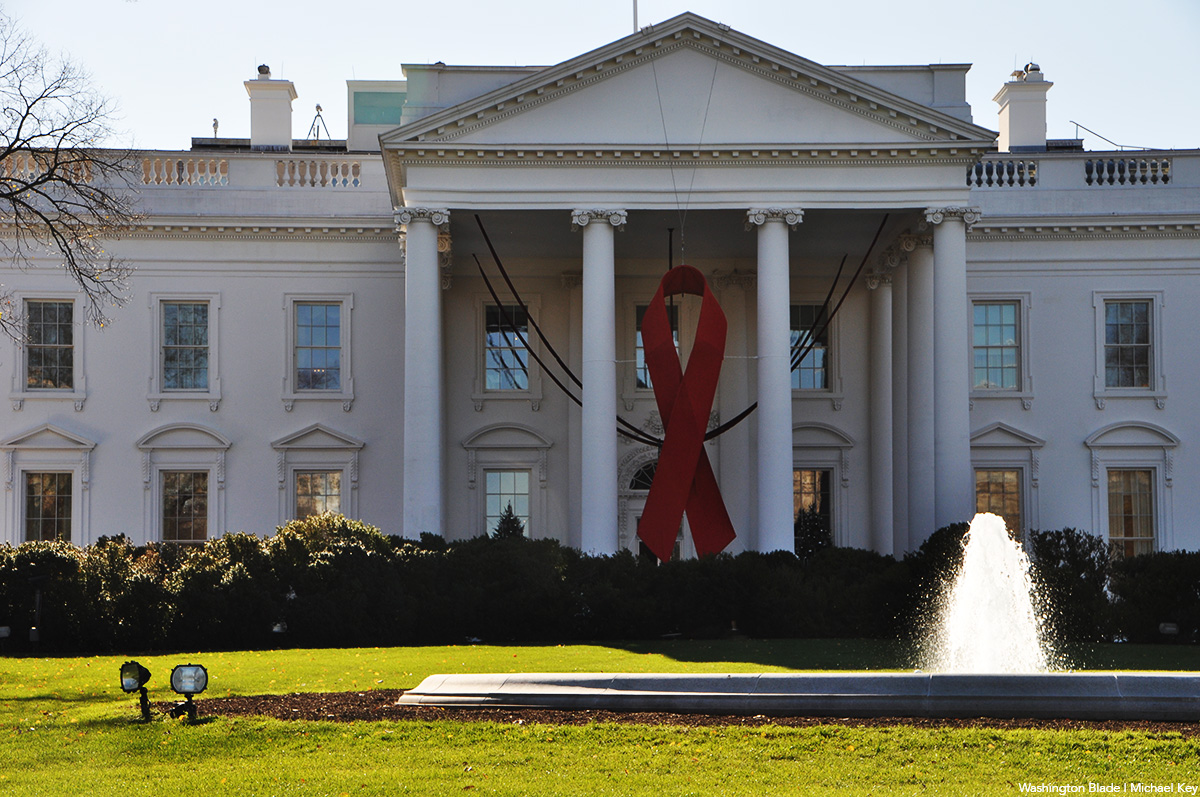
The State Department on Tuesday announced PEPFAR has delivered the first doses of a groundbreaking HIV prevention drug to two African countries.
The lenacapavir doses arrived in Eswatini and Zambia.
The State Department in September unveiled an initiative with Gilead Sciences to bring lenacapavir “to market in high-burden HIV countries.”
Lenacapavir users inject the drug twice a year.
The State Department in its September announcement noted everyone who participated in Gilead’s clinical trials remained HIV negative. It also said lenacapavir “has the potential to be particularly helpful for pregnant and breastfeeding mothers, as it safely protects them during and after pregnancy to prevent mother-to-child transmission.”
“In our new America First Global Health Strategy, the Department of State is establishing a first-of-its-kind innovation fund to support American-led research, market-shaping, and other dynamic advancements in global health,” said PEPFAR on Tuesday in a press release.
“The arrivals of the first doses of lenacapavir in Eswatini and Zambia mark an important milestone in HIV prevention and reflect our commitment to supporting communities with the greatest need,” added Gilead CEO Daniel O’Day. “For the first time, a new HIV medicine is reaching communities in sub-Saharan Africa in the same year as its U.S. approval.”
The September announcement came against the backdrop of widespread criticism over the Trump-Vance administration’s reported plans to not fully fund PEPFAR and to cut domestic HIV/AIDS funding. The Washington Blade has previously reported PEPFAR-funded programs in Kenya and other African countries have been forced to curtail services or even close because of U.S. funding cuts.
Botswana
The first courageous annual Palapye Pride in Botswana
Celebration was a beginning rooted in courage, community, and love.
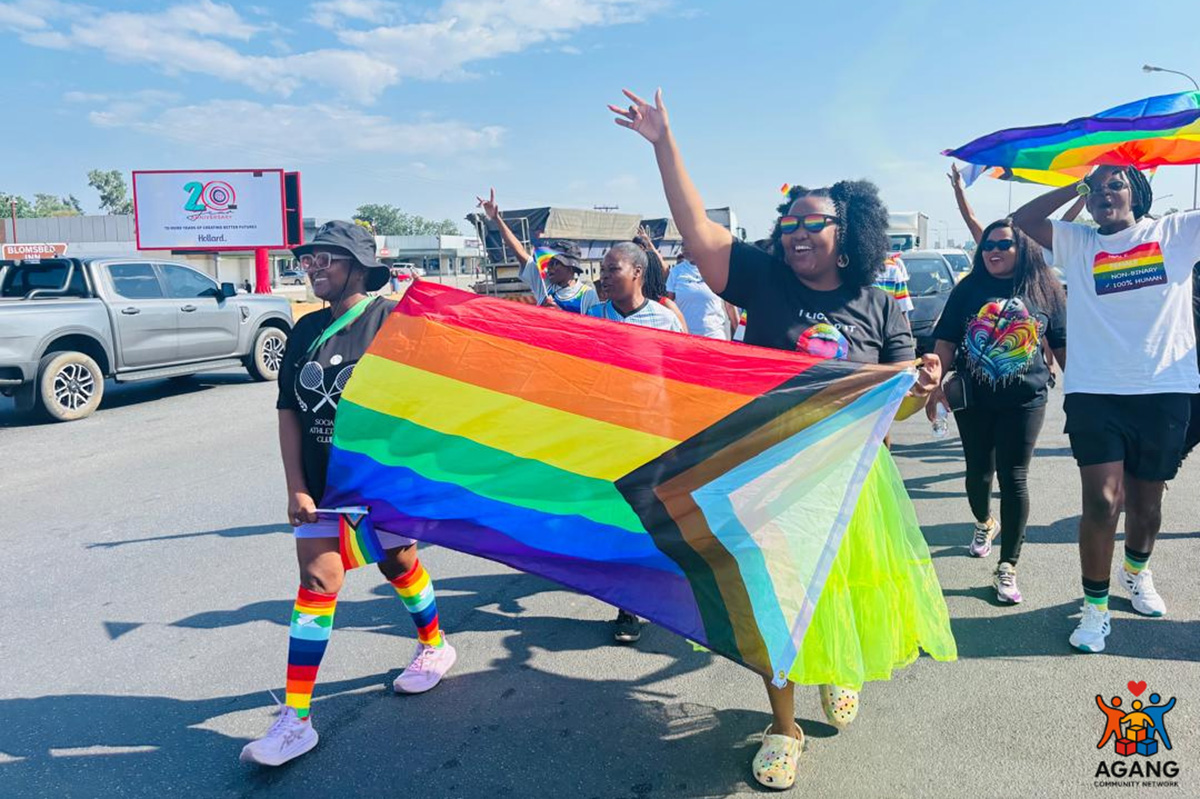
“When the sun rose on 1 Nov., 2025, Pride morning in Palapye, the open space where the march was scheduled to begin was empty. I stood there trying to look calm, but inside, my chest felt tight. I was worried that no one would come. It was the first-ever Pride in Palapye, a semi-urban village where cultural norms, religious beliefs, and tradition are deeply woven into everyday life.
I kept asking myself if we were being naive. Maybe people weren’t ready. Perhaps fear was going to win. For the first 30 minutes, it was me, a couple of religious leaders and a handful of parents. That was it. The silence was loud, and every second felt like it stretched into hours. I expected to see the queer community showing up in numbers, draped in color and excitement. Instead, only the wind was moving.
But slowly, gently, just like courage often arrives, people started to show up with a rainbow flag appearing from behind a tree and a hesitant wave from someone standing at a distance.
That’s when I understood that people weren’t late, just that they were afraid. And their fear made sense. Showing up openly in a small community like Palapye is a radical act. It disrupts silence. It challenges norms. It forces visibility. Visibility is powerful, but it is never easy. We marched with courage, pulling from the deepest parts of ourselves. We marched with laughter that cracked through the tension. We marched not because it was easy, but because it was necessary,” narrates activist Seipone Boitshwarelo from AGANG Community Network, which focuses on families and friends of LGBTIQ+ people in Botswana. She is also a BW PRIDE Awards nominee for the Healing and Justice Award, a category which acknowledges contributions to wellness, mental health, and healing for the LGBTIQ+ community across Botswana.
Queer Pride is Botswana Pride!
Pride is both a celebration and a political statement. It came about as a response to systemic oppression, particularly the criminalization and marginalization of LGBTIQ+ people globally, including in Botswana at some point. It is part of the recognition, equality, and assertion of human rights. It also reminds us that liberation and equality are not automatically universal, and continued activism is necessary. A reminder of the famous saying by Fannie Lou Hamer, “Nobody is free until everybody’s free.”
The 2023 Constitutional Review process made one thing evident, which is that Botswana still struggles to acknowledge the existence of LGBTIQ+ people as full citizens. Instead of creating a democratic space for every voice, the process sidelined and erased an entire community. In Bradley Fortuin’s analysis of the Constitutional review and its final report, he highlighted how this erasure directly contradicts past court decisions that explicitly affirmed the right of LGBTIQ+ people to participate fully and openly in civic life. When the state chooses to ignore court orders and ignore communities, it becomes clear that visibility must be reclaimed through alternative means. This is why AGANG Community Network embarked on Palapye Pride. It is a radical insistence on belonging, rooted in community and strengthened through intersectionality with families, friends, and allies who refuse to let our stories be erased.
Motho ke motho ka batho!
One of the most strategic decisions made by the AGANG Community Network was to engage parents, religious leaders, and local community members, recognizing their value in inclusion and support. Thus, their presence in the march was not symbolic, but it was intentional.
Funding for human rights and LGBTIQ+ advocacy has been negatively impacted since January 2025, and current funding is highly competitive, uneven and scarce, especially for grassroots organizations in Botswana. The Palapye Pride event was not funded, but community members still showed up and donated water, a sound system, and someone even printed materials. This event happened because individuals believed in its value and essence. It was a reminder that activism is not always measured in budgets but in willingness and that “motho ke motho ka batho!” (“A person is a person because of other people!”).
Freedom of association for all
In March 2016, in the the Attorney General of Botswana v. Rammoge and 19 Others case, also known as the LEGABIBO registration case, the Botswana Court of Appeal stated that “members of the gay, lesbian, and transgender community, although no doubt a small minority, and unacceptable to some on religious or other grounds, form part of the rich diversity of any nation and are fully entitled in Botswana, as in any other progressive state, to the constitutional protection of their dignity.” Freedom of association, assembly, and expression is a foundation for civic and democratic participation, as it allows all citizens to organize around shared interests, raise their collective voice, and influence societal and cultural change, as well as legislative reform.
The Botswana courts, shortly after in 2021, declared that criminalizing same-sex sexual relations is unconstitutional because they violated rights to privacy, liberty, dignity, equality, and nondiscrimination. Despite these legal wins, social stigma, cultural, and religious opposition continue to affect the daily lived experience of LGBTIQ+ people in Botswana.
The continuation of a declaration
AGANG Community Network is committed to continuing this work and creating safe and supportive spaces for LGBTIQ+ people, their families, friend, and allies. Pride is not just a day of fun. It is a movement, a declaration of queer existence and recognition of allyship. It is healing and reconciliation while amplifying queer joy.
Seipone Boitshwarelo is a feminist, activist, social justice healer, and founder of AGANG Community Network. Bradley Fortuin is a social justice activist and a consultant at the Southern Africa Litigation Center.

PHOTOS: The Holiday Show

The best books to give this holiday season

Studio’s ‘Mother Play’ draws from lesbian playwright’s past

Choose U ambassadors share lived experiences with HIV, personal reflections, and insights

DOJ seeks to join lawsuit against Loudoun County over trans student in locker room

EXCLUSIVE: George Santos speaks out on prison, Trump pardon, and more

Victory Institute honors transgender Spanish senator in D.C.

The beginning of the fall of Trump

Markey reintroduces International Human Rights Act in Senate